
Strep Throat Treatment Market Outlook: Size, Share, Trends, Growth Analysis, Competitive Landscape & Forecast, 2026-2033

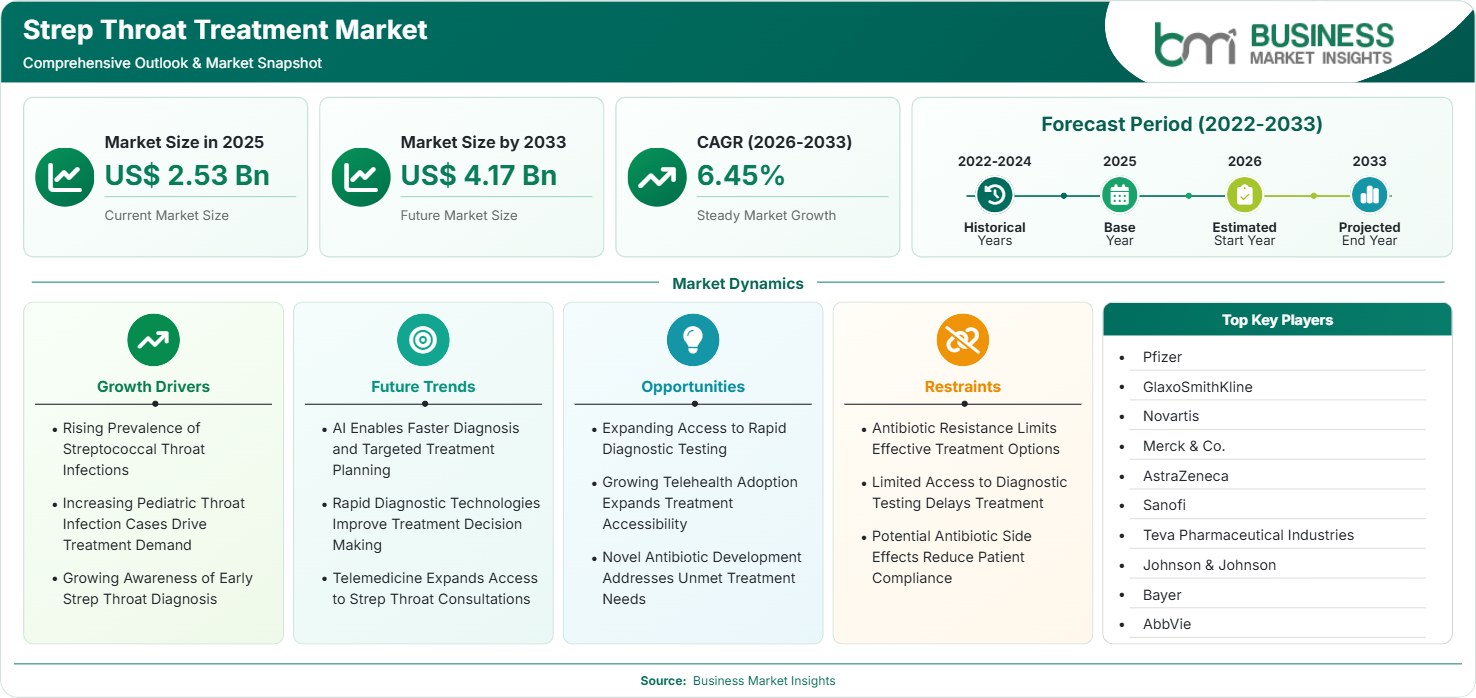
The Strep Throat Treatment Market size was valued at US$ 2.53 billion in 2025 and is projected to reach US$ 4.17 billion by 2033, growing at a CAGR of 6.45% during 2026–2033. Increasing incidence of streptococcal infections, rising pediatric throat infection cases, and growing awareness of early diagnosis are supporting market expansion. Opportunities are emerging through rapid diagnostic testing, telehealth-based treatment access, and development of improved antibiotic therapies targeting unmet clinical needs.

Report Coverage
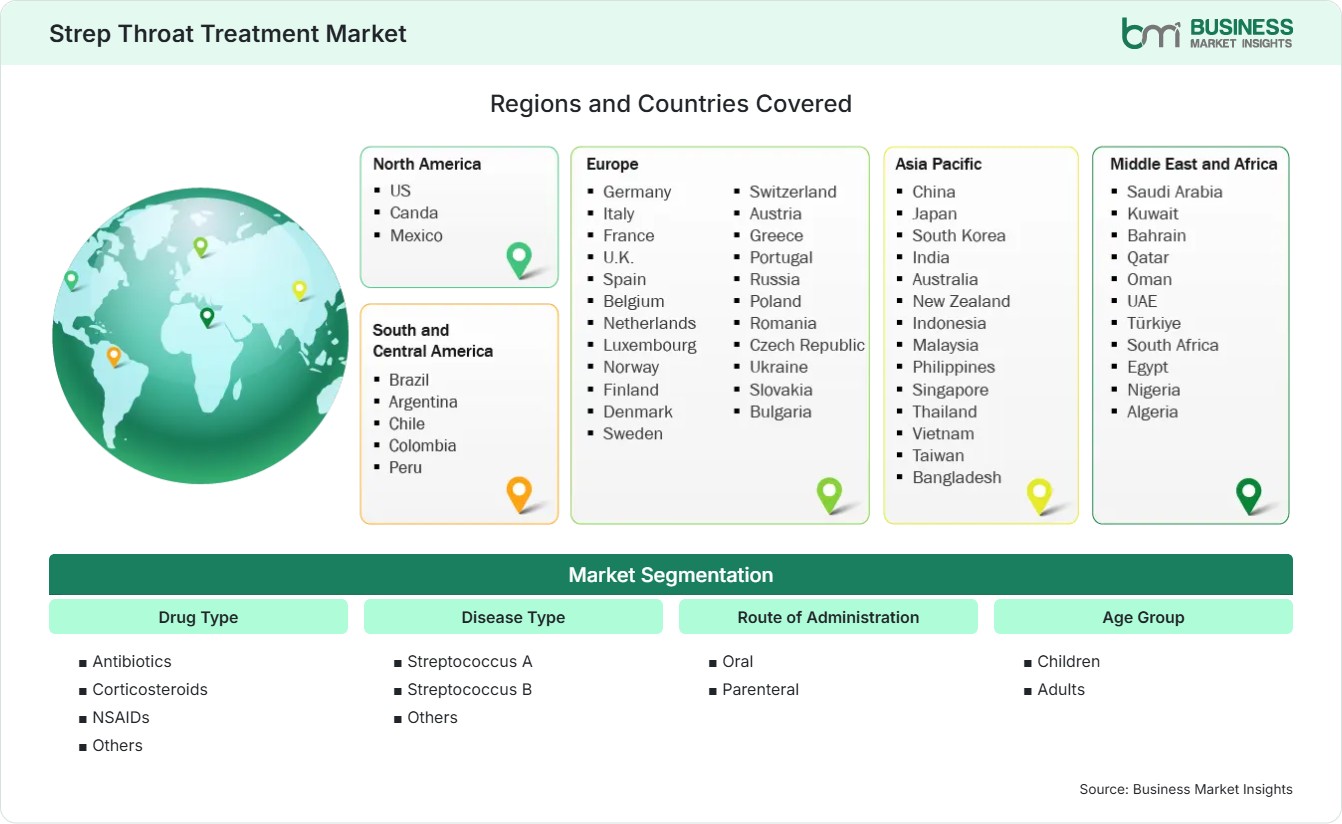
  • Drug Type: Antibiotics, Corticosteroids, NSAIDs, Others
  • Disease Type: Streptococcus A, Streptococcus B, Others
  • Route of Administration: Oral, Parenteral
  • Age Group: Children, Adults
  • Distribution Channel: Hospital Pharmacies, Drug Stores & Retail Pharmacies, Online Pharmacies
US$ 2.53 Bn Market size in 2025
US$ 4.17 Bn Market Size by 2033
6.45% CAGR, 2026 - 2033
2026-2033 Forecast Period

01 AI Overview

Strep Throat Treatment Market Summary

  • North America Region: North America accounted for 36%–39% share in 2025 and is projected to grow at a CAGR of 6.1%–6.6% during 2026–2033. Growth is supported by high healthcare accessibility, advanced diagnostic infrastructure, pediatric infection management, and established pharmaceutical networks. The U.S. represents 82%–87% of regional demand, supported by widespread testing availability, physician awareness, and treatment adoption, with a CAGR of 6.2%–6.7% during 2026–2033.
  • Fastest Growing Region: Asia Pacific represented 22%–25% share in 2025 and is expected to expand at a CAGR of 7.0%–7.5% during 2026–2033. Growth is driven by increasing healthcare access, rising infection awareness, improving diagnostic availability, and expanding pharmaceutical distribution networks across emerging economies.
  • Leading Segment: Antibiotics accounted for 60%–64% share in 2025 and are projected to grow at a CAGR of 6.0%–6.5% during 2026–2033. Segment growth is supported by their role as the primary treatment approach for confirmed bacterial throat infections.
  • High Growth Segment: Online Pharmacies represented 15%–19% share in 2025 and are expected to grow at a CAGR of 8.0%–8.5% during 2026–2033. Increasing digital healthcare adoption, convenience, and telehealth integration are supporting segment expansion.
  • Key Market Opportunity: Expansion of rapid diagnostic testing, digital healthcare platforms, and innovative antibiotic development is creating opportunities for pharmaceutical companies to improve treatment accessibility and address evolving infection management requirements.
  • Major Market Players: Pfizer, GlaxoSmithKline, Novartis, Merck & Co., AstraZeneca, Sanofi, Teva Pharmaceutical Industries, Johnson & Johnson, Bayer, AbbVie.
02 Strategic Insights

Strep Throat Treatment Market: Strategic Insights

strep-throat-treatment-market-market-strategic-framework
FREE PDF
Request your free sample
Request free sample
03 Stakeholder View

Key Takeaways

  • The Strep Throat Treatment Market ecosystem includes pharmaceutical manufacturers, antibiotic developers, diagnostic companies, hospitals, pediatric care providers, retail pharmacies, online pharmacies, and healthcare platforms supporting infection management.
  • Antibiotic therapies remain the core treatment category, while opportunities are expanding for rapid diagnostics, personalized treatment approaches, and digital healthcare delivery models.
  • Innovation is shifting toward improved antimicrobial formulations, rapid testing technologies, telehealth integration, and treatment approaches designed to address antibiotic resistance challenges.
  • Asia Pacific provides an attractive expansion opportunity due to increasing healthcare investments, rising infection awareness, improving diagnostic access, and expanding pharmaceutical distribution channels.
  • Strategic investments are increasingly focused on infectious disease research, digital healthcare platforms, diagnostic technologies, and pharmaceutical pipelines addressing unmet treatment requirements.
  • Regulatory approvals, antimicrobial effectiveness, diagnostic accuracy, and supply chain reliability remain important competitive factors influencing pharmaceutical company positioning.
04 Geographic Outlook

Strep Throat Treatment Market Regional Highlights

North America Strep Throat Treatment Market

North America held 36%–39% share in 2025 and is projected to grow at a CAGR of 6.1%–6.6% during 2026–2033. The region benefits from advanced healthcare systems, strong pharmaceutical presence, established diagnostic testing infrastructure, and high treatment accessibility. The Strep Throat Treatment Market share is supported by widespread physician awareness, pediatric healthcare networks, and availability of prescription therapies. The United States remains the dominant contributor due to higher healthcare spending and established infection management practices.

  • The U.S. market is supported by strong adoption of rapid testing methods and physician-driven treatment protocols.
  • Canada is witnessing increased availability of diagnostic services and improved access to infection management therapies.
  • Pharmaceutical companies are investing in antimicrobial research and treatment optimization initiatives.
  • Digital healthcare platforms are improving consultation access for patients with throat infection symptoms.
  • Retail and online pharmacy channels are strengthening treatment availability across urban and suburban regions.

US Strep Throat Treatment Market

The U.S. accounted for 82%–87% of North America’s share in 2025 and is expected to grow at a CAGR of 6.2%–6.7% during 2026–2033. The country benefits from advanced healthcare infrastructure, high prescription medicine availability, and strong awareness regarding bacterial infection diagnosis. Pediatric healthcare demand represents a significant contributor due to frequent occurrence of throat infections among children. Expansion of telehealth services and rapid testing adoption is improving treatment accessibility.

  • Pediatric clinics are increasing adoption of diagnostic-based treatment approaches for bacterial throat infections.
  • Online pharmacies are expanding access to prescription medications through digital healthcare channels.
  • Healthcare providers are focusing on reducing unnecessary antibiotic use through improved diagnosis.
  • Pharmaceutical companies continue developing therapies addressing antimicrobial resistance concerns.

Europe Strep Throat Treatment Market

Europe accounted for 27%–30% share in 2025 and is projected to grow at a CAGR of 5.8%–6.3% during 2026–2033. The region benefits from strong healthcare infrastructure, established pharmaceutical manufacturing capabilities, and increasing focus on antimicrobial stewardship. Germany, the United Kingdom, France, and Italy represent major markets, while Eastern European countries are experiencing improved healthcare access. Regulatory emphasis on responsible antibiotic use is influencing treatment practices.

  • Germany remains a significant market due to advanced healthcare systems and pharmaceutical research capabilities.
  • The United Kingdom is focusing on improved infection diagnosis and antimicrobial management programs.
  • France and Italy are expanding access to pediatric healthcare and prescription treatments.
  • European healthcare systems are promoting diagnostic accuracy to reduce inappropriate antibiotic usage.
  • Pharmaceutical companies are adapting strategies according to evolving regulatory requirements.

Asia Pacific Strep Throat Treatment Market

Asia Pacific represented 22%–25% share in 2025 and is expected to register a CAGR of 7.0%–7.5% during 2026–2033. The region is experiencing rapid growth due to increasing healthcare awareness, expanding medical infrastructure, and rising availability of diagnostic and pharmaceutical products. China, India, Japan, and South Korea are key contributors. Population growth, pediatric healthcare demand, and digital healthcare expansion are strengthening regional opportunities.

  • China is improving infectious disease management through healthcare modernization and pharmaceutical accessibility.
  • India is witnessing increased demand due to expanding healthcare services and rising diagnostic awareness.
  • Japan is focusing on advanced healthcare delivery and antimicrobial treatment management.
  • South Korea is adopting digital healthcare solutions to improve patient access.
  • Emerging economies are creating opportunities through expanded pharmacy networks.

Rest of World Strep Throat Treatment Market

Rest of World accounted for 9%–12% share in 2025 and is projected to grow at a CAGR of 6.5%–7.0% during 2026–2033. Latin America, the Middle East, and Africa are experiencing gradual market expansion due to improving healthcare infrastructure, rising infection awareness, and increasing pharmaceutical availability. Brazil, Mexico, Saudi Arabia, and South Africa represent important growth markets. Healthcare investments and digital consultation services are improving access to diagnosis and treatment.

Growing private healthcare facilities and pharmacy networks are supporting broader availability of infection management solutions across developing regions.

  • Latin America is expanding access through private healthcare investments and pharmacy infrastructure development.
  • Middle Eastern countries are improving healthcare facilities and adopting advanced treatment technologies.
  • African markets are benefiting from healthcare development programs and increased medicine availability.
  • International pharmaceutical companies are strengthening distribution partnerships in emerging regions.
global-market-geography
FREE PDF
Request your free sample
Request free sample
05 Segment Analysis

Strep Throat Treatment Market Segmentation

Drug Type

The Drug Type segment represents a major component of the market, with antibiotics accounting for 60%–64% share in 2025 and growing at a CAGR of 6.0%–6.5% during 2026–2033. Antibiotics remain essential for confirmed bacterial infections, while supportive therapies continue complementing treatment approaches. The segment is influenced by antimicrobial research, treatment guidelines, and the need for effective infection management. The Strep Throat Treatment Market scope continues expanding through improved formulations, diagnostic integration, and patient-focused therapies.

  • Antibiotics: Antibiotics remain the primary treatment option for bacterial throat infections, supported by physician prescriptions and clinical effectiveness in managing streptococcal infections.
  • Corticosteroids: Corticosteroids support symptom relief by reducing inflammation and discomfort, particularly in selected cases requiring additional therapeutic management.
  • NSAIDs: NSAIDs provide supportive care by managing pain, fever, and inflammation associated with throat infection symptoms.
  • Others: Additional treatment options include supportive therapies and alternative medications used according to patient requirements.

Disease Type

The Disease Type segment is influenced by infection prevalence, diagnostic capability, and treatment requirements associated with different streptococcal strains. Streptococcus A represents the primary focus due to its association with common bacterial throat infections and established treatment protocols. Growing awareness of accurate diagnosis is supporting segment development.

  • Streptococcus A: Streptococcus A remains the leading infection type due to widespread occurrence and established antibiotic treatment approaches.
  • Streptococcus B: Streptococcus B treatment demand is supported by clinical management requirements and ongoing research into infection control.
  • Others: Other bacterial classifications contribute to treatment demand through specialized diagnostic and therapeutic approaches.

Route of Administration

The Route of Administration segment includes oral and parenteral therapies used for managing bacterial throat infections. Oral administration maintains strong adoption due to convenience, patient compliance, and outpatient treatment suitability. Parenteral therapies remain important for severe cases requiring clinical intervention.

  • Oral: Oral therapies dominate due to convenience, widespread prescription use, and suitability for routine infection management.
  • Parenteral: Parenteral treatments are used in specific clinical situations requiring faster or controlled medication delivery.

Age Group

The Age Group segment is driven by pediatric infection prevalence and adult treatment requirements. Children represent an important patient population due to higher incidence of streptococcal throat infections. Adults continue contributing demand through workplace healthcare needs and infection management.

  • Children: Pediatric patients represent a significant segment due to frequent throat infections and increased diagnostic attention.
  • Adults: Adults contribute demand through treatment requirements associated with infection prevention and symptom management.

Distribution Channel

The Distribution Channel segment is evolving through increased availability of prescription medicines across hospitals, retail pharmacies, and online platforms. Digital pharmacy adoption is improving convenience and expanding access to treatment options.

  • Hospital Pharmacies: Hospital pharmacies support treatment availability for diagnosed patients requiring professional healthcare supervision.
  • Drug Stores & Retail Pharmacies: Retail pharmacies provide convenient access to prescribed medicines and supportive treatments.
  • Online Pharmacies: Online pharmacies are expanding due to digital healthcare adoption, convenience, and improved medicine delivery services.
06 Market Forces

Strep Throat Treatment Market Dynamics

Key Market Drivers

Rising Prevalence of Streptococcal Throat Infections

The rising prevalence of throat infections caused by Streptococcus bacteria is one of the primary factors driving the Strep Throat Treatment Market growth. Infections caused by Streptococcus pyogenes still account for a considerable proportion of bacterial throat infections worldwide and continue to drive demand for diagnostics, antibiotics, and treatment. Seasonal occurrences, close interactions, and increased awareness of infection symptoms are among the reasons leading to an increase in diagnoses. Healthcare providers aim to diagnose and treat the infection early to avoid complications. Pharmaceutical companies are expanding their infectious disease portfolios by providing treatments for throat bacterial infections.

Increasing Pediatric Throat Infection Cases Drive Treatment Demand

Children are among the key patient demographics affected by streptococcal sore throat; hence, the increasing demand for pediatric health care is a key driver of market growth. Increased schooling, crowded surroundings, and growing immune systems in children are among the reasons for higher rates of infection. Early diagnosis and treatment have been gaining prominence in pediatrics to prevent conditions such as rheumatic fever and other complications arising from infection. Improved formulations of drugs for children, better diagnostic practices, and greater parental awareness have helped increase the rate of treatment. The Strep Throat Treatment Market trends highlight growing concern about pediatric infection management, with drug manufacturers focusing on developing safe formulations and health care practitioners working to provide testing and counseling services to children.

Growing Awareness of Early Strep Throat Diagnosis

Rising awareness of the importance of early detection is leading people to visit hospitals at the earliest stages of infection. Advanced methods for rapid testing, clinical assessment, and healthcare communication are allowing easier identification of bacterial throat infections. Early detection helps healthcare practitioners recommend treatment options without unnecessarily resorting to antibiotics. The growing significance of point-of-care testing is expected to help increase the demand for diagnostic and treatment options. Rising concern among healthcare systems about the proper use of antimicrobials is expected to make accurate detection more significant. Preventive healthcare and rising awareness about patient education will continue to drive demand for diagnostic and treatment options.

Key Market Opportunities

Expanding Access to Rapid Diagnostic Testing

The development of rapid diagnosis is a great chance for businesses working in the field of infection management. Rapid antigen tests and molecular diagnostics allow health workers to identify streptococcal infection and initiate appropriate treatment. Better testing will help make the process of antibiotic administration more precise by distinguishing bacterial infections from viral sore throats. According to the Strep Throat Treatment Market forecast, there are more opportunities for businesses that develop efficient and inexpensive diagnostic devices. There is a growing demand for rapid diagnostics due to the growth of out-of-hospital medical services.

Growing Telehealth Adoption Expands Treatment Accessibility

The increase in telemedicine use ensures that patients can consult doctors for symptoms of throat infection from the comfort of their homes. Telemedicine technology enables patients to seek consultations and medical advice from doctors without physically traveling to healthcare centers. This is especially helpful for those in regions with inadequate healthcare infrastructure or a shortage of doctors. Digital prescription systems, combined with telemedicine and pharmacies, are making healthcare delivery easier. Pharmaceutical companies and healthcare providers are forming digital healthcare partnerships to increase patient engagement and improve medication delivery.

Novel Antibiotic Development Addresses Unmet Treatment Needs

The emergence of novel antibiotic therapies offers an attractive opportunity amid rising concerns about antimicrobial resistance. Antibiotics remain useful for most people; however, emerging trends in antimicrobial resistance are spurring further investigations into alternative therapeutic interventions. Antibiotic innovations have been driven by pharmaceutical firms' investments in new antimicrobial drugs and treatments targeting resistant bacteria. As revealed in the Strep Throat Treatment Market analysis, pharmaceutical firms capable of developing safe and effective treatments will have a competitive advantage in the emerging infectious diseases market. Innovations in antibiotic products are possible through collaborations between research organizations, biotechnology firms, and pharmaceutical firms.

Market Restraints and Challenges

Antibiotic Resistance Limits Effective Treatment Options

Factor: Increasing antibiotic resistance is creating challenges for effective management of bacterial infections and reducing the long-term effectiveness of commonly used therapies. Impact: The issue of resistance may complicate the treatment process, necessitate additional diagnostic procedures, and prompt the search for alternative treatment approaches. One of the problems that is becoming increasingly significant in the field of infectious disease therapy worldwide is antimicrobial resistance. This problem is associated with improper use of antimicrobials, insufficient treatments, and bacterial evolution. Healthcare organizations support antimicrobial stewardship to promote appropriate medication prescribing. Companies specializing in pharmaceuticals encounter difficulties in developing new antibiotics due to the high cost of research, complex regulations, and uncertain profits.

Limited Access to Diagnostic Testing Delays Treatment

Factor: Limited availability of rapid diagnostic testing, particularly in underserved regions, can delay identification of streptococcal infections and appropriate treatment initiation. Impact: The delayed diagnosis can impact the treatment results, cause excess consumption of medications, and limit infection management in time. The availability of proper diagnostic services varies from region to region because of various limitations, including the lack of infrastructure, shortage of healthcare professionals, and cost-related concerns. In the regions where the testing services are unavailable, the doctors may have to base their conclusions on symptoms only, which makes proper diagnosis more complicated. The development of diagnostic infrastructure, reduction of costs, and introduction of point-of-care testing solutions are likely to be used to solve this issue.

07 Company Analysis

Competitive Landscape

The competitive landscape consists of global pharmaceutical companies, infectious disease therapy developers, and healthcare organizations focused on antibiotic development, treatment accessibility, and disease management solutions. Companies are investing in antimicrobial research, product expansion, strategic partnerships, and healthcare distribution networks to strengthen their market presence. The Strep Throat Treatment Market Report highlights that competitive positioning depends on pharmaceutical innovation, regulatory approvals, supply chain capabilities, and the ability to address changing treatment requirements.

Company Name

Overview

Products and Services Relevant to this Market

Pfizer

Global pharmaceutical company with a broad portfolio of prescription medicines and healthcare solutions.

Antibiotic therapies, infectious disease medicines, and pharmaceutical research capabilities.

GlaxoSmithKline

Healthcare company involved in vaccines and prescription medicines.

Anti-infective treatments, respiratory healthcare products, and pharmaceutical development.

Novartis

Global healthcare company focused on innovative medicines.

Prescription therapies, research capabilities, and infectious disease-related solutions.

Merck & Co.

Pharmaceutical company developing medicines across multiple therapeutic areas.

Antibiotic research, prescription treatments, and healthcare solutions.

AstraZeneca

Global biopharmaceutical company focused on innovative therapies.

Prescription medicines, research programs, and healthcare technologies.

Sanofi

Healthcare company providing medicines and vaccines worldwide.

Infectious disease treatments, pharmaceutical products, and healthcare solutions.

Teva Pharmaceutical Industries

Generic and specialty pharmaceutical manufacturer.

Antibiotic medicines, affordable treatment options, and pharmaceutical distribution.

Johnson & Johnson

Healthcare company operating across pharmaceutical and medical sectors.

Prescription medicines, healthcare products, and research capabilities.

Bayer

Global healthcare company with pharmaceutical operations.

Prescription medicines, infection management products, and healthcare solutions.

AbbVie

Research-based pharmaceutical company focused on specialty medicines.

Prescription therapies, research activities, and healthcare innovations.

10 Trust & Transparency

Research Methodology

The market analysis combines proprietary research with secondary data from government agencies, company disclosures, regulatory filings, industry databases and expert interviews. Market estimates are validated through data triangulation, cross-market benchmarking and analyst review.

View Full Research Methodology

11 Questions Answered

Frequently Asked Questions

6. What does the Strep Throat Treatment Market Report provide?

The market report provides insights into market size, segmentation, regional analysis, competitive landscape, growth drivers, opportunities, restraints, and future industry trends.

What challenges affect market growth?

Major challenges include antibiotic resistance, limited diagnostic access, healthcare infrastructure gaps, and difficulties associated with developing new antimicrobial therapies.

Why is telehealth becoming important for strep throat treatment?

Telehealth platforms improve access to medical consultations, especially in regions with limited healthcare availability, while supporting digital prescriptions and remote patient management.

How are rapid diagnostic tests influencing treatment decisions?

Rapid diagnostic tests help healthcare providers identify bacterial infections quickly, supporting appropriate treatment selection and reducing unnecessary antibiotic usage.

Which drug type dominates the Strep Throat Treatment Market?

Antibiotics represent the leading drug type due to their established role in treating confirmed bacterial throat infections and widespread physician adoption.

What factors are driving the market?

The market is driven by rising streptococcal infection cases, increasing pediatric throat infections, improved diagnosis awareness, expanding healthcare access, and continued demand for effective antibiotic treatments.

Access the Full Strep Throat Treatment Market Report

Get segment-level forecasts, regional estimates, competitive benchmarking, company profiles and downloadable Excel datasets.

Access the full Strep Throat Treatment Market Report
350 pages PDF & Excel | 2026-08-05