
Inflammatory Bowel Disease Treatment Market Outlook: Size, Share, Trends, Growth Analysis, Competitive Landscape & Forecast, 2026-2033

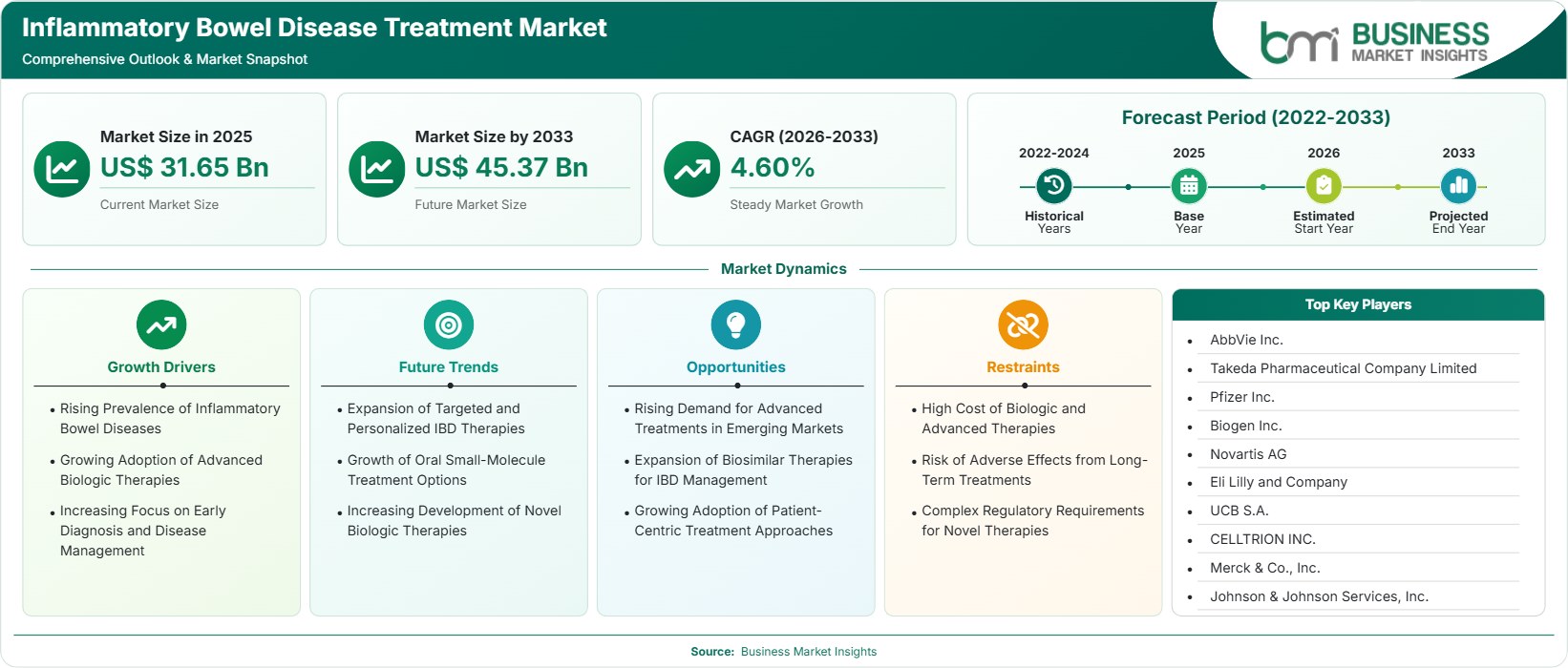
The Inflammatory Bowel Disease Treatment Market size was valued at US$ 31.65 Billion in 2025 and is projected to reach US$ 45.37 Billion by 2033, growing at a CAGR of 4.60% during 2026–2033. Increasing prevalence of inflammatory bowel diseases, growing adoption of biologics and targeted therapies, rising healthcare expenditure, expanding awareness regarding early diagnosis, and increasing development of advanced treatment options are supporting market growth worldwide.

Report Coverage
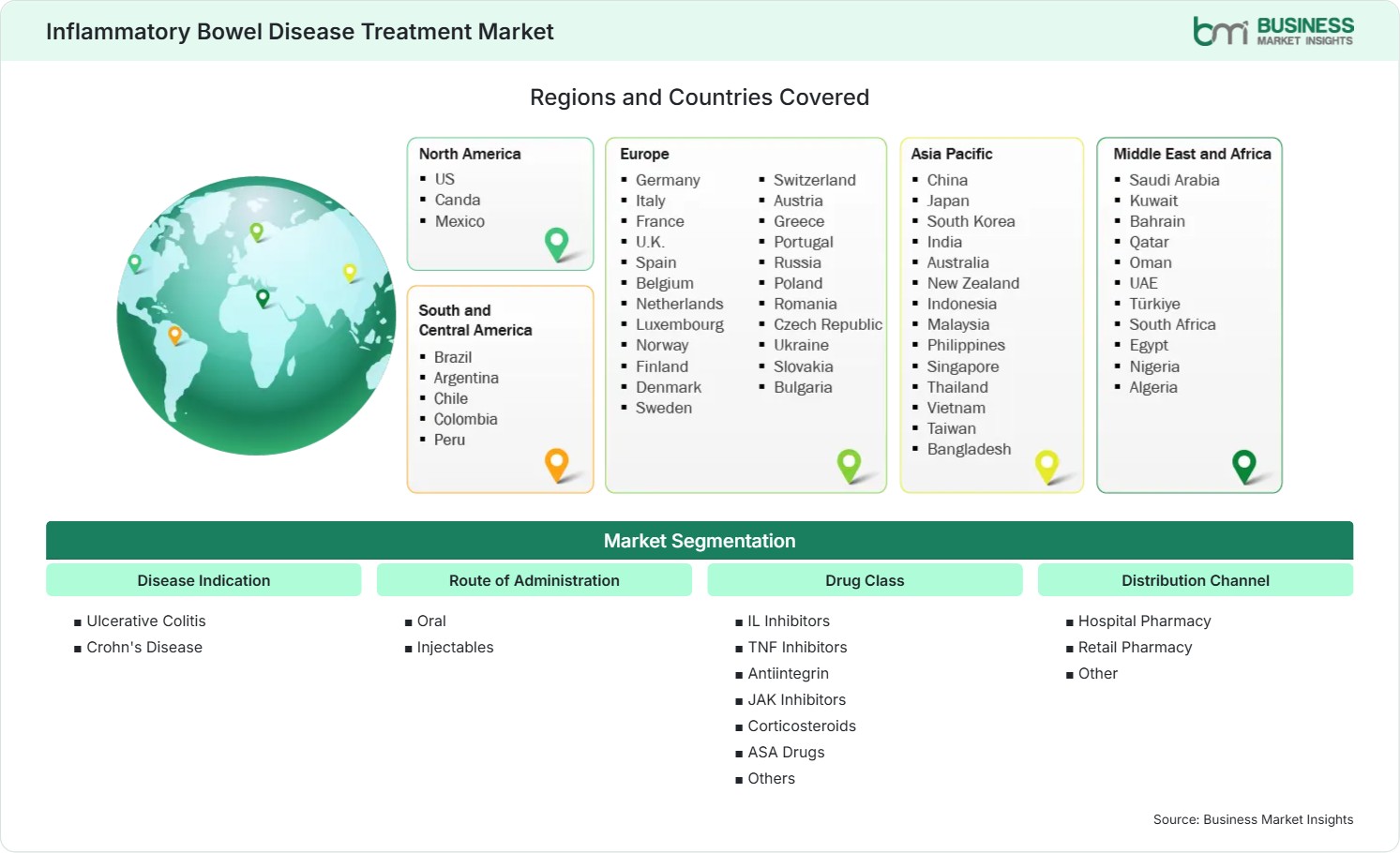
  • Disease Indication: Ulcerative Colitis, Crohn's Disease
  • Route of Administration: Oral, Injectables
  • Drug Class: IL Inhibitors, TNF Inhibitors, Antiintegrin, JAK Inhibitors, Corticosteroids, ASA Drugs, Others
  • Distribution Channel: Hospital Pharmacy, Retail Pharmacy, Other
US$ 31.65 Bn Market size in 2025
US$ 45.37 Bn Market Size by 2033
4.60% CAGR, 2026 - 2033
2026-2033 Forecast Period

AI Overview

Inflammatory Bowel Disease Treatment Market Summary

  • North America Region: North America holds a inflammatory bowel disease treatment market share of 38%–42% in 2025 and is projected to grow at a CAGR of 4.0%–4.5% during 2026–2033. Growth is supported by high disease prevalence, advanced healthcare infrastructure, biologic therapy adoption, favorable reimbursement frameworks, increasing diagnosis rates, research investments, patient awareness initiatives, specialist availability, treatment accessibility, and ongoing pharmaceutical innovation. The U.S. remains the dominant market owing to significant biologic usage and strong healthcare spending, advancing at a CAGR of 4.1%–4.6%.
  • Fastest Growing Region: Asia Pacific accounts for 23%–27% share in 2025 and is expected to register a CAGR of 5.6%–6.2% through 2033. Growth is fueled by rising disease awareness, improving healthcare infrastructure, growing access to advanced therapies, increasing healthcare expenditure, expanding insurance coverage, urbanization, lifestyle changes, improving diagnosis capabilities, pharmaceutical market development, and government healthcare initiatives.
  • Leading Segment: Crohn's Disease represents 54%–58% share in 2025 and is anticipated to grow at a CAGR of 4.7%–5.2% through 2033. Demand is supported by increasing prevalence, long-term treatment requirements, growing biologic adoption, disease management programs, specialist consultations, advanced therapeutic options, monitoring requirements, treatment adherence initiatives, and ongoing clinical research.
  • High Growth Segment: TNF Inhibitors capture 26%–30% share in 2025 and are forecast to expand at a CAGR of 5.3%–5.9% during 2026–2033. Expansion is driven by proven clinical efficacy, widespread physician adoption, growing biologic utilization, favorable treatment outcomes, extensive clinical evidence, chronic disease management, increasing patient access, and broader therapeutic acceptance.
  • Key Market Opportunity: Growing development of targeted biologics, next-generation immunotherapies, and personalized treatment approaches is creating opportunities for improved patient outcomes, enhanced disease management, and long-term therapeutic innovation.
  • Major Market Players: AbbVie Inc., Takeda Pharmaceutical Company Limited, Pfizer Inc., Biogen Inc., Novartis AG, Eli Lilly and Company, UCB S.A., CELLTRION INC., Merck & Co., Inc., and Johnson & Johnson Services, Inc.
Strategic Insights

Inflammatory Bowel Disease Treatment Market: Strategic Insights

Inflammatory Bowel Disease Treatment Market Strategic Framework
FREE PDF
Request your free sample
Request free sample
Stakeholder View

Key Takeaways

  • The treatment landscape is shifting toward advanced biologics, biosimilars, and targeted therapies that offer improved disease management, long-term remission outcomes, and enhanced patient quality of life.
  • TNF inhibitors continue to represent a major revenue-generating segment owing to strong clinical efficacy, broad physician acceptance, and established treatment guidelines across inflammatory bowel disease indications.
  • Personalized medicine, biomarker-driven treatment selection, and precision therapeutics are emerging as important strategies for improving patient outcomes and treatment adherence.
  • Asia Pacific presents substantial growth opportunities due to improving healthcare access, rising awareness, increasing diagnosis rates, and growing adoption of advanced biologic therapies.
  • Pharmaceutical companies are actively investing in pipeline development, immunology research, and next-generation targeted therapies to strengthen their competitive positioning.
  • Expanding reimbursement support and increasing availability of biosimilars are expected to improve treatment accessibility across multiple healthcare markets.
Geographic Outlook

Inflammatory Bowel Disease Treatment Market Regional Highlights

North America Inflammatory Bowel Disease Treatment Market

North America accounted for 38%–42% of global revenue in 2025 and is expected to grow at a CAGR of 4.0%–4.5% through 2033. The region benefits from a high prevalence of inflammatory bowel diseases, widespread biologic utilization, advanced healthcare systems, and strong pharmaceutical innovation. The Inflammatory Bowel Disease Treatment Market share remains the largest globally due to favorable reimbursement structures and extensive adoption of advanced therapies. Increasing use of personalized treatment approaches and biologics continues supporting market growth.

  • Strong healthcare spending supports broader access to advanced biologic and targeted therapies, strengthening treatment availability across the region.
  • High disease awareness encourages earlier diagnosis, timely treatment initiation, and continuous disease monitoring among patients.
  • Pharmaceutical innovation continues supporting the introduction of advanced therapeutic options, including biologics and targeted treatments for diverse patient needs.
  • Growing biosimilar adoption improves treatment affordability, expands patient access, and supports broader use of established biologic therapies.
  • Specialized gastrointestinal care centers contribute to improved disease management through multidisciplinary treatment, regular monitoring, and personalized care approaches.

US Inflammatory Bowel Disease Treatment Market

The United States represents 82%–86% of North American demand and is projected to grow at a CAGR of 4.1%–4.6% through 2033. Growth is driven by high diagnosis rates, strong biologic adoption, and ongoing development of innovative treatment approaches. Continued investments in immunology research further support inflammatory bowel disease treatment market expansion.

  • Healthcare providers increasingly utilize advanced biologics for moderate-to-severe disease management, supporting demand for effective treatment options.
  • Research investments continue supporting the development of targeted therapies with improved efficacy and more personalized treatment approaches.
  • Growing disease awareness improves treatment adherence, encourages regular follow-up, and strengthens long-term disease monitoring.
  • Biosimilar penetration is gradually expanding treatment accessibility by improving affordability and supporting broader adoption of biologic therapies.

Europe Inflammatory Bowel Disease Treatment Market

Europe held 27%–31% of global revenue in 2025 and is expected to register a CAGR of 4.2%–4.8% through 2033. Rising patient awareness, favorable healthcare coverage, and increasing adoption of biologics continue supporting market growth. Germany remains the leading market, while Spain represents a strong growth market with a CAGR of 5.0%–5.6%. Expansion of biosimilars and targeted treatment options continues enhancing patient access across the region.

  • Government-supported healthcare systems facilitate broader access to advanced inflammatory bowel disease treatments and specialized care.
  • Growing adoption of biosimilars is contributing to market expansion by improving affordability and treatment accessibility.
  • Clinical research activities continue advancing treatment innovation and supporting the development of targeted therapeutic options.
  • Healthcare providers increasingly emphasize personalized disease management approaches based on patient needs and treatment response.
  • Treatment uptake remains strong among newly diagnosed and chronic disease patients, supported by improved awareness and ongoing disease monitoring.

Asia Pacific Inflammatory Bowel Disease Treatment Market

Asia Pacific accounted for 23%–27% of global revenue in 2025 and is expected to record the fastest CAGR of 5.6%–6.2% through 2033. Increasing disease prevalence, healthcare modernization, and rising access to advanced therapies are driving regional growth. China and Japan remain key markets, while India is projected to register a CAGR of 6.3%–6.9%. Growing awareness and improving diagnostic capabilities are supporting market penetration.

  • Increasing healthcare expenditure is improving patient access to advanced inflammatory bowel disease treatments and specialized healthcare services.
  • Growing disease awareness supports earlier diagnosis, timely intervention, and improved long-term treatment management.
  • Expanding healthcare infrastructure strengthens market potential by improving access to specialists, diagnostic services, and treatment facilities.
  • Rising adoption of biologics contributes to treatment advancement by providing targeted options for patients with moderate-to-severe disease.
  • Government healthcare initiatives support broader disease management efforts through improved treatment access, healthcare services, and patient support programs.

Rest of World Inflammatory Bowel Disease Treatment Market

Rest of World accounted for 8%–12% of global revenue in 2025 and is forecast to grow at a CAGR of 4.4%–5.0% through 2033. Market growth is supported by healthcare infrastructure improvements, expanding pharmaceutical access, and increasing awareness of chronic gastrointestinal disorders. Brazil and Saudi Arabia are among the key markets benefiting from healthcare modernization efforts.

  • Healthcare investments continue improving access to specialty treatments, advanced therapies, and comprehensive inflammatory bowel disease care.
  • Awareness campaigns are encouraging disease identification, earlier diagnosis, timely intervention, and treatment adoption among patients.
  • Pharmaceutical companies are increasing market penetration efforts by expanding therapy availability and strengthening patient access initiatives.
  • Growing specialist availability supports long-term disease management through improved diagnosis, treatment monitoring, and personalized care.
  • Treatment accessibility continues improving across emerging healthcare systems as infrastructure development and healthcare service coverage expand.
Global Market Geography
FREE PDF
Request your free sample
Request free sample
Segment Analysis

Inflammatory Bowel Disease Treatment Market Segmentation

Disease Indication

Crohn's Disease accounts for 54%–58% share in 2025 and is expected to grow at a CAGR of 4.7%–5.2% through 2033. The segment continues to dominate due to increasing disease prevalence, long-term treatment requirements, and growing adoption of biologic therapies. The Inflammatory Bowel Disease Treatment Market scope continues expanding as healthcare providers focus on personalized disease management and advanced therapeutic interventions.

  • Ulcerative Colitis: Supported by increasing diagnosis rates, growing awareness, expanding treatment availability, and rising adoption of biologics and targeted therapies.
  • Crohn's Disease: Leads market demand owing to chronic disease burden, complex treatment needs, extensive use of biologics, and continuous monitoring requirements.

Route of Administration

Injectables hold 58%–62% share in 2025 and are projected to grow at a CAGR of 5.1%–5.7% through 2033. The segment benefits from widespread utilization of biologics and advanced therapies that offer superior efficacy in moderate-to-severe disease management. Current Inflammatory Bowel Disease Treatment Market trends indicate growing physician preference for targeted injectable therapies.

  • Oral: Includes corticosteroids, JAK inhibitors, and aminosalicylates that provide convenient administration and support long-term maintenance therapy.
  • Injectables: Widely utilized for biologics and monoclonal antibody therapies delivering targeted treatment and improved disease control.

Drug Class

TNF Inhibitors represent 26%–30% share in 2025 and are expected to grow at a CAGR of 5.3%–5.9% through 2033. Extensive clinical evidence, established treatment protocols, and strong physician confidence continue supporting leadership within the segment.

  • IL Inhibitors: Gaining traction through targeted immune modulation capabilities and expanding clinical applications.
  • TNF Inhibitors: Remain a cornerstone of IBD treatment due to proven efficacy, broad adoption, and extensive long-term clinical experience.
  • Anti-integrin: Increasingly utilized for targeted gastrointestinal inflammation management with favorable safety profiles.
  • JAK Inhibitors: Supported by oral administration benefits and expanding adoption in patients requiring alternative treatment options.
  • Corticosteroids: Continue playing a role in short-term disease flare management and symptom control.
  • ASA Drugs: Commonly prescribed for mild-to-moderate disease management and maintenance therapy.
  • Others: Include emerging biologics, biosimilars, and novel immunomodulatory therapies.

Distribution Channel

Hospital Pharmacy accounts for 61%–65% share in 2025 and is projected to expand at a CAGR of 4.8%–5.4% through 2033. Growth is driven by administration of biologics, specialist treatment services, and increasing patient access to advanced therapies.

  • Hospital Pharmacy: Benefits from specialist supervision, biologic administration requirements, and coordinated disease management programs.
  • Retail Pharmacy & Other: Supported by maintenance therapy prescriptions, growing access to oral medications, and expanding pharmacy service networks.
Market Forces

Inflammatory Bowel Disease Treatment Market Dynamics

Key Market Drivers

Rising Prevalence of Inflammatory Bowel Diseases

The increasing incidence of Crohn's disease and ulcerative colitis across both developed and emerging economies continues driving demand for effective treatment solutions. Lifestyle changes, urbanization, dietary shifts, genetic factors, and environmental influences have contributed to growing patient populations. As diagnosis rates improve, healthcare systems are witnessing increased demand for long-term disease management strategies. Pharmaceutical companies are responding by expanding therapeutic portfolios and investing in innovative treatment development. The rising disease burden remains a major factor supporting market expansion globally.

Growing Adoption of Advanced Biologic Therapies

Biologic therapies have transformed the treatment landscape for inflammatory bowel diseases by providing targeted mechanisms of action and improved clinical outcomes. Healthcare providers increasingly prescribe biologics to achieve disease remission, reduce complications, and improve patient quality of life. Ongoing advancements in monoclonal antibodies and immune-modulating therapies continue expanding treatment options. Growing physician familiarity, favorable clinical evidence, and expanding reimbursement support are accelerating biologic adoption worldwide. These factors continue driving demand across the market.

Increasing Focus on Early Diagnosis and Disease Management

Healthcare providers are increasingly emphasizing early identification and proactive management of inflammatory bowel diseases to prevent disease progression and reduce complications. Diagnostic improvements, awareness campaigns, and specialist referral programs support earlier intervention. Timely treatment initiation improves patient outcomes and reduces hospitalization risks. As healthcare systems prioritize chronic disease management and preventive care strategies, demand for effective treatment options continues to increase, supporting overall market growth.

Key Market Opportunities

Rising Demand for Advanced Treatments in Emerging Markets

Healthcare access improvements, economic development, and rising awareness are creating significant opportunities across emerging healthcare markets. Increasing diagnosis rates and expanding healthcare infrastructure are driving demand for innovative IBD therapies. Inflammatory Bowel Disease Treatment Market Forecasts indicate developing regions will contribute an increasing share of future revenues as advanced biologic treatments become more accessible. Pharmaceutical companies continue investing in geographic expansion and market development strategies to capitalize on this opportunity.

Expansion of Biosimilar Therapies for IBD Management

The growing availability of biosimilars is improving affordability and expanding patient access to advanced biologic therapies. Healthcare providers and payers increasingly view biosimilars as cost-effective alternatives that maintain comparable efficacy and safety profiles. Broader adoption is expected to reduce treatment costs while increasing utilization rates. Manufacturers are actively developing and commercializing biosimilar products to strengthen market presence and address unmet treatment needs.

Growing Adoption of Patient-Centric Treatment Approaches

Healthcare systems are increasingly focusing on personalized treatment strategies designed around patient preferences, disease characteristics, and long-term management goals. Advances in precision medicine, digital health monitoring, and individualized care pathways are supporting this transition. Patient-centric approaches improve adherence, treatment satisfaction, and clinical outcomes. Pharmaceutical companies and healthcare providers continue developing solutions that align therapies more closely with patient needs, creating new opportunities for market growth.

Market Restraints and Challenges

High Cost of Biologic and Advanced Therapies

Factor: Biologic therapies and next-generation treatment options often involve substantial manufacturing, development, and distribution costs. Impact: High pricing can limit patient access, increase healthcare expenditure, and create reimbursement challenges across multiple markets. Budget constraints within healthcare systems may influence treatment availability and adoption rates. Cost concerns remain a key challenge despite the strong clinical benefits offered by advanced therapies.

Risk of Adverse Effects from Long-Term Treatments

Factor: Chronic inflammatory bowel disease management frequently requires long-term use of immunosuppressive agents, biologics, and corticosteroids. Impact: Extended treatment duration may increase the risk of infections, immune-related complications, and therapy-related adverse events. These concerns can affect patient adherence, physician prescribing decisions, and overall treatment strategies. Ongoing safety monitoring and careful patient management remain essential components of long-term IBD therapy.

Company Analysis

Competitive Landscape

The Inflammatory Bowel Disease Treatment Market analysis highlights strong competition among global pharmaceutical companies focused on biologics, biosimilars, immunology research, and next-generation targeted therapies.

Company Name

Overview

Products and Services Relevant to this Market

AbbVie Inc.

Leading biopharmaceutical company with extensive immunology and gastroenterology portfolio.

Biologic therapies, immunology treatments, and inflammatory bowel disease management solutions.

Takeda Pharmaceutical Company Limited

Global pharmaceutical company with significant presence in gastroenterology.

IBD therapies, biologics, targeted treatments, and gastrointestinal disease management products.

Pfizer Inc.

Research-driven pharmaceutical company focused on innovative therapeutics.

JAK inhibitors, immunology therapies, and advanced treatment solutions.

Biogen Inc.

Biotechnology company specializing in immune-mediated disease treatments.

Biologic therapies, immunology products, and specialty pharmaceutical solutions.

Novartis AG

Global healthcare company with diversified pharmaceutical portfolio.

Biologics, immunomodulators, and advanced immune-mediated disease therapies.

Eli Lilly and Company

Pharmaceutical innovator focused on immune and inflammatory disorders.

Targeted therapies, biologics, and advanced immunology treatments.

UCB S.A.

Biopharmaceutical company specializing in severe immune-related diseases.

Biologic therapies, innovative immunology medicines, and specialty care products.

CELLTRION INC.

Global biotechnology company recognized for biosimilar development.

Biosimilars, biologic therapies, and immune-mediated disease treatment solutions.

Merck & Co., Inc.

Pharmaceutical company with extensive research and development capabilities.

Immunology therapies, biologic medicines, and specialty treatment solutions.

Johnson & Johnson Services, Inc.

Healthcare company with strong presence in immunology and gastroenterology.

Biologic therapies, inflammatory disease treatments, and patient support programs.

Trust & Transparency

Research Methodology

The market analysis combines proprietary research with secondary data from government agencies, company disclosures, regulatory filings, industry databases and expert interviews. Market estimates are validated through data triangulation, cross-market benchmarking and analyst review.

View Full Research Methodology

Questions Answered

Frequently Asked Questions

What does this Inflammatory Bowel Disease Treatment Market Report evaluate?

The market report evaluates market dynamics, disease trends, treatment adoption patterns, competitive positioning, regional opportunities, growth drivers, and industry challenges through 2033.

Which region is expected to experience the fastest growth?

Asia Pacific is expected to register the highest growth due to improving healthcare infrastructure, increasing awareness, rising diagnosis rates, and expanding access to advanced therapies.

Why are biologics important in IBD treatment?

Biologics provide targeted therapeutic action, improved clinical outcomes, disease remission benefits, and reduced complications for patients with moderate-to-severe inflammatory bowel diseases.

Which disease indication segment leads the market?

Crohn's Disease leads the market due to its high treatment burden, long-term management requirements, and significant utilization of advanced biologic therapies.

What is driving growth in the inflammatory bowel disease treatment market?

Growth is driven by increasing disease prevalence, greater biologic therapy adoption, rising diagnosis rates, expanding healthcare access, and continuous advancements in targeted treatment technologies.

Access the Full Inflammatory Bowel Disease Treatment Market Report

Get segment-level forecasts, regional estimates, competitive benchmarking, company profiles and downloadable Excel datasets.

Access the full Inflammatory Bowel Disease Treatment Market Report
350 pages PDF & Excel | 2026-08-24