
Idiopathic Inflammatory Myopathy Treatment Market Outlook: Size, Share, Trends, Growth Analysis, Competitive Landscape & Forecast, 2026-2033

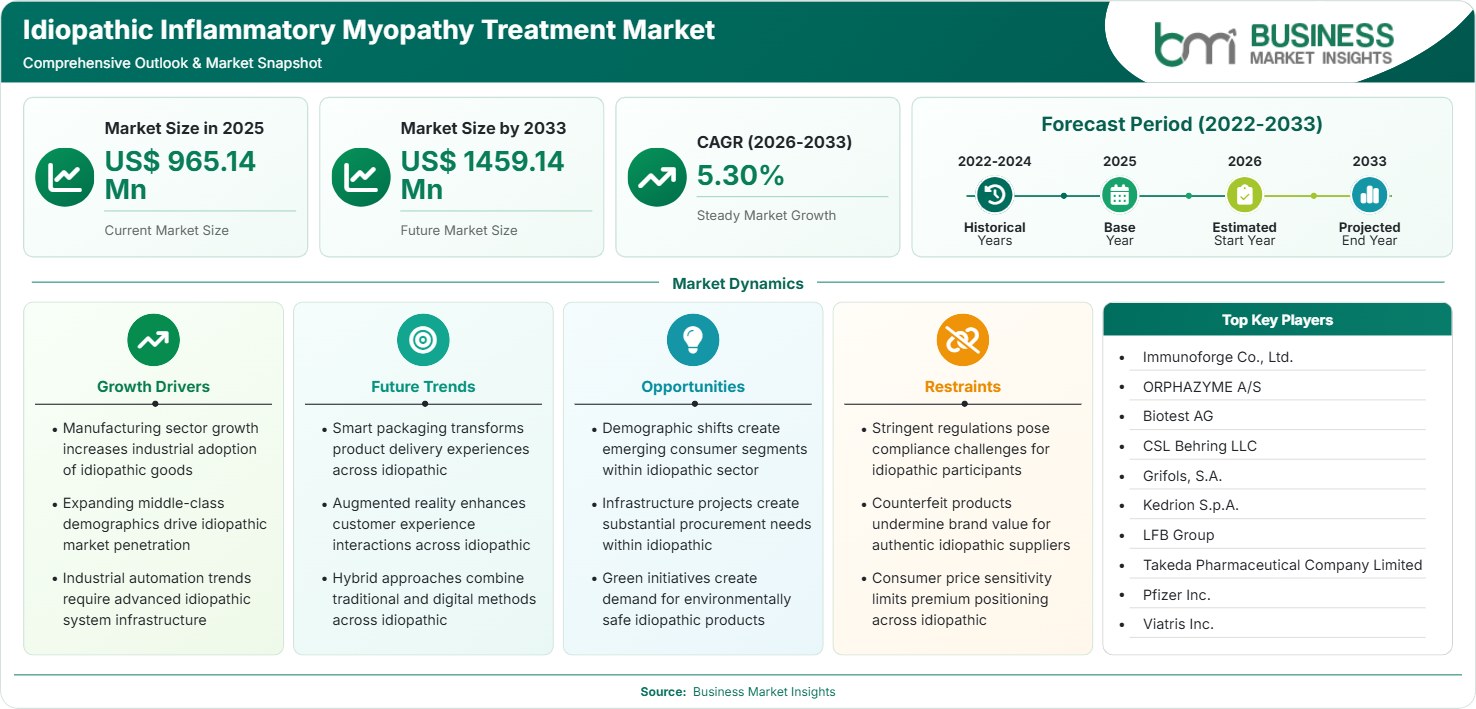
The Idiopathic Inflammatory Myopathy Treatment Market size was valued at US$ 965.14 Million in 2025 and is projected to reach US$ 1459.14 Million by 2033, growing at a CAGR of 5.30% during 2026–2033. Rising diagnosis rates, expanding biologics research, increasing autoimmune disease awareness, and supportive orphan drug incentives are accelerating therapeutic innovation while creating opportunities for precision medicine, digital patient monitoring, and combination immunotherapy development.

Report Coverage
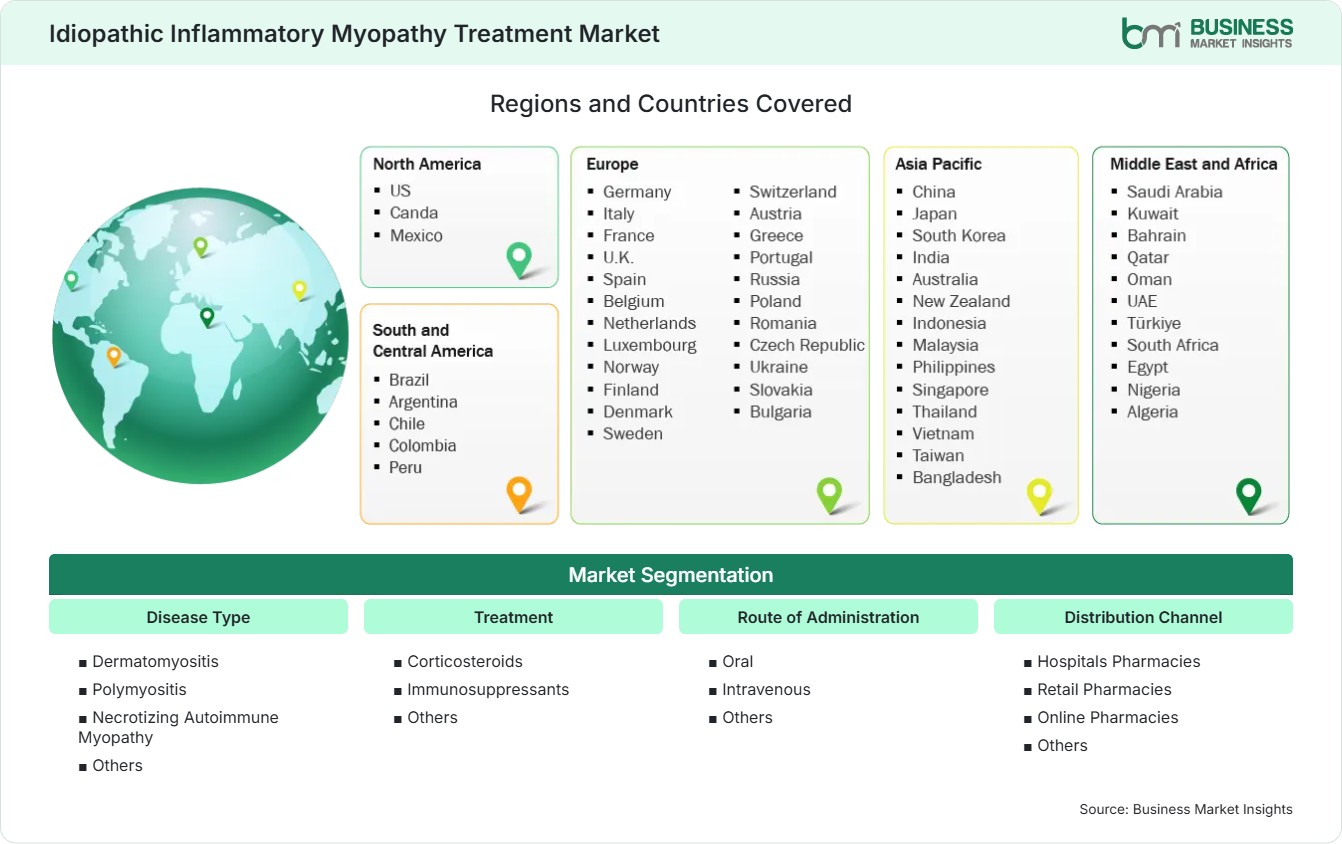
  • Disease Type: Dermatomyositis, Polymyositis, Necrotizing Autoimmune Myopathy, Others
  • Treatment: Corticosteroids, Immunosuppressants, Others
  • Route of Administration: Oral, Intravenous, Others
  • Distribution Channel: Hospitals Pharmacies, Retail Pharmacies, Online Pharmacies, Others
US$ 965.14 Mn Market size in 2025
US$ 1459.14 Mn Market Size by 2033
5.30% CAGR, 2026 - 2033
2026-2033 Forecast Period

AI Overview

Idiopathic Inflammatory Myopathy Treatment Market Summary

  • North America Region: North America holds a market share of 38% – 41% in 2025, growing with a CAGR of 4.9% – 5.3% during 2026–2033, supported by advanced autoimmune disease diagnostics, favorable reimbursement, specialist treatment centers, biologics innovation, expanding clinical trials, precision medicine adoption, patient advocacy initiatives, and increasing orphan drug development investments worldwide. The U.S. benefits from advanced rheumatology infrastructure, strong biologics adoption, extensive clinical research, and is projected to expand at a CAGR of 5.0% – 5.4% through 2033.
  • Fastest Growing Region: Asia Pacific accounts for 24% – 27% of the market in 2025 and is anticipated to expand at a CAGR of 6.3% – 6.8% through 2033, driven by healthcare modernization, improving autoimmune disease diagnosis, wider biologic accessibility, government investments, expanding specialty hospitals, rising clinical research participation, and increasing patient awareness initiatives.
  • Leading Segment: Corticosteroids command a market share of 42% – 45% in 2025 while advancing at a CAGR of 4.6% – 5.0% during 2026–2033 because first-line treatment recommendations, rapid inflammation control, broad physician familiarity, established reimbursement pathways, cost effectiveness, combination therapy compatibility, and extensive clinical evidence continue supporting routine prescribing practices.
  • High Growth Segment: Intravenous administration represents 31% – 34% of revenue in 2025 and is forecast to register a CAGR of 6.5% – 7.0% through 2033, supported by increasing immunoglobulin utilization, biologic therapies, hospital infusion services, severe disease management, personalized dosing strategies, expanding specialty clinics, and stronger reimbursement coverage.
  • Key Market Opportunity: Growing development of targeted biologics, complement inhibitors, precision diagnostics, biomarker-guided treatment pathways, and orphan drug incentives enables manufacturers to improve therapeutic outcomes, expand premium treatment adoption, strengthen specialist collaborations, and accelerate commercialization across underserved autoimmune patient populations.
  • Major Market Players: Immunoforge Co., Ltd., ORPHAZYME A/S, Biotest AG, CSL Behring LLC, Grifols, S.A., Kedrion S.p.A., LFB Group, Takeda Pharmaceutical Company Limited, Pfizer Inc., Viatris Inc.
Strategic Insights

Idiopathic Inflammatory Myopathy Treatment Market: Strategic Insights

Idiopathic Inflammatory Myopathy Treatment Market Strategic Framework
FREE PDF
Request your free sample
Request free sample
Stakeholder View

Key Takeaways

  • The treatment ecosystem increasingly depends on integrated value chains connecting diagnostic laboratories, specialty pharmaceutical manufacturers, biologics developers, plasma collection networks, hospital infusion centers, and specialist physicians, enabling more coordinated management of rare inflammatory muscle disorders.
  • Significant commercial opportunities are emerging in intravenous biologics, immunoglobulin therapies, and targeted immunomodulators, particularly for patients demonstrating inadequate responses to conventional corticosteroid-based treatment approaches and requiring personalized long-term disease management strategies.
  • Innovation is shifting toward biomarker-guided therapies, artificial intelligence-supported diagnostic interpretation, precision immunology, and next-generation biologics designed to improve efficacy while minimizing long-term corticosteroid exposure and treatment-related adverse events.
  • Asia Pacific presents one of the strongest long-term investment opportunities as healthcare infrastructure expansion, specialist workforce development, orphan disease awareness programs, and broader reimbursement reforms collectively improve access to advanced autoimmune disease treatments across major economies.
  • Strategic acquisitions, licensing agreements, plasma-derived product expansion, and collaborative research partnerships remain prominent investment themes as pharmaceutical companies strengthen rare disease portfolios and diversify immunology pipelines to enhance competitive positioning in specialized therapeutic markets.
  • Future competitive differentiation will increasingly depend on integrated patient support services, companion diagnostics, digital disease monitoring, real-world evidence generation, and personalized treatment algorithms capable of improving long-term clinical outcomes while supporting value-based healthcare reimbursement models.
Geographic Outlook

Idiopathic Inflammatory Myopathy Treatment Market Regional Highlights

North America Idiopathic Inflammatory Myopathy Treatment Market

North America accounted for 38% – 41% of the Idiopathic Inflammatory Myopathy Treatment Market share in 2025 and is projected to expand at a CAGR of 4.9% – 5.3% through 2033. Regional leadership is supported by sophisticated neuromuscular disease centers, strong biologics adoption, favorable reimbursement, and extensive rare disease clinical research. Collaboration among pharmaceutical companies, academic institutions, and patient advocacy organizations continues improving diagnosis rates while increasing access to intravenous immunoglobulin therapies, corticosteroids, and emerging immunomodulatory medicines for complex autoimmune myopathies.

  • The United States and Canada continue strengthening rare disease treatment ecosystems through increased funding for autoimmune disease registries, wider availability of genetic testing, specialist referral networks, and improved reimbursement policies supporting advanced biologic and plasma-derived therapies.
  • Pharmaceutical innovation remains concentrated across leading biotechnology clusters, enabling accelerated clinical trials evaluating targeted immunotherapies, complement inhibitors, and precision medicine approaches for patients experiencing corticosteroid-resistant inflammatory muscle diseases.
  • Strong plasma collection infrastructure benefits regional production of intravenous immunoglobulin therapies, reducing supply uncertainties while supporting expanding treatment demand across tertiary hospitals and specialized infusion centers treating severe autoimmune myopathies.
  • Digital health integration, including remote symptom monitoring, tele-rheumatology consultations, and artificial intelligence-supported clinical decision systems, improves long-term patient management while enhancing treatment adherence and healthcare resource utilization.
  • Growing collaboration between neurologists, rheumatologists, pulmonologists, and rehabilitation specialists encourages multidisciplinary treatment pathways that improve functional recovery, reduce disease progression, and optimize personalized therapeutic interventions across diverse patient populations.

US Idiopathic Inflammatory Myopathy Treatment Market

The United States represented 82% – 85% of the North American Idiopathic Inflammatory Myopathy Treatment Market in 2025 and is anticipated to record a CAGR of 5.0% – 5.4% through 2033. Strong pharmaceutical innovation, comprehensive insurance coverage for specialty therapies, and advanced diagnostic capabilities support continued expansion. Academic medical centers remain central to translational research, while expanding orphan drug development programs and biologics commercialization strengthen access to innovative therapies for patients with rare inflammatory muscle disorders.

  • Federal support for rare disease research through national biomedical institutions accelerates understanding of autoimmune disease mechanisms while encouraging development of precision therapeutics and biomarker-guided clinical strategies.
  • Expanded specialty infusion networks improve patient access to intravenous immunoglobulin therapies, monoclonal antibodies, and emerging biologic medicines, particularly for severe or treatment-resistant idiopathic inflammatory myopathy cases requiring multidisciplinary care.
  • Robust participation in multinational clinical trials positions the country as an important destination for evaluating novel immunomodulators, gene-targeted therapies, and personalized medicine approaches for autoimmune muscle diseases.
  • Increasing adoption of electronic health records integrated with rare disease registries enables earlier diagnosis, real-world evidence generation, and improved long-term treatment optimization across specialist healthcare providers.

Europe Idiopathic Inflammatory Myopathy Treatment Market

Europe accounted for 28% – 31% of the Idiopathic Inflammatory Myopathy Treatment Market in 2025 and is forecast to register a CAGR of 5.1% – 5.6% through 2033. Comprehensive healthcare systems, expanding orphan medicine incentives, and coordinated rare disease networks continue supporting market expansion. Germany remains the leading regional market due to advanced immunology research, while Spain demonstrates the fastest growth with a CAGR of 5.8% – 6.2%, supported by increasing biologics adoption and healthcare modernization initiatives.

  • European Reference Networks strengthen collaboration among specialist hospitals, enabling faster diagnosis, standardized treatment protocols, and broader patient participation in multinational autoimmune disease clinical research programs.
  • Germany leads regional pharmaceutical manufacturing capabilities, supported by strong biologics production, advanced plasma fractionation infrastructure, and substantial investment in translational immunology research targeting inflammatory muscle disorders.
  • Spain experiences accelerated market expansion through improved reimbursement for specialty biologics, growing hospital infrastructure, and increasing physician awareness regarding early diagnosis and multidisciplinary autoimmune disease management.
  • Regulatory support for orphan medicinal products continues encouraging pharmaceutical companies to invest in innovative therapies targeting rare inflammatory myopathies with high unmet clinical needs across European healthcare systems.
  • Growing collaboration between academic institutions and biotechnology companies accelerates biomarker discovery, personalized medicine development, and commercialization of advanced immunomodulatory treatment options throughout the region.

Asia Pacific Idiopathic Inflammatory Myopathy Treatment Market

Asia Pacific represented 24% – 27% of global Idiopathic Inflammatory Myopathy Treatment Market revenue in 2025 and is expected to achieve the fastest regional expansion with a CAGR of 6.3% – 6.8% during 2026–2033. Rising healthcare expenditure, improving autoimmune disease diagnosis, expanding specialist hospitals, and wider biologic availability continue strengthening regional demand. Japan leads the regional market owing to advanced healthcare infrastructure, while India records the highest growth at a CAGR of 6.9% – 7.3%, driven by expanding healthcare access and rare disease awareness.

  • Japan maintains leadership through established neurology and rheumatology treatment centers, high diagnostic accuracy, and strong reimbursement mechanisms supporting biologics and intravenous immunoglobulin therapies for autoimmune muscle disorders.
  • India demonstrates rapid market development through expanding tertiary healthcare facilities, government initiatives supporting rare disease diagnosis, increasing specialist training, and improving access to advanced immunomodulatory treatment options.
  • China continues investing heavily in biotechnology innovation, domestic biologics manufacturing, and clinical research capabilities, strengthening regional availability of targeted therapies and reducing dependence on imported specialty medicines.
  • Australia and South Korea are expanding clinical trial participation, precision diagnostics, and digital healthcare platforms that facilitate earlier disease recognition, specialist consultations, and optimized long-term patient management strategies.
  • Increasing public awareness campaigns, patient advocacy organizations, and physician education initiatives encourage earlier referrals, improving treatment outcomes while supporting broader adoption of innovative autoimmune disease therapies.

Rest of World Idiopathic Inflammatory Myopathy Treatment Market

The Rest of World region accounted for 7% – 9% of total Idiopathic Inflammatory Myopathy Treatment Market revenue in 2025 and is projected to expand at a CAGR of 5.5% – 5.9% through 2033. South & Central America continue improving access to specialist autoimmune care through healthcare modernization initiatives.

Meanwhile, the Middle East & Africa benefit from expanding tertiary hospitals, increasing biologics availability, and greater investment in rare disease treatment programs. Brazil remains the regional leader, while Saudi Arabia records the strongest growth with a CAGR of 6.0% – 6.4% supported by healthcare transformation and specialty pharmaceutical investments.

  • Brazil strengthens regional leadership through expanding immunology treatment centers, improving biologics reimbursement, and increasing collaboration with multinational pharmaceutical companies developing therapies for autoimmune disorders.
  • Saudi Arabia continues investing in advanced hospital infrastructure, specialist physician recruitment, and national healthcare transformation programs that improve diagnosis and treatment accessibility for rare inflammatory diseases.
  • The United Arab Emirates expands adoption of precision medicine technologies, digital health systems, and international research collaborations supporting improved clinical outcomes for autoimmune muscle disease patients.
  • South Africa gradually enhances specialist referral pathways, diagnostic laboratory capabilities, and public-private healthcare partnerships, improving access to advanced therapies despite ongoing affordability and infrastructure challenges.
  • Growing regional partnerships with international biotechnology companies encourage technology transfer, physician education, and improved availability of innovative immunomodulatory medicines, supporting sustainable long-term market expansion across developing healthcare systems.
Global Market Geography
FREE PDF
Request your free sample
Request free sample
Segment Analysis

Idiopathic Inflammatory Myopathy Treatment Market Segmentation

Disease Type

The Disease Type segment accounted for 33% – 36% of the market in 2025 and is projected to expand at a CAGR of 5.2% – 5.6% through 2033. The Idiopathic Inflammatory Myopathy Treatment Market scope continues broadening as improved diagnostic tools distinguish disease subtypes more accurately, enabling personalized treatment strategies. Increasing physician awareness, biomarker identification, and multidisciplinary care are strengthening therapeutic outcomes while encouraging pharmaceutical companies to develop targeted immunomodulatory medicines.

  • Dermatomyositis: Represents the largest diagnosed subgroup due to characteristic skin manifestations enabling earlier diagnosis. Increasing biologics research and immunoglobulin utilization continue improving long-term disease management and patient outcomes.
  • Polymyositis: Growing specialist awareness and improved diagnostic criteria support wider adoption of immunosuppressive therapies, particularly among adult patients requiring sustained immune modulation and multidisciplinary clinical management.
  • Necrotizing Autoimmune Myopathy: Rising recognition of severe muscle weakness associated with autoimmune mechanisms is encouraging earlier intervention using intravenous immunoglobulins and advanced immunomodulatory therapies across specialist treatment centers.

Treatment

The Treatment segment represented 41% – 44% of total revenue in 2025 and is expected to register a CAGR of 5.0% – 5.4% through 2033. Expanding availability of targeted therapies complements established corticosteroid regimens while reducing long-term treatment complications. Idiopathic Inflammatory Myopathy Treatment Market trends increasingly emphasize combination therapies, individualized dosing, and steroid-sparing approaches that improve disease control and quality of life.

  • Corticosteroids: Remain the preferred first-line therapy because of rapid anti-inflammatory activity, established clinical evidence, broad physician familiarity, and compatibility with combination treatment strategies for newly diagnosed patients.
  • Immunosuppressants: Increasingly prescribed to reduce corticosteroid dependence while improving long-term disease control, particularly among patients experiencing relapsing disease progression or steroid-related adverse effects requiring alternative therapeutic approaches.

Route of Administration

The Route of Administration segment captured 29% – 32% of the overall Idiopathic Inflammatory Myopathy Treatment Market in 2025 and is anticipated to grow at a CAGR of 5.7% – 6.2% during the forecast period. Demand continues shifting toward flexible treatment delivery models combining oral medicines with infusion-based biologics. Expansion of hospital infusion centers and specialty clinics supports greater adoption of intravenous therapies for severe autoimmune muscle disorders.

  • Oral: Continues dominating routine disease management through corticosteroids and immunosuppressants because of convenience, established prescribing practices, favorable patient compliance, and broad availability across healthcare systems.
  • Intravenous: Experiences rapid expansion owing to increasing utilization of immunoglobulin therapies and biologics for refractory disease, supported by specialized infusion facilities and improved reimbursement across developed healthcare markets.

Distribution Channel

The Distribution Channel segment accounted for 34% – 37% of revenue in 2025 and is forecast to expand at a CAGR of 5.4% – 5.8% through 2033. Hospital-centered dispensing continues dominating complex autoimmune therapy distribution because specialist supervision remains essential. Expanding retail pharmacy services and regulated online pharmaceutical platforms are improving patient convenience while strengthening continuity of long-term treatment.

  • Hospitals Pharmacies: Continue leading medicine distribution through specialist prescribing, biologic administration, multidisciplinary monitoring, and access to advanced immunomodulatory therapies requiring controlled clinical supervision.
  • Retail Pharmacies: Benefit from increasing long-term maintenance therapy prescriptions, improving patient accessibility and supporting consistent medication adherence through expanding chronic disease management programs.
  • Online Pharmacies: Gain momentum through secure prescription fulfillment, digital healthcare integration, home delivery services, and expanding patient preference for convenient access to maintenance medications under regulatory oversight.
Market Forces

Idiopathic Inflammatory Myopathy Treatment Market Dynamics

Key Market Drivers

Expanding Early Diagnosis and Rare Disease Awareness

Improved recognition of inflammatory muscle disorders is significantly strengthening the Idiopathic Inflammatory Myopathy Treatment Market growth by increasing the number of patients receiving timely therapeutic intervention. International bodies like the WHO are still advocating early detection of such rare diseases through improved health-care systems and training for medical specialists. Availability of techniques like magnetic resonance imaging, muscle biopsy assessment, antibody analysis, and multidisciplinary referrals allows doctors to detect the disease earlier. Early detection will minimize muscle destruction and increase the need for steroids, immunosuppressive agents, intravenous immunoglobulins, and novel biologics. Increased physician knowledge is an additional factor.

Growing Adoption of Biologics and Plasma-Derived Therapies

Increasing utilization of intravenous immunoglobulin therapies and targeted biologics is transforming therapeutic standards for patients with treatment-resistant inflammatory myopathies. New breakthroughs in plasma fractionation techniques, increased production capabilities, and positive clinical results keep motivating specialists to use cutting-edge immunotherapy approaches. Approvals from the regulatory authorities concerning the development of novel biological drugs give more options for treatment aside from traditional steroids. The pharmaceutical companies continue investigating complement inhibitors, monoclonal antibodies, and precise immunomodulators aimed at increasing effectiveness while decreasing risks.

Increasing Investment in Orphan Drug Development

Government incentives supporting orphan drug research are encouraging pharmaceutical manufacturers to prioritize therapies for rare autoimmune diseases. Market exclusivity, fast track review and incentives offered by regulatory authorities in North America, Europe and Asia offer a favorable business environment for lowering development risks. More collaboration between biotech companies, universities and specialty hospitals is helping advance research for novel immunotherapeutic and precision medicine solutions. More investment in research for identifying biomarkers, companion diagnostics and personalized treatment options will lead to better patient outcomes and more commercially viable rare disease medicines.

Key Market Opportunities

Expansion of Precision Medicine and Biomarker-Based Therapies

The emergence of precision immunology presents substantial Idiopathic Inflammatory Myopathy Treatment Market Forecasts for pharmaceutical companies investing in targeted therapies. The discovery of disease-specific biomarkers allows for a better classification of autoimmune myopathies by enabling the selection of personalized therapies. The development of companion diagnostics in tandem with biological drugs allows for an increase in treatment efficacy and the prevention of excessive drug administration. Greater investments in genomics, artificial intelligence diagnostics, and personalized medicine provide profitable business options. In the future, payment for medical care will be based on tangible health benefits.

Healthcare Expansion Across Emerging Economies

Rapid healthcare modernization throughout Asia Pacific, Latin America, and the Middle East creates favorable conditions for expanding access to advanced autoimmune disease therapies. Incentives by the government in terms of investments in specialist hospitals, rare diseases and reimbursement policies help to enhance the use of biologics and immunomodulation drugs. The rise in medical training, public knowledge and availability of diagnostic laboratories adds more value in making the therapy available. The global pharma giants are establishing robust manufacturing and supply chains in the region to achieve sustainable growth.

Digital Patient Monitoring and Integrated Care Models

Growing adoption of digital health technologies creates opportunities for long-term disease management beyond conventional pharmaceutical treatment. Through remote symptom tracking, use of wearables, telemedicine, and artificial intelligence (AI) supported treatment optimization, doctors can track disease progression more easily. Digital health integrated with hospital IT systems can improve medication compliance, rehabilitation, and patient engagement. Health care organizations are valuing treatment ecosystems that incorporate specialty drugs together with digital services, thereby providing unique business advantages for drug companies and health tech companies.

Market Restraints and Challenges

High Treatment Costs and Limited Reimbursement

Factor: Advanced biologics, intravenous immunoglobulin therapies, and long-term specialist care substantially increase overall treatment expenditure.

Impact: Elevated healthcare costs restrict access across lower-income healthcare systems and create reimbursement challenges even in developed markets. Budget constraints frequently delay adoption of innovative therapies despite demonstrated clinical benefits. Patients often require prolonged treatment and multidisciplinary monitoring, increasing cumulative medical expenses. Limited reimbursement policies can reduce treatment adherence and slow commercialization of premium therapies. Pharmaceutical manufacturers must therefore demonstrate stronger health-economic evidence while working with healthcare providers and payers to improve affordability and long-term patient access.

Complex Diagnosis and Limited Patient Population

Factor: Idiopathic inflammatory myopathies remain rare disorders with heterogeneous clinical presentations, frequently delaying accurate diagnosis.

Impact: Diagnostic complexity reduces timely treatment initiation and limits patient enrollment for clinical research. Small patient populations increase development costs while extending timelines for clinical validation of novel therapies. Variability in disease manifestations further complicates standardized treatment pathways and regulatory evaluation. Manufacturers must invest heavily in physician education, biomarker discovery, and international patient registries to improve diagnosis rates, strengthen evidence generation, and accelerate development of innovative therapeutic solutions for these uncommon autoimmune diseases.

Company Analysis

Competitive Landscape

The competitive environment remains moderately consolidated, with global plasma-derived therapy manufacturers, specialty immunology companies, and multinational pharmaceutical organizations investing in biologics, immunoglobulins, and rare disease portfolios. The Idiopathic Inflammatory Myopathy Treatment Market analysis indicates that competition is increasingly centered on expanding plasma collection capacity, orphan drug development, precision immunology research, and strategic collaborations with academic institutions and specialist healthcare centers.

Company Name

Overview

Products and Services Relevant to this Market

Immunoforge Co., Ltd.

Clinical-stage biotechnology company focused on immune-mediated and inflammatory disorders through innovative therapeutic development and translational research.

Novel immunomodulatory candidates, autoimmune disease research programs, rare disease drug development, and precision immunology technologies.

ORPHAZYME A/S

Rare disease biotechnology company recognized for research targeting protein homeostasis and severe orphan indications.

Rare disease therapeutic research, clinical development programs, and innovative treatment platforms for underserved disorders.

Biotest AG

Global biopharmaceutical company specializing in plasma protein therapies and immunology-focused products for critical healthcare needs.

Human immunoglobulins, plasma-derived biologics, specialty immunology products, and hospital therapeutics.

CSL Behring LLC

Leading global plasma therapeutics manufacturer with extensive expertise in immunoglobulins, rare diseases, and specialty biologics.

Intravenous immunoglobulins, subcutaneous immunoglobulins, plasma-derived biologics, and rare disease therapies.

Grifols, S.A.

International healthcare company focused on plasma-derived medicines, diagnostics, and hospital pharmacy solutions worldwide.

Intravenous immunoglobulin therapies, plasma proteins, diagnostic solutions, and specialty biologics.

Kedrion S.p.A.

Plasma-derived therapeutic manufacturer serving patients with rare and chronic immune-related disorders globally.

Human immunoglobulins, plasma-derived medicines, and specialty biologic therapies.

LFB Group

French biopharmaceutical organization developing plasma-derived medicines and recombinant therapies for rare diseases.

Immunoglobulin products, biologics, recombinant proteins, and hospital therapeutics.

Takeda Pharmaceutical Company Limited

Global pharmaceutical leader with diversified immunology, rare disease, and plasma-derived therapy portfolios.

Immunoglobulin therapies, rare disease medicines, biologics, and specialty immunology treatments.

Pfizer Inc.

Multinational pharmaceutical company investing in immunology, inflammation research, and advanced biologic therapies.

Immunology medicines, biologics, autoimmune disease therapies, and clinical research programs.

Viatris Inc.

Global healthcare company delivering branded and generic medicines across multiple therapeutic categories.

Corticosteroids, immunosuppressants, specialty pharmaceuticals, and hospital medicines.

Trust & Transparency

Research Methodology

The market analysis combines proprietary research with secondary data from government agencies, company disclosures, regulatory filings, industry databases and expert interviews. Market estimates are validated through data triangulation, cross-market benchmarking and analyst review.

View Full Research Methodology

Questions Answered

Frequently Asked Questions

What does the Idiopathic Inflammatory Myopathy Treatment Market Report typically include?

A comprehensive report generally includes market sizing, forecasts, competitive benchmarking, regional assessments, segmentation analysis, technology trends, regulatory developments, investment opportunities, company profiles, and strategic recommendations for stakeholders.

How are pharmaceutical companies strengthening their competitive position?

Companies are expanding plasma collection infrastructure, investing in targeted biologics, pursuing orphan drug designations, developing biomarker-guided therapies, and collaborating with academic institutions to accelerate clinical innovation and commercialization.

Which region offers the strongest long-term growth potential?

Asia Pacific offers the strongest future growth prospects due to healthcare modernization, increasing specialist availability, expanding biologics access, improving reimbursement frameworks, and rising investment in rare disease diagnosis.

Which treatment category currently generates the highest Idiopathic Inflammatory Myopathy Treatment Market revenue?

Corticosteroids remain the largest treatment category because they continue serving as first-line therapy for most patients owing to their rapid anti-inflammatory effects, broad clinical acceptance, and established treatment guidelines.

What factors are driving demand for idiopathic inflammatory myopathy treatments?

Increasing disease awareness, earlier diagnosis through advanced biomarkers, greater biologics adoption, expanding orphan drug incentives, and improving multidisciplinary care models are supporting long-term demand for effective therapies across autoimmune muscle disorders.

Access the Full Idiopathic Inflammatory Myopathy Treatment Market Report

Get segment-level forecasts, regional estimates, competitive benchmarking, company profiles and downloadable Excel datasets.

Access the full Idiopathic Inflammatory Myopathy Treatment Market Report
350 pages PDF & Excel | 2026-08-31