
Degenerative Disc Disease Treatment Market Outlook: Size, Share, Trends, Growth Analysis, Competitive Landscape & Forecast, 2026-2033

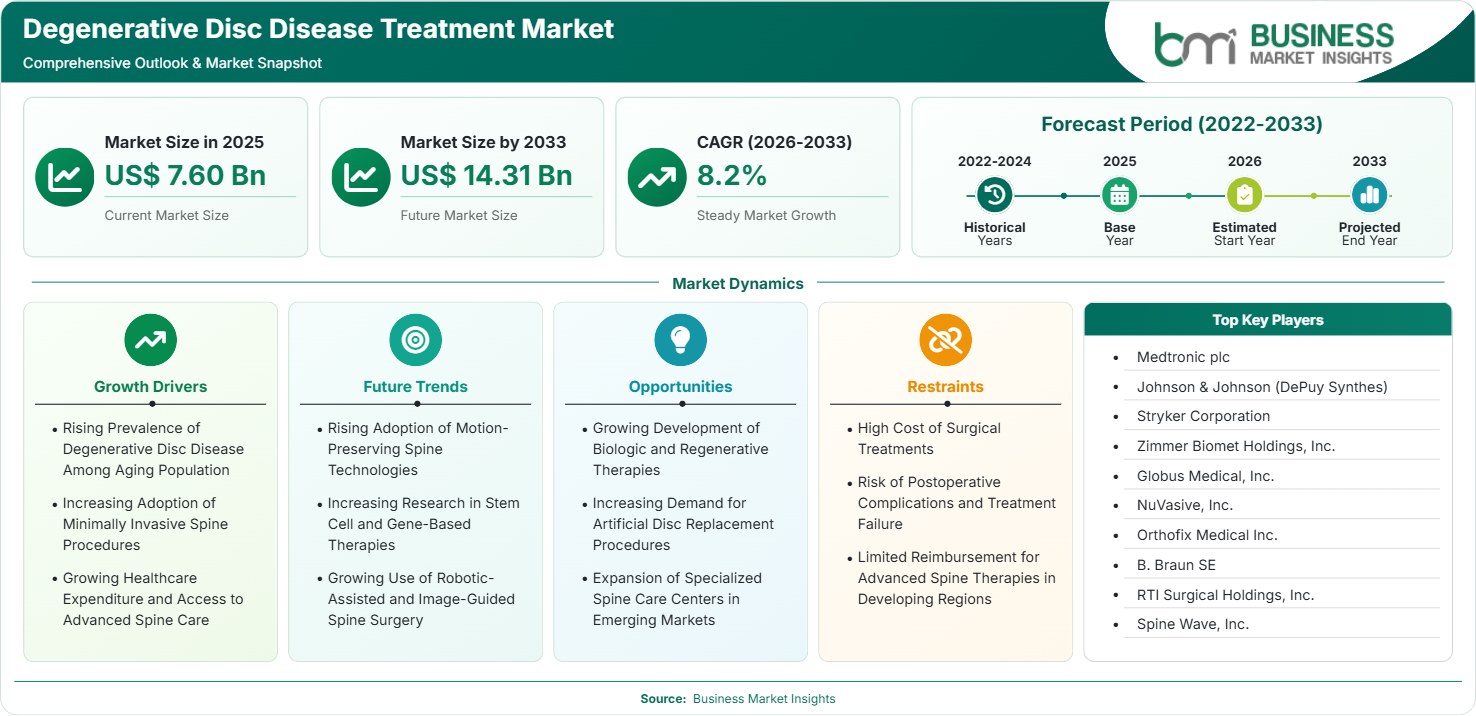
The Degenerative Disc Disease Treatment Market size was valued at US$ 7.60 Billion in 2025 and is projected to reach US$ 14.31 Billion by 2033, growing at a CAGR of 8.2% during 2026–2033. The market is driven by the rising prevalence of degenerative disc disease among the aging population, increasing adoption of minimally invasive spine procedures, and growing healthcare expenditure supporting access to advanced spinal care. The emergence of biologic therapies, regenerative medicine, and artificial disc replacement technologies continues creating significant long-term growth opportunities.

Report Coverage
  • By Type: Conventional Drugs (Non-steroidal Anti-inflammatory Drugs (NSAIDs), Corticosteroids, Opioids, and Others), Novel Therapies (Cell Therapy, Platelet Rich Plasma (PRP), and Others
US$ 7.60 Bn Market size in 2025
US$ 14.31 Bn Market Size by 2033
8.2% CAGR, 2026 - 2033
2026-2033 Forecast Period

01 AI Overview

Degenerative Disc Disease Treatment Market Summary

  • North America Region: North America accounted for 41%–44% of the global market in 2025 and is projected to register a CAGR of 7.8%–8.2% during 2026–2033. High adoption of advanced spinal surgeries, favorable reimbursement policies, strong presence of leading medical device manufacturers, and increasing healthcare spending continue supporting regional growth. The U.S. market is expected to expand at a CAGR of 7.9%–8.3%, driven by increasing spinal disorder incidence and growing utilization of minimally invasive procedures.
  • Fastest Growing Region: Asia Pacific held 24%–27% of the global market in 2025 and is projected to grow at the fastest CAGR of 9.0%–9.5% during 2026–2033. Rising geriatric population, improving healthcare infrastructure, expanding medical tourism, and increasing awareness regarding advanced spine treatments continue accelerating regional demand.
  • Leading Segment: Conventional Drugs accounted for 62%–65% of market revenue in 2025 and are projected to expand at a CAGR of 7.7%–8.1%, driven by widespread use of NSAIDs, corticosteroids, and pain management therapies as first-line treatment options.
  • High Growth Segment: Novel Therapies accounted for 35%–38% of the market in 2025 and are expected to register the fastest CAGR of 9.6%–10.1%, supported by increasing clinical research in regenerative medicine, stem cell therapy, platelet-rich plasma (PRP), and biologic treatments.
  • Key Market Opportunity: Increasing development of biologic therapies, expanding adoption of artificial disc replacement procedures, and growth of specialized spine care centers continue creating substantial opportunities for market participants.
  • Major Market Players: Medtronic plc, Johnson & Johnson (DePuy Synthes), Stryker Corporation, Zimmer Biomet Holdings, Inc., Globus Medical, Inc., NuVasive, Inc., Orthofix Medical Inc., B. Braun SE, RTI Surgical Holdings, Inc., and Spine Wave, Inc.
02 Strategic Insights

Degenerative Disc Disease Treatment Market: Strategic Insights

Degenerative Disc Disease Treatment Market Strategic Framework
FREE PDF
Request your free sample
Request free sample
03 Stakeholder View

Key Takeaways

  • Conventional drug therapies continue dominating the market as the primary treatment option for early-stage degenerative disc disease.
  • Regenerative medicine and biologic therapies represent the fastest-growing treatment segment due to ongoing clinical advancements.
  • North America remains the largest regional market owing to advanced healthcare infrastructure and widespread adoption of minimally invasive spine procedures.
  • Asia Pacific is expected to witness the fastest growth, supported by healthcare infrastructure expansion, medical tourism, and increasing elderly populations.
  • Continuous innovation in artificial disc replacement, robotic-assisted surgery, and regenerative therapies continues strengthening future market growth.
04 Geographic Outlook

Degenerative Disc Disease Treatment Market Regional Highlights

North America Degenerative Disc Disease Treatment Market

North America accounted for 41%–44% of the global market in 2025 and is projected to expand at a CAGR of 7.8%–8.2% during 2026–2033. Rising prevalence of degenerative spinal disorders, increasing adoption of minimally invasive spine surgeries, and advanced healthcare infrastructure continue supporting regional market growth. The Degenerative Disc Disease Treatment Market share remains dominant due to strong reimbursement frameworks, high healthcare expenditure, and rapid adoption of innovative spinal implants and biologic therapies.

  • The United States remains the largest regional market owing to increasing incidence of chronic lower back pain and degenerative spinal diseases.
  • Hospitals and specialized spine centers continue expanding minimally invasive surgical capabilities to improve patient recovery outcomes.
  • Increasing adoption of robotic-assisted spine surgery and navigation technologies continues enhancing procedural accuracy.
  • Growing availability of biologic therapies and artificial disc replacement procedures supports long-term market expansion.
  • Continuous investment in orthopedic research and advanced spine care technologies strengthens regional competitiveness.

US Degenerative Disc Disease Treatment Market

The United States represented 36%–39% of the global market in 2025 and is anticipated to grow at a CAGR of 7.9%–8.3% through 2026–2033. Increasing aging population, higher diagnosis rates, and widespread availability of advanced spine treatment options continue driving Degenerative Disc Disease Treatment Market growth.

  • Healthcare providers continue expanding outpatient minimally invasive spine surgery programs.
  • Rising adoption of artificial disc replacement procedures supports improved patient mobility and faster recovery.
  • Advanced imaging technologies enable earlier diagnosis and personalized treatment planning.
  • Favourable reimbursement policies continue supporting adoption of premium spinal implants and surgical procedures.

Europe Degenerative Disc Disease Treatment Market

Europe held 28%–31% of global revenue in 2025 and is expected to register a CAGR of 8.0%–8.4% during 2026–2033. Growing elderly populations, increasing prevalence of musculoskeletal disorders, and expanding access to specialized orthopedic care continue driving regional growth. Germany remains the leading regional market, while Poland is projected to register the fastest growth.

  • Germany dominates the regional market owing to advanced spine care infrastructure and strong adoption of minimally invasive procedures.
  • Poland is projected to register a CAGR of 8.7%–9.1%, supported by expanding healthcare investments and modernization of orthopedic treatment facilities.
  • France, Italy, and the United Kingdom continue increasing adoption of biologic therapies and advanced spinal implants.
  • Government healthcare investments continue improving access to specialized spine care services.
  • Continuous clinical research in regenerative medicine supports long-term market development.

Asia Pacific Degenerative Disc Disease Treatment Market

Asia Pacific accounted for 24%–27% of global market revenue in 2025 and is projected to register the fastest CAGR of 9.0%–9.5% during 2026–2033. Rapid healthcare infrastructure development, growing elderly population, rising medical tourism, and increasing awareness of advanced spinal treatments continue accelerating regional demand. China remains the largest market, while India is projected to witness the fastest growth.

  • China dominates regional demand through expanding orthopedic hospitals, increasing healthcare expenditure, and growing patient volumes.
  • India is projected to register a CAGR of 9.5%–10.0%, supported by expanding specialized spine care centers, increasing medical tourism, and improving healthcare accessibility.
  • Japan continues witnessing strong demand due to its rapidly aging population and advanced healthcare system.
  • South Korea continues investing in minimally invasive spine surgery technologies and regenerative therapies.
  • Increasing adoption of advanced spinal implants continues supporting regional market expansion.

Rest of World Degenerative Disc Disease Treatment Market

The Rest of the World accounted for 4%–6% of global market revenue in 2025 and is expected to expand at a CAGR of 7.5%–7.9% during 2026–2033. Market growth is supported by improving healthcare infrastructure, increasing orthopedic care availability, and rising awareness regarding spinal disease diagnosis and treatment across Latin America, the Middle East, and Africa.

Growing investments in specialized hospitals, orthopedic surgery centers, and rehabilitation facilities continue creating new opportunities for degenerative disc disease treatment providers across emerging markets.

  • Brazil continues expanding orthopedic and spine surgery capabilities through public and private healthcare investments.
  • Saudi Arabia is strengthening specialized spine care services under ongoing healthcare modernization initiatives.
  • The United Arab Emirates continues investing in advanced orthopedic hospitals and minimally invasive surgical technologies.
  • South Africa is witnessing gradual adoption of modern spinal treatment procedures supported by expanding private healthcare infrastructure.
  • Increasing access to specialized spine care and rehabilitation services continues supporting long-term market growth.
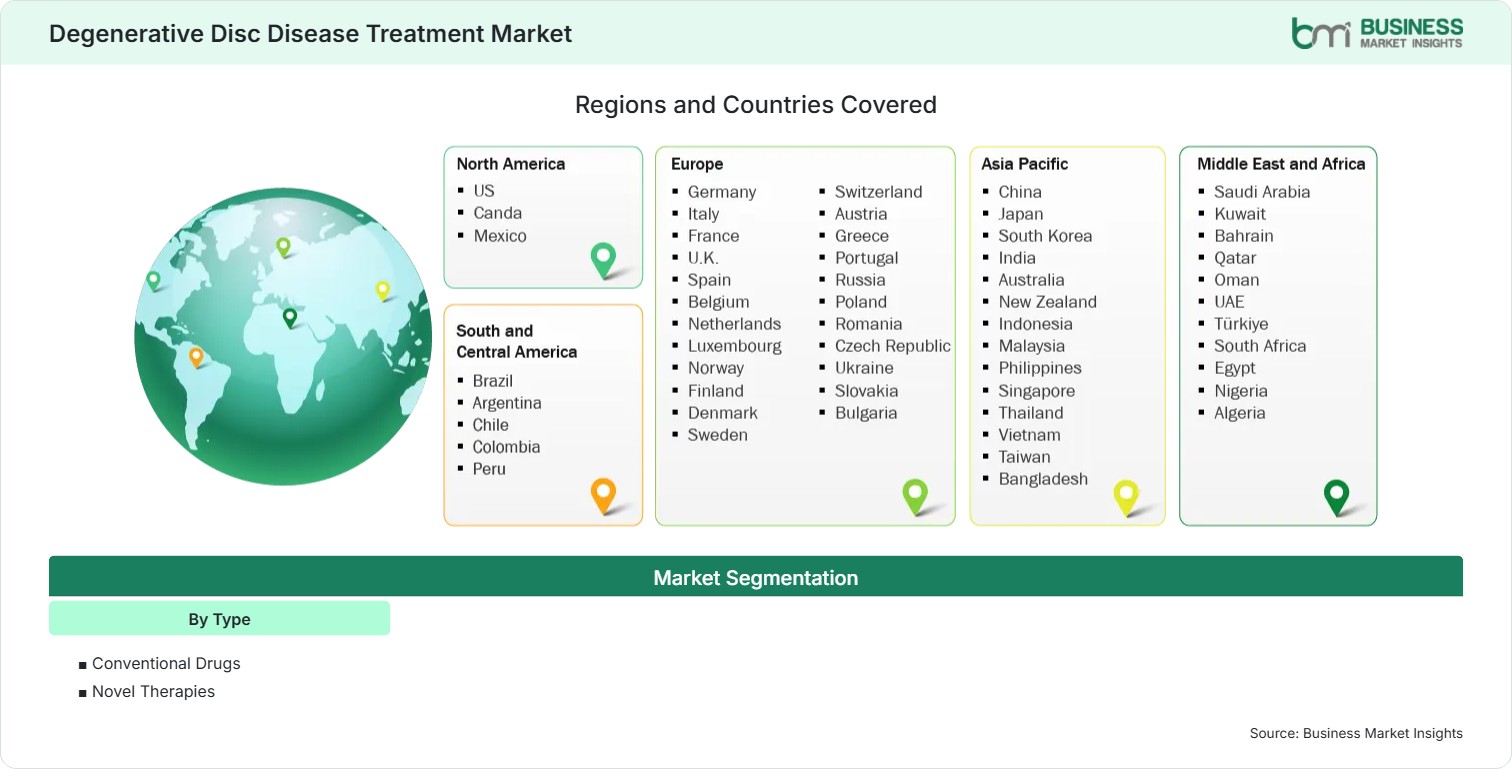
Global Market Geography
FREE PDF
Request your free sample
Request free sample
05 Segment Analysis

Degenerative Disc Disease Treatment Market Segmentation

Type

The Conventional Drugs segment accounted for 62%–65% of the global market in 2025 and is projected to expand at a CAGR of 7.7%–8.1% during 2026–2034. Conventional pharmacological therapies remain the first-line treatment option for patients with mild-to-moderate degenerative disc disease due to their effectiveness in relieving pain and inflammation, widespread availability, and lower treatment costs. The Degenerative Disc Disease Treatment Market scope continues expanding as healthcare providers increasingly combine drug therapy with physiotherapy and minimally invasive interventions to improve long-term patient outcomes.

  • Conventional Drugs: This segment dominates the market owing to its extensive use in pain management, early-stage disease treatment, and postoperative recovery.
    • Non-steroidal Anti-inflammatory Drugs (NSAIDs): NSAIDs remain the most prescribed medications for reducing inflammation, relieving pain, and improving mobility among degenerative disc disease patients.
    • Corticosteroids: Corticosteroid injections continue to be widely utilized for patients experiencing severe inflammation and nerve compression, providing short-term pain relief.
    • Opioids: Opioids are prescribed primarily for severe chronic pain cases where conservative therapies fail, although their use remains limited due to dependency concerns.
    • Others: Muscle relaxants, analgesics, and adjunctive medications continue supporting comprehensive pain management strategies.
  • Novel Therapies: Novel therapies represent the fastest-growing segment due to increasing research in regenerative medicine and biologic treatments capable of addressing the underlying causes of disc degeneration.
    • Cell Therapy: Stem cell-based regenerative therapies are being investigated to repair damaged intervertebral discs, restore tissue function, and delay disease progression.
    • Platelet Rich Plasma (PRP): PRP therapies continue gaining clinical attention for promoting tissue healing, reducing inflammation, and improving spinal function in selected patients.
    • Others: Additional regenerative approaches include gene therapy, growth factor therapies, tissue-engineered disc implants, and biologic injectable treatments currently under clinical evaluation.
06 Market Forces

Degenerative Disc Disease Treatment Market Dynamics

Key Market Drivers

Rising Prevalence of Degenerative Disc Disease Among Aging Population

The rapidly growing global elderly population continues increasing the prevalence of degenerative spinal disorders, chronic lower back pain, and age-related disc degeneration. Longer life expectancy and sedentary lifestyles further contribute to disease incidence, increasing demand for effective medical and surgical treatment options. These factors continue supporting market growth, while evolving Degenerative Disc Disease Treatment Market trends indicate increasing demand for personalized treatment strategies, early diagnosis, and minimally invasive interventions.

Increasing Adoption of Minimally Invasive Spine Procedures

Healthcare providers are increasingly adopting minimally invasive spinal procedures that reduce surgical trauma, shorten hospital stays, minimize postoperative complications, and accelerate patient recovery. Technological advancements in spinal navigation systems, robotic-assisted surgery, endoscopic spine procedures, and precision implants continue improving clinical outcomes while expanding patient eligibility for surgical intervention.

Growing Healthcare Expenditure and Access to Advanced Spine Care

Increasing healthcare investments, expanding insurance coverage, and growing availability of specialized orthopedic and spine care centers are improving patient access to advanced diagnostic and treatment options. Governments and private healthcare providers continue investing in modern surgical technologies, rehabilitation facilities, and regenerative medicine research, supporting long-term expansion of the degenerative disc disease treatment market.

Key Market Opportunities

Growing Development of Biologic and Regenerative Therapies

The increasing focus on regenerative medicine is creating significant growth opportunities in the treatment of degenerative disc disease. Biologic therapies, including stem cell therapy, platelet-rich plasma (PRP), growth factors, and tissue engineering technologies, are being developed to repair damaged intervertebral discs rather than simply manage symptoms. Positive Degenerative Disc Disease Treatment Market Forecasts continue encouraging biotechnology companies, medical device manufacturers, and research institutions to invest in next-generation regenerative treatments capable of delaying disease progression and reducing the need for invasive surgeries.

Increasing Demand for Artificial Disc Replacement Procedures

Artificial disc replacement (ADR) procedures are witnessing growing adoption as an alternative to spinal fusion surgery, particularly among younger and active patients seeking to preserve spinal motion. Continuous advancements in implant materials, surgical techniques, and long-term clinical outcomes are supporting wider acceptance of ADR. Increasing surgeon expertise and favorable clinical evidence continue creating long-term growth opportunities for manufacturers of spinal implants and motion-preserving technologies.

Expansion of Specialized Spine Care Centers

The growing establishment of dedicated orthopedic hospitals, spine institutes, and multidisciplinary rehabilitation centers is improving access to advanced spinal care worldwide. These specialized facilities offer comprehensive diagnosis, minimally invasive surgery, regenerative therapies, pain management, and postoperative rehabilitation under one platform. Expansion of specialized spine care infrastructure continues supporting earlier diagnosis, improved patient outcomes, and increased adoption of advanced treatment technologies.

Market Restraints and Challenges

High Cost of Surgical Treatments

Factor: Surgical interventions such as spinal fusion, artificial disc replacement, robotic-assisted procedures, and advanced spinal implants involve substantial costs related to implants, operating facilities, specialized surgeons, and postoperative rehabilitation.High treatment expenses limit patient access, particularly in developing economies and regions with limited reimbursement coverage, slowing market penetration despite increasing clinical demand. Healthcare providers and manufacturers continue focusing on cost-effective surgical technologies and value-based care models to improve affordability.

Risk of Postoperative Complications and Treatment Failure

Factor: Spine surgeries carry potential risks including infection, implant failure, adjacent segment degeneration, nerve injury, persistent pain, and revision surgeries. Additionally, regenerative therapies continue facing challenges related to long-term efficacy validation and standardized clinical protocols. These clinical uncertainties may influence physician treatment decisions and patient acceptance, encouraging continued investment in surgical innovation, precision navigation technologies, improved implant designs, and long-term clinical research to enhance safety and treatment success rates.

07 Company Analysis

Competitive Landscape

The competitive landscape is characterized by continuous innovation in minimally invasive spine surgery, biologic therapies, artificial disc replacement technologies, and robotic-assisted spinal procedures. The Degenerative Disc Disease Treatment Market analysis indicates that leading companies are investing in advanced spinal implants, navigation systems, regenerative medicine research, and strategic acquisitions to strengthen their product portfolios and expand their global presence.

Company Name

Overview

Products and Services Relevant to this Market

Medtronic plc

Global leader in medical technology with a comprehensive spine portfolio.

Spinal fusion systems, artificial disc technologies, minimally invasive spine surgery solutions, navigation systems, and biologic products.

Johnson & Johnson (DePuy Synthes)

Leading orthopedic and spine care company providing advanced surgical technologies.

Spine implants, cervical and lumbar fixation systems, interbody fusion devices, navigation technologies, and orthopedic instruments.

Stryker Corporation

Global medical device company specializing in orthopedic and spine technologies.

Spine implants, minimally invasive surgical systems, navigation platforms, interbody devices, and spinal instrumentation.

Zimmer Biomet Holdings, Inc.

Global orthopedic manufacturer offering comprehensive spine solutions.

Spinal implants, fixation systems, biologic products, bone graft substitutes, and surgical instruments.

Globus Medical, Inc.

Spine-focused medical technology company known for innovative implant systems.

Spine implants, robotic-assisted surgery platform (ExcelsiusGPS), interbody devices, navigation technologies, and orthopedic solutions.

NuVasive, Inc.

Developer of minimally invasive spine surgery technologies.

Lateral access surgery systems, spinal implants, biologics, cervical and lumbar fusion products, and surgical navigation solutions.

Orthofix Medical Inc.

Global provider of orthopedic and spine care solutions.

Bone growth therapies, spinal fixation systems, biologics, cervical implants, and minimally invasive spine products.

B. Braun SE

International healthcare company providing surgical and orthopedic solutions.

Spine implants, surgical instruments, biologic solutions, and orthopedic surgical products.

RTI Surgical Holdings, Inc.

Medical technology company specializing in biologic implants and surgical solutions.

Allograft implants, biologic materials, spinal implants, and regenerative tissue products.

Spine Wave, Inc.

Spine technology company focused on innovative implant systems.

Cervical and lumbar implants, expandable interbody devices, fixation systems, and minimally invasive spine surgery products.

08 Industry Activity

Recent Developments

February, 2026

Medtronic plc received FDA approval for INFUSE Bone Graft for one- and two-level Transforaminal Lumbar Interbody Fusion (TLIF) procedures. The expanded indication provides surgeons treating degenerative lumbar spine conditions with an additional FDA-approved biologic option for spinal fusion using both PEEK and titanium interbody cages.

July, 2025

Medtronic plc announced a major milestone in its INFUSE Bone Graft TLIF clinical study. Following the FDA's Breakthrough Device Designation, the company advanced its pivotal clinical trial with an updated adaptive study design to accelerate evaluation of INFUSE for patients with degenerative lumbar spine disorders.

April, 2025

Stryker completed the sale of its U.S. spinal implants business to VB Spine. The transaction enables greater strategic focus across Stryker's core orthopaedics portfolio while ensuring continued support for spine technologies through the newly formed company.

August, 2024

Johnson & Johnson MedTech Launched new digital spine surgery innovations and advanced instrumentation supporting minimally invasive spinal procedures and improved surgical planning.

10 Trust & Transparency

Research Methodology

The market analysis combines proprietary research with secondary data from government agencies, company disclosures, regulatory filings, industry databases and expert interviews. Market estimates are validated through data triangulation, cross-market benchmarking and analyst review.

View Full Research Methodology

11 Questions Answered

Frequently Asked Questions

Why is the Degenerative Disc Disease Treatment Market Report valuable for stakeholders?

The market report provides comprehensive insights into market trends, technological advancements, regional opportunities, competitive strategies, and future growth prospects, enabling stakeholders to make informed business and investment decisions.

Which treatment segment is expected to witness the fastest growth?

Novel Therapies, including stem cell therapy and platelet-rich plasma (PRP), are expected to witness the fastest growth due to increasing research in regenerative medicine and biologic treatment approaches.

Which treatment segment holds the largest market share?

Conventional Drugs hold the largest market share owing to their widespread use as first-line therapy for pain management and inflammation associated with degenerative disc disease.

Which region dominates the market?

North America dominates the market due to advanced healthcare infrastructure, high adoption of minimally invasive spine surgeries, favorable reimbursement systems, and the presence of leading medical device manufacturers.

What is driving the Degenerative Disc Disease Treatment Market?

The market is driven by the increasing prevalence of degenerative disc disease among the aging population, rising adoption of minimally invasive spine procedures, growing healthcare expenditure, and continuous advancements in spinal implants and regenerative therapies.

Access the Full Degenerative Disc Disease Treatment Market Report

Get segment-level forecasts, regional estimates, competitive benchmarking, company profiles and downloadable Excel datasets.

Access the full Degenerative Disc Disease Treatment Market Report
350 pages PDF & Excel | 2026-07-27