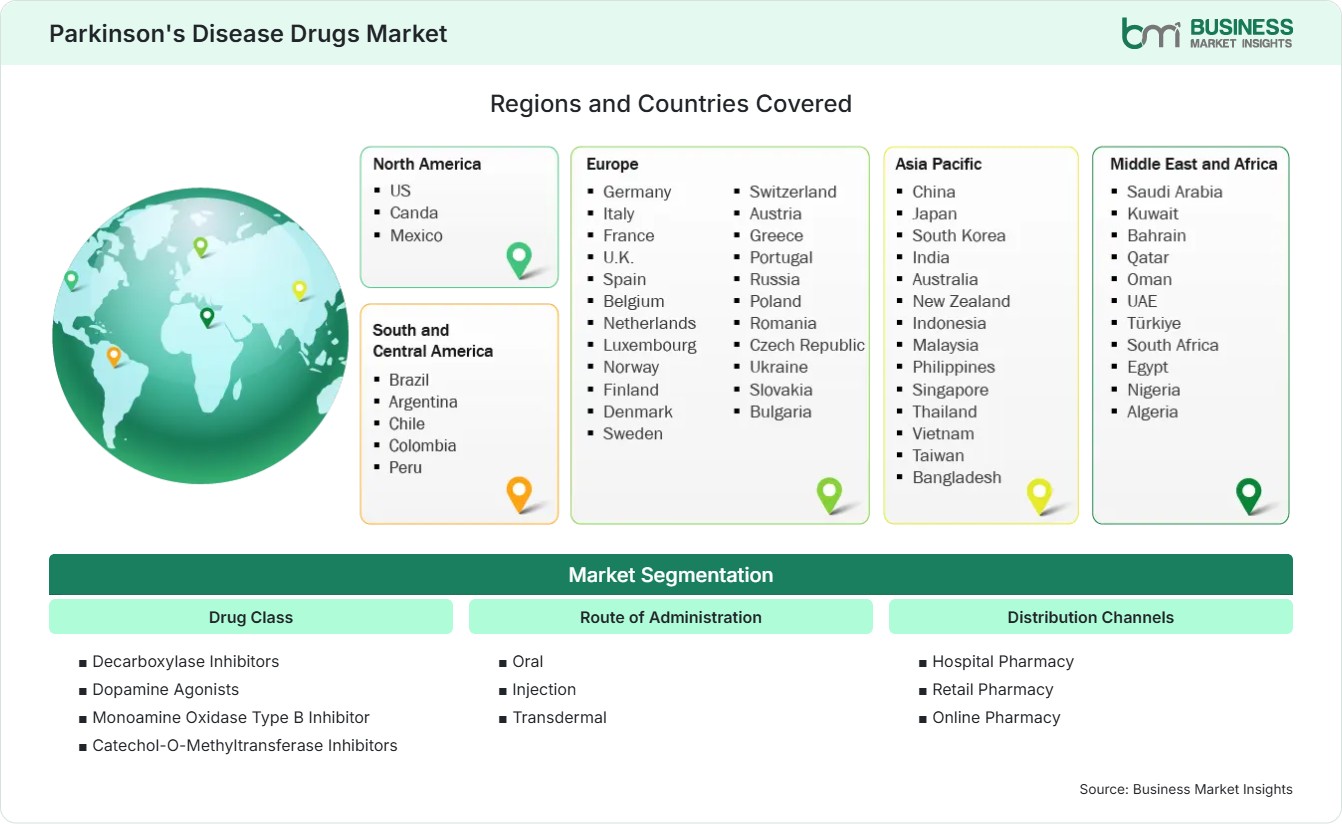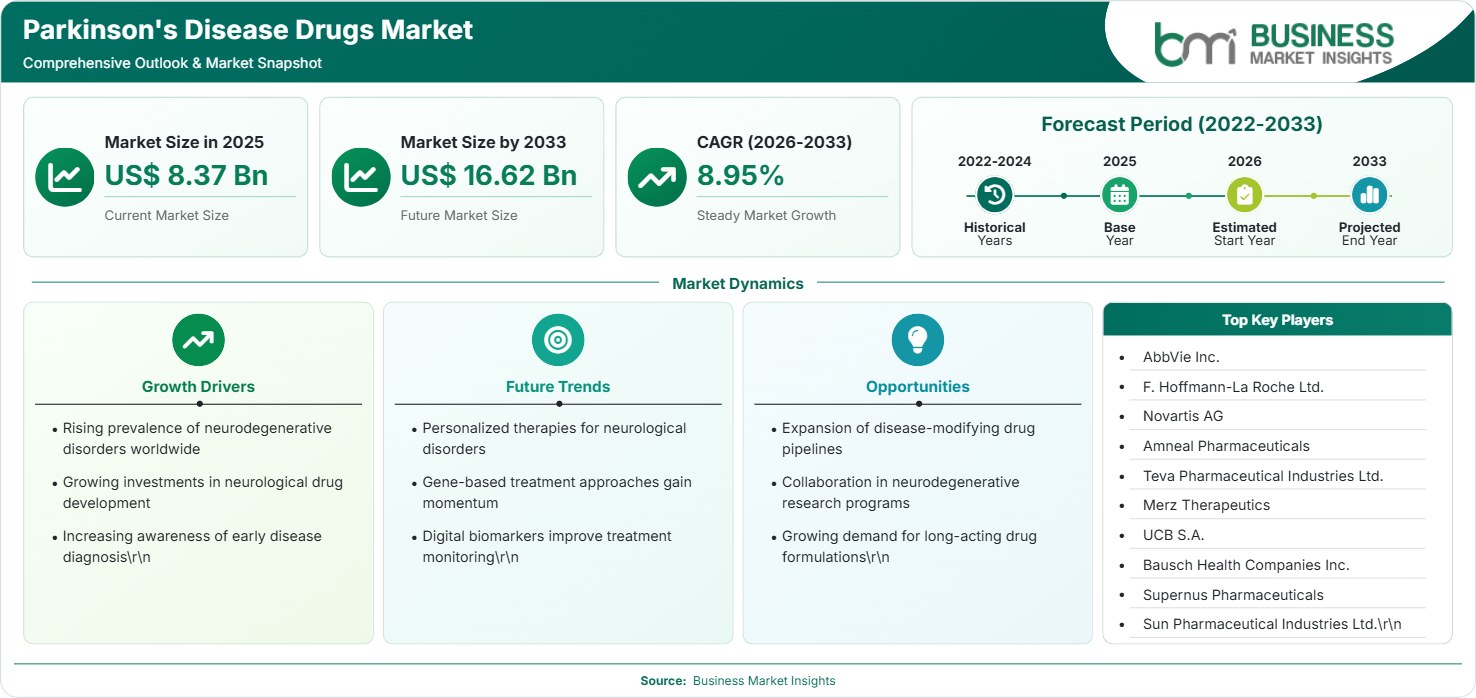
Parkinson's Disease Drugs Market Regional Highlights
North America Parkinson's Disease Drugs Market
North America accounted for 39%–42% of the Parkinson's Disease Drugs Market Share in 2025 and is projected to expand at a CAGR of 8.4%–8.8% during 2026–2033. The region benefits from strong pharmaceutical research capabilities, high healthcare expenditure, favorable reimbursement policies, and continuous regulatory support for innovative neurological therapies. Increasing clinical trial activity, expanding biologics development, and growing adoption of advanced Parkinson's disease treatments continue to strengthen the regional market position.
- Pharmaceutical companies continue to expand investments in neuroscience research, enabling the faster development of novel drug candidates, precision therapeutics, and advanced treatment options that address unmet clinical needs in Parkinson's disease management.
- Favorable reimbursement frameworks encourage broader patient access to branded neurological therapies while supporting commercial adoption of innovative oral, injectable, and transdermal formulations across healthcare systems.
- Academic research institutions increasingly collaborate with biotechnology companies to accelerate biomarker discovery, disease-modifying drug development, and next-generation therapeutic innovation for neurodegenerative disorders.
- Regulatory agencies continue supporting accelerated review pathways for breakthrough neurological therapies, encouraging pharmaceutical companies to strengthen product pipelines and expand commercialization efforts.
- Rising awareness regarding early neurological diagnosis promotes timely treatment initiation, improving patient outcomes while sustaining long-term demand for advanced Parkinson's disease medications.
US Parkinson's Disease Drugs Market
The United States represented 33%–36% of global revenue in 2025 and is forecast to register a CAGR of 8.5%–8.9% through 2026–2033. Strong biotechnology innovation, robust pharmaceutical research funding, expanding specialty neurology centers, and favorable intellectual property protection continue to maintain the country's leadership in neurological drug development and commercialization.
- Large-scale investments by leading pharmaceutical companies continue strengthening clinical pipelines focused on disease-modifying therapies, neuroprotective drugs, and innovative combination treatment strategies.
- Expanding specialty neurology clinics and integrated healthcare networks improve patient diagnosis, access to treatment, and long-term disease management through multidisciplinary care models.
- Government funding for neuroscience research continues supporting translational medicine initiatives, accelerating development of advanced therapeutics and precision medicine approaches.
- Increasing patient enrollment in neurological clinical trials supports regulatory progress while encouraging faster commercialization of innovative Parkinson's disease treatment options.
Europe Parkinson's Disease Drugs Market
Europe held 28%–31% market share during 2025 and is anticipated to grow at a CAGR of 8.2%–8.6% through 2026–2033. Strong regulatory frameworks, extensive neuroscience research, expanding aging population healthcare services, and increasing pharmaceutical innovation continue supporting regional development. Germany leads regional revenue with a CAGR of 8.3%–8.7%, while Spain is projected to record the fastest growth at 8.9%–9.3% during the forecast period.
- Germany maintains regional leadership through advanced pharmaceutical manufacturing, extensive neurological research infrastructure, and strong investments in innovative drug development programs.
- Spain experiences rapid expansion owing to growing healthcare expenditure, increasing neurological disease awareness, and improving patient access to specialty pharmaceutical therapies.
- Collaborative European neuroscience research programs continue accelerating biomarker identification, precision medicine development, and commercialization of innovative neurological treatments.
- Favorable orphan drug and innovative medicine regulations encourage pharmaceutical companies to strengthen European product pipelines and expand market presence.
- Increasing adoption of digital healthcare technologies supports remote patient monitoring and optimized neurological disease management across regional healthcare systems.
Asia Pacific Parkinson's Disease Drugs Market
Asia Pacific accounted for 22%–25% of industry revenue in 2025 and is projected to record the highest CAGR of 9.8%–10.3% during 2026–2033. Rising healthcare expenditure, expanding pharmaceutical manufacturing capacity, increasing awareness of neurological disorders, and strengthening clinical research infrastructure continue driving regional expansion. China leads regional demand with a CAGR of 9.7%–10.1%, while India records the fastest growth at 10.3%–10.8%.
- China continues strengthening domestic pharmaceutical innovation through investments in biotechnology, neuroscience research, and advanced neurological drug manufacturing capabilities.
- India benefits from expanding generic pharmaceutical production, increasing clinical research participation, and improving healthcare accessibility, supporting broader treatment adoption.
- Japan and South Korea continue advancing neurological research through precision medicine initiatives, regenerative medicine programs, and collaborative pharmaceutical innovation.
- Increasing government initiatives promoting neurological disease awareness encourage earlier diagnosis and improved patient access to advanced treatment options.
- Growing investments in specialty healthcare infrastructure continue supporting commercialization of innovative neurological therapies across emerging Asian economies.
Rest of World Parkinson's Disease Drugs Market
The Rest of World accounted for 8%–10% market share in 2025 and is expected to register a CAGR of 8.6%–9.1% during 2026–2033. South & Central America continues to improve neurological care through expanding pharmaceutical access and healthcare modernization initiatives.
The Middle East & Africa are witnessing increasing investments in specialty healthcare services, neurological treatment centers, and pharmaceutical distribution infrastructure. Brazil leads South & Central America with a CAGR of 8.7%–9.1%, while Saudi Arabia records the fastest regional growth at 9.2%–9.6% owing to expanding healthcare investments and neurological care programs.
- Brazil continues strengthening specialty pharmaceutical distribution while improving patient access through healthcare reforms and broader neurological treatment availability.
- Saudi Arabia accelerates investments in advanced healthcare infrastructure, specialty hospitals, and neurological disease management programs supporting pharmaceutical market expansion.
- International pharmaceutical partnerships continue improving medicine availability across developing healthcare markets while strengthening regulatory collaboration.
- Expanding neurological awareness campaigns encourage earlier diagnosis, improved treatment compliance, and broader adoption of innovative Parkinson's disease therapies.
- Increasing healthcare expenditure across emerging economies continues creating long-term commercial opportunities for innovative neurological drug manufacturers.