
Rapid Test Kits Market Outlook: Size, Share, Trends, Growth Analysis, Competitive Landscape & Forecast, 2026-2033

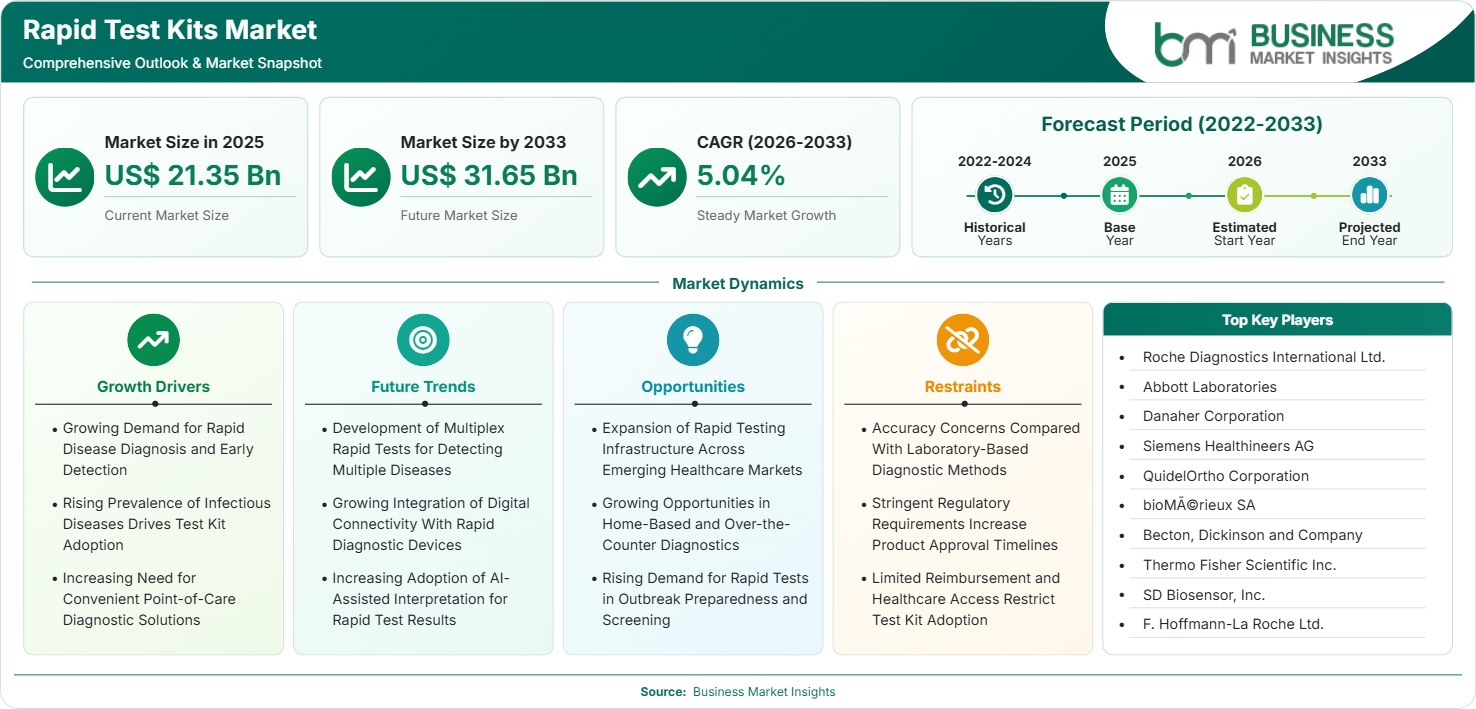
The Rapid Test Kits Market size was valued at US$ 21.35 Billion in 2025 and is projected to reach US$ 31.65 Billion by 2033, growing at a CAGR of 5.04% during 2026–2033, driven by faster disease diagnosis, infectious disease prevalence, point-of-care testing, decentralized healthcare, home diagnostics, and outbreak preparedness.

Report Coverage
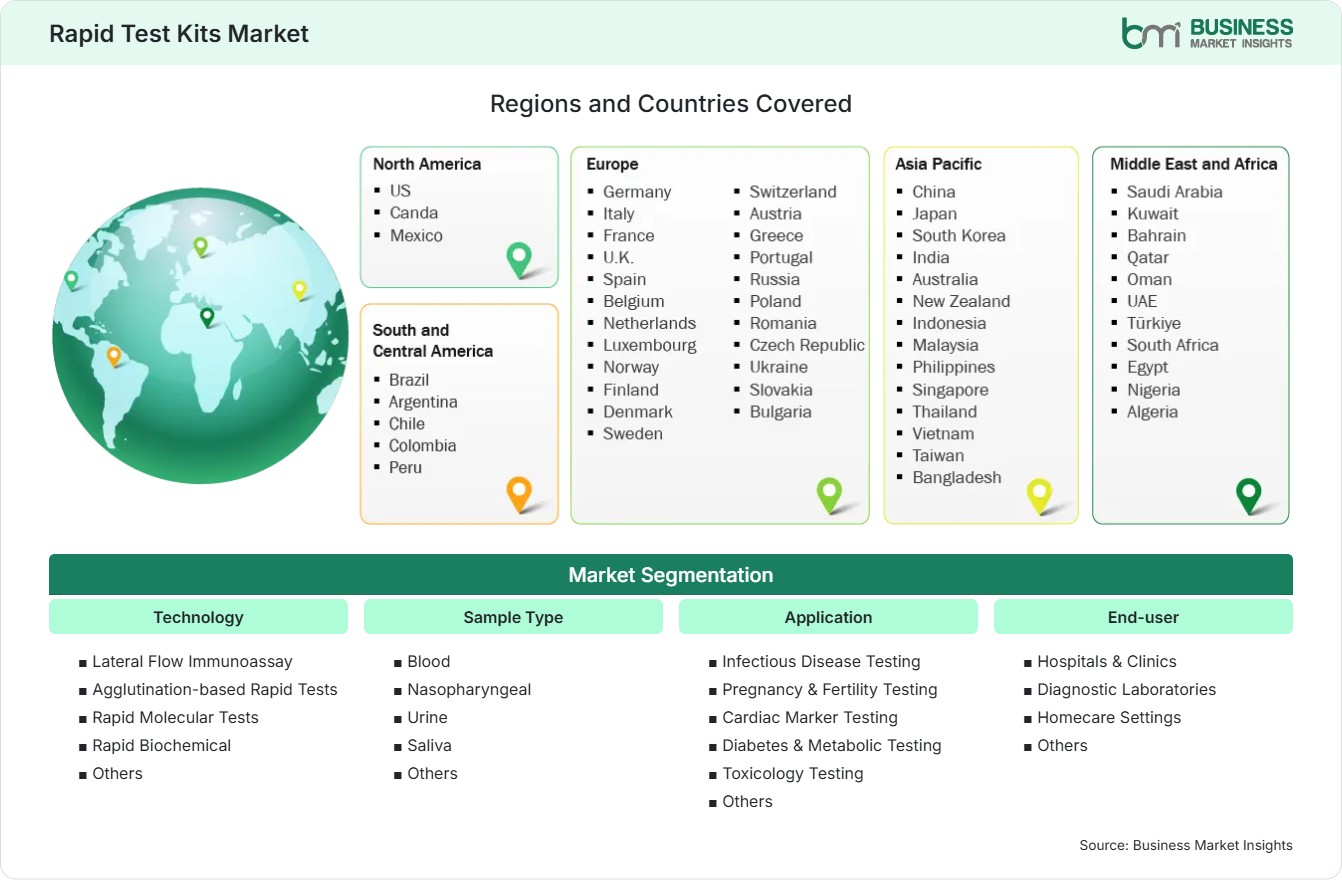
  • Technology: Lateral Flow Immunoassay, Agglutination-based Rapid Tests, Rapid Molecular Tests, Rapid Biochemical, Others
  • Sample Type: Blood, Nasopharyngeal, Urine, Saliva, Others
  • Application: Infectious Disease Testing, Pregnancy & Fertility Testing, Cardiac Marker Testing, Diabetes & Metabolic Testing, Toxicology Testing, Others
  • End-user: Hospitals & Clinics, Diagnostic Laboratories, Homecare Settings, Others
US$ 21.35 Bn Market size in 2025
US$ 31.65 Bn Market Size by 2033
5.04% CAGR, 2026 - 2033
2026-2033 Forecast Period

AI Overview

Rapid Test Kits Market Summary

  • North America Region: North America holds a share of 35%–39% in 2025, growing with a CAGR of 4.5%–5.5%, supported by advanced healthcare infrastructure, established point-of-care testing, infectious disease surveillance, and growing demand for decentralized diagnostics. The US represents 31%–35% share, with a CAGR of 4.7%–5.7%, supported by expanding outpatient and home-based testing.
  • Fastest Growing Region: Asia Pacific holds a share of 21%–25% in 2025, growing with a CAGR of 6.5%–7.5%, driven by expanding diagnostic infrastructure, infectious disease burden, increasing healthcare access, government screening programs, and growing demand for affordable point-of-care testing.
  • Leading Segment: Infectious Disease Testing holds a share of 48%–52% in 2025, growing with a CAGR of 5.2%–6.2%, supported by recurring respiratory and infectious disease outbreaks, faster diagnosis requirements, public health screening, and decentralized testing demand.
  • High Growth Segment: Homecare Settings holds a share of 17%–21% in 2025, growing with a CAGR of 7.0%–8.0%, driven by consumer preference for convenience, self-testing, aging populations, chronic disease monitoring, and wider availability of over-the-counter diagnostic products.
  • Key Market Opportunity: Expanding decentralized testing, home diagnostics, emerging healthcare infrastructure, and outbreak preparedness can create opportunities for affordable, accurate, connected, and easy-to-use rapid diagnostic platforms.
  • Major Market Players: Roche Diagnostics International Ltd., Abbott Laboratories, Danaher Corporation, Siemens Healthineers AG, QuidelOrtho Corporation, bioMérieux SA, Becton, Dickinson and Company, Thermo Fisher Scientific Inc., SD Biosensor, Inc., and F. Hoffmann-La Roche Ltd.
Strategic Insights

Rapid Test Kits Market: Strategic Insights

Rapid Test Kits Market Strategic Framework
FREE PDF
Request your free sample
Request free sample
Stakeholder View

Key Takeaways

  • The value chain is increasingly shifting toward decentralized diagnostic ecosystems involving assay developers, reagent manufacturers, instrument providers, distributors, healthcare providers, pharmacies, and digital health platforms.
  • Infectious disease testing remains the primary commercial anchor, while cardiac, metabolic, pregnancy, fertility, and toxicology applications provide diversification opportunities for manufacturers with broad assay portfolios.
  • Multiplexing, rapid molecular technologies, improved lateral flow performance, digital readers, and connectivity are shaping innovation as developers seek higher accuracy without sacrificing speed or portability.
  • Asia Pacific offers an attractive investment opportunity because governments and healthcare providers are expanding diagnostic infrastructure while addressing large populations and uneven access to centralized laboratories.
  • Outbreak preparedness is creating opportunities for strategic stockpiling, scalable manufacturing, public-private partnerships, and rapid deployment capabilities that can support demand during infectious disease emergencies.
  • Competitive differentiation increasingly depends on analytical performance, regulatory approvals, manufacturing scalability, usability, supply reliability, and the ability to integrate testing into decentralized healthcare pathways.
Geographic Outlook

Rapid Test Kits Market Regional Highlights

North America Rapid Test Kits Market

North America represents a Rapid Test Kits Market share of 35%–39% in 2025 and records a CAGR of 4.5%–5.5% during 2026–2033. The region benefits from advanced healthcare infrastructure, established diagnostic laboratories, strong point-of-care adoption, and broad access to healthcare technologies. The US dominates regional demand, supported by outpatient testing, pharmacy-based diagnostics, and home testing. Canada contributes through public health screening and decentralized diagnostic initiatives.

  • Point-of-care testing is expanding across outpatient settings, urgent care facilities, pharmacies, and clinics where rapid results can support faster clinical decision-making and treatment initiation.
  • Home testing is gaining importance as consumers seek convenient diagnostic options, while manufacturers are developing simplified workflows and easy-to-interpret result formats.
  • Public health preparedness continues to support demand for scalable rapid testing platforms that can be deployed during outbreaks and emerging infectious disease events.

US Rapid Test Kits Market

The US represents a Rapid Test Kits Market share of 31%–35% in 2025 and records a CAGR of 4.7%–5.7% through 2033. Demand will be driven by high-quality diagnostic equipment, pharmacy-based testing facilities, growth in urgent care centers, and increasing consumer awareness regarding home-based diagnosis. Testing for infectious diseases is still crucial, but pregnancy tests, cardiac markers, metabolic tests, and toxicology tests will also play an important role.

  • Pharmacy-based and community testing provides additional access points for rapid diagnostics, supporting decentralized healthcare delivery and reducing reliance on centralized laboratory infrastructure.
  • Home testing is expanding beyond infectious diseases, creating opportunities for manufacturers developing easy-to-use platforms for metabolic, reproductive, and other health applications.
  • Diagnostic companies are investing in multiplexing and rapid molecular technologies to improve clinical utility while maintaining shorter turnaround times than conventional laboratory workflows.

Europe Rapid Test Kits Market

Europe accounts for a share of 27%–31% in 2025 and records a CAGR of 4.8%–5.8% through 2033. Germany, the UK, France, and Italy represent leading markets, while Spain and the Netherlands provide additional opportunities. Healthcare systems are increasingly evaluating rapid testing as a tool for improving diagnostic efficiency, reducing unnecessary clinical delays, and supporting earlier intervention.

  • Germany remains a leading market because of its developed healthcare infrastructure, diagnostic capabilities, and demand for efficient point-of-care testing solutions.
  • The UK benefits from decentralized testing initiatives and increasing interest in diagnostics that can support healthcare capacity and improve access to timely results.
  • Spain represents a high-growth market at a CAGR of 5.5%–6.5%, supported by healthcare modernization, infectious disease surveillance, and growing decentralized testing requirements.
  • The Netherlands offers a CAGR of 5.3%–6.3%, driven by advanced healthcare infrastructure, digital health integration, and increasing interest in efficient diagnostic pathways.

Asia Pacific Rapid Test Kits Market

Asia Pacific represents a share of 21%–25% in 2025 and Asia Pacific rapid test kits market forecast to grow at CAGR of 6.5%–7.5% through 2033. China, Japan, India, South Korea, and Australia are important markets, while Southeast Asia offers substantial expansion opportunities. Large patient populations, infectious disease burden, healthcare infrastructure investment, and increasing access to diagnostics are supporting demand. Manufacturers are also targeting affordability and portability to reach decentralized healthcare settings. Government screening programs and public health preparedness initiatives provide additional opportunities for rapid diagnostic adoption.

  • India offers a CAGR of 7.0%–8.0%, supported by expanding healthcare access, infectious disease surveillance, government screening programs, and increasing demand for affordable point-of-care diagnostics.
  • China remains a leading market with strong domestic manufacturing capabilities, expanding healthcare infrastructure, and growing demand for rapid diagnostic technologies.
  • Southeast Asia provides a CAGR of 7.5%–8.5%, driven by healthcare investment, infectious disease monitoring, tourism-related health screening, and growing access to decentralized testing.
  • Japan and South Korea maintain advanced diagnostic ecosystems, with opportunities arising from aging populations, healthcare efficiency requirements, and increasing adoption of rapid and portable technologies.

Rest of World Rapid Test Kits Market

South and Central America represent approximately 7%–10% of regional demand in 2025 and record a CAGR of 5.0%–6.5%. Brazil and Mexico are leading markets, supported by expanding healthcare access, infectious disease monitoring, and private diagnostic investment. The Middle East and Africa represent approximately 8%–11% share in 2025 and achieve a CAGR of 6.0%–7.5%. The UAE, Saudi Arabia, and South Africa lead regional demand.

  • Brazil is a leading opportunity as diagnostic infrastructure expands and healthcare providers seek faster testing solutions for infectious and chronic conditions.
  • Mexico benefits from private healthcare investment and increasing diagnostic access, although affordability and regional differences in healthcare infrastructure influence adoption.
  • The UAE and Saudi Arabia offer high-growth opportunities through healthcare modernization, infectious disease preparedness, and investment in advanced diagnostic infrastructure.
  • South Africa provides opportunities for rapid testing in infectious disease management, community healthcare, and decentralized settings where laboratory access can be constrained.
Global Market Geography
FREE PDF
Request your free sample
Request free sample
Segment Analysis

Rapid Test Kits Market Segmentation

Technology

Lateral Flow Immunoassay accounted for a Rapid Test Kits Market share of 51%–55% in 2025 and is projected to grow at a CAGR of 4.8%–5.8% between 2026–2033. Its low cost, portability, simple workflow, and broad application range support widespread adoption.. Technology development is increasingly focused on multiplexing, improved analytical performance, digital interpretation, and integration with connected diagnostic platforms.

  • Lateral Flow Immunoassay: Lateral flow platforms offer simple workflows, portability, low manufacturing complexity, and broad use across infectious disease, pregnancy, and other decentralized testing applications.
  • Agglutination-based Rapid Tests: Agglutination methods provide accessible testing approaches for selected diagnostic applications, with adoption supported by straightforward procedures and established clinical familiarity.
  • Rapid Molecular Tests: Rapid molecular tests provide enhanced analytical performance and are increasingly used where faster nucleic-acid detection is required without conventional laboratory turnaround times.
  • Rapid Biochemical: Rapid biochemical tests support applications requiring fast measurement of specific analytes, offering opportunities across metabolic, cardiac, and other diagnostic testing environments.

Sample Type

Blood accounted for a Rapid Test Kits Market share of 38%–42% in 2025 and is projected to grow at a CAGR of 4.7%–5.7% between 2026–2033. Blood-based testing remains important because it supports diverse diagnostic applications, including glucose, cardiac markers, infectious diseases, and other analytes. Manufacturers are increasingly developing platforms requiring smaller sample volumes and simpler collection procedures to improve decentralized testing usability.

  • Blood: Blood samples support broad diagnostic applications, including infectious disease, cardiac markers, metabolic testing, and other assays requiring access to circulating biomarkers.
  • Nasopharyngeal: Nasopharyngeal samples remain relevant for respiratory infection testing, although manufacturers are increasingly exploring less invasive collection methods to improve patient acceptance.
  • Urine: Urine provides a convenient noninvasive sample type used extensively in pregnancy, fertility, toxicology, and selected metabolic testing applications.
  • Saliva: Saliva-based testing offers convenient, minimally invasive sample collection and supports opportunities in infectious disease, hormone, and other emerging diagnostic applications.

Application

Infectious Disease Testing accounted for a Rapid Test Kits Market share of 48%–52% in 2025 and is projected to grow at a CAGR of 5.2%–6.2% between 2026–2033. Recurring outbreaks, respiratory infections, public health screening, and the need for rapid treatment decisions support demand. Toxicology testing also provides opportunities in emergency care, workplace screening, and substance monitoring.

  • Infectious Disease Testing: Infectious disease testing remains the largest application due to recurring outbreaks, surveillance requirements, screening programs, and demand for rapid treatment decisions.
  • Pregnancy & Fertility Testing: Pregnancy and fertility tests benefit from consumer familiarity, home testing convenience, retail availability, and continued demand for accessible reproductive health diagnostics.
  • Cardiac Marker Testing: Cardiac marker testing offers opportunities for rapid emergency assessment, supporting faster clinical decisions in settings where timely identification of cardiac events is critical.
  • Diabetes & Metabolic Testing: Diabetes and metabolic testing benefit from chronic disease prevalence, home monitoring demand, and increasing preference for decentralized measurement and self-management.
  • Toxicology Testing: Toxicology testing supports emergency departments, workplace programs, addiction management, and law enforcement applications requiring rapid identification of selected substances.

End-user

Hospitals & Clinics accounted for a Rapid Test Kits Market share of 49%–53% in 2025 and are projected to grow at a CAGR of 4.5%–5.5% between 2026–2033. Hospitals and clinics remain major users because rapid results can support triage, treatment decisions, and infection control. Diagnostic laboratories provide specialized testing and confirmatory workflows.

  • Hospitals & Clinics: Hospitals and clinics use rapid tests for triage, infectious disease screening, emergency assessment, and treatment decisions requiring timely diagnostic information.
  • Diagnostic Laboratories: Diagnostic laboratories use rapid platforms to complement conventional workflows, improve turnaround times, and support high-volume testing and confirmatory diagnostic pathways.
  • Homecare Settings: Homecare settings are expanding through self-testing, chronic disease monitoring, consumer diagnostics, and increasing availability of easy-to-use over-the-counter rapid test products.
Market Forces

Rapid Test Kits Market Dynamics

Key Market Drivers

Growing Demand for Rapid Disease Diagnosis and Early Detection

The growing need for quicker diagnoses is driving an increased need for diagnostic technology that is able to provide results quickly in minutes rather than take long turnaround times in the laboratory. The rapid test can be used for making timely treatment decisions, patient prioritization, infection control, and screening. Thus, this Rapid Test Kits Market trend is growing due to healthcare providers' desire for efficiency in diagnostics and testing procedures beyond the laboratory setting.

Rising Prevalence of Infectious Diseases Drives Test Kit Adoption

Infectious disease pressures have continued to drive demand for rapid diagnostic test kits that enable early diagnosis and intervention through the public health system. Respiratory diseases, gastrointestinal diseases, vector-borne diseases, and emerging pathogens can contribute to significant demand for testing during outbreaks or seasonal surges. Rapid test kits are especially useful when lab facilities are lacking or when prompt results can dictate the treatment or isolation decision.

Increasing Need for Convenient Point-of-Care Diagnostic Solutions

The role of point-of-care diagnostics is becoming more prominent due to the decentralization of healthcare delivery and rapid access requirements from patients. The quick kits can be utilized in hospitals, clinics, pharmacies, urgent care centers, workplaces, and even at home, lessening the reliance on central laboratories for certain diagnostics tasks. Ease of use, portability, limited sample preparation requirements, and speed are essential qualities of the products. With the growing efficiency demands from healthcare institutions and the rising comfort of self-diagnosis among customers, such diagnostics methods will become more popular.

Key Market Opportunities

Expansion of Rapid Testing Infrastructure Across Emerging Healthcare Markets

Emerging healthcare markets present many opportunities, as there is an imbalance in diagnostic services and laboratory systems, which are concentrated in metropolitan areas. Quick diagnostics allow access to primary care sites, community clinics, pharmacies, and other places where no complicated lab facilities are needed. Governments and the healthcare industry are paying attention to diagnostic services, infectious disease monitoring, and the expansion of healthcare. Local manufacturing partnerships and distribution agreements can further improve availability while reducing logistics challenges.

Growing Opportunities in Home-Based and Over-the-Counter Diagnostics

Home-based and over-the-counter diagnostics represent an expanding opportunity as consumers increasingly seek convenient access to health information. Simple rapid tests can reduce the need for clinic visits for selected conditions and support earlier awareness of potential health issues. Infectious disease self-testing has increased consumer familiarity with home diagnostics, creating opportunities for broader applications. Manufacturers can explore pregnancy, fertility, metabolic, and other testing categories where users value privacy and convenience.

Rising Demand for Rapid Tests in Outbreak Preparedness and Screening

Outbreak preparedness has created opportunities for manufacturers who have the ability to scale production and deliver diagnostics capability amid an outbreak. The government, hospitals, healthcare systems, and public health institutions need tests that can easily be deployed to hospitals, laboratories, airports, offices, schools, and communities. Technologies such as multiplexing and flexible molecular diagnostics can help in increasing preparedness through the expansion of pathogen detection. Firms with sound regulatory and distribution systems will stand to benefit from this increasing focus on diagnostic preparedness.

Market Restraints and Challenges

Accuracy Concerns Compared with Laboratory-Based Diagnostic Methods

Factor: The analytical sensitivity or specificity of some rapid tests may be lower compared to centralized lab techniques, especially in situations where the concentration of pathogens or biomarkers is relatively low. Impact: Concerns about getting false negatives or positives may make healthcare professionals reluctant to use the test in highly conclusive scenarios, and this may lead to additional laboratory testing, which will decrease the benefits that rapid kits over lab techniques.

Stringent Regulatory Requirements Increase Product Approval Timelines

Factor: Rapid-diagnosis products need to adhere to regulations governing analysis, validation, manufacturing, labeling, and post-market surveillance, and these regulations differ from place to place. Impact: It may lead to high development costs and delays in bringing new products to market due to the complexity of the process involved. It requires a heavy investment on the part of companies in terms of regulatory requirements and clinical data before distribution.

Company Analysis

Competitive Landscape

Rapid Test Kits Market analysis indicates competition among global diagnostics companies, diversified healthcare technology providers, specialized infectious disease testing companies, and rapid diagnostic manufacturers. Competitive differentiation increasingly depends on analytical performance, assay breadth, regulatory approvals, manufacturing scalability, geographic distribution, cost efficiency, and the ability to serve both professional point-of-care and consumer testing markets.

Company Name

Overview

Products and Services relevant to this market

Roche Diagnostics International Ltd.

Major diagnostics business providing laboratory and point-of-care solutions across infectious disease, oncology, molecular diagnostics, and other healthcare applications.

Rapid diagnostic assays, molecular testing platforms, point-of-care diagnostics, immunoassays, and integrated diagnostic systems.

Abbott Laboratories

Global healthcare company with a broad diagnostics portfolio spanning rapid testing, infectious diseases, cardiac markers, diabetes, and consumer diagnostics.

Rapid immunoassays, point-of-care diagnostics, infectious disease testing, cardiac marker testing, glucose monitoring, and molecular platforms.

Danaher Corporation

Diversified life sciences and diagnostics company operating through specialized healthcare and diagnostic technology businesses.

Molecular diagnostics, immunodiagnostics, point-of-care testing, laboratory technologies, reagents, instruments, and diagnostic workflow solutions.

Siemens Healthineers AG

Global medical technology company providing diagnostic imaging, laboratory diagnostics, and point-of-care testing technologies.

Point-of-care diagnostics, blood gas testing, cardiac testing, infectious disease solutions, laboratory analyzers, and diagnostic systems.

QuidelOrtho Corporation

Diagnostics company specializing in rapid immunoassays, molecular diagnostics, and testing technologies for infectious and other diseases.

Rapid antigen tests, molecular diagnostic assays, immunoassays, point-of-care platforms, and infectious disease testing solutions.

bioMérieux SA

In-vitro diagnostics company focused strongly on infectious disease diagnosis and microbiology solutions across clinical and industrial applications.

Rapid infectious disease diagnostics, molecular testing, immunoassays, microbiology systems, reagents, and point-of-care solutions.

Becton, Dickinson and Company

Medical technology company offering diagnostic systems and technologies supporting microbiology, infectious disease testing, and healthcare workflows.

Diagnostic systems, molecular assays, microbiology solutions, blood collection technologies, and rapid diagnostic-related products.

Thermo Fisher Scientific Inc.

Life sciences and diagnostics company supplying molecular biology technologies, reagents, instruments, and clinical testing solutions.

Molecular diagnostic technologies, PCR systems, reagents, sample preparation, rapid testing components, and laboratory diagnostic solutions.

SD Biosensor, Inc.

Diagnostics manufacturer specializing in rapid testing technologies, immunoassays, molecular diagnostics, and point-of-care products.

Rapid antigen tests, immunoassays, molecular diagnostics, infectious disease tests, and portable point-of-care testing platforms.

F. Hoffmann-La Roche Ltd.

Global healthcare company with extensive diagnostics capabilities spanning molecular testing, immunodiagnostics, and integrated healthcare solutions.

Molecular diagnostics, immunoassays, point-of-care testing technologies, infectious disease diagnostics, and laboratory diagnostic systems.

Trust & Transparency

Research Methodology

The market analysis combines proprietary research with secondary data from government agencies, company disclosures, regulatory filings, industry databases and expert interviews. Market estimates are validated through data triangulation, cross-market benchmarking and analyst review.

View Full Research Methodology

Questions Answered

Frequently Asked Questions

What does the Market Report cover?

The Rapid Test Kits Market Report evaluates technology, sample type, application, and end-user segments, alongside regional demand, technological developments, and strategic opportunities.

How can rapid testing support outbreak preparedness?

Rapid testing enables faster screening, case identification, and surveillance during infectious disease events. Scalable manufacturing, and accelerate diagnostic deployment.

What factors influence rapid test kit adoption in emerging markets?

Affordability, distribution infrastructure, regulatory approval, test performance, ease of use, healthcare access, and local manufacturing capabilities strongly influence adoption.

Why are multiplex rapid tests gaining attention?

Multiplex tests can detect multiple pathogens or biomarkers from a single sample, helping distinguish conditions with similar symptoms. This can improve diagnostic efficiency and reduce the need for sequential testing.

How do rapid test kits differ from conventional laboratory tests?

Rapid test kits are designed to provide results within a shorter timeframe and can often be used closer to the patient.

Access the Full Rapid Test Kits Market Report

Get segment-level forecasts, regional estimates, competitive benchmarking, company profiles and downloadable Excel datasets.

Access the full Rapid Test Kits Market Report
350 pages PDF & Excel | 2026-08-10
Similar Research

Related Market Reports