
Retinal Disease Therapeutics Market Outlook: Size, Share, Trends, Growth Analysis, Competitive Landscape & Forecast, 2026–2033

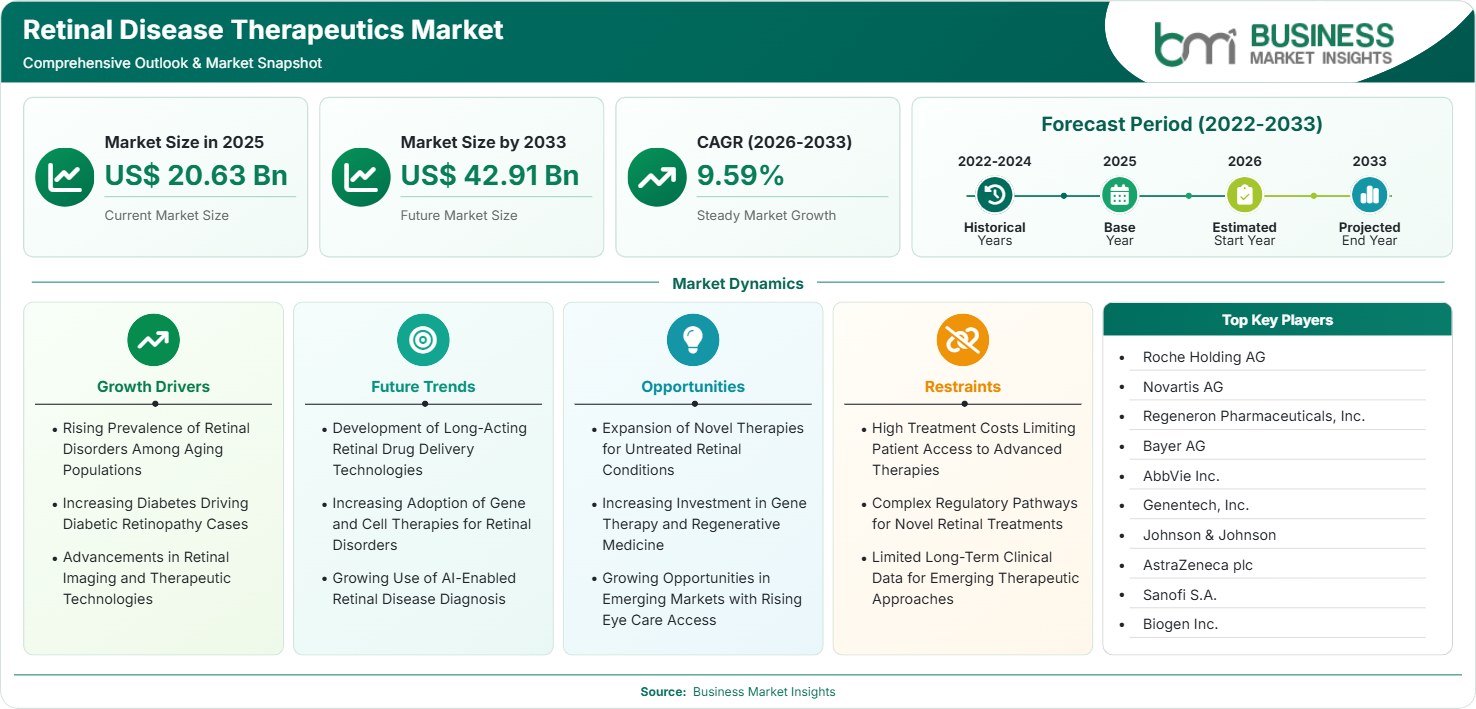
The Retinal Disease Therapeutics Market size was valued at US$ 20.63 Billion in 2025 and is projected to reach US$ 42.91 Billion by 2033, growing at a CAGR of 9.59% during 2026–2033. Rising prevalence of retinal disorders, increasing diabetic eye disease cases, technological advancements in ophthalmic therapeutics, and expanding investments in innovative biologics and gene therapies continue driving market expansion.

Report Coverage
  • Disease Indication: Macular Degeneration, Diabetic Retinopathy, Diabetic Macular Edema, Retinal Vein Occlusion
  • Distribution Channel: Hospital Pharmacy, Retail Pharmacy
US$ 20.63 Bn Market size in 2025
US$ 42.91 Bn Market Size by 2033
9.59% CAGR, 2026 - 2033
2026-2033 Forecast Period

AI Overview

Retinal Disease Therapeutics Market Summary

  • North America Region: North America holds 39%–42% market share in 2025 and is expected to register a 8.9%–9.3% CAGR during 2026–2033. Strong reimbursement systems, high adoption of anti-VEGF therapies, expanding retinal disease screening programs, and continuous innovation in biologics support sustained market growth. The U.S. market benefits from advanced ophthalmology infrastructure, increasing clinical research, and high biologics adoption, expanding at an estimated 9.0%–9.4% CAGR through 2033.
  • Fastest Growing Region: Asia Pacific accounts for 24%–27% market share in 2025 while recording the highest 10.8%–11.3% CAGR during the forecast period. Rising diabetes prevalence, improving healthcare infrastructure, expanding ophthalmic care access, and increasing healthcare expenditure continue accelerating therapeutic adoption.
  • Leading Segment: Macular Degeneration represents 41%–44% market share in 2025 and is projected to expand at a 9.4%–9.8% CAGR through 2033. Growing elderly populations, widespread anti-VEGF therapy utilization, and continuous introduction of long-acting retinal therapeutics support segment leadership.
  • High Growth Segment: Diabetic Retinopathy accounts for 22%–25% market share in 2025 while advancing at 10.5%–11.0% CAGR during the forecast period. Increasing diabetes prevalence, improved disease awareness, expanding retinal screening initiatives, and earlier diagnosis continue driving robust growth.
  • Key Market Opportunity: Increasing investment in gene therapy, regenerative medicine, sustained-release ocular drug delivery, personalized ophthalmic treatments, and expanding eye care access across emerging economies continues creating attractive long-term commercial opportunities.
  • Major Market Players: Roche Holding AG, Novartis AG, Regeneron Pharmaceuticals, Inc., Bayer AG, AbbVie Inc., Genentech, Inc., Johnson & Johnson, AstraZeneca plc, Sanofi S.A., Biogen Inc.
Strategic Insights

Retinal Disease Therapeutics Market: Strategic Insights

Retinal Disease Therapeutics Market Strategic Framework
FREE PDF
Request your free sample
Request free sample
Stakeholder View

Key Takeaways

  • The market value chain increasingly integrates biotechnology innovators, pharmaceutical manufacturers, ophthalmic device companies, specialty distributors, hospitals, and retinal specialists, strengthening commercialization and patient access to advanced therapies.
  • Diabetic retinal disorders and age-related macular degeneration continue offering the strongest commercial opportunities due to rising disease prevalence, increasing diagnosis rates, and expanding biologic treatment adoption.
  • Innovation is shifting toward gene therapies, regenerative medicine, sustained-release implants, AI-assisted diagnostics, and precision ophthalmology, supporting longer treatment durability and improved patient outcomes.
  • Asia Pacific presents the most attractive long-term investment opportunity because of rapidly increasing diabetic populations, improving healthcare infrastructure, expanding ophthalmology services, and rising healthcare expenditure.
  • Strategic licensing agreements, acquisitions, co-development partnerships, and expanded clinical trial programs continue reshaping competition while accelerating commercialization of next-generation retinal therapeutics.
  • Personalized treatment strategies and digital retinal monitoring technologies are expected to improve treatment adherence, optimize clinical decision-making, and enhance long-term visual outcomes.
Geographic Outlook

Retinal Disease Therapeutics Market Regional Highlights

North America Retinal Disease Therapeutics Market

North America accounted for approximately 39%–42% of global revenue during 2025 while expanding at a 8.9%–9.3% CAGR through 2033. The Retinal Disease Therapeutics Market share remains supported by advanced ophthalmology infrastructure, strong reimbursement systems, widespread adoption of anti-VEGF therapies, and increasing clinical research activities.

  • The United States continues leading therapeutic adoption owing to advanced specialty eye care centers, high biologic utilization, and robust clinical research supporting innovative retinal therapies.
  • Canada continues strengthening retinal treatment accessibility through expanding ophthalmology services, favorable reimbursement policies, and increasing investments in chronic disease management.
  • Pharmaceutical companies continue investing in long-acting retinal therapeutics designed to reduce injection frequency while improving treatment adherence among patients with chronic retinal diseases.
  • Artificial intelligence-assisted retinal imaging and teleophthalmology platforms continue enhancing early diagnosis and treatment planning across healthcare systems.

US Retinal Disease Therapeutics Market

The United States contributes nearly 81%–84% of North American revenue while registering approximately 9.0%–9.4% CAGR through 2033. Growing prevalence of age-related macular degeneration and diabetic retinal diseases, combined with strong reimbursement coverage and increasing biologics adoption, continues supporting sustained market expansion. Investments in gene therapy research, retinal imaging technologies, and precision ophthalmology further strengthen long-term growth.

  • Advanced retinal specialty centers continue expanding access to innovative therapies, improving diagnosis rates and long-term patient management.
  • Clinical trials evaluating gene therapies, sustained-release implants, and next-generation biologics continue strengthening the country's innovation leadership.
  • Increasing diabetes prevalence continues expanding demand for therapies targeting diabetic retinopathy and diabetic macular edema.
  • Digital ophthalmology platforms and AI-assisted retinal screening continue improving disease detection and referral efficiency.

Europe Retinal Disease Therapeutics Market

Europe accounted for approximately 28%–31% of global revenue in 2025 and is projected to expand at a 9.1%–9.5% CAGR through 2033. Increasing prevalence of retinal diseases, expanding elderly populations, favorable reimbursement frameworks, and continuous innovation in ophthalmic therapeutics continue supporting regional growth. Strong clinical research activities, government-funded healthcare systems, and rising investments in precision medicine further strengthen adoption of advanced retinal therapies across major European countries.

  • Germany leads regional demand owing to advanced ophthalmology infrastructure, high biologics adoption, and significant investments in retinal disease research and innovative therapeutic development.
  • France continues expanding access to retinal therapies through universal healthcare coverage, increasing diabetic eye screening programs, and growing adoption of anti-VEGF biologics.
  • The United Kingdom records steady growth supported by advanced retinal treatment centers, active clinical research, and increasing integration of AI-assisted ophthalmic diagnostics.
  • Italy and Spain continue improving retinal disease management through expanded specialist services, enhanced reimbursement, and rising awareness of early disease diagnosis.
  • Collaboration between biotechnology companies and academic institutions continues accelerating innovation in gene therapy and regenerative ophthalmology.

Asia Pacific Retinal Disease Therapeutics Market

Asia Pacific retinal disease therapeutics market represented approximately 24%–27% of global revenue in 2025 and is forecast to register the fastest 10.8%–11.3% CAGR through 2033. Rapid population aging, increasing diabetes prevalence, expanding healthcare expenditure, and improving access to specialized ophthalmic services continue accelerating regional market growth. Government investments in vision care programs and growing adoption of advanced biologics further strengthen therapeutic demand.

  • China remains the largest regional market due to expanding healthcare infrastructure, increasing retinal disease diagnosis, and growing availability of innovative ophthalmic treatments.
  • India records the highest regional growth, supported by rising diabetic populations, expanding eye care networks, government blindness prevention initiatives, and increasing healthcare investments.
  • Japan continues demonstrating strong adoption owing to its aging population, advanced ophthalmology practices, and continuous innovation in retinal disease therapeutics.
  • South Korea strengthens regional demand through biotechnology innovation, increasing ophthalmic research, and expanding access to advanced retinal treatment options.
  • Southeast Asian countries continue improving retinal disease diagnosis through expanding healthcare access, diabetic screening initiatives, and investments in specialist ophthalmology services.

Rest of World Retinal Disease Therapeutics Market

The Rest of World region accounted for approximately 7%–9% of global market revenue in 2025 while advancing at a 9.4%–9.8% CAGR during the forecast period. South & Central America continue improving access to retinal specialists and biologic therapies, while the Middle East & Africa benefit from increasing healthcare investments, expanding ophthalmology infrastructure, and greater awareness of vision-threatening retinal disorders. Growing government initiatives supporting diabetes management and blindness prevention continue strengthening demand for advanced retinal therapeutics. Rising healthcare expenditure and partnerships between international pharmaceutical companies and regional healthcare providers further improve treatment accessibility across emerging markets.

  • Brazil leads South & Central America through expanding ophthalmology services, increasing biologic adoption, and improving diabetic retinal disease management.
  • Mexico continues strengthening retinal care through improved specialist availability, expanding healthcare coverage, and increasing investments in ophthalmic treatment facilities.
  • Saudi Arabia records significant growth driven by healthcare modernization, expanding specialist hospitals, and increasing investment in advanced ophthalmology services.
  • The United Arab Emirates continues enhancing retinal disease management through adoption of innovative biologics and expansion of specialized eye care centers.
  • South Africa continues improving retinal disease diagnosis through expanded diabetic screening programs and increasing healthcare infrastructure investments.
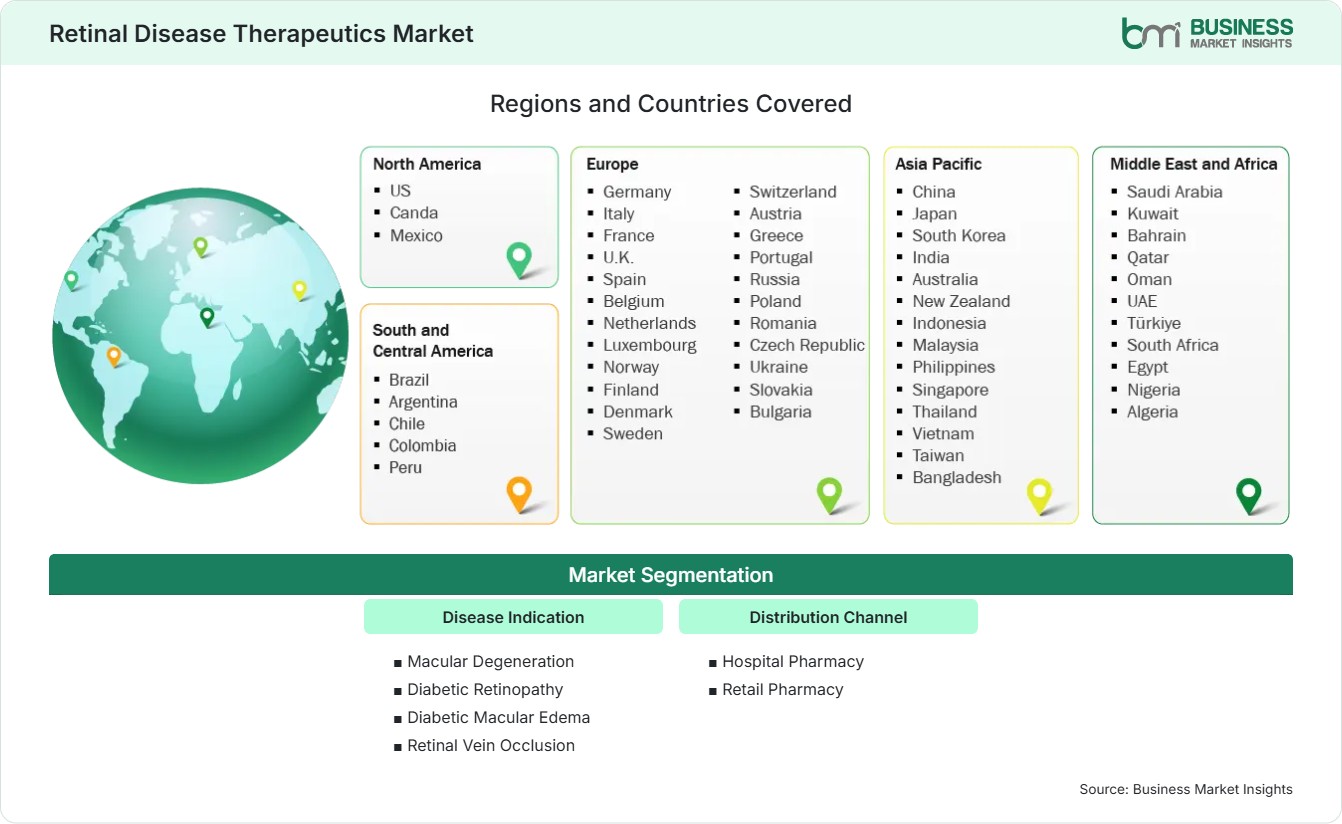
Global Market Geography
FREE PDF
Request your free sample
Request free sample
Segment Analysis

Retinal Disease Therapeutics Market Segmentation

Disease Indication

The Disease Indication segment accounted for approximately 68%–71% of total market revenue in 2025 and is projected to register a 9.8%–10.2% CAGR through 2033. Increasing prevalence of age-related and diabetes-associated retinal disorders, continuous innovation in biologic therapies, and improved disease diagnosis continue supporting strong segment growth. The Retinal Disease Therapeutics Market scope continues expanding as pharmaceutical companies introduce innovative therapies targeting previously underserved retinal conditions.

  • Macular Degeneration: The largest sub-segment owing to increasing elderly populations, strong anti-VEGF therapy adoption, improved diagnosis rates, and continuous development of long-acting biologic treatments.
  • Diabetic Retinopathy: Strong growth supported by increasing diabetes prevalence, expanding retinal screening initiatives, earlier diagnosis, and growing availability of advanced therapeutic options.
  • Diabetic Macular Edema: Growing therapeutic demand driven by rising diabetic complications, increasing awareness, improved ophthalmology access, and broader adoption of biologic treatment regimens.
  • Retinal Vein Occlusion: Stable market expansion supported by improved retinal imaging, earlier intervention, and increasing utilization of anti-VEGF and corticosteroid-based treatment approaches.

Distribution Channel

The Distribution Channel segment represented approximately 29%–32% of market revenue in 2025 and is anticipated to expand at a 9.2%–9.6% CAGR through 2033. Efficient medicine distribution, cold-chain logistics, and increasing availability of specialty biologics continue supporting treatment accessibility. The Retinal Disease Therapeutics Market trends increasingly favor specialized hospital-based administration alongside improved pharmaceutical distribution networks.

  • Hospital Pharmacy: Dominates distribution owing to specialist-administered biologics, intravitreal injection procedures, integrated patient monitoring, and advanced ophthalmology treatment facilities.
  • Retail Pharmacy: Continues expanding through improved availability of supportive ophthalmic medicines, patient convenience, stronger pharmaceutical distribution networks, and expanding specialty pharmacy services.
Market Forces

Retinal Disease Therapeutics Market Dynamics

Key Market Drivers

Rising Prevalence of Retinal Disorders Among Aging Populations

The increase in numbers of elderly people in the world is contributing towards more cases of age-related macular degeneration and other eye conditions which will require a continued treatment process. Based on WHO, population aging is continuously on the rise in the world, causing more chronic ophthalmic conditions among others. With increase in life expectancy and increased disease awareness coupled with increased ophthalmic screening services, more people are getting diagnosed and treated early. This Retinal Disease Therapeutics Market trend is aided by innovations in the field such as anti-VEGF biologics and personalized treatments.

Increasing Diabetes Driving Diabetic Retinopathy Cases

The increased prevalence of diabetes leads to an increased number of patients suffering from diabetic retinopathy and diabetic macular edema all over the world. The sedentary lifestyle, overweight issues, and aging population are some of the factors that are contributing to increased incidence of diabetes and thus, leading to high demand for retina treatment solutions. More healthcare institutions are offering diabetic eye screening services in order to intervene early and avoid any preventable blindness. Pharmaceutical companies are working on developing more advanced biological treatments and combination treatments.

Advancements in Retinal Imaging and Therapeutic Technologies

Continuous innovations in optical coherence tomography, retinal imaging using artificial intelligence, gene therapy, and long-acting biologics are revolutionizing the diagnostic procedures and treatments for retinal diseases. Innovative imaging technologies enable early disease detection and monitoring, while new drugs offer improved therapeutic persistence and reduced need for injections. Continued funding of clinical research in ophthalmology and precision medicine will further help develop innovative solutions for retinal diseases, thus bolstering the future prospects of the market.

Key Market Opportunities

Expansion of Novel Therapies for Untreated Retinal Conditions

Advancements in research on treatments for inherited retinal disorders, geographic atrophy, and other poorly-served ophthalmological conditions create ample business opportunities. The pharmaceutical industry is focusing on the development of biologics, sustained-release implants, and novel molecular therapies for diseases with high unmet medical need. As per Retinal Disease Therapeutics Market Forecast, there will be more funding in conducting clinical trials, gaining regulatory approval, and commercializing novel first-in-class retinal disease therapies. The increasing cooperation between biotech companies, research institutions, and health organizations is going to speed up innovation and enhance patient care.

Increasing Investment in Gene Therapy and Regenerative Medicine

Gene therapy, stem cell research, and regenerative medicine are creating transformative opportunities within retinal disease treatment. Advances in genetic engineering and targeted delivery technologies are enabling development of therapies capable of addressing the underlying causes of inherited retinal disorders rather than only managing symptoms. Continued investment from pharmaceutical companies, biotechnology firms, and venture capital organizations is expected to accelerate commercialization of next-generation ophthalmic therapies over the forecast period.

Growing Opportunities in Emerging Markets with Rising Eye Care Access

Expanding healthcare infrastructure, improving reimbursement systems, increasing awareness of retinal diseases, and rising ophthalmology specialist availability are strengthening demand across emerging economies. Governments continue investing in diabetic eye screening, blindness prevention initiatives, and specialist eye care services. These developments create favorable conditions for broader adoption of advanced retinal therapeutics while enabling pharmaceutical companies to expand their geographic presence through strategic partnerships and localized commercialization initiatives.

Market Restraints and Challenges

High Treatment Costs Limiting Patient Access to Advanced Therapies

Factor: Innovation through biologic drugs, sustained release implants, gene therapy, and repeat intravitreal injections require high costs of treatment, specific healthcare infrastructure, and constant patient follow-up. The unavailability of reimbursement in a number of healthcare systems makes the treatment more expensive for the patients. Impact: High costs of treatment make the treatments less accessible, start therapy late, and less available in poor areas because of increasing the prevalence of the diseases. The pharmaceutical industry and healthcare facilities keep trying to find ways to price treatments based on their value.

Complex Regulatory Pathways for Novel Retinal Treatments

Factor: Gene therapy, regenerative medicines, and new biologics need extensive testing, safety observation, and documentation prior to market launch. Stringent regulations complicate the development process, raise financial stakes, and prolong the product approval period. Impact: Long approval period delays market introduction, raises the cost of development, and poses uncertainties to companies regarding commercialization of their products. Companies are building strong regulatory skills, conducting multicountry clinical trials, and closely cooperating with health regulators to expedite the approval process without compromising on safety and efficacy standards.

Company Analysis

Competitive Landscape

The competitive landscape of the Market is characterized by continuous innovation in anti-VEGF therapies, gene therapies, sustained-release drug delivery technologies, and regenerative medicine. The Retinal Disease Therapeutics Market analysis indicates that leading pharmaceutical and biotechnology companies are expanding their ophthalmology portfolios through strategic acquisitions, licensing agreements, clinical collaborations, and investments in next-generation retinal therapeutics.

Company Name

Overview

Products and Services Relevant to this Market

Roche Holding AG

Global pharmaceutical leader with extensive expertise in ophthalmology, biologics, and precision medicine, supported by strong clinical research capabilities and worldwide commercial presence.

Anti-VEGF biologics, retinal disease therapies, ophthalmology research, clinical development, precision medicine solutions, specialty pharmaceuticals, and innovative treatments for chronic retinal disorders.

Novartis AG

Multinational healthcare company focused on innovative medicines, advanced ophthalmology research, and long-term investments in retinal disease therapies and biologic product development.

Ophthalmology biologics, retinal therapeutics, specialty medicines, clinical research, innovative drug development, precision treatment solutions, and advanced pharmaceutical manufacturing capabilities.

Regeneron Pharmaceuticals, Inc.

Biotechnology company recognized for pioneering biologic therapies and continuous innovation in retinal disease treatment through advanced clinical development and research programs.

Anti-VEGF biologics, retinal disease treatments, ophthalmology innovation, biologic drug development, clinical research programs, and specialty pharmaceutical products for vision-threatening diseases.

Bayer AG

Global life sciences company maintaining a strong ophthalmology portfolio while investing in innovative therapies, strategic collaborations, and long-term retinal disease research initiatives.

Ophthalmology medicines, retinal biologics, anti-VEGF therapies, specialty pharmaceuticals, collaborative drug development, and innovative therapeutic solutions for retinal disorders.

AbbVie Inc.

Research-driven biopharmaceutical company expanding its ophthalmology portfolio through innovative biologics, strategic acquisitions, and advanced therapeutic development across multiple disease areas.

Specialty biologics, ophthalmic therapeutics, pharmaceutical research, immunology expertise, retinal disease treatments, clinical development, and innovative healthcare solutions.

Genentech, Inc.

Biotechnology innovator focused on developing breakthrough medicines while strengthening ophthalmology research through advanced biologics and next-generation retinal therapies.

Anti-VEGF therapies, retinal biologics, ophthalmic drug development, biotechnology research, clinical innovation, specialty pharmaceuticals, and precision medicine solutions.

Johnson & Johnson

Diversified global healthcare company delivering pharmaceutical innovation, medical technologies, and long-term investments supporting advanced ophthalmology treatment and vision care solutions.

Ophthalmic pharmaceuticals, vision care technologies, specialty medicines, retinal treatment support, healthcare innovation, and advanced therapeutic product development.

AstraZeneca plc

Global biopharmaceutical company expanding research activities across specialty medicines while exploring innovative approaches for retinal diseases and precision healthcare applications.

Specialty pharmaceuticals, biologic research, clinical development, precision medicine, ophthalmology collaborations, therapeutic innovation, and advanced healthcare solutions.

Sanofi S.A.

International pharmaceutical company investing in biologic innovation, research partnerships, and advanced therapeutic platforms addressing complex chronic diseases including ophthalmic conditions.

Biologic therapies, specialty medicines, pharmaceutical research, innovative drug development, clinical programs, and advanced treatment solutions supporting retinal healthcare.

Biogen Inc.

Biotechnology company leveraging scientific expertise in neurological and ophthalmic research to develop innovative therapies addressing complex retinal and neurodegenerative diseases.

Biologic drug development, retinal disease research, specialty therapeutics, clinical innovation, precision medicine, biotechnology solutions, and advanced pharmaceutical development programs.

.

Trust & Transparency

Research Methodology

The market analysis combines proprietary research with secondary data from government agencies, company disclosures, regulatory filings, industry databases and expert interviews. Market estimates are validated through data triangulation, cross-market benchmarking and analyst review.

View Full Research Methodology

Questions Answered

Frequently Asked Questions

How does the Market Report help stakeholders?

The Retinal Disease Therapeutics Market Report provides detailed insights into disease trends, therapeutic innovations, competitive strategies, regional opportunities, and investment priorities, supporting informed business and strategic decision-making.

Which distribution channel dominates the market?

Hospital Pharmacy remains the dominant distribution channel because advanced retinal therapies are primarily administered in specialized ophthalmology centers under expert clinical supervision.

Why is Asia Pacific the fastest-growing regional market?

Asia Pacific benefits from rising diabetes prevalence, expanding healthcare infrastructure, improving access to ophthalmic specialists, increasing healthcare expenditure, and government initiatives promoting early eye disease diagnosis.

Which disease indication holds the largest market share?

Macular Degeneration remains the leading disease indication due to the growing elderly population, widespread use of anti-VEGF therapies, and increasing diagnosis of age-related retinal disorders.

What is driving the Retinal Disease Therapeutics Market?

The increasing prevalence of age-related retinal disorders, rising diabetes cases, continuous innovation in biologics, expanding retinal screening programs, and advancements in gene therapy are the primary drivers supporting market growth.

Access the Full Retinal Disease Therapeutics Market Report

Get segment-level forecasts, regional estimates, competitive benchmarking, company profiles and downloadable Excel datasets.

Access the full Retinal Disease Therapeutics Market Report
350 pages PDF & Excel | 2026-08-25