
Rheumatoid Arthritis Therapeutics Market Outlook: Size, Share, Trends, Growth Analysis, Competitive Landscape & Forecast, 2026-2033

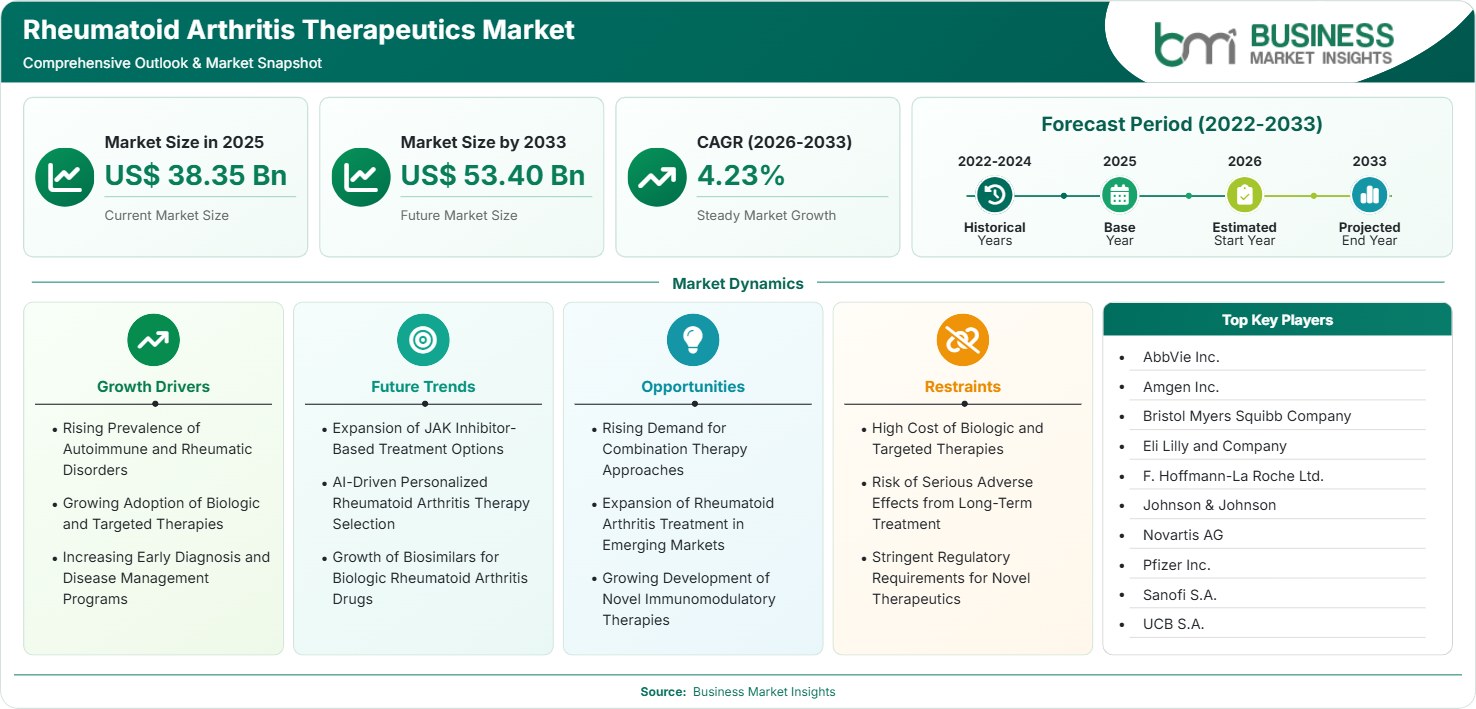
The Rheumatoid Arthritis Therapeutics Market size was valued at US$ 38.35 Billion in 2025 and is projected to reach US$ 53.40 Billion by 2033, growing at a CAGR of 4.23% during 2026–2033. Rising prevalence of rheumatoid arthritis, increasing adoption of biologic therapies, growing awareness regarding early disease diagnosis, and expanding access to advanced treatment options are supporting market growth worldwide.

Report Coverage
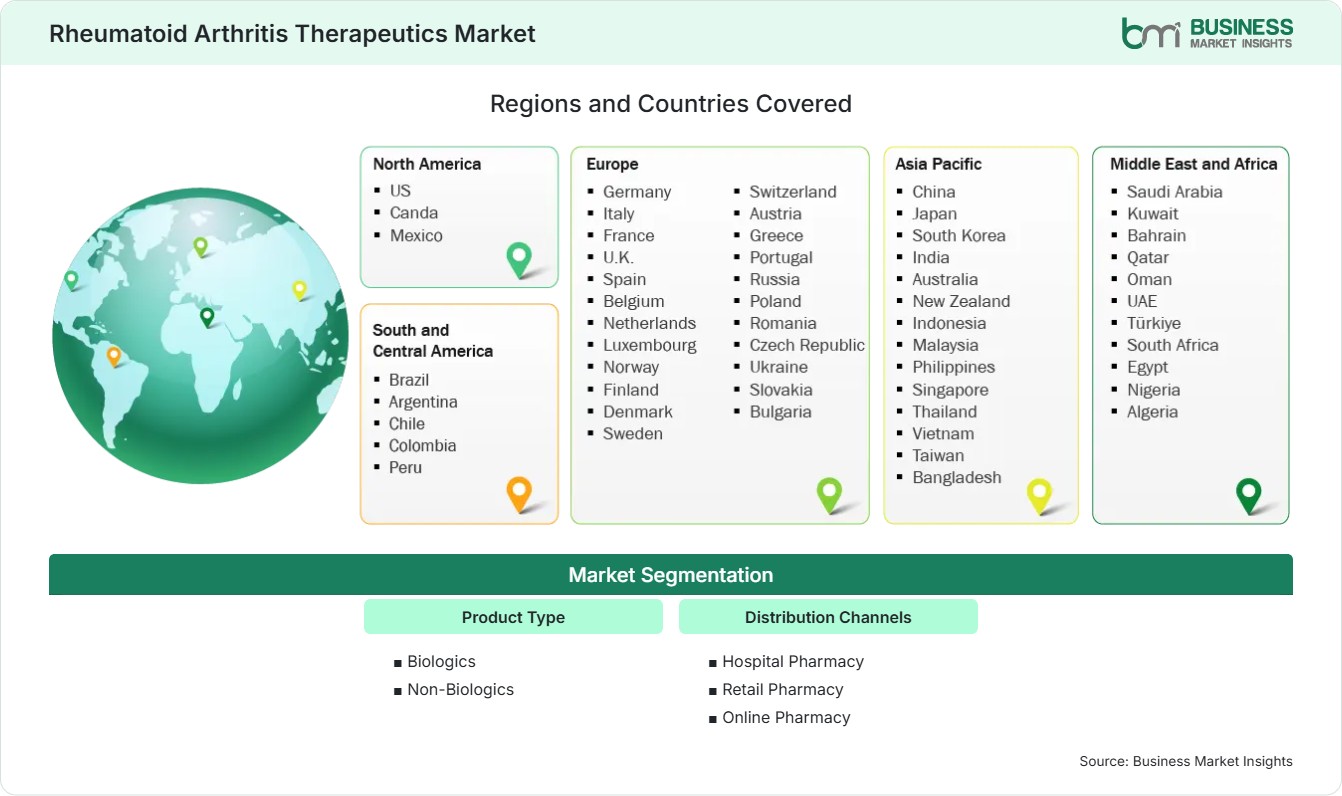
  • Product Type: Biologics, Non-Biologics
  • Distribution Channels: Hospital Pharmacy, Retail Pharmacy, Online Pharmacy
US$ 38.35 Bn Market size in 2025
US$ 53.40 Bn Market Size by 2033
4.23% CAGR, 2026 - 2033
2026-2033 Forecast Period

AI Overview

Rheumatoid Arthritis Therapeutics Market Summary

  • North America Region: North America holds a rheumatoid arthritis therapeutics market share of 38%–41% in 2025, growing with a CAGR of 3.8%–4.3% during 2026–2033. Strong healthcare infrastructure, high biologic therapy adoption, favorable reimbursement policies, and increasing investment in autoimmune disease management continue supporting regional leadership. The U.S. market is expected to register a CAGR of 3.9%–4.4%.
  • Fastest Growing Region: Asia Pacific accounts for 22%–25% share in 2025 and is projected to grow at a CAGR of 5.2%–5.8% through 2033. Growing healthcare expenditure, increasing awareness regarding autoimmune disorders, improving diagnostic capabilities, and expanding treatment accessibility continue supporting regional expansion.
  • Leading Segment: Biologics represent 63%–66% share in 2025 and are expected to grow at a CAGR of 4.5%–5.1% through 2033. Superior clinical efficacy, targeted treatment mechanisms, and strong physician preference continue supporting segment dominance.
  • High Growth Segment: Online Pharmacy accounts for 10%–13% share in 2025 and is forecast to grow at a CAGR of 6.4%–7.0% during 2026–2033. Rising digital healthcare adoption, increasing patient convenience, and expanding e-pharmacy networks are driving growth.
  • Key Market Opportunity: Expanding utilization of targeted biologics and next-generation autoimmune therapies is creating significant opportunities for manufacturers and healthcare providers.
  • Major Market Players: AbbVie Inc., Boehringer Ingelheim International GmbH, Novartis AG, Regeneron Pharmaceuticals, Inc., Pfizer Inc., Bristol-Myers Squibb Company, F. Hoffmann-La Roche Ltd., UCB S.A., Johnson & Johnson Services, Inc., Amgen Inc.
Strategic Insights

Rheumatoid Arthritis Therapeutics Market: Strategic Insights

Rheumatoid Arthritis Therapeutics Market Strategic Framework
FREE PDF
Request your free sample
Request free sample
Stakeholder View

Key Takeaways

  • Biologic therapies continue dominating the rheumatoid arthritis market due to their targeted mechanisms of action, proven clinical effectiveness, and ability to slow disease progression while improving long-term quality of life for patients.
  • Early diagnosis and timely treatment initiation are becoming critical healthcare priorities, as prompt intervention helps reduce irreversible joint damage, enhances treatment outcomes, and improves long-term physical function and overall patient well-being.
  • The growing burden of autoimmune disorders continues creating sustained demand for advanced rheumatoid arthritis therapies, encouraging pharmaceutical companies to invest in innovative treatment options that offer greater efficacy and improved safety profiles.
  • Asia Pacific presents significant growth opportunities because of expanding healthcare infrastructure, rising healthcare expenditure, increasing disease awareness, and broader access to specialty therapies across developing and emerging economies.
  • Pharmaceutical innovation remains focused on improving treatment efficacy, reducing side effects, developing convenient dosing methods, and enhancing overall patient adherence through next-generation therapeutic solutions.
  • Digital healthcare platforms and online pharmacies are increasingly improving therapy accessibility, supporting remote patient monitoring, strengthening medication adherence, and enhancing patient engagement through personalized healthcare services and digital care solutions.
Geographic Outlook

Rheumatoid Arthritis Therapeutics Market Regional Highlights

North America Rheumatoid Arthritis Therapeutics Market

North America accounts for 38%–41% Rheumatoid Arthritis Therapeutics Market share in 2025 and is projected to grow at a CAGR of 3.8%–4.3% through 2033. Strong biologics adoption, advanced healthcare infrastructure, favorable reimbursement systems, and widespread awareness regarding autoimmune disease management continue supporting regional leadership.

  • Healthcare providers increasingly utilize targeted biologic therapies and advanced treatment protocols to improve disease control and reduce long-term joint damage among rheumatoid arthritis patients.
  • Strong reimbursement coverage for specialty therapies continues encouraging wider adoption of premium treatment options across healthcare systems.
  • Pharmaceutical companies actively invest in clinical research and patient support initiatives to strengthen therapy accessibility and adherence.
  • Growing focus on personalized medicine is supporting the integration of targeted therapies into routine clinical practice.
  • Expansion of specialty rheumatology centers continues improving diagnosis rates and long-term disease management outcomes.

US Rheumatoid Arthritis Therapeutics Market

The United States contributes approximately 83%–87% of North American revenue and is expected to register a CAGR of 3.9%–4.4% through 2033. Advanced treatment availability, strong healthcare spending, and widespread physician awareness continue supporting rheumatoid arthritis therapeutics market growth.

  • Physicians increasingly prescribe biologic therapies and advanced disease-modifying antirheumatic drugs (DMARDs) because of their proven ability to deliver superior disease control, reduce inflammation, slow joint damage, and significantly improve long-term patient quality of life.
  • Growing awareness regarding the benefits of early intervention continues encouraging faster diagnosis and timely treatment initiation, leading to improved clinical outcomes, better disease management, and reduced long-term complications.
  • Significant clinical research activity remains focused on expanding therapeutic options for autoimmune disorders through innovative drug development, advanced biologics, and next-generation targeted therapies.
  • Patient assistance programs continue improving accessibility to high-value treatment solutions by reducing financial barriers, supporting medication adherence, and increasing access to advanced therapies for eligible patients.

Europe Rheumatoid Arthritis Therapeutics Market

Europe represents 26%–29% of global revenue in 2025 and is anticipated to expand at a CAGR of 4.0%–4.6% through 2033. Increasing prevalence of autoimmune diseases, strong healthcare systems, and broad access to innovative therapies continue supporting regional growth. Germany remains the leading market, while Poland demonstrates stronger growth potential.

  • Germany maintains regional leadership through advanced rheumatology care infrastructure and widespread biologic adoption.
  • Poland is among the fastest-growing markets and is projected to register a CAGR of 5.0%–5.6% during the forecast period.
  • Growing acceptance of targeted therapies continues improving treatment outcomes across patient populations.
  • Healthcare providers increasingly focus on achieving disease remission through evidence-based treatment strategies.
  • Expansion of specialty treatment centers is enhancing patient access to innovative therapies.

Asia Pacific Rheumatoid Arthritis Therapeutics Market

Asia Pacific accounts for 22%–25% of global revenue in 2025 and is expected to achieve the fastest CAGR of 5.2%–5.8% through 2033. Improving healthcare infrastructure, growing awareness regarding autoimmune diseases, and increasing treatment accessibility continue supporting strong market expansion.

  • China remains the largest regional market due to its large patient population and ongoing healthcare modernization initiatives.
  • India is projected to achieve approximately 5.8%–6.4% CAGR, supported by increasing healthcare expenditure and growing awareness regarding autoimmune disorder management.
  • Rising diagnosis rates are contributing to higher demand for advanced rheumatoid arthritis therapies.
  • Expanding availability of biologics and specialty drugs is supporting stronger market penetration.
  • Healthcare reforms and improved insurance coverage continue enhancing patient access to treatment.

Rest of World Rheumatoid Arthritis Therapeutics Market

Rest of World accounts for 8%–11% of global revenue in 2025 and is projected to expand at a CAGR of 4.3%–4.9% through 2033. Growing healthcare investments, rising awareness regarding autoimmune diseases, and improving access to specialty medicines continue supporting market development.

  • Brazil continues generating demand for rheumatoid arthritis treatments due to increasing diagnosis rates and healthcare improvements.
  • The UAE is witnessing increased adoption of advanced biologic therapies supported by healthcare modernization initiatives.
  • Saudi Arabia is expected to achieve approximately 5.0%–5.6% CAGR through 2033, driven by expanding access to specialty care services.
  • Growing physician awareness is supporting earlier diagnosis and treatment intervention.
  • Increasing investments in chronic disease management programs continue strengthening market growth across emerging regions.
Global Market Geography
FREE PDF
Request your free sample
Request free sample
Segment Analysis

Rheumatoid Arthritis Therapeutics Market Segmentation

Product Type

The product type segment forms the foundation of rheumatoid arthritis treatment strategies, consisting of biologic and non-biologic therapies designed to manage disease progression, reduce inflammation, and improve patient quality of life. The segment accounts for approximately 63%–66% share in 2025 and is projected to grow at a CAGR of 4.5%–5.1% through 2033. The expanding Rheumatoid Arthritis Therapeutics Market scope is supported by increasing treatment adoption, continuous advancements in autoimmune disease management, and growing emphasis on targeted therapeutic approaches.

  • Biologics: Biologics dominate the market owing to their targeted mechanism of action, strong clinical efficacy, ability to slow disease progression, and widespread adoption among patients with moderate to severe rheumatoid arthritis.
  • Non-Biologics: Non-biologic therapies continue to play a critical role in treatment protocols due to their accessibility, established clinical use, lower treatment costs, and suitability for early-stage disease management.

Distribution Channels

Distribution channels play a crucial role in ensuring patient access to rheumatoid arthritis treatments across healthcare systems. This segment accounts for approximately 34%–37% share in 2025 and is expected to register a CAGR of 4.8%–5.4% through 2033. Current Rheumatoid Arthritis Therapeutics Market trends indicate increasing utilization of digital healthcare platforms and broader accessibility of specialty medications.

  • Hospital Pharmacy: Hospital pharmacies remain the leading distribution channel due to administration requirements for biologic therapies, specialist supervision, and comprehensive disease management programs.
  • Retail Pharmacy: Retail pharmacies continue serving a large patient base through broad geographic accessibility, prescription fulfillment capabilities, and chronic disease medication management support.
  • Online Pharmacy: Online pharmacies represent the fastest-growing channel owing to increasing digital healthcare adoption, home delivery services, improved patient convenience, and growing e-commerce penetration within healthcare markets.
Market Forces

Rheumatoid Arthritis Therapeutics Market Dynamics

Key Market Drivers

Rising Prevalence of Autoimmune and Rheumatic Disorders

The growing incidence of autoimmune diseases and rheumatic conditions around the world has been leading to the rising requirement for novel rheumatoid arthritis treatments. Aging population, genetic factors, environmental factors, bad health-related lifestyles, and rising awareness about diseases are among other factors that are resulting in the growing patient population that would require therapy and management of the disease. The focus of healthcare professionals on early diagnosis and treatment for reducing joint damages, avoiding disabilities, and improving patient outcomes is another factor adding to the growing market opportunities for players. Rising diagnosis incidences in developed as well as developing healthcare settings would ensure consistent demand for products during the forecast period.

Growing Adoption of Biologic and Targeted Therapies

Increasingly, biologic and targeted drugs have become the drug of choice in moderate to severe cases of rheumatoid arthritis as a result of their capacity to selectively target immune pathways responsible for causing the disease. Biologics and targeted agents are more effective than most traditional treatment regimens in terms of controlling the condition, reducing inflammation, slowing the rate of joint destruction and providing better clinical outcomes. Physicians' increasing confidence, growing clinical evidence, favorable guidelines, and patient accessibility are helping to promote their acceptance across the globe. Pharmaceutical advancements will continue to enhance their efficacy through the emergence of new biologics and biosimilars.

Increasing Early Diagnosis and Disease Management Programs

Healthcare firms are now focusing on providing methods of early diagnosis and preventive management of the disease to minimize future complications caused by rheumatoid arthritis. Improvements in diagnostic technology, increased awareness of the condition, and easy access to specialists are helping diagnose patients who need medical treatment. This will help in controlling symptoms, maintaining joint functionality, and reducing healthcare expenditures related to the advanced stage of the condition.

Key Market Opportunities

Rising Demand for Combination Therapy Approaches

Healthcare providers are increasingly adopting combination therapy strategies that utilize multiple treatment modalities to improve clinical outcomes and achieve disease remission. Combining biologics, targeted therapies, and conventional disease-modifying treatments can provide enhanced therapeutic effectiveness for certain patient populations. Growing clinical evidence supporting personalized treatment approaches is encouraging broader implementation of combination strategies. This trend creates opportunities for pharmaceutical companies to expand therapeutic portfolios and optimize patient care pathways.

Expansion of Rheumatoid Arthritis Treatment in Emerging Markets

Emerging economies present substantial opportunities for rheumatoid arthritis therapeutic manufacturers due to improving healthcare infrastructure, rising healthcare expenditures, and increasing disease awareness. Governments and healthcare organizations are working to improve diagnosis rates and treatment accessibility for chronic autoimmune conditions. Expanding insurance coverage, healthcare modernization initiatives, and improved access to specialty medicines continue supporting market penetration. These factors are creating attractive growth opportunities across developing healthcare systems.

Growing Development of Novel Immunomodulatory Therapies

Pharmaceutical companies continue investing heavily in the development of next-generation immunomodulatory therapies designed to provide improved efficacy, safety, and patient outcomes. Research efforts are increasingly focused on targeted mechanisms that address underlying disease pathways while minimizing adverse effects. Advances in biotechnology, precision medicine, and autoimmune disease research are accelerating innovation. Long-term Rheumatoid Arthritis Therapeutics Market Forecasts remain favorable as novel therapies continue expanding available treatment options and addressing unmet clinical needs.

Market Restraints and Challenges

High Cost of Biologic and Targeted Therapies

Factor: Biologic and targeted therapies often involve substantial treatment costs due to complex manufacturing processes, specialized development requirements, and ongoing administration expenses. These costs can place financial pressure on healthcare systems and patients, particularly in regions with limited reimbursement support. Impact: High therapy costs may restrict treatment accessibility, delay treatment initiation, and limit adoption among certain patient populations. Cost considerations remain a significant challenge affecting broader market penetration and healthcare affordability.

Risk of Serious Adverse Effects from Long-Term Treatment

Factor: Long-term use of biologics and immunomodulatory therapies may be associated with potential adverse effects including infections, immune-related complications, and other treatment-associated risks. Careful monitoring and ongoing clinical evaluation are often required throughout therapy administration. Impact: Safety concerns can influence prescribing decisions, affect patient adherence, and increase healthcare monitoring requirements. Managing treatment-related risks remains an important consideration for healthcare providers and pharmaceutical manufacturers seeking to optimize long-term patient outcomes.

Company Analysis

Competitive Landscape

The Rheumatoid Arthritis Therapeutics Market analysis is characterized by strong competition among global pharmaceutical companies focused on biologics, targeted therapies, immunomodulators, and autoimmune disease treatment solutions. Market participants are investing heavily in biologic innovation, novel therapeutic mechanisms, biosimilar development, clinical research, and patient support programs to strengthen their market positions. Strategic collaborations, indication expansions, and next-generation autoimmune therapies continue shaping the competitive landscape.

Company Name

Overview

Products and Services relevant to this market

AbbVie Inc.

Global biopharmaceutical company with a strong presence in immunology and autoimmune disease treatment.

Biologic therapies, immunology treatments, rheumatoid arthritis therapeutics, autoimmune disease management solutions, and specialty medicines.

Boehringer Ingelheim International GmbH

Research-driven pharmaceutical company focused on innovative therapies across multiple disease areas.

Autoimmune disease therapies, immunology treatments, specialty pharmaceuticals, and chronic disease management solutions.

Novartis AG

Multinational pharmaceutical company focused on innovative medicines and advanced therapeutic solutions.

Biologic therapies, immunomodulatory treatments, specialty pharmaceuticals, and autoimmune disease management products.

Regeneron Pharmaceuticals, Inc.

Biotechnology company specializing in innovative biologic therapies and targeted medicines.

Monoclonal antibody therapies, immunology treatments, biologic medicines, and autoimmune disease research solutions.

Pfizer Inc.

Global pharmaceutical company with a diversified portfolio across immunology and chronic disease treatments.

Rheumatoid arthritis therapies, biologics, targeted medicines, specialty pharmaceuticals, and autoimmune disease treatment solutions.

Bristol-Myers Squibb Company

Biopharmaceutical company focused on innovative therapies for immune-mediated diseases and chronic conditions.

Immunomodulatory therapies, autoimmune disease treatments, biologics, specialty medicines, and advanced therapeutic solutions.

F. Hoffmann-La Roche Ltd.

Global healthcare company active in biotechnology, specialty pharmaceuticals, and immunology treatments.

Biologic therapies, autoimmune disease medicines, immunology products, specialty pharmaceuticals, and targeted treatment solutions.

UCB S.A.

Biopharmaceutical company specializing in immunology and neurological disorder treatments.

Rheumatoid arthritis therapies, biologics, autoimmune disease medicines, immunology products, and specialty treatment solutions.

Johnson & Johnson Services, Inc.

Diversified healthcare company with strong capabilities in immunology and specialty medicines.

Biologic therapies, autoimmune disease treatments, specialty pharmaceuticals, immunology products, and chronic disease management solutions.

Amgen Inc.

Biotechnology company focused on innovative biologics and immune-mediated disease treatments.

Biologic medicines, biosimilars, rheumatoid arthritis therapeutics, immunology products, and advanced treatment platforms.

Trust & Transparency

Research Methodology

The market analysis combines proprietary research with secondary data from government agencies, company disclosures, regulatory filings, industry databases and expert interviews. Market estimates are validated through data triangulation, cross-market benchmarking and analyst review.

View Full Research Methodology

Questions Answered

Frequently Asked Questions

What role do biologic therapies play in rheumatoid arthritis management?

Biologic therapies target specific immune pathways responsible for inflammation, helping reduce symptoms, slow disease progression, improve joint function, and enhance patient quality of life.

What does this Rheumatoid Arthritis Therapeutics Market Report cover?

This report covers product type analysis, distribution channel trends, regional opportunities, competitive landscape assessment, market dynamics, and growth prospects through 2033.

Why are online pharmacies experiencing strong growth?

Online pharmacies are expanding rapidly because of increasing digital healthcare adoption, greater patient convenience, home delivery services, and improving accessibility to specialty medications.

Which product type segment dominates the market?

Biologics represent the leading segment due to their targeted mechanism of action, strong clinical efficacy, and ability to effectively slow disease progression in patients with moderate to severe rheumatoid arthritis.

What is driving growth in the rheumatoid arthritis therapeutics market?

Rising prevalence of autoimmune and rheumatic disorders, increasing adoption of biologic and targeted therapies, and growing emphasis on early diagnosis and disease management programs are major factors driving market growth.

Access the Full Rheumatoid Arthritis Therapeutics Market Report

Get segment-level forecasts, regional estimates, competitive benchmarking, company profiles and downloadable Excel datasets.

Access the full Rheumatoid Arthritis Therapeutics Market Report
350 pages PDF & Excel | 2026-08-12
Similar Research

Related Market Reports