
Scleroderma Therapeutics Market Outlook: Size, Share, Trends, Growth Analysis, Competitive Landscape & Forecast, 2026–2033

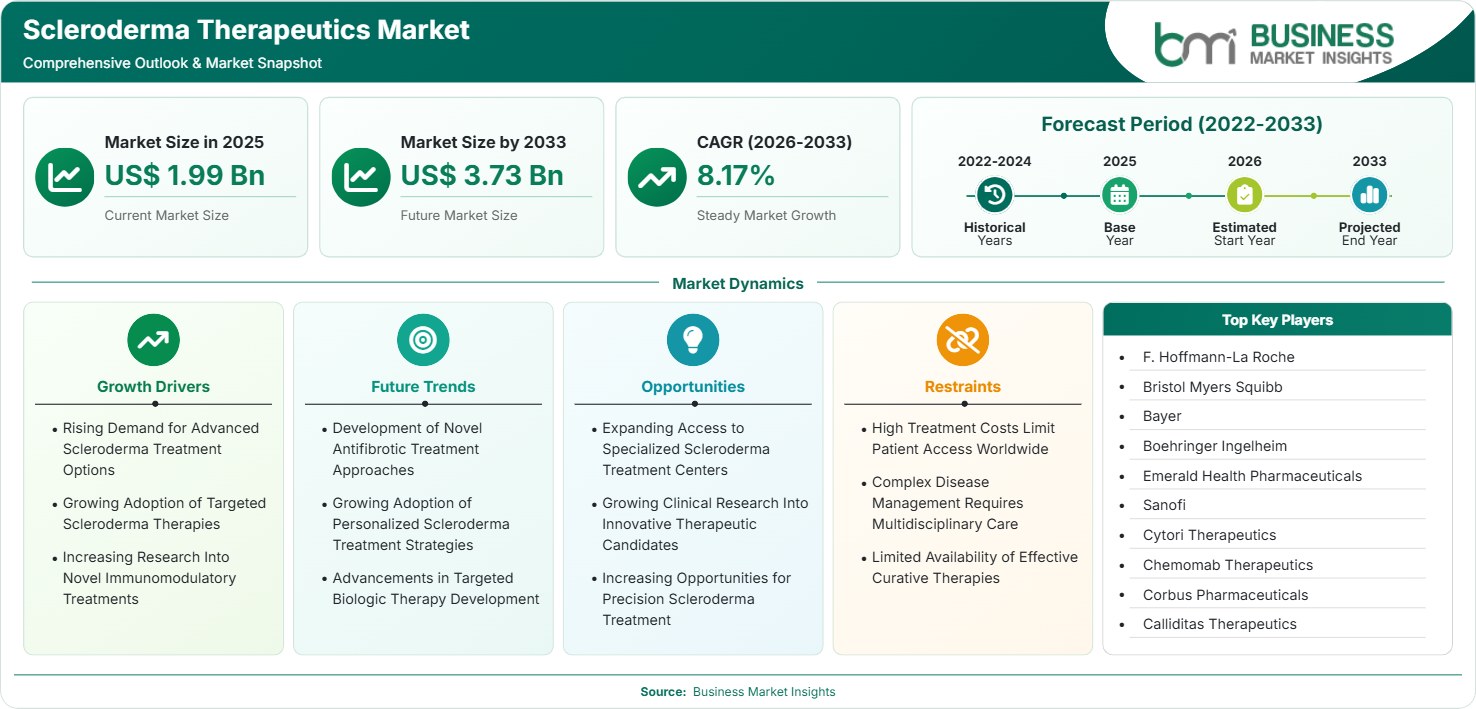
The Scleroderma Therapeutics Market size was valued at US$ 1.99 billion in 2025 and is projected to reach US$ 3.73 billion by 2033, growing at a CAGR of 8.17% during 2026–2033. Rising treatment demand, targeted therapies, specialist care expansion, and therapeutic innovation are creating opportunities.

Report Coverage
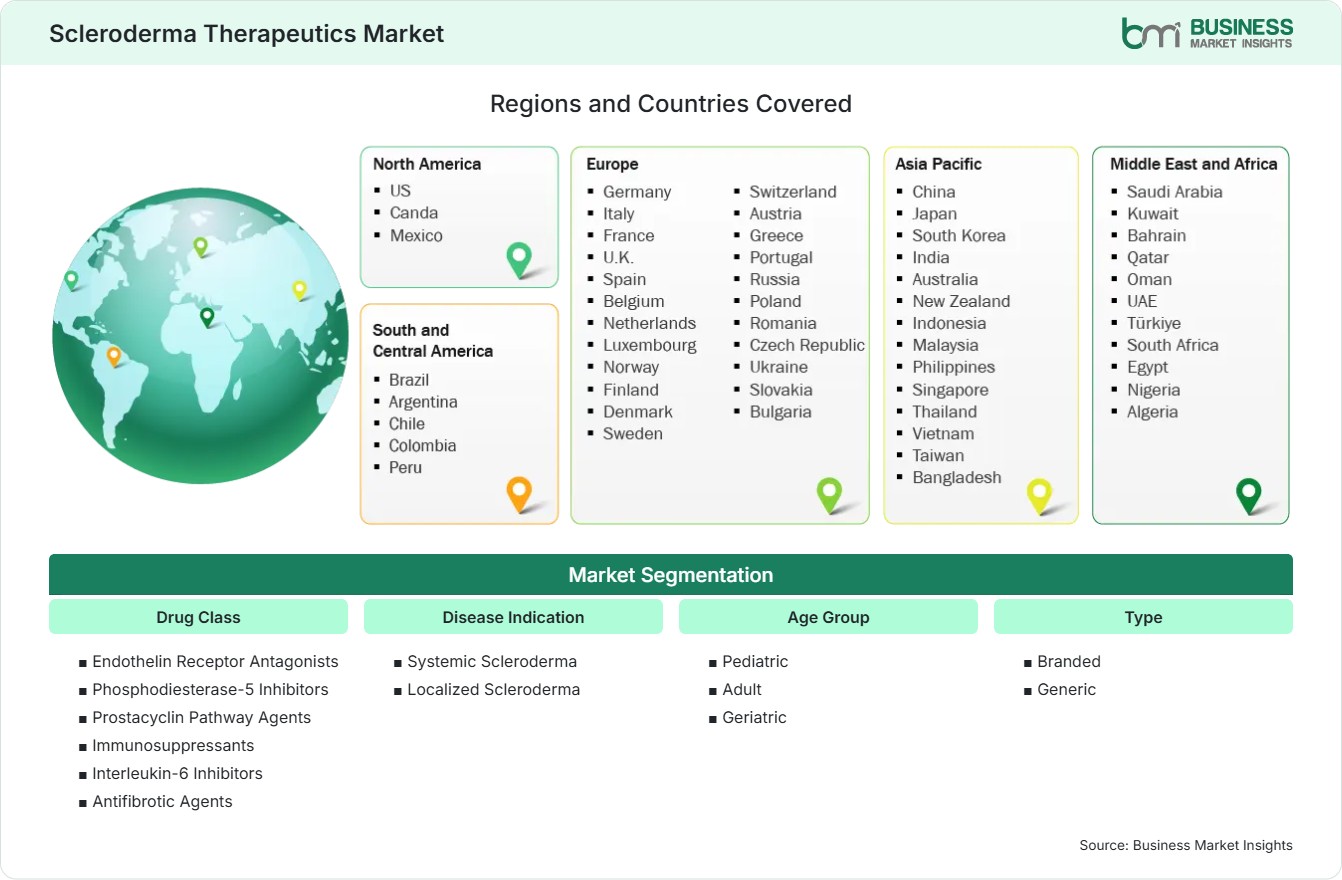
  • Drug Class: Endothelin Receptor Antagonists , Phosphodiesterase-5 Inhibitors, Prostacyclin Pathway Agents, Immunosuppressants, Interleukin-6 Inhibitors, Antifibrotic Agents
  • Disease Indication: Systemic Scleroderma, Localized Scleroderma
  • Age Group: Pediatric, Adult, Geriatric
  • Type: Branded, Generic
  • Route of Administration: Oral, Intravenous, Subcutaneous, Topical
US$ 1.99 Bn Market size in 2025
US$ 3.73 Bn Market Size by 2033
8.17% CAGR, 2026 - 2033
2026-2033 Forecast Period

01 AI Overview

Scleroderma Therapeutics Market Summary

  • North America Region: North America holds a 31%–35% share in 2025 and is projected to grow at a 7.5%–8.2% CAGR through 2033, supported by specialist rheumatology care, advanced diagnostics, targeted therapies, clinical research, and treatment access. The United States holds a 72%–77% share within North America and is growing at a 7.8%–8.5% CAGR.
  • Fastest Growing Region: Asia Pacific accounts for a 28%–32% share in 2025 and is projected to expand at a 8.6%–9.4% CAGR through 2033. Increasing specialist healthcare capacity, improved diagnosis, pharmaceutical access, and expanding treatment infrastructure are supporting regional demand.
  • Leading Segment: Immunosuppressants represent a 31%–35% share in 2025 and are projected to grow at a 7.8%–8.5% CAGR through 2033, supported by established use across systemic manifestations, physician familiarity, and demand for disease management.
  • High Growth Segment: Interleukin-6 (IL-6) Inhibitors account for a 12%–16% Scleroderma Therapeutics Market share in 2025 and are projected to grow at a 9.2%–10.2% CAGR through 2033, supported by targeted treatment development and increasing focus on inflammatory disease pathways.
  • Key Market Opportunity: Precision treatment, targeted immunomodulation, antifibrotic development, specialist centers, and improved patient identification create opportunities for differentiated therapies addressing systemic disease manifestations and unmet treatment needs.
  • Major Market Players: F. Hoffmann-La Roche AG; Bristol Myers Squibb Company; Bayer AG; Boehringer Ingelheim International GmbH; Emerald Health Pharmaceuticals, Inc.; Sanofi; Cytori Therapeutics, Inc.; Chemomab Therapeutics Ltd.; Corbus Pharmaceuticals Holdings, Inc.; Calliditas Therapeutics AB.
02 Strategic Insights

Scleroderma Therapeutics Market: Strategic Insights

Scleroderma Therapeutics Market Strategic Framework
FREE PDF
Request your free sample
Request free sample
03 Stakeholder View

Key Takeaways

  • The value chain spans pharmaceutical developers, biotechnology companies, clinical research organizations, specialist physicians, hospitals, pharmacies, and patient-support ecosystems.
  • Immunomodulatory, antifibrotic, vascular, and targeted biologic therapies provide differentiated opportunities because systemic disease involves multiple clinical manifestations requiring tailored treatment approaches.
  • Therapeutic innovation is moving toward pathway-specific interventions, biomarker-guided patient selection, combination treatment strategies, and improved management of progressive organ involvement.
  • Asia Pacific provides an attractive expansion environment as specialist healthcare capacity, diagnostic capabilities, pharmaceutical distribution, and awareness of rare autoimmune conditions continue developing.
  • Investment priorities increasingly center on differentiated mechanisms, clinical-stage assets, orphan-disease platforms, licensing opportunities, and technologies capable of addressing fibrosis and immune dysregulation.
  • Greater coordination between specialist centers and pharmaceutical developers can improve treatment identification, clinical-trial recruitment, real-world evidence generation, and commercialization opportunities.
04 Geographic Outlook

Scleroderma Therapeutics Market Regional Highlights

North America Scleroderma Therapeutics Market

North America represents 31%–35% of global demand in 2025 and is projected to grow at a 7.5%–8.2% CAGR through 2033. The region benefits from specialist care, advanced diagnosis, established pharmaceutical distribution, and strong clinical research capabilities. The United States remains the principal contributor, supported by sophisticated healthcare infrastructure and access to specialized therapeutic options.

  • Specialist rheumatology and multidisciplinary centers support diagnosis, treatment selection, monitoring, and management of complex systemic manifestations.
  • Established pharmaceutical channels facilitate access to branded, generic, biologic, and specialty therapies across major treatment settings.
  • Clinical research infrastructure supports development of targeted treatments addressing fibrosis, vascular dysfunction, and immune-mediated disease mechanisms.
  • Increasing recognition of organ-specific complications is encouraging earlier referral and more structured long-term disease management.

US Scleroderma Therapeutics Market

The United States accounts for 72%–77% of North American demand and is projected to grow at a 7.8%–8.5% CAGR through 2033. Specialist treatment networks, advanced pharmaceutical access, clinical research, and complex-care capabilities support sustained demand. The market benefits from strong participation in rare-disease research and expanding interest in targeted therapeutic approaches.

  • Academic medical centers provide multidisciplinary care for patients requiring coordinated rheumatology, pulmonary, vascular, and dermatology management.
  • Specialty pharmacy networks support distribution of complex therapies requiring monitoring, reimbursement coordination, or patient assistance.
  • Clinical research activity encourages development of novel immune-modulating and antifibrotic treatment candidates.

Europe Scleroderma Therapeutics Market

Europe holds a 25%–29% share in 2025 and is projected to grow at a 7.7%–8.4% CAGR through 2033. Germany, the United Kingdom, France, Italy, and Spain remain important markets, while Germany and the United Kingdom offer strong specialist-care and research environments. Treatment access, clinical guidance, and pharmaceutical innovation influence regional expansion.

  • Germany supports demand through established specialist networks and advanced treatment infrastructure for complex autoimmune disorders.
  • The United Kingdom benefits from specialist centers and structured clinical research focused on rare and systemic diseases.
  • France and Italy provide expanding opportunities through specialist rheumatology services and pharmaceutical distribution capabilities.
  • Spain represents a growing opportunity as diagnosis and access to specialist treatment continue improving.

Asia Pacific Scleroderma Therapeutics Market

Asia Pacific accounts for 28%–32% of global demand in 2025 and is projected to grow at a 8.6%–9.4% CAGR through 2033. China, Japan, India, South Korea, and Australia represent important markets, while India and China offer strong expansion potential through improving diagnosis and specialist healthcare capacity.

  • China is strengthening specialist treatment infrastructure and pharmaceutical access for complex autoimmune and connective-tissue disorders.
  • Japan provides a mature clinical environment supported by specialist physicians, advanced diagnostics, and established pharmaceutical distribution.
  • India presents opportunities through expanding tertiary hospitals, improving specialist availability, and increasing awareness of rare autoimmune conditions.
  • Australia supports research and specialist management through established healthcare institutions and advanced clinical capabilities.

Rest of World Scleroderma Therapeutics Market

Rest of World represents 10%–14% of global demand in 2025 and is projected to grow at a 6.8%–7.6% CAGR through 2033. South and Central America are supported by expanding specialist services, while Middle Eastern and African markets are developing pharmaceutical access and diagnostic capabilities.

Latin American markets are improving specialist referral pathways and access to autoimmune disease therapies, creating opportunities for pharmaceutical suppliers and specialty distributors. Middle Eastern markets are expanding advanced healthcare capacity, while selected African markets remain focused on improving diagnosis and treatment availability.

  • Brazil and Mexico provide the strongest regional commercial opportunities through larger healthcare systems and expanding specialist treatment capacity.
  • Saudi Arabia and the United Arab Emirates are developing advanced healthcare infrastructure that supports specialty pharmaceutical adoption.
  • South Africa remains an important African market as tertiary healthcare facilities expand access to complex disease management.
  • Regional distributors can improve treatment availability by strengthening specialty pharmacy and hospital supply networks.
Global Market Geography
FREE PDF
Request your free sample
Request free sample
05 Segment Analysis

Scleroderma Therapeutics Market Segmentation

Drug Class

Immunosuppressants hold a 31%–35% share in 2025 and are projected to grow at a 7.8%–8.5% CAGR through 2033. Established clinical use, broad disease-management applications, and physician familiarity support segment leadership across systemic manifestations.

  • Endothelin Receptor Antagonists (ERAs): ERAs address vascular complications associated with systemic disease and support treatment strategies focused on pulmonary vascular manifestations and digital-ulcer management.
  • Phosphodiesterase-5 (PDE-5) Inhibitors: PDE-5 inhibitors support vascular symptom management, particularly where impaired blood flow contributes to Raynaud-related complications and other vascular manifestations.
  • Prostacyclin Pathway Agents: Prostacyclin pathway agents provide specialized vasodilatory treatment options for severe vascular complications requiring advanced management and specialist administration.
  • Immunosuppressants: Immunosuppressants remain important for controlling immune-mediated disease activity, particularly systemic manifestations involving skin and internal organs requiring sustained therapeutic management.
  • Interleukin-6 (IL-6) Inhibitors: IL-6 inhibitors target inflammatory signaling and offer opportunities for more selective treatment approaches addressing inflammatory components of systemic disease.
  • Antifibrotic Agents: Antifibrotic agents focus on slowing fibrotic progression and provide differentiated treatment options for patients experiencing progressive tissue and organ involvement.

Disease Indication

Systemic Scleroderma represents the leading indication, supported by multisystem involvement and greater treatment complexity. The Scleroderma Therapeutics Market scope is expanding through therapies addressing vascular, immune, inflammatory, and fibrotic manifestations across systemic disease.

  • Systemic Scleroderma: Systemic disease requires coordinated management across multiple organs, creating sustained demand for immunomodulatory, vascular, antifibrotic, and targeted treatment approaches.
  • Localized Scleroderma: Localized disease primarily involves skin and underlying tissues, supporting demand for therapies focused on inflammation, fibrosis, skin symptoms, and localized disease control.

Age Group

Adult patients represent the dominant treatment population because systemic disease is more frequently diagnosed during adulthood. Growing specialist awareness and improved disease recognition are supporting treatment access across age groups, while pediatric care remains highly specialized.

  • Pediatric: Pediatric treatment requires age-appropriate dosing, specialist monitoring, and individualized management strategies addressing disease manifestations and developmental considerations.
  • Adult: Adults represent the principal treatment population, with demand shaped by systemic disease management, organ monitoring, long-term therapy, and specialist follow-up.
  • Geriatric: Geriatric treatment requires careful consideration of comorbidities, drug interactions, tolerability, organ function, and individualized treatment intensity.

Type

Branded therapies maintain strong demand because innovative targeted treatments and specialty products command significant clinical attention. Generic adoption remains relevant where established molecules offer lower-cost treatment options and broader accessibility across healthcare systems.

  • Branded: Branded therapies support innovation-led treatment strategies through differentiated mechanisms, specialty formulations, clinical evidence, and targeted approaches for complex disease manifestations.
  • Generic: Generic medicines improve affordability and accessibility for established therapies, supporting broader treatment availability where reimbursement systems emphasize cost-effective pharmaceutical options.

Route of Administration

Oral administration leads because convenience and outpatient usability support long-term treatment adherence. However, intravenous and subcutaneous routes remain important for specialty therapies, while topical products address selected localized manifestations.

  • Oral: Oral therapies provide convenient administration for chronic treatment and support outpatient management across systemic and vascular disease manifestations.
  • Intravenous: Intravenous therapies enable controlled delivery of selected specialty treatments and are particularly relevant where intensive treatment or clinical monitoring is required.
  • Subcutaneous: Subcutaneous administration supports biologic and specialty therapies requiring repeated dosing while offering alternatives to intravenous administration in suitable treatment pathways.
  • Topical: Topical therapies provide localized treatment options for selected skin manifestations, supporting symptom management and complementing broader therapeutic strategies.

Distribution Channel

Hospital Pharmacies remain important because complex therapies and specialist treatment pathways frequently involve hospital-based care. Retail and online pharmacies broaden accessibility for established outpatient medicines and recurring prescriptions.

  • Hospital Pharmacies: Hospital pharmacies support specialty therapies, monitored administration, complex prescriptions, and coordinated treatment for patients receiving multidisciplinary care.
  • Retail Pharmacies: Retail pharmacies provide convenient access to established oral and topical medicines, supporting recurring outpatient prescriptions and wider patient accessibility.
  • Online Pharmacies: Online pharmacies improve convenience and geographic reach for eligible prescription medicines, particularly where digital healthcare services and home delivery are established.
06 Market Forces

Scleroderma Therapeutics Market Dynamics

Key Market Drivers

Rising Demand for Advanced Scleroderma Treatment Options

Patients and doctors are now looking for treatments which will deal specifically with the mechanism behind a particular disease rather than just focusing on symptomatic management. This implies that any therapy that can take care of complex systemic symptoms needs to have a mechanism-based approach. As far as pharmaceuticals are concerned, they are now focusing more on mechanisms and effects on organs. The Scleroderma Therapeutics Market growth is due to the growing importance being attached to personalized medicine and improved monitoring of diseases. Specialized centers are becoming increasingly important for treatment selection and clinical research.

Growing Adoption of Targeted Scleroderma Therapies

Targeted treatments are becoming popular due to the complex nature of scleroderma involving interrelated immune, vascular, and fibrotic systems, which may need distinct modes of treatment. Developments in the field of biologics, pathway-targeted medicines, and anti-fibrotics are offering opportunities beyond the traditional use of immunosuppressive drugs. The Scleroderma Therapeutics Market trends are now becoming increasingly affected by the treatment regimes being devised based on symptoms and patients' attributes. The development in this area is motivating researchers to develop treatments with specific biological targets and desired outcomes.

Increasing Research Into Novel Immunomodulatory Treatments

The field of immune dysregulation will continue to influence drug development due to the involvement of inflammatory signaling in disease pathogenesis. Drug developers are exploring the potential of using targeted modulation of the immune system along with improved efficacy and tolerance. Further developments in biomarker discovery are aiding the identification of patients who can have different responses to specific mechanisms. Clinical exploration continues to aid in further differentiation of therapies and fosters collaboration between biotechnology firms and more traditional pharmaceutical companies. The Scleroderma Therapeutics Market forecast acknowledges a world where innovation is reliant upon validated biological targets, clinical outcomes, and therapeutic options.

Key Market Opportunities

Expanding Access to Specialized Scleroderma Treatment Centers

The establishment of specialized centers offers chances for improved diagnosis, multidisciplinary treatment, monitoring of patients, and enrollment in clinical trials. Specializing in rheumatology, pulmonology, dermatology, and vascular medicine may offer better chances for managing the cases that present complex symptoms. Clinicians can make use of specialist networks in educating on treatment and the longitudinal evaluation of disease. This can be advantageous for pharmaceutical companies through better clinical connections, patient identification, and evidence generation. The development of a specialist network in growing healthcare markets may also help to enhance access to advanced treatments.

Growing Clinical Research Into Innovative Therapeutic Candidates

There is potential in clinical research to pursue novel mechanisms of action, especially those addressing fibrosis, inflammation, and immune dysfunction. Rare disease product development may be aided by targeted patient trials, specialty investigator networks, and registries of patients, which will allow increased knowledge about the course of the disease. Endpoint selection may also improve the ability to generate and submit data. Investment in areas other than specific products includes investments in biomarkers, companion diagnostics, clinical trial technology, and real-world evidence systems. Pharmaceutical/biotech companies with unique assets may find partners for strategic collaboration with their programs showing both biological logic and clinical value.

Increasing Opportunities for Precision Scleroderma Treatment

Treatment modalities based on precision medicine offer the potential to enhance drug selection through the association between clinical features, disease symptoms, biological markers, and drug response. Precision treatment is highly applicable in scleroderma, as there can be significant differences in skin, blood vessel, lung, digestive tract, and musculoskeletal disease presentation. It offers the opportunity to develop drugs targeted for specific phenotypes rather than for the general population. Technology tools used in the tracking of clinical outcomes and disease progression can be used to optimize the treatment. There exist commercial possibilities in diagnostic services, stratified patient care, monitoring technology, and specialty treatment services.

Market Restraints and Challenges

High Treatment Costs Limit Patient Access Worldwide

Factor: Specialty drugs, biologicals, long-term therapy needs, diagnostic follow-ups, and the need for multidisciplinary care may result in high cumulative costs to the patient and the health-care system. Impact: High treatment costs can limit access, slow down the start of treatment, and result in disparities between adequately funded health-care systems and underfunded regions. There is a need for manufacturers to find the balance between innovativeness and affordability amid reimbursement demands. Patient assistance programs can help solve access issues, but are unable to solve the issue of affordability completely. Adoption is linked to showing the value to patients and to the healthcare system. Thus, pricing and reimbursement continue to be significant business factors.

Complex Disease Management Requires Multidisciplinary Care

Factor: Scleroderma can involve multiple organs and requires coordination among specialists, creating complex diagnostic, monitoring, and treatment pathways. Impact: Fragmented care can delay diagnosis, complicate treatment selection, and reduce continuity across disease-management stages. Healthcare systems need coordinated referral pathways, specialist networks, and integrated patient monitoring to manage complex manifestations effectively. Pharmaceutical commercialization can also become more challenging when treatment decisions involve several specialties and organ-specific considerations. Developers must therefore generate evidence that clearly demonstrates value across relevant patient populations and treatment settings. Improving care coordination can strengthen therapeutic adoption, but establishing multidisciplinary infrastructure remains difficult in regions with limited specialist availability.

07 Company Analysis

Competitive Landscape

The competitive environment is shaped by targeted therapy development, specialty pharmaceutical capabilities, clinical research, immunomodulation, antifibrotic innovation, and expansion of specialist treatment pathways. The Scleroderma Therapeutics Market analysis indicates that competitive positioning increasingly depends on differentiated mechanisms, clinical evidence, treatment accessibility, and the ability to address specific disease manifestations.

Company Name

Overview

Products and Services relevant to this market

F. Hoffmann-La Roche AG

Global pharmaceutical company with strong capabilities in specialty medicines and immunology.

Targeted biologic therapies, immunomodulatory treatments, clinical development, and specialty pharmaceutical services.

Bristol Myers Squibb Company

Global biopharmaceutical company focused on innovative medicines across serious diseases.

Immunomodulatory therapies, biologics, clinical research, and specialty treatment development.

Bayer AG

Diversified healthcare company with pharmaceutical capabilities across specialty therapeutic areas.

Specialty medicines, vascular therapies, clinical development, and pharmaceutical distribution.

Boehringer Ingelheim International GmbH

Research-driven pharmaceutical company active in respiratory, immunology, and specialty disease areas.

Antifibrotic therapies, specialty medicines, clinical research, and systemic disease treatment solutions.

Emerald Health Pharmaceuticals, Inc.

Biotechnology company focused on developing therapies for inflammatory and fibrotic conditions.

Novel therapeutic candidates, clinical development, and disease-focused pharmaceutical research.

Sanofi

Global healthcare company with broad capabilities in immunology and specialty medicines.

Immunomodulatory medicines, biologic therapies, clinical research, and specialty care solutions.

Cytori Therapeutics, Inc.

Biotechnology company associated with regenerative medicine and cell-based therapeutic development.

Cell-based therapeutic research, regenerative medicine platforms, and clinical development activities.

Chemomab Therapeutics Ltd.

Clinical-stage biotechnology company developing therapies targeting fibrotic and inflammatory diseases.

Antifibrotic drug candidates, targeted biological research, and clinical-stage therapeutic development.

Corbus Pharmaceuticals Holdings, Inc.

Biopharmaceutical company focused on immune-mediated and fibrotic disease programs.

Immunomodulatory candidates, fibrosis-focused research, clinical development, and specialty therapeutics.

Calliditas Therapeutics AB

Specialty pharmaceutical company focused on rare and significant immune-mediated diseases.

Specialty therapeutics, clinical development, immune-mediated disease treatments, and commercialization capabilities.

10 Trust & Transparency

Research Methodology

The market analysis combines proprietary research with secondary data from government agencies, company disclosures, regulatory filings, industry databases and expert interviews. Market estimates are validated through data triangulation, cross-market benchmarking and analyst review.

View Full Research Methodology

11 Questions Answered

Frequently Asked Questions

What does the Scleroderma Therapeutics Market report indicate about future competition?

The report indicates that competition will increasingly center on differentiated mechanisms, targeted immunomodulation, antifibrotic approaches, clinical evidence, precision treatment, and patient access. Companies able to demonstrate meaningful outcomes in defined disease manifestations can strengthen their position in specialty therapeutics.

Why are specialized treatment centers creating new opportunities for scleroderma therapeutics?

Specialized centers bring together rheumatology, pulmonology, dermatology, vascular medicine, diagnostics, and pharmacy services. Their multidisciplinary structure can improve patient identification, treatment selection, monitoring, clinical research participation, and access to advanced therapies.

How are targeted therapies influencing scleroderma treatment adoption?

Targeted therapies are expanding treatment options by focusing on specific immune, inflammatory, vascular, or fibrotic mechanisms. This approach can support more individualized treatment decisions while encouraging pharmaceutical developers to pursue differentiated therapies for patient groups with distinct disease manifestations.

Which applications present the strongest opportunity in the market?

Systemic disease management, interstitial lung disease, vascular complications, skin fibrosis, and other organ-specific manifestations provide strong opportunities. Treatments capable of addressing defined disease pathways and improving long-term management can support differentiated positioning among specialist physicians and healthcare providers.

What factors are improving Scleroderma Therapeutics Market return on investment?

Increasing demand for targeted treatments, improved specialist diagnosis, growing research activity, and persistent unmet needs are supporting investment potential. Developers can capture value through differentiated mechanisms, specialty medicines, biomarker-guided treatment strategies, and therapies addressing fibrosis, vascular complications, and immune dysregulation.

Access the Full Scleroderma Therapeutics Market Report

Get segment-level forecasts, regional estimates, competitive benchmarking, company profiles and downloadable Excel datasets.

Access the full Scleroderma Therapeutics Market Report
350 pages PDF & Excel | 2026-08-19