
Digital Therapeutics Market Outlook: Size, Share, Trends, Growth Analysis, Competitive Landscape & Forecast, 2026-2033

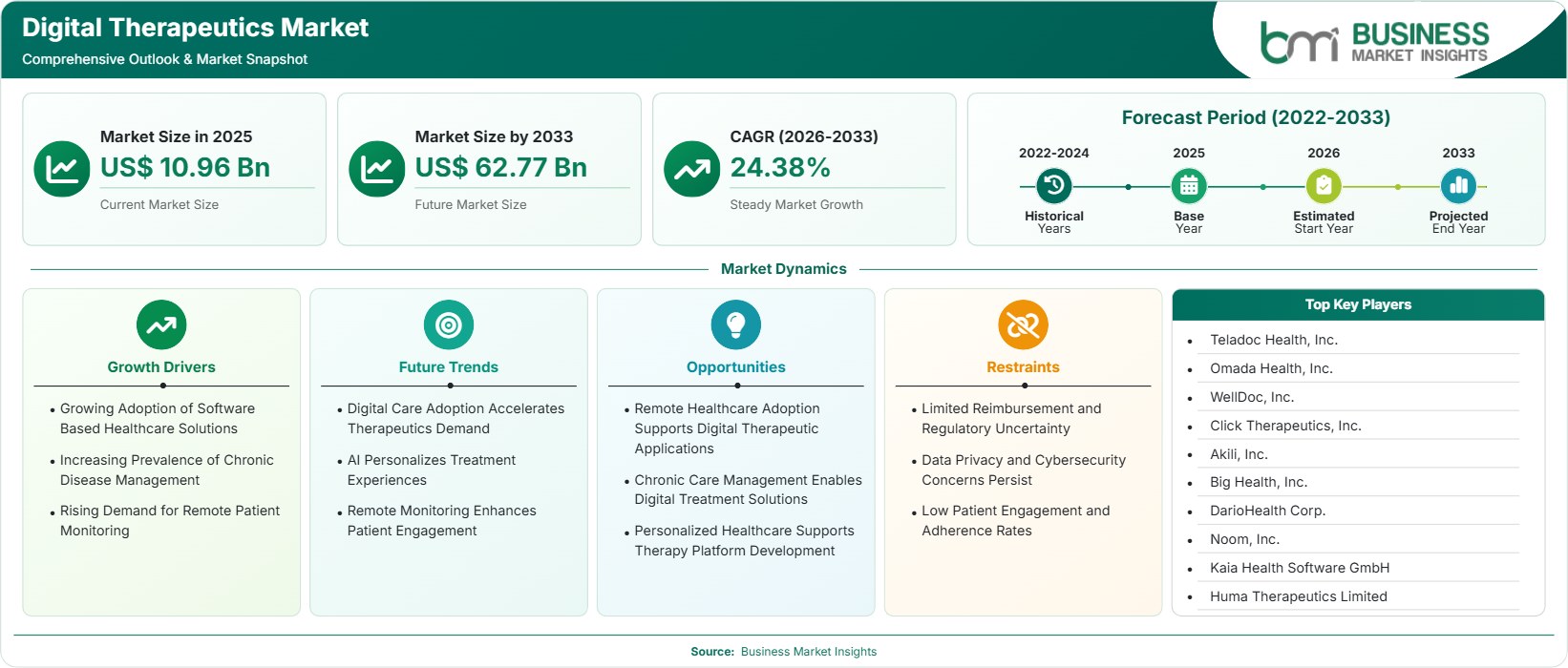
The Digital Therapeutics Market size was valued at US$ 10.96 Billion in 2025 and is projected to reach US$ 62.77 Billion by 2033, growing at a CAGR of 24.38% during 2026–2033, driven by chronic disease prevalence, reimbursement expansion, AI-enabled care, remote monitoring adoption, and digital health integration opportunities.

Report Coverage
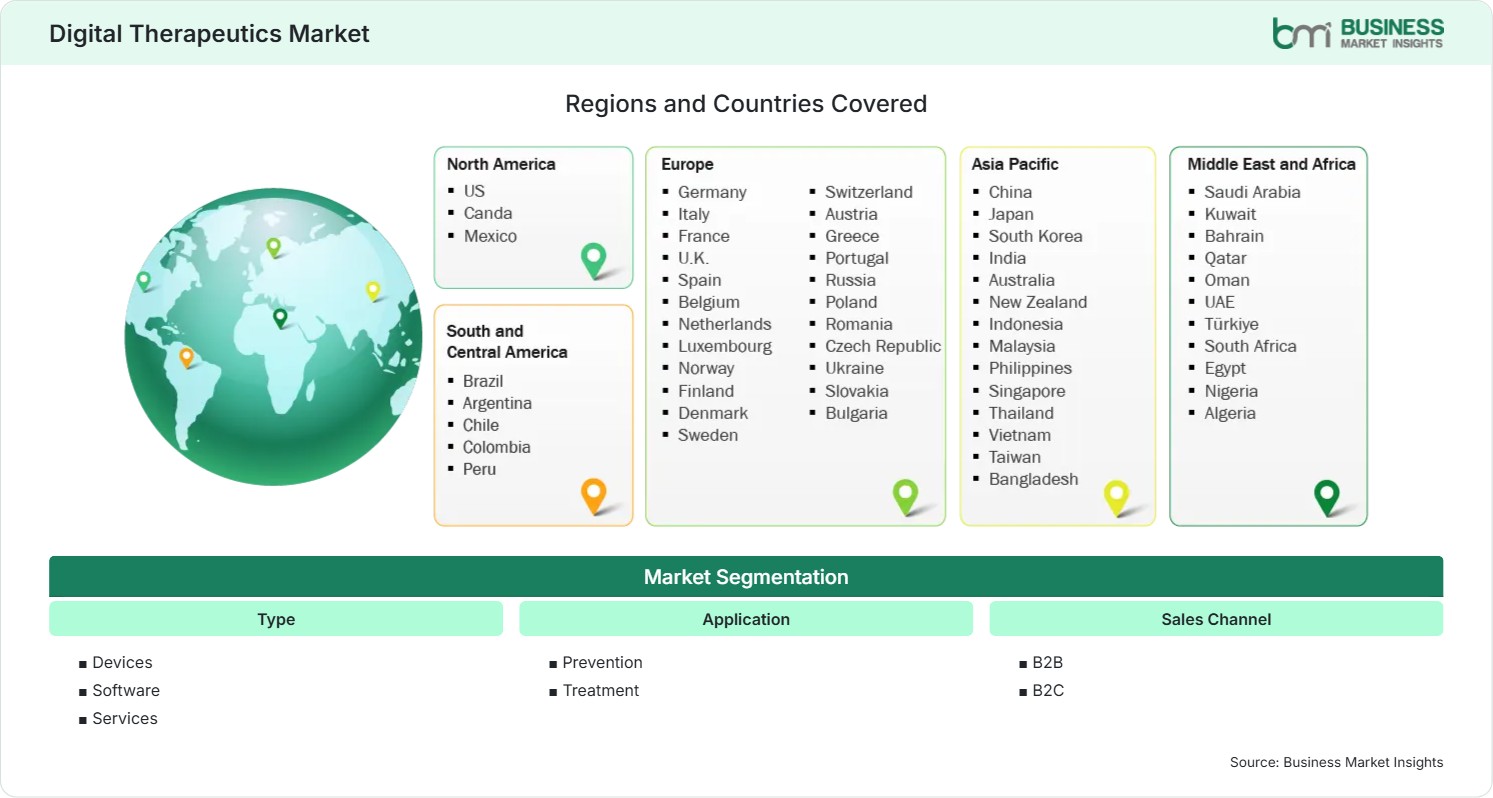
  • Type: Devices, Software, Services
  • Application: Prevention, Treatment
  • Sales Channel: B2B, B2C
US$ 10.96 Bn Market size in 2025
US$ 62.77 Bn Market Size by 2033
24.38% CAGR, 2026 - 2033
2026-2033 Forecast Period

AI Overview

Digital Therapeutics Market Summary

  • North America Region: North America holds a market share of 42%–45% in 2025, growing with a CAGR of 22%–24% during 2026–2033. Growth is supported by payer reimbursement expansion, strong digital health infrastructure, FDA regulatory progress, employer wellness adoption, value-based care initiatives, chronic disease burden, AI integration, remote monitoring demand, provider digitization, and rising behavioral healthcare utilization. U.S. market benefits from prescription digital therapy adoption and payer partnerships, advancing at 22%–24% CAGR.
  • Fastest Growing Region: Asia Pacific holds a Digital Therapeutics Market share of 22%–25% in 2025, growing with a CAGR of 27%–29% during 2026–2033. Expansion is supported by smartphone penetration, healthcare digitization programs, telehealth acceptance, rising diabetes prevalence, government innovation funding, improving reimbursement pathways, urbanization, connected healthcare ecosystems, increasing clinician awareness, and scalable software deployment models.
  • Leading Segment: Treatment accounts for 68%–71% share in 2025 and advances at a CAGR of 24%–26%. Growth is driven by clinical validation, chronic disease management demand, prescription-based solutions, improved outcomes tracking, provider engagement, digital biomarkers, patient adherence support, reimbursement progress, remote care integration, and expanding evidence generation.
  • High Growth Segment: Mental Health represents 18%–22% share in 2025 and records a CAGR of 28%–30%. Growth stems from rising anxiety and depression incidence, access gaps, behavioral therapy digitization, employer programs, scalable interventions, AI-driven personalization, clinician shortages, remote support demand, reimbursement advances, and stigma reduction initiatives globally.
  • Key Market Opportunity: Integration of digital interventions with connected devices, AI-driven analytics, and pharmaceutical therapy pathways enables continuous care models, improves outcomes, strengthens engagement, reduces healthcare costs, and expands reimbursement eligibility.
  • Major Market Players: Teladoc Health, Inc.; Omada Health, Inc.; WellDoc, Inc.; Click Therapeutics, Inc.; Akili, Inc.; Big Health, Inc.; DarioHealth Corp.; Noom, Inc.; Kaia Health Software GmbH; Huma Therapeutics Limited.
Strategic Insights

Digital Therapeutics Market: Strategic Insights

Digital Therapeutics Market Strategic Framework
FREE PDF
Request your free sample
Request free sample
Stakeholder View

Key Takeaways

  • The value chain increasingly combines software developers, healthcare providers, medical device firms, cloud infrastructure suppliers, and payers, creating integrated therapeutic ecosystems with recurring revenue models.
  • Mental health, diabetes management, and cardiometabolic prevention applications offer the strongest commercial upside due to growing disease prevalence and improved reimbursement visibility.
  • AI-enabled personalization, digital biomarkers, predictive analytics, and adaptive therapy algorithms are becoming critical differentiators in product development strategies.
  • Asia Pacific presents a compelling investment case because of expanding smartphone access, large untreated patient populations, supportive health-tech initiatives, and accelerating digital care acceptance.
  • Strategic alliances between pharmaceutical companies and digital therapeutics developers are increasing, supporting hybrid treatment pathways and broader commercialization opportunities.
  • Real-world evidence generation and outcomes-based contracting are emerging as important mechanisms for demonstrating clinical value and securing payer adoption.
Geographic Outlook

Digital Therapeutics Market Regional Highlights

North America Digital Therapeutics Market

The North American region accounted for 42%–45% of revenue in 2025 and is anticipated to grow at a CAGR of 22%–24% during the forecast period from 2026 to 2033. The Digital Therapeutics Market's dominance in market share is attributed to high levels of healthcare digitization, widespread smartphone use, a conducive investment environment, and increasing acceptance of reimbursement. The burden of chronic diseases in the region has facilitated its application in diabetes, cardiovascular diseases, and behavioral health. Integration of virtual care programs with evidence-based software interventions continues to accelerate deployment among payers, providers, and employer-sponsored healthcare networks.

  • FDA-recognized digital health pathways encourage development of clinically validated software solutions and strengthen provider confidence in digital intervention deployment.
  • Employers increasingly contract outcome-focused platforms to reduce healthcare expenditure and improve workforce health management performance.
  • Behavioral health addresses care-access shortages through scalable intervention models and remote engagement capabilities.
  • Strategic collaborations between pharmaceutical manufacturers and software developers accelerate commercialization and clinical integration.
  • Connected care models combine wearable devices with therapeutic applications to improve long-term adherence.

US Digital Therapeutics Market

The United States represents 82%–85% of regional revenue and advances at a CAGR of 22%–24% through 2033. High healthcare expenditure, strong venture investment, and broad remote-care adoption contribute to leadership. Digital Therapeutics Market growth is strengthened by growing employer demand, value-based care initiatives, and increasing clinical evidence supporting prescription and non-prescription software interventions. Market participants continue expanding offerings targeting cardiometabolic diseases, behavioral health, and chronic disease management programs.

  • Commercial payers increasingly evaluate outcomes-based reimbursement structures for evidence-backed software therapies.
  • AI-enhanced patient engagement models improve adherence and treatment persistence across chronic conditions.
  • Digital care integration within health systems supports measurable clinical and economic outcomes.
  • Pharmaceutical collaborations expand hybrid treatment offerings linking medications with digital interventions.

Europe Digital Therapeutics Market

Europe captured 27%–30% market share in 2025 and is forecast to grow at a CAGR of 23%–25%. Germany leads regional adoption due to reimbursement mechanisms supporting digital therapeutics, while the United Kingdom remains a major innovation center. France and the Nordic countries continue investing in digital health infrastructure. High-growth opportunities are emerging in Spain and Italy, where healthcare modernization programs and telehealth expansion increase uptake. Regulatory clarity and outcome-focused healthcare systems strengthen commercial opportunities.

  • Germany remains the leading country, supported by reimbursement frameworks and strong clinician adoption.
  • Spain demonstrates faster expansion, recording estimated growth near the upper regional CAGR range.
  • Public health agencies increasingly support digital disease-management initiatives.
  • Strong data-protection standards encourage secure platform development and patient trust.
  • Mental health and diabetes applications continue attracting investment across major markets.

Asia Pacific Digital Therapeutics Market

Asia Pacific accounted for a 22%–25% share in 2025 and is expected to achieve a 27%–29% CAGR in the Digital Therapeutics Market, making it the fastest-growing region. China, Japan, Australia, South Korea, and India are expanding digital healthcare ecosystems and encouraging innovation. Rising diabetes prevalence, telehealth adoption, and smartphone accessibility support demand. Healthcare providers increasingly leverage software-based interventions to extend reach and improve care continuity. Government-backed digital transformation programs further accelerate commercialization and adoption across major healthcare systems.

  • Japan leads regional revenue through advanced healthcare infrastructure and digital innovation programs.
  • India records the fastest expansion, benefiting from large patient pools and healthcare digitization.
  • Increased telemedicine usage creates favorable conditions for software therapeutic deployment.
  • Growing investments in health technology startups stimulate product innovation.
  • AI-enabled healthcare tools improve personalization and clinical decision support capabilities.

Rest of World Digital Therapeutics Market

Rest of World had a market share of 6%–8% in 2025 and is expected to grow with a CAGR of 24%–26%. Countries in South and Central America are increasingly integrating digital health technologies into chronic care management. Countries in the Middle East and Africa are also adopting digital technology through government-driven healthcare reforms. Brazil continues to be the market leader in Latin America, while Saudi Arabia and the UAE show greater growth potential through investments in digital transformation and supportive innovation ecosystems.

  • Brazil benefits from telehealth expansion and increasing healthcare digitalization efforts.
  • Saudi Arabia invests substantially in technology-enabled healthcare delivery under national transformation programs.
  • UAE health innovation strategies encourage digital therapeutic pilots and partnerships.
  • Chronic disease prevalence creates demand for scalable care-management platforms.
  • Infrastructure improvements steadily strengthen regional commercialization opportunities.
Global Market Geography
FREE PDF
Request your free sample
Request free sample
Segment Analysis

Digital Therapeutics Market Segmentation

Type

The segment is subdivided based on devices, software, and services. Software-based therapeutic solutions dominate adoption due to their scalability and reimbursement opportunities. The segment holds a market share of around 72%–75% in 2025 and is projected to grow at a CAGR of 25%–27%. The Digital Therapeutics Market scope continues to expand through hardware-software ecosystems that enable ongoing patient interaction and customization.

  • Devices: Connected sensors, monitoring tools, and wearable technologies enhance therapeutic effectiveness through continuous data collection and real-time patient feedback mechanisms.
  • Software & Services: Clinical-grade applications, coaching platforms, analytics tools, and therapeutic programs support outcome improvement through personalized interventions and remote engagement.

Application

Application demand depends on preventive and disease management needs. The treatment segment holds a 68%-71% share until 2025, with a CAGR of 24%-26%. This will be aided by increasing evidence-based and clinical adoption. The Digital Therapeutics Market trends are towards condition-specific therapies that show outcome measures that can secure provider and payer support.

  • Prevention: Population-health programs increasingly deploy digital interventions to reduce long-term disease risks and improve lifestyle management.
  • Prediabetes: Lifestyle coaching, behavior modification, and continuous monitoring help delay or prevent disease progression.
  • Obesity: Digital weight-management solutions combine behavioral support, tracking tools, and personalized engagement strategies.
  • Treatment: Therapeutic applications target diagnosed conditions and support measurable clinical improvements.
  • Diabetes: Glycemic management platforms combine coaching, analytics, and monitoring integrations to improve outcomes.
  • Respiratory Care: Digital programs assist symptom management, inhaler adherence, and disease monitoring.
  • Mental Health: Software-based cognitive behavioral interventions address anxiety, depression, and related disorders.
  • Cardiovascular: Remote monitoring and lifestyle management applications support long-term risk reduction and engagement.

Sales Channel

The sales channel has two types into B2B and B2C. The B2B segment comprises 60%-63% share in 2025 and is expected to grow at a 24%-26% CAGR owing to adoption by health-care providers, payers, and employers. Institutional buying helps achieve scale, reimbursement, and sustained engagement while strengthening implementation outcomes across diverse patient populations.

  • B2B: Providers, payers, and employers purchase solutions to enhance care delivery, disease management, and population-health performance.
  • B2C: Consumers increasingly adopt wellness and therapeutic applications seeking personalized, convenient healthcare support.
Market Forces

Digital Therapeutics Market Dynamics

Key Market Drivers

Rising Burden of Chronic Diseases

According to WHO statistics, chronic conditions are responsible for the most deaths worldwide, and hence the need for scalable solutions for managing patient care. The rising incidence of diabetes, heart problems, respiratory conditions, and obesity cases has made evidence-based digital applications more feasible. Providers are looking for affordable methods to improve adherence, enable continuous monitoring, and minimize unnecessary hospital admissions. The digital approach offers quantifiable results and individualized engagement. With the increasing strain on healthcare resources, current Digital Therapeutics Market trends are increasingly aligned with technologies that extend clinical assistance beyond the conventional environment while supporting population health management objectives.

Expansion of Reimbursement and Regulatory Support

Increased awareness regarding the use of software for therapy is boosting business viability. Regulatory bodies continue to develop pathways for software-based therapies, while the introduction of reimbursement programs enhances the commercial accessibility of such applications. Reimbursement guidelines in Germany, payer coverage strategies, and outcomes-based contracting arrangements facilitate the use of software solutions. Clinical validation demands lead to the creation of evidence and enhance practitioners' confidence. Reimbursement expansion reduces barriers to adoption and facilitates the development of viable business models. Proving economic value by lowering healthcare costs is an important factor in decision-making.

Advances in AI and Connected Health Infrastructure

AI, wearable technology, cloud computing, analysis, and interoperability in the health sector are redefining patient engagement models. They enable personalized, predictable, and ongoing engagement that ensures therapy's relevance. Data-driven approaches enable better clinical decision-making and personalized treatment options. The integration with remote patient monitoring models extends applications to chronic diseases. Healthcare organizations are focusing on platforms that deliver better results in resource utilization efficiency. Technological maturity continues to strengthen adoption across provider networks, insurers, and employers seeking scalable solutions.

Key Market Opportunities

Pharmaceutical and Software Convergence

Therapeutic software combined with drug treatments opens up possibilities for unique care pathways. Drug manufacturers are more inclined to investigate applications that help in improving adherence, monitoring, and patient engagement. Hybrid solutions have a much higher likelihood of success than those involving just drugs alone, and they can actually produce real-world evidence. Collaboration is important for commercialization, regulation, and even access. In relation to the Digital Therapeutics Market forecasts, it is evident that digital therapeutic ecosystem solutions have the potential to be highly valuable sources of value creation. Collaboration between pharmaceutical companies and technology firms is likely to continue increasing the market opportunity.

Expansion Across Emerging Healthcare Systems

Many emerging health care markets face doctor shortages, rising prevalence of chronic diseases, and increased smartphone usage. The use of digital tools offers scalable ways of expanding health care delivery without a corresponding increase in infrastructure. Governments are increasingly embracing digital transformation initiatives that enhance efficiency and accessibility. Expansion can be facilitated by local partnerships, language customization, and cloud-based deployment models. More investors are targeting such markets as demand for affordable solutions in disease management grows. As reimbursement pathways mature, growth opportunities are expected to accelerate significantly.

Real-World Evidence and Outcomes-Based Care

There is an increasing need for outcome measurement among the stakeholders in the healthcare system. Platforms for digital therapeutics are well-placed to provide data that would enable the creation of evidence. Systems focused on outcomes offer vendors an opportunity to demonstrate their value by providing information on platform engagement and utilization. Real-world data can be used to negotiate with payers and regulators. Organizations that leverage analytics are likely to gain a competitive edge. This trend supports long-term commercial expansion and premium positioning strategies.

Market Restraints and Challenges

Data Privacy and Cybersecurity Risks

Factor: Therapeutic technologies collect personal and confidential patient data and must adhere strictly to privacy policies. Impact: The potential risks of security threats and abuse of patient data can deter users of this type of platform and may delay implementation by physicians. There are considerable costs required in cybersecurity systems, encryption techniques, and continuous monitoring. Different regulations exist across jurisdictions, further complicating the matter. Otherwise, there can be legal problems, reputational damage, and delayed market entry for the product. These challenges remain significant as platforms collect increasing volumes of health and behavioral data.

Fragmented Reimbursement Environment

Factor: Reimbursement policies differ from country to country, payer to payer, and health care system to health care system. Impact: Lack of insurance coverage may hinder adoption, create a disincentive to purchase, and create financial insecurity for the developers. Most software treatments still require substantial evidence before they are eligible for reimbursement. It also creates challenges for smaller firms that have limited resources to meet payer and regulatory requirements. While reimbursement policies are making significant strides, payment inconsistencies still hinder adoption in many markets and remain a substantial barrier to broader adoption.

Company Analysis

Competitive Landscape

Digital Therapeutics Market analysis indicates competition is shaped by clinical validation, payer partnerships, AI capabilities, therapeutic specialization, and regulatory expertise.

Company Name

Overview

Products and Services relevant to this market

Teladoc Health, Inc.

Global virtual care provider with extensive chronic disease management capabilities and connected health services.

Digital chronic care platforms, remote monitoring, behavioral health, coaching programs.

Omada Health, Inc.

Focuses on cardiometabolic health and behavior-change programs for employers and health plans.

Diabetes prevention, weight management, hypertension management, virtual coaching.

WellDoc, Inc.

Developer of evidence-based digital health solutions for chronic disease management.

Diabetes-focused digital therapeutics, analytics, patient engagement tools.

Click Therapeutics, Inc.

Prescription digital therapeutics specialist developing software-based treatments for multiple conditions.

Migraine, mental health, cardiometabolic and prescription therapeutic platforms.

Akili, Inc.

Known for neuroscience-based therapeutic interventions delivered through digital experiences.

Cognitive and neurological therapeutic applications.

Big Health, Inc.

Behavioral health company addressing sleep and mental wellness conditions.

Digital mental health and insomnia interventions.

DarioHealth Corp.

Chronic disease management provider integrating coaching and connected care capabilities.

Diabetes, hypertension, behavioral health, weight-management solutions.

Noom, Inc.

Consumer-focused health technology company emphasizing behavior modification.

Weight management, wellness, preventive care applications.

Kaia Health Software GmbH

Specializes in musculoskeletal and respiratory digital intervention programs.

MSK rehabilitation, respiratory support, digital coaching.

Huma Therapeutics Limited

Digital health platform provider supporting remote patient monitoring and care pathways.

Connected care, monitoring platforms, health analytics solutions.

Trust & Transparency

Research Methodology

The market analysis combines proprietary research with secondary data from government agencies, company disclosures, regulatory filings, industry databases and expert interviews. Market estimates are validated through data triangulation, cross-market benchmarking and analyst review.

View Full Research Methodology

Questions Answered

Frequently Asked Questions

What is the biggest commercial challenge for vendors?

Achieving broad reimbursement coverage while generating robust clinical evidence remains one of the most important challenges affecting scalability and long-term revenue growth.

What is covered in a Digital Therapeutics Market Report?

A Market Report typically evaluates size, competitive positioning, technology developments, regulations, regional dynamics, end-user demand, investment activities, and future growth opportunities.

Which application area offers the strongest long-term potential?

Mental health, diabetes, and cardiometabolic management remain highly attractive due to large patient populations, recurring engagement needs, and increasing reimbursement support.

How do digital therapeutics differ from general wellness applications?

Digital therapeutics are evidence-based interventions designed to prevent or treat medical conditions and typically require clinical validation, regulatory oversight, and measurable health outcomes.

What factors are accelerating adoption across healthcare systems?

Growing chronic disease prevalence, virtual care integration, stronger clinical evidence, and improving reimbursement frameworks are enabling broader adoption among providers, payers, employers, and patients.

Access the Full Digital Therapeutics Market Report

Get segment-level forecasts, regional estimates, competitive benchmarking, company profiles and downloadable Excel datasets.

Access the full Digital Therapeutics Market Report
350 pages PDF & Excel | 2026-09-22
Similar Research

Related Market Reports