
Breast Cancer Therapeutics Market Outlook: Size, Share, Trends, Growth Analysis, Competitive Landscape & Forecast, 2026-2033

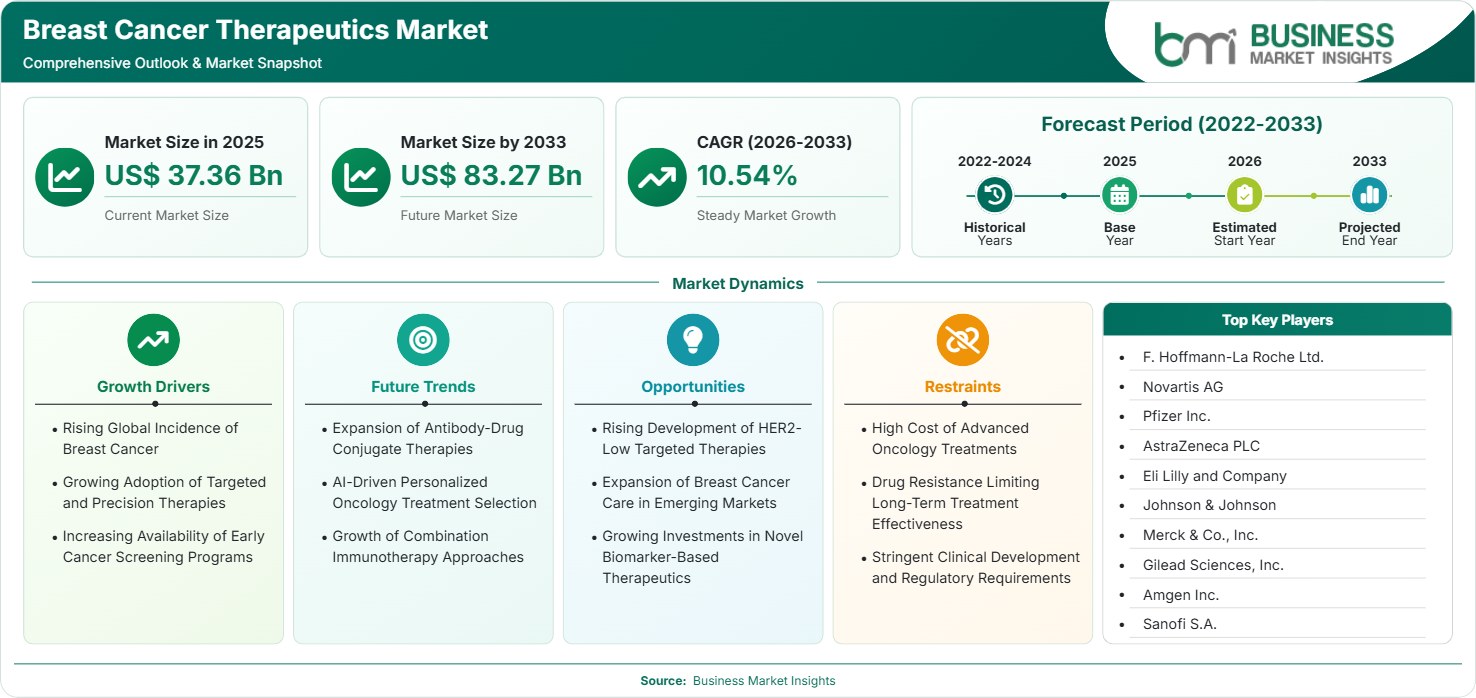
The Breast Cancer Therapeutics Market size was valued at US$ 37.36 Billion in 2025 and is projected to reach US$ 83.27 Billion by 2033, growing at a CAGR of 10.54% during 2026–2033. Rising breast cancer incidence worldwide, increasing adoption of targeted therapies, growing demand for precision medicine, and continuous advancements in oncology drug development are supporting market growth globally.

Report Coverage
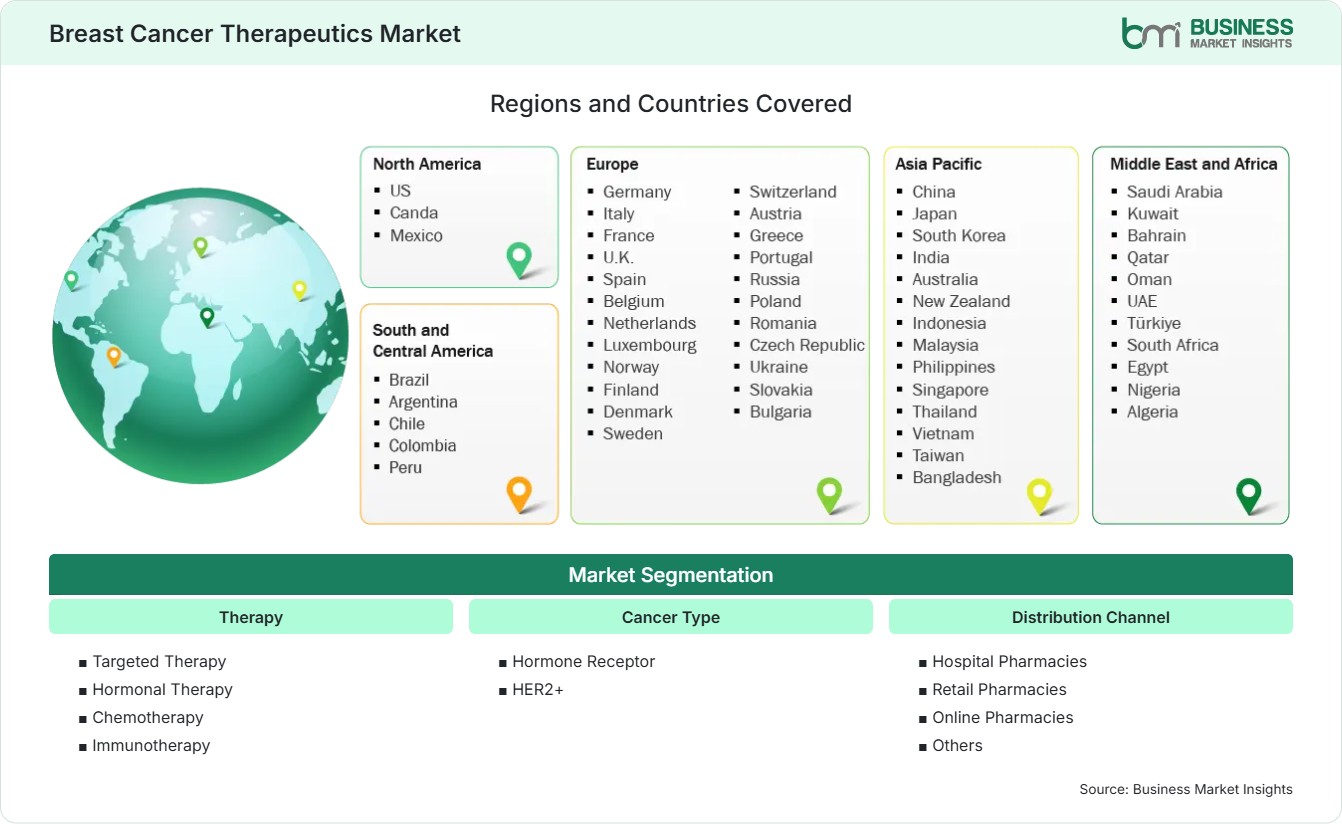
  • Therapy: Targeted Therapy, Hormonal Therapy, Chemotherapy, Immunotherapy
  • Cancer Type: Hormone Receptor, HER2+
  • Distribution Channel: Hospital Pharmacies, Retail Pharmacies, Online Pharmacies, Others
US$ 37.36 Bn Market size in 2025
US$ 83.27 Bn Market Size by 2033
10.54% CAGR, 2026 - 2033
2026-2033 Forecast Period

AI Overview

Breast Cancer Therapeutics Market Summary

  • North America Region: North America holds a market share of 38%–41% in 2025, growing with a CAGR of 10.0%–10.7% during 2026–2033. Strong oncology research activities, increasing adoption of novel therapies, favorable reimbursement frameworks, and advanced healthcare infrastructure continue supporting regional leadership. The U.S. market is expected to register a CAGR of 10.2%–10.9%.
  • Fastest Growing Region: Asia Pacific accounts for 23%–26% share in 2025 and is projected to grow at a CAGR of 11.6%–12.3% through 2033. Rising cancer prevalence, growing healthcare investments, expanding access to oncology treatments, and increasing adoption of innovative therapeutics continue driving regional growth.
  • Leading Segment: Targeted Therapy represents 42%–45% share in 2025 and is expected to grow at a CAGR of 10.8%–11.5% through 2033. Increasing utilization of precision medicine approaches and superior treatment outcomes continue supporting segment dominance.
  • High Growth Segment: HER2+ Breast Cancer accounts for 26%–29% share in 2025 and is forecast to grow at a CAGR of 11.4%–12.1% during 2026–2033. Continuous development of HER2-targeted therapies and improved diagnosis rates continue accelerating growth.
  • Key Market Opportunity: Expansion of precision oncology, next-generation targeted therapies, antibody-drug conjugates, and personalized treatment strategies is creating substantial growth opportunities.
  • Major Market Players: F. Hoffmann-La Roche Ltd, Eli Lilly and Company, Novartis AG, AstraZeneca, Pfizer Inc., Sanofi, Eisai Co. Ltd., Kyowa Kirin, Bristol Myers Squibb, and Merck & Co., Inc.
Strategic Insights

Breast Cancer Therapeutics Market: Strategic Insights

Breast Cancer Therapeutics Market Strategic Framework
FREE PDF
Request your free sample
Request free sample
Stakeholder View

Key Takeaways

  • Targeted therapies remain the dominant treatment category due to increasing adoption of precision oncology approaches.
  • HER2-positive breast cancer continues to attract significant research and development investments globally.
  • Pharmaceutical companies are expanding oncology pipelines with advanced biologics and antibody-based therapies.
  • Early diagnosis initiatives and improved screening programs are supporting treatment adoption rates.
  • Hospital pharmacies remain the primary distribution channel for specialty oncology therapeutics.
  • North America maintains market leadership due to strong innovation capabilities and advanced healthcare infrastructure.
  • Asia Pacific is expected to witness the fastest growth owing to rising cancer prevalence and expanding healthcare access.
  • Precision medicine, biomarker testing, and next-generation immunotherapies are expected to create significant future growth opportunities.
Geographic Outlook

Breast Cancer Therapeutics Market Regional Highlights

North America Breast Cancer Therapeutics Market

North America accounts for 38%–41% Breast Cancer Therapeutics Market share in 2025 and is projected to grow at a CAGR of 10.0%–10.7% through 2033. Strong oncology research capabilities, increasing adoption of innovative therapies, and a well-established healthcare ecosystem continue supporting regional leadership.

  • Pharmaceutical companies continue investing heavily in breast cancer drug development programs.
  • Advanced diagnostic capabilities support early disease detection and treatment adoption.
  • Favorable reimbursement frameworks encourage the use of innovative oncology therapies.
  • Increasing prevalence of breast cancer continues driving demand for advanced treatments.
  • Growing utilization of targeted therapies and biologics is strengthening market expansion.
  • Strong clinical trial activity continues supporting innovation across treatment categories.

US Breast Cancer Therapeutics Market

The United States contributes approximately 86%–90% of North American revenue and is expected to register a CAGR of 10.2%–10.9% through 2033. High healthcare spending, strong pharmaceutical innovation, and broad availability of advanced treatment options continue supporting market leadership.

  • Precision medicine adoption continues increasing across oncology centers.
  • Targeted therapies are witnessing strong utilization rates among clinicians.
  • Research organizations continue advancing next-generation immunotherapy programs.
  • Biopharmaceutical companies remain focused on novel therapeutic development.
  • Growing patient awareness continues supporting treatment adoption.

Europe Breast Cancer Therapeutics Market

Europe represents 25%–28% of global revenue in 2025 and is anticipated to expand at a CAGR of 10.3%–11.0% through 2033. Strong healthcare systems, increasing cancer research investments, and broad access to advanced oncology treatments continue supporting regional growth. Germany remains the leading market while Poland demonstrates stronger growth momentum.

  • Germany continues leading regional demand due to advanced oncology treatment infrastructure.
  • Poland is among the fastest-growing markets and is estimated to register a CAGR of 11.2%–11.9% during the forecast period.
  • Increasing adoption of biologics continues supporting market expansion.
  • Government-supported cancer treatment programs are improving patient access.
  • Precision oncology initiatives continue gaining momentum.
  • Rising focus on personalized medicine is creating additional opportunities.

Asia Pacific Breast Cancer Therapeutics Market

Asia Pacific accounts for 23%–26% of global revenue in 2025 and is expected to achieve the fastest CAGR of 11.6%–12.3% through 2033. Rising disease burden, growing healthcare expenditure, increasing awareness programs, and expanding oncology infrastructure continue supporting strong market growth.

  • China remains the largest regional market due to growing oncology investments and increasing patient population.
  • India is projected to achieve approximately 12.4%–13.1% CAGR, supported by improving healthcare access and increasing cancer diagnosis rates.
  • Pharmaceutical companies continue expanding regional oncology portfolios.
  • Rising middle-class populations are supporting higher treatment accessibility.
  • Government healthcare initiatives continue improving cancer care delivery.
  • Increasing clinical research activity is strengthening market opportunities.

Rest of World Breast Cancer Therapeutics Market

Rest of World accounts for 8%–11% of global revenue in 2025 and is projected to expand at a CAGR of 10.4%–11.1% through 2033. Improving healthcare infrastructure, expanding oncology treatment access, and rising awareness initiatives continue supporting market growth.

  • Brazil continues generating demand through growing cancer treatment investments.
  • The UAE is witnessing increased adoption of advanced oncology therapies.
  • Saudi Arabia is expected to achieve approximately 11.2%–11.9% CAGR through 2033, supported by healthcare modernization initiatives.
  • Access to specialty cancer treatments continues improving.
  • Oncology research activities are expanding steadily.
  • Government investments in healthcare infrastructure are supporting long-term market development.
Global Market Geography
FREE PDF
Request your free sample
Request free sample
Segment Analysis

Breast Cancer Therapeutics Market Segmentation

Therapy

The therapy segment forms the foundation of the breast cancer therapeutics market, encompassing a wide range of treatment approaches designed to target different disease pathways and molecular characteristics. The segment accounts for approximately 42%–45% share in 2025 and is projected to grow at a CAGR of 10.8%–11.5% through 2033. The expanding Breast Cancer Therapeutics Market scope is supported by rising breast cancer incidence, increasing adoption of personalized medicine, growing awareness regarding early-stage treatment, and continuous innovation in oncology drug development.

  • Targeted Therapy: Targeted therapy remains the dominant segment due to its ability to selectively attack cancer cells while minimizing damage to healthy tissues. Growing adoption of HER2-directed therapies, CDK4/6 inhibitors, and other precision oncology products continues supporting segment leadership.
  • Hormonal Therapy: Hormonal therapy continues to be widely utilized for hormone receptor-positive breast cancer patients. These therapies help slow or prevent disease progression by blocking hormone activity that fuels tumor growth.
  • Chemotherapy: Chemotherapy remains an essential treatment option, particularly in advanced-stage disease and aggressive cancer subtypes. It continues to play a critical role in combination treatment strategies.
  • Immunotherapy: Immunotherapy is gaining traction as research continues to demonstrate its effectiveness in specific patient populations. Increasing clinical success is encouraging greater adoption across various breast cancer treatment settings.

Cancer Type

Cancer type significantly influences treatment selection, therapeutic outcomes, and investment priorities within the breast cancer treatment landscape. This segment accounts for approximately 54%–57% share in 2025 and is expected to register a CAGR of 10.9%–11.6% through 2033. Current Breast Cancer Therapeutics Market trends indicate increasing development of subtype-specific therapies designed to improve survival outcomes and treatment personalization.

  • Hormone Receptor: Hormone receptor-positive breast cancer represents the largest segment due to its high prevalence among diagnosed patients. Continuous innovation in endocrine therapy and targeted treatment combinations is strengthening segment growth.
  • HER2+: HER2-positive breast cancer remains one of the fastest-evolving segments with significant investments in targeted biologics, antibody-drug conjugates, and precision treatment approaches. Improved diagnostic capabilities continue supporting market expansion.

Distribution Channel

Distribution channels play an essential role in ensuring patient access to specialty oncology therapies and biologic treatments. This segment accounts for approximately 61%–64% share in 2025 and is projected to grow at a CAGR of 10.5%–11.2% through 2033.

  • Hospital Pharmacies: Hospital pharmacies dominate the segment due to the specialized administration requirements, monitoring needs, and physician oversight associated with many breast cancer treatments.
  • Retail Pharmacies: Retail pharmacies continue expanding their role as oral oncology therapies and long-term treatment regimens become more widely available.
  • Online Pharmacies: Online pharmacy channels are gradually gaining importance due to improved patient convenience, digital healthcare adoption, and expanding e-pharmacy services.
  • Others: Additional channels include specialty pharmacies, direct distribution programs, and integrated oncology care networks.
Market Forces

Breast Cancer Therapeutics Market Dynamics

Key Market Drivers

Rising Global Incidence of Breast Cancer

The problem of breast cancer still exists, being one of the leading diagnoses of cancer all over the world and imposing an important healthcare burden. Rising population numbers, increasing longevity, changes in the lifestyles of people, and advances in diagnostics are among the factors that lead to an increase in the number of diagnosed patients worldwide. With growing awareness about breast cancer, more women are becoming involved in screening and early detection campaigns, which leads to higher numbers of cases to be treated. Doctors make oncological treatment services more accessible to patients, and governments make additional investments in cancer care measures. Higher numbers of patients who require treatment result in increased demand for advanced therapies at all disease management stages. The incidence of breast cancer continues to grow in developed and emerging countries, thus ensuring positive future market growth prospects.

Growing Adoption of Targeted and Precision Therapies

The trend towards precision medicine has affected the breast cancer treatment approach globally. Targeted drugs allow physicians to consider the molecular features of tumors to improve treatment efficacy and decrease possible side effects. Innovations in biomarker testing and genotyping help doctors determine which treatment will be the best for particular patients. Pharmaceutical companies keep developing new targeted medicines, antibody-drug conjugates, and innovative biologics that can prolong progression-free survival and increase the overall effectiveness. The results obtained from the treatment of patients by HER2-targeted drugs and combinations of endocrine therapy confirm the efficiency of personalized approach. Moreover, health care professionals realize the importance of personalized treatments for patients. Demand for targeted drugs against breast cancer will grow due to the implementation of precision medicine in clinical practice.

Increasing Availability of Early Cancer Screening Programs

Early detection initiatives are playing an increasingly important role in improving breast cancer outcomes and supporting treatment adoption. Public awareness campaigns, government screening programs, advanced imaging technologies, and improved healthcare accessibility have contributed to higher diagnosis rates in earlier stages of disease. Early detection enables clinicians to initiate treatment sooner, improving survival rates and treatment effectiveness. Healthcare organizations are expanding screening infrastructure and education initiatives to improve participation rates among at-risk populations. Technological advancements in mammography, imaging analytics, and diagnostic testing are further supporting effective disease identification. As screening programs continue expanding globally, increasing numbers of patients are entering treatment pathways, creating sustained demand for breast cancer therapeutics across a broad range of disease subtypes and treatment categories.

Key Market Opportunities

Rising Development of HER2-Low Targeted Therapies

The emergence of HER2-low breast cancer as a distinct therapeutic category is creating significant opportunities within the market. Pharmaceutical companies are actively developing targeted therapies capable of addressing patient populations previously considered ineligible for traditional HER2-directed treatments. Recent advances in antibody-drug conjugates and targeted biologics have demonstrated encouraging clinical outcomes in this patient group. As researchers continue exploring new molecular targets and therapeutic mechanisms, the addressable patient population for targeted therapies is expected to expand considerably. The growing focus on HER2-low disease represents a major opportunity for manufacturers seeking to broaden treatment options and improve patient outcomes.

Expansion of Breast Cancer Care in Emerging Markets

Emerging economies continue presenting substantial growth opportunities due to improving healthcare infrastructure, rising patient awareness, and expanding access to cancer treatment services. Governments and healthcare providers are increasing investments in diagnostic capabilities, oncology centers, and specialized treatment facilities. Greater availability of innovative therapies is improving treatment accessibility across previously underserved regions. Pharmaceutical companies are also expanding their presence within rapidly growing healthcare markets to address rising demand. Continued economic development and healthcare modernization initiatives are expected to support long-term market growth throughout Asia, Latin America, the Middle East, and parts of Africa.

Growing Investments in Novel Biomarker-Based Therapeutics

Biomarker-driven treatment strategies are becoming increasingly important within the breast cancer therapeutics landscape. Researchers are identifying new predictive and prognostic biomarkers that can improve patient selection and treatment effectiveness. These discoveries are supporting the development of highly targeted therapies designed for specific patient populations. Growing investments in genomics, companion diagnostics, and personalized medicine platforms are accelerating clinical innovation. Long-term Breast Cancer Therapeutics Market Forecasts remain favorable as biomarker-based approaches continue transforming treatment decision-making and enabling more effective therapeutic interventions.

Market Restraints and Challenges

High Cost of Advanced Oncology Treatments

Factor: Modern breast cancer therapies, particularly targeted biologics, antibody-drug conjugates, and immunotherapies, often involve substantial research, development, manufacturing, and commercialization costs. These expenses contribute to high treatment prices and place financial pressure on patients, healthcare systems, and payers. Access disparities may be more pronounced in lower-income markets where reimbursement coverage remains limited.

Impact: High treatment costs may restrict adoption rates, delay therapy initiation, and create affordability challenges for healthcare providers and patients. Manufacturers and policymakers continue exploring pricing, reimbursement, and access strategies to improve treatment availability while maintaining sustainable healthcare delivery models.

Drug Resistance Limiting Long-Term Treatment Effectiveness

Factor: Despite significant therapeutic advancements, many patients eventually develop resistance to hormonal therapies, targeted drugs, or chemotherapy regimens. Tumor evolution, genetic mutations, and complex biological mechanisms can reduce treatment effectiveness over time and contribute to disease progression. Managing resistance remains one of the most significant clinical challenges in breast cancer care.

Impact: Drug resistance may lead to treatment switching, additional healthcare costs, and more complex disease management requirements. Pharmaceutical companies must continue investing in next-generation therapies, combination treatments, and novel mechanisms of action to address resistance challenges and improve long-term patient outcomes.

Company Analysis

Competitive Landscape

The Breast Cancer Therapeutics Market analysis is characterized by intense competition among global pharmaceutical companies, biotechnology innovators, and oncology-focused drug developers. Market participants are focusing on targeted therapies, antibody-drug conjugates, hormonal treatments, immunotherapies, and precision medicine platforms to strengthen their market positions. Rising prevalence of breast cancer, increasing adoption of biomarker-guided treatment approaches, and growing investments in oncology research continue driving innovation across the market. Strategic collaborations, clinical trial expansion, regulatory approvals, and pipeline diversification remain key competitive strategies among leading companies.

Company Name

Overview

Products and Services relevant to this market

F. Hoffmann-La Roche Ltd

Global healthcare company and a leading innovator in oncology therapeutics and diagnostics.

HER2-targeted therapies, antibody-drug conjugates, precision oncology solutions, breast cancer therapeutics, and companion diagnostics.

Eli Lilly and Company

Pharmaceutical company focused on oncology, immunology, and innovative therapeutic development.

Breast cancer therapies, targeted oncology products, precision medicine programs, and oncology research platforms.

Novartis AG

Global healthcare company specializing in innovative medicines and advanced cancer treatments.

Hormonal therapies, targeted treatments, oncology medicines, breast cancer drug candidates, and precision healthcare solutions.

AstraZeneca

Biopharmaceutical company focused on oncology, rare diseases, and innovative therapeutics.

Targeted breast cancer therapies, antibody-drug conjugates, hormone-based treatments, and oncology development programs.

Pfizer Inc.

Global pharmaceutical company engaged in oncology, vaccines, and specialty medicines.

Breast cancer therapeutics, targeted oncology drugs, hormone therapies, biologics development, and precision treatment solutions.

Sanofi

Healthcare company focusing on specialty medicines and innovative therapeutic programs.

Oncology therapies, targeted treatment platforms, biologic drug development, and breast cancer treatment solutions.

Eisai Co. Ltd.

Pharmaceutical company with a strong presence in oncology and neuroscience markets.

Breast cancer therapeutics, oncology medicines, targeted therapies, and clinical development programs.

Kyowa Kirin

Biotechnology and pharmaceutical company specializing in antibody-based treatments.

Oncology biologics, targeted therapeutic platforms, specialty cancer treatments, and clinical-stage oncology products.

Bristol Myers Squibb

Global biopharmaceutical company focused on oncology, immunology, and cardiovascular therapies.

Immunotherapy products, targeted cancer treatments, biologics research, and breast cancer therapeutic programs.

Merck & Co., Inc.

Global healthcare company specializing in innovative medicines and cancer immunotherapy.

Immuno-oncology therapies, targeted treatment platforms, cancer biologics, and breast cancer clinical development programs.

Trust & Transparency

Research Methodology

The market analysis combines proprietary research with secondary data from government agencies, company disclosures, regulatory filings, industry databases and expert interviews. Market estimates are validated through data triangulation, cross-market benchmarking and analyst review.

View Full Research Methodology

Questions Answered

Frequently Asked Questions

How is precision medicine influencing breast cancer treatment?

Precision medicine enables physicians to select therapies based on tumor biomarkers and molecular characteristics, improving treatment effectiveness, supporting personalized care, and driving the adoption of targeted therapeutic strategies.

What does this breast cancer therapeutics market report cover?

This report covers therapy analysis, cancer type segmentation, distribution channel assessment, regional trends, competitive landscape evaluation, market dynamics, opportunities, restraints, and future growth prospects through 2033.

Why is HER2-positive breast cancer an important growth segment?

HER2-positive breast cancer continues attracting significant research investment because of the success of targeted biologics, antibody-drug conjugates, and next-generation treatment platforms designed specifically for this subtype.

Which therapy segment dominates the market?

Targeted Therapy represents the leading segment due to its ability to improve treatment outcomes through precision medicine approaches while minimizing damage to healthy tissues compared to conventional therapies.

What is driving growth in the breast cancer therapeutics market?

Rising global incidence of breast cancer, growing adoption of targeted and precision therapies, expanding access to early cancer screening programs, and continuous advancements in oncology drug development are major factors driving market growth.

Access the Full Breast Cancer Therapeutics Market Report

Get segment-level forecasts, regional estimates, competitive benchmarking, company profiles and downloadable Excel datasets.

Access the full Breast Cancer Therapeutics Market Report
350 pages PDF & Excel | 2026-08-12
Similar Research

Related Market Reports