
Lung Cancer Therapeutics Market Outlook: Size, Share, Trends, Growth Analysis, Competitive Landscape & Forecast, 2026-2033

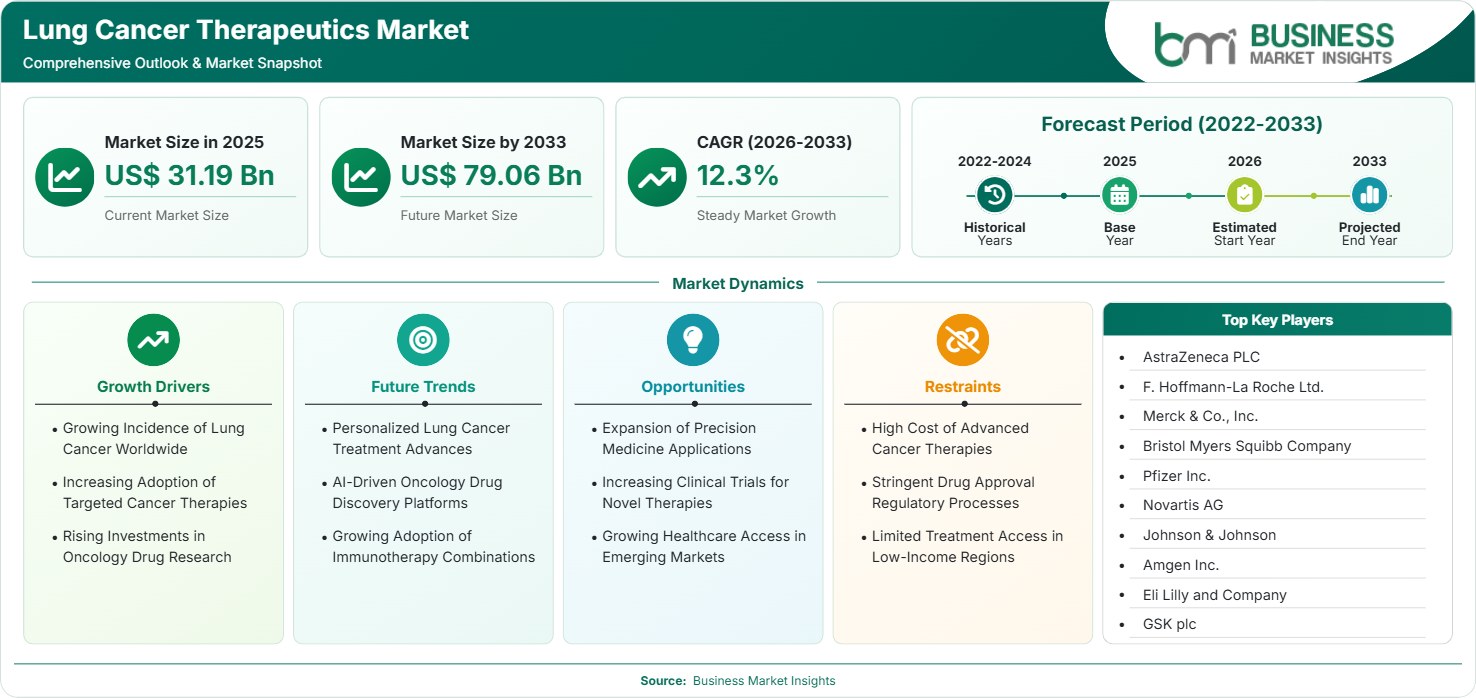
The Lung Cancer Therapeutics Market size was valued at US$ 31.19 Billion in 2025 and is projected to reach US$ 79.06 Billion by 2033, growing at a CAGR of 12.3% during 2026–2033, driven by rising lung cancer prevalence, increasing adoption of targeted and immune-based therapies, expanding precision medicine applications, and growing investments in oncology drug development.

Report Coverage
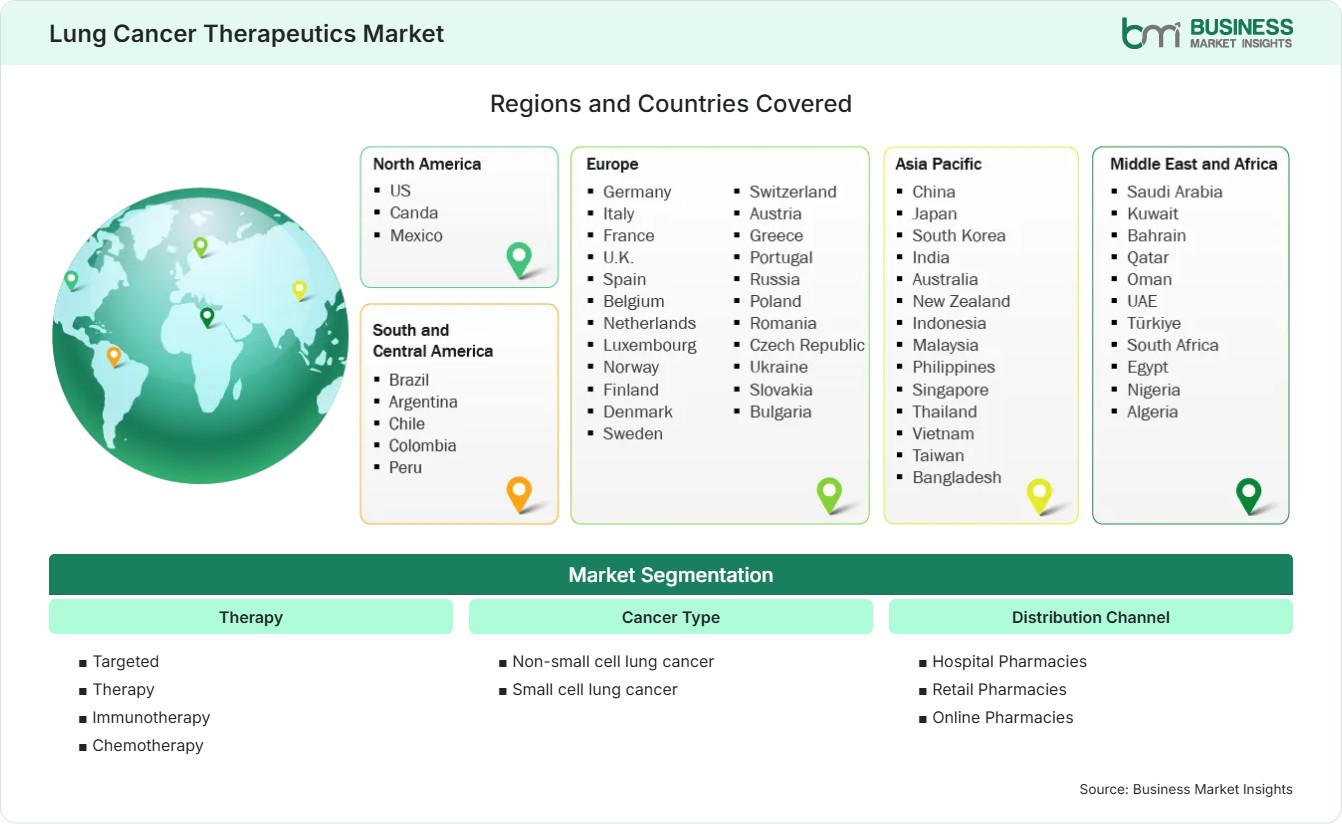
  • Therapy: Targeted, Therapy, Immunotherapy, Chemotherapy
  • Cancer Type: Non-small cell lung cancer, Small cell lung cancer
  • Distribution Channel: Hospital Pharmacies, Retail Pharmacies, Online Pharmacies
US$ 31.19 Bn Market size in 2025
US$ 79.06 Bn Market Size by 2033
12.3% CAGR, 2026 - 2033
2026-2033 Forecast Period

AI Overview

Lung Cancer Therapeutics Market Summary

  • North America Region: North America holds 42%–45% market share in 2025, growing with a CAGR of 11.8%–12.2% during 2026–2033, supported by advanced oncology infrastructure, high adoption of innovative therapies, strong reimbursement systems, and extensive clinical research activities. The United States remains the dominant contributor through early access to advanced treatments, expanding at a CAGR of 12.0%–12.4%.
  • Fastest Growing Region: Asia Pacific accounts for 24%–27% market share in 2025 and is projected to expand at a CAGR of 13.5%–14.0% through 2033, driven by rising lung cancer burden, improving healthcare infrastructure, increasing oncology investments, and expanding access to advanced therapeutic options across emerging economies.
  • Leading Segment: Immunotherapy represents the leading segment with 45%–48% market share in 2025 and is expected to grow at a CAGR of 13.0%–13.5%, supported by increasing adoption of immune checkpoint inhibitors, improved survival outcomes, combination treatment approaches, and expanding approvals for advanced lung cancer indications.
  • High Growth Segment: Targeted Therapy represents the high-growth segment with 30%–33% of the Lung Cancer Therapeutics Market share in 2025 and advances at a CAGR of 13.8%–14.3%, supported by biomarker-driven treatment strategies, molecular diagnostics adoption, increasing genomic testing, and development of therapies targeting specific cancer mutations.
  • Key Market Opportunity: Growing integration of precision oncology, artificial intelligence-based diagnostics, biomarker testing, and personalized treatment approaches is creating significant opportunities for pharmaceutical companies to develop highly effective lung cancer therapies with improved patient outcomes.
  • Major Market Players: AstraZeneca PLC, F. Hoffmann-La Roche Ltd., Merck & Co., Inc., Bristol Myers Squibb Company, Pfizer Inc., Novartis AG, Johnson & Johnson, Amgen Inc., Eli Lilly and Company, GSK plc.
Strategic Insights

Lung Cancer Therapeutics Market: Strategic Insights

Lung Cancer Therapeutics Market Strategic Framework
FREE PDF
Request your free sample
Request free sample
Stakeholder View

Key Takeaways

  • The market ecosystem is increasingly shaped by collaborations among pharmaceutical companies, biotechnology firms, diagnostic providers, and healthcare institutions.
  • Precision medicine and biomarker-driven treatment approaches represent major growth opportunities as healthcare providers increasingly adopt genomic testing and personalized treatment pathways.
  • Innovation is shifting toward next-generation immune checkpoint inhibitors, antibody-drug conjugates, combination therapies, and molecularly targeted medicines.
  • Asia Pacific presents a strong investment opportunity due to rising lung cancer incidence, improving oncology infrastructure, increasing healthcare expenditure, and expanding access to innovative medicines.
  • Pharmaceutical consolidation and strategic partnerships continue influencing competitive positioning as companies strengthen oncology portfolios through acquisitions, licensing agreements, and collaborations.
Geographic Outlook

Lung Cancer Therapeutics Market Regional Highlights

North America Lung Cancer Therapeutics Market

North America accounted for 42%–45% of the global market share in 2025 and is expected to grow at a CAGR of 11.8%–12.2% during 2026–2033. The region maintains leadership due to advanced healthcare infrastructure, high adoption of innovative oncology medicines, strong reimbursement frameworks, and significant pharmaceutical research investments. The Lung Cancer Therapeutics Market share remains supported by extensive clinical trial activity, increasing use of precision medicine, and rapid commercialization of novel therapies in the United States and Canada.

  • The United States remains the largest contributor due to strong oncology research capabilities, widespread adoption of immunotherapies, advanced diagnostic infrastructure, and favorable access to recently approved targeted treatment options.
  • Increasing investment in cancer research programs and biotechnology innovation is accelerating development of novel therapies, combination treatments, and biomarker-based approaches that improve outcomes for lung cancer patients.
  • High penetration of molecular testing technologies is supporting personalized treatment selection by identifying actionable genetic mutations and enabling physicians to prescribe targeted therapies more effectively.
  • Growing adoption of outpatient oncology care models and specialty pharmacy networks is improving patient access to advanced lung cancer medicines while supporting treatment continuity and monitoring.

US Lung Cancer Therapeutics Market

The United States represents the largest market in North America, with a market share of 36%-39% in 2025 and a CAGR of 12.0%-12.4%. The Lung Cancer Therapeutics Market is driven by factors such as high healthcare spending, rapid adoption of new treatments, and the presence of leading pharmaceutical companies.

  • Strong adoption of immune checkpoint inhibitors and targeted therapies continues driving market expansion as physicians increasingly use biomarker-based treatment strategies for advanced lung cancer cases.
  • Extensive clinical trial infrastructure supports faster development and commercialization of innovative oncology drugs, strengthening the country's position as a major hub for lung cancer therapeutic innovation.
  • Increasing integration of companion diagnostics with treatment pathways is improving patient selection and supporting personalized medicine approaches across hospitals and specialty oncology centers.
  • Growing focus on early detection programs and comprehensive cancer care networks is supporting improved treatment outcomes and expanding demand for advanced therapeutic solutions.

Europe Lung Cancer Therapeutics Market

Europe represented 20%–23% of the global market share in 2025 and is projected to expand at a CAGR of 11.2%–11.7% during 2026–2033. The region benefits from established healthcare systems, increasing adoption of precision oncology, expanding reimbursement coverage, and strong pharmaceutical research capabilities.

  • Germany maintains its position in market development due to advanced hospital networks, higher adoption of molecular diagnostics, and the use of innovative cancer treatments at specialist cancer treatment centers.
  • The United Kingdom has the advantage of having numerous research initiatives for cancer, participation in clinical trials, and healthcare initiatives aimed at facilitating better access to targeted and immunotherapies.
  • France, Italy, and Spain are witnessing increasing adoption of personalized oncology treatments as healthcare providers expand genomic testing capabilities and integrate advanced therapies into lung cancer management protocols.
  • European regulatory emphasis on cancer care improvement and early diagnosis is encouraging pharmaceutical innovation, reimbursement expansion, and broader availability of advanced therapeutic options.

Asia Pacific Lung Cancer Therapeutics Market

Asia Pacific accounted for 24%–27% of the global Lung Cancer Therapeutics Market share in 2025 and is expected to register the fastest growth with a CAGR of 13.5%–14.0% from 2026–2033. Rising lung cancer incidence, improving healthcare infrastructure, increasing oncology investments, and expanding access to advanced medicines are driving regional growth.

  • China remains a significant contributor due to high lung cancer prevalence, expanding oncology research capabilities, domestic pharmaceutical development, and increasing adoption of targeted and immune-based therapies.
  • Japan demonstrates strong demand for innovative lung cancer treatments supported by advanced healthcare infrastructure, aging population demographics, and established regulatory pathways for oncology drug approvals.
  • India is experiencing increasing adoption of advanced therapies due to improving cancer care infrastructure, rising healthcare expenditure, expanding specialty hospitals, and greater awareness of precision medicine approaches.
  • South Korea is strengthening its oncology ecosystem through biotechnology innovation, clinical research expansion, and government-supported healthcare technology initiatives focused on cancer treatment advancement.
  • Southeast Asian countries are gradually improving access to advanced cancer medicines through healthcare investments, pharmaceutical partnerships, and expansion of specialized oncology treatment facilities.

Rest of World Lung Cancer Therapeutics Market

The Rest of World region accounted for 8%–11% of the global market share in 2025 and is estimated to grow at a CAGR of 12.5%–13.0% during 2026–2033. Growth across Latin America, the Middle East, and Africa is supported by increasing healthcare investments, improving cancer awareness, expanding hospital infrastructure, and rising demand for advanced oncology treatments.

  • Brazil remains a leading Latin American market due to expanding oncology networks, increasing healthcare investment, and growing availability of targeted therapies and immunotherapy treatments.
  • Mexico is improving cancer care access through healthcare infrastructure development, increasing diagnostic capabilities, and partnerships supporting availability of advanced oncology medicines.
  • Saudi Arabia and the United Arab Emirates are investing in specialized cancer facilities, precision medicine programs, and advanced treatment technologies as part of healthcare transformation initiatives.
  • African markets are gradually expanding access to lung cancer treatments through international healthcare partnerships, improved diagnostic capacity, and development of specialized oncology services.
Global Market Geography
FREE PDF
Request your free sample
Request free sample
Segment Analysis

Lung Cancer Therapeutics Market Segmentation

Therapy

The Therapy segment is the key element of lung cancer treatment approaches, with Immunotherapy holding a 45%-48% market share in 2025 and experiencing a 13.0%-13.5% CAGR during 2026-2033. It is driven by rising use of immune checkpoint inhibitors, combinatorial therapy, and customized treatment methodologies. This segment keeps on developing as pharmaceutical firms innovate new treatment methods for better survivability rates, more accurate treatments, and complex cases of lung cancer at various stages.

  • Targeted Therapy: Targeted therapies focus on specific genetic mutations and molecular pathways, enabling personalized treatment approaches through biomarker identification and genomic testing advancements in lung cancer care.
  • Immunotherapy: Immunotherapy stimulates the immune system to recognize and attack cancer cells, with increasing adoption driven by checkpoint inhibitors, combination regimens, and improved clinical outcomes.
  • Chemotherapy: Chemotherapy remains an established treatment approach, particularly for advanced disease management, combination protocols, and patients requiring systemic cancer control when other therapies are unsuitable.

Cancer Type

In the Cancer Type segment, demand is high due to the rising prevalence of the disease and advances in treatment. Non-small cell lung cancer (NSCLC) is the leading segment, holding 82%–85% of market share by 2025 and is expected to register a CAGR of 12.4%–12.9% for 2026–2033. This segment experiences positive growth due to the development of molecular tests, targeted therapies, and immunotherapy approvals, and the development of treatments for small-cell lung cancer continues.

  • Non-small cell lung cancer (NSCLC): NSCLC treatment is advancing through biomarker-driven therapies, immune checkpoint inhibitors, targeted medicines, and precision oncology approaches, improving patient outcomes.
  • Small cell lung cancer (SCLC): SCLC therapies are evolving through novel immunotherapies, combination treatments, and research focused on overcoming aggressive disease progression and improving survival rates.

Distribution Channel

The Distribution Channel segment will be impacted by the increasing availability of cancer drug treatments, the rise of specialty pharmacy services, and the growing availability of oral targeted cancer therapies. Hospital pharmacies will continue to dominate due to the complexity of managing and monitoring cancer therapies. There will be an increased prominence for retail and online pharmacies due to the expansion of outpatient cancer drug treatments. The Lung Cancer Therapeutics Market scope continues to broaden as healthcare systems improve access to medicines and strengthen cancer care delivery networks.

  • Hospital Pharmacies: Hospital pharmacies remain the primary distribution channel due to specialized oncology services, physician supervision requirements, infusion therapy administration, and comprehensive patient monitoring capabilities.
  • Retail Pharmacies: Retail pharmacies support access to supportive medications and selected oral oncology treatments while improving convenience for patients receiving long-term cancer management therapies.
  • Online Pharmacies: Online pharmacies are expanding through digital healthcare adoption, improved medicine delivery systems, and increasing demand for convenient access to prescribed oncology-related medications.
Market Forces

Lung Cancer Therapeutics Market Dynamics

Key Market Drivers

Growing Incidence of Lung Cancer Worldwide

The growing worldwide incidence of lung cancer has been a key driver for the expansion of the therapeutics market. Based on reports from various global cancer surveillance bodies, lung cancer continues to be among the most commonly detected forms of cancer around the world, hence the need for good treatment options. The Lung Cancer Therapeutics Market growth can be attributed to increased prevalence, improved diagnosis, and identification of patients eligible for treatment. Raising awareness about health issues and conducting cancer screenings will definitely lead to better treatment results. The pharmaceutical industry is reacting to this situation by developing its oncology research programs, which involve developing drugs to treat certain molecular subtypes of people with advanced lung cancer.

Increasing Adoption of Targeted Cancer Therapies

There is an increase in the use of targeted cancer medicines due to advances in molecular diagnostics, which enable the detection of specific genetic mutations associated with lung cancer development. Advances in genomic testing have improved patient selection and enabled health care practitioners to administer medications specifically tailored to the nature of tumors. Targeted therapies have gained popularity due to their high effectiveness, minimal side effects compared with traditional cancer medicines, and the availability of medications to treat specific diseases. There has been a review of drug manufacturers' portfolios on emerging biomarkers and targets.

Rising Investments in Oncology Drug Research

Increasing investments in oncology research and development are supporting innovation across lung cancer treatment categories drive the Lung Cancer Therapeutics Market trends. Pharmaceutical and biotech firms are expanding the scope of their clinical programs to include immuno-oncology drugs, targeted agents, antibody-drug conjugates, and combination therapies. With increased investment in research activities, there is a greater capacity to discover new modes of action and to conduct clinical evaluation of novel agents. The collaboration among academia, health care providers, and industry is contributing to the development of the oncology innovation ecosystem. Such efforts are helping to develop next-generation drugs that can address treatment resistance and improve response rates.

Key Market Opportunities

Expansion of Precision Medicine Applications

Expansion of precision medicine applications is creating significant opportunities for lung cancer therapeutic developers by enabling treatment selection based on individual molecular profiles. Due to developments in genomic sequencing, biomarkers, and companion diagnostics, patient stratification has become easier, and targeted therapies are becoming more efficient. Pharmaceutical firms are also focusing on therapies targeting specific genetic mutations and on personalized therapy combinations. The increasing role of precision oncology in clinical settings will boost the need for novel therapies with better efficacy than conventional therapies. Molecular testing services are also becoming more prevalent, facilitating the widespread use of personalized lung cancer management programs.

Increasing Clinical Trials for Novel Therapies

A rise in clinical trial activity related to new treatment modalities is providing pharmaceutical companies with an opportunity to offer better treatment alternatives to address unmet medical needs. R&D programs are being expanded for immunotherapy drugs, targeted drugs, antibody-drug conjugates, and combination therapies to improve the efficacy of these treatment modalities while reducing resistance. The increased cooperation between biotech firms, educational institutes, and healthcare providers is speeding up the process of discovering new drugs and conducting clinical trials.

Growing Healthcare Access in Emerging Markets

An increase in healthcare access in developing countries is offering new opportunities by way of increased oncology infrastructure, improved diagnostics, and advanced drug availability. Asian, Pacific, Latin American, and Middle Eastern countries are establishing specialized cancer centers, healthcare advancement programs, and reimbursement systems. Lung Cancer Therapeutics Market Forecasts suggest further opportunities as healthcare access continues to expand and the utilization of innovative oncology treatments increases. The pharma industry will concentrate more on forming regional partnerships, pricing strategies, and distributing medicines that meet the needs of marginalized patients. Government-led awareness campaigns on cancer and healthcare programs will further motivate the use of therapeutic medicines in developing nations.

Market Restraints and Challenges

High Cost of Advanced Cancer Therapies

Factor: High costs associated with advanced cancer therapies, including targeted medicines, immunotherapies, and personalized treatment approaches, can limit accessibility for patients and healthcare systems with budget constraints. Impact: Elevated treatment expenses may restrict adoption rates, delay patient access to innovative therapies, and increase financial pressure on healthcare providers and insurance systems. Development costs, complex manufacturing processes, and extensive clinical research requirements contribute to higher therapy pricing. Although advanced treatments demonstrate improved clinical outcomes, affordability remains a major challenge affecting widespread availability. Pharmaceutical companies and healthcare stakeholders are increasingly focusing on value-based pricing models, reimbursement strategies, and cost optimization approaches to improve access.

Stringent Drug Approval Regulatory Processes

Factor: Stringent regulatory approval processes for oncology medicines require extensive clinical evidence, long development timelines, and significant investment before commercialization. Impact: Complex approval requirements can delay market entry of innovative therapies and increase development risks for pharmaceutical companies. Regulatory authorities require comprehensive safety, efficacy, and quality assessments, particularly for advanced cancer treatments with novel mechanisms of action. Although strict evaluation standards support patient safety, they can create challenges for smaller biotechnology companies and emerging therapy developers. Companies are increasingly investing in regulatory expertise, adaptive clinical trial designs, and strategic collaborations to improve approval efficiency while maintaining compliance with global healthcare standards.

Company Analysis

Competitive Landscape

The Lung Cancer Therapeutics Market analysis highlights a competitive environment driven by pharmaceutical innovation, oncology pipeline expansion, strategic collaborations, and increasing investment in precision medicine platforms. Leading companies are focusing on targeted therapies, immunotherapies, combination treatments, and personalized cancer care solutions to strengthen their market presence.

Company Name

Overview

Products and Services relevant to this market

AstraZeneca PLC

Global biopharmaceutical company specializing in innovative medicines across oncology and other therapeutic areas.

Targeted therapies, immunotherapies, lung cancer medicines, and precision oncology solutions.

F. Hoffmann-La Roche Ltd.

Healthcare company focused on pharmaceuticals, diagnostics, and personalized medicine solutions.

Lung cancer therapies, biomarker diagnostics, immunotherapies, and oncology treatment platforms.

Merck & Co., Inc.

Global pharmaceutical company with a strong oncology portfolio and research pipeline.

Immune checkpoint inhibitors, cancer medicines, and combination therapy solutions.

Bristol Myers Squibb Company

Biopharmaceutical company developing innovative treatments across oncology and immunology.

Immunotherapies, oncology biologics, and advanced lung cancer treatment options.

Pfizer Inc.

Global pharmaceutical company with oncology-focused research and therapeutic products.

Targeted medicines, cancer therapies, precision treatment solutions, and clinical research programs.

Novartis AG

Healthcare company focused on innovative medicines and advanced therapeutic research.

Targeted cancer therapies, oncology medicines, and molecular treatment solutions.

Johnson & Johnson

Healthcare organization providing pharmaceutical products and oncology innovations.

Cancer therapies, targeted treatments, immunology-based medicines, and oncology research programs.

Amgen Inc.

Biotechnology company developing advanced therapies for cancer and serious diseases.

Oncology biologics, targeted treatments, and innovative cancer medicines.

Eli Lilly and Company

Pharmaceutical company focused on oncology research and precision medicine development.

Targeted oncology therapies, cancer medicines, and clinical development programs.

GSK plc

Global biopharmaceutical company with growing oncology and immune-based treatment portfolio.

Immunotherapies, oncology medicines, and innovative cancer treatment solutions.

Industry Activity

Recent Developments

July 2026

AstraZeneca PLC announced an exclusive global licensing agreement with Dizal for ZEGFROVY (sunvozertinib), an oral EGFR inhibitor for patients with EGFR exon 20 insertion-mutated non-small cell lung cancer (NSCLC). Under the agreement, AstraZeneca will develop and commercialize the therapy globally (excluding certain territories), strengthening its precision lung cancer portfolio.

June 2025

Nuvation Bio Inc. announced that the U.S. FDA approved IBTROZI (taletrectinib) for adults with ROS1-positive locally advanced or metastatic NSCLC. The approval was based on the TRUST-I and TRUST-II clinical studies and expands targeted treatment options for ROS1-positive lung cancer patients.

May 2025

Merck & Co., Inc. (MSD) announced that the U.S. FDA approved KEYTRUDA (pembrolizumab) in combination with chemotherapy as a perioperative treatment for patients with resectable Stage II, IIIA, or IIIB (T3–4N2) NSCLC, based on results from the KEYNOTE-671 trial.

May 2025

AbbVie Inc. announced that the U.S. FDA approved EMRELIS (telisotuzumab vedotin-tllv) for adults with previously treated advanced non-squamous NSCLC with high c-Met protein overexpression. The antibody-drug conjugate is the first approved therapy specifically targeting this biomarker-defined patient population.

Trust & Transparency

Research Methodology

The market analysis combines proprietary research with secondary data from government agencies, company disclosures, regulatory filings, industry databases and expert interviews. Market estimates are validated through data triangulation, cross-market benchmarking and analyst review.

View Full Research Methodology

Questions Answered

Frequently Asked Questions

What insights are covered in the Lung Cancer Therapeutics Market Report?

The Market Report provides analysis of market size, competitive landscape, treatment trends, segmentation, regional opportunities, therapeutic innovations, and strategic developments shaping the global oncology treatment ecosystem.

How are emerging markets influencing future growth opportunities?

Emerging markets are expanding opportunities through healthcare infrastructure improvements, increasing cancer awareness, growing oncology investments, improved diagnostic capabilities, and broader access to advanced therapeutic options.

Why are targeted therapies gaining importance in lung cancer treatment?

Targeted therapies are gaining importance because they enable personalized treatment based on genetic mutations and biomarkers. Advances in genomic testing allow physicians to identify suitable patients and improve treatment effectiveness through mutation-specific medicines.

Which therapy segment dominates the lung cancer therapeutics landscape?

Immunotherapy represents the leading segment due to widespread adoption of immune checkpoint inhibitors, combination treatment approaches, improved clinical outcomes, and expanding approvals across multiple lung cancer indications.

What factors are driving the growth of the Lung Cancer Therapeutics Market?

Growth is driven by increasing lung cancer incidence, rising adoption of immunotherapies and targeted treatments, expansion of precision medicine, increasing oncology research investments, and improved availability of molecular diagnostics that support personalized treatment decisions.

Access the Full Lung Cancer Therapeutics Market Report

Get segment-level forecasts, regional estimates, competitive benchmarking, company profiles and downloadable Excel datasets.

Access the full Lung Cancer Therapeutics Market Report
350 pages PDF & Excel | 2026-07-30
Similar Research

Related Market Reports