
Crispr Therapeutics Market Outlook: Size, Share, Trends, Growth Analysis, Competitive Landscape & Forecast, 2026-2033

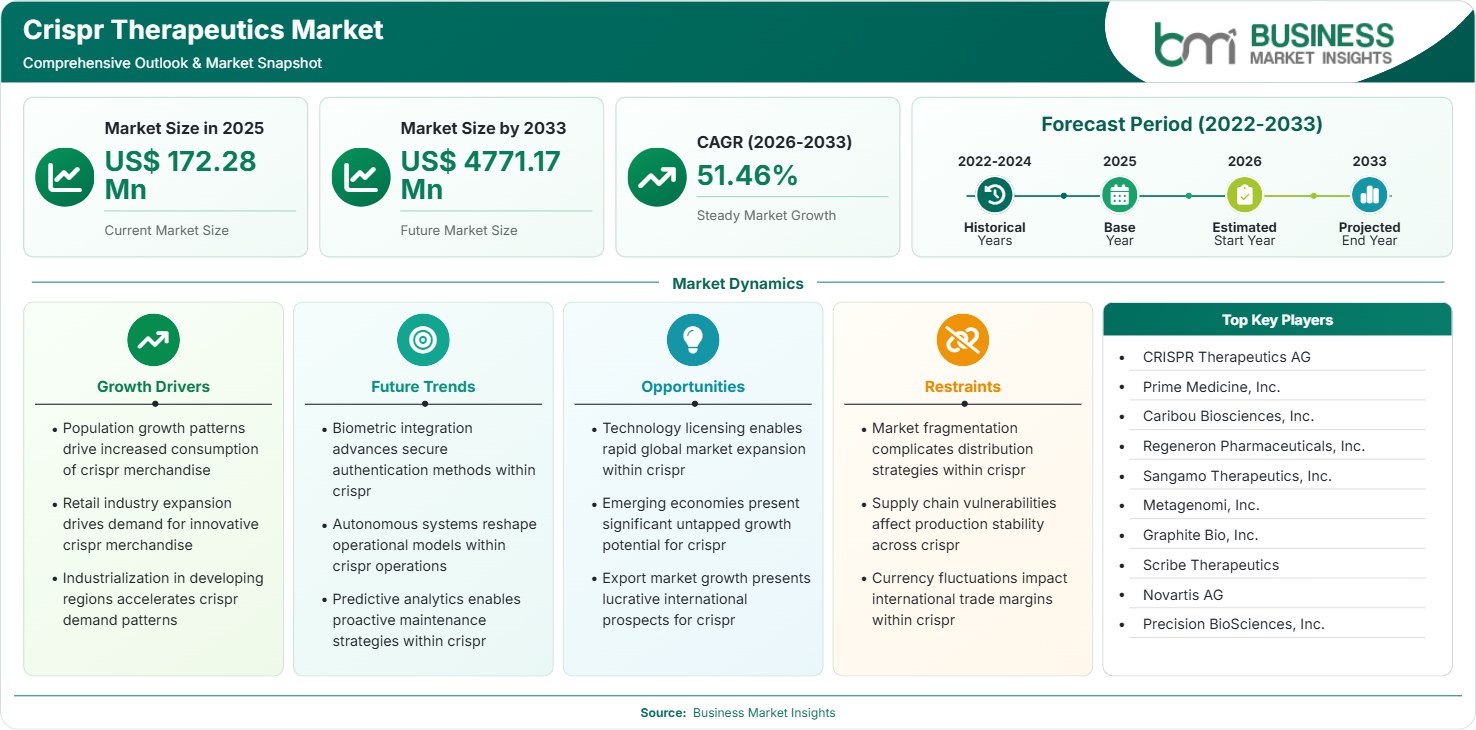
The CRISPR Therapeutics Market size was valued at US$ 172.28 Million in 2025 and is projected to reach US$ 4771.17 Million by 2033, growing at a CAGR of 51.46% during 2026–2033, driven by gene-editing advancements, increasing clinical adoption, expanding therapeutic pipelines, regulatory support, and investment opportunities in precision medicine applications.

Report Coverage
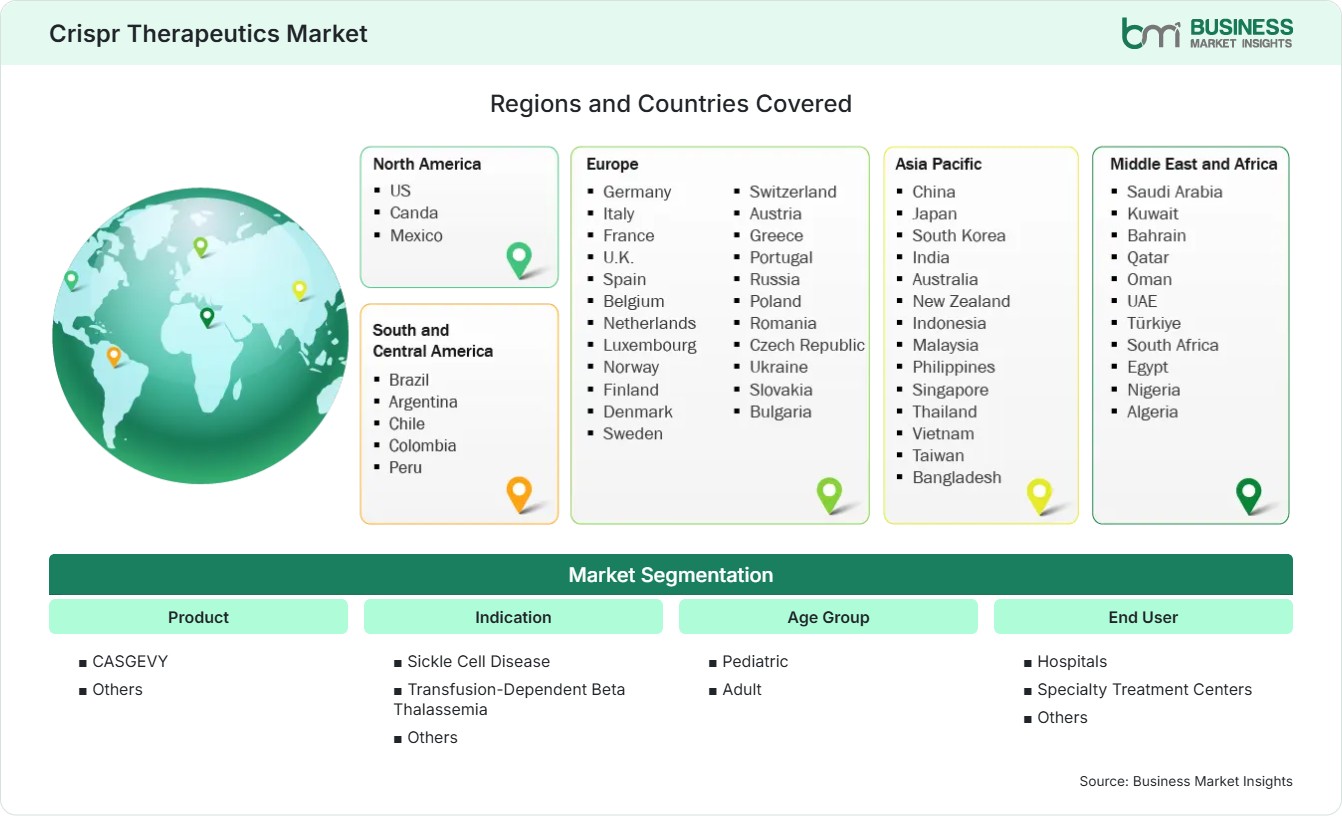
  • Product: CASGEVY, Others
  • Indication: Sickle Cell Disease, Transfusion-Dependent Beta Thalassemia, Others
  • Age Group: Pediatric, Adult
  • End User: Hospitals, Specialty Treatment Centers, Others
US$ 172.28 Mn Market size in 2025
US$ 4771.17 Mn Market Size by 2033
51.46% CAGR, 2026 - 2033
2026-2033 Forecast Period

01 AI Overview

Crispr Therapeutics Market Summary

  • North America Region: North America holds a 42%–45% share in 2025, expanding at a CAGR of 50%–53% during 2026–2033. Key drivers include advanced clinical infrastructure, strong biotechnology funding, regulatory acceleration, expanding gene therapy adoption, and increasing collaborations between pharmaceutical companies, research institutions, and specialized treatment centers. The US market demonstrates a CAGR of 51%–54% from 2026–2033, supported by FDA approvals, commercialization of gene-editing therapies, and robust biotechnology investments.
  • Fastest Growing Region: Asia Pacific represents a 20%–23% share in 2025, growing at a CAGR of 54%–57% during 2026–2033. Key drivers include rising healthcare investments, expanding genomic research capabilities, increasing patient access initiatives, government biotechnology programs, and growing partnerships supporting advanced therapeutic manufacturing and clinical development.
  • Leading Segment: CASGEVY under Product holds a 55%–58% share in 2025, achieving a CAGR of 52%–55% during 2026–2033. Key drivers include commercial availability, regulatory approvals for inherited blood disorders, clinical validation, increasing physician awareness, and adoption across specialized treatment centers globally.
  • High Growth Segment: Transfusion-Dependent Beta Thalassemia under Indication accounts for a 28%–31% share in 2025, growing at a CAGR of 53%–56% during 2026–2033. Key drivers include unmet treatment needs, rising disease awareness, expanded genetic screening, therapeutic innovation, and increasing adoption of one-time curative treatment approaches.
  • Key Market Opportunity: Expanding gene-editing applications beyond hematological disorders creates opportunities through next-generation CRISPR platforms, improved delivery technologies, broader clinical pipelines, strategic partnerships, and commercialization of personalized therapies across emerging healthcare markets.
  • Major Market Players: Vertex Pharmaceuticals Incorporated, Intellia Therapeutics, Inc., Beam Therapeutics Inc., Eli Lilly and Company, Verve Therapeutics, Inc., CRISPR Therapeutics AG, Editas Medicine, Inc.
02 Strategic Insights

Crispr Therapeutics Market: Strategic Insights

Crispr Therapeutics Market Strategic Framework
FREE PDF
Request your free sample
Request free sample
03 Stakeholder View

Key Takeaways

  • The ecosystem is evolving from research-driven innovation toward commercial therapeutic delivery, with biotechnology firms, pharmaceutical companies, manufacturing providers, and specialized healthcare centers forming integrated value chains for advanced gene-editing treatments.
  • Growth opportunities are concentrated in approved therapeutic products, inherited blood disorder applications, and emerging pipeline indications where CRISPR technology can address diseases with significant unmet medical needs and limited curative options.
  • Innovation is shifting toward improved editing accuracy, enhanced delivery mechanisms, reduced manufacturing complexity, and next-generation platforms designed to expand treatment accessibility while improving patient outcomes.
  • North America remains a strategic investment hub because of advanced regulatory frameworks, biotechnology clusters, clinical research capabilities, and strong pharmaceutical partnerships supporting commercialization activities.
  • Investment activity is increasingly focused on strategic alliances, licensing agreements, and acquisitions as companies seek access to proprietary editing technologies, manufacturing expertise, and differentiated therapeutic pipelines.
  • Expansion into rare diseases and personalized medicine applications provides additional opportunities for companies developing scalable gene-editing platforms with broader clinical utility.
04 Geographic Outlook

Crispr Therapeutics Market Regional Highlights

North America CRISPR Therapeutics Market

North America maintains the largest regional position with a 42%–45% share in 2025 and a CAGR of 50%–53% during 2026–2033. The region benefits from advanced biotechnology ecosystems, regulatory support, and strong clinical research capabilities. The market share reflects strong commercialization momentum from approved therapies and pipeline expansion. The CRISPR Therapeutics Market growth is supported by pharmaceutical partnerships, manufacturing investments, and increasing adoption across specialized treatment facilities.

  • The United States dominates regional activity through advanced gene-editing research, strong venture funding, and increasing commercialization of approved therapies targeting inherited blood disorders and rare genetic conditions.
  • Canada contributes through expanding biotechnology research programs, academic collaborations, and investments in precision medicine infrastructure supporting future gene-editing clinical applications.
  • Regulatory clarity from agencies such as the FDA accelerates therapy approvals, encouraging companies to develop scalable manufacturing capabilities and broaden patient access.
  • Increasing partnerships between biotechnology firms and healthcare providers strengthen clinical trial networks and improve adoption pathways for advanced genetic treatments.

US CRISPR Therapeutics Market

The US accounts for a 36%–39% CRISPR Therapeutics Market share in 2025 within North America and records a CAGR of 51%–54% during 2026–2033. Strong biotechnology infrastructure, extensive clinical trial activity, and favorable reimbursement discussions position the country as a commercialization leader. The market benefits from academic research excellence, pharmaceutical investments, and rapid adoption of innovative genetic therapies across specialized healthcare networks.

  • The US benefits from leading biotechnology clusters in California, Massachusetts, and other innovation hubs supporting CRISPR research, manufacturing, and clinical development programs.
  • Growing healthcare investment and regulatory advancements are improving access to gene-editing therapies for patients with complex inherited disorders.
  • Pharmaceutical collaborations with biotechnology companies are accelerating commercialization strategies and strengthening domestic manufacturing capabilities for advanced therapies.
  • Expanding clinical research networks enable faster patient recruitment and support broader evaluation of emerging CRISPR-based treatment approaches.

Europe CRISPR Therapeutics Market

Europe represents a 25%–28% CRISPR Therapeutics Market share in 2025, expanding at a CAGR of 49%–52% during 2026–2033. The region demonstrates strong potential through healthcare modernization, research collaborations, and increasing acceptance of advanced therapies. Germany, the United Kingdom, France, and Switzerland remain leading markets due to biotechnology expertise and clinical infrastructure. Switzerland shows high growth momentum due to its life sciences ecosystem and pharmaceutical concentration.

  • Germany supports market expansion through advanced healthcare facilities, biotechnology investments, and increasing adoption of innovative treatment technologies.
  • The United Kingdom benefits from genomic research initiatives, regulatory developments, and collaborations between academic institutions and biotechnology companies.
  • France is strengthening its position through government-supported healthcare innovation programs and expanding access to advanced therapeutic solutions.
  • Switzerland contributes through pharmaceutical expertise, research capabilities, and presence of globally recognized gene-editing companies.
  • European regulatory harmonization supports cross-border clinical development and improves commercialization opportunities for advanced genetic therapies.

Asia Pacific CRISPR Therapeutics Market

Asia Pacific holds a 20%–23% CRISPR Therapeutics Market share in 2025 and records the highest CAGR of 54%–57% during 2026–2033. The region benefits from increasing healthcare expenditure, expanding biotechnology capabilities, and rising genetic disease awareness. China, Japan, South Korea, and India are emerging markets due to research investments, clinical development activities, and growing healthcare infrastructure. Increasing government support is improving regional accessibility.

  • China leads regional growth through biotechnology investments, expanding genomic research facilities, and increasing clinical development activities for genetic medicines.
  • Japan supports adoption through advanced healthcare systems, regulatory innovation, and growing interest in regenerative and precision medicine.
  • South Korea is developing biotechnology capabilities through research funding, manufacturing investments, and partnerships with global therapeutic developers.
  • India presents future opportunities due to increasing healthcare investments, expanding clinical research capacity, and rising awareness of genetic treatment options.
  • Regional partnerships are improving technology transfer, manufacturing capabilities, and access to advanced gene-editing platforms.

Rest of World CRISPR Therapeutics Market

Rest of World accounts for a 7%–10% share of the CRISPR Therapeutics Market in 2025, growing at a CAGR of 45%–48% during 2026–2033. South and Central America are gradually developing biotechnology capabilities through healthcare investments and research collaborations. Middle East and Africa markets are progressing through specialized healthcare infrastructure development and international partnerships. Countries including Brazil, Saudi Arabia, and the UAE represent emerging opportunities.

  • Brazil supports regional growth through expanding healthcare infrastructure, research institutions, and increasing focus on rare disease treatment solutions.
  • Middle Eastern countries are investing in advanced healthcare facilities and precision medicine programs to improve access to innovative therapies.
  • The UAE and Saudi Arabia are developing biotechnology strategies through partnerships, research investments, and healthcare modernization initiatives.
  • Limited specialist availability remains a challenge, creating opportunities for international collaborations and technology transfer programs.
  • Growing awareness of genetic disorders is encouraging governments to strengthen diagnostic capabilities and advanced treatment accessibility.
Global Market Geography
FREE PDF
Request your free sample
Request free sample
05 Segment Analysis

Crispr Therapeutics Market Segmentation

Product

The Product segment represents the commercial foundation of the CRISPR Therapeutics Market scope, with CASGEVY accounting for a 55%–58% share in 2025 and a CAGR of 52%–55% during 2026–2034. Commercial approvals, clinical validation, and expanding treatment availability are strengthening adoption. Emerging product innovations are expected to improve therapeutic applications and support broader genetic medicine commercialization.

  • CASGEVY: CASGEVY has gained adoption as an approved CRISPR-based therapy for inherited blood disorders, supported by clinical outcomes, regulatory approvals, and specialized treatment infrastructure.
  • Others: Other products include emerging gene-editing candidates targeting multiple diseases, supported by pipeline expansion, research investments, and advancements in editing technologies.

Indication

The indication segment reflects diverse therapeutic applications, with increasing focus on inherited blood disorders requiring durable treatment solutions. Sickle Cell Disease and Transfusion-Dependent Beta Thalassemia remain major applications due to significant unmet needs. Advancing clinical pipelines and genetic screening improvements are strengthening adoption prospects. The CRISPR Therapeutics Market trends indicate increasing interest in expanding indications beyond hematological conditions.

  • Sickle Cell Disease: Sickle cell disease applications benefit from high unmet medical needs, increasing diagnosis rates, and adoption of gene-editing therapies offering potential long-term treatment benefits.
  • Transfusion-Dependent Beta Thalassemia: This indication gains momentum through demand for alternatives to chronic transfusion management, improved patient outcomes, and expanding availability of advanced therapeutic approaches.

Age Group

The Age Group segment highlights treatment accessibility across patient populations, with adult applications currently representing larger adoption due to regulatory approvals and clinical evidence. Pediatric opportunities are developing through ongoing research and improved safety assessments. The segment is influenced by disease prevalence, treatment eligibility criteria, and healthcare provider readiness for advanced therapies.

  • Pediatric: Pediatric applications are supported by early intervention opportunities, expanding clinical research, and future potential for treating inherited disorders before disease progression.
  • Adult: Adult applications benefit from established clinical evidence, approved treatment pathways, and greater accessibility through specialized healthcare centers.

End User

The End User segment demonstrates increasing demand from facilities capable of delivering complex genetic therapies. Hospitals and specialty treatment centers remain central due to infrastructure requirements, patient monitoring capabilities, and multidisciplinary expertise. The segment is shaped by treatment complexity, manufacturing coordination, and healthcare system preparedness for advanced therapeutic procedures.

  • Hospitals: Hospitals support adoption through specialized departments, clinical expertise, and integrated care pathways required for gene-editing treatment delivery.
  • Specialty Treatment Centers: Specialty treatment centers provide focused expertise, advanced infrastructure, and patient management capabilities for complex genetic therapies.
06 Market Forces

Crispr Therapeutics Market Dynamics

Key Market Drivers

Increasing Approval of Gene-Editing Therapies

The approval of commercial CRISPR-based therapies represents a major driver by demonstrating clinical feasibility and accelerating physician adoption. These regulatory achievements validate the potential of gene-editing technologies and strengthen confidence in their long-term therapeutic value. The regulatory milestones are helping biotech firms move forward with their research programs on developing treatment options for other genetic and rare hereditary diseases. The availability of treatments that have passed through regulatory approval processes will help build confidence in the healthcare industry and in individuals looking for long-term solutions to their medical issues. With more successful CRISPR treatment options making their way through regulation, its adoption will continue to grow.

Rising Investment in Genomic Medicine Research

Investment growth in genomic medicine is strengthening innovation across CRISPR platforms, delivery technologies, and manufacturing processes. With increased funding, scientists have been able to enhance the accuracy of the editing process, improve the safety of treatments, and increase large-scale production abilities. Biotech companies are being funded through partnerships, venture capitalists, and pharmaceutical partnerships, which help in enhancing clinical development activities and fast-tracking the process of moving from lab research to treatment. This funding is also promoting advanced research facilities, increasing collaborations, and fostering the development of more sophisticated gene editing technologies for treating complex genetic diseases.

Expansion of Precision Medicine Applications

Increasing demand for personalized healthcare solutions is driving CRISPR adoption across targeted disease areas. Technologies involving DNA sequencing, biomarkers identification and tailored treatment methods have become a way to use new applications in various therapeutic areas. Modern health systems are gradually turning towards more precise treatment methods that will not only treat diseases but eliminate their causes, which will significantly improve treatment results for patients. With the increasing role of personalized medicine, CRISPR technology becomes a promising tool for designing tailored treatments based on the individual's genetic data.

Key Market Opportunities

Expansion Beyond Hematological Disorders

Expanding CRISPR applications into oncology, metabolic diseases, and rare genetic conditions provides significant commercial opportunities. With the increasing knowledge of the genetic basis behind diseases, there are emerging opportunities for gene-editing treatments that may address diseases that are not currently targeted by the therapies. By targeting more areas with new approaches, companies will gain access to a wider pool of patients as well as revenue streams from their treatments. The development of more therapies in other therapeutic areas ensures that they are not dependent on a few indications of diseases.

Development of Advanced Delivery Technologies

Improved delivery systems represent a major opportunity by enabling safer and more effective gene editing. The innovations that have continued to occur revolve around ensuring increased accuracy of editing and at the same time reducing undesirable biological effects in addition to ensuring positive therapeutic effects. The advancements in nanoparticles, viral vectors and delivery systems can enhance therapeutic potential while at the same time overcoming current limitations in delivering treatments. Delivery technology advancement makes gene editing procedures more efficient thus enabling development of treatments for conditions that were challenging with traditional delivery methods.

Growth Potential in Emerging Healthcare Markets

Emerging economies offer opportunities through increasing healthcare investments, biotechnology development programs, and growing awareness of genetic diseases. Governments and healthcare organizations are strengthening medical infrastructure while encouraging research activities that support advanced treatment options. Strategic partnerships can help companies establish infrastructure and improve access to advanced gene-editing therapies. Expanding into these markets enables biotechnology companies to reach underserved patient populations, strengthen regional collaborations, and support the long-term adoption of innovative CRISPR-based therapies as healthcare capabilities continue to improve.

Market Restraints and Challenges

High Manufacturing Complexity and Production Costs

Factor: The gene therapies that involve gene editing technology need a certain type of manufacturing facility, personnel with the right skill set, and stringent quality controls in order to maintain consistency in terms of quality and safety of the products manufactured.

Impact: This raises the cost of production and limits the availability of the treatments in areas that do not have well-developed healthcare facilities. The increased cost of production may further hamper scalability, affordability to healthcare providers, and wide adoption of the therapy globally.

Regulatory and Accessibility Barriers

Factor: Regulatory pressures and financial uncertainties exist regarding advanced treatments. There is need for diverse regulatory environments, where clinical data needs to be obtained over long periods of time and compliance maintained.

Impact: Such issues will not only delay the entry of such therapies into the market but also deny the patients access to such therapies despite their clinical effectiveness and the numerous health benefits that they offer. The uncertainty surrounding such therapies may even hinder investments in such products and launch of the therapy in different locations.

07 Company Analysis

Competitive Landscape

The CRISPR Therapeutics Market analysis highlights a competitive ecosystem involving biotechnology innovators, pharmaceutical companies, and technology-focused organizations developing gene-editing platforms. Leading companies are focused on commercializing approved therapies, expanding clinical pipelines, and improving editing technologies.

Company Name

Overview

Products and Services relevant to this market

Vertex Pharmaceuticals Incorporated

Global biotechnology and pharmaceutical company focused on innovative treatments for serious diseases with strong commercial capabilities.

Develops CASGEVY with CRISPR Therapeutics for treating sickle cell disease and transfusion-dependent beta thalassemia.

Intellia Therapeutics, Inc.

Biotechnology company specializing in genome editing technologies and clinical development of transformative genetic medicines.

Develops in vivo and ex vivo CRISPR therapies targeting genetic disorders and advanced therapeutic applications.

Beam Therapeutics Inc.

Biotechnology company developing precision genetic medicines using base editing technology platforms.

Provides next-generation gene-editing solutions focused on safer and more targeted genetic modifications.

Eli Lilly and Company

Global pharmaceutical company investing in innovative medicines and strategic biotechnology partnerships.

Supports genetic medicine initiatives through collaborations and investments in advanced therapeutic technologies.

Verve Therapeutics, Inc.

Biotechnology company focused on cardiovascular genetic medicines using advanced gene-editing approaches.

Develops gene-editing therapies targeting cardiovascular diseases through precision editing platforms.

CRISPR Therapeutics AG

Gene-editing company specializing in CRISPR/Cas9-based therapies and commercialized genetic medicines.

Develops CRISPR-based treatments including CASGEVY for inherited blood disorders.

Editas Medicine, Inc.

Genome editing company developing therapies using CRISPR and related gene-editing technologies.

Develops experimental treatments for genetic diseases using targeted genome editing approaches.

10 Trust & Transparency

Research Methodology

The market analysis combines proprietary research with secondary data from government agencies, company disclosures, regulatory filings, industry databases and expert interviews. Market estimates are validated through data triangulation, cross-market benchmarking and analyst review.

View Full Research Methodology

11 Questions Answered

Frequently Asked Questions

What is the outlook for the CRISPR Therapeutics Market Report?

The CRISPR Therapeutics Market Report indicates continued expansion driven by technological innovation, broader therapeutic applications, and increasing investments in precision medicine.

What role does manufacturing play in CRISPR commercialization?

Manufacturing capabilities influence scalability, cost efficiency, quality control, and accessibility of complex gene-editing therapies.

How do CRISPR therapies differ from conventional treatments?

CRISPR therapies aim to modify disease-related genetic mechanisms, potentially providing durable benefits compared with treatments requiring continuous symptom management.

Which diseases are currently targeted by CRISPR therapies?

Current commercial applications focus primarily on inherited blood disorders, while clinical pipelines are exploring oncology, cardiovascular diseases, and other genetic conditions.

What factors are driving adoption of CRISPR-based therapies?

Adoption is supported by regulatory approvals, clinical success, increasing investment in genomic medicine, and demand for therapies addressing genetic disease causes rather than symptoms.

Access the Full Crispr Therapeutics Market Report

Get segment-level forecasts, regional estimates, competitive benchmarking, company profiles and downloadable Excel datasets.

Access the full Crispr Therapeutics Market Report
350 pages PDF & Excel | 2026-08-17