
Cancer Of Unknown Primary Therapeutics Market Outlook: Size, Share, Trends, Growth Analysis, Competitive Landscape & Forecast, 2026–2033

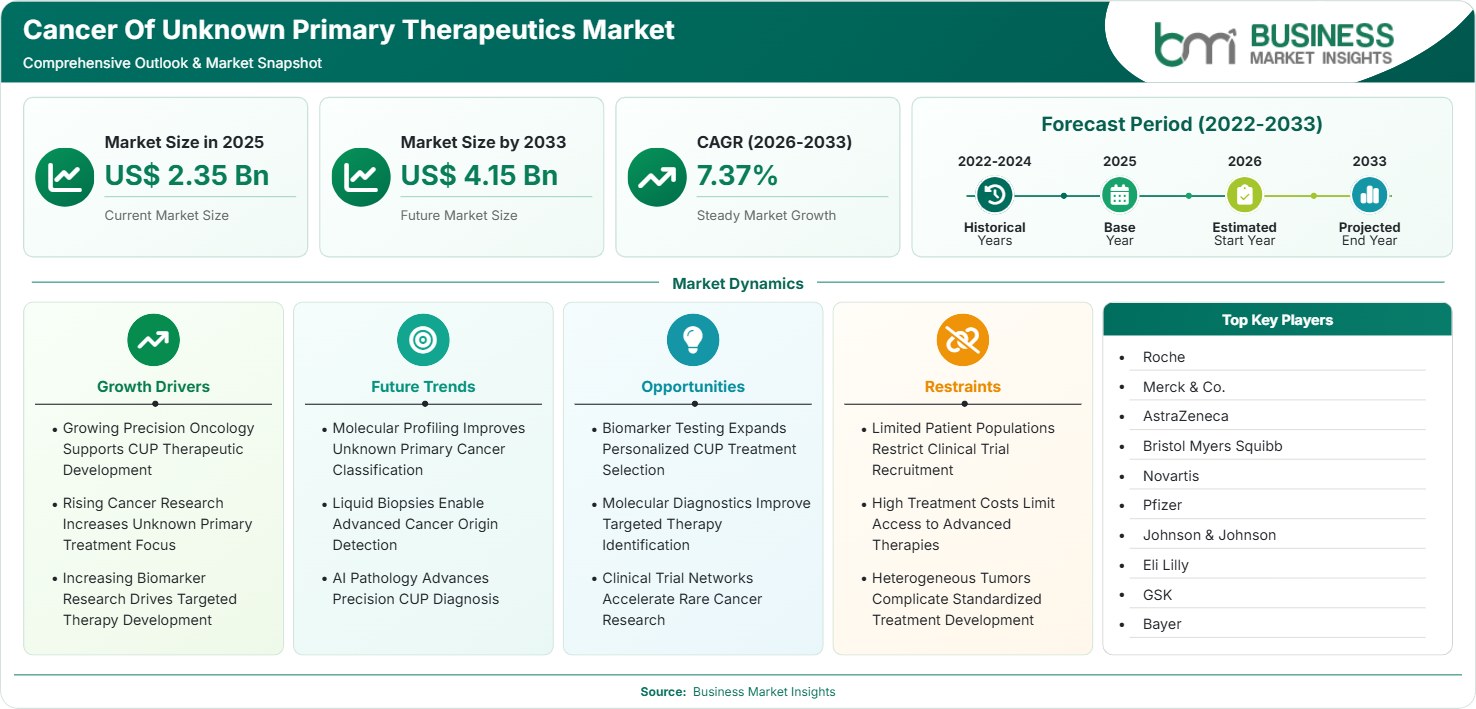
The Cancer of Unknown Primary Therapeutics Market size was valued at US$ 2.35 billion in 2025 and is projected to reach US$ 4.15 billion by 2033, growing at a CAGR of 7.37% during 2026–2033. Growth is driven by precision oncology adoption, expanding biomarker research, increasing cancer diagnostic capabilities, rising targeted therapy development, and improved treatment approaches for complex metastatic cancers.

Report Coverage
  • Drug Class: Platinum Compounds, Taxanes, Immune Checkpoint Inhibitors, Antimetabolites, HER2-Directed ADCs/HER2-Directed Biologics, TRK Inhibitors, BRAF/MEK Inhibitors, Others
  • Therapy Type: Chemotherapy, Targeted Therapy, Immunotherapy, Others
  • Age Group: Pediatric, Adults
  • Route of Administration: Intravenous, Others
  • Distribution Channel: Hospital Pharmacies, Drug Stores & Retail Pharmacies, Online Pharmacies
US$ 2.35 Bn Market size in 2025
US$ 4.15 Bn Market Size by 2033
7.37% CAGR, 2026 - 2033
2026-2033 Forecast Period

AI Overview

Cancer Of Unknown Primary Therapeutics Market Summary

  • North America Region: North America holds a leading position with a share ranging between 40%–44% in 2025 and is projected to grow at a CAGR of 7.1%–7.7% through 2033. Advanced oncology infrastructure, high cancer research investments, molecular diagnostics adoption, and strong pharmaceutical presence support regional growth. The U.S. contributes approximately 86%–90% of North America demand and is expected to grow at a CAGR of 7.2%–7.8%, supported by precision medicine programs, clinical trials, and advanced cancer treatment access.
  • Fastest Growing Region: Asia Pacific represents the fastest-growing region with a share ranging between 22%–26% in 2025 and is expected to expand at a CAGR of 8.0%–8.7% through 2033. Increasing oncology investments, improving healthcare infrastructure, expanding diagnostic capabilities, and growing access to advanced therapeutics are supporting adoption across emerging markets.
  • Leading Segment: Immunotherapy represents the leading drug class segment with a share ranging between 28%–32% in 2025 and is projected to grow at a CAGR of 8.1%–8.8% through 2033. Increasing immune checkpoint inhibitor adoption and biomarker-driven treatment strategies are supporting segment leadership.
  • High Growth Segment: Targeted Therapy represents the high-growth therapy segment with a share ranging between 24%–28% in 2025 and is expected to register a CAGR of 8.5%–9.2% through 2033. Advancements in molecular profiling, genomic testing, and personalized treatment approaches are accelerating adoption.
  • Key Market Opportunity: Expansion of biomarker testing, molecular diagnostics, clinical trial collaborations, and personalized oncology approaches is creating opportunities for pharmaceutical companies developing targeted and immune-based therapies.
  • Major Market Players: Roche, Merck & Co., AstraZeneca, Bristol Myers Squibb, Novartis, Pfizer, Johnson & Johnson, Eli Lilly and Company, GSK plc, and Bayer AG.
Strategic Insights

Cancer Of Unknown Primary Therapeutics Market: Strategic Insights

Cancer Of Unknown Primary Therapeutics Market Strategic Framework
FREE PDF
Request your free sample
Request free sample
Stakeholder View

Key Takeaways

  • The market ecosystem includes pharmaceutical companies, oncology research organizations, diagnostic developers, healthcare providers, and clinical trial networks focused on improving treatment outcomes for rare metastatic cancers.
  • Targeted therapies and immunotherapies provide significant growth opportunities as personalized oncology approaches become more integrated into cancer treatment decisions.
  • Innovation is shifting toward molecular profiling, biomarker-guided therapies, immune checkpoint approaches, and combination treatment strategies for complex cancer cases. The Cancer of Unknown Primary Therapeutics Market trend highlights increasing adoption of personalized oncology models, where diagnostic insights support targeted treatment selection and improved clinical decision-making for patients with complex cancer profiles.
  • North America remains an attractive investment region due to advanced oncology infrastructure, strong research capabilities, and extensive clinical development activity.
  • Companies are strengthening market positions through drug development partnerships, clinical collaborations, licensing agreements, and expansion of oncology portfolios.
  • Future competitiveness will depend on improving diagnostic accuracy, expanding patient identification methods, and developing therapies that address diverse molecular cancer profiles.
Geographic Outlook

Cancer Of Unknown Primary Therapeutics Market Regional Highlights

North America Cancer of Unknown Primary Therapeutics Market

North America accounted for approximately 40%–44% of the Cancer of Unknown Primary Therapeutics Market share in 2025 and is projected to grow at a CAGR of 7.1%–7.7% through 2033. The region benefits from advanced oncology infrastructure, strong pharmaceutical research capabilities, molecular diagnostic adoption, and extensive clinical trial activity. The U.S. remains the largest contributor due to strong healthcare investment and precision oncology adoption.

  • Oncology research investments are supporting development of targeted and immune-based therapies for complex cancers.
  • Pharmaceutical companies are expanding clinical programs focused on biomarker-driven treatment approaches.
  • Advanced diagnostic infrastructure is improving patient identification and treatment selection.
  • Healthcare providers are increasing adoption of personalized oncology strategies.

US Cancer of Unknown Primary Therapeutics Market

The U.S. represented approximately 86%–90% of North America’s Cancer of Unknown Primary Therapeutics Market share in 2025 and is expected to grow at a CAGR of 7.2%–7.8% through 2033. Strong research institutions, oncology centers, pharmaceutical innovation, and availability of advanced therapies support market expansion. The country remains a major hub for clinical trials and precision medicine development.

  • Clinical research networks are accelerating evaluation of emerging CUP therapies.
  • Precision diagnostics are improving identification of actionable molecular targets.
  • Pharmaceutical companies are increasing investments in oncology drug pipelines.
  • Advanced healthcare facilities are supporting access to innovative treatments.

Europe Cancer of Unknown Primary Therapeutics Market

Europe represented approximately 26%–30% of the market share in 2025 and is projected to grow at a CAGR of 6.8%–7.4% through 2033. Germany, the United Kingdom, France, and Switzerland contribute significantly due to established oncology systems, research infrastructure, and increasing adoption of molecular diagnostics. Regional healthcare initiatives are supporting advanced cancer treatment access.

  • European oncology centers are expanding precision medicine capabilities for rare cancers.
  • Research collaborations are improving understanding of unknown primary malignancies.
  • Healthcare systems are adopting advanced diagnostic testing approaches.
  • Pharmaceutical companies are increasing regional clinical trial participation.

Asia Pacific Cancer of Unknown Primary Therapeutics Market

Asia Pacific accounted for approximately 22%–26% of the Cancer of Unknown Primary Therapeutics Market share in 2025 and is expected to register the fastest growth with a CAGR of 8.0%–8.7% through 2033. China, Japan, India, South Korea, and Australia are supporting expansion through healthcare modernization, cancer research investments, and improved access to advanced diagnostics and therapies.

  • Growing oncology infrastructure is improving treatment availability across emerging markets.
  • Diagnostic technology adoption is increasing identification of complex cancer profiles.
  • Healthcare investments are supporting advanced therapeutic access.
  • Regional research partnerships are expanding clinical development opportunities.

Rest of World Cancer of Unknown Primary Therapeutics Market

The Rest of World region accounted for approximately 8%–12% of the Cancer of Unknown Primary Therapeutics Market share in 2025 and is projected to grow at a CAGR of 6.2%–6.8% through 2033. Latin America, Middle East, and Africa markets are gradually improving oncology capabilities through healthcare investments, diagnostic expansion, and increasing awareness of advanced cancer therapies.

Middle Eastern countries are strengthening oncology facilities, while Latin American and African markets are improving access to specialized cancer diagnostics and treatments.

  • Healthcare modernization programs are improving oncology treatment availability.
  • Diagnostic infrastructure development is creating opportunities for advanced therapies.
  • International partnerships are supporting cancer research capabilities.
  • Increasing awareness is encouraging earlier diagnosis and treatment adoption.
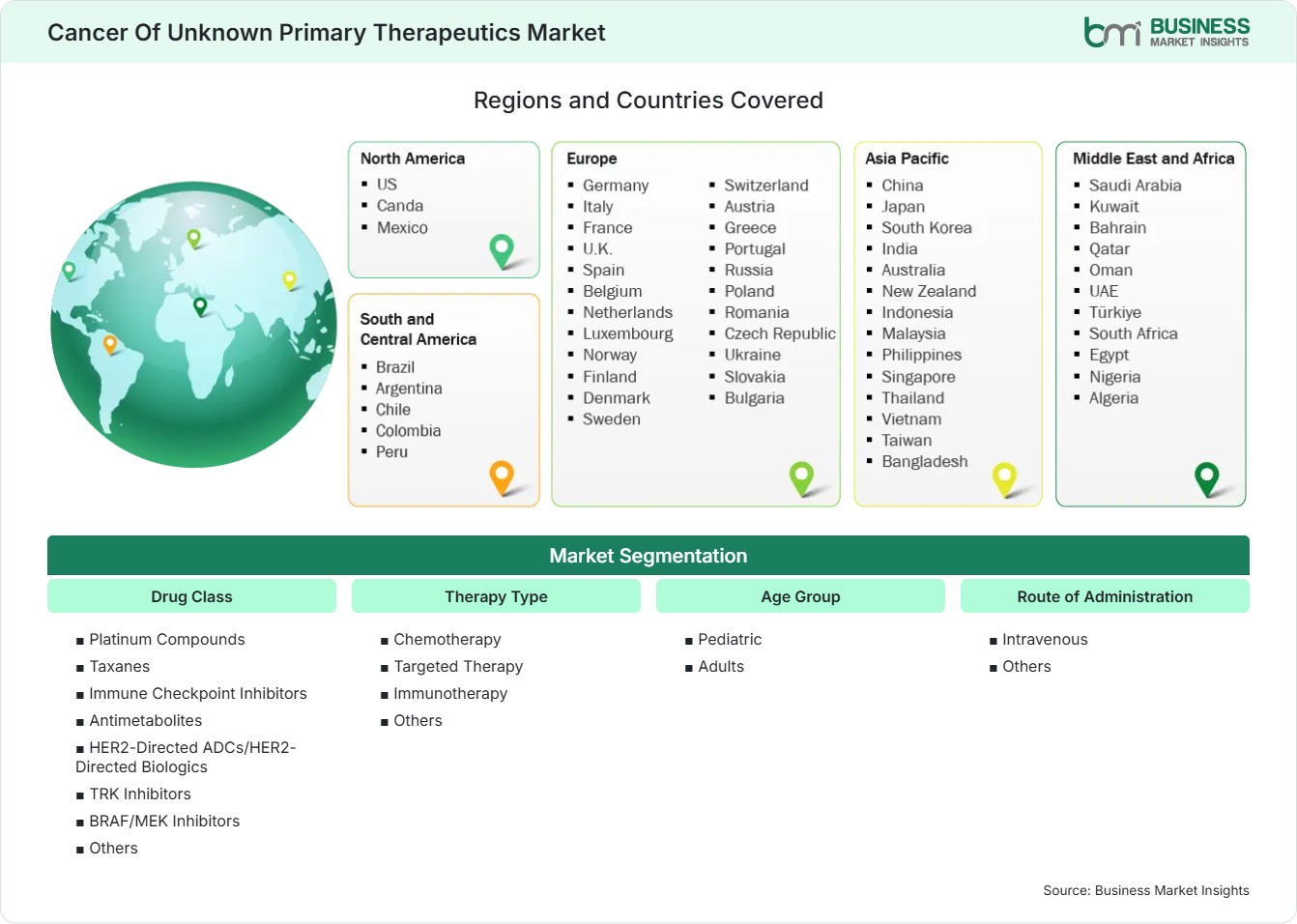
Global Market Geography
FREE PDF
Request your free sample
Request free sample
Segment Analysis

Cancer Of Unknown Primary Therapeutics Market Segmentation

Drug Class

Immunotherapy represents a leading segment due to increasing adoption of immune checkpoint inhibitors and biomarker-guided treatment strategies. The Cancer of Unknown Primary Therapeutics Market scope is expanding as researchers focus on therapies that improve outcomes for patients with molecularly diverse metastatic cancers.

  • Platinum Compounds: Platinum-based drugs remain important chemotherapy options for broad treatment approaches in unknown primary cancers.
  • Taxanes: Taxanes support combination therapies by providing established cytotoxic activity across multiple cancer indications.
  • Immune Checkpoint Inhibitors: These therapies are gaining importance through immune response activation and precision treatment approaches.
  • Antimetabolites: Antimetabolites continue supporting oncology treatment protocols requiring systemic therapeutic approaches.
  • HER2-Directed ADCs/HER2-Directed Biologics: These therapies provide targeted options for patients with HER2-related molecular characteristics.
  • TRK Inhibitors: TRK inhibitors support personalized treatment strategies for cancers with specific gene alterations.
  • BRAF/MEK Inhibitors: These therapies address cancers with relevant pathway mutations through targeted inhibition approaches.

Therapy Type

Targeted therapy is gaining momentum as molecular testing enables identification of actionable alterations in unknown primary cancers. Increasing precision oncology adoption is encouraging pharmaceutical companies to develop therapies focused on specific biological pathways.

  • Chemotherapy: Chemotherapy remains widely used due to established treatment protocols and broad anticancer activity.
  • Targeted Therapy: Targeted therapies provide personalized treatment options based on molecular characteristics.
  • Immunotherapy: Immunotherapy supports improved treatment strategies through immune system activation.
  • Others: Other approaches include emerging therapeutic strategies and combination treatment methods.

Age Group

Adult patients represent the dominant segment due to higher incidence of metastatic cancers and greater availability of clinical evidence. Research efforts continue improving therapeutic approaches across patient groups.

  • Pediatric: Pediatric applications focus on rare cancer cases and specialized treatment strategies.
  • Adults: Adult patients represent the primary treatment population due to higher disease prevalence and therapeutic demand.

Route of Administration

Intravenous administration remains widely used due to compatibility with many oncology therapies and hospital-based treatment protocols. Development of alternative delivery methods continues supporting treatment flexibility.

  • Intravenous: Intravenous therapies provide controlled delivery for chemotherapy, immunotherapy, and targeted treatments.
  • Others: Other administration methods support emerging therapies requiring different delivery approaches.

Distribution Channel

Hospital pharmacies remain important distribution channels due to the specialized nature of cancer treatments and clinical supervision requirements. Advanced oncology therapies require professional administration and monitoring.

  • Hospital Pharmacies: Hospital pharmacies support controlled distribution of specialized oncology medicines.
  • Drug Stores & Retail Pharmacies: Retail channels provide access to supportive medications and selected therapies.
  • Online Pharmacies: Online platforms are expanding medicine accessibility and prescription management options.
Market Forces

Cancer Of Unknown Primary Therapeutics Market Dynamics

Key Market Drivers

Growing Precision Oncology Supports CUP Therapeutic Development

Precision medicine is emerging as a prominent driver, as molecular information is increasingly used by healthcare professionals to develop appropriate treatment plans for CUP patients. The use of advanced sequencing tools, diagnostic tests, and profiling systems is leading to better recognition of actionable mutations and biomarkers. Pharmaceutical firms are developing treatments that target specific pathways in the body based on molecular information rather than traditional cancer type classifications. This ensures personalized treatment, allowing scientists to test treatment options across groups of patients with similar genetics. Innovations in oncology are prompting biotech companies, academic institutions, and healthcare organizations to collaborate.

Rising Cancer Research Increases Unknown Primary Treatment Focus

Increased efforts in the study of cancers whose origins cannot be traced to a particular tumor are evident in the growth of cancer research activities. Cancer research institutes have focused on studying the biology of tumors, metastasis, and responses to therapy in cancers of unknown primary. Clinical research is facilitating researchers to test new therapy combinations and to understand the underlying biology of such cancers. The pharmaceutical industry is investing more in cancer research to bring new drugs to market that address unmet treatment needs. This effort will create new sources of knowledge, improved approaches to stratifying patients, and new treatment avenues.

Increasing Biomarker Research Drives Targeted Therapy Development

Research into biomarkers is helping identify potential patients who will benefit from specific therapies and immunotherapy approaches. As a result of advancements in molecular diagnostics, physicians can analyze changes in genes, immune markers, and tumors that affect treatment. Such developments are paving the way for the integration of biomarker approaches into clinical trial development by pharmaceutical organizations. With more accurate diagnostic technologies, it will be easier to select the correct therapies and eliminate doubts about the choice of treatment in case of CUP patients. The advent of the precision diagnostic platform is also contributing to integrated solutions involving both diagnostics and therapies, thereby advancing the field of personalized medicine.

Key Market Opportunities

Biomarker Testing Expands Personalized CUP Treatment Selection

The rising number of biomarker tests is providing avenues to enhance treatment options for people with cancers of unknown origin. Through molecular profiling, health care professionals can identify genetic and biological markers that may indicate whether someone will benefit from certain drugs. The expansion of diagnostic technologies is enabling health care professionals to start practicing more personalized treatments. Companies dealing in pharmaceutical products are developing treatments alongside companion diagnostics to facilitate the right choice of treatment. Greater access to test kits will facilitate better patient identification, improved decision-making in clinical settings, and more efficient use of cutting-edge oncology drugs. This trend will encourage closer cooperation among diagnostic firms, health care organizations, and drug developers.

Molecular Diagnostics Improve Targeted Therapy Identification

Innovations in molecular diagnostics have created new possibilities to identify therapeutic targets in patients with CUP. Advances in next-generation sequencing technology and other diagnostic technologies are providing greater insight into the nature of tumors. They help discover actionable mutations and facilitate targeted therapy planning. The integration of diagnostic results in oncology practice can improve treatment options and contribute to personalized medicine. Medical institutions have begun using molecular diagnostic approaches to increase their capacity to manage cancer. It can be assumed that further advances in diagnostic technologies will contribute to the development of better-targeted drugs.

Clinical Trial Networks Accelerate Rare Cancer Research

The expansion of clinical trial networks is helping to create opportunities for rapid evaluation of drugs developed to treat rare and difficult-to-treat cancers. The collaboration between pharmaceutical companies, universities, and oncology hospitals is helping to improve patient recruitment and coordinate research. This is helping researchers gather valuable information from the clinical study as they perform their research on various patients. The Cancer of Unknown Primary Therapeutics forecast says there will be more opportunities due to collaborative research, improved trial infrastructure, and rare-cancer drug development.

Market Restraints and Challenges

High Treatment Costs Limit Access to Advanced Therapies

Factor: High costs associated with advanced oncology medicines, biomarker testing, and specialized treatment procedures can limit accessibility for patients and healthcare systems. Impact: Expensive therapies may restrict adoption in cost-sensitive markets, create reimbursement challenges, and slow broader utilization of innovative CUP treatment options. Pharmaceutical companies must focus on value-based approaches, pricing strategies, and healthcare partnerships to improve availability. Limited affordability can particularly affect regions where advanced oncology infrastructure and reimbursement mechanisms are still developing. Addressing treatment cost barriers remains important for improving equitable access to targeted therapies and immunotherapies.

Limited Patient Populations Restrict Clinical Trial Recruitment

Factor: The relatively small patient population associated with cancers of unknown primary origin creates difficulties in recruiting sufficient participants for clinical studies. Impact: Limited enrollment can extend trial timelines, increase research expenses, and delay regulatory progress for new therapies. Researchers must develop collaborative trial networks and innovative study designs to improve patient identification and participation. The rarity and biological diversity of CUP cases require coordinated efforts among healthcare providers, research organizations, and pharmaceutical companies. Improving patient recruitment strategies will remain essential for accelerating therapeutic development and generating stronger clinical evidence.

Company Analysis

Competitive Landscape

The Cancer of Unknown Primary Therapeutics Market analysis indicates that competition is influenced by oncology research capabilities, precision medicine investments, therapeutic innovation, and expanding clinical development pipelines. Leading pharmaceutical companies are strengthening their positions through targeted therapy programs, immunotherapy advancements, diagnostic collaborations, and strategic partnerships focused on improving cancer treatment outcomes.

Company Name

Overview

Products and Services relevant to this market

Roche

Global healthcare company specializing in pharmaceuticals and diagnostics with strong oncology capabilities.

Oncology medicines, targeted therapies, companion diagnostics, and personalized healthcare solutions.

Merck & Co.

Pharmaceutical company recognized for oncology and immunotherapy innovation.

Immune checkpoint inhibitors, cancer medicines, and clinical research programs.

AstraZeneca

Biopharmaceutical company focused on precision oncology and targeted treatments.

Targeted therapies, oncology medicines, and biomarker-driven solutions.

Bristol Myers Squibb

Healthcare company with extensive oncology and immunotherapy expertise.

Immunotherapies, cancer treatments, and oncology development programs.

Novartis

Global company developing advanced medicines across multiple therapeutic areas.

Precision oncology drugs, targeted therapies, and innovative treatment platforms.

Pfizer

Pharmaceutical organization with broad oncology research capabilities.

Cancer medicines, targeted treatments, and clinical development solutions.

Johnson & Johnson

Healthcare company advancing pharmaceutical innovation and cancer therapies.

Oncology medicines, targeted treatments, and research programs.

Eli Lilly and Company

Pharmaceutical company developing innovative oncology solutions.

Cancer therapeutics, targeted medicines, and precision treatment approaches.

GSK plc

Biopharmaceutical company focused on specialty medicines and oncology research.

Oncology therapies, immune-based medicines, and clinical programs.

Bayer AG

Healthcare organization developing pharmaceutical and oncology solutions.

Cancer treatments, targeted therapies, and precision healthcare products.

Trust & Transparency

Research Methodology

The market analysis combines proprietary research with secondary data from government agencies, company disclosures, regulatory filings, industry databases and expert interviews. Market estimates are validated through data triangulation, cross-market benchmarking and analyst review.

View Full Research Methodology

Questions Answered

Frequently Asked Questions

What does the Cancer of Unknown Primary Therapeutics Market report indicate about future competition?

The report indicates that competition will increasingly focus on precision oncology capabilities, biomarker integration, innovative clinical pipelines, and partnerships between pharmaceutical and diagnostic companies.

What challenges affect adoption of advanced CUP therapies?

Advanced therapies can face challenges related to cost, diagnostic availability, clinical evidence requirements, and limited patient populations. Healthcare systems must balance innovation adoption with affordability and accessibility considerations.

How are pharmaceutical companies improving CUP therapy options?

Companies are investing in targeted medicines, immune-based therapies, clinical trials, and diagnostic partnerships. These efforts aim to improve treatment selection, expand therapeutic options, and address the complexity of cancers with unidentified primary origins.

Why is precision oncology important for unknown primary cancer treatment?

Precision oncology allows treatment strategies to focus on tumor biology rather than only cancer location. This approach helps identify actionable genetic changes and supports development of therapies designed for individual patient profiles.

What role do biomarkers play in Cancer of Unknown Primary Therapeutics Market development?

Biomarkers help identify molecular characteristics of tumors, enabling physicians to select targeted therapies and immunotherapies more effectively. They support personalized treatment decisions by improving patient classification and increasing the potential for better therapeutic responses.

Access the Full Cancer Of Unknown Primary Therapeutics Market Report

Get segment-level forecasts, regional estimates, competitive benchmarking, company profiles and downloadable Excel datasets.

Access the full Cancer Of Unknown Primary Therapeutics Market Report
350 pages PDF & Excel | 2026-08-11
Similar Research

Related Market Reports