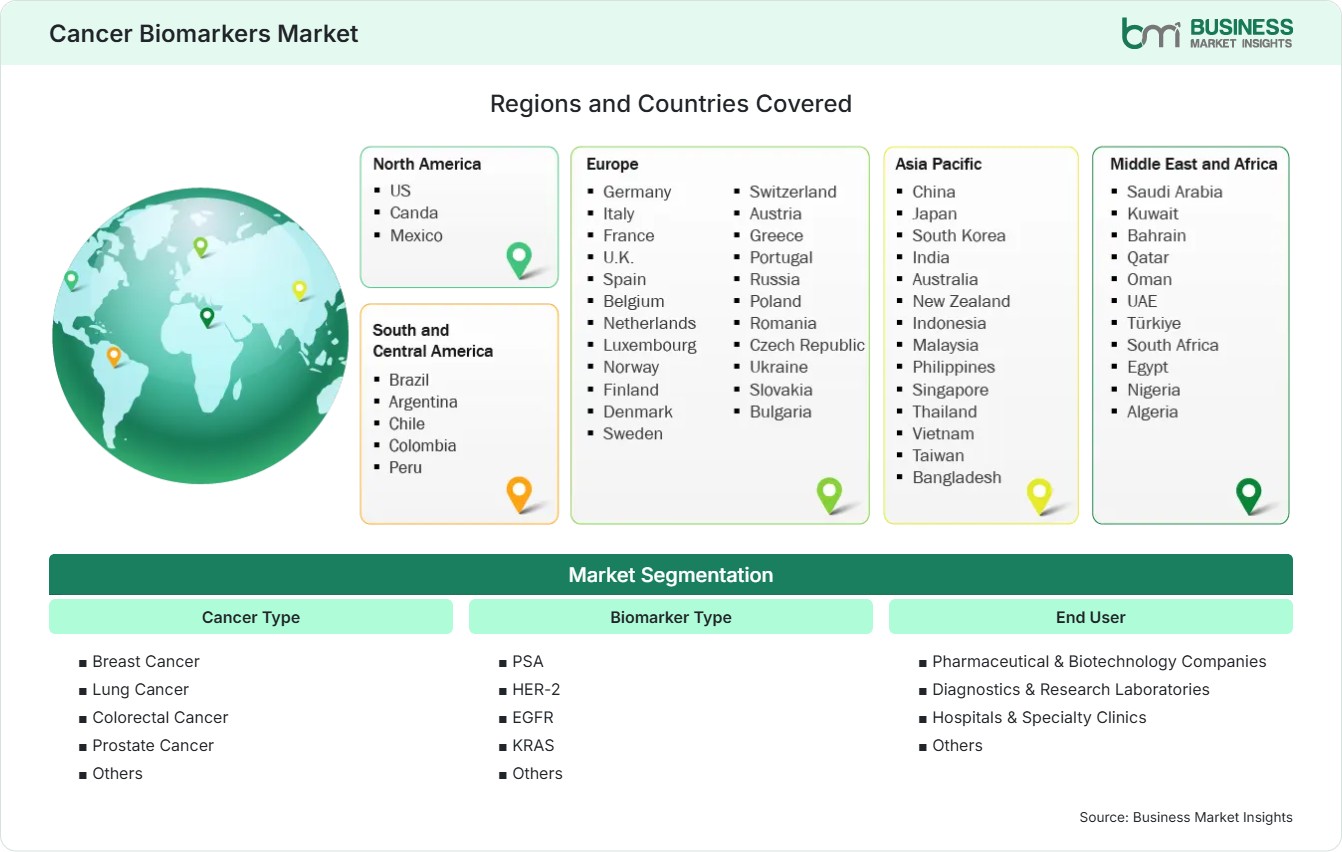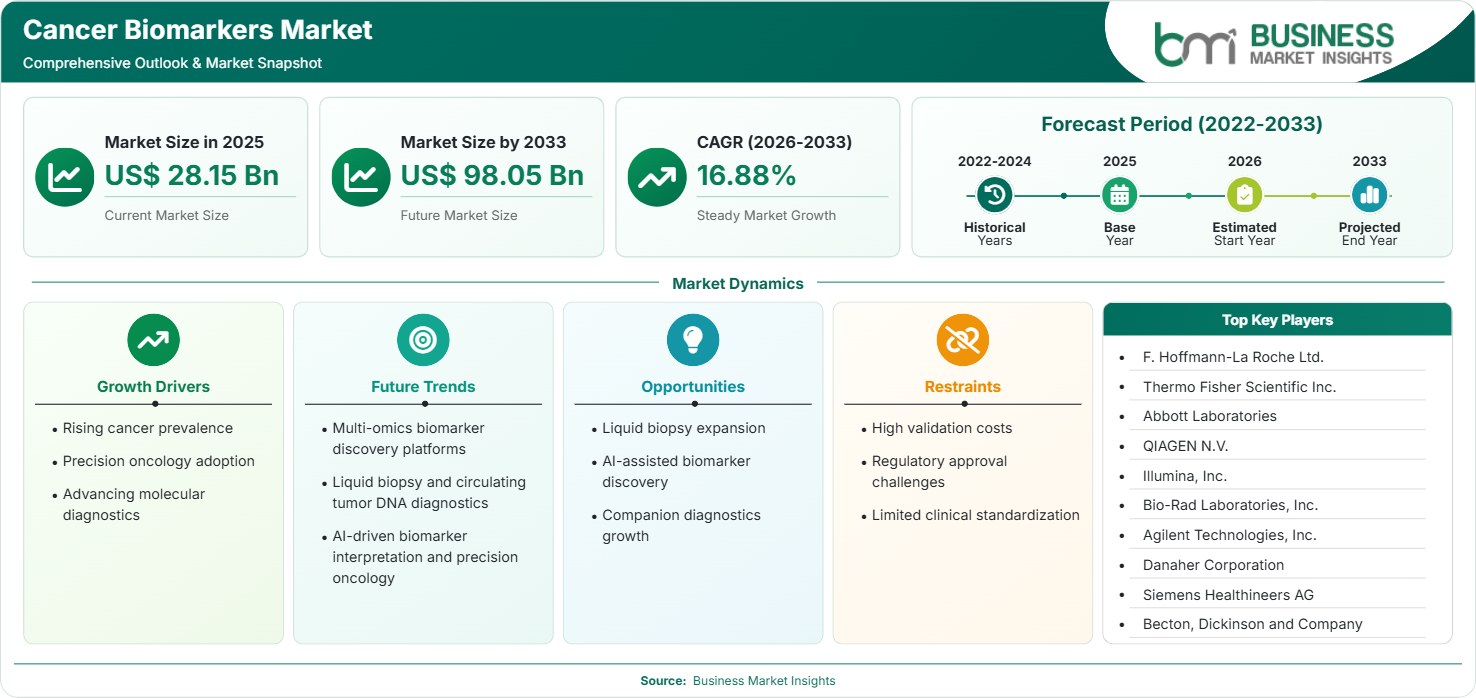
Cancer Biomarkers Market Regional Highlights
North America Cancer Biomarkers Market
North America accounts for an estimated 42%–46% share in 2025, supported by advanced healthcare systems, strong oncology research capabilities, and widespread adoption of molecular diagnostics. The region is projected to grow at a 16.2%–16.9% CAGR during 2026–2033. The US and Canada continue driving demand through precision oncology programs, pharmaceutical innovation, clinical research investments, and increasing use of biomarker-guided therapies.
- The United States dominates regional demand due to extensive oncology research, advanced diagnostics infrastructure, and precision medicine adoption.
- Pharmaceutical companies continue investing in biomarker-based drug development and companion diagnostic partnerships.
- Healthcare providers are expanding molecular testing capabilities for personalized cancer treatment decisions.
- Research institutions are advancing genomic studies supporting biomarker identification and validation.
US Cancer Biomarkers Market
The US represents an estimated 84%–88% North America's Cancer Biomarkers Market share in 2025 and is expected to expand at a 16.4%–17.1% CAGR through 2033. Growth is supported by high cancer research spending, advanced diagnostic infrastructure, biotechnology innovation, and increasing integration of biomarker testing into oncology workflows.
- Precision oncology programs are increasing demand for genomic profiling and targeted biomarker testing.
- Biotechnology companies are developing advanced diagnostic platforms for early cancer detection and monitoring.
- Companion diagnostics adoption is expanding alongside targeted cancer therapies and immunotherapies.
Europe Cancer Biomarkers Market
Europe represents an estimated 26%–30% share in 2025, growing at a 16.0%–16.7% CAGR during 2026–2033. Strong healthcare systems, government-supported cancer research initiatives, and increasing adoption of personalized medicine support regional expansion. Germany, the United Kingdom, France, and Switzerland remain important contributors due to biotechnology capabilities and advanced diagnostic adoption.
- Germany benefits from strong healthcare infrastructure and molecular diagnostics research capabilities.
- The United Kingdom continues expanding precision oncology initiatives through research institutions and healthcare programs.
- France supports biomarker adoption through cancer research networks and diagnostic technology investments.
- Switzerland contributes through pharmaceutical innovation and biotechnology development.
Asia Pacific Cancer Biomarkers Market
Asia Pacific represents an estimated 22%–26% share in 2025 and records the fastest growth at a 17.5%–18.4% CAGR during 2026–2033. Increasing cancer prevalence, healthcare modernization, expanding diagnostic access, and biotechnology investments are supporting regional expansion. China, Japan, India, and South Korea are emerging as important markets due to growing research capabilities and healthcare investments.
- China leads regional growth through biotechnology expansion, cancer research investments, and increasing diagnostic adoption.
- Japan supports demand through advanced healthcare systems and precision medicine development.
- India is expanding biomarker adoption through improving diagnostic infrastructure and oncology access.
- South Korea is strengthening capabilities through biotechnology innovation and genomic research.
- Regional governments are increasing investments in cancer screening and healthcare modernization.
Rest of World Cancer Biomarkers Market
Latin America, the Middle East, and Africa collectively represent an estimated 6%–9% share in 2025, expanding at a 15.8%–16.8% CAGR through 2033. Growth is supported by rising cancer awareness, improving healthcare infrastructure, increased diagnostic investments, and expanding access to advanced testing technologies. Brazil, Mexico, UAE, Saudi Arabia, and South Africa represent key developing markets.
- Brazil is improving oncology diagnostics through healthcare investments and expanding laboratory capabilities.
- Mexico is witnessing increasing adoption of advanced cancer testing technologies.
- Middle Eastern countries are investing in specialized healthcare facilities and precision medicine programs.
- South Africa is developing cancer diagnostic capabilities through healthcare modernization initiatives.
- Emerging markets provide opportunities for affordable and scalable biomarker testing solutions.