
Biomarkers Market Outlook: Size, Share, Trends, Growth Analysis, Competitive Landscape & Forecast, 2026-2033

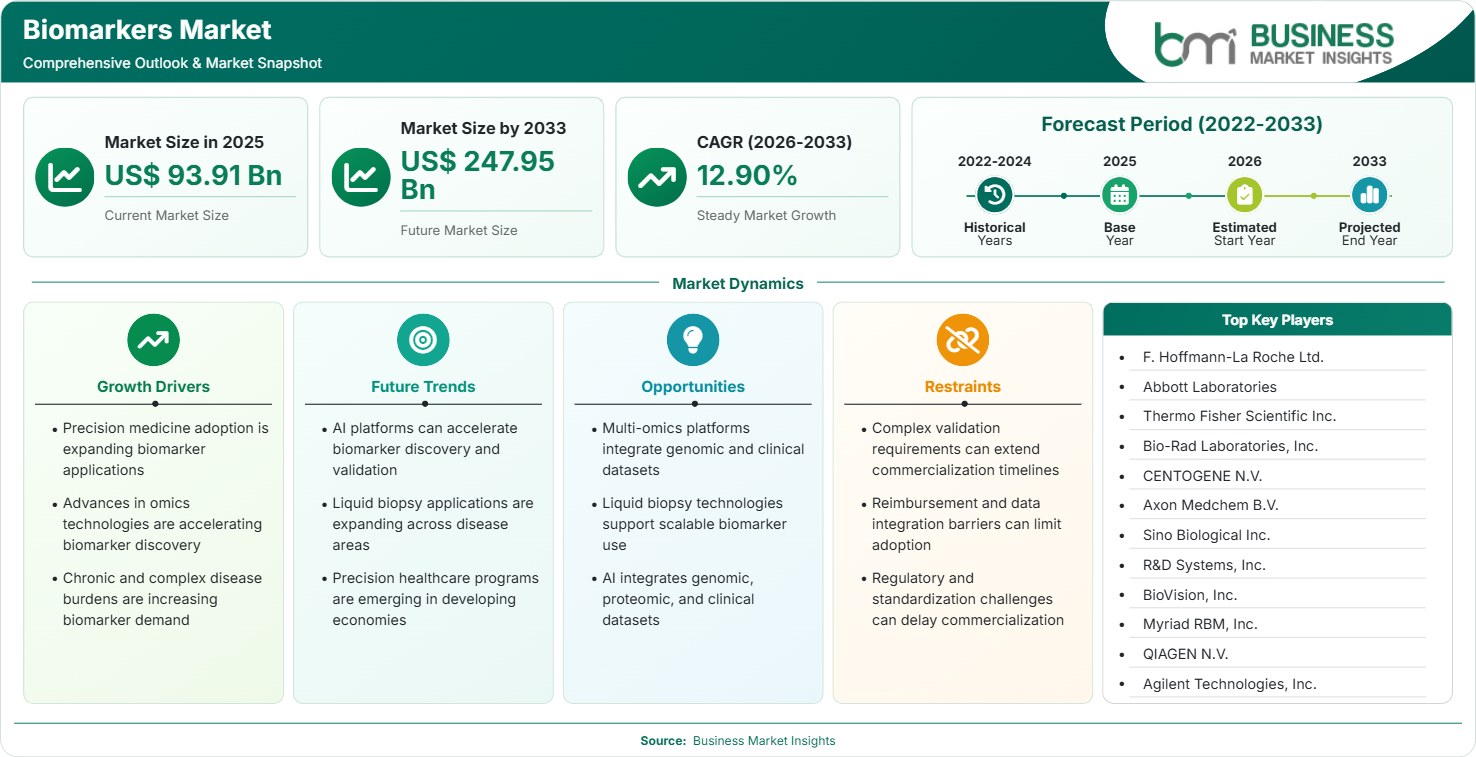
The Biomarkers Market size was valued at US$ 93.91 Billion in 2025 and is projected to reach US$ 247.95 Billion by 2033, growing at a CAGR of 12.90% during 2026–2033, driven by precision medicine adoption, companion diagnostics expansion, rising chronic disease prevalence, genomic research investments, AI-enabled biomarker discovery, and increasing pharmaceutical demand for predictive and prognostic testing.

Report Coverage
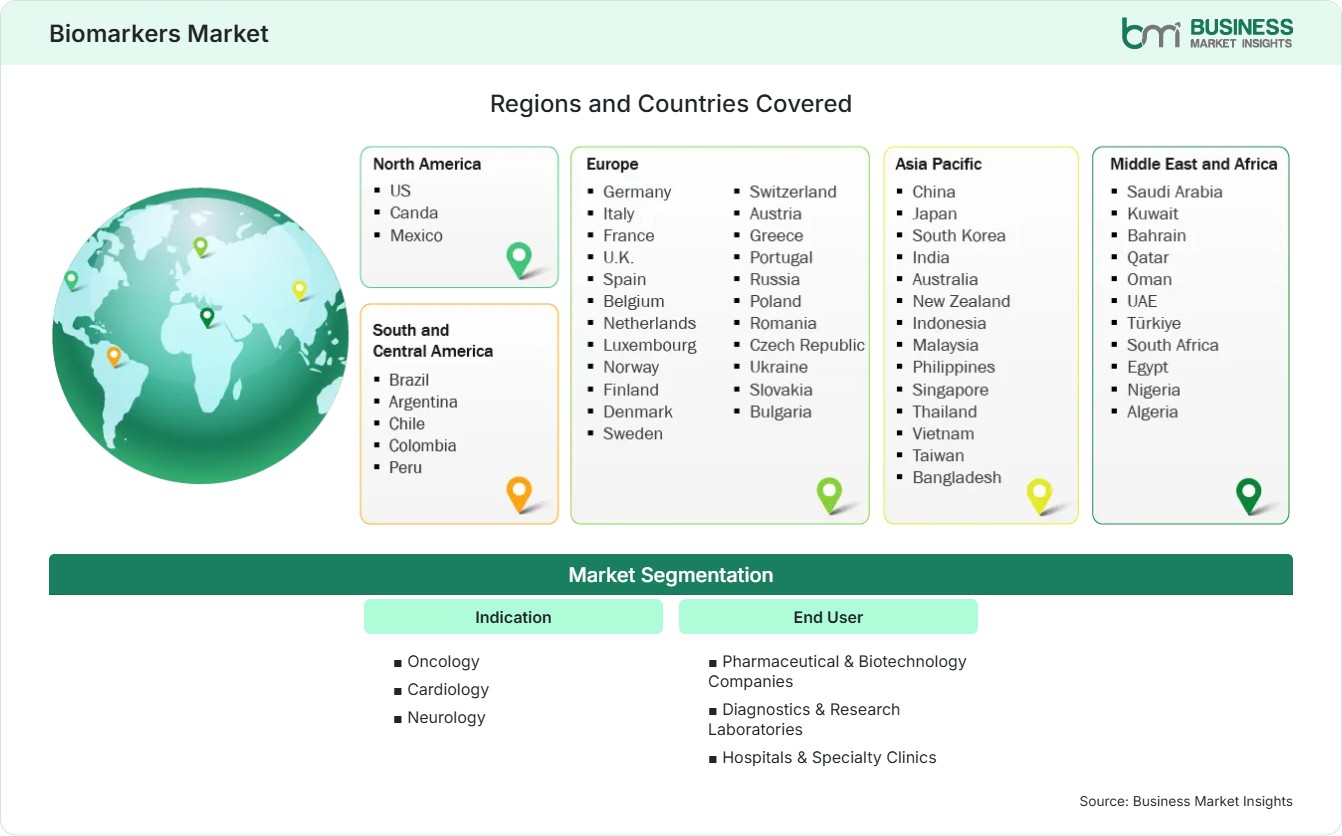
  • Indication: Oncology, Cardiology, Neurology
  • End User: Pharmaceutical & Biotechnology Companies, Diagnostics & Research Laboratories, Hospitals & Specialty Clinics
US$ 93.91 Bn Market size in 2025
US$ 247.95 Bn Market Size by 2033
12.90% CAGR, 2026 - 2033
2026-2033 Forecast Period

AI Overview

Biomarkers Market Summary

  • North America Region: North America holds a Biomarkers Market share of 38%–41% in 2025, growing with a CAGR of 11.8%–12.4% during 2026–2033. Growth is supported by precision medicine programs, strong pharmaceutical research funding, increasing oncology biomarker utilization, advanced diagnostic infrastructure, regulatory support for companion diagnostics, expanding clinical trials, and genomic medicine adoption across healthcare systems. The US benefits from extensive genomic testing networks, strong biopharma innovation, and a CAGR of 11.9%–12.5% through 2033.
  • Fastest Growing Region: Asia Pacific accounts for a 24%–27% share in 2025 and is expected to expand at a CAGR of 14.8%–15.6% during 2026–2033. Growth is supported by rising healthcare investments, expanding molecular diagnostics capacity, increasing cancer screening programs, biotechnology sector development, growing clinical research activities, precision medicine initiatives, and government-backed genomic research projects.
  • Leading Segment: Oncology represents a 43%–46% share of the Biomarkers Market in 2025 and is projected to grow at a CAGR of 13.2%–13.8% during 2026–2033. Demand is driven by increasing cancer incidence, companion diagnostic adoption, targeted therapy development, liquid biopsy innovation, personalized treatment strategies, biomarker-guided patient selection, and growing investment in translational oncology research.
  • High Growth Segment: Pharmaceutical & Biotechnology Companies account for 34%–37% share in 2025 and are expected to register a CAGR of 14.2%–14.9% during 2026–2033. Growth is supported by drug discovery applications, clinical trial optimization, predictive biomarker utilization, regulatory emphasis on precision therapies, increasing R&D expenditure, and strategic collaborations between diagnostic and therapeutic developers.
  • Key Market Opportunity: Expanding integration of artificial intelligence with genomic, proteomic, and metabolomic datasets creates opportunities for accelerated biomarker identification, improved predictive accuracy, enhanced patient stratification, and scalable precision medicine deployment worldwide.
  • Major Market Players: F. Hoffmann-La Roche Ltd.; Abbott Laboratories; Thermo Fisher Scientific Inc.; Bio-Rad Laboratories, Inc.; CENTOGENE N.V.; Axon Medchem B.V.; Sino Biological Inc.; R&D Systems, Inc.; BioVision, Inc.; Myriad RBM, Inc.; QIAGEN N.V.; Agilent Technologies, Inc.
Strategic Insights

Biomarkers Market: Strategic Insights

Biomarkers Market Strategic Framework
FREE PDF
Request your free sample
Request free sample
Stakeholder View

Key Takeaways

  • The industry value chain is becoming increasingly integrated, with genomic sequencing providers, assay developers, pharmaceutical companies, and healthcare institutions collaborating to accelerate biomarker commercialization and clinical implementation.
  • Oncology-focused applications continue to provide the strongest commercial opportunities due to growing demand for targeted therapies, companion diagnostics, and personalized treatment protocols across major healthcare systems.
  • Innovation is shifting toward multi-omics platforms, liquid biopsy technologies, and AI-enabled data interpretation tools that improve predictive performance and accelerate translational research outcomes.
  • Asia Pacific presents a compelling investment landscape as governments expand precision medicine programs, increase healthcare spending, and support biotechnology ecosystem development through funding initiatives.
  • Strategic acquisitions and partnerships are strengthening market positioning, particularly among diagnostic technology providers seeking broader molecular testing portfolios and expanded pharmaceutical collaborations.
  • Regulatory harmonization for molecular diagnostics and biomarker validation standards is expected to improve commercialization efficiency and support broader clinical adoption globally.
Geographic Outlook

Biomarkers Market Regional Highlights

North America Biomarkers Market

North America accounted for 38%–41% of global revenue in 2025, supported by advanced healthcare infrastructure, extensive molecular diagnostics adoption, and significant pharmaceutical research expenditure. The region is projected to expand at a CAGR of 11.8%–12.4% through 2033. The Biomarkers Market share remains highest in this region due to strong precision medicine initiatives, widespread genomic testing availability, and continuous innovation from biotechnology companies. Growing clinical trial activity, increasing cancer prevalence, and regulatory support for companion diagnostics continue reinforcing regional leadership across therapeutic applications.

  • Pharmaceutical companies increasingly incorporate predictive molecular indicators into clinical trial designs, improving patient stratification, enhancing response prediction accuracy, and reducing development timelines for targeted therapies and personalized medicines.
  • Rising adoption of liquid biopsy technologies supports non-invasive disease detection and monitoring, creating additional demand across oncology programs and strengthening diagnostic innovation throughout healthcare systems.
  • Federal research funding and academic collaborations continue accelerating genomic medicine initiatives, supporting biomarker discovery efforts and commercialization opportunities across multiple therapeutic categories.
  • Expanding utilization of AI-driven biological data analytics improves interpretation efficiency, enabling healthcare providers and researchers to identify clinically actionable insights from complex datasets.
  • Companion diagnostic approvals continue increasing, reinforcing the role of molecular testing in treatment decision-making and supporting long-term industry expansion across specialized care settings.

US Biomarkers Market

The United States represented approximately 78%–82% of North American revenue in 2025 and is forecast to expand at a CAGR of 11.9%–12.5% of the Biomarkers Market through 2033. Strong pharmaceutical innovation capabilities, extensive clinical research infrastructure, and leadership in genomic medicine continue supporting national competitiveness. The country remains a primary destination for biomarker-focused investment due to large-scale sequencing initiatives, advanced healthcare delivery systems, and favorable reimbursement pathways for selected molecular diagnostics. Continuous precision medicine adoption strengthens demand across research, diagnostic, and therapeutic applications.

  • Large biopharmaceutical organizations increasingly integrate molecular signatures into drug development programs, improving success rates and supporting personalized treatment approaches for complex diseases.
  • Expanding cancer screening initiatives and targeted therapy adoption are driving broader utilization of advanced diagnostic assays in hospital and specialty care environments.
  • Academic medical centers continue contributing significantly to translational research, enabling faster movement of scientific discoveries from laboratories into clinical practice.
  • Investments in artificial intelligence, digital pathology, and integrated healthcare analytics are creating opportunities for more comprehensive disease characterization and individualized care planning.

Europe Biomarkers Market

Europe accounted for 27%–30% of global revenue in 2025 and is projected to register a CAGR of 11.5%–12.1% through 2033. Regional expansion is supported by strong healthcare systems, increasing adoption of precision medicine, and growing investment in translational research programs. Collaborative initiatives among academic institutions, biotechnology companies, and public health agencies continue strengthening innovation capacity. Germany remains the leading national Biomarkers Market, while Spain demonstrates the fastest growth trajectory due to expanding genomic testing adoption, supportive healthcare modernization programs, and rising molecular diagnostics utilization across clinical settings.

  • Germany benefits from a mature diagnostics ecosystem, strong pharmaceutical research capabilities, and increasing integration of molecular testing into routine clinical workflows across oncology and rare disease applications.
  • The United Kingdom continues investing in genomic medicine infrastructure, supporting broader access to advanced testing technologies and accelerating personalized healthcare implementation.
  • France is expanding national precision medicine initiatives, creating opportunities for assay developers and research organizations focused on translational biomarker applications.
  • Spain demonstrates one of the strongest regional growth profiles, supported by increasing healthcare digitalization, expanding biotechnology investments, and greater adoption of genomic testing capabilities.
  • Regulatory alignment across European healthcare markets supports commercialization efficiency and encourages cross-border collaboration among diagnostics developers and healthcare providers.

Asia Pacific Biomarkers Market

The Asia Pacific region accounted for 24%-27% of global revenue in 2025 and is predicted to grow at a CAGR of 14.8%-15.6% from 2023-2033, making it the fastest-growing regional market in the Biomarkers market. High investments in healthcare infrastructure, increased investments in biotechnology, and growing awareness of personalized medicine are boosting adoption. China is the leading region in terms of demand, while India experiences the highest growth rate, owing to increased genomic research activities and the modernization of healthcare facilities. Government-backed precision medicine projects and the rising prevalence of chronic disease continue to strengthen long-term demand across clinical and research environments.

  • China maintains leadership through substantial biotechnology funding, expanding sequencing capacity, and increasing integration of molecular diagnostics into healthcare delivery systems.
  • India is emerging as a high-growth destination supported by favorable demographics, expanding clinical research activity, and rising investment in precision healthcare infrastructure.
  • Japan continues advancing biomarker-driven therapeutic development through strong pharmaceutical innovation and extensive adoption of genomic medicine technologies.
  • South Korea benefits from supportive government policies, advanced healthcare systems, and growing biotechnology research capabilities focused on personalized treatment approaches.
  • Regional contract research organizations are increasingly incorporating molecular stratification methods into clinical studies, supporting broader adoption across drug development activities.

Rest of World Biomarkers Market

The Rest of World region accounted for 8%–11% of global revenue in 2025 and is forecast to expand at a CAGR of 12.7%–13.4% of the Biomarkers Market through 2033. Demand is supported by healthcare infrastructure development, expanding disease screening initiatives, and increasing access to advanced diagnostic technologies.

South & Central America has Brazil at its helm, whereas Saudi Arabia is growing rapidly in the Middle East and Africa. Investments in healthcare modernization, precision medicine initiatives, and collaborations are driving adoption in both these regions and are creating a great opportunity for diagnostics providers and biotechnology firms worldwide.

  • Brazil remains the largest regional contributor due to expanding cancer diagnostics programs, increasing healthcare investments, and growing clinical research participation.
  • Mexico continues strengthening molecular testing capabilities through public-private healthcare initiatives and increasing awareness of personalized treatment strategies.
  • Saudi Arabia is investing heavily in genomic medicine infrastructure, supporting advanced diagnostic adoption and precision healthcare implementation objectives.
  • The United Arab Emirates is expanding biotechnology collaborations and healthcare innovation programs, creating opportunities for advanced molecular testing solutions.
  • International partnerships with research institutions and healthcare organizations continue facilitating technology transfer and improving access to sophisticated diagnostic capabilities.
Global Market Geography
FREE PDF
Request your free sample
Request free sample
Segment Analysis

Biomarkers Market Segmentation

Indication

The indication segment accounted for the largest share of industry demand, with oncology the largest application segment. The segment held a market share of about 43%-46% in 2025 and is expected to have a CAGR of 13.2%-13.8% during the forecast period. Increasing numbers of precision medicine initiatives, rising incidence rates of chronic diseases, and growing use in clinical practice will expand the scope of the Biomarkers Market across various therapeutic areas. Research institutes and healthcare professionals are relying on biomolecular markers for disease diagnosis and therapy management.

  • Oncology: Growing use of companion diagnostics, liquid biopsy technologies, and targeted therapies continues accelerating adoption. Molecular profiling supports treatment optimization, patient stratification, and clinical decision-making across multiple cancer indications.
  • Cardiology: Rising prevalence of cardiovascular disorders and increasing focus on early disease detection are supporting broader utilization. Healthcare providers increasingly employ biological markers to improve risk assessment and therapeutic management.
  • Neurology: Expanding research into neurodegenerative disorders and central nervous system diseases is driving demand. Advanced molecular characterization approaches support earlier diagnosis and improve understanding of disease progression patterns.

End User

The end-user segment is dominated by pharmaceutical and biotech companies, which held around a 34%-37% market share in 2025 and are anticipated to exhibit a CAGR of 14.2%-14.9% over 2033. The increasing spending on precision medicines, clinical trial optimization, and drug discovery is driving more commercial opportunities in the industry. Growing partnerships between diagnostic firms and drugmakers are contributing to adoption in the sector. Biomarkers market trends show increased use of molecular knowledge in pharmaceutical research and healthcare delivery strategies.

  • Pharmaceutical & Biotechnology Companies: Drug developers increasingly utilize molecular signatures to improve patient selection, optimize clinical trials, and enhance therapeutic efficacy across precision medicine programs.
  • Diagnostics & Research Laboratories: Advanced testing capabilities, growing research activities, and increasing demand for molecular characterization services continue supporting adoption across academic and commercial environments.
  • Hospitals & Specialty Clinics: Clinical utilization is expanding as healthcare providers incorporate personalized treatment approaches and advanced diagnostic technologies into routine patient management workflows.
Market Forces

Biomarkers Market Dynamics

Key Market Drivers

Expansion of Precision Medicine and Targeted Therapeutics

Precision medicine has become a central force behind Biomarkers Market growth as healthcare systems increasingly transition from generalized treatment approaches to individualized therapies. Biomarkers allow the clinician to identify patients who are most likely to benefit from specific treatment options, thereby increasing the likelihood of a good outcome and minimizing side effects. The increase in the number of drugs specifically targeting cancer that have received approval from leading regulatory agencies has enhanced the need for diagnostic tests that will work alongside the therapy. Many drug makers are making large investments in developing biomarker-based clinical development strategies to enhance success and streamline patient selection. Developments in genomic sequencing, transcriptomic studies, and proteomics have increased the number of clinically useful biomarkers for treating diseases. The rising incidence of cancer, cardiovascular diseases, and neurological conditions further adds to the importance of precision medicine paradigms. As healthcare practitioners seek to develop better, more cost-efficient treatment protocols, the use of decision-making systems that incorporate biomarkers is becoming more common.

Rapid Advances in Omics Technologies and Molecular Diagnostics

Advancements in genomics, proteomics, metabolomics, and transcriptomics are driving rapid progress in the discovery and commercialization of biomarkers. The development of high-throughput sequencing technologies, mass spectrometry equipment, and multiplexing technologies has facilitated the large-scale production of biological data, which will help identify molecular biomarkers associated with diseases. Omics technologies are increasingly being used by research centers and biotech companies to achieve precise diagnosis and treatment. Advances in sequencing cost-effectiveness and analytics have increased the accessibility of these technologies in both clinical and research settings. Molecular diagnostics are becoming more sophisticated in healthcare systems and increasing disease detection, diagnosis, and treatment monitoring capabilities. Enhanced laboratory capabilities and automation have contributed to greater efficiency.

Growing Burden of Chronic and Complex Diseases

An increase in the occurrence of cancers, cardiovascular disease, neurodegenerative diseases, autoimmune diseases, and rare genetic diseases is resulting in the need for better diagnostic tools. There is a need for more accurate methods of detecting these diseases at an early stage to enable proper treatment. In accordance with international health organizations such as the World Health Organization, chronic diseases continue to contribute a large number of deaths and costs for healthcare in different parts of the world. Molecular biomarkers provide insight into disease development and mechanisms, thereby enabling early diagnosis and improved management. An increase in life expectancy among the elderly population has led to more diseases requiring personalized treatment approaches. As the need to minimize long-term treatment costs grows, biomarker-based diagnostic and therapeutic interventions are becoming increasingly important in both developed and developing healthcare sectors.

Key Market Opportunities

Artificial Intelligence-Driven Biomarker Discovery Platforms

The development of artificial intelligence and machine learning technologies has opened up groundbreaking possibilities for biomarker discovery and commercialization. Algorithms can be applied to analyze genomic, proteomic, metabolic, and clinical information, thereby identifying biological markers associated with disease development and therapy response. The application of such an approach enables time savings in the discovery process, enhances predictive capacity, and increases the efficiency of validation procedures. Nowadays, healthcare organizations, pharmaceutical companies, and biotech companies are actively developing their computational biology competencies to increase the effectiveness of research efforts. Combining AI with multi-omics data improves disease characterization and the development of next-generation diagnostics. Also, the rise of electronic medical records and real-world evidence further broadens the scope for analysis. Such trends offer a good opportunity for AI-based discovery platforms.

Expansion of Liquid Biopsy Applications Across Disease Areas

Liquid biopsy technology has emerged as one of the most exciting areas for future commercialization. This technology is useful for detecting disease-related molecular markers through minimally invasive blood tests. Other than cancer, liquid biopsies can be used to diagnose heart disorders, neurodegenerative disorders, transplantation follow-up, and prenatal diagnoses. Improvements in liquid biopsy techniques are increasing their specificity and sensitivity. Physicians' acceptance of the technology and increased regulatory acceptance are also factors driving the market. Investment by diagnostic developers and pharmaceutical companies is bolstering the development pipeline. Under such circumstances, the Biomarkers Market Forecasts increasingly focus on liquid biopsy technology as a key source of future revenue and long-term industry transformation.

Emerging Precision Healthcare Programs in Developing Economies

Healthcare market development efforts are generating significant potential via investments into genomics medicine, national genome sequencing programs, and healthcare system modernization initiatives. The nations in the Asia-Pacific region, the Middle East, and some Latin American nations have been improving their research facilities and purchasing modern diagnostic tools. The factors leading to acceptance include higher health care spending, improved laboratory efficiency, and greater knowledge of personalized treatments. The collaboration between public and private sector entities is helping to establish biobanks, genomic databases, and research laboratories for biomarker discovery and validation. Foreign partnerships between pharmaceutical companies and academic institutions are also contributing to innovation in this area. In light of health care organizations' efforts toward disease prevention and improved treatment outcomes, demand for molecular diagnostics and predictive tests will increase sharply during the forecast period.

Market Restraints and Challenges

Factor: Complex Validation Requirements Impact: Extended Commercialization Timelines

The difficulty that confronts industry players is the need to conduct substantial validation processes to assess the clinical utility of the biomarkers, their analytical validity, and regulatory approval. The biomarker validation process involves conducting extensive clinical trials, lengthy observation periods, and considerable financial costs before commercialization becomes possible. Patient variability, disease characteristics, and test procedures may present obstacles to validation and approval. The lack of standardized guidelines across healthcare systems adds another layer of complexity to the validation process. All of the above may increase the cost of developing and commercializing the diagnostic devices and biotechnology products. This may make it more difficult for smaller organizations to access the resources required to perform such validation activities, thereby reducing their innovation potential.

Factor: Reimbursement and Data Integration Barriers Impact: Uneven Adoption Rates

Despite growing clinical acceptance, reimbursement, and data integration within healthcare still pose limitations that hinder the technology's application. Substantial evidence demonstrating cost-effectiveness is required for reimbursement. Inconsistencies in the reimbursement policy may pose problems for all stakeholders involved. Apart from this, integrating biomarker data into the EMR and CDS systems requires a significant investment in infrastructure. Fragmentation of the healthcare data environment may hinder interoperability, thereby affecting the effectiveness of molecular data in clinical decision-making. This becomes particularly relevant for developing nations with low spending on healthcare and infrastructure. Differences in adoption rate may further hinder the commercialization of personalized healthcare services.

Company Analysis

Competitive Landscape

The competitive environment is characterized by strategic collaborations, companion diagnostic development, genomic testing expansion, and biomarker discovery investments. Current Biomarkers Market analysis indicates that leading participants are focusing on multi-omics technologies, AI-enabled discovery platforms, translational research partnerships, and precision medicine applications to strengthen competitive positioning.

Company Name

Overview

Products and Services Relevant to this Market

F. Hoffmann-La Roche Ltd.

Global healthcare leader with strong diagnostics and pharmaceutical capabilities supporting precision medicine initiatives worldwide.

Companion diagnostics, molecular testing solutions, genomic profiling technologies, oncology biomarkers, and personalized healthcare platforms.

Abbott Laboratories

Diversified healthcare company with extensive diagnostic capabilities and global laboratory testing presence.

Immunoassays, molecular diagnostics, clinical laboratory solutions, biomarker detection systems, and disease monitoring technologies.

Thermo Fisher Scientific Inc.

Major provider of life science tools and analytical technologies supporting research and clinical applications.

Genomic sequencing platforms, biomarker discovery tools, proteomics solutions, molecular assays, and laboratory services.

Bio-Rad Laboratories, Inc.

Life science and diagnostics company specializing in advanced research and clinical testing technologies.

Digital PCR systems, immunoassays, biomarker analysis platforms, quality controls, and molecular diagnostics products.

CENTOGENE N.V.

Precision medicine company focused on rare disease diagnostics and genomic intelligence solutions.

Genetic testing services, biomarker discovery programs, rare disease databases, and molecular diagnostic solutions.

Axon Medchem B.V.

Specialist provider supporting biomedical research through high-quality compounds and scientific solutions.

Research reagents, reference compounds, biomarker research materials, and discovery support services.

Sino Biological Inc.

Biotechnology company recognized for recombinant proteins and research reagent development.

Antibodies, recombinant proteins, assay development materials, biomarker validation reagents, and research services.

R&D Systems, Inc.

Established supplier of life science research products supporting biomarker investigation activities.

Cytokines, antibodies, immunoassays, protein analysis tools, and biomarker research solutions.

BioVision, Inc.

Developer of biochemical and molecular biology products serving research and diagnostic markets.

Assay kits, biomarkers, cellular analysis solutions, metabolomics tools, and laboratory reagents.

Myriad RBM, Inc.

Precision health company focused on advanced biomarker testing and translational research services.

Multiplex biomarker testing, companion diagnostics support, clinical research services, and molecular profiling solutions.

Other Players

Regional and specialized companies contribute through innovation, niche expertise, and emerging technologies.

Biomarker discovery platforms, clinical testing services, molecular diagnostics, and precision medicine applications.

Trust & Transparency

Research Methodology

The market analysis combines proprietary research with secondary data from government agencies, company disclosures, regulatory filings, industry databases and expert interviews. Market estimates are validated through data triangulation, cross-market benchmarking and analyst review.

View Full Research Methodology

Questions Answered

Frequently Asked Questions

Which emerging technology is expected to create significant future opportunities?

Artificial intelligence integrated with genomic, proteomic, and clinical datasets is expected to accelerate biomarker discovery, improve predictive accuracy, and support development of next-generation personalized healthcare solutions.

What does the Biomarkers Market Report typically evaluate?

A comprehensive Market Report assesses market size, regional dynamics, competitive positioning, technology developments, segmentation trends, regulatory influences, and emerging opportunities across diagnostic and therapeutic applications.

How are pharmaceutical companies utilizing biomarkers?

Pharmaceutical organizations employ biomarkers to identify patient populations, optimize clinical trials, improve therapeutic response prediction, reduce development risks, and strengthen regulatory submissions for precision therapies.

Which application area generates the highest revenue contribution?

Oncology remains the largest application area due to extensive use of companion diagnostics, targeted therapies, liquid biopsy technologies, and molecular profiling approaches that support personalized cancer treatment strategies.

What factors are accelerating demand for biomarker technologies globally?

Growing adoption of precision medicine, increasing cancer incidence, expansion of molecular diagnostics, advances in genomics, and rising pharmaceutical research investments are driving demand. Healthcare providers increasingly rely on molecular indicators to improve diagnosis, treatment selection, and patient monitoring.

Access the Full Biomarkers Market Report

Get segment-level forecasts, regional estimates, competitive benchmarking, company profiles and downloadable Excel datasets.

Access the full Biomarkers Market Report
350 pages PDF & Excel | 2026-08-31