
Cancer Immunotherapy Market Outlook: Size, Share, Trends, Growth Analysis, Competitive Landscape & Forecast, 2022-2033

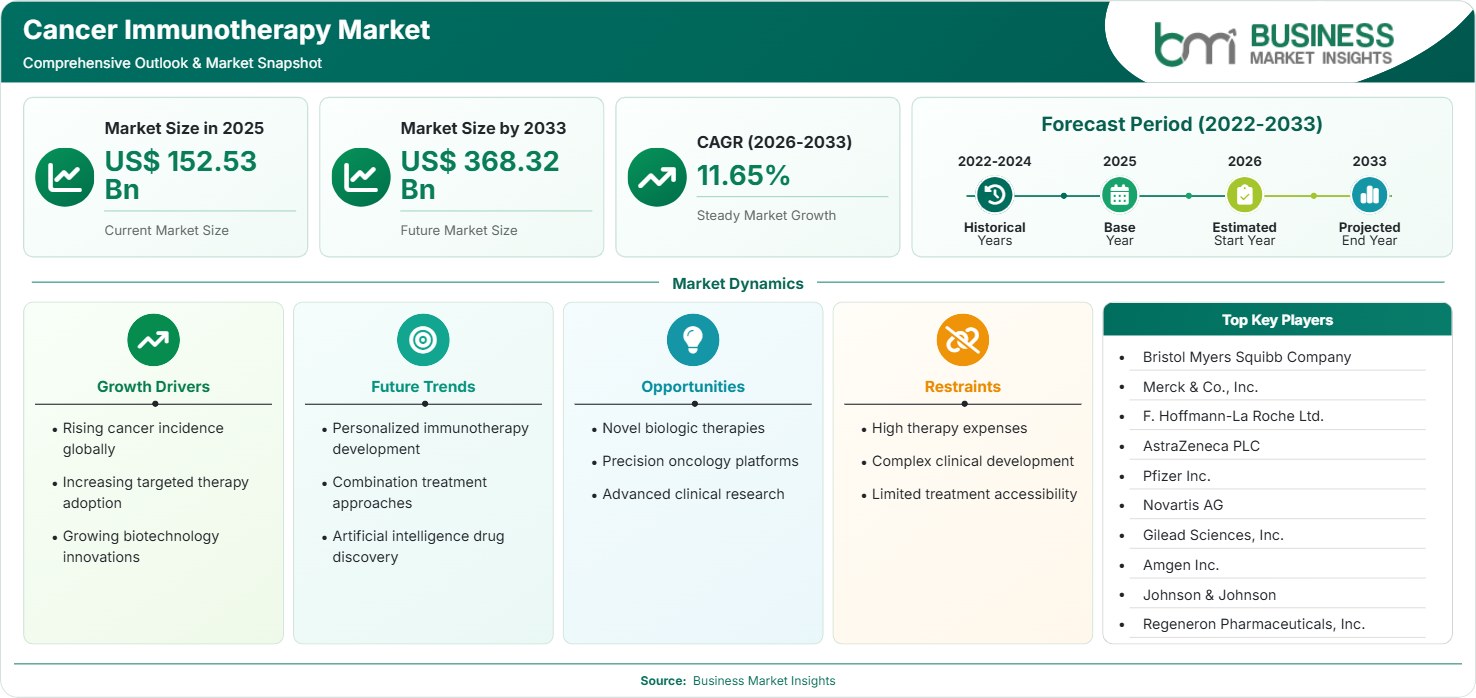
The Cancer Immunotherapy Market size was valued at US$ 152.53 billion in 2025 and is projected to reach US$ 368.32 billion by 2033, growing at a CAGR of 11.65% during 2026–2033. Rising cancer incidence globally, increasing targeted therapy adoption, and growing biotechnology innovations continue accelerating market expansion, while novel biologic therapies, precision oncology platforms, and advanced clinical research create substantial long-term growth opportunities.

Report Coverage
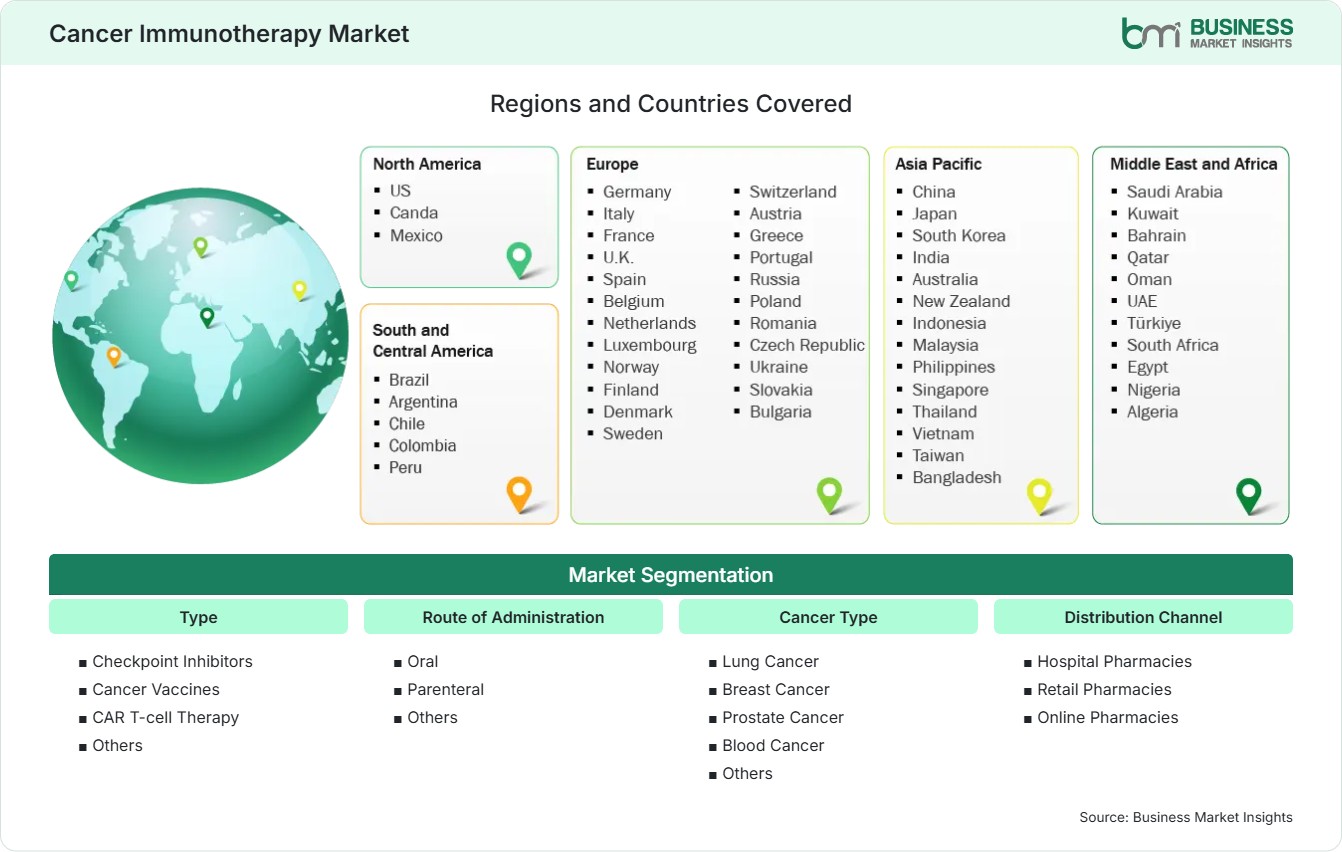
  • Type: Checkpoint Inhibitors, Cancer Vaccines, CAR T-cell Therapy, Others
  • Route of Administration: Oral, Parenteral, Others
  • Cancer Type: Lung Cancer, Breast Cancer, Prostate Cancer, Blood Cancer, Others
  • Distribution Channel: Hospital Pharmacies, Retail Pharmacies, Online Pharmacies
US$ 152.53 Bn Market size in 2025
US$ 368.32 Bn Market Size by 2033
11.65% CAGR, 2026 - 2033
2026-2033 Forecast Period

01 AI Overview

Cancer Immunotherapy Market Summary

  • North America: North America holds 43%–46% market share in 2025 and is projected to grow at a CAGR of 11.2%–12.0% during 2026–2033. Strong biologics adoption, favorable reimbursement systems, and continuous oncology research investments support regional leadership. The U.S. market is expected to expand at a CAGR of 11.4%–12.2% through 2033.
  • Fastest Growing Region: Asia Pacific accounts for 23%–26% of the market in 2025 and is forecast to register the highest CAGR of 12.8%–13.6% during 2026–2033. Expanding healthcare infrastructure, rising cancer prevalence, and increasing biotechnology investments continue driving regional demand.
  • Leading Segment: Checkpoint Inhibitors represent 48%–51% market share in 2025 and are anticipated to grow at a CAGR of 11.8%–12.6% during the forecast period. Increasing regulatory approvals and expanding indications across multiple cancers continue supporting segment dominance.
  • High Growth Segment: CAR T-cell Therapy accounts for 16%–19% market share in 2025 and is projected to register a CAGR of 14.2%–15.0% through 2033. Technological advancements in personalized cell therapies and growing clinical adoption continue strengthening segment expansion.
  • Key Market Opportunity: Expanding investments in precision oncology, next-generation immunotherapies, and combination biologic treatments are creating significant opportunities for pharmaceutical companies and biotechnology innovators.
  • Major Market Players: Bristol Myers Squibb Company, Merck & Co., Inc., F. Hoffmann-La Roche Ltd., AstraZeneca PLC, Pfizer Inc., Novartis AG, Gilead Sciences Inc., Amgen Inc., Johnson & Johnson, Regeneron Pharmaceuticals Inc.
02 Strategic Insights

Cancer Immunotherapy Market: Strategic Insights

cancer-immunotherapy-market-market-strategic-framework
FREE PDF
Request your free sample
Request free sample
03 Stakeholder View

Key Takeaways

  • The industry value chain continues expanding through biologics research, clinical development, advanced manufacturing, specialized distribution, and precision oncology diagnostics.
  • Checkpoint inhibitors and personalized cellular therapies represent the strongest commercial opportunities owing to expanding regulatory approvals and increasing clinical utilization.
  • Innovation in biomarker-guided treatment selection, engineered immune cells, and combination immunotherapies is transforming oncology treatment strategies.
  • Asia Pacific offers the strongest long-term investment opportunity due to expanding healthcare infrastructure, increasing biotechnology funding, and growing oncology research capabilities.
  • Strategic collaborations among pharmaceutical companies, biotechnology firms, academic institutions, and research organizations continue accelerating the development of next-generation cancer immunotherapies.
04 Geographic Outlook

Cancer Immunotherapy Market Regional Highlights

North America Cancer Immunotherapy Market

North America accounts for 43%–46% of the global market in 2025 and is projected to expand at a CAGR of 11.2%–12.0% through 2033. Strong biotechnology innovation, favorable reimbursement frameworks, and high adoption of biologic therapies continue supporting regional leadership. The Cancer Immunotherapy Market share remains the largest globally due to advanced healthcare infrastructure and extensive oncology clinical research.

  • Strong regulatory support accelerates immunotherapy approvals.
  • Precision oncology adoption continues expanding across cancer centers.
  • Pharmaceutical R&D investments strengthen treatment innovation.
  • Biomarker-based therapies improve patient treatment outcomes.

US Cancer Immunotherapy Market

The United States dominates regional revenue and is expected to register a CAGR of 11.4%–12.2% during the forecast period. Rising cancer prevalence, expanding biologics utilization, increasing oncology clinical trials, and strong pharmaceutical innovation continue driving sustained market growth.

  • Comprehensive cancer centers accelerate therapy adoption.
  • Strong reimbursement supports biologic treatment accessibility.
  • Cell therapy manufacturing capacity continues expanding.

Europe Cancer Immunotherapy Market

Europe represents 27%–30% of the market in 2025 and is projected to grow at a CAGR of 11.0%–11.8% during 2026–2033. Germany leads regional adoption, while Spain records strong growth supported by expanding oncology research, increasing biologic approvals, and improving precision medicine capabilities.

  • Public healthcare systems support immunotherapy accessibility.
  • Germany leads regional oncology research investments.
  • Spain demonstrates growing clinical trial activity.
  • Biomarker testing strengthens personalized treatment adoption.

Asia Pacific Cancer Immunotherapy Market

Asia Pacific accounts for 23%–26% of global revenue in 2025 and is expected to register the fastest CAGR of 12.8%–13.6% through 2033. China dominates regional revenue, while India records the highest growth driven by expanding cancer care infrastructure, biotechnology investments, and precision medicine initiatives.

  • Biotechnology investments strengthen regional manufacturing.
  • Rising cancer incidence increases treatment demand.
  • Government healthcare initiatives improve therapy accessibility.
  • Clinical research expansion supports innovation pipelines.

Rest of World Cancer Immunotherapy Market

The Rest of World region accounts for 5%–7% of the global market in 2025 and is projected to grow at a CAGR of 10.7%–11.5% during the Cancer Immunotherapy Market forecast period. Brazil, Saudi Arabia, and South Africa continue strengthening oncology care infrastructure, biologic availability, and specialized cancer treatment services.

  • Healthcare modernization improves oncology treatment access.
  • Biologic medicine availability continues expanding.
  • Public-private partnerships strengthen cancer research.
  • Growing specialist centers support advanced therapy adoption.
global-market-geography
FREE PDF
Request your free sample
Request free sample
05 Segment Analysis

Cancer Immunotherapy Market Segmentation

Type

The Type segment accounted for 49%–52% of the overall market in 2025 and is projected to grow at a CAGR of 11.8%–12.6% during 2026–2033. Continuous advancements in immune-based therapies, increasing regulatory approvals, and expanding clinical evidence supporting improved patient outcomes continue driving adoption. Pharmaceutical companies are investing in next-generation biologics, combination therapies, and personalized treatment approaches to improve efficacy while addressing multiple cancer indications across solid tumors and hematological malignancies.

  • Checkpoint Inhibitors: Checkpoint inhibitors dominate the market owing to their broad clinical adoption, expanding therapeutic indications, durable clinical responses, and increasing regulatory approvals across numerous cancer types.
  • Cancer Vaccines: Cancer vaccines continue gaining attention through ongoing clinical research focused on stimulating targeted immune responses, improving disease prevention strategies, and supporting combination treatment approaches.
  • CAR T-cell therapy: CAR T-cell therapy represents one of the fastest-growing segments because of its personalized treatment approach, remarkable outcomes in blood cancers, and continuous advancements in cellular engineering technologies.

Route of Administration

The Route of Administration segment accounted for 70% to 73% of the market in 2025 and is projected to grow at a CAGR of 11.6% to 12.4% over the forecast period. The increasing preference for biologic drugs, hospital infusions, and sophisticated cancer treatments is still affecting the route of administration. Improved drug formulations and an improved healthcare system are leading patients to use novel immunotherapeutics.

  • Oral: Oral therapies are gradually expanding with ongoing development of targeted immunomodulatory agents that improve patient convenience, treatment adherence, and outpatient care capabilities.
  • Parenteral: Parenteral administration remains the preferred route due to widespread use of monoclonal antibodies, checkpoint inhibitors, cellular therapies, and biologic products requiring controlled clinical administration.

Cancer Type

The Cancer Type segment share constituted 44% - 47% of the total market in 2025 and is expected to grow at a CAGR of 11.9% - 12.7% through 2033. The increasing incidence of cancer around the globe, the growing number of biomarker-based treatments, and precision oncology programs are contributing to the increasing need for immunotherapy treatments in various types of cancer. The Cancer Immunotherapy Market trends indicate growing investments in personalized treatment strategies, combination immunotherapies, and advanced diagnostic technologies that improve clinical outcomes.

  • Lung Cancer: Lung cancer remains the largest application owing to extensive adoption of checkpoint inhibitors, expanding biomarker testing, and continuous approvals for first-line and combination therapies.
  • Breast Cancer: Breast cancer treatment increasingly incorporates immunotherapies alongside targeted therapies to improve survival outcomes for patients with advanced and difficult-to-treat disease subtypes.
  • Prostate Cancer: Prostate cancer continues to witness increasing clinical research into personalized immunotherapies, therapeutic vaccines, and immune-modulating treatment strategies for advanced disease management.
  • Blood Cancer: Blood cancers represent a rapidly growing application driven by successful CAR T-cell therapies, monoclonal antibodies, and next-generation cellular immunotherapies for hematological malignancies.
  • Others: Other cancer indications continue expanding through ongoing clinical trials evaluating immunotherapy effectiveness across gastrointestinal, liver, kidney, skin, and gynecological cancers.

Distribution Channel

The Distribution Channel segment continues to grow due to the commercialization of biological drugs, specialist oncology products, and advanced pharmacy networks. The dominant mode of drug delivery is still hospital-based owing to the need for specialized dispensing and monitoring by oncologists during the treatment process.

  • Hospital Pharmacies: Hospital pharmacies account for the largest distribution share by supporting biologic storage, infusion therapies, oncology treatment coordination, and specialized pharmaceutical services.
  • Retail Pharmacies: Retail pharmacies continue increasing participation through supportive oncology medications, oral therapies, patient counseling services, and expanding specialty pharmacy capabilities.
  • Online Pharmacies: Online pharmacies are gradually improving access to approved oncology medicines, prescription management, and patient support services while complementing traditional healthcare distribution channels.
06 Market Forces

Cancer Immunotherapy Market Dynamics

Key Market Drivers

Rising cancer incidence globally

The increased burden of cancer across the world is leading to a greater need for cutting-edge immunotherapy techniques that will not only help increase the chances of survival but also minimize disease progression. Increased efforts in cancer screening, improved diagnostic methods, earlier disease detection, and greater investment in health care facilities are ensuring easy access to these new treatment options. Besides, increased approval of new immunotherapy drugs, more clinical trials for these techniques, greater awareness among healthcare professionals, and favorable reimbursement are also contributing to this trend.

Increasing targeted therapy adoption

Healthcare professionals are increasingly using combinations of immunotherapy and targeted therapies to deliver individualized cancer care based on tumor markers, genetic tests, and molecular diagnostics. The use of precision medicine improves the efficiency of cancer treatments by allowing treatment to be administered specifically to individual needs, reducing exposure to unnecessary conventional treatments such as chemotherapy and radiotherapy. Furthermore, developments in the field of biomarker identification, diagnostic tests, genome sequencing, and combination therapy techniques enable more precise patient selection and improved results, which lead to the development of individualized immuno-oncology therapies.

Growing biotechnology innovations

The tremendous progress in biotechnology, cell engineering, monoclonal antibodies, gene editing, immune modulation, and synthetic biology has continually advanced immunotherapy pipeline development in the worldwide oncology market. Research and development investment has significantly increased the rate of discoveries, development, and marketing of novel biological drugs such as immune checkpoint inhibitors, CAR-T cell therapy, vaccines for cancers, bispecific antibodies, and cytokines. Besides, increasing cooperation between pharmaceutical and biotechnology companies, academic research centers, and research institutions is contributing to innovation and the broader use of immunotherapies in different cancers.

Key Market Opportunities

Novel biologic therapies

The increased focus on investments in novel biologic drugs, bispecific antibodies, modified immune cells, immunomodulatory drugs, and advanced immuno-oncology technologies is generating significant business potential for both pharmaceutical and biotech companies around the world. Increasing expenditure on R&D, clinical trials, partnerships, licenses, and mergers and acquisitions is contributing significantly to the faster development and commercialization of novel cancer immunotherapeutic products. Moreover, the growing need for individualized therapy, supportive regulation, and consistent progress in precision medicine is allowing businesses to enhance their product pipelines and maintain their competitive edge in the dynamic oncology market.

Precision oncology platforms

The convergence of genomic sequencing, biomarker assays, artificial intelligence, machine learning, and companion diagnostics has opened many new growth avenues, as evidenced by projections for the Cancer Immunotherapy Market, by enabling the selection of highly personalized immunotherapy options by identifying the patient population that will best respond to specific therapies. Such technologies contribute to higher treatment success rates, improved clinical decision-making, better patient stratification, and a minimal risk of exposing patients to unnecessary and less effective treatments. Moreover, future innovations in precision medicine, molecular diagnostics, predictive analytics, and oncology platforms will further expand personalized cancer treatment.

Advanced clinical research

Growing participation in clinical trials of combination immunotherapy regimens, personalized cancer vaccines, innovative cell therapies, immune checkpoint inhibitors, bispecific antibodies, and other immune cell therapies in the global market is driving innovation in therapy and creating future treatment options for various cancers. The increasing investments in oncology and precision medicine research and translational science are facilitating the development of innovative and targeted treatment methods. Besides, partnerships between pharmaceutical companies, biotechnology companies, universities, and research institutions are facilitating the clinical development of treatments, increasing the effectiveness and safety of treatment, and expanding access to advanced immunotherapy treatments for cancers.

Market Restraints and Challenges

High therapy expenses

Factor: Immunotherapies require complex biologic manufacturing, specialized healthcare infrastructure, personalized treatment protocols, and extensive clinical monitoring, resulting in substantially higher treatment costs. Impact: High therapy costs can limit patient access, increase reimbursement pressures, and strain healthcare systems, particularly in developing countries with constrained healthcare budgets.

Complex clinical development

Factor: The development of cancer immunotherapies requires lengthy clinical trials, biomarker validation, regulatory approvals, and extensive safety monitoring due to biological complexity and variable patient responses. Impact: Extended development timelines increase research costs, delay commercialization, and create significant investment risks for biotechnology companies developing innovative immunotherapy products.

07 Company Analysis

Competitive Landscape

Investments in biologics, precision oncology, cell therapy, and immune checkpoint inhibitors are notable features of the competitive environment and are among the important considerations in Cancer Immunotherapy Market analysis. Top pharmaceutical and biotechnology firms have been augmenting their oncology product lines via collaborative efforts, acquisitions, and clinical trials. With continuous regulatory approvals, biomarker-based therapy, and personalized medicine practices, competition is on the rise, and at the same time, innovation is being fostered in the field of immuno-oncology.

Company Name

Overview

Products and Services Relevant to this Market

Bristol Myers Squibb Company

Global biopharmaceutical company with a leading oncology and immunotherapy portfolio.

Checkpoint inhibitors, oncology biologics, combination immunotherapies, cancer research programs.

Merck & Co., Inc.

Pharmaceutical company focused on innovative oncology and vaccine development.

PD-1 inhibitors, cancer immunotherapies, precision oncology solutions, biologic medicines.

F. Hoffmann-La Roche Ltd.

Healthcare company specializing in oncology therapeutics and companion diagnostics.

Cancer immunotherapies, monoclonal antibodies, precision diagnostics, targeted oncology therapies.

AstraZeneca PLC

Global biopharmaceutical company developing innovative cancer treatment solutions.

Immune checkpoint inhibitors, combination therapies, precision oncology medicines, biologics.

Pfizer Inc.

Pharmaceutical company with diversified oncology research and biologics capabilities.

Oncology medicines, targeted therapies, immunotherapy research, cancer treatment solutions.

Novartis AG

Global healthcare company recognized for advanced cell and gene therapies.

CAR T-cell therapies, oncology biologics, targeted therapies, precision medicine solutions.

Gilead Sciences Inc.

Biopharmaceutical company advancing innovative cellular immunotherapies.

CAR T-cell therapies, hematologic cancer treatments, biologic oncology products.

Amgen Inc.

Biotechnology company focused on oncology innovation and biologic therapeutics.

Bispecific antibodies, immunotherapies, oncology biologics, targeted cancer treatments.

Johnson & Johnson

Global healthcare company with extensive oncology research and development capabilities.

Oncology biologics, targeted therapies, hematology treatments, cancer research platforms.

Regeneron Pharmaceuticals Inc.

Biotechnology company specializing in antibody-based therapeutic development.

Monoclonal antibodies, immuno-oncology therapies, biologic medicines, oncology research solutions.

08 Industry Activity

Recent Developments

May 2025

Nykode Therapeutics ASA presented new clinical data for its VB10.16 and VB10.NEO cancer immunotherapy candidates at the 2025 ASCO Annual Meeting, highlighting robust immune responses and encouraging safety profiles in multiple solid tumor studies.

May 2025

Zelluna ASA announced that it had successfully scaled and automated its proprietary manufacturing process for TCR-NK cell therapies, strengthening its readiness for clinical-stage development of off-the-shelf cancer immunotherapies.

March 2025

Anocca AB received authorization to initiate its first-in-human VIDAR-1 Phase I/II clinical trial for ANOC-001, a TCR-T cell immunotherapy for advanced pancreatic cancer, marking the first non-viral gene-edited TCR-T therapy approved for clinical evaluation in Europe.

January 2025

Nykode Therapeutics ASA announced the publication of final Phase II VB-C-02 trial results for VB10.16 in combination with Tecentriq® (atezolizumab), confirming durable clinical benefit and a favorable safety profile in patients with advanced cervical cancer.

10 Trust & Transparency

Research Methodology

The market analysis combines proprietary research with secondary data from government agencies, company disclosures, regulatory filings, industry databases and expert interviews. Market estimates are validated through data triangulation, cross-market benchmarking and analyst review.

View Full Research Methodology

11 Questions Answered

Frequently Asked Questions

What future opportunities are expected to shape the market?

Future opportunities include novel biologic therapies, precision oncology platforms, advanced clinical research, engineered cell therapies, biomarker-guided treatments, and next-generation combination immunotherapies.

Who are the leading companies operating in the Cancer Immunotherapy Market Report?

Major companies include Bristol Myers Squibb Company, Merck & Co., Inc., F. Hoffmann-La Roche Ltd., AstraZeneca PLC, Pfizer Inc., Novartis AG, Gilead Sciences Inc., Amgen Inc., Johnson & Johnson, and Regeneron Pharmaceuticals Inc.

Which type segment holds the largest market share?

Checkpoint Inhibitors dominate the market with a 48%–51% share in 2025 owing to expanding regulatory approvals, broad clinical indications, durable treatment responses, and increasing adoption across multiple cancer types.

Which region dominates the market?

North America leads the market with a 43%–46% share in 2025, supported by advanced healthcare infrastructure, strong biotechnology research, favorable reimbursement systems, and widespread adoption of innovative biologic therapies.

What is driving the growth of the Cancer Immunotherapy Market?

The market is driven by rising global cancer incidence, increasing adoption of targeted therapies, expanding biotechnology innovation, growing precision oncology programs, and continuous regulatory approvals for advanced immunotherapy products.

Access the Full Cancer Immunotherapy Market Report

Get segment-level forecasts, regional estimates, competitive benchmarking, company profiles and downloadable Excel datasets.

Access the full Cancer Immunotherapy Market Report
350 pages PDF & Excel | 2026-07-31