
Lung Cancer Screening Market Outlook: Size, Share, Trends, Growth Analysis, Competitive Landscape & Forecast, 2026-2033

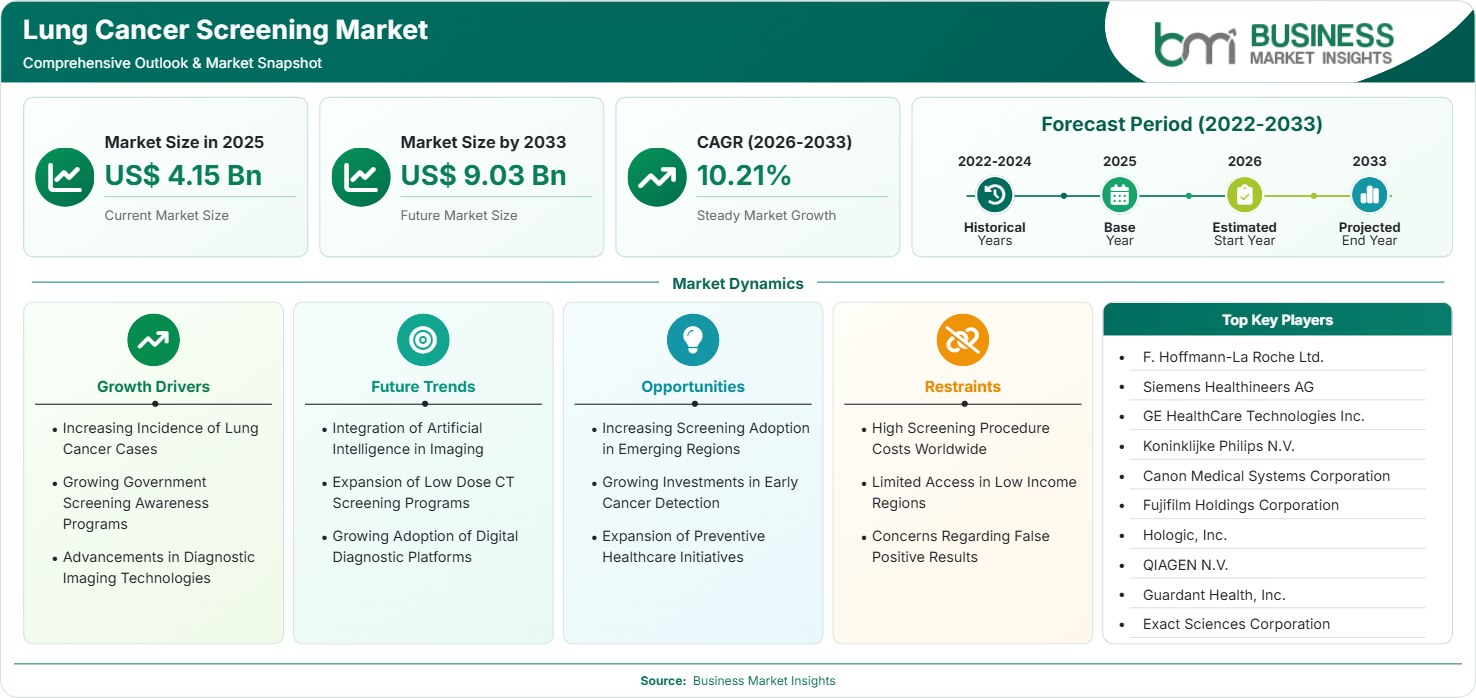
The Lung Cancer Screening Market size was valued at US$ 4.15 Billion in 2025 and is projected to reach US$ 9.03 Billion by 2033, growing at a CAGR of 10.21% during 2026–2033, driven by rising cancer incidence, early detection initiatives, advanced imaging technologies, preventive healthcare programs, and expanding diagnostic infrastructure.

Report Coverage
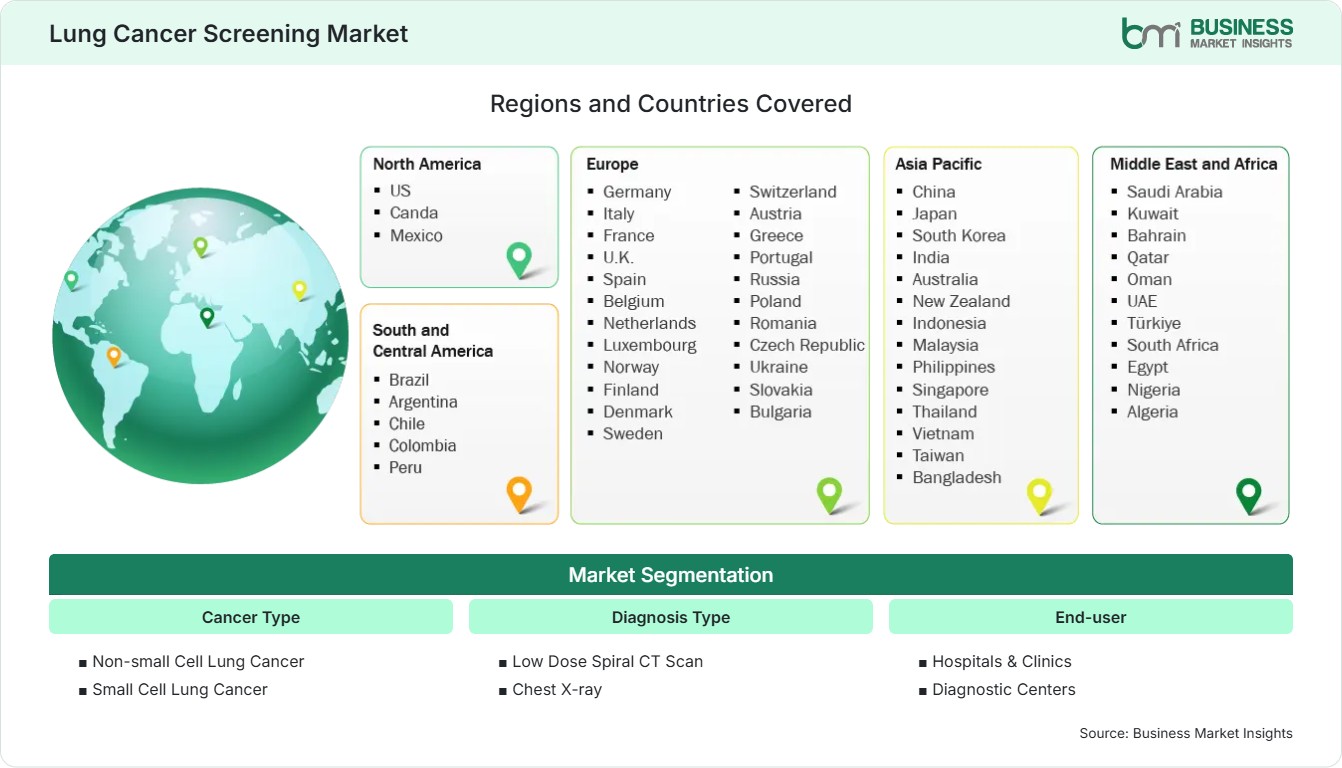
  • Cancer Type: Non-small Cell Lung Cancer , Small Cell Lung Cancer
  • Diagnosis Type: Low Dose Spiral CT Scan, Chest X-ray
  • End-user: Hospitals & Clinics, Diagnostic Centers
US$ 4.15 Bn Market size in 2025
US$ 9.03 Bn Market Size by 2033
10.21% CAGR, 2026 - 2033
2026-2033 Forecast Period

AI Overview

Lung Cancer Screening Market Summary

  • North America Region: North America holds a 42%–46% share in 2025, growing with a CAGR of 9%–11% during 2026–2033, supported by established screening guidelines, advanced healthcare infrastructure, reimbursement coverage, and adoption of low dose CT technologies. The US market demonstrates strong screening adoption through national recommendations, hospital networks, and diagnostic innovation, expanding at a CAGR of 9%–11% between 2026 and 2033.
  • Fastest Growing Region: Asia Pacific represents a 22%–26% share in 2025, expanding at a CAGR of 12%–14% during 2026–2033, supported by increasing cancer awareness, healthcare investments, expanding diagnostic facilities, government initiatives, and improving access to advanced imaging technologies.
  • Leading Segment: Low Dose Spiral CT Scan diagnosis type accounts for a 68%–72% share in 2025, growing at a CAGR of 10%–12% during 2026–2033, driven by superior early detection capability, clinical guideline support, improved imaging accuracy, and adoption across screening programs.
  • High Growth Segment: Small Cell Lung Cancer screening applications demonstrate a CAGR of 11%–13% during 2026–2033, supported by increasing research focus, improved diagnostic approaches, early intervention programs, and development of targeted cancer detection technologies.
  • Key Market Opportunity: Opportunities are emerging through expansion of population-based screening programs, artificial intelligence-enabled imaging, emerging market healthcare investments, molecular diagnostics integration, and preventive oncology initiatives.
  • Major Market Players: F. Hoffmann-La Roche Ltd., Siemens Healthineers AG, GE HealthCare Technologies Inc., Koninklijke Philips N.V., Canon Medical Systems Corporation, Fujifilm Holdings Corporation, Hologic, Inc., QIAGEN N.V., Guardant Health, Inc., and Exact Sciences Corporation.
Strategic Insights

Lung Cancer Screening Market: Strategic Insights

Lung Cancer Screening Market Strategic Framework
FREE PDF
Request your free sample
Request free sample
Stakeholder View

Key Takeaways

  • There is increasing collaboration in the diagnostic ecosystem as imaging equipment manufacturers, hospitals, biotech firms, and research organizations collaborate on developing an integrated screening pathway to diagnose cancer at an early stage.
  • Technologies such as Low Dose Spiral CT Scans have been identified as areas of innovation due to the increased demand for non-invasive screenings with high sensitivity for early lung abnormalities.
  • Innovation is moving toward artificial intelligence-assisted imaging, liquid biopsy integration, molecular diagnostics, and automated interpretation tools designed to improve accuracy and screening efficiency.
  • Asia Pacific represents a strong opportunity for expansion because of the increased burden of disease, development of healthcare infrastructure, government-led screening programs, and investments in diagnostic capabilities.
  • Strategic partnerships and acquisitions among medical technology companies and diagnostic firms are accelerating development of comprehensive oncology screening portfolios and strengthening market competitiveness.
Geographic Outlook

Lung Cancer Screening Market Regional Highlights

North America Lung Cancer Screening Market

North America accounted for a 42%–46% share in 2025 and is projected to expand at a CAGR of 9%–11% during 2026–2033. Strong reimbursement frameworks, advanced healthcare infrastructure, and widespread adoption of screening guidelines support regional expansion. The Lung Cancer Screening Market share remains concentrated in the United States due to established low dose CT programs, clinical awareness, and technology adoption across hospitals and diagnostic networks.

  • The United States remains the primary contributor due to national screening recommendations, increasing participation among high-risk populations, and expansion of specialized oncology diagnostic centers.
  • Canada is improving screening accessibility through provincial healthcare initiatives, investments in diagnostic infrastructure, and increasing focus on early cancer detection strategies.
  • Advanced imaging adoption is accelerating as healthcare providers integrate artificial intelligence tools to improve interpretation accuracy and reduce diagnostic delays.
  • Partnerships between medical technology companies and healthcare organizations are strengthening screening workflows through integrated imaging platforms and data-driven oncology solutions.

US Lung Cancer Screening Market

The United States represented a 36%–40% share of North America in 2025, growing at a CAGR of 9%–11% during 2026–2033. The country benefits from mature healthcare infrastructure, established reimbursement mechanisms, and increasing compliance with recommended screening protocols. The Lung Cancer Screening Market growth in the US is supported by adoption of low dose CT scans, artificial intelligence-based diagnostics, and expanding hospital-based cancer prevention programs.

  • The Centers for Medicare & Medicaid Services coverage framework supports screening accessibility among eligible high-risk populations, encouraging broader diagnostic adoption.
  • Leading hospitals are investing in advanced imaging systems and integrated oncology platforms to improve screening efficiency and patient management.
  • Research institutions and technology companies are developing AI-powered solutions that enhance image analysis, reduce workflow burden, and support radiologist decision-making.

Europe Lung Cancer Screening Market

Europe held a 24%–28% share in 2025 and is expected to grow at a CAGR of 8%–10% during 2026–2033. The region benefits from national cancer control strategies, expanding screening initiatives, and strong healthcare systems. Germany, the United Kingdom, France, and Italy represent leading markets, while Eastern European countries provide additional growth potential through healthcare modernization and improved diagnostic accessibility.

  • Germany is advancing adoption through healthcare digitization, oncology research investments, and increasing implementation of structured lung cancer screening pathways.
  • The United Kingdom is expanding early detection initiatives through national healthcare programs focused on improving cancer survival outcomes.
  • France and Italy are strengthening diagnostic capabilities through investments in imaging infrastructure and preventive healthcare frameworks.
  • European regulatory emphasis on early cancer detection is encouraging healthcare providers to adopt advanced screening technologies and data-driven diagnostic models.

Asia Pacific Lung Cancer Screening Market

Asia Pacific accounted for a 22%–26% share in 2025 and is projected to register a CAGR of 12%–14% during 2026–2033. Increasing lung cancer prevalence, expanding healthcare infrastructure, and government investments are driving regional development. China, Japan, India, and South Korea are key contributors, with emerging economies creating additional opportunities through improved access to imaging technologies and oncology services.

  • China is increasing screening adoption through healthcare modernization programs, rising cancer awareness, and investments in advanced diagnostic imaging facilities.
  • Japan benefits from strong medical technology capabilities, aging population healthcare requirements, and established cancer screening infrastructure.
  • India represents a high-potential market due to expanding hospitals, increasing diagnostic investments, and growing awareness of early cancer detection.
  • South Korea is advancing adoption through digital healthcare initiatives, precision medicine programs, and technology-enabled oncology screening solutions.

Rest of World Lung Cancer Screening Market

Rest of World accounted for a 8%–12% share in 2025 and is expected to grow at a CAGR of 10%–12% during 2026–2033. South and Central America, along with Middle East and Africa markets, are gradually expanding through healthcare infrastructure development and increasing oncology awareness. Brazil, Mexico, Saudi Arabia, and the United Arab Emirates are emerging markets with improving diagnostic capabilities.

  • Brazil is enhancing cancer screening capacity through healthcare investments, expanding diagnostic centers, and increased focus on preventive oncology programs.
  • Mexico is improving access to imaging technologies through healthcare modernization and partnerships supporting cancer detection initiatives.
  • Middle Eastern countries are investing in advanced healthcare facilities and oncology centers to strengthen early diagnosis capabilities.
  • Saudi Arabia and the UAE are adopting technology-driven screening approaches through healthcare transformation programs and specialized medical infrastructure.
  • African markets present long-term opportunities as healthcare access improves through public-private partnerships and international cancer control initiatives.
Global Market Geography
FREE PDF
Request your free sample
Request free sample
Segment Analysis

Lung Cancer Screening Market Segmentation

Cancer Type

Cancer Type segmentation demonstrates varied adoption patterns based on disease prevalence, diagnostic complexity, and treatment requirements. Non-small Cell Lung Cancer dominates with a 78%–82% share in 2025 and grows at a CAGR of 9%–11% between 2026–2033 due to higher incidence rates. The Lung Cancer Screening Market scope is expanding through improved detection pathways, targeted therapies, and precision oncology approaches.

  • Non-small Cell Lung Cancer (NSCLC): Represents the majority of screening demand due to higher occurrence rates, availability of targeted treatments, and increasing emphasis on early-stage diagnosis.
  • Small Cell Lung Cancer: Gains attention through advancements in diagnostic research, improved detection methods, and growing clinical focus on aggressive cancer management approaches.

Diagnosis Type

Diagnosis Type segmentation is influenced by accuracy requirements, clinical guidelines, and healthcare infrastructure availability. Low Dose Spiral CT Scan leads with a 68%–72% share in 2025 and expands at a CAGR of 10%–12% between 2026–2033. The Lung Cancer Screening Market trends are shaped by increasing adoption of advanced imaging solutions and preventive screening programs.

  • Low Dose Spiral CT Scan: Provides enhanced early detection capabilities with reduced radiation exposure, making it preferred for population-based screening and high-risk patient evaluation.
  • Chest X-ray: Continues supporting diagnostic workflows in regions with limited CT accessibility, offering cost-effective imaging options for preliminary assessment.

End-user

End-user segmentation reflects differences in healthcare delivery models, diagnostic capacity, and patient accessibility. Hospitals & Clinics maintain leadership with a 60%–64% share in 2025 and grow at a CAGR of 9%–11% through 2026–2033. Diagnostic Centers represent a rapidly developing segment due to specialized imaging services and increasing outpatient screening demand.

  • Hospitals & Clinics: Remain primary screening locations due to integrated oncology departments, advanced imaging infrastructure, and multidisciplinary cancer care capabilities.
  • Diagnostic Centers: Expand through specialized imaging services, shorter diagnostic timelines, and increasing demand for accessible screening facilities in urban healthcare markets.
Market Forces

Lung Cancer Screening Market Dynamics

Key Market Drivers

Increasing Incidence of Lung Cancer Cases

Rising lung cancer incidence worldwide is strengthening demand for early detection solutions, as healthcare systems focus on improving survival outcomes through timely diagnosis. As per the report from World Health Organization, lung cancer is still one of the major reasons for cancer deaths worldwide and there is pressure on the healthcare providers to expand their screening programs. The Lung Cancer Screening Market growth includes rising prevalence of high-risk individuals, impact of smoking-related diseases and use of screening methods based on evidence. Trends in the market suggest increased demand for imaging techniques, molecular diagnosis, and oncology platforms.

Growing Government Screening Awareness Programs

Government-led cancer awareness initiatives and structured screening programs are increasing accessibility to diagnostic services among high-risk populations. Healthcare authorities are encouraging low dose CT screening guidelines, awareness programs, and preventive oncology protocols in an effort to prevent late-stage diagnosis. Countries from North America, Europe, and Asia Pacific regions are focusing on developing their screening infrastructure so as to increase participation rate. Such measures will help in improving the preparedness of healthcare professionals and also encourage the use of screening technology. Lung Cancer Screening Market growth is driven by policy backing, reimbursement enhancements, and government organizations' partnerships with hospitals and diagnostic technology firms.

Advancements in Diagnostic Imaging Technologies

Innovations in diagnostic imaging technologies are enhancing the performance of lung cancer detection techniques through faster, accurate, and efficient lung cancer detection processes. Image analysis through artificial intelligence, advanced CT scanning technologies, and automated workflows have empowered radiologists to detect any abnormalities. Imaging technologies being developed by medical technology companies enable fast analysis and support the development of large-scale screening programs. This is consistent with the Lung Cancer Screening Market trends, which emphasize precision diagnostics, better patient outcomes, and scalable screening methods.

Key Market Opportunities

Increasing Screening Adoption in Emerging Regions

Emerging economies present significant opportunities as healthcare infrastructure expands and governments increase investment in cancer diagnosis capabilities. The development of dedicated oncology centers and enhanced diagnostic equipment is being done in many countries of Asia Pacific, Latin America, and the Middle East as a result of the rising burden of cancer. Health care financing, public-private collaboration, and international health care programs are helping to improve access to cancer screening tests. Lung Cancer Screening Market Forecasts state that new regions will benefit from the adoption of economical imaging and mobile diagnostic technologies.

Growing Investments in Early Cancer Detection

Increasing investments in early cancer detection technologies are creating opportunities for diagnostic companies, healthcare providers, and research organizations. Funding is directed toward artificial intelligence-based imaging, biomarker discovery, liquid biopsy platforms, and precision medicine applications. Collaborations between pharmaceuticals and biotechnology firms are fast-tracking the development of complementary diagnostic techniques, which will aid decision-making related to personalized treatments. The health care system is investing in prevention techniques so that high-cost treatment due to late-stage cancer can be avoided. These investments have created new opportunities for firms that are building a complete screening ecosystem.

Expansion of Preventive Healthcare Initiatives

The expansion of preventive healthcare models is encouraging healthcare organizations to shift from reactive treatment approaches toward early intervention strategies. Screening programs integrated with routine health assessments are creating opportunities for wider patient engagement and improved cancer detection rates. Employers, insurers, and healthcare networks are increasingly supporting preventive diagnostics to manage long-term healthcare costs. Digital platforms, remote consultations, and connected diagnostic systems are enabling broader screening accessibility. Growing emphasis on population health management is expected to encourage adoption of comprehensive screening frameworks across developed and developing healthcare markets.

Market Restraints and Challenges

High Screening Procedure Costs Worldwide

Factor: Advanced imaging equipment costs, maintenance requirements, and specialized healthcare expertise increase the financial burden associated with lung cancer screening programs. Impact: High implementation expenses can limit adoption among smaller healthcare providers and restrict accessibility in price-sensitive markets. Although low dose CT technologies provide significant diagnostic benefits, purchasing and operating advanced imaging systems require substantial capital investment. Cost optimization through equipment innovation, reimbursement expansion, and shared healthcare infrastructure models remains essential for improving screening availability and supporting wider market penetration.

Limited Access in Low Income Regions

Factor: Shortages of diagnostic infrastructure, trained specialists, and oncology healthcare resources create barriers to effective screening implementation. Impact: Limited access reduces screening participation rates and contributes to delayed lung cancer diagnosis in underserved communities. Rural populations often experience longer travel distances to diagnostic facilities, reducing engagement with screening programs. Addressing these gaps requires investment in mobile screening units, healthcare training initiatives, affordable diagnostic technologies, and coordinated public health strategies focused on equitable cancer detection.

Company Analysis

Competitive Landscape

The Lung Cancer Screening Market analysis highlights a competitive environment driven by medical imaging innovation, diagnostic technology advancement, precision oncology integration, and strategic collaborations between healthcare technology providers and diagnostic companies. Leading participants are focusing on artificial intelligence-enabled imaging, molecular diagnostics, workflow optimization, and comprehensive cancer screening solutions to strengthen their market positions.

Company Name

Overview

Products and Services relevant to this market

F. Hoffmann-La Roche Ltd.

Roche is a global healthcare company focused on diagnostics, pharmaceuticals, and precision medicine solutions for improving cancer detection and treatment outcomes.

Provides oncology diagnostics, molecular testing solutions, digital pathology platforms, and diagnostic technologies supporting lung cancer detection workflows.

Siemens Healthineers AG

Siemens Healthineers develops advanced medical technologies focused on imaging, diagnostics, and healthcare digitalization across global healthcare systems.

Offers computed tomography scanners, AI-powered imaging solutions, and diagnostic platforms used for lung cancer screening and clinical assessment.

GE HealthCare Technologies Inc.

GE HealthCare provides medical imaging and digital healthcare technologies supporting diagnostic accuracy, workflow efficiency, and patient care improvement.

Develops CT imaging systems, artificial intelligence imaging applications, and healthcare solutions designed for cancer screening environments.

Koninklijke Philips N.V.

Philips delivers healthcare technology solutions combining imaging innovation, informatics, and connected care platforms for diagnostic applications.

Provides CT systems, radiology workflow solutions, AI-enabled imaging technologies, and integrated diagnostic platforms for lung cancer screening.

Canon Medical Systems Corporation

Canon Medical Systems specializes in advanced diagnostic imaging technologies designed to support accurate and efficient clinical decision-making.

Supplies CT scanners, imaging software, and advanced visualization technologies used in lung cancer screening procedures.

Fujifilm Holdings Corporation

Fujifilm operates across healthcare imaging, diagnostics, and information systems with a focus on innovative medical solutions.

Offers medical imaging systems, AI-assisted diagnostic tools, and healthcare informatics solutions supporting lung cancer screening.

Hologic, Inc.

Hologic develops diagnostic and medical technologies focused on improving women’s health, imaging, and disease detection capabilities.

Provides diagnostic imaging technologies and molecular testing solutions applicable to early cancer detection workflows.

QIAGEN N.V.

QIAGEN specializes in molecular diagnostics and sample-based testing solutions supporting precision medicine applications.

Develops molecular diagnostic platforms, sample preparation technologies, and testing solutions for oncology applications.

Guardant Health, Inc.

Guardant Health focuses on precision oncology through blood-based diagnostic technologies and genomic testing solutions.

Provides liquid biopsy platforms, genomic cancer testing, and biomarker analysis solutions supporting personalized lung cancer care.

Exact Sciences Corporation

Exact Sciences develops cancer screening and diagnostic technologies focused on early detection and precision treatment approaches.

Offers molecular diagnostic solutions, cancer detection technologies, and testing platforms supporting oncology screening strategies.

Trust & Transparency

Research Methodology

The market analysis combines proprietary research with secondary data from government agencies, company disclosures, regulatory filings, industry databases and expert interviews. Market estimates are validated through data triangulation, cross-market benchmarking and analyst review.

View Full Research Methodology

Questions Answered

Frequently Asked Questions

What information is covered in the Lung Cancer Screening Market Report?

The report evaluates market size, segmentation, regional trends, competitive landscape, growth drivers, opportunities, challenges, and emerging technologies influencing the development of global screening solutions through 2033.

Why is early detection important in lung cancer management?

Early detection improves treatment planning, increases therapeutic options, and can enhance patient outcomes by identifying disease before advanced progression. Screening programs help healthcare systems reduce late-stage diagnoses and improve cancer management efficiency.

What role do molecular diagnostics play in lung cancer detection?

Molecular diagnostics support personalized oncology by identifying genetic biomarkers and enabling targeted treatment decisions. Integration of genomic testing with imaging-based screening approaches helps physicians develop more precise diagnostic and therapeutic strategies for patients.

How does artificial intelligence support lung cancer screening procedures?

Artificial intelligence assists radiologists by improving image analysis, identifying suspicious lung nodules, prioritizing cases, and reducing diagnostic workload.

What factors are driving adoption of lung cancer screening technologies?

Increasing cancer incidence, government-supported screening initiatives, improved imaging technologies, and rising demand for early diagnosis are encouraging healthcare providers to adopt advanced screening solutions.

Access the Full Lung Cancer Screening Market Report

Get segment-level forecasts, regional estimates, competitive benchmarking, company profiles and downloadable Excel datasets.

Access the full Lung Cancer Screening Market Report
350 pages PDF & Excel | 2026-08-25
Similar Research

Related Market Reports