
Prostate Cancer Therapeutics Market Outlook: Size, Share, Trends, Growth Analysis, Competitive Landscape & Forecast, 2026-2033

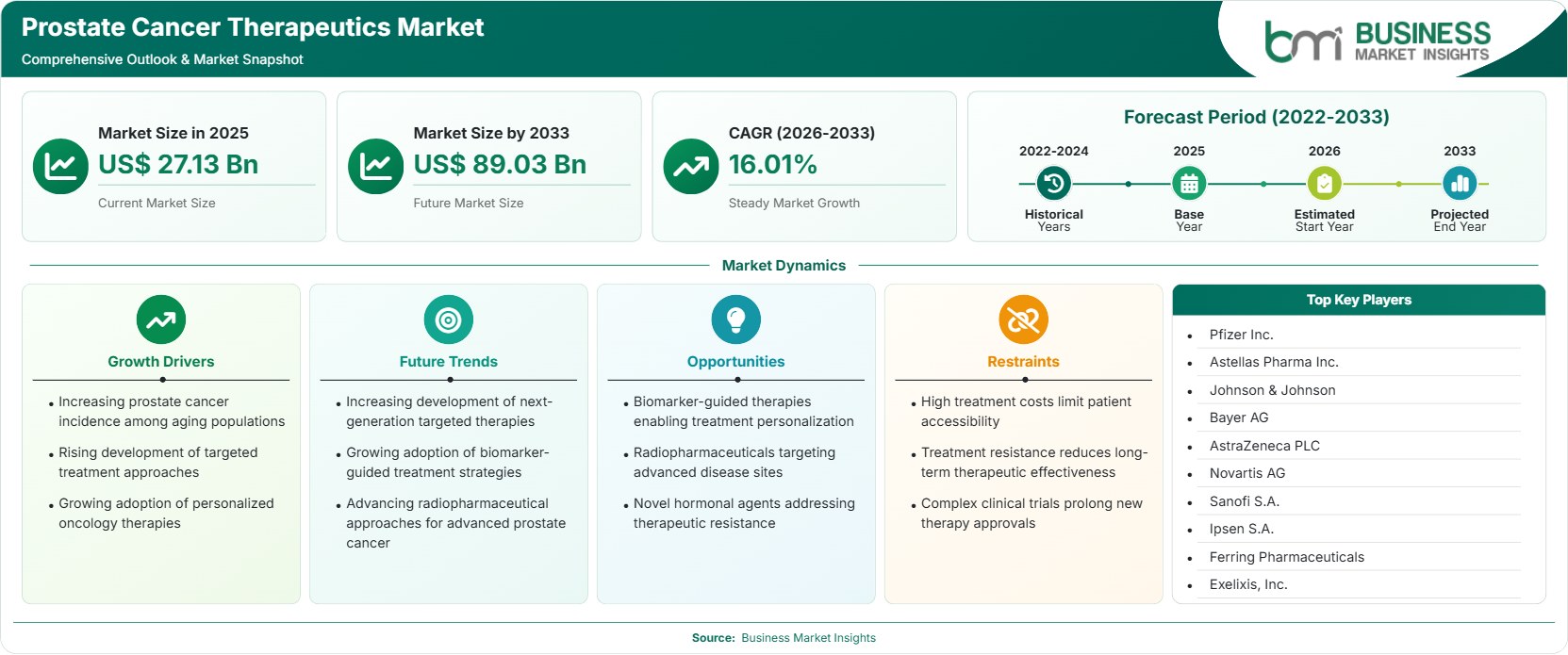
The Prostate Cancer Therapeutics Market size was valued at US$ 27.13 Billion in 2025 and is projected to reach US$ 89.03 Billion by 2033, growing at a CAGR of 16.01% during 2026–2033. Growth is supported by rising prostate cancer incidence, broader biomarker testing adoption, expanding radioligand therapies, improved survival outcomes, increasing androgen receptor-targeted treatment use, and stronger oncology investment pipelines.

Report Coverage
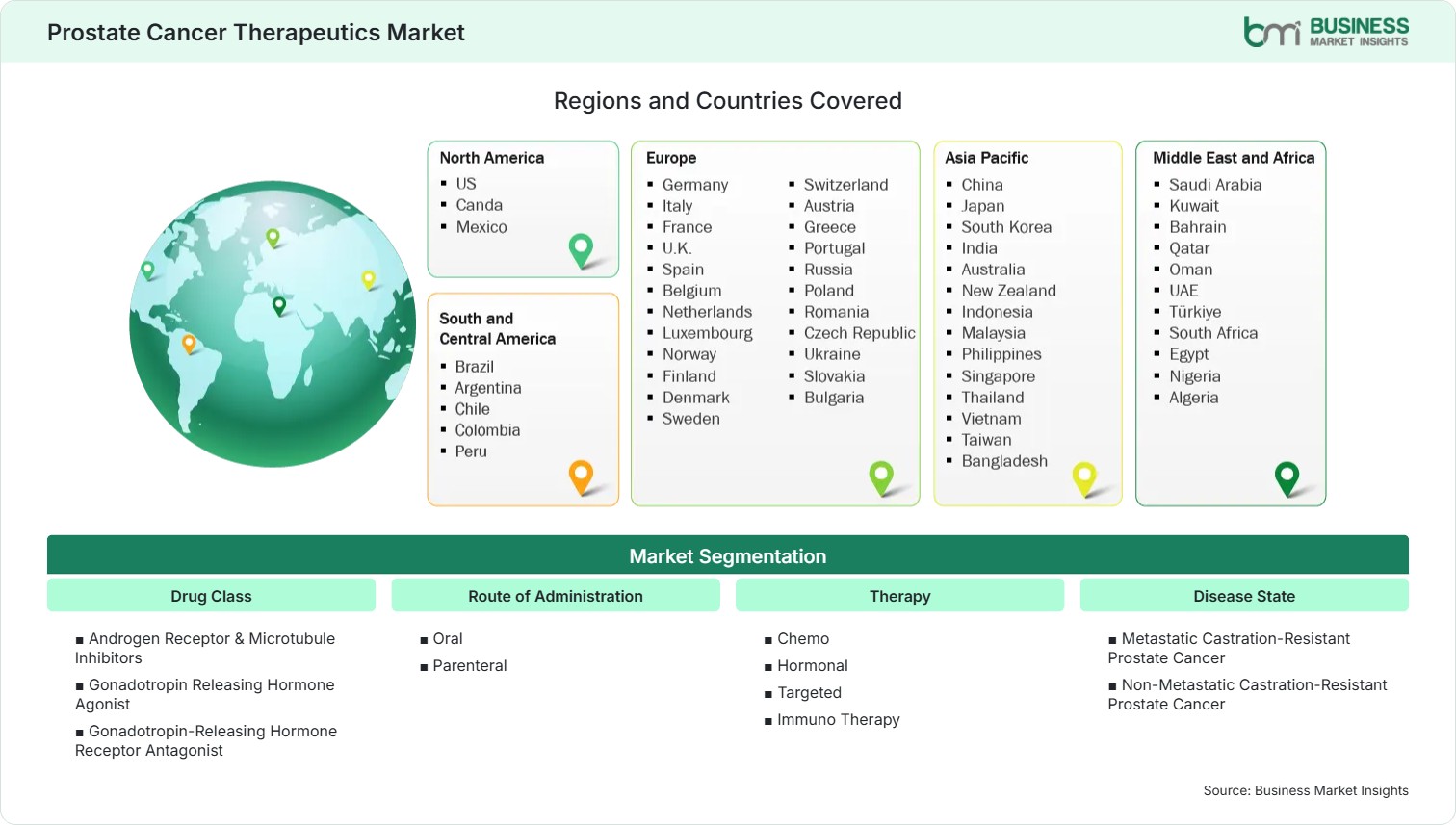
  • Drug Class: Androgen Receptor & Microtubule Inhibitors, Gonadotropin Releasing Hormone Agonist, Gonadotropin-Releasing Hormone Receptor Antagonist
  • Route of Administration: Oral, Parenteral
  • Therapy: Chemo, Hormonal, Targeted, Immuno Therapy
  • Disease State: Metastatic Castration-Resistant Prostate Cancer, Non-Metastatic Castration-Resistant Prostate Cancer
  • Distribution Channel: Hospital Pharmacies, Drug Stores & Retail Pharmacies, Online Pharmacies
US$ 27.13 Bn Market size in 2025
US$ 89.03 Bn Market Size by 2033
16.01% CAGR, 2026 - 2033
2026-2033 Forecast Period

AI Overview

Prostate Cancer Therapeutics Market Summary

  • North America Region: North America holds a market share of 41%–44% in 2025, growing at a CAGR of 14.5%–15.5% during 2026–2033. Demand is driven by advanced oncology infrastructure, elevated screening rates, radiopharmaceutical adoption, favorable reimbursement, precision medicine expansion, strong clinical trial activity, increasing elderly population, and sustained pharmaceutical innovation investment. U.S. market benefits from extensive specialty oncology networks and is projected to expand at approximately 14.8%–15.8% CAGR.
  • Fastest Growing Region: Asia Pacific holds a market share of 22%–25% in 2025, growing at a CAGR of 17.5%–18.5% during 2026–2033. Growth stems from improving cancer diagnostics, rising healthcare expenditure, expanding insurance access, increasing disease awareness, broader treatment availability, accelerating pharmaceutical investments, expanding hospital capacity, and growing clinical research participation.
  • Leading Segment: Hormonal Therapy holds a Prostate Cancer Therapeutics Market share of 43%–46% in 2025, growing at a CAGR of 15.0%–16.0% during 2026–2033. Leadership reflects standard-of-care positioning, extensive physician familiarity, established reimbursement pathways, wide patient eligibility, strong outcome evidence, combination treatment adoption, and increasing utilization across advanced disease management programs.
  • High Growth Segment: Targeted Therapy holds a market share of 18%–21% in 2025, growing at a CAGR of 18.5%–19.5% during 2026–2033. Expansion is supported by genomic profiling growth, precision oncology development, biomarker-guided treatment selection, pipeline advancement, favorable efficacy outcomes, personalized medicine adoption, and increasing regulatory support for innovative therapies.
  • Key Market Opportunity: Commercialization of radioligand therapies and biomarker-driven treatment strategies creates opportunities for differentiated products, improved outcomes, expanded patient stratification, premium pricing, and stronger long-term oncology portfolio value creation.
  • Major Market Players: Pfizer Inc., Astellas Pharma Inc., Johnson & Johnson, Bayer AG, AstraZeneca PLC, Novartis AG, Sanofi S.A., Ipsen S.A., Ferring Pharmaceuticals, Exelixis, Inc.
Strategic Insights

Prostate Cancer Therapeutics Market: Strategic Insights

Prostate Cancer Therapeutics Market Strategic Framework
FREE PDF
Request your free sample
Request free sample
Stakeholder View

Key Takeaways

  • The value chain increasingly depends on integrated diagnostics, specialty drug manufacturing, radiopharmaceutical production, hospital oncology services, and specialty pharmacy distribution.
  • Metastatic disease management and precision medicine applications represent the highest commercial upside due to increasing patient identification and treatment intensity.
  • Innovation is shifting toward genomic-guided therapies, radioligands, and combination regimens designed to extend progression-free survival.
  • Asia Pacific presents a compelling investment case due to diagnosis expansion, healthcare modernization, and rising oncology spending.
  • Strategic partnerships between pharmaceutical manufacturers and diagnostic developers are accelerating commercialization of targeted treatment pathways.
  • Competitive differentiation increasingly depends on clinical outcomes, biomarker relevance, reimbursement support, and real-world evidence generation.
Geographic Outlook

Prostate Cancer Therapeutics Market Regional Highlights

North America Prostate Cancer Therapeutics Market

North America accounted for approximately 41%–44% of the Prostate Cancer Therapeutics Market share in 2025 and is forecast to expand at 14.5%–15.5% CAGR through 2033. The region benefits from strong oncology reimbursement systems, broad adoption of advanced therapeutics, and significant pharmaceutical R&D investment. High screening penetration supports patient identification, while specialty treatment centers facilitate adoption of innovative therapies. Radiopharmaceutical utilization and genomic testing integration continue enhancing treatment personalization across major healthcare systems.

  • Strong reimbursement frameworks accelerate physician adoption of premium oncology therapeutics and innovative treatment protocols.
  • Rising utilization of PSMA-targeted imaging supports more accurate staging and optimized therapeutic decisions.
  • Active clinical trial ecosystems strengthen commercialization opportunities for emerging treatments.
  • Aging demographics continue increasing eligible patient populations across major regional markets.
  • Widespread specialist access improves adherence and long-term treatment outcomes.

US Prostate Cancer Therapeutics Market

The United States represents approximately 78%–82% of North American revenue and is projected to register 14.8%–15.8% CAGR. High healthcare expenditure, comprehensive cancer center networks, and substantial pharmaceutical innovation activity support market leadership. Advanced diagnostics are routinely incorporated into care pathways, facilitating earlier intervention and personalized treatment selection. Favorable access to novel medicines strengthens commercial adoption across metastatic and non-metastatic disease categories.

  • Extensive oncology infrastructure supports rapid integration of innovative therapies.
  • Early adoption of molecular diagnostics expands biomarker-driven treatment opportunities.
  • Commercial and government reimbursement programs improve patient accessibility.
  • Research funding continues supporting next-generation therapy development.

Europe Prostate Cancer Therapeutics Market

The Europe region accounted for 26%-29% of the market share in 2025 and is projected to grow at a 15.0%-16.0% CAGR. Market development is driven by the presence of cancer treatment pathways, increased awareness programs, and precision oncology programs. Germany is the leading revenue contributor to the region, and Spain and certain Central European countries exhibit rapid adoption rates. Broader access to advanced diagnostics and targeted therapeutic options continues to support regional competitiveness across multiple treatment settings.

  • Germany remains the largest national market due to advanced oncology infrastructure.
  • Spain demonstrates stronger-than-average adoption supported by healthcare modernization.
  • Growing use of targeted therapies improves treatment personalization.
  • Regulatory support encourages innovation and market access.
  • Population aging contributes to rising disease incidence.

Asia Pacific Prostate Cancer Therapeutics Market

Asia Pacific accounted for a 22%–25% share in 2025 and is the fastest-growing region with 17.5%–18.5% CAGR. Rising healthcare expenditure, improving cancer awareness, expanding insurance coverage, and healthcare digitization support robust growth. Japan remains the leading market, while India exhibits the fastest expansion due to increasing diagnosis rates and infrastructure development. Pharmaceutical companies are strengthening regional partnerships to capitalize on expanding treatment demand.

  • Japan leads through advanced oncology services and strong therapeutic adoption.
  • India records the fastest growth driven by screening expansion and healthcare investment.
  • China continues increasing precision medicine implementation across major hospitals.
  • Growing specialist availability improves treatment access.
  • Regional manufacturing capabilities support supply security and affordability.

Rest of World Prostate Cancer Therapeutics Market

The Rest of World accounts for 8% to 10% of the share in 2025, and is anticipated to register a CAGR of 15.5% to 16.5%. The South and Central America region will benefit from the growing oncology program, while the Middle East and Africa region will experience growth due to healthcare infrastructure development. Brazil is leading the region in terms of demand, while Saudi Arabia shows growth potential. Increasing awareness, specialist access, and healthcare funding continue to support therapeutic adoption

  • Brazil remains the largest market across South and Central America.
  • Saudi Arabia shows notable expansion supported by healthcare transformation initiatives.
  • Oncology capacity investments improve treatment accessibility.
  • Public awareness programs encourage earlier diagnosis.
  • International partnerships support access to innovative therapies.
Global Market Geography
FREE PDF
Request your free sample
Request free sample
Segment Analysis

Prostate Cancer Therapeutics Market Segmentation

Drug Class

This market segment held roughly 43%-46% market share in 2025 and has been growing at an estimated 15.5%-16.5% CAGR. There is steady growth in the scope of the Prostate Cancer Therapeutics Market in the drug class due to the adoption of combination, precision medicine, and hormonal therapy approaches.

  • Androgen Receptor & Microtubule Inhibitors: Widely used in advanced disease management, benefiting from strong efficacy profiles and growing physician acceptance across metastatic treatment settings.
  • Gonadotropin-Releasing Hormone (GnRH) Agonist: Continues serving as a foundational hormonal approach supported by extensive clinical experience and broad utilization.
  • Gonadotropin-Releasing Hormone (GnRH) Receptor Antagonist: Adoption increases due to favorable onset characteristics and growing preference in selected patient populations.

Route of Administration

This segment maintains meaningful diversification with increasing preference for convenient treatment pathways. Adoption reflects patient compliance considerations, healthcare delivery evolution, and availability of innovative formulations, supporting sustained market expansion through the forecast period.

  • Oral: Gains traction through improved convenience, outpatient suitability, and increasing availability of targeted treatment options.
  • Parenteral: Remains essential for biologics, injectable hormonal therapies, and advanced oncology administration requirements.

Therapy

Therapy selection increasingly reflects disease stage, biomarker status, and treatment objectives. The Prostate Cancer Therapeutics Market trends indicate growing utilization of combination regimens as clinical evidence demonstrates enhanced outcomes across advanced disease settings.

  • Chemo: Maintains relevance in advanced disease where aggressive intervention remains clinically appropriate.
  • Hormonal: Represents the largest therapeutic category because androgen suppression remains central to disease management.
  • Targeted: Expands rapidly alongside genomic profiling and precision medicine adoption.
  • Immuno Therapy: Benefits from ongoing research aimed at improving response rates and extending survival.

Disease State

Disease-state segmentation reflects distinct treatment complexity, care intensity, and therapeutic requirements. Commercial opportunities are strongest where advanced-stage patients require multiple lines of intervention and long-term disease management support.

  • Metastatic Castration-Resistant Prostate Cancer: Generates substantial treatment demand due to higher therapeutic intensity and multidrug utilization.
  • Non-Metastatic Castration-Resistant Prostate Cancer: Expands through earlier intervention strategies and increasing disease monitoring capabilities.

Distribution Channel

Distribution channels continue evolving alongside specialty pharmacy growth, digital healthcare adoption, and changing patient access preferences. Healthcare systems increasingly integrate multiple fulfillment models to improve continuity of care.

  • Hospital Pharmacies: Maintain leadership through specialist supervision and advanced oncology treatment integration.
  • Drug Stores & Retail Pharmacies: Support prescription accessibility and long-term therapy continuity.
  • Online Pharmacies: Experience rising adoption due to convenience, digital engagement, and expanding healthcare e-commerce ecosystems.
Market Forces

Prostate Cancer Therapeutics Market Dynamics

Key Market Drivers

Rising Global Prostate Cancer Incidence

According to international cancer institutes and medical institutions, prostate cancer continues to be one of the most commonly diagnosed cancers amongst males, resulting in continued demand for treatment. An increase in longevity and an aging population has led to a rise in the prevalence of the disease in developed and developing countries. The prostate cancer therapeutics market growth will be driven by the increasing number of patients requiring advanced treatment options. Increased efforts for early detection have improved diagnostic rates, and increased awareness campaigns have encouraged the adoption of treatment options. Increasing prevalence supports sustained prescription volumes, stronger clinical research investment, enhanced healthcare prioritization, and wider deployment of innovative therapeutic solutions across multiple regions.

Expansion of Precision Oncology Adoption

Biomarkers, genomic analysis, and tailored therapies have revolutionized medicine. Healthcare professionals are increasingly applying molecular knowledge to maximize patient benefits and minimize unnecessary treatment exposure. With growing clinical evidence favoring the use of biomarkers to select therapies, their uptake by the commercial sector is increasing. The combination of targeted treatments and diagnostics enhances the efficiency of healthcare provision while creating more avenues for pharmaceutical companies to innovate in this space. Broader access to genomic technologies across cancer centers continues to support market development and differentiation

Advancement of Radioligand and Novel Therapeutics

The development of radioligand therapies is an innovative field in oncology. The therapies provide targeted drug delivery options that help improve therapeutic accuracy and disease control for patients at an advanced stage. Regulatory approval and successful results help build more confidence among physicians. Pharmaceutical companies are increasing their production capacity and collaborating with other firms due to rising demand for drugs. The emergence of next-generation therapeutic platforms strengthens competition, stimulates pipeline activity, and enhances treatment availability across global markets.

Key Market Opportunities

Commercial Expansion of Biomarker-Guided Treatments

The rise in genome testing offers many opportunities for pharma and diagnostics companies. There is an opportunity to be more specific about patient selection using biomarkers. The increased focus on personalized medicine by health care systems offers pharma and diagnostics companies the opportunity to integrate their diagnostics and drugs to gain a competitive advantage. Prostate Cancer Therapeutics Market Forecasts increasingly indicate increased use of these targeted treatments, supported by real-world evidence, regulatory encouragement, and expanded reimbursement acceptance across major healthcare markets.

Growth Potential in Emerging Asian Healthcare Systems

Various Asian countries continue to make significant investments in cancer infrastructure, training, and diagnostics. Increased awareness and insurance coverage facilitate access to cancer treatment for more people. There are also increased efforts by pharmaceutical companies to develop local presence through collaborations, investment in manufacturing, and clinical development. All these developments provide an enabling environment for entering new markets.

Combination Therapy Development Strategies

The combination approach is beginning to show clinical efficacy at different stages of the disease. Programs that involve development through the integration of hormonal, targeted, and novel therapies might lead to better survival outcomes. Companies with superior comparative efficacy might gain a competitive advantage in the marketplace and price premiums. Increasing clinical trial efforts might create significant commercial value.

Market Restraints and Challenges

High Treatment Costs and Access Limitations

Factor: Premium pricing of oncology treatments, medicines, and radiopharmaceuticals poses affordability issues. Impact: Cost control measures will be implemented, such as access barriers to reimbursement and delays in access by the healthcare system and payers. Affordability issues may affect the uptake of these therapies, especially in resource-limited settings, and also create an imbalance between the developed and developing healthcare systems. Budgetary challenges also influence procurement decisions, potentially limiting commercial expansion for high-cost therapeutic categories despite demonstrated clinical benefits.

Therapy Resistance and Clinical Complexity

Factor: The progression of the disease and mechanisms of resistance may reduce the long-term efficacy of existing treatment methods. Impact: Doctors must apply several methods sequentially to treat their patients, increasing treatment complexity. Varied patient reactions make it harder to control the condition, while advanced cases require constant monitoring and treatment optimization. These factors increase healthcare burden and highlight the importance of sustained innovation across therapeutic platforms.

Company Analysis

Competitive Landscape

Prostate Cancer Therapeutics Market analysis indicates competition is concentrated among multinational pharmaceutical companies with strong oncology portfolios, advanced clinical pipelines, and global commercialization capabilities.

Company Name

Overview

Products and Services relevant to this market

Pfizer Inc.

Global biopharmaceutical company focused on oncology innovation and advanced cancer therapeutics.

Oncology medicines, targeted therapies, clinical development programs, precision medicine initiatives.

Astellas Pharma Inc.

Leading specialty pharmaceutical company with strong urology and oncology expertise.

XTANDI and associated prostate cancer treatment solutions.

Johnson & Johnson

Diversified healthcare leader with significant oncology presence.

ERLEADA and supporting oncology therapeutic portfolio.

Bayer AG

Global life sciences company active in oncology innovation.

NUBEQA and prostate cancer research programs.

AstraZeneca PLC

Research-driven biopharmaceutical company emphasizing precision medicine.

Targeted oncology therapies and biomarker-focused development.

Novartis AG

Major pharmaceutical innovator with radioligand leadership.

Pluvicto and advanced radiopharmaceutical platforms.

Sanofi S.A.

Global healthcare company with established oncology capabilities.

Cancer therapeutics, specialty medicines and research initiatives.

Ipsen S.A.

Specialty biopharmaceutical company focused on oncology care.

Oncology therapies and physician support programs.

Ferring Pharmaceuticals

Research-based healthcare company with urology expertise.

Hormonal therapy products and supportive treatment solutions.

Exelixis, Inc.

Oncology-focused biotechnology company developing targeted medicines.

Targeted therapy research and cancer treatment development.

Trust & Transparency

Research Methodology

The market analysis combines proprietary research with secondary data from government agencies, company disclosures, regulatory filings, industry databases and expert interviews. Market estimates are validated through data triangulation, cross-market benchmarking and analyst review.

View Full Research Methodology

Questions Answered

Frequently Asked Questions

Why is this Prostate Cancer Therapeutics Market Report valuable for stakeholders?

The Market Report provides insights into growth drivers, regional opportunities, competitive positioning, therapeutic trends, and future investment priorities.

How are precision medicine strategies changing treatment approaches?

Precision medicine enables biomarker-guided therapy selection, helping physicians tailor treatment decisions and improve clinical outcomes for eligible patients.

Which region offers the strongest future growth potential?

Asia Pacific presents the strongest growth outlook because of healthcare infrastructure development, growing awareness, and expanding access to advanced oncology treatments.

What therapy type currently generates the largest revenue contribution?

Hormonal therapy remains the leading therapy category due to its established role across multiple stages of prostate cancer treatment.

What are the primary factors driving demand for prostate cancer therapeutics?

Demand is supported by aging populations, increasing diagnosis rates, broader screening adoption, innovation in targeted therapies, and stronger access to precision oncology solutions.

Access the Full Prostate Cancer Therapeutics Market Report

Get segment-level forecasts, regional estimates, competitive benchmarking, company profiles and downloadable Excel datasets.

Access the full Prostate Cancer Therapeutics Market Report
350 pages PDF & Excel | 2026-09-10
Similar Research

Related Market Reports