
Renal Therapeutics Market Outlook: Size, Share, Trends, Growth Analysis, Competitive Landscape & Forecast, 2026-2033

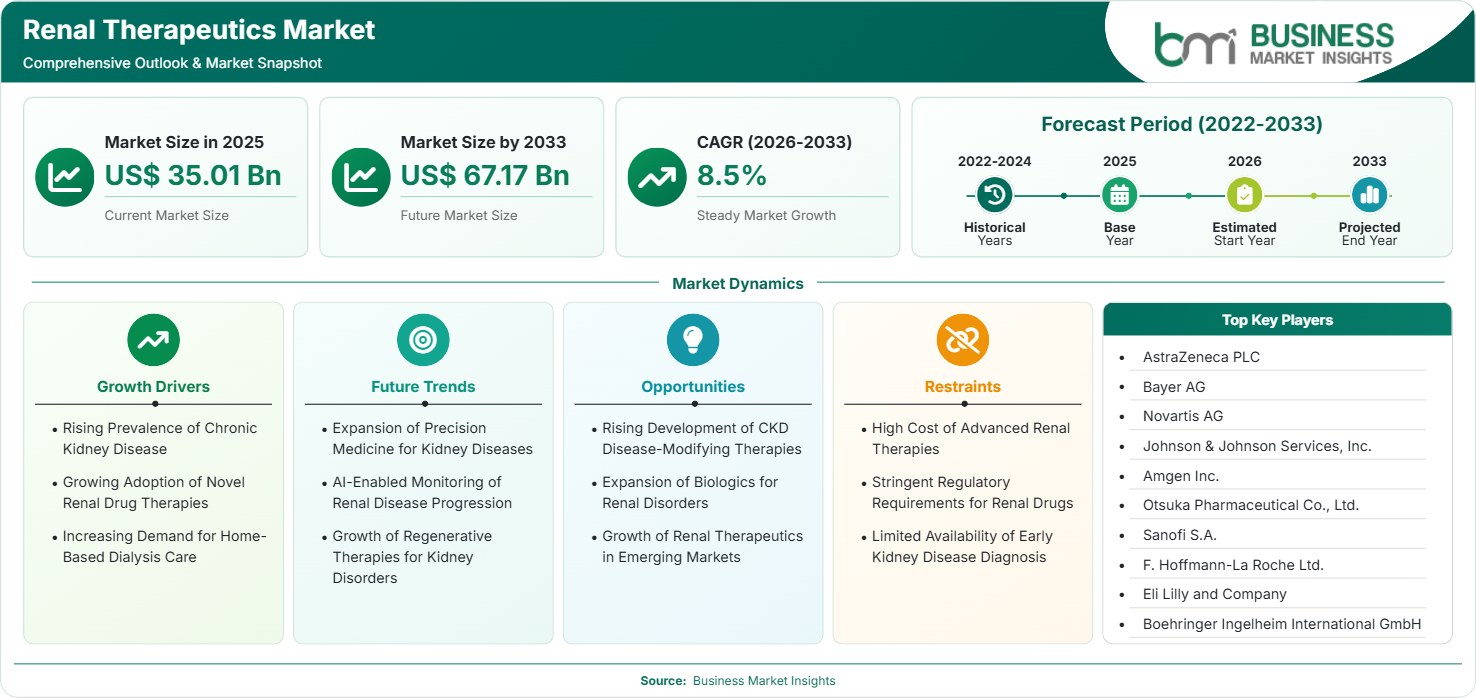
The Renal Therapeutics Market size was valued at USD 35.01 Billion in 2025 and is projected to reach USD 67.17 Billion by 2033, growing at a CAGR of 8.5% during 2026–2033. Growth is driven by the increasing prevalence of chronic kidney disease (CKD), rising incidence of diabetes-related renal disorders, growing aging population, expanding adoption of novel nephrology therapies, and increasing awareness regarding early diagnosis and treatment of kidney diseases.

Report Coverage
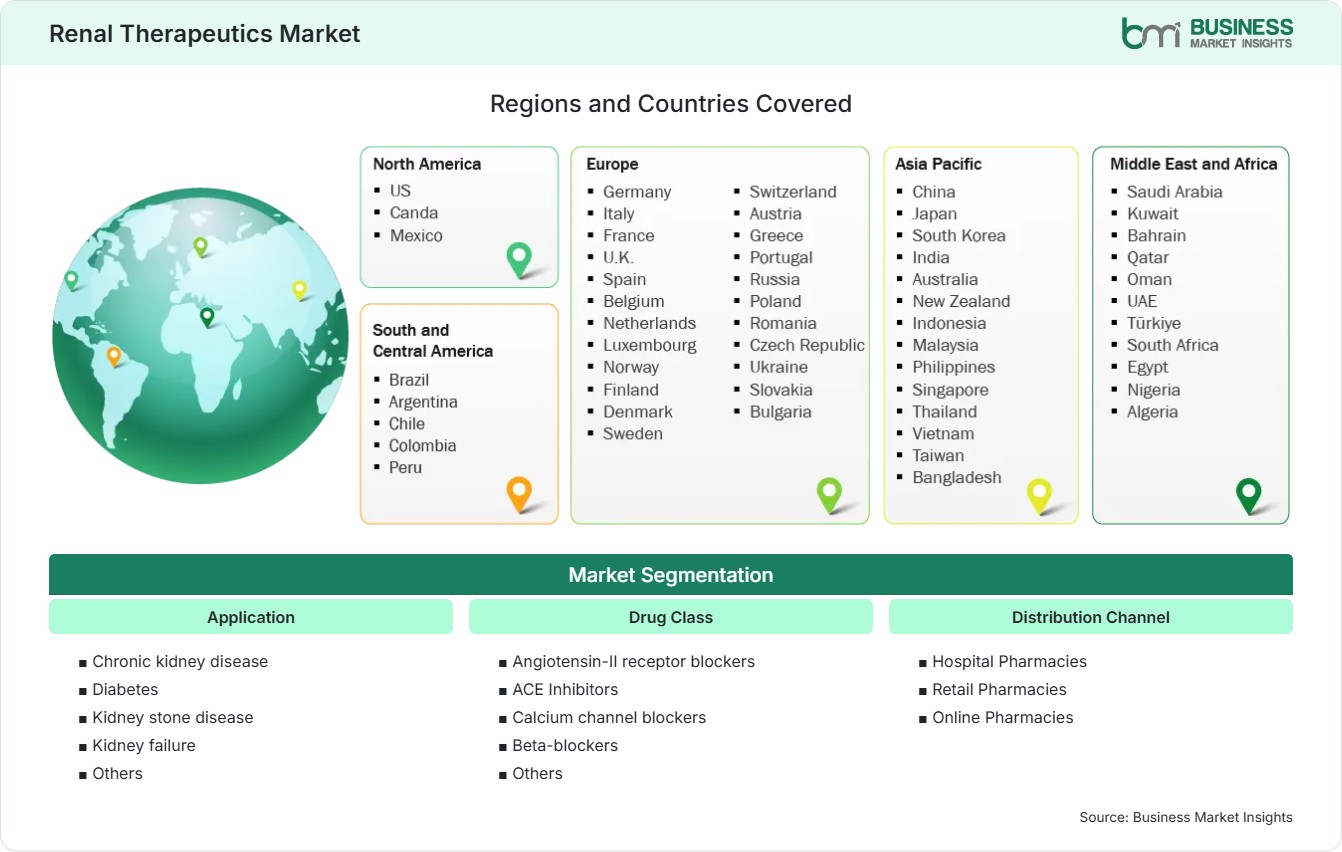
  • Application: Chronic kidney disease, Diabetes, Kidney stone disease, Kidney failure, Others
  • Drug Class: Angiotensin-II receptor blockers, ACE Inhibitors, Calcium channel blockers, Beta-blockers, Others
  • Distribution Channel: Hospital Pharmacies, Retail Pharmacies, Online Pharmacies
US$ 35.01 Bn Market size in 2025
US$ 67.17 Bn Market Size by 2033
8.5% CAGR, 2026 - 2033
2026-2033 Forecast Period

AI Overview

Renal Therapeutics Market Summary

  • North America Region: North America holds a renal therapeutics market share of 36%–39% in 2025, growing at a CAGR of 7.8%–8.4% during 2026–2033. Demand is supported by advanced healthcare infrastructure, high diagnosis rates, and strong adoption of innovative renal therapeutics. The U.S. remains the dominant market, advancing at a CAGR of 8.0%–8.6%.
  • Fastest Growing Region: Asia Pacific accounts for 27%–30% of revenue in 2025 and is projected to register a CAGR of 9.2%–9.9% through 2033. Increasing prevalence of diabetes, growing healthcare expenditure, and improving access to nephrology treatments continue supporting market development.
  • Leading Segment: Chronic Kidney Disease (CKD) holds a market share of 34%–38% in 2025 and is expected to grow at a CAGR of 8.7%–9.3%. Demand is driven by the rising global burden of kidney disorders and growing focus on slowing disease progression.
  • High Growth Segment: Angiotensin-II Receptor Blockers (ARBs) account for 22%–26% of renal therapeutics market revenue in 2025 and are projected to register a CAGR of 9.1%–9.8% during the forecast period. Increasing utilization in hypertension management and renal protection continues supporting expansion.
  • Key Market Opportunity: Growing development of targeted renal therapies, increasing adoption of preventive nephrology care, and expanding treatment options for diabetic kidney disease are creating significant opportunities for market participants.
  • Major Market Players: AstraZeneca PLC, Bayer AG, Novartis AG, Johnson & Johnson Services, Inc., Amgen Inc., Otsuka Pharmaceutical Co., Ltd., Sanofi S.A., F. Hoffmann-La Roche Ltd., Eli Lilly and Company, and Boehringer Ingelheim International GmbH.
Strategic Insights

Renal Therapeutics Market: Strategic Insights

Renal Therapeutics Market Strategic Framework
FREE PDF
Request your free sample
Request free sample
Stakeholder View

Key Takeaways

  • The renal therapeutics market analysis includes pharmaceutical companies, healthcare providers, nephrology specialists, retail pharmacies, hospital pharmacies, research organizations, and healthcare regulators.
  • Chronic kidney disease remains the largest application segment due to rising prevalence rates and growing focus on delaying disease progression and preventing renal failure.
  • Product innovation is increasingly focused on targeted therapies, combination treatment approaches, and drugs designed to improve renal and cardiovascular outcomes simultaneously.
  • Asia Pacific offers strong growth potential due to increasing diabetes prevalence, expanding healthcare infrastructure, and improving access to nephrology treatments.
  • Pharmaceutical companies continue investing in research and development programs aimed at addressing unmet needs in chronic kidney disease, diabetic nephropathy, and renal failure management.
  • Hospital pharmacies remain important distribution channels due to the complexity of renal disease treatment and specialist care requirements.
  • Growing awareness regarding preventive nephrology and early-stage disease intervention is supporting therapeutic adoption globally.
  • Diabetes-related kidney disease continues to emerge as a major area of clinical focus owing to its rising prevalence and significant healthcare burden.
  • Strategic collaborations between pharmaceutical companies and healthcare organizations are a potential renal therapeutics market trend accelerating innovation and improving treatment accessibility.
  • Advances in renal disease management, supportive care therapies, and patient monitoring technologies are expected to create substantial long-term opportunities across the market.
Geographic Outlook

Renal Therapeutics Market Regional Highlights

North America Renal Therapeutics Market

North America accounted for 36%–39% of global revenue in 2025 and is projected to expand at a CAGR of 7.8%–8.4% through 2033. Growth is supported by the high prevalence of chronic kidney disease, widespread access to advanced healthcare services, increasing biologics adoption, and strong reimbursement frameworks. The Renal Therapeutics Market share in the region continues benefiting from growing awareness of kidney health and increasing investments in nephrology research.

  • Rising incidence of diabetes and hypertension continues driving demand for renal disease treatment and management solutions.
  • Healthcare providers are increasingly emphasizing early diagnosis and intervention to reduce progression to end-stage renal disease.
  • Pharmaceutical companies continue launching innovative therapies targeting chronic kidney disease and diabetic nephropathy.
  • Growing adoption of value-based healthcare models is encouraging better long-term disease management.
  • Strong clinical research activity continues supporting development of next-generation renal therapeutics.

US Renal Therapeutics Market

The United States represented 31%–34% of global revenue in 2025 and is anticipated to register a CAGR of 8.0%–8.6% during the forecast period. Demand is driven by increasing chronic disease prevalence, high healthcare expenditure, and robust adoption of advanced renal therapies. Continued innovation in nephrology treatment supports market growth.

  • Chronic kidney disease remains a significant public health concern requiring long-term therapeutic intervention.
  • Growing adoption of targeted therapies is improving disease management outcomes.
  • Hospital systems are increasingly implementing comprehensive kidney care programs.
  • Rising awareness campaigns continue supporting earlier diagnosis and treatment uptake.

Europe Renal Therapeutics Market

Europe held 27%–30% of global revenue in 2025 and is projected to grow at a CAGR of 8.1%–8.7% through 2033. Increasing prevalence of kidney disorders, expanding geriatric populations, and growing utilization of innovative therapeutics continue supporting market expansion. Germany remains the leading renal therapeutics market with a CAGR of 8.2%–8.8%, while Poland is the fastest-growing country, expanding at a CAGR of 8.8%–9.4%.

  • Healthcare systems continue prioritizing chronic kidney disease management and prevention initiatives.
  • Adoption of advanced treatment options is increasing across nephrology care settings.
  • Germany maintains leadership through strong pharmaceutical presence and healthcare spending.
  • Growing demand for personalized medicine approaches continues supporting market development.
  • Improved screening programs are enabling earlier disease identification and treatment.

Asia Pacific Renal Therapeutics Market

Asia Pacific accounted for 27%–30% of global revenue in 2025 and is expected to remain the fastest-growing region, registering a CAGR of 9.2%–9.9% through 2033. Rising diabetes prevalence, expanding healthcare access, growing healthcare expenditure, and improving disease awareness continue driving renal therapeutics market growth. China remains the largest regional market with a CAGR of 9.0%–9.7%, while India records the highest growth at 9.8%–10.5%.

  • Increasing rates of diabetes and hypertension are contributing significantly to kidney disease burden across the region.
  • China benefits from expanding healthcare infrastructure and increasing adoption of advanced pharmaceutical therapies.
  • India is witnessing growing awareness regarding kidney disease prevention and treatment options.
  • Government healthcare initiatives are improving access to nephrology services and medications.
  • Rising investments in pharmaceutical manufacturing and healthcare modernization continue supporting market expansion.

Rest of World Renal Therapeutics Market

The Rest of World region accounted for 6%–9% of global revenue in 2025 and is expected to register a CAGR of 7.9%–8.5% through 2033. Market growth is supported by increasing healthcare investments, rising chronic disease prevalence, and improving access to kidney disease treatments. Demand remains particularly strong across chronic kidney disease and diabetes-related renal complications.

Brazil is the leading market in South & Central America and is forecast to grow at a CAGR of 8.1%–8.7%. In the Middle East & Africa, Saudi Arabia is expected to be the fastest-growing country with a CAGR of 8.3%–8.9%.

  • Brazil continues benefiting from improved healthcare access and increasing awareness of chronic kidney disease.
  • Saudi Arabia is witnessing rising investment in chronic disease management and specialized healthcare services.
  • Expanding pharmaceutical distribution networks are improving treatment accessibility.
  • Growing healthcare modernization efforts continue supporting adoption of advanced therapies.
  • Increasing disease screening activities are creating long-term growth opportunities across emerging markets.
Global Market Geography
FREE PDF
Request your free sample
Request free sample
Segment Analysis

Renal Therapeutics Market Segmentation

Application

Application-based demand continues expanding as healthcare systems focus on managing chronic kidney diseases, reducing complications, and improving long-term patient outcomes. Chronic Kidney Disease (CKD) holds 34%–38% share in 2025 and is projected to grow at a CAGR of 8.7%–9.3% through 2033. The Renal Therapeutics Market scope continues broadening as the global burden of kidney-related disorders rises alongside increasing prevalence of diabetes and hypertension.

  • Chronic Kidney Disease: Dominates demand owing to its high prevalence, long-term treatment requirements, and growing focus on disease progression management.
  • Diabetes: Represents a major application area due to increasing incidence of diabetic kidney disease and related renal complications.
  • Kidney Stone Disease: Supports demand for pharmacological therapies focused on prevention and recurrence management.
  • Kidney Failure: Benefits from increasing need for supportive treatment alongside dialysis and renal replacement therapies.
  • Others: Include glomerular diseases, nephrotic disorders, and various renal complications requiring specialized treatment approaches.

Drug Class

Drug class innovation continues improving renal outcomes through better blood pressure control, kidney function preservation, and disease progression management. Angiotensin-II Receptor Blockers (ARBs) account for 22%–26% market share in 2025 and are projected to register the fastest growth at a CAGR of 9.1%–9.8% through 2033.

  • Angiotensin-II Receptor Blockers: Lead growth owing to widespread use in kidney protection and hypertension management among renal patients.
  • ACE Inhibitors: Remain extensively utilized due to their established role in delaying kidney disease progression.
  • Calcium Channel Blockers: Support treatment of hypertension frequently associated with renal disorders.
  • Beta-blockers: Continue serving patients requiring cardiovascular and blood pressure management.
  • Others: Include emerging renal therapies, combination drug regimens, and specialty nephrology medications.

Distribution Channel

Distribution channels continue evolving as patients increasingly seek convenient access to chronic disease medications and long-term treatment support.

  • Hospital Pharmacies: Represent the leading segment due to specialist supervision, complex treatment requirements, and management of advanced renal conditions.
  • Retail Pharmacies: Benefit from growing outpatient treatment and chronic disease medication dispensing.
  • Online Pharmacies: Witness increasing adoption due to convenience, improving digital healthcare ecosystems, and growing prescription fulfillment capabilities.
Market Forces

Renal Therapeutics Market Dynamics

Key Market Drivers

Rising Prevalence of Chronic Kidney Disease

Chronic kidney disease has emerged as a major global health burden due to increasing rates of diabetes, hypertension, obesity, and aging populations. Millions of patients require long-term disease management to prevent progression to end-stage renal disease and associated complications. Healthcare providers are increasingly emphasizing routine screening, early intervention, and comprehensive treatment strategies to improve patient outcomes. Growing awareness among patients and healthcare professionals is contributing to earlier diagnosis and improved treatment adherence. As chronic kidney disease prevalence continues rising worldwide, demand for effective renal therapeutics is expected to increase substantially during the forecast period.

Growing Adoption of Novel Renal Drug Therapies

Pharmaceutical innovation is transforming renal disease management through the introduction of therapies that address disease progression and improve kidney function preservation. New treatment approaches are providing clinicians with more effective tools to manage chronic kidney disease and associated complications. Healthcare providers are increasingly adopting advanced therapies that offer improved efficacy and broader clinical benefits. Ongoing research initiatives continue expanding treatment options across various renal disorders. These advancements are expected to strengthen therapeutic adoption and support sustained market growth.

Increasing Demand for Home-Based Dialysis Care

Home-based dialysis care is gaining popularity as patients seek greater treatment flexibility, improved quality of life, and reduced dependence on hospital visits. This trend is encouraging broader utilization of supportive renal therapies that complement home-based disease management programs. Healthcare systems are increasingly promoting homecare models to improve accessibility and reduce treatment costs. Pharmaceutical therapies play an important role in managing complications and maintaining patient health outside traditional clinical settings. Continued growth of home-based kidney care is expected to support long-term demand for renal therapeutics.

Key Market Opportunities

Rising Development of CKD Disease-Modifying Therapies

The development of disease-modifying therapies for chronic kidney disease represents one of the most significant opportunities within the renal therapeutics industry. Historically, many treatments have focused primarily on symptom management and slowing disease progression. Pharmaceutical companies are now investing heavily in therapies designed to target underlying disease mechanisms and improve long-term kidney outcomes. Advances in nephrology research, biomarker identification, and precision medicine are accelerating drug development activities. As healthcare providers increasingly seek therapies capable of altering disease trajectories, innovative CKD treatments are expected to generate substantial commercial opportunities throughout the forecast period.

Expansion of Biologics for Renal Disorders

Biologic therapies are creating new possibilities for the treatment of complex renal diseases that may not respond adequately to conventional medications. Advances in biotechnology are enabling the development of targeted therapies designed to address inflammation, immune-mediated renal disorders, and disease progression pathways. Healthcare providers are showing increasing interest in biologics due to their potential to improve outcomes among high-risk patient populations. Expanding clinical research activities continue strengthening the biologics pipeline within nephrology. This trend is expected to create attractive growth opportunities for pharmaceutical manufacturers and healthcare providers alike.

Growth of Renal Therapeutics in Emerging Markets

Emerging markets present a substantial opportunity as healthcare access improves and awareness of kidney disease continues to increase. Rapid urbanization, lifestyle changes, and rising rates of diabetes and hypertension are contributing to a growing burden of renal disorders across developing economies. Governments are investing in healthcare infrastructure, screening programs, and chronic disease management initiatives to address these challenges. Pharmaceutical companies are expanding regional presence and strengthening distribution networks to improve treatment accessibility. As diagnostic rates and healthcare spending increase, emerging markets are expected to become important contributors to future market growth.

Market Restraints and Challenges

High Cost of Advanced Renal Therapies

Factor: Advanced renal therapeutics, biologics, and innovative treatment approaches often require significant research investment, specialized manufacturing processes, and complex distribution systems.

Impact: High treatment costs can limit patient access, particularly in regions with limited healthcare coverage or reimbursement support. Healthcare providers and payers may face increased financial pressures when adopting premium therapies. These challenges can influence treatment adoption rates and market penetration despite clinical benefits.

Stringent Regulatory Requirements for Renal Drugs

Factor: Renal therapies must satisfy rigorous regulatory standards related to safety, efficacy, quality, and long-term clinical outcomes before receiving market approval.

Impact: Extensive clinical trials, regulatory reviews, and compliance obligations can increase development costs and extend commercialization timelines. Manufacturers may face delays in product launches and higher investment requirements throughout the drug development process. These regulatory challenges can affect innovation speed and create barriers to entry for market participants.

Company Analysis

Competitive Landscape

The market remains competitive with the presence of global pharmaceutical companies, biotechnology firms, and specialty nephrology drug developers. Market participants are focusing on chronic kidney disease management, diabetic kidney disease therapies, biologics development, precision medicine approaches, and innovative renal protection therapies. Growing demand for disease-modifying treatments and improved patient outcomes continues shaping Renal Therapeutics Market analysis and competitive strategies across the global nephrology therapeutics industry.

Company Name

Overview

Products and Services Relevant to this Market

AstraZeneca PLC

Global biopharmaceutical company with a strong cardiorenal therapy portfolio.

CKD therapies, diabetic kidney disease treatments, renal care medicines.

Bayer AG

Pharmaceutical company focused on cardiovascular and renal disease management.

Renal therapeutics, kidney disease treatments, specialty pharmaceuticals.

Novartis AG

Global healthcare company developing innovative medicines for chronic diseases.

Renal therapeutics, specialty medicines, nephrology treatments.

Johnson & Johnson Services, Inc.

Healthcare company with diversified pharmaceutical and medical technology operations.

Kidney disease therapies, specialty pharmaceuticals, supportive care products.

Amgen Inc.

Biotechnology company focused on innovative biologic therapies.

Nephrology treatments, biologics, supportive renal care solutions.

Otsuka Pharmaceutical Co., Ltd.

Pharmaceutical company engaged in treatments for chronic diseases and specialty care.

Kidney disease therapies, renal supportive medicines, specialty pharmaceuticals.

Sanofi S.A.

Global healthcare company with a broad chronic disease treatment portfolio.

Renal therapeutics, diabetes-related kidney disease treatments, specialty medicines.

F. Hoffmann-La Roche Ltd.

Biotechnology and pharmaceutical company focused on precision medicine.

Renal disease therapies, biologics, targeted healthcare solutions.

Eli Lilly and Company

Pharmaceutical company active in diabetes and chronic disease management.

Diabetic kidney disease therapies, specialty pharmaceuticals, renal care products.

Boehringer Ingelheim International GmbH

Research-driven pharmaceutical company focused on chronic disease innovation.

Kidney disease medicines, cardiorenal therapies, prescription pharmaceuticals.

Industry Activity

Recent Developments

July 2026

Vera Therapeutics, Inc. announced that the U.S. FDA granted accelerated approval to TRUTAKNA™ (atacicept-vymj) to reduce proteinuria in adult patients with primary IgA nephropathy at risk of disease progression.

July 2026

Mission Therapeutics divested its Phase 2-ready acute kidney injury candidate MTX652 to Dimerix in a deal worth up to $292 million, enabling Mission to accelerate development of its Parkinson’s disease-focused CNS program, MTX325.

July 2026

Dimerix acquired DMX-652, a Phase 2-ready acute kidney injury therapy from Mission Therapeutics, expanding its renal disease pipeline with a first-in-class USP30 inhibitor and positioning the asset for rapid advancement into mid-stage clinical development.

June 2026

Mediar Therapeutics, Inc. announced that the first cohorts have been dosed in its Phase 1 clinical trial of MTX-439, a first-in-class anti-SMOC2 antibody treatment being evaluated for fibrosis associated with chronic kidney disease.

Trust & Transparency

Research Methodology

The market analysis combines proprietary research with secondary data from government agencies, company disclosures, regulatory filings, industry databases and expert interviews. Market estimates are validated through data triangulation, cross-market benchmarking and analyst review.

View Full Research Methodology

Questions Answered

Frequently Asked Questions

What challenge has the greatest long-term impact on the industry?

High costs associated with advanced renal therapies remain a significant challenge because they can limit treatment accessibility and increase healthcare spending burdens.

How are novel renal therapies influencing market growth?

Novel therapies are improving disease management, targeting underlying disease mechanisms, enhancing renal protection, and providing better long-term outcomes for patients.

Why is Asia Pacific the fastest-growing region?

The region benefits from rising diabetes prevalence, increasing healthcare expenditure, improving access to nephrology treatments, and expanding healthcare infrastructure.

Which application segment leads the market?

Chronic Kidney Disease (CKD) leads the market due to its high prevalence, long-term treatment requirements, and increasing emphasis on slowing disease progression.

What is driving growth in the Renal Therapeutics Market report?

Rising prevalence of chronic kidney disease, growing adoption of novel renal drug therapies, increasing demand for home-based dialysis care, and rising incidence of diabetes-related kidney disorders are the primary growth drivers.

Access the Full Renal Therapeutics Market Report

Get segment-level forecasts, regional estimates, competitive benchmarking, company profiles and downloadable Excel datasets.

Access the full Renal Therapeutics Market Report
350 pages PDF & Excel | 2026-08-03