
Autism Spectrum Disorder Therapeutics Market Outlook: Size, Share, Trends, Growth Analysis, Competitive Landscape & Forecast, 2026–2033

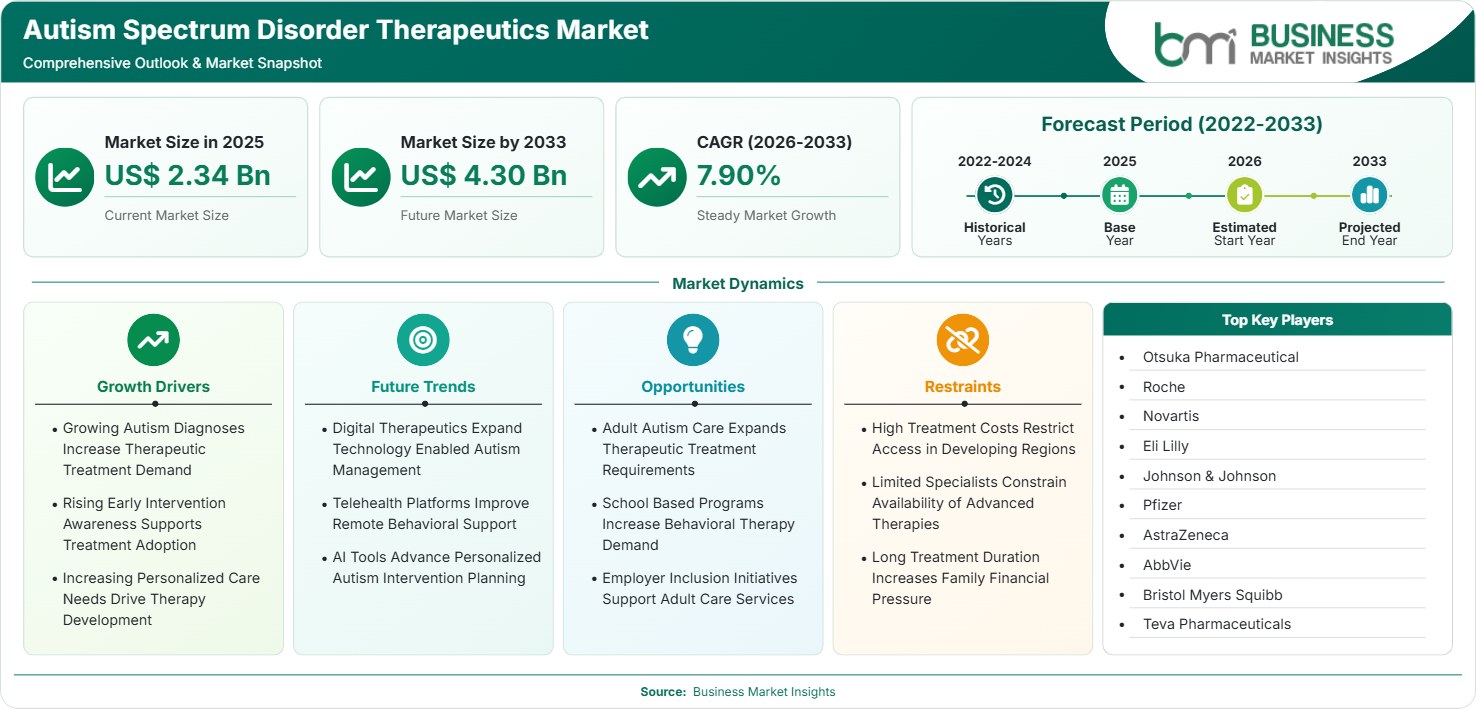
The Autism Spectrum Disorder Therapeutics Market size was valued at US$ 2.34 billion in 2025 and is projected to reach US$ 4.30 billion by 2033, expanding at a CAGR of 7.90% during 2026–2033. Market expansion is supported by rising autism diagnoses, increasing awareness of early intervention, growing investments in neurodevelopmental disorder research, expanding access to behavioral and pharmacological therapies, and continuous advancements in personalized treatment approaches.

Report Coverage
  • Drug Type: Antipsychotic Drugs, Selective Serotonin Reuptake Inhibitors, Stimulants, Sleep Medications, Others
  • Disease: Autistic Disorder, Asperger Syndrome, Pervasive Developmental Disorder, Others
  • Age Group: Pediatrics, Adults
  • Distribution Channel: Hospital Pharmacies, Drugs Stores & Retail Pharmacies, Online Pharmacies
US$ 2.34 Bn Market size in 2025
US$ 4.30 Bn Market Size by 2033
7.90% CAGR, 2026 - 2033
2026-2033 Forecast Period

01 AI Overview

Autism Spectrum Disorder Therapeutics Market Summary

  • North America Region: North America holds a leading position with a share ranging between 41%–44% in 2025 and is projected to grow at a CAGR of 7.6%–8.2% through 2033. Advanced healthcare infrastructure, high diagnostic rates, favorable reimbursement policies, and increasing investment in neurological research continue to support regional market expansion. The U.S. market benefits from growing awareness initiatives, specialized autism care centers, and strong pharmaceutical innovation, supporting a CAGR of 7.7%–8.3%.
  • Fastest Growing Region: Asia Pacific represents the fastest-growing region with a share of 22%–25% in 2025 and is expected to expand at a CAGR of 8.8%–9.5% during the forecast period. Increasing healthcare investments, improving diagnostic capabilities, government awareness campaigns, and expanding pediatric healthcare services are accelerating therapeutic adoption across the region.
  • Leading Segment: Antipsychotic Drugs represent the leading segment with a share ranging between 38%–42% in 2025 and are projected to grow at a CAGR of 7.8%–8.4%. Their established role in managing irritability, aggression, and behavioral symptoms associated with autism spectrum disorder continues to support segment leadership.
  • High Growth Segment: Online Pharmacies demonstrate strong expansion with a share ranging between 18%–21% in 2025 and a CAGR of 9.1%–9.8%. Increasing digital healthcare adoption, improved prescription accessibility, and growing telemedicine utilization are supporting rapid channel growth.
  • Key Market Opportunity: Expanding adult autism care, precision medicine research, digital behavioral therapies, biomarker-based treatment approaches, and integrated multidisciplinary care models are creating new opportunities for therapeutic developers and healthcare providers.
  • Major Market Players: Otsuka Pharmaceutical, Roche, Novartis, Eli Lilly, Johnson & Johnson, Pfizer, AstraZeneca, AbbVie, Bristol Myers Squibb, and Teva Pharmaceuticals.
02 Strategic Insights

Autism Spectrum Disorder Therapeutics Market: Strategic Insights

Autism Spectrum Disorder Therapeutics Market Strategic Framework
FREE PDF
Request your free sample
Request free sample
03 Stakeholder View

Key Takeaways

  • Rising autism prevalence and improved diagnostic capabilities are increasing long-term demand for comprehensive therapeutic solutions across pediatric and adult populations.
  • Pharmaceutical innovation is increasingly focused on personalized treatment approaches targeting behavioral symptoms, cognitive function, and quality-of-life improvements through precision medicine.
  • Digital health technologies, telemedicine platforms, and online pharmacy services are expanding treatment accessibility while improving continuity of patient care.
  • Multidisciplinary treatment models integrating medication, behavioral therapy, educational interventions, and caregiver support are becoming central to modern autism management strategies.
  • North America continues to maintain market leadership through advanced healthcare infrastructure, extensive research investments, and strong regulatory support for neurological therapeutics.
  • Emerging healthcare markets present significant expansion opportunities through increasing awareness, improving specialist availability, expanding healthcare expenditure, and government-supported autism intervention programs.
04 Geographic Outlook

Autism Spectrum Disorder Therapeutics Market Regional Highlights

North America Autism Spectrum Disorder Therapeutics Market

North America accounted for a share ranging between 41%–44% in 2025 and is expected to grow at a CAGR of 7.6%–8.2% during 2026–2033. The region benefits from advanced neurological healthcare infrastructure, favorable reimbursement systems, strong pharmaceutical research capabilities, and increasing awareness regarding autism spectrum disorders. The Autism Spectrum Disorder Therapeutics Market share remains supported by continuous therapeutic innovation and widespread access to specialized treatment services.

  • The U.S. remains the largest regional contributor due to advanced diagnostic capabilities and high healthcare expenditure.
  • Specialized autism treatment centers continue expanding multidisciplinary care services.
  • Pharmaceutical companies are investing heavily in neurodevelopmental disorder research.
  • Government awareness initiatives are supporting earlier diagnosis and intervention programs.

US Autism Spectrum Disorder Therapeutics Market

The U.S. represented a share ranging between 84%–87% of North America in 2025 and is projected to grow at a CAGR of 7.7%–8.3% through 2033. Increasing clinical research activity, growing patient awareness, expanding insurance coverage, and widespread availability of specialized care continue supporting market development. The Autism Spectrum Disorder Therapeutics Market growth is also strengthened by increasing adoption of integrated treatment strategies combining behavioral therapies with pharmacological interventions.

  • Leading academic medical centers continue expanding autism research programs.
  • Digital healthcare platforms are improving long-term treatment accessibility.
  • Precision medicine research is supporting individualized therapeutic development.
  • Public and private organizations continue investing in early intervention initiatives.

Europe Autism Spectrum Disorder Therapeutics Market

Europe held a share ranging between 26%–29% in 2025 and is expected to expand at a CAGR of 7.3%–7.9% during 2026–2033. Increasing government healthcare expenditure, expanding autism awareness campaigns, and growing availability of multidisciplinary treatment centers continue supporting regional market development. Germany, the United Kingdom, France, Italy, and Spain remain key contributors due to advanced healthcare systems and ongoing clinical research activities.

  • National autism awareness programs are improving diagnostic rates.
  • Pharmaceutical innovation continues expanding treatment options across Europe.
  • Behavioral therapy integration is strengthening comprehensive patient care.
  • Healthcare reforms continue supporting broader access to neurological treatments.

Asia Pacific Autism Spectrum Disorder Therapeutics Market

Asia Pacific accounted for a share ranging between 22%–25% in 2025 and is projected to grow at a CAGR of 8.8%–9.5% during the forecast period. Rising healthcare investments, increasing public awareness, expanding pediatric healthcare services, and improving diagnostic capabilities are accelerating regional market expansion. China, Japan, India, South Korea, and Australia are driving demand through growing healthcare modernization initiatives.

  • Government awareness campaigns are encouraging earlier autism diagnosis.
  • Pediatric healthcare infrastructure continues expanding across developing economies.
  • Clinical research investments are increasing throughout major regional markets.
  • Telemedicine adoption is improving specialist access for underserved populations.

Rest of World Autism Spectrum Disorder Therapeutics Market

Latin America, the Middle East, and Africa collectively accounted for a share ranging between 7%–10% in 2025 and are expected to grow at a CAGR of 6.8%–7.4% through 2033. Market expansion is supported by increasing awareness initiatives, gradual healthcare infrastructure improvements, and growing investments in neurological healthcare services.

  • Public health initiatives are improving autism awareness and diagnosis.
  • Healthcare providers are expanding access to behavioral therapy services.
  • International collaborations continue supporting clinical education programs.
  • Government healthcare investments are strengthening neurological care capabilities.
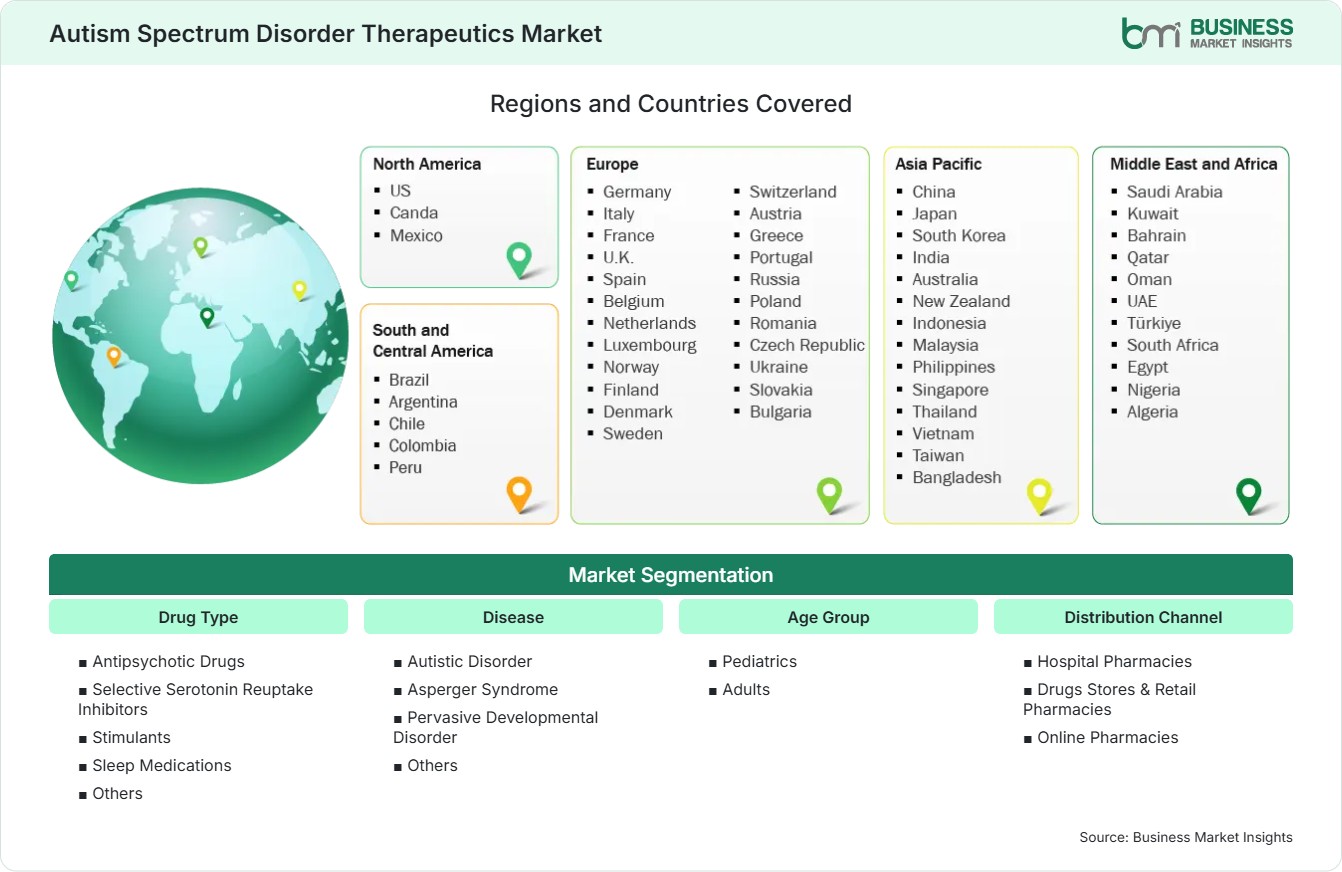
Global Market Geography
FREE PDF
Request your free sample
Request free sample
05 Segment Analysis

Autism Spectrum Disorder Therapeutics Market Segmentation

Drug Type

The drug type segment comprises antipsychotic drugs, selective serotonin reuptake inhibitors (SSRIs), stimulants, sleep medications, and others. Antipsychotic drugs represent the leading segment due to their established role in managing irritability, aggression, and behavioral symptoms associated with autism spectrum disorder. The segment accounted for a share ranging between 38%–42% in 2025 and is expected to grow at a CAGR of 7.8%–8.4% during 2026–2033. Continuous research into safer formulations and improved patient management strategies is supporting sustained adoption across healthcare settings.

  • Antipsychotic Drugs: Antipsychotic medications dominate the market owing to their proven effectiveness in managing behavioral symptoms such as aggression, self-injury, and severe irritability. Continued clinical research and physician familiarity support their widespread utilization.
  • Selective Serotonin Reuptake Inhibitors (SSRIs): SSRIs are prescribed to manage anxiety, repetitive behaviors, and mood-related symptoms in selected patients. Their adoption continues to grow as clinicians pursue individualized treatment approaches.
  • Stimulants: Stimulants are increasingly used to manage attention deficit and hyperactivity symptoms that frequently coexist with autism spectrum disorder. Growing recognition of comorbid conditions is supporting segment expansion.
  • Sleep Medications: Sleep-related disorders remain common among individuals with autism, encouraging greater use of sleep medications to improve overall quality of life and treatment outcomes.
  • Others: Other therapeutic options include emerging pharmacological agents and supportive medications targeting specific neurological and behavioral symptoms.

Disease

The disease segment includes autistic disorder, Asperger syndrome, pervasive developmental disorder, and others. Autistic disorder accounts for the largest market share due to higher diagnosis rates and greater utilization of long-term therapeutic interventions. The segment represented a share ranging between 52%–56% in 2025 and is projected to expand at a CAGR of 7.9%–8.5% through 2033. Increasing awareness and earlier diagnosis continue supporting sustained therapeutic demand.

  • Autistic Disorder: This segment dominates owing to the larger diagnosed patient population requiring behavioral management, supportive therapies, and pharmacological interventions over extended treatment periods.
  • Asperger Syndrome: Growing awareness and improved diagnosis are supporting increased treatment utilization, particularly for behavioral support and associated psychiatric conditions.
  • Pervasive Developmental Disorder: Continued improvements in diagnostic capabilities are expanding therapeutic intervention among patients presenting with broader developmental symptoms.
  • Others: Additional developmental disorders requiring individualized therapeutic strategies contribute to overall market expansion.

Age Group

The age group segment comprises pediatrics and adults. Pediatrics represents the dominant category due to increasing emphasis on early diagnosis, early intervention programs, and comprehensive developmental care. The segment accounted for a share ranging between 70%–74% in 2025 and is projected to grow at a CAGR of 7.8%–8.3% during the forecast period. Healthcare systems continue prioritizing pediatric intervention to improve long-term developmental outcomes.

  • Pediatrics: Children remain the primary treatment population due to widespread screening initiatives, school-based intervention programs, and increasing parental awareness regarding developmental disorders.
  • Adults: Adult therapeutic demand continues expanding as more individuals receive diagnoses later in life while existing patients require ongoing behavioral, psychiatric, and supportive healthcare services. The Autism Spectrum Disorder Therapeutics Market scope continues expanding with increasing recognition of lifelong autism care requirements.

Distribution Channel

The distribution channel segment consists of hospital pharmacies, drug stores & retail pharmacies, and online pharmacies. Hospital pharmacies maintain the largest market share due to specialist prescribing practices, multidisciplinary treatment approaches, and management of complex neurological conditions. The segment accounted for a share ranging between 46%–50% in 2025 and is projected to grow at a CAGR of 7.5%–8.1% through 2033.

  • Hospital Pharmacies: Hospital pharmacies remain the leading distribution channel because autism therapeutics are frequently prescribed through specialized neurological, psychiatric, and pediatric healthcare centers requiring multidisciplinary clinical oversight.
  • Drug Stores & Retail Pharmacies: Retail pharmacies continue supporting long-term medication access through convenient community-based dispensing and expanding prescription fulfillment services.
  • Online Pharmacies: Online pharmacies are experiencing rapid expansion as digital healthcare adoption, telemedicine utilization, and home medicine delivery services improve treatment accessibility for patients and caregivers.
06 Market Forces

Autism Spectrum Disorder Therapeutics Market Dynamics

Key Market Drivers

Growing Autism Diagnoses Increase Therapeutic Treatment Demand

The growing number of patients suffering from autism spectrum disorder (ASD) in both developed and developing nations has created an ongoing need for a solution that is effective in treatment. Advances in diagnostic criteria, screening measures, public awareness of the illness, and access to pediatric health care services have led to a higher rate of diagnoses. This, in turn, enables timely treatment and promotes the development of treatment plans that use different medicines and therapies. Research is being intensified by pharmaceutical firms to meet changing needs in the healthcare industry. Regarding the Autism Spectrum Disorder Therapeutics Market analysis, it is established that rising diagnoses will be a major driver of growth.

Rdriver of long-term growthports Treatment Adoption

An increased recognition of the importance of early intervention is motivating healthcare practitioners, educators, and parents to implement therapy as soon as possible after diagnosing autism spectrum disorder. Early treatment has been shown to improve communication skills, behavior, social interactions, and overall functioning. The government, non-governmental organizations, and healthcare providers have been working to educate and screen people for early intervention to improve outcomes. With the increasing availability of multidisciplinary intervention programs, the need for pharmacological and other therapies is growing.

Increasing Personalized Care Needs Drive Therapy Development

This disorder manifests itself in symptoms that vary greatly from one patient to another. This necessitates customized treatment approaches for each patient’s case. Innovations in genetics, neurosciences, biomarker discovery, and precision medicine have enabled pharmaceutical companies to develop customized drugs that can help achieve effective treatment while causing minimal side effects. There is increasing use of drugs in combination with other forms of treatment, including behavioral and educational interventions, in health practitioners’ treatment plans. The Autism Spectrum Disorder Therapeutics Market trend shows the industry’s increasing focus on individualized treatment strategies.

Key Market Opportunities

Adult Autism Care Expands Therapeutic Treatment Requirements

Traditionally, autism therapy was largely geared towards the pediatric population. However, with growing recognition of the need for lifelong treatment, there are significant business opportunities in adult healthcare services. More people are getting diagnosed with autism or continue to receive treatment they had begun during their childhood. Healthcare providers are expanding adult neurology, psychiatry, and behavioral care programs to cater to the changing needs of patients. There are business opportunities for pharmaceutical firms to develop drugs catering to adult behavioral disorders, anxiety, depression, and related neurological disorders.

School Based Programs Increase Behavioral Therapy Demand

The use of behavioral intervention programs as part of an overall treatment program is becoming more common in educational settings. Collaboration among schools, health care practitioners, clinical psychologists, and educators who specialize in special needs is being used to enhance development through individual education plans and therapies. Such trends increase the need for integrated treatment programs that include medication along with therapy. Inclusive education policies continue to create new opportunities for therapeutic programs.

Employer Inclusion Initiatives Support Adult Care Services

Workplace inclusion programs for neurodiverse individuals are being initiated in many organizations through customized training, psychological care, and appropriate accommodations. Higher employment of individuals with autism spectrum disorder is raising awareness about the need for continuous therapeutic interventions. Health care professionals and the pharmaceutical industry have been addressing this by launching services aimed at adult patients. The Autism Spectrum Disorder Therapeutics Market forecasts predict that initiatives for workplace inclusion will drive demand for adult autism care in the coming years.

Market Restraints and Challenges

High Treatment Costs Restrict Access in Developing Regions

Factor: Comprehensive autism treatment frequently combines medications, behavioral therapy, occupational therapy, speech therapy, psychological support, and long-term clinical monitoring, resulting in substantial healthcare costs. Limited reimbursement coverage and constrained healthcare resources further increase financial barriers for many families in developing economies. Impact: High treatment expenses reduce access to specialized therapeutic services, delay intervention, and contribute to disparities in patient outcomes across lower-income regions. Healthcare providers and policymakers continue exploring reimbursement reforms and public funding initiatives to improve affordability and long-term access to autism care.

Limited Specialists Constrain Availability of Advanced Therapies

Factor: Many healthcare systems continue facing shortages of developmental pediatricians, child psychiatrists, neurologists, behavioral therapists, and autism specialists required to deliver comprehensive multidisciplinary treatment. Rural and underserved regions are particularly affected by workforce limitations. Impact: Limited specialist availability delays diagnosis, prolongs treatment initiation, and restricts patient access to advanced therapeutic interventions. Expansion of telemedicine services, professional training programs, and integrated care networks is helping address these challenges, although workforce shortages remain a significant constraint on market expansion.

07 Company Analysis

Competitive Landscape

The market is characterized by continuous research into neurodevelopmental disorders, strategic collaborations, product pipeline expansion, and investments in precision medicine. Major pharmaceutical companies are focusing on developing targeted therapies, improving patient outcomes through personalized treatment approaches, and expanding clinical trials for autism-related behavioral and neurological symptoms. The Autism Spectrum Disorder Therapeutics Market report highlights increasing investments in neuroscience research and multidisciplinary therapeutic development as key competitive strategies.

Company Name

Overview

Products and Services Relevant to This Market

Otsuka Pharmaceutical

Global pharmaceutical company specializing in neuroscience and psychiatric disorders.

CNS therapeutics, neurodevelopmental disorder research, psychiatric medicines, and clinical development programs.

Roche

Global healthcare company focused on pharmaceuticals and diagnostics.

Precision medicine, neurological research, biomarker technologies, and CNS therapeutic development.

Novartis

Multinational pharmaceutical company with diversified therapeutic research programs.

Neurology therapeutics, specialty medicines, clinical research, and innovative pharmaceutical solutions.

Eli Lilly

Global pharmaceutical company with strong neuroscience research capabilities.

CNS therapies, psychiatric medicines, neurodevelopmental research, and precision treatment development.

Johnson & Johnson

Healthcare company with pharmaceutical and medical technology operations.

Neuroscience medicines, behavioral health therapeutics, pharmaceutical innovation, and research collaborations.

Pfizer

Multinational pharmaceutical company engaged in innovative drug development.

CNS research, specialty pharmaceuticals, clinical trials, and neurological therapeutic development.

AstraZeneca

Global biopharmaceutical company investing in advanced therapeutic research.

Precision medicine research, neurological drug development, and specialty pharmaceutical solutions.

AbbVie

Research-driven biopharmaceutical company focused on innovative medicines.

Neuroscience portfolio, psychiatric therapies, specialty pharmaceuticals, and clinical development programs.

Bristol Myers Squibb

Global biopharmaceutical company with extensive research capabilities.

Innovative therapeutics, neuroscience research, precision medicine, and clinical trial programs.

Teva Pharmaceuticals

Global pharmaceutical company specializing in generic and specialty medicines.

CNS medications, specialty pharmaceuticals, neurological therapies, and patient support programs.

10 Trust & Transparency

Research Methodology

The market analysis combines proprietary research with secondary data from government agencies, company disclosures, regulatory filings, industry databases and expert interviews. Market estimates are validated through data triangulation, cross-market benchmarking and analyst review.

View Full Research Methodology

11 Questions Answered

Frequently Asked Questions

How will future innovation shape the market?

Future growth will be supported by targeted drug development, digital therapeutics, biomarker-guided treatment selection, expanded adult autism care programs, and integrated multidisciplinary treatment models. The Autism Spectrum Disorder Therapeutics Market trend is expected to increasingly emphasize individualized care, precision medicine, and broader access to comprehensive therapeutic services.

How is personalized medicine influencing therapeutic development?

Advances in genetics, biomarker identification, neuroscience, and precision medicine are encouraging development of individualized treatment strategies designed to improve efficacy while reducing adverse effects. Personalized care models are becoming increasingly important for long-term autism management.

Which regions offer the greatest growth opportunities?

Asia Pacific is expected to register the fastest growth owing to increasing healthcare expenditure, improving diagnostic infrastructure, rising public awareness, expanding pediatric healthcare services, and greater government support for neurodevelopmental disorder management. The Autism Spectrum Disorder Therapeutics Market forecast also indicates strong long-term opportunities across emerging healthcare markets.

Which therapeutic segment accounts for the largest market share?

Antipsychotic drugs currently account for the largest market share due to their established effectiveness in managing irritability, aggression, and behavioral symptoms associated with autism spectrum disorder. Continued clinical experience and physician familiarity support sustained utilization.

What is driving demand in the market?

Growing autism diagnosis rates, increasing awareness of early intervention, expanding neuroscience research, improved diagnostic capabilities, and rising adoption of multidisciplinary treatment approaches are the primary factors driving market demand across both pediatric and adult patient populations.

Access the Full Autism Spectrum Disorder Therapeutics Market Report

Get segment-level forecasts, regional estimates, competitive benchmarking, company profiles and downloadable Excel datasets.

Access the full Autism Spectrum Disorder Therapeutics Market Report
350 pages PDF & Excel | 2026-08-11