
Primary Cells Market Outlook: Size, Share, Trends, Growth Analysis, Competitive Landscape & Forecast, 2026-2033

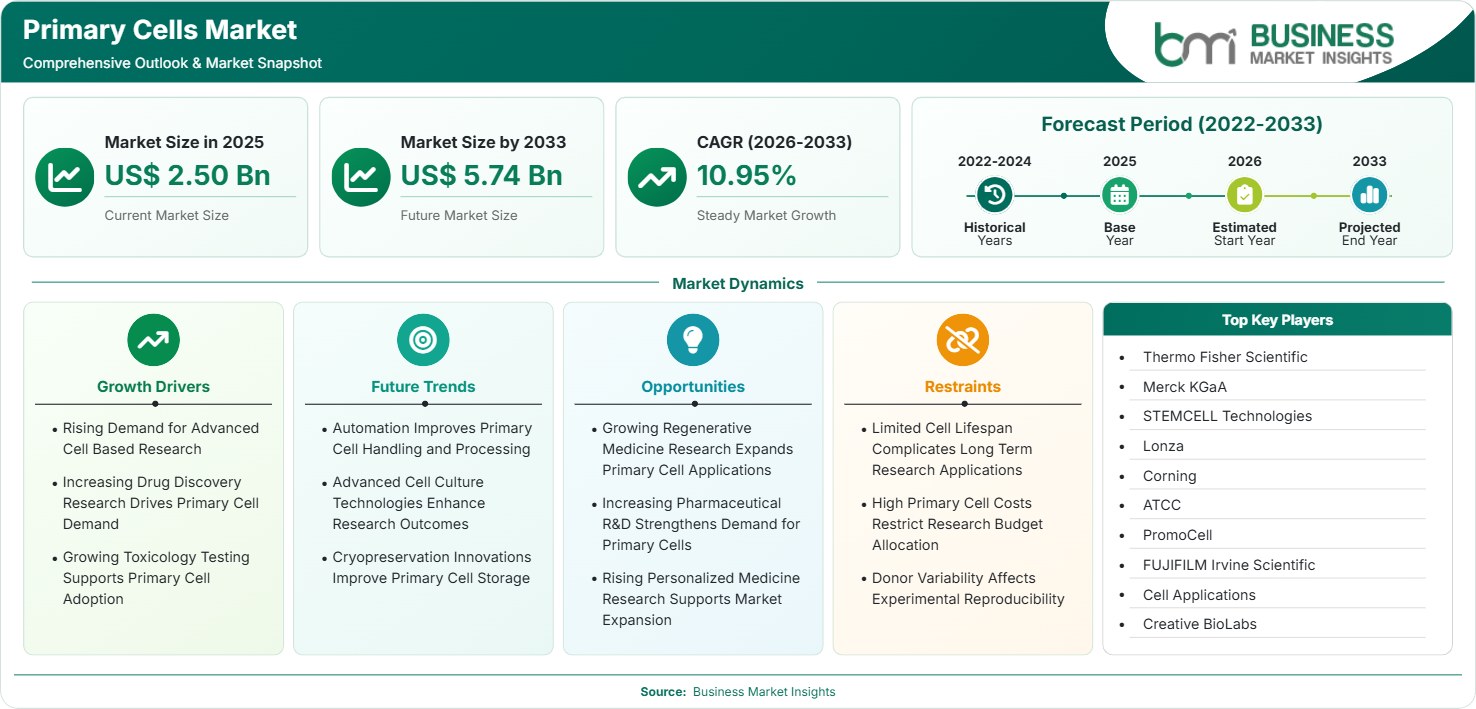
The Primary Cells Market size was valued at US$ 2.50 billion in 2025 and is projected to reach US$ 5.74 billion by 2033, growing at a CAGR of 10.95% during 2026–2033. Increasing adoption of advanced cell-based research, rising drug discovery activities, expanding toxicology testing requirements, and growing regenerative medicine investments are creating new opportunities for market participants.

Report Coverage
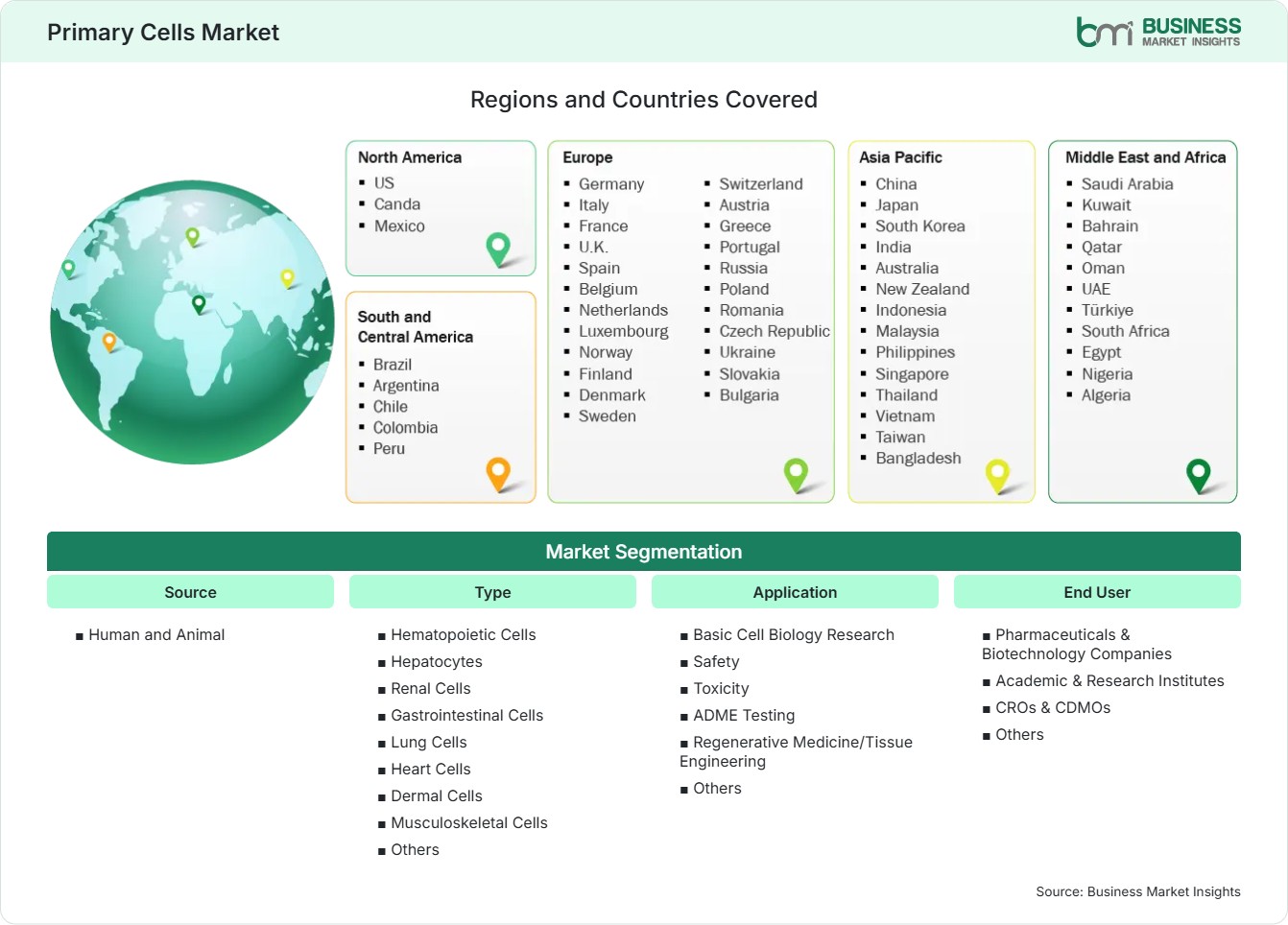
  • Source: Human and Animal
  • Type: Hematopoietic Cells, Hepatocytes, Renal Cells, Gastrointestinal Cells, Lung Cells, Heart Cells, Dermal Cells, Musculoskeletal Cells, Others
  • Application: Basic Cell Biology Research, Safety, Toxicity, ADME Testing, Regenerative Medicine/Tissue Engineering, Others
  • End User: Pharmaceuticals & Biotechnology Companies, Academic & Research Institutes, CROs & CDMOs, Others
US$ 2.50 Bn Market size in 2025
US$ 5.74 Bn Market Size by 2033
10.95% CAGR, 2026 - 2033
2026-2033 Forecast Period

01 AI Overview

Primary Cells Market Summary

  • North America Region: North America holds 38%–42% market share in 2025, growing with a CAGR of 10.4%–11.1% during 2026–2033, supported by advanced life science research infrastructure, strong pharmaceutical R&D investments, increasing biotechnology funding, expanding academic research activities, and growing adoption of cell-based assays. The U.S. market demonstrates consistent growth with a CAGR of 10.6%–11.3% during 2026–2033, driven by biotechnology innovation, drug development programs, and high research expenditure.
  • Fastest Growing Region: Asia Pacific represents 23%–27% market share in 2025 and is expanding at a CAGR of 12.0%–12.8% through 2033, supported by increasing biotechnology investments, expanding research infrastructure, rising pharmaceutical manufacturing capabilities, growing clinical research activities, and increasing adoption of advanced cell biology technologies.
  • Leading Segment: Human source cells account for 64%–68% market share in 2025 and are expected to grow at a CAGR of 11.0%–11.7% during 2026–2033, driven by increasing demand for disease modeling, drug screening, personalized medicine research, and translational healthcare applications.
  • High Growth Segment: Regenerative Medicine/Tissue Engineering application represents 20%–24% market share in 2025 and is projected to expand at a CAGR of 12.5%–13.3% through 2033, supported by stem cell research advancements, tissue engineering programs, and increasing interest in cell-based therapeutic development.
  • Key Market Opportunity: Expansion of precision medicine, increasing pharmaceutical research investments, development of advanced in vitro models, and rising regenerative medicine applications are creating opportunities for primary cell providers.
  • Major Market Players: Thermo Fisher Scientific, Merck KGaA, STEMCELL Technologies, Lonza, Corning, ATCC, PromoCell, FUJIFILM Irvine Scientific, Cell Applications, and Creative BioLabs.
02 Strategic Insights

Primary Cells Market: Strategic Insights

primary-cells-market-market-strategic-framework
FREE PDF
Request your free sample
Request free sample
03 Stakeholder View

Key Takeaways

  • The market ecosystem includes cell suppliers, biotechnology companies, academic institutions, pharmaceutical developers, and research organizations involved in sourcing, processing, and applying primary cell technologies.
  • Pharmaceutical screening, toxicity testing, and regenerative medicine applications represent major growth opportunities as researchers seek more accurate biological models for therapeutic development.
  • Innovation is focused on improving cell preservation techniques, enhancing quality consistency, developing advanced culture methods, and integrating primary cells with emerging research platforms.
  • Asia Pacific offers a strong investment opportunity due to expanding biotechnology infrastructure, increasing research funding, growing pharmaceutical manufacturing capacity, and rising demand for advanced biological models.
  • Strategic partnerships, acquisitions, and collaborations among life science companies are shaping competitive positioning as organizations expand primary cell portfolios and research service capabilities.
  • Increasing adoption of personalized medicine approaches is encouraging demand for patient-derived primary cells that support disease modeling, biomarker discovery, and individualized therapeutic research.
04 Geographic Outlook

Primary Cells Market Regional Highlights

North America Primary Cells Market

North America accounted for 38%–42% of global revenue in 2025 and is projected to expand at a CAGR of 10.4%–11.1% through 2033. The region maintains market leadership due to strong biotechnology ecosystems, advanced research infrastructure, pharmaceutical innovation, and high investment in life sciences. The Primary Cells Market share remains substantial as academic institutions, pharmaceutical companies, and biotechnology organizations increasingly utilize primary cell models for research and development activities.

  • Strong pharmaceutical R&D investment continues supporting demand for advanced biological research models.
  • Biotechnology companies are expanding cell-based platforms for drug discovery and therapeutic development.
  • Academic research institutions are increasing adoption of primary cells for disease modeling studies.
  • Advanced laboratory infrastructure enables broader implementation of complex cell-based research workflows.

US Primary Cells Market

The United States represents the largest contributor within North America, accounting for 84%–88% of regional revenue and growing at a CAGR of 10.6%–11.3% during 2026–2033. Strong pharmaceutical innovation, extensive biotechnology activities, and significant research funding continue supporting primary cell adoption across multiple applications.

  • Pharmaceutical companies are increasing investment in cell-based screening and therapeutic research programs.
  • Research institutions are expanding applications of primary cells in disease modeling and molecular studies.
  • Biotechnology startups are developing innovative platforms using advanced primary cell technologies.

Europe Primary Cells Market

Europe represented 27%–31% of global revenue in 2025 and is expected to grow at a CAGR of 10.7%–11.4% through 2033. The region benefits from established biomedical research networks, strong academic collaborations, and increasing biotechnology development. Germany leads regional adoption, while the United Kingdom and Switzerland demonstrate strong growth through advanced life science research activities.

  • Increasing pharmaceutical research activities are supporting demand for high-quality primary cell products.
  • Regulatory focus on improved testing methods encourages adoption of alternative biological models.
  • Academic and biotechnology collaborations are accelerating cell-based research innovation.
  • Growing regenerative medicine programs are expanding primary cell applications.

Asia Pacific Primary Cells Market

Asia Pacific accounted for 23%–27% of global revenue in 2025 and is projected to register the fastest expansion at a CAGR of 12.0%–12.8% through 2033. Increasing biotechnology investments, expanding pharmaceutical industries, and improving research infrastructure are accelerating adoption. China leads regional contribution, while India, Japan, and South Korea demonstrate strong growth potential through expanding life science capabilities.

  • Increasing pharmaceutical manufacturing activities are creating demand for research-grade primary cells.
  • Government investments are strengthening biotechnology and biomedical research infrastructure.
  • Growing clinical research activities are supporting adoption of advanced biological models.
  • Expanding academic research programs are increasing primary cell utilization.

Rest of World Primary Cells Market

The Rest of World region accounted for 5%–8% of global revenue in 2025 and is forecast to grow at a CAGR of 10.8%–11.6% through 2033. South America, Middle East, and Africa are improving biotechnology capabilities through research investments and healthcare modernization initiatives. Brazil leads South American adoption, while the UAE and Saudi Arabia are increasing investments in life science infrastructure.

  • Growing research collaborations are improving access to advanced cell technologies.
  • Healthcare investments are supporting biotechnology infrastructure development.
  • International suppliers are expanding distribution networks across emerging markets.
  • Increasing scientific research activities are creating new demand opportunities.
global-market-geography
FREE PDF
Request your free sample
Request free sample
05 Segment Analysis

Primary Cells Market Segmentation

Source

Human source cells represented the leading source category with 64%–68% market share in 2025 and are expected to grow at a CAGR of 11.0%–11.7% through 2033. The Primary Cells Market scope is expanding as researchers increasingly prefer biologically relevant models for disease research, drug discovery, and personalized medicine applications. Growing demand for human-derived cellular models is strengthening adoption across pharmaceutical and academic research environments.

  • Human: Supports disease modeling, drug screening, personalized medicine research, and translational studies requiring physiologically relevant cellular responses.
  • Animal: Used in comparative biology studies, veterinary research, toxicology evaluation, and experimental models requiring species-specific cellular analysis.

Type

Hematopoietic Cells represented the leading type segment with 18%–22% market share in 2025 and are projected to grow at a CAGR of 11.2%–11.9% through 2033 due to increasing immunology research, cancer studies, and therapeutic development activities.

  • Hematopoietic Cells: Enable blood-related research, immune system studies, and development of advanced cellular therapies.
  • Hepatocytes: Support liver disease research, drug metabolism studies, and toxicity testing applications.
  • Renal Cells: Used in kidney disease research, nephrotoxicity testing, and pharmaceutical evaluation programs.
  • Gastrointestinal Cells: Support digestive system research and development of disease-specific cellular models.
  • Lung Cells: Enable respiratory disease studies, toxicity evaluation, and therapeutic research applications.
  • Heart Cells: Used for cardiovascular research, cardiac safety testing, and regenerative medicine investigations.
  • Dermal Cells: Support skin biology research, cosmetic testing, and tissue engineering applications.
  • Musculoskeletal Cells: Enable bone, cartilage, and muscle research for regenerative medicine and therapeutic development.
06 Market Forces

Primary Cells Market Dynamics

Key Market Drivers

Rising Demand for Advanced Cell Based Research

Increasing utilization of physiologically relevant cellular models is accelerating demand for primary cells across academic, pharmaceutical, and biotechnology research environments. Researchers are increasingly shifting from traditional cell lines toward primary cell models that provide more accurate biological responses for disease studies and therapeutic development. Market growth is supported by advancements in cell isolation, preservation, and culture technologies that improve usability and reliability. The Primary Cells Market trends indicate growing adoption of primary cells in oncology, immunology, neuroscience, and regenerative medicine research. Increasing investments in advanced biological research platforms are encouraging suppliers to expand product portfolios and develop specialized primary cell solutions for diverse applications.

Increasing Drug Discovery Research Drives Primary Cell Demand

The growth of pharmaceutical and biotechnology research programs has led to greater demand for primary cells across drug discovery and efficacy testing applications. The use of primary cells helps researchers study how drugs act in a biological setting. This helps in making better decisions about the drug development process. The trend of developing personalized and difficult-to-cure diseases is another reason behind the rising demand for sophisticated cell culture models. Pharmaceutical companies and contract research organizations are using primary cells for their drug discovery programs due to their predictive capability. Advances in innovative medicines and other therapies are further driving demand.

Growing Toxicology Testing Supports Primary Cell Adoption

The growing interest in safety evaluation and regulation in the pharmaceutical industry is fostering greater use of primary cells for toxicity and metabolism testing. Use of primary cell models provides useful information on cellular responses, enabling researchers to identify potential adverse effects that could result from the development of a new pharmaceutical compound. Growing regulatory attention to improved safety testing procedures is driving pharmaceutical companies to adopt biological models in their testing. More specialized cells, such as hepatocytes and renal cells, are increasingly used to evaluate drug metabolism and toxicity.

Key Market Opportunities

Growing Regenerative Medicine Research Expands Primary Cell Applications

The expansion of regenerative medicine and tissue engineering research is creating significant opportunities for primary cell suppliers. Researchers are increasingly exploring cell-based approaches for repairing damaged tissues, developing therapeutic solutions, and understanding biological regeneration processes. Primary cells are becoming valuable resources for creating advanced tissue models and evaluating therapeutic strategies. Increasing funding for regenerative medicine programs and collaborations between research institutions and biotechnology companies are accelerating innovation. The Primary Cells Market Forecasts indicate that growing investment in cell-based therapies, personalized treatments, and tissue engineering platforms will create new opportunities for companies providing high-quality primary cell products and related research services.

Increasing Pharmaceutical R&D Strengthens Demand for Primary Cells

Increased spending on pharmaceutical research is creating new opportunities for the providers of primary cells for applications such as drug discovery and development. The pharmaceutical firms are broadening their research pipelines in various fields, including oncology, rare diseases, immunology, and chronic disorders. As a result, the use of reliable cell models is increasing, making it easier to analyze disease mechanisms and develop drugs more efficiently. Contract research organizations and biotech firms are also embracing testing platforms that use primary cells to support their outsourced research projects. Companies that provide application-specific cells, documentation, and customized solutions can gain an advantage from the increased research and development activities in the pharmaceutical industry.

Rising Personalized Medicine Research Supports Market Expansion

Increasing focus on personalized medicine is creating new opportunities for patient-specific primary cell applications in research and therapeutic development. Primary cells derived from individual biological samples enable researchers to investigate disease characteristics and evaluate treatment responses at a personalized level. Advances in precision oncology, biomarker discovery, and patient-specific modeling are increasing demand for specialized cellular resources. Biotechnology companies are developing improved methods for maintaining cell functionality and expanding research applications. As healthcare moves toward individualized treatment approaches, primary cells are expected to play an important role in supporting translational research and improving understanding of patient-specific biological variations.

Market Restraints and Challenges

Limited Cell Lifespan Complicates Long Term Research Applications

Factor: Primary cells have limited replication capacity and may undergo functional changes during extended culture periods, creating challenges for long-duration experiments. Impact: Short cellular lifespan can restrict research continuity, increase operational complexity, and require repeated sourcing of biological materials. Researchers often need optimized preservation methods and standardized protocols to maintain cell quality throughout studies. Although advances in cryopreservation and culture techniques are improving usability, lifespan limitations remain a significant challenge compared with immortalized cell lines. These constraints can influence project timelines, research costs, and experimental consistency across pharmaceutical, academic, and biotechnology applications.

High Primary Cell Costs Restrict Research Budget Allocation

Factor: Primary cell products require specialized sourcing, processing, quality control, storage conditions, and validation procedures that increase production costs. Impact: Higher pricing can limit adoption among academic institutions, smaller biotechnology companies, and research organizations with restricted budgets. Advanced primary cell applications often require additional resources, including specialized equipment and trained personnel, further increasing operational expenses. Suppliers are developing improved production efficiencies and customized offerings to address affordability concerns. However, cost remains a key consideration influencing purchasing decisions, particularly in emerging research markets where funding availability can affect adoption of advanced cellular research tools.

07 Company Analysis

Competitive Landscape

The competitive environment includes life science companies, biotechnology suppliers, research solution providers, and cell technology specialists developing advanced biological research products. The Primary Cells Market analysis highlights increasing competition around cell quality, application-specific solutions, customization capabilities, and research support services.

Company Name

Overview

Products and Services relevant to this market

Thermo Fisher Scientific

Life science company providing research tools, laboratory products, and biological solutions worldwide.

Primary cells, cell culture products, research reagents, and biotechnology solutions for drug discovery and cell biology studies.

Merck KGaA

Science and technology company supporting life science research and pharmaceutical development activities.

Primary cells, cell culture media, research reagents, and laboratory solutions for biological applications.

STEMCELL Technologies

Biotechnology company specializing in cell biology research tools and cellular solutions.

Primary cells, cell isolation products, cell culture systems, and research platforms for life science applications.

Lonza

Life sciences company providing cellular technologies and biomanufacturing solutions.

Primary cells, cell culture media, cell therapy solutions, and research services for biotechnology applications.

Corning

Life sciences company developing laboratory products and advanced cell culture technologies.

Primary cells, cell culture vessels, extracellular matrices, and laboratory solutions supporting cell-based research.

ATCC

Biological resource organization providing authenticated biological materials and research resources.

Primary cells, cell lines, biological standards, and research materials for academic and commercial applications.

PromoCell

Biotechnology company specializing in human primary cells and cell culture products.

Human primary cells, cell culture media, and customized cellular research solutions.

FUJIFILM Irvine Scientific

Life science company developing cell culture media and biotechnology solutions.

Primary cell culture products, media solutions, and research technologies supporting cellular applications.

Cell Applications

Biotechnology company providing human cell products for research and development.

Primary cells, cell culture products, and specialized cellular models for biomedical research.

Creative BioLabs

Biotechnology service provider offering customized research and biological solutions.

Primary cells, cell-based assays, research services, and customized biotechnology solutions.

10 Trust & Transparency

Research Methodology

The market analysis combines proprietary research with secondary data from government agencies, company disclosures, regulatory filings, industry databases and expert interviews. Market estimates are validated through data triangulation, cross-market benchmarking and analyst review.

View Full Research Methodology

11 Questions Answered

Frequently Asked Questions

What does the Primary Cells Market Report include?

The Market Report includes market size, segmentation, regional analysis, competitive landscape, trends, growth factors, opportunities, restraints, and recent industry developments.

How are regenerative medicine applications influencing primary cell demand?

Regenerative medicine research is increasing demand for primary cells used in tissue engineering, therapeutic development, and advanced biological modeling applications.

Why are primary cells preferred in drug discovery research?

Primary cells provide biologically relevant responses that help researchers evaluate therapeutic effects, improve predictive accuracy, and support safer drug development processes.

Which source segment dominates the primary cells industry?

Human-derived primary cells represent the leading source segment due to increasing use in disease modeling, drug development, and translational research applications.

What factors are driving the Primary Cells Market growth?

Increasing demand for advanced cell-based research, pharmaceutical discovery activities, toxicity testing, regenerative medicine research, and personalized medicine applications are supporting market expansion.

Access the Full Primary Cells Market Report

Get segment-level forecasts, regional estimates, competitive benchmarking, company profiles and downloadable Excel datasets.

Access the full Primary Cells Market Report
350 pages PDF & Excel | 2026-08-05