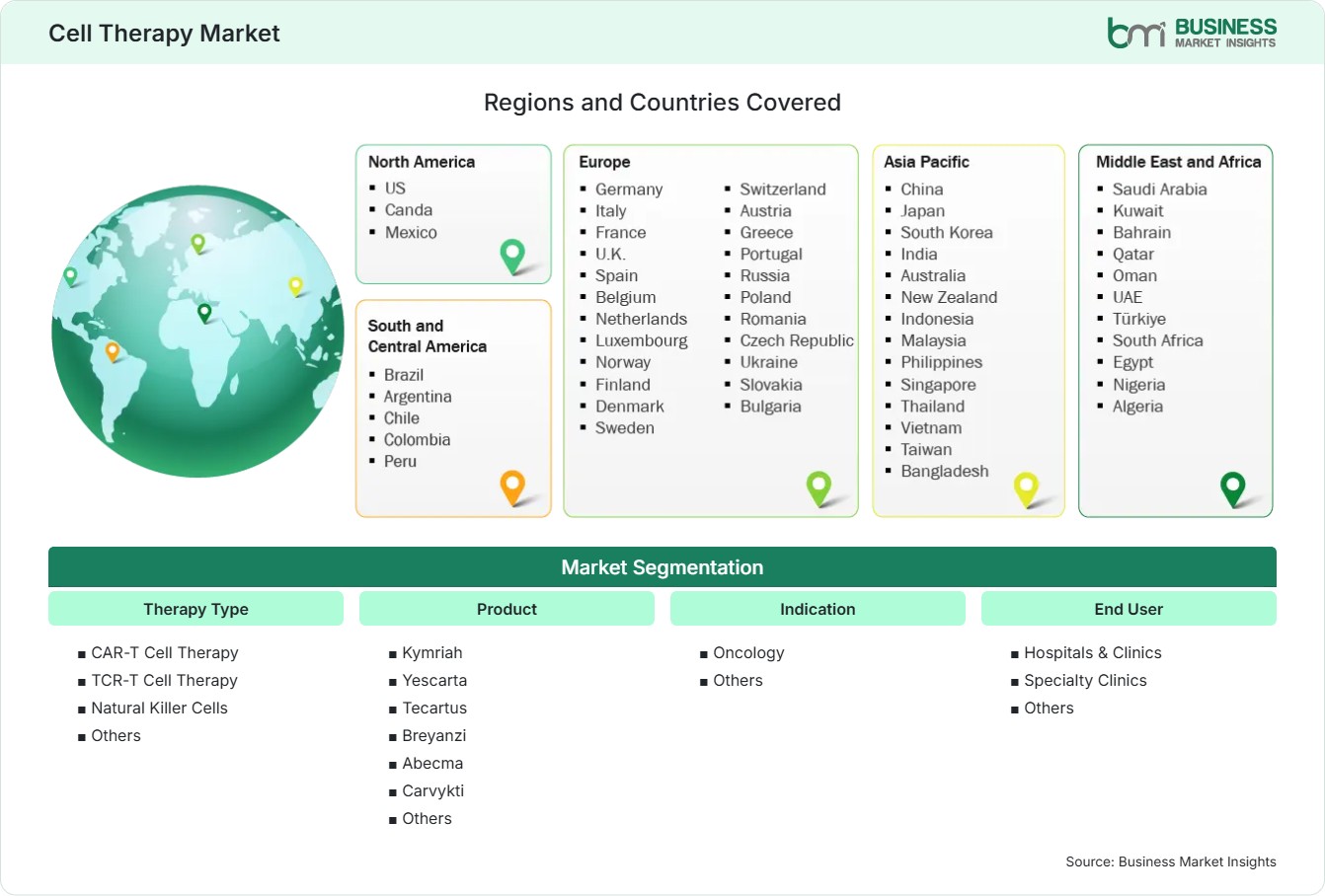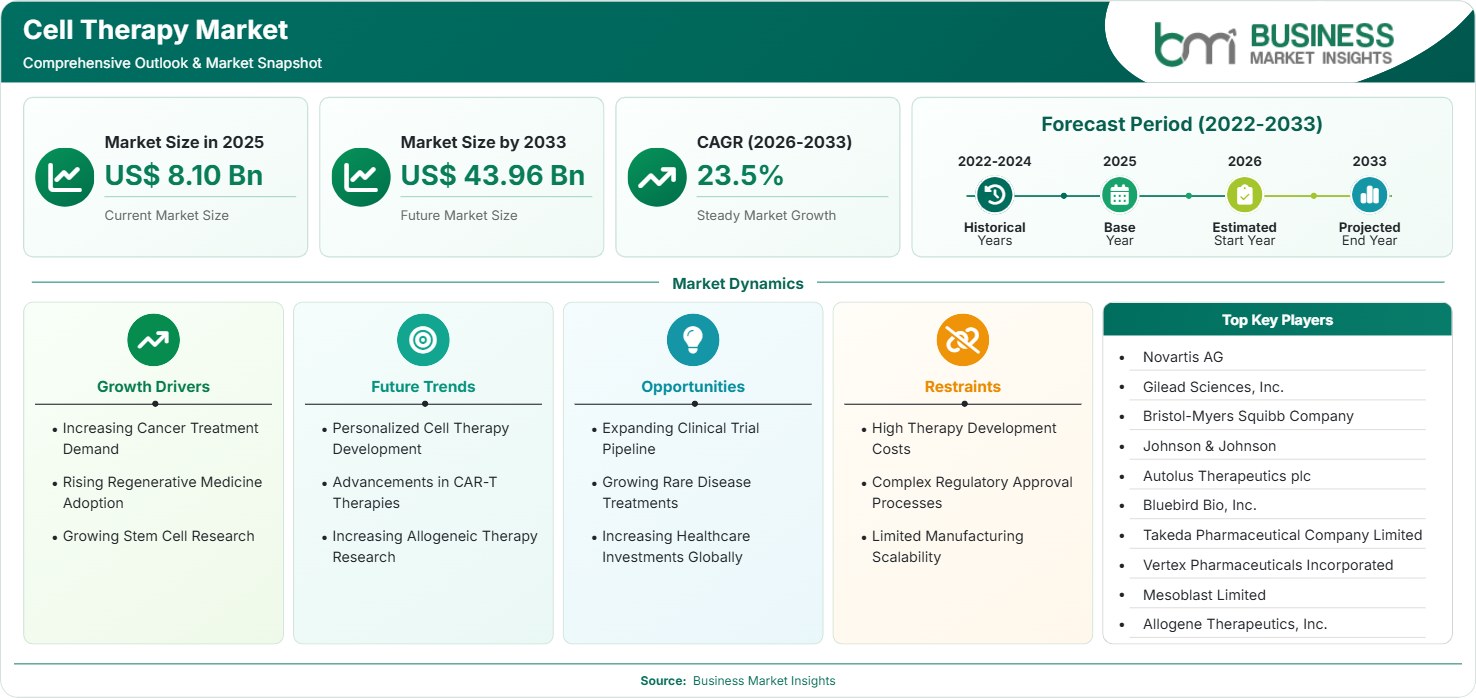
Cell Therapy Market Regional Highlights
North America Cell Therapy Market
North America accounted for 48%–51% of global revenue in 2025 and is projected to expand at a CAGR of 23.1%–23.7% during 2026–2033. The Cell Therapy Market share remains the highest globally due to strong biotechnology innovation, rapid commercialization of approved therapies, advanced healthcare infrastructure, and favorable reimbursement frameworks. Continuous investments in cell manufacturing facilities, translational research, and precision medicine are further strengthening regional leadership.
- The United States continues leading commercial adoption through increasing FDA approvals, robust clinical trial activity, and strong investments from biotechnology and pharmaceutical companies in advanced cellular therapeutics.
- Canada is expanding regenerative medicine research through academic collaborations, government funding, and investments in advanced manufacturing infrastructure supporting commercialization of innovative cell therapies.
- Increasing utilization of CAR-T therapies for hematological malignancies continues driving demand across specialized cancer treatment centers and tertiary healthcare institutions.
- Contract development and manufacturing organizations continue expanding production capacity to improve scalability, reduce manufacturing timelines, and strengthen commercial supply chains.
- Growing investments in gene-editing technologies and automated cell processing platforms continue accelerating product innovation and commercialization.
US Cell Therapy Market
The United States represented 43%–46% of global revenue in 2025 and is expected to register a CAGR of 23.3%–23.9% during the forecast period. Expanding oncology treatment adoption, increasing regenerative medicine research, and supportive regulatory pathways continue driving Cell Therapy Market growth across both academic and commercial healthcare settings.
- Major biotechnology companies continue investing heavily in next-generation CAR-T, NK cell, and gene-edited therapies to address broader oncology and rare disease indications.
- Academic medical centers remain key contributors to translational research, facilitating faster progression from laboratory discoveries to commercial therapeutic applications.
- Expanding manufacturing automation and digital quality management systems continue improving production efficiency and product consistency.
- Increasing payer acceptance for clinically validated therapies is gradually improving patient access to high-value personalized treatments.
Europe Cell Therapy Market
Europe accounted for 24%–27% of global Cell Therapy Market revenue in 2025 and is projected to expand at a CAGR of 23.0%–23.5% during 2026–2033. Supportive regulatory frameworks, expanding regenerative medicine research, and increasing commercialization of advanced therapy medicinal products (ATMPs) continue driving regional growth. Germany remains the leading market, while Poland is projected to register the fastest growth.
- Germany continues leading regional adoption through advanced biotechnology infrastructure, strong academic research capabilities, and increasing commercialization of innovative cell-based therapies.
- Poland is projected to register a CAGR of 24.4%–24.9%, supported by expanding clinical research infrastructure, biotechnology investments, and favorable healthcare modernization initiatives.
- France and the United Kingdom continue strengthening regenerative medicine ecosystems through government-backed innovation programs and increasing private investment.
- European manufacturers continue expanding GMP-certified manufacturing facilities to support growing clinical and commercial demand.
- Collaborative research across universities, hospitals, and biotechnology companies continues accelerating advanced therapy development.
Asia Pacific Cell Therapy Market
Asia Pacific accounted for 20%–23% of global revenue in 2025 and is projected to register the fastest CAGR of 25.2%–25.8% during 2026–2033. Rising biotechnology investments, expanding clinical trial activity, supportive government initiatives, and increasing healthcare expenditure continue accelerating regional adoption. China remains the largest regional market, while India is expected to witness the fastest growth.
- China continues investing heavily in cell therapy manufacturing infrastructure, biotechnology innovation, and clinical research supporting both domestic development and global commercialization.
- India is projected to register a CAGR of 26.0%–26.6%, driven by expanding biotechnology startups, favorable government initiatives, and increasing participation in global clinical trials.
- Japan continues advancing regenerative medicine through supportive legislation and strong collaboration between academia and industry.
- South Korea continues strengthening cell manufacturing capabilities while expanding research into next-generation immunotherapies.
- Australia continues supporting innovation through advanced clinical research networks and regenerative medicine funding programs.
Rest of World Cell Therapy Market
The Rest of the World accounted for 4%–6% of global revenue in 2025 and is projected to expand at a CAGR of 22.4%–22.9% during 2026–2033. Latin America and the Middle East are gradually increasing investments in biotechnology research, specialized healthcare infrastructure, and regenerative medicine capabilities, supporting long-term commercialization opportunities.
Growing international collaborations and technology transfer agreements continue strengthening clinical development across emerging healthcare markets. Increasing investments in oncology centers and advanced treatment facilities are expected to improve patient access over the coming years.
- Brazil continues strengthening regenerative medicine research through expanding academic collaborations and increasing biotechnology investments.
- Saudi Arabia is investing in advanced healthcare infrastructure to support precision medicine and innovative biologic therapies.
- The United Arab Emirates continues expanding specialized oncology centers and advanced treatment capabilities.
- South Africa continues improving clinical research capacity through partnerships with international biotechnology organizations.
- Growing government support for life sciences innovation continues encouraging long-term development across emerging healthcare markets.