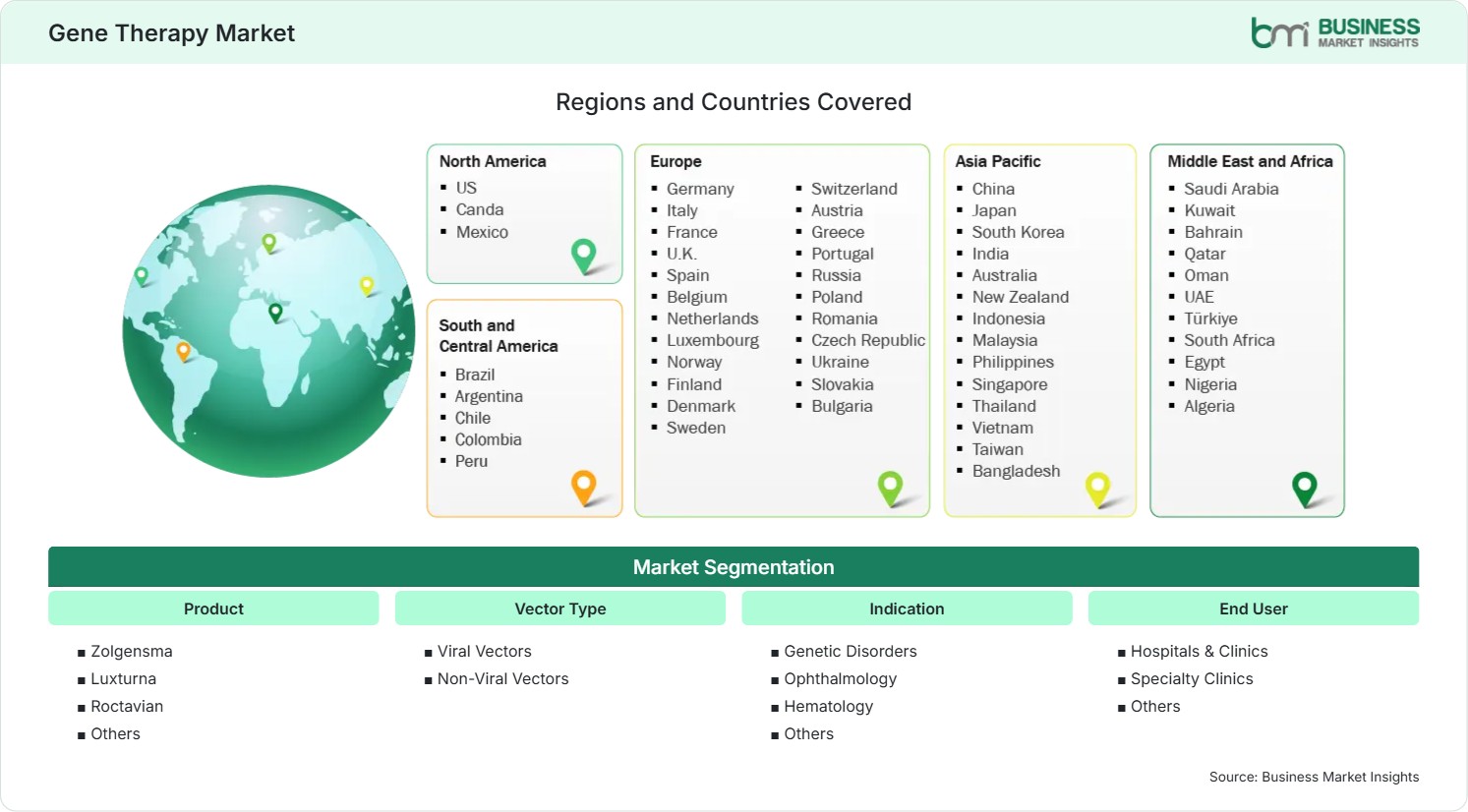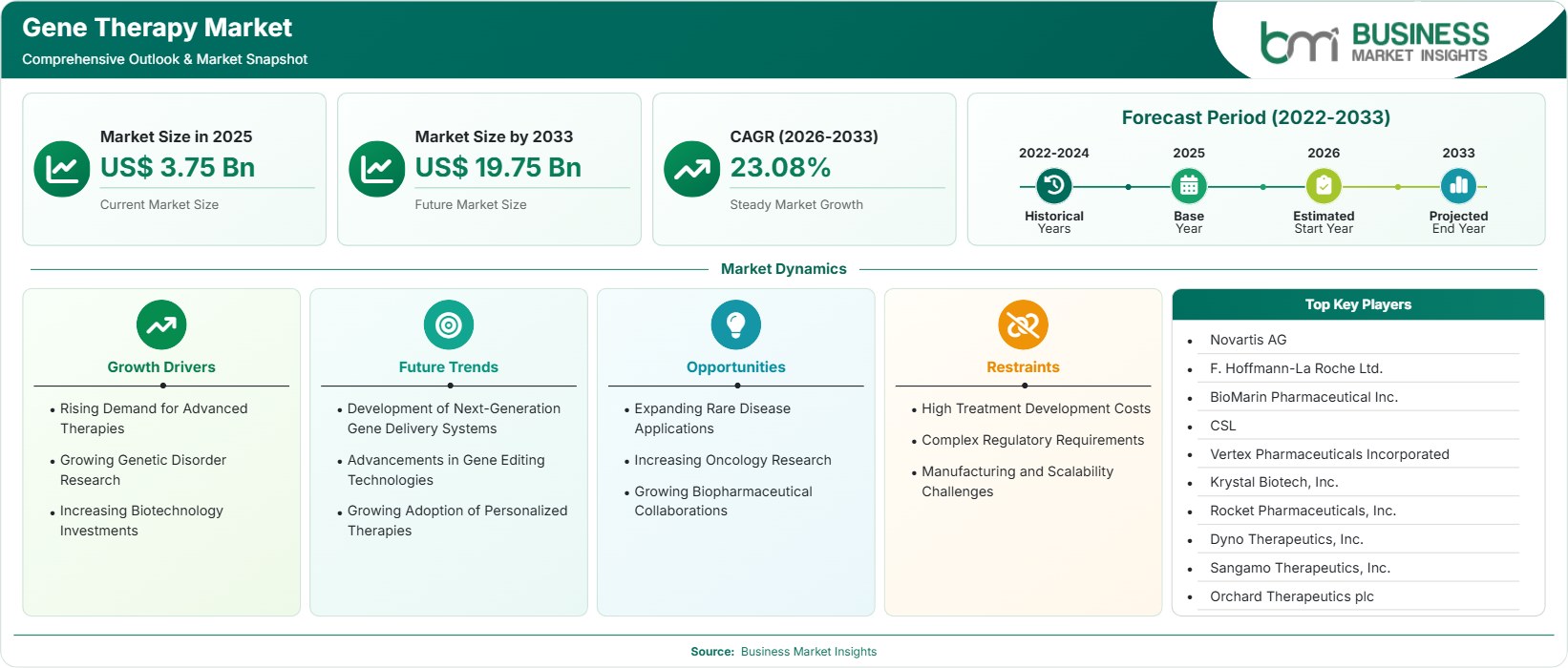
Gene Therapy Market Regional Highlights
North America Gene Therapy Market
North America held a 47%–51% of the Gene Therapy Market share in 2025 and is projected to grow at a 22.00%–23.50% CAGR through 2033. The region benefits from mature biotechnology ecosystems, specialized clinical centers, venture funding, advanced genomic testing, and experienced regulatory infrastructure. The U.S. dominates regional activity, supported by FDA approvals and established reimbursement pathways. Canada contributes through research institutions and specialized healthcare networks.
- U.S. developers benefit from an experienced FDA framework, including flexible CMC approaches designed to address the specialized manufacturing characteristics of cellular and gene therapies.
- Specialized treatment centers are becoming important commercial infrastructure because many therapies require conditioning, infusion, monitoring, or multidisciplinary management before and after administration.
- Venture-backed biotechnology companies continue to contribute platform innovation, while large pharmaceutical companies provide manufacturing, regulatory, market-access, and commercialization capabilities.
- Demand is increasingly supported by molecular diagnosis and genetic testing, enabling identification of patients who may previously have remained undiagnosed within fragmented rare-disease populations.
US Gene Therapy Market
The U.S. accounted for 39%–43% of global Gene Therapy Market demand in 2025 and is forecast to expand at a 22.50%–24.00% CAGR through 2033. FDA has approved numerous cellular and gene therapies, while 2025 and 2026 brought additional approvals for diseases including SMA, Wiskott-Aldrich syndrome, LAD-I, genetic hearing loss, and pediatric sickle cell disease. These decisions expand both disease coverage and the operational experience of treatment centers.
- FDA regulatory flexibility can shorten development friction where manufacturing strategies are scientifically justified, improving the attractiveness of specialized platforms and rare-disease programs.
- Expanded age indications can materially enlarge eligible populations, as demonstrated by CASGEVY approval for patients aged two years and older in 2026.
- Commercial centers increasingly require genetic testing, apheresis or conditioning capabilities where applicable, infusion infrastructure, adverse-event management, and long-term follow-up systems.
Europe Gene Therapy Market
Europe held a 23%–27% of the Gene Therapy Market share in 2025 and is projected to expand at a 20.50%–22.50% CAGR. Germany, the United Kingdom, France, Italy, and Spain remain leading markets because of advanced healthcare systems and specialist clinical infrastructure. Germany and the United Kingdom provide strong commercial potential, while Spain and Italy offer expanding treatment capacity. EMA adopted updated requirements for investigational advanced therapies effective July 2025, reinforcing quality, nonclinical, and clinical expectations across development programs.
- Germany benefits from sophisticated university hospitals and established rare-disease networks capable of supporting complex administration and long-term follow-up.
- The United Kingdom combines specialized clinical research infrastructure with a mature regulatory environment and growing interest in advanced therapies.
- Spain is strengthening access through reimbursement arrangements, illustrated by Orchard Therapeutics securing a national reimbursement agreement for Libmeldy in 2025.
- European developers must manage country-level reimbursement differences, creating a stronger need for health-economic evidence and coordinated market-access planning.
Asia Pacific Gene Therapy Market
Asia Pacific Gene Therapy Market represented a 15%–19% share in 2025 and is expected to register a 24.50%–26.50% CAGR, making it the fastest-growing region. Japan and China remain leading markets because of advanced biotechnology capabilities and substantial healthcare systems. India and South Korea provide strong growth opportunities as genomic medicine, clinical research, manufacturing, and specialist care expand. Japan is particularly attractive for innovative therapies, with regulatory approvals demonstrating increasing access to genetic medicines.
- Japan combines advanced clinical infrastructure with sophisticated regulatory capabilities, supporting adoption of specialized genetic medicines for rare and inherited disorders.
- China offers substantial patient populations and growing domestic biotechnology capacity, creating opportunities for localized development, manufacturing, and clinical partnerships.
- India presents a developing opportunity through expanding genomic diagnostics, biotechnology research, specialist hospitals, and cost-efficient clinical development capabilities.
- South Korea combines biotechnology manufacturing expertise with advanced healthcare infrastructure, supporting vector development, clinical research, and regional commercialization strategies.
Rest of World Gene Therapy Market
South and Central America accounted for 4%–6% of 2025 demand and are projected to expand at a 20.00%–22.00% CAGR. Brazil and Mexico lead regional activity, supported by larger healthcare systems and specialist institutions. Chile and Colombia provide emerging opportunities as molecular diagnostics and rare-disease referral networks improve.
Middle East and Africa represented 3%–5% share in 2025 and are forecast to expand at a 19.00%–21.00% CAGR. Saudi Arabia, the UAE, and South Africa are leading markets, supported by healthcare modernization and specialist treatment investment.
- Brazil provides the largest regional opportunity through its healthcare scale, research institutions, and growing interest in advanced therapies for rare diseases.
- Gulf markets can accelerate adoption through centralized healthcare systems, specialist centers, international partnerships, and government-backed investment in precision medicine.
- South Africa provides a gateway for specialist therapies across sub-Saharan markets, although reimbursement and treatment infrastructure remain important constraints.
- Regional distributors and pharmaceutical partners can create value by coordinating imports, patient identification, treatment logistics, regulatory documentation, and specialist-provider networks.