
Stem Cells Market Outlook: Size, Share, Trends, Growth Analysis, Competitive Landscape & Forecast, 2026–2033

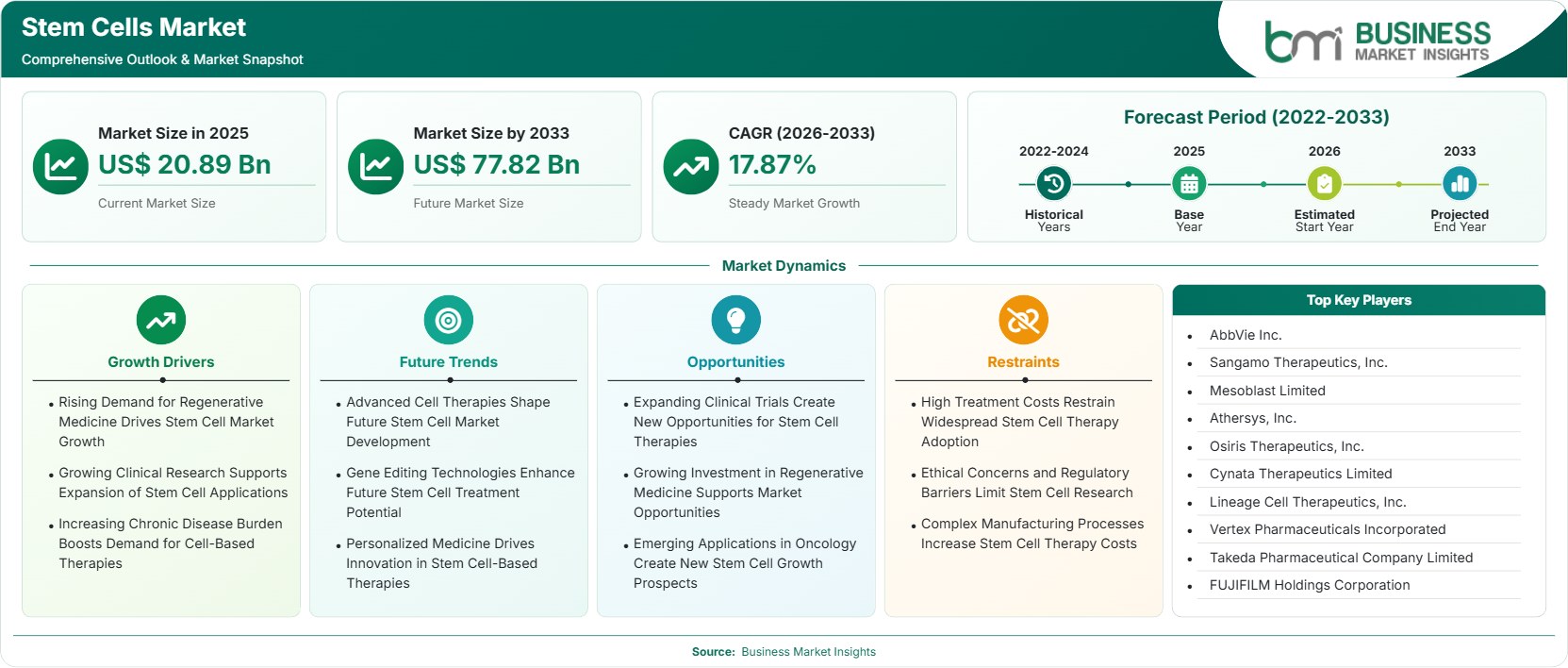
The Stem Cells Market size was valued at US$ 20.89 Billion in 2025 and is projected to reach US$ 77.82 Billion by 2033, growing at a CAGR of 17.87% during 2026–2033, driven by regenerative medicine adoption, clinical research expansion, chronic disease burden, oncology applications, and rising investment in advanced cell-based therapies.

Report Coverage
  • Cell Type: Embryonic Stem Cells , Mesenchymal Stem Cells , Adult Stem Cells, Induced Pluripotent Stem Cells
  • Application: Research, Clinical
  • End-user: Pharmaceutical & Biotechnology Companies, Academic & Research Institutes, Others
US$ 20.89 Bn Market size in 2025
US$ 77.82 Bn Market Size by 2033
17.87% CAGR, 2026 - 2033
2026-2033 Forecast Period

AI Overview

Stem Cells Market Summary

  • North America Region: North America holds a Stem Cells Market share of 38%–42% in 2025, growing at a CAGR of 16.5%–18.5% during 2026–2033, supported by regenerative medicine funding, advanced clinical infrastructure, expanding cell therapy pipelines, and strong pharmaceutical investment. The US market is projected to expand at a CAGR of 17.0%–19.0% during 2026–2033, supported by clinical translation and biotechnology investment.
  • Fastest Growing Region: Asia Pacific accounts for a Stem Cells Market share of 23%–27% in 2025 and is projected to expand at a CAGR of 19.0%–21.5% during 2026–2033, driven by expanding biotechnology capabilities, rising clinical trial activity, improving healthcare infrastructure, and growing demand for regenerative therapies.
  • Leading Segment: Mesenchymal Stem Cells (MSCs) represent a leading segment with a 35%–39% share in 2025 and a CAGR of 17.0%–19.0% during 2026–2033, supported by broad therapeutic research, clinical development activity, and expanding applications across regenerative medicine.
  • High Growth Segment: Induced Pluripotent Stem Cells (iPSCs) represent a high-growth segment with a 12%–16% share in 2025 and a CAGR of 21.0%–24.0% during 2026–2033, driven by disease modeling, drug discovery, precision medicine, cell differentiation technologies, and increasing pharmaceutical research adoption.
  • Key Market Opportunity: Increasing clinical translation of stem cell technologies creates opportunities across regenerative medicine, oncology, disease modeling, drug discovery, personalized medicine, and scalable manufacturing platforms, particularly where improved safety and reproducibility accelerate commercialization.
  • Major Market Players: AbbVie Inc., Sangamo Therapeutics, Inc., Mesoblast Limited, Athersys, Inc., Osiris Therapeutics, Inc., Cynata Therapeutics Limited, Lineage Cell Therapeutics, Inc., Vertex Pharmaceuticals Incorporated, Takeda Pharmaceutical Company Limited, FUJIFILM Holdings Corporation.
Strategic Insights

Stem Cells Market: Strategic Insights

Stem Cells Market Strategic Framework
FREE PDF
Request your free sample
Request free sample
Stakeholder View

Key Takeaways

  • The value chain is becoming more integrated as discovery laboratories, cell banks, clinical research organizations, specialized manufacturers, logistics providers, hospitals, and pharmaceutical companies collaborate to move therapies from laboratory development toward commercial-scale treatment.
  • Mesenchymal stem cells remain commercially attractive because their immunomodulatory characteristics support research across multiple therapeutic areas, while iPSC platforms offer high upside in disease modeling, drug discovery, regenerative medicine, and personalized treatment development.
  • Manufacturing innovation is shifting toward automated cell processing, closed-system production, improved cryopreservation that can reduce variability and strengthen regulatory confidence during clinical development.
  • Asia Pacific offers a compelling investment case because biotechnology infrastructure is expanding alongside clinical research capabilities, and healthcare investment, creating opportunities for regional partnerships and localized cell therapy development.
  • Investment activity is increasingly focused on platforms capable of generating repeatable clinical and manufacturing outcomes rather than isolated research assets, encouraging strategic partnerships, and selective consolidation across the cell therapy ecosystem.
  • Commercial success will increasingly depend on the ability to demonstrate durable clinical outcomes, establish scalable manufacturing economics, secure reimbursement.
Geographic Outlook

Stem Cells Market Regional Highlights

North America Stem Cells Market

North America holds a 38%–42% share in 2025 and is projected to grow at a CAGR of 16.5%–18.5% during 2026–2033. The region benefits from strong biotechnology investment, advanced clinical research infrastructure, established pharmaceutical capabilities, and sophisticated regulatory oversight. The United States represents the dominant regional contributor, supported by extensive research institutions and venture funding. Canada provides additional opportunities through regenerative medicine research and biotechnology development.

  • The United States accounts for approximately 80%–85% of regional revenue, supported by extensive biotechnology research, pharmaceutical investment, specialized clinical centers, and an established ecosystem connecting academic research with commercial development.
  • Regulatory development remains a major market-shaping factor as agencies continue strengthening oversight of cellular therapies, manufacturing quality, clinical evidence, and long-term patient safety, encouraging developers to prioritize robust development strategies.
  • Venture investment and strategic pharmaceutical partnerships are supporting advanced cell platforms, particularly where technologies demonstrate potential across multiple indications and can generate differentiated intellectual property portfolios.

US Stem Cells Market

The US represents approximately 80%–85% of North American revenue in 2025 and US Stem Cells Market forecast to grow at a CAGR of 17.0%–19.0% during 2026–2033. Strong federal research support, biotechnology investment, advanced clinical infrastructure, and specialized manufacturing capabilities underpin demand. The country also benefits from a large pharmaceutical industry and a mature ecosystem for clinical trials.

  • Research institutions and biotechnology companies continue expanding development programs involving pluripotent and adult stem cell platforms, increasing demand for specialized laboratory infrastructure and translational research capabilities.
  • Pharmaceutical partnerships are increasingly focused on platforms that can support multiple therapeutic programs, improving the attractiveness of scalable technologies with differentiated manufacturing processes and broad intellectual property protection.
  • Commercial adoption depends heavily on clinical outcomes and reimbursement feasibility, making evidence generation and cost-effectiveness assessment increasingly important for developers targeting large patient populations.

Europe Stem Cells Market

Europe Stem Cells Market represents approximately 25%–29% of global revenue in 2025 and is projected to grow at a CAGR of 15.0%–17.5% during 2026–2033. Germany, the United Kingdom, France, Italy, and Spain remain important research and clinical centers. The United Kingdom is among the higher-growth markets at approximately 17.0%–19.0%, supported by biotechnology investment and translational research.

  • Germany benefits from established biomedical research infrastructure and pharmaceutical capabilities, creating opportunities for clinical translation, advanced manufacturing, and collaborations between academic institutions and commercial developers.
  • The United Kingdom maintains a strong position in advanced cell research, supported by biotechnology investment, specialized research institutions, and a growing focus on translating laboratory discoveries into therapeutic applications.
  • France and Italy provide opportunities through expanding regenerative medicine research and clinical infrastructure, although commercialization remains dependent on regulatory compliance, reimbursement frameworks, and evidence demonstrating long-term therapeutic value.
  • European developers increasingly prioritize standardized manufacturing and quality systems to support regulatory submissions and facilitate scalable production across multiple clinical and commercial programs.

Asia Pacific Stem Cells Market

Asia Pacific Stem Cells Market accounts for approximately 23%–27% of global revenue in 2025 and is projected to expand at a CAGR of 19.0%–21.5% during 2026–2033. China, Japan, South Korea, and Australia represent leading markets, while India and Southeast Asia provide high-growth opportunities. Japan is projected to grow at approximately 20.0%–22.0%, supported by advanced regenerative medicine research.

  • China represents a major regional opportunity because of expanding biotechnology investment, large research capabilities, growing clinical development activity, and increasing demand for advanced therapeutic platforms.
  • Japan maintains strong regenerative medicine capabilities and specialized regulatory pathways, supporting continued investment in cell-based research, clinical translation, manufacturing infrastructure, and therapeutic development.
  • South Korea is strengthening its biotechnology ecosystem through advanced manufacturing capabilities and research investment, creating opportunities for companies developing scalable cell processing and therapeutic platforms.
  • India and Southeast Asia offer long-term growth potential as healthcare infrastructure expands, research capabilities improve, and demand increases for advanced treatments addressing complex and chronic diseases.

Rest of World Stem Cells Market

South and Central America Stem Cells Market account for approximately 6%–9% of global revenue in 2025, with Brazil and Mexico representing leading contributors. Brazil is projected to grow at approximately 16.0%–18.0%, supported by expanding healthcare capabilities and research activity. The Middle East and Africa collectively represent approximately 4%–7%, with the United Arab Emirates and Saudi Arabia offering comparatively stronger growth opportunities. Investment remains concentrated in specialized healthcare infrastructure, research collaborations, and advanced treatment centers. In the Middle East, investment in biotechnology and specialized medical centers is creating demand for advanced therapeutic technologies. However, limited local manufacturing capacity, regulatory differences, and high treatment costs continue to constrain broad commercialization.

  • Brazil remains the leading South American market, supported by healthcare infrastructure, medical research capabilities, and growing interest in regenerative therapies addressing complex and chronic conditions.
  • Mexico provides growth opportunities through expanding healthcare investment and increasing access to specialized medical services, although advanced therapy adoption remains dependent on affordability and clinical infrastructure.
  • The United Arab Emirates is developing a stronger biotechnology ecosystem through healthcare modernization and investment in specialized medical facilities, creating opportunities for advanced cell therapy research and services.
  • Saudi Arabia is increasing healthcare and biotechnology investment, supporting long-term opportunities for regenerative medicine infrastructure, clinical research, and partnerships with international technology providers.
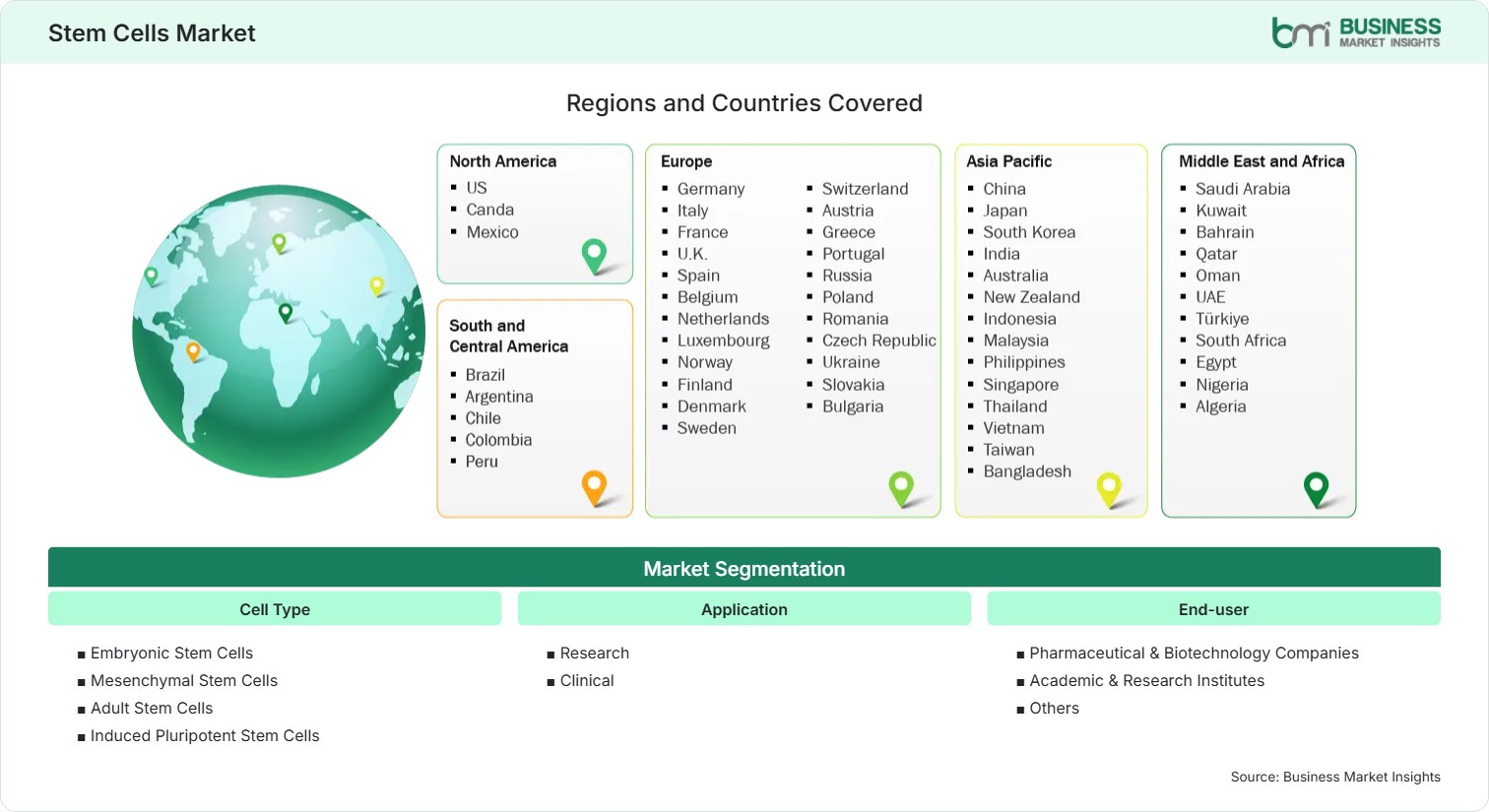
Global Market Geography
FREE PDF
Request your free sample
Request free sample
Segment Analysis

Stem Cells Market Segmentation

Cell Type

The Cell Type segment is led by Mesenchymal Stem Cells, representing approximately 35%–39% Stem Cells Market share in 2025 and growing at a CAGR of 17.0%–19.0% during 2026–2033. Their broad research utility, immunomodulatory characteristics, and clinical development potential support demand. iPSCs demonstrate faster expansion as precision medicine, disease modeling, and drug discovery applications mature globally.

  • Embryonic Stem Cells (ESCs): Embryonic stem cells retain research importance because of pluripotency and differentiation capabilities, supporting developmental biology and regenerative research while ethical considerations influence application and regulatory acceptance.
  • Mesenchymal Stem Cells (MSCs): MSCs support extensive research because of immunomodulatory and differentiation properties, with applications spanning regenerative medicine, inflammatory disorders, transplantation, and tissue repair programs.
  • Adult Stem Cells: Adult stem cells remain important for established research and therapeutic applications, supported by accessibility, clinical experience, and continued investigation across hematological and regenerative medicine programs.
  • Induced Pluripotent Stem Cells (iPSCs): iPSCs are gaining momentum in disease modeling, drug screening, precision medicine, and regenerative research because they enable differentiated cell generation from reprogrammed somatic cells.

Application

The Application segment is dominated by Research applications, representing approximately 58%–63% share in 2025 and expanding at a CAGR of 16.0%–18.0% during 2026–2033. Research demand is supported by disease modeling, drug discovery, toxicity testing, and cellular biology.

  • Research: Research applications benefit from growing demand for disease models, drug screening, toxicity assessment, and cell differentiation studies, with pharmaceutical companies increasingly adopting advanced cellular platforms.
  • Clinical: Clinical applications are expanding as evidence improves and regulatory pathways mature, with demand concentrated in hematology, oncology, regenerative medicine, transplantation, and selected rare disease indications.

End-user

Pharmaceutical & Biotechnology Companies lead the End-user segment with approximately 52%–57% share in 2025 and a CAGR of 18.0%–20.0% during 2026–2033. These organizations drive demand through drug discovery, therapeutic development, clinical trials, and manufacturing investments.

  • Pharmaceutical & Biotechnology Companies: These companies represent the largest end-user group because they integrate stem cell technologies into drug discovery, therapeutic pipelines, clinical development, manufacturing, and precision medicine strategies.
  • Academic & Research Institutes: Academic institutions provide foundational research capabilities supporting disease modeling, cellular biology, differentiation studies, and translational science while supplying specialized expertise to commercial development programs.
Market Forces

Stem Cells Market Dynamics

Key Market Drivers

Rising Demand for Regenerative Medicine Drives Stem Cells Market Growth

The rising focus on regenerative medicine is contributing to market growth as healthcare systems require treatment options that can deal with the problem at a fundamental level of tissue damage rather than just symptom management. Regenerative medicine is defined by the FDA as approaches used to grow, repair, replace, or modulate cells/tissues/organs, leading to restoration of normal function, thereby underlining the significance of cellular therapy for advanced healthcare innovations. Rising clinical success is building investor confidence, whereas increasing research in areas such as tissue repair and transplantation is widening the addressable market size. These developments are reinforcing Stem Cells Market trends centered on therapeutic translation, and stronger clinical evidence.

Growing Clinical Research Supports Expansion of Stem Cell Applications

Clinical research growth is enhancing the opportunities to develop stem cell technologies across different therapeutic areas like hematology, oncology, regenerative medicine, immunology, and rare diseases. Research institutions are also adopting more advanced trial designs, better patient selection, and standardized potency tests. The increase in the number of clinical programs will also increase the need for specialized contract research, cell processing, cryogenic logistics, and manufacturing services. This ecosystem development will enhance the commercialization of advanced cell therapy through overcoming technical barriers between the lab discovery and clinical use. Market trend are now changing to platform technologies which will support several indications and repetitive manufacturing processes.

Increasing Chronic Disease Burden Boosts Demand for Cell-Based Therapies

The emergence of chronic and degenerative diseases is prompting efforts to develop therapies that repair tissue damage and improve physiological functions. Cardiovascular diseases, neurodegenerative diseases, diabetes, musculoskeletal disorders, and cancer, among others constitute huge unmet medical needs that the current therapies do not address sufficiently. Stem cell technology provides an opportunity to regenerate damaged tissue, modulate the immune system, and conduct disease modeling, among other activities. The high cost of healthcare and growing interest in personalized medicine are driving drug developers to consider cell therapy approaches.

Key Market Opportunities

Expanding Clinical Trials Create New Opportunities for Stem Cell Therapies

Growth in clinical trials is providing new avenues for stem cell treatments through the creation of clinical data in the areas of regenerative medicine, tissue repair, immunomodulation, and disease-specific treatments. Greater numbers of both early and later stage trials may enhance knowledge about safety, dosing, delivery, and treatment outcomes, facilitating the movement towards commercialization of those therapeutic candidates that show promise. Improvements in the areas of cell manufacture, cryopreservation, quality control and potency assays are also increasing the scalability of clinical trials. Clinical success can build confidence among investors and pharmaceutical partners to grow the stem cell product pipeline.

Growing Investment in Regenerative Medicine Supports Market Opportunities

Increasing investments in regenerative medicine are creating opportunities for stem cell therapies by facilitating research, platform development, manufacturing capabilities, and clinical translation. Investments from drug companies, biotech organizations, research institutes, and strategic investors are facilitating development within tissue regeneration, cell replacement, and immunotherapy techniques. Increasing investments could help create partnerships between technology companies and clinical organizations that would help to translate the therapeutic candidates into commercial success. Advances in automated cell processing, large-scale production, and analytical characterization have helped improve the ability of the industry to manufacture consistent therapeutic products.

Emerging Applications in Oncology Create New Stem Cell Growth Prospects

New applications in oncology are opening up growth opportunities through increased application of stem cell technology in cancer research, therapy development, and supportive care. Stem cell technology can be applied in disease modeling, drug discovery, immune cell generation, and cancer biology studies, making them highly relevant in the pipeline of oncology research. Growing cooperation between biotechnology companies, drug developers, and academic researchers is facilitating this process.

Market Restraints and Challenges

High Treatment Costs Restrain Widespread Stem Cell Therapy Adoption

Factor: Stem cell-based treatments are associated with unique requirements for production, controlled handling, thorough testing, cryopreservation, and skilled clinical staff. These factors lead to higher development and treatment expenses than conventional pharmaceuticals. Impact: Higher prices may result in limited access, problems with insurance coverage, and restricted use in healthcare organizations operating under budget constraints. This factor is especially applicable to stem cell-based treatments with personalized production and complicated therapy procedures. Therefore, the developers should be able to prove significant medical advantages justifying expensive price and favorable insurance coverage.

Ethical Concerns and Regulatory Barriers Limit Stem Cell Research

Factor: Ethics associated with particular stem cell sources, as well as different regulatory environments, may pose a challenge to the research and development process and to global commercialization of products. impact: Uncertainty in regulations may prolong development times and increase costs for companies to comply, thus reducing investments in products without defined approval paths. Authorities increasingly require robust evidence regarding product identity, safety, manufacturing consistency, and long-term outcomes.

Company Analysis

Competitive Landscape

Stem Cells Market Analysis reflects that the market faces competition in the form of pharmaceutical firms, biotechnology firms, regenerative medicine experts, and advanced research institutes. The competition has become more dependent on cell platform, clinical evidence, manufacturing expertise, intellectual property, regulatory progress, and commercialization partnerships.

Company Name

Overview

Products and Services relevant to this market

AbbVie Inc.

AbbVie is a global biopharmaceutical company with capabilities spanning immunology, oncology, neuroscience, and specialized therapeutic development.

Relevant activities include advanced therapeutic research, biologics development, clinical development capabilities, and partnerships supporting innovative cellular and regenerative medicine approaches.

Sangamo Therapeutics, Inc.

Sangamo Therapeutics is a biotechnology company focused on genomic medicine and advanced therapeutic development involving engineered biological systems.

Its capabilities include genome engineering, cell-based research, gene regulation technologies, and development platforms relevant to advanced cellular medicine.

Mesoblast Limited

Mesoblast is a regenerative medicine company specializing in cellular medicines based on mesenchymal lineage cells and related therapeutic platforms.

Its portfolio includes mesenchymal stromal cell-based therapies and development capabilities targeting inflammatory, immune-mediated, and regenerative conditions.

Athersys, Inc.

Athersys has focused on regenerative medicine and cell therapy development, particularly therapeutic approaches involving multipotent adult progenitor cells.

Relevant capabilities include cell therapy research and development programs targeting tissue repair, immune modulation, and neurological or inflammatory conditions.

Osiris Therapeutics, Inc.

Osiris Therapeutics developed regenerative medicine technologies and biologic products focused on tissue repair and cellular therapeutic applications.

Its historical capabilities included mesenchymal stem cell research, regenerative medicine products, and tissue-based therapeutic development activities.

Cynata Therapeutics Limited

Cynata Therapeutics is a biotechnology company developing therapeutic applications based on induced pluripotent stem cell-derived mesenchymal stem cells.

Its platform focuses on scalable iPSC-derived MSC production for regenerative medicine and immune-mediated disease applications.

Lineage Cell Therapeutics, Inc.

Lineage Cell Therapeutics develops cell therapies designed to replace or restore damaged cells in serious medical conditions.

Its capabilities include differentiated cell therapy development and clinical programs targeting neurological and ophthalmic diseases.

Vertex Pharmaceuticals Incorporated

Vertex Pharmaceuticals is a biotechnology company developing transformative therapies for serious diseases, including advanced cell-based approaches.

Relevant capabilities include stem cell-derived cell replacement therapies, manufacturing development, clinical research, and regenerative medicine platforms.

Takeda Pharmaceutical Company Limited

Takeda is a global biopharmaceutical company with broad research and development capabilities across rare diseases, oncology, neuroscience, and gastroenterology.

Relevant activities include regenerative medicine research, cell therapy development, advanced biomanufacturing, and collaborations supporting innovative therapeutic platforms.

FUJIFILM Holdings Corporation

FUJIFILM has expanded its healthcare and biotechnology operations, including advanced therapies, bioprocessing, and cell therapy manufacturing capabilities.

Relevant services include cell therapy manufacturing, process development, bioprocessing, research services, and technologies supporting scalable advanced therapy production.

Trust & Transparency

Research Methodology

The market analysis combines proprietary research with secondary data from government agencies, company disclosures, regulatory filings, industry databases and expert interviews. Market estimates are validated through data triangulation, cross-market benchmarking and analyst review.

View Full Research Methodology

Questions Answered

Frequently Asked Questions

Which application area offers long-term expansion potential in market report?

Clinical applications offer substantial long-term potential as regulatory pathways mature and evidence improves, while research applications remain essential for disease modeling, drug discovery, biomarker development, and therapeutic innovation.

What is the role of pharmaceutical companies in the Stem Cells Market Report?

Pharmaceutical companies support the sector through research investment, clinical development, licensing, partnerships, manufacturing capabilities, and commercialization expertise, helping translate promising cell technologies into regulated therapies.

How does manufacturing affect stem cell therapy commercialization?

Manufacturing determines product consistency, scalability, cost, and regulatory readiness. Automated processing, closed systems, standardized inputs, and validated potency testing can improve commercial viability.

Why are iPSCs attracting increasing research investment?

iPSCs enable researchers to generate differentiated cell types for disease modeling, drug screening, toxicity studies, and precision medicine, creating broad utility across pharmaceutical research and regenerative medicine.

Which stem cell type has the strongest commercial potential?

Mesenchymal stem cells have strong commercial potential because of their broad research base, immunomodulatory characteristics, and applicability across regenerative and inflammatory disease programs.

Access the Full Stem Cells Market Report

Get segment-level forecasts, regional estimates, competitive benchmarking, company profiles and downloadable Excel datasets.

Access the full Stem Cells Market Report
350 pages PDF & Excel | 2026-08-12
Similar Research

Related Market Reports