
Monoclonal Antibody Therapy Market Outlook: Size, Share, Trends, Growth Analysis, Competitive Landscape & Forecast, 2026-2033

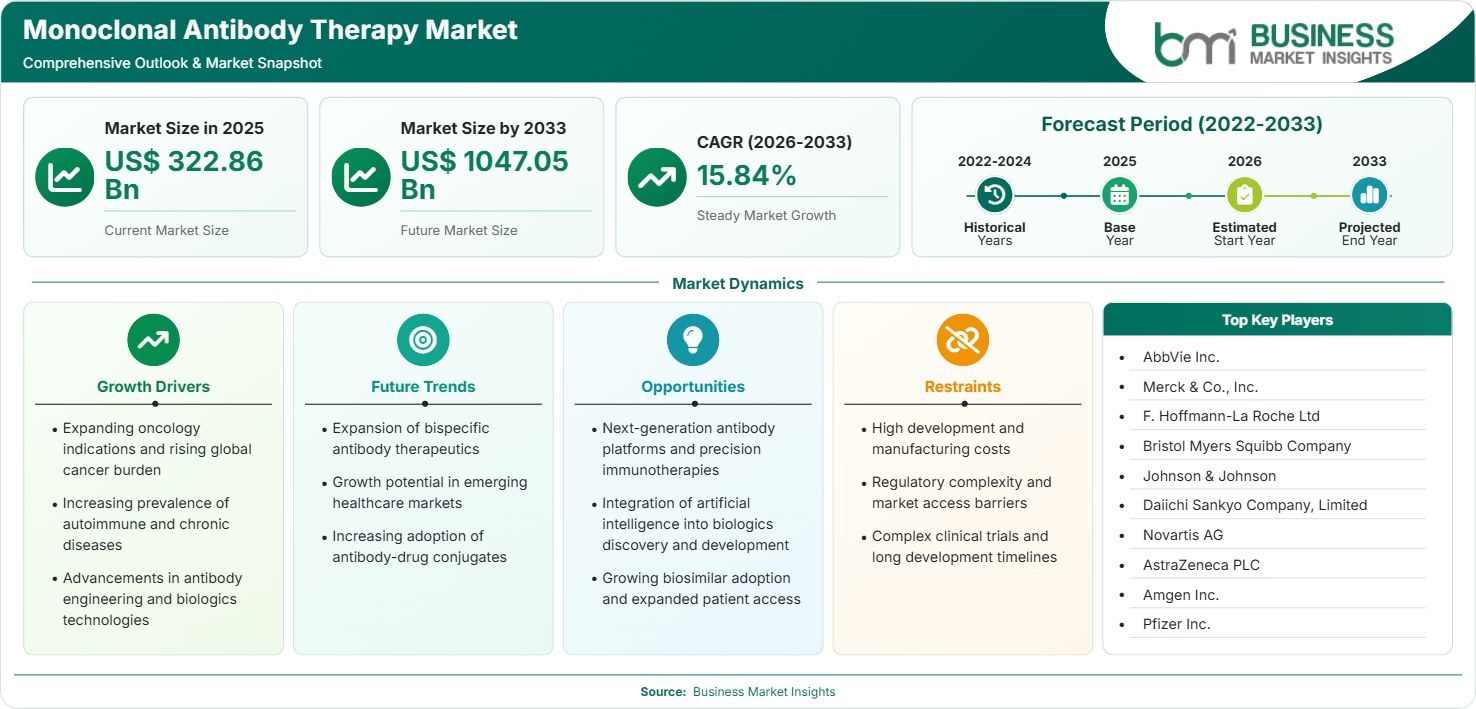
The Monoclonal Antibody Therapy Market size was valued at US$ 322.86 Billion in 2025 and is projected to reach US$ 1047.05 Billion by 2033, growing at a CAGR of 15.84% during 2026–2033, driven by expanding oncology indications, autoimmune disease prevalence, precision medicine adoption, biologics innovation, biosimilar penetration, and increasing investments in advanced antibody engineering platforms globally.

Report Coverage
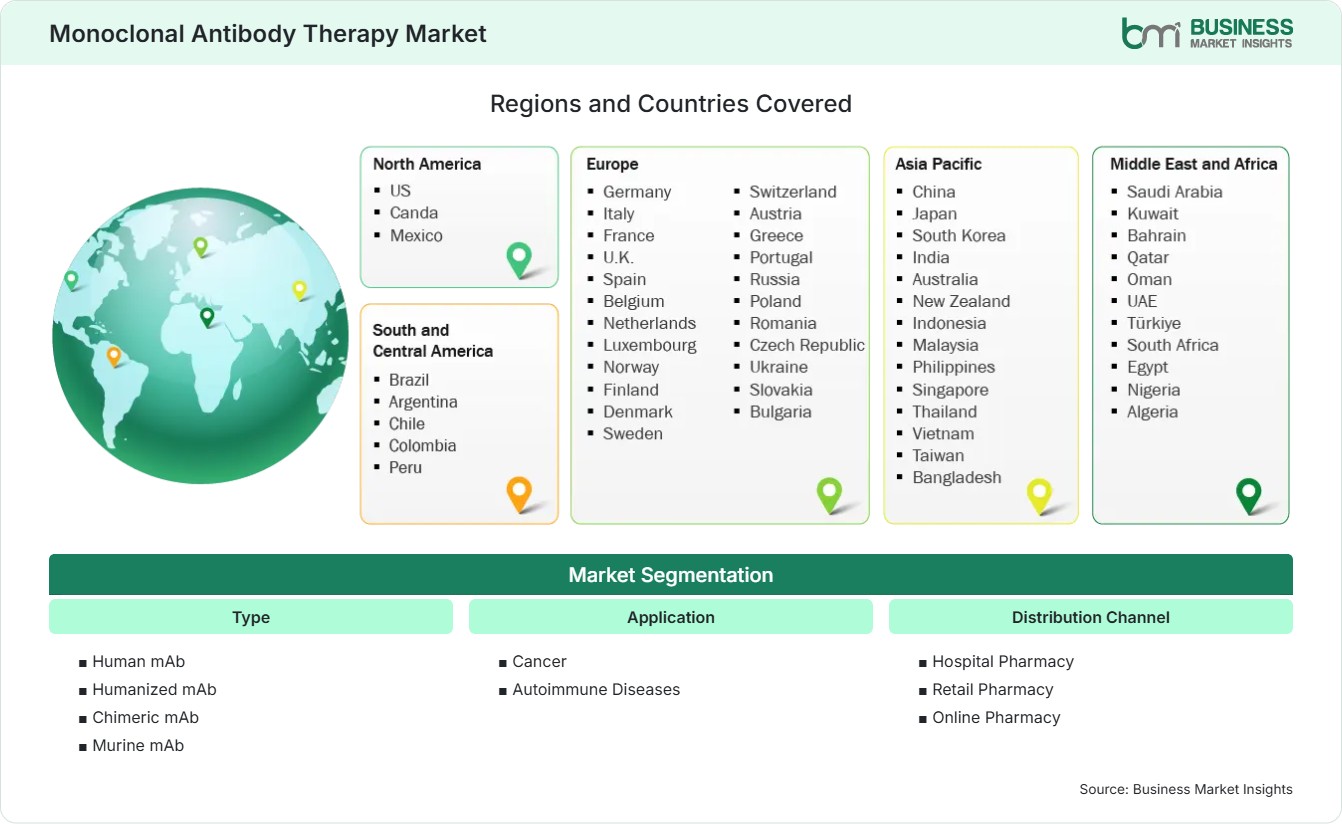
  • Type: Human mAb, Humanized mAb, Chimeric mAb, Murine mAb
  • Application: Cancer, Autoimmune Diseases
  • Distribution Channel: Hospital Pharmacy, Retail Pharmacy, Online Pharmacy
US$ 322.86 Bn Market size in 2025
US$ 1047.05 Bn Market Size by 2033
15.84% CAGR, 2026 - 2033
2026-2033 Forecast Period

AI Overview

Monoclonal Antibody Therapy Market Summary

  • North America Region: North America holds a market share of 41%–44% in 2025, growing with a CAGR of 14.8%–15.6% during 2026–2033, supported by strong biologics pipelines, favorable reimbursement, advanced clinical infrastructure, rising oncology diagnoses, personalized medicine initiatives, immunotherapy adoption, and continuous regulatory approvals across major therapeutic areas. The U.S. dominates regional demand, advancing at a CAGR of 15.0%–15.8% through extensive biologics innovation and commercialization.
  • Fastest Growing Region: Asia Pacific holds a market share of 22%–25% in 2025, growing with a CAGR of 17.2%–18.0% during 2026–2033, driven by expanding healthcare expenditure, increasing cancer incidence, local biologics manufacturing investments, biosimilar adoption, regulatory modernization, growing patient access programs, and strengthened pharmaceutical research capabilities.
  • Leading Segment: Humanized mAb holds a market share of 38%–41% in 2025, growing with a CAGR of 15.6%–16.3% during 2026–2033, supported by reduced immunogenicity, broad therapeutic applicability, extensive clinical validation, strong regulatory acceptance, durable efficacy profiles, and continued expansion across oncology and autoimmune treatments.
  • High Growth Segment: Cancer holds a market share of 46%–49% in 2025, growing with a CAGR of 16.8%–17.5% during 2026–2033, fueled by increasing cancer burden, combination immunotherapy development, biomarker-guided treatment strategies, antibody-drug conjugate innovation, improved survival outcomes, and growing adoption of targeted therapeutics.
  • Key Market Opportunity: Expansion of next-generation antibody platforms, including bispecific antibodies, antibody-drug conjugates, and precision immunotherapies, is creating substantial opportunities to address unmet clinical needs across oncology, inflammatory, and rare diseases.
  • Major Market Players: AbbVie Inc.; Merck & Co., Inc.; F. Hoffmann-La Roche Ltd; Bristol Myers Squibb Company; Johnson & Johnson; Daiichi Sankyo Company, Limited; Novartis AG; AstraZeneca PLC; Amgen Inc.; Pfizer Inc.
Strategic Insights

Monoclonal Antibody Therapy Market: Strategic Insights

Monoclonal Antibody Therapy Market Strategic Framework
FREE PDF
Request your free sample
Request free sample
Stakeholder View

Key Takeaways

  • The value chain increasingly integrates biotechnology innovators, contract development and manufacturing organizations, specialized biologics suppliers, and global pharmaceutical firms, creating a highly interconnected commercialization ecosystem.
  • Oncology-focused applications present the strongest revenue upside as antibody-drug conjugates, bispecific antibodies, and precision-targeted immunotherapies continue to expand treatment eligibility and clinical effectiveness.
  • Advanced protein engineering technologies are improving target specificity, reducing immunogenicity, and enabling next-generation therapeutic platforms capable of addressing complex disease mechanisms.
  • Asia Pacific represents a compelling investment destination due to rising healthcare expenditure, expanding biologics production capacity, and improving regulatory pathways supporting innovative therapeutics.
  • Strategic partnerships, licensing agreements, and acquisition activity continue to accelerate pipeline development while helping companies diversify therapeutic portfolios and geographic reach.
  • Growing adoption of biosimilars is enhancing patient access while creating competitive pricing dynamics that encourage broader utilization of biologic therapies across healthcare systems.
Geographic Outlook

Monoclonal Antibody Therapy Market Regional Highlights

North America Monoclonal Antibody Therapy Market

North America accounted for approximately 41%–44% of global revenue in 2025 and is projected to expand at a CAGR of 14.8%–15.6% through 2033. Strong biologics research ecosystems, extensive clinical trial activity, favorable reimbursement policies, and high specialty drug utilization continue to support regional leadership. The region benefits from substantial pharmaceutical R&D expenditure and rapid commercialization of novel therapies. Monoclonal Antibody Therapy Market share remains highest in North America due to strong regulatory support, advanced healthcare infrastructure, and broad adoption of innovative immunotherapies across multiple disease areas.

  • Large-scale oncology treatment programs continue driving antibody utilization as healthcare providers increasingly adopt targeted therapies with demonstrated efficacy and improved patient outcomes across multiple cancer indications.
  • Regulatory agencies continue approving innovative biologics and expanded indications, accelerating commercialization opportunities and enabling broader patient access to advanced therapeutic options throughout the region.
  • Growing prevalence of autoimmune disorders is increasing demand for targeted biologics, supporting sustained revenue generation and encouraging continued pharmaceutical investment in antibody development programs.
  • Partnerships between biotechnology companies, academic institutions, and pharmaceutical manufacturers are strengthening innovation pipelines while accelerating translational research and clinical development activities.
  • Rising integration of biomarker-guided treatment approaches improves therapeutic precision, supporting greater utilization of specialized antibody therapies across oncology and immunology applications.

US Monoclonal Antibody Therapy Market

The United States represented approximately 79%–82% of the North American Monoclonal Antibody Therapy Market revenue in 2025 and is anticipated to register a CAGR of 15.0%–15.8% through 2033. Strong pharmaceutical innovation capacity, extensive biologics manufacturing infrastructure, and high healthcare expenditure support continued market expansion. Federal support for biomedical research and robust intellectual property protections encourage long-term investment in therapeutic antibody development. The country remains a global hub for breakthrough oncology and immunology therapies, facilitating rapid adoption of advanced biologics across healthcare systems.

  • Major pharmaceutical companies continue expanding biologics pipelines through acquisitions, licensing agreements, and collaborative research initiatives focused on innovative therapeutic targets and advanced antibody technologies.
  • Increasing adoption of precision medicine strategies enhances treatment effectiveness by matching patients with therapies based on molecular and genetic disease characteristics.
  • Strong clinical trial networks support rapid development and evaluation of next-generation antibody therapeutics, reinforcing the country's leadership position within the global industry.
  • Expanding reimbursement coverage for high-value biologics supports broader patient access and contributes to sustained commercial growth across major therapeutic categories.

Europe Monoclonal Antibody Therapy Market

Europe accounted for approximately 26%–29% of global revenue in 2025 and is projected to grow at a CAGR of 14.2%–15.0% through 2033. The key strengths include developed healthcare infrastructure, biologics research abilities, and reimbursement policies for providing access to innovative products. Germany continues to be the dominant country-market owing to a well-developed pharmaceutical industry and clinical trials; however, one of the most promising markets is Spain, which demonstrates a CAGR of 15.5%-16.2%.

  • The European Medicines Agency continues facilitating approvals for innovative antibody therapies, encouraging broader commercialization and patient access across member states while maintaining rigorous safety and efficacy standards.
  • Rising cancer incidence across Western and Central Europe is increasing demand for targeted immunotherapies, supporting sustained investment in biologics development and specialized treatment programs.
  • Biosimilar adoption is improving affordability and healthcare system efficiency, creating opportunities for expanded patient access while encouraging competition among biologics manufacturers.
  • Germany leads regional revenue generation through strong pharmaceutical manufacturing capabilities, extensive clinical trial networks, and high utilization of advanced therapeutic interventions.
  • Spain demonstrates accelerated expansion due to growing healthcare investments, increased research collaborations, and broader integration of biologic therapies into national treatment protocols.

Asia Pacific Monoclonal Antibody Therapy Market

Asia Pacific represented approximately 22%–25% of the global Monoclonal Antibody Therapy Market revenue in 2025 and is forecast to achieve the highest CAGR of 17.2%–18.0% through 2033. Increasing healthcare cost, increasing production of biologics, and high chronic disease burden are aiding the growth of the region. China is leading in regional demand owing to heavy investments in biotechnology and drug development, while India stands out as the fastest growing country at a CAGR of 18.0% - 18.8%.

  • Government initiatives supporting domestic biopharmaceutical manufacturing are strengthening regional supply chains and reducing reliance on imported biologics across major healthcare markets.
  • Expanding oncology treatment programs and growing awareness of targeted therapies are increasing demand for advanced antibody-based therapeutics among healthcare providers.
  • China maintains leadership through significant investments in biotechnology research, clinical development infrastructure, and commercialization capabilities for innovative biologic products.
  • India continues attracting investment due to competitive manufacturing capabilities, expanding biosimilar portfolios, and growing demand for affordable biologic treatment options.
  • Regulatory modernization efforts across several countries are streamlining approval processes and encouraging greater participation from global pharmaceutical companies.

Rest of World Monoclonal Antibody Therapy Market

The Rest of World region accounted for approximately 8%–10% of global revenue in 2025 and is expected to expand at a CAGR of 15.4%–16.2% through 2033. South and Central America are experiencing increased biologics adoption through healthcare modernization programs and expanding specialty care access. In the Middle East and Africa, growing investments in advanced healthcare infrastructure and oncology services are supporting demand. Brazil leads regional revenues, while Saudi Arabia demonstrates the fastest expansion, supported by healthcare diversification initiatives and biotechnology investments.

South and Central American healthcare systems are increasingly integrating targeted biologics into treatment protocols, while Middle Eastern countries continue investing in advanced medical technologies and specialty pharmaceutical capabilities.

  • Brazil remains a leading market due to strong pharmaceutical distribution networks, increasing biologics reimbursement, and expanding access to specialized healthcare services.
  • Saudi Arabia continues strengthening healthcare infrastructure through national transformation initiatives supporting advanced therapeutics and innovative pharmaceutical technologies.
  • Growing prevalence of chronic diseases is encouraging broader utilization of targeted biologics across public and private healthcare systems.
  • International pharmaceutical companies are expanding regional partnerships to improve product availability and strengthen market penetration strategies.
  • Investments in specialty hospitals and oncology treatment centers are supporting increased adoption of antibody-based therapies throughout emerging markets.
Global Market Geography
FREE PDF
Request your free sample
Request free sample
Segment Analysis

Monoclonal Antibody Therapy Market Segmentation

Type

The Type segment represents a critical foundation of therapeutic development, with Humanized mAb accounting for approximately 38%–41% of market revenue in 2025 and advancing at a CAGR of 15.6%–16.3% through 2033. Reduced immunogenicity, broad therapeutic applicability, and strong clinical validation continue supporting adoption. The Monoclonal Antibody Therapy Market scope within this segment is expanding as developers increasingly optimize antibody structures to improve efficacy, safety, and treatment durability across multiple disease indications.

  • Human mAb: Fully human antibodies demonstrate strong compatibility with patient immune systems, supporting broad utilization in oncology and autoimmune disorders while reducing risks associated with immune-mediated adverse reactions.
  • Humanized mAb: Humanized antibodies remain widely utilized due to favorable efficacy profiles, established regulatory acceptance, and expanding applications across targeted therapeutic areas requiring long-term treatment strategies.
  • Chimeric mAb: Chimeric antibodies continue serving important therapeutic roles in oncology and inflammatory diseases, supported by extensive clinical experience and established treatment guidelines worldwide.
  • Murine mAb: Murine antibodies retain value in selected diagnostic and therapeutic applications while contributing to ongoing research and development efforts across specialized medical fields.

Application

Application-based demand is led by Cancer, which accounted for approximately 46%–49% of global revenue in 2025 and is projected to expand at a CAGR of 16.8%–17.5% through 2033. Increasing cancer incidence, growing utilization of precision oncology, and development of innovative antibody-drug conjugates continue supporting expansion. Monoclonal Antibody Therapy Market trends indicate strong momentum toward biomarker-driven treatment approaches, improving therapeutic outcomes and supporting broader adoption across diverse oncology indications.

  • Cancer: Oncology applications continue dominating therapeutic utilization as targeted antibodies improve survival outcomes and support increasingly personalized treatment strategies across multiple tumor types.
  • Autoimmune Diseases: Autoimmune disease treatments benefit from expanding biologics adoption, improved disease management outcomes, and growing physician preference for targeted therapeutic interventions.

Distribution Channel

Hospital Pharmacy remains the leading distribution channel, accounting for approximately 58%–61% of market revenue in 2025 and advancing at a CAGR of 15.2%–15.9% through 2033. Administration complexity, specialist oversight requirements, and infusion-based treatment protocols continue supporting hospital-centered distribution. Monoclonal Antibody Therapy Market share within this channel remains dominant as healthcare providers increasingly centralize biologic therapy management to optimize patient monitoring, treatment compliance, and clinical outcomes.

  • Hospital Pharmacy: Hospital pharmacies maintain leadership through direct integration with specialty care services, infusion centers, and multidisciplinary treatment teams managing complex biologic therapies.
  • Retail Pharmacy: Retail pharmacies are expanding participation through enhanced specialty pharmacy services, improved cold-chain logistics, and growing patient support capabilities.
  • Online Pharmacy: Online pharmacies are gaining relevance through digital healthcare adoption, convenient medication access, and expanded specialty pharmaceutical distribution networks.
Market Forces

Monoclonal Antibody Therapy Market Dynamics

Key Market Drivers

Rising Global Cancer Burden Driving Targeted Biologic Adoption

According to the World Health Organization, cancer remains one of the leading causes of mortality globally, with millions of new diagnoses reported annually. Growing demand for targeted therapies with improved efficacy and lower systemic toxicity continues accelerating biologics adoption. Monoclonal Antibody Therapy Market growth will be driven by greater adoption of precision oncology techniques, biomarker-based therapy selection, and the indications for therapeutic antibodies. There are substantial investments in the new generation of cancer platforms like antibody drug conjugates and bispecific antibodies. Such advances not only help in the improvement of patient care, but they also help in meeting unmet clinical needs using antibodies.

Increasing Prevalence of Autoimmune and Chronic Diseases

The growing burden of autoimmune disorders, including rheumatoid arthritis, psoriasis, inflammatory bowel disease, and multiple sclerosis, continues expanding demand for targeted biologics. Therapeutic antibodies provide selective immune modulation, enabling better disease control compared with many conventional treatment options. The increasing preference for biologics is owing to the proven long-term efficacy and positive outcomes for patients. With rising diagnoses, increased awareness, and better access to specialists, biologics are gaining popularity. In the process of focusing on chronic diseases, healthcare organizations have started using therapeutic antibodies, which have played an important role in the commercial growth of biologics.

Advancements in Antibody Engineering Technologies

Rapid innovation in protein engineering, molecular targeting, and biologics manufacturing is transforming therapeutic development. Monoclonal Antibody Therapy Market trends indicates a growing need for highly specific antibodies that can deal with the intricate disease mechanisms. Innovations in humanization technology of antibodies, Fc engineering, and multispecific platforms are increasing the efficiency, safety, and pharmacological profile of the drug. Artificial intelligence is revolutionizing the process of drug discovery and helps to identify potential targets. The technological innovations allow reducing the time of development of drugs and increasing the success rate.

Key Market Opportunities

Expansion of Bispecific Antibody Therapeutics

Bispecific antibodies constitute one of the most innovative fields of study in biologic medicines. These drugs can interact with multiple biological targets at the same time, thus enhancing their therapeutic value. Pharmaceutical companies continue expanding research investments to accelerate clinical development and commercialization. Monoclonal Antibody Therapy Market Forecasts indicate that there will be an increased need for innovative immunotherapy solutions, which can combat resistance and boost the efficacy of treatment solutions. Increased regulatory approval, evidence, and knowledge among healthcare practitioners will provide significant business prospects for companies developing biologic platforms that stand out from others.

Growth Potential in Emerging Healthcare Markets

Emerging economies across Asia Pacific, Latin America, and the Middle East are investing significantly in healthcare modernization and biologics accessibility. Increased insurance coverage, increased healthcare spending, and improved diagnostics make new treatments available to more patients. The local production of pharmaceuticals is encouraged by governments in order to enhance healthcare systems' self-sufficiency and decrease reliance on imported goods. This creates opportunities for manufacturers aiming at market expansion. Strategic partnerships, local manufacturing initiatives, and regional commercialization agreements are expected to accelerate market penetration while supporting sustainable long-term revenue growth.

Increasing Adoption of Antibody-Drug Conjugates

Antibody-drug conjugates are creating new treatment possibilities by combining targeted antibody delivery with potent therapeutic payloads. These drugs provide higher accuracy and fewer side effects than the conventional treatment options. Clinical success in oncology is motivating more efforts and research into this area. Antibody-drug conjugate pipelines are receiving growing investment from leading pharma companies to establish distinct product lines. With expanding clinical data and improving manufacturing techniques, there will be many business opportunities in this class of drugs.

Market Restraints and Challenges

High Development and Manufacturing Costs

Factor: Development of therapeutic antibodies involves intensive clinical trials, special facilities for production, and strict quality control measures.

Impact: Such conditions raise the costs of development and the risks of commercialization. The production of high-end biologics requires the use of cell-culture technology, a sophisticated manufacturing environment, and an advanced analysis and testing process. Biotech companies may encounter financial difficulties when taking their drug candidates into the late stages of development. The costs of production could be one of the factors that make some healthcare systems struggle with drug pricing issues. Even though the development of technology continuously improves productivity, cost limitations still exist.

Regulatory Complexity and Market Access Barriers

Factor: Regulations for biologics depend on the location being considered; nevertheless, in all cases, there is documentation required regarding safety, effectiveness, and consistent manufacturing.

Impact: Long product development review processes and regulatory requirements might lead to a delay in the commercialization process and raise costs of operation. In addition to that, companies have to cope with different rules of insurance and pharmacovigilance, as well as market access processes in various countries. The emergence of new markets might complicate things due to differences in healthcare systems.

Company Analysis

Competitive Landscape

Monoclonal Antibody Therapy Market analysis indicates a highly competitive environment characterized by strong biologics pipelines, strategic collaborations, immuno-oncology investments, and continuous innovation in antibody engineering technologies.

Company Name

Overview

Products and Services relevant to this market

AbbVie Inc.

Global biopharmaceutical company with strong immunology and oncology portfolios supported by extensive biologics research and commercialization capabilities.

Therapeutic monoclonal antibodies, immunology treatments, oncology biologics, clinical development programs, and specialty pharmaceutical services.

Merck & Co., Inc.

Major pharmaceutical innovator focused on oncology, immunology, and advanced biologic therapeutics supported by global research infrastructure.

Cancer immunotherapies, biologics development, antibody research platforms, and precision medicine solutions.

F. Hoffmann-La Roche Ltd

Leading biotechnology and pharmaceutical organization recognized for extensive oncology biologics expertise and diagnostics integration.

Monoclonal antibodies, cancer therapeutics, companion diagnostics, and personalized medicine solutions.

Bristol Myers Squibb Company

Global biopharmaceutical company focused on oncology, hematology, and immune-mediated diseases through innovative research programs.

Immunotherapies, oncology biologics, targeted treatments, and antibody development services.

Johnson & Johnson

Diversified healthcare organization with significant pharmaceutical operations and strong biologics innovation capabilities.

Therapeutic antibodies, immunology treatments, oncology products, and specialty healthcare solutions.

Daiichi Sankyo Company, Limited

Research-driven pharmaceutical company advancing oncology innovation through targeted biologics and antibody-drug conjugates.

Oncology therapeutics, antibody-drug conjugates, biologics development, and research collaborations.

Novartis AG

Multinational healthcare company investing extensively in advanced biologics and precision medicine platforms.

Therapeutic antibodies, oncology products, immunology solutions, and innovative biologic therapies.

AstraZeneca PLC

Global biopharmaceutical company emphasizing oncology, rare diseases, and immune-mediated conditions.

Antibody therapies, oncology treatments, targeted biologics, and advanced clinical development programs.

Amgen Inc.

Biotechnology leader with broad expertise in biologics discovery, manufacturing, and commercialization.

Monoclonal antibodies, biosimilars, oncology therapies, and immune-focused biologic products.

Trust & Transparency

Research Methodology

The market analysis combines proprietary research with secondary data from government agencies, company disclosures, regulatory filings, industry databases and expert interviews. Market estimates are validated through data triangulation, cross-market benchmarking and analyst review.

View Full Research Methodology

Questions Answered

Frequently Asked Questions

What insights does the Monoclonal Antibody Therapy Market Report provide?

The Monoclonal Antibody Therapy Market Report provides analysis of market size, competitive landscape, regional performance, therapeutic applications, technology developments, investment opportunities, and long-term industry growth drivers.

How are biosimilars influencing industry development?

Biosimilars improve affordability, increase patient access, encourage competitive pricing, and support broader utilization of biologic therapies while maintaining stringent quality and efficacy standards.

Why is Asia Pacific considered the fastest-growing regional market?

The region benefits from rising healthcare expenditure, expanding biotechnology infrastructure, increasing biologics manufacturing investments, improving patient access programs, and supportive regulatory reforms across major economies.

Which therapeutic area generates the highest revenue?

Cancer remains the largest application area due to widespread adoption of targeted oncology therapies, expanding antibody-drug conjugate utilization, and increasing integration of biomarker-guided treatment strategies.

What factors are driving demand for monoclonal antibody therapies?

Demand is being driven by rising cancer incidence, increasing autoimmune disease prevalence, precision medicine adoption, growing biologics approvals, and technological advances in antibody engineering that improve treatment effectiveness and safety profiles.

Access the Full Monoclonal Antibody Therapy Market Report

Get segment-level forecasts, regional estimates, competitive benchmarking, company profiles and downloadable Excel datasets.

Access the full Monoclonal Antibody Therapy Market Report
350 pages PDF & Excel | 2026-09-02