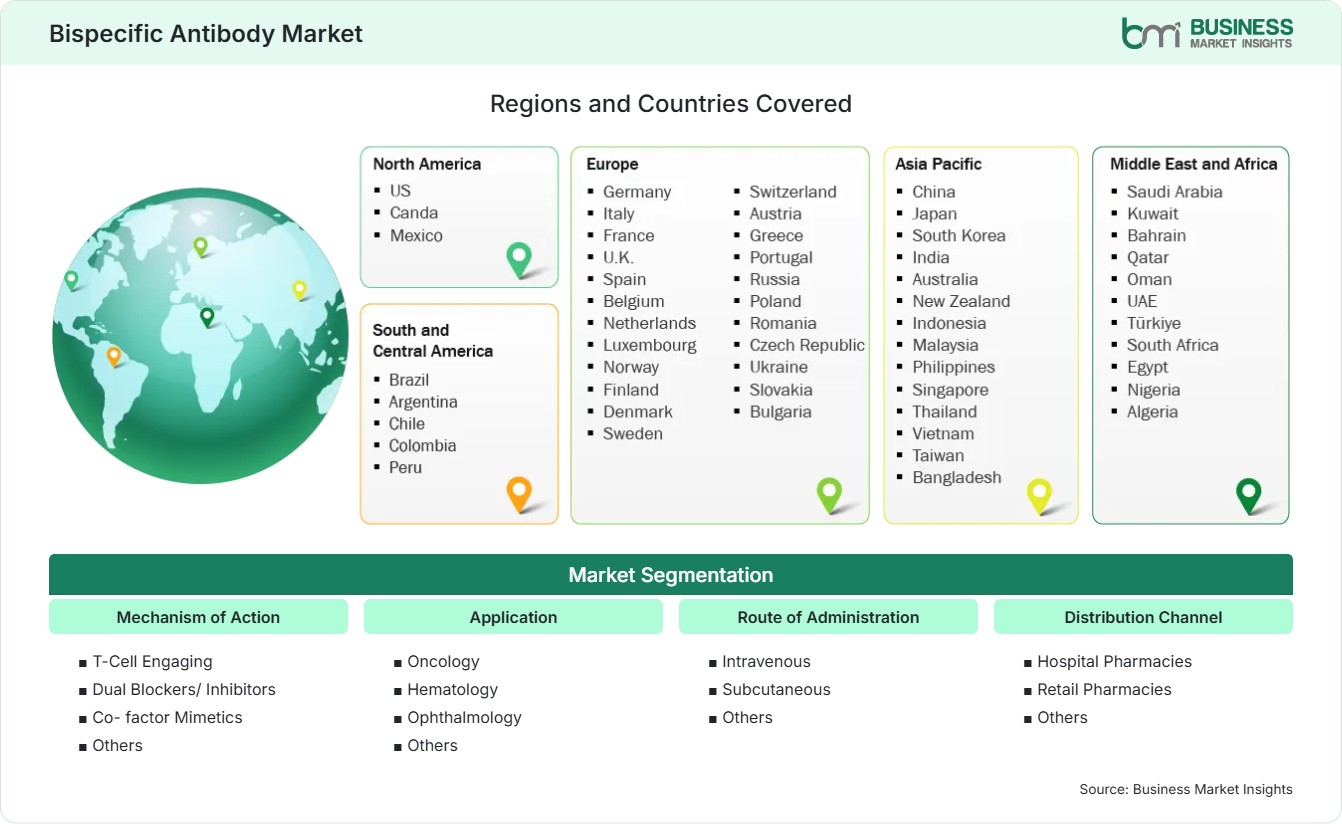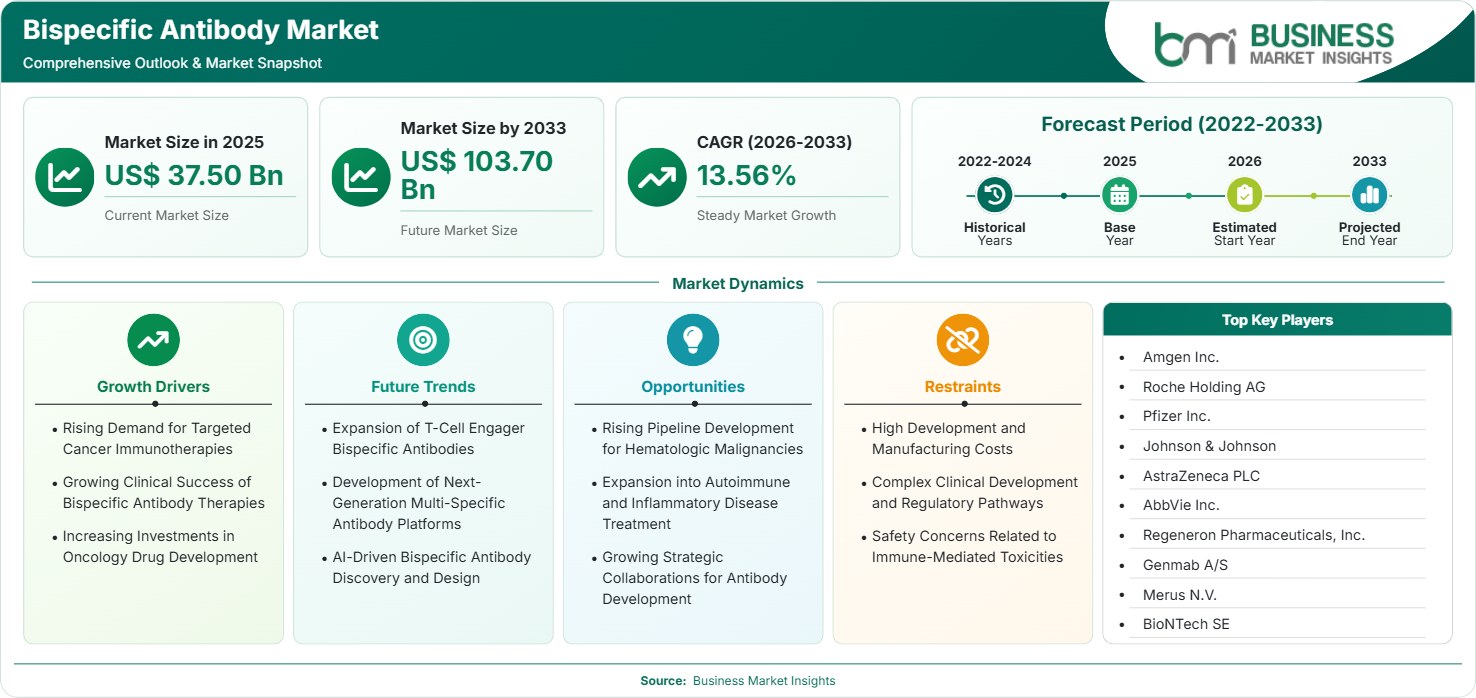
Bispecific Antibody Market Regional Highlights
North America Bispecific Antibody Market
North America accounts for 39%–42% Bispecific Antibody Market share in 2025 and is projected to grow at a CAGR of 12.8%–13.5% through 2033. Strong oncology research, extensive biologics development activities, increasing regulatory approvals, and advanced healthcare infrastructure continue supporting regional leadership.
- Pharmaceutical companies continue expanding bispecific antibody research programs and clinical trial portfolios, focusing on developing innovative therapies for oncology, autoimmune disorders, and other complex diseases with high unmet medical needs.
- Rising cancer prevalence is supporting increased adoption of targeted immunotherapies, as healthcare providers seek more effective treatment options with improved clinical outcomes and reduced adverse effects.
- Healthcare providers are increasingly utilizing innovative biologic treatments for difficult-to-treat diseases, driven by advancements in biotechnology, improved patient outcomes, and growing clinical evidence supporting their effectiveness.
- Strong collaboration between research institutions and biotechnology companies is accelerating innovation through joint development programs, technology sharing, and expanded clinical research initiatives worldwide.
- Regulatory support for advanced therapeutics continues facilitating market expansion by streamlining approval pathways, encouraging innovation, and promoting the commercialization of breakthrough biologic therapies.
- Growing investments in precision medicine are strengthening long-term growth prospects by enabling personalized treatment approaches, improving therapeutic efficacy, and supporting the development of next-generation bispecific antibodies.
US Bispecific Antibody Market
The United States contributes approximately 86%–90% of North American revenue and is expected to register a CAGR of 13.0%–13.7% through 2033. Strong biotechnology innovation, high healthcare expenditure, and extensive oncology treatment adoption continue supporting bispecific antibody market leadership.
- Biopharmaceutical companies continue advancing next-generation antibody platforms, focusing on improving therapeutic efficacy, safety profiles, and treatment options for complex diseases across multiple clinical indications.
- Increasing clinical trial activity remains a significant growth driver, accelerating the development and commercialization of innovative antibody-based therapies worldwide.
- Oncology centers are adopting advanced immunotherapies to improve patient outcomes through more targeted, effective, and personalized cancer treatment approaches.
- Precision medicine initiatives are supporting broader utilization of targeted therapeutics by enabling customized treatment strategies based on patient-specific disease characteristics.
- Strong industry-academic collaboration continues fostering innovation through joint research, technology development, and expanded clinical validation programs.
Europe Bispecific Antibody Market
Europe represents 26%–29% of global revenue in 2025 and is anticipated to expand at a CAGR of 13.1%–13.8% through 2033. Growing biologics research, increasing cancer treatment demand, and rising healthcare innovation continue supporting regional growth. Germany remains the leading market while Poland demonstrates stronger growth momentum.
- Germany continues leading regional demand through extensive pharmaceutical research activities.
- Poland is among the fastest-growing markets and is estimated to register a CAGR of 14.2%–14.9% during the forecast period.
- Expanding biotechnology investments continue supporting therapeutic innovation.
- Healthcare providers are increasingly integrating immunotherapies into treatment protocols.
- Strong academic research networks continue supporting pipeline development.
- Regulatory advancements are encouraging market expansion.
Asia Pacific Bispecific Antibody Market
Asia Pacific accounts for 21%–24% of global revenue in 2025 and is expected to achieve the fastest CAGR of 14.8%–15.6% through 2033. Growing biotechnology investments, rising cancer incidence, expanding clinical research activities, and improving healthcare infrastructure continue supporting strong regional growth.
- China remains the largest regional bispecific antibody market due to substantial biopharmaceutical investments and clinical development programs.
- India is projected to achieve approximately 15.5%–16.3% CAGR, supported by increasing oncology treatment adoption and expanding biotechnology research.
- Regional pharmaceutical companies are actively investing in biologics innovation.
- Growing healthcare access is supporting increased utilization of advanced therapies.
- Government initiatives continue encouraging biotechnology development.
- Expanding clinical trial capabilities are strengthening market opportunities.
Rest of World Bispecific Antibody Market
Rest of World accounts for 8%–11% of global revenue in 2025 and is projected to expand at a CAGR of 13.3%–14.0% through 2033. Improving healthcare infrastructure, increasing cancer awareness, and expanding access to biologic therapies continue supporting market growth.
- Brazil continues generating demand through expanding oncology treatment infrastructure.
- The UAE is witnessing increasing investments in advanced therapeutics and specialty healthcare services.
- Saudi Arabia is expected to achieve approximately 14.0%–14.8% CAGR through 2033, supported by healthcare modernization initiatives.
- Access to innovative oncology treatments continues improving.
- Clinical research activities are expanding steadily.
- Investments in advanced healthcare capabilities are supporting long-term market development.