Silicon Carbide (SiC) Devices Market Regional Highlights
North America Silicon Carbide (SiC) Devices Market
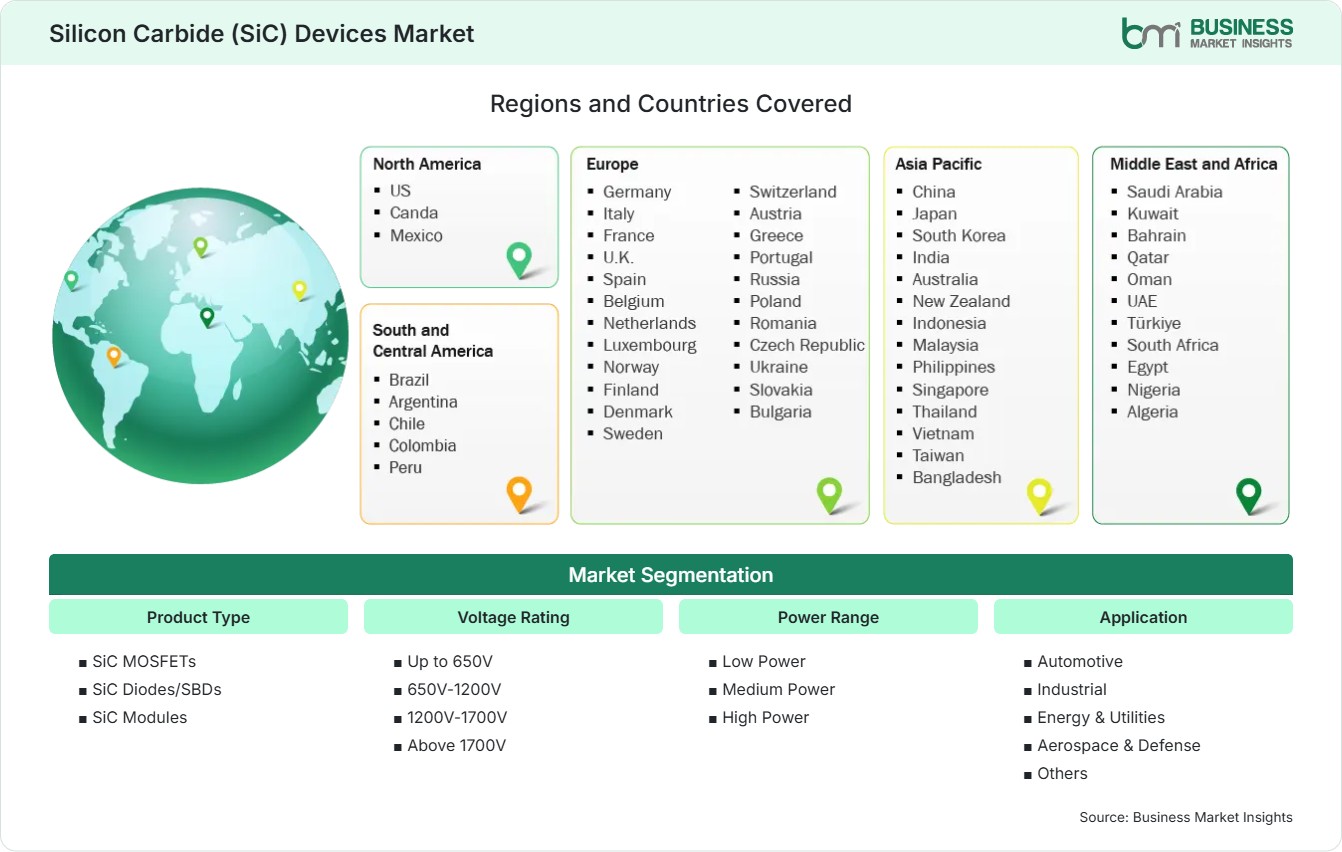
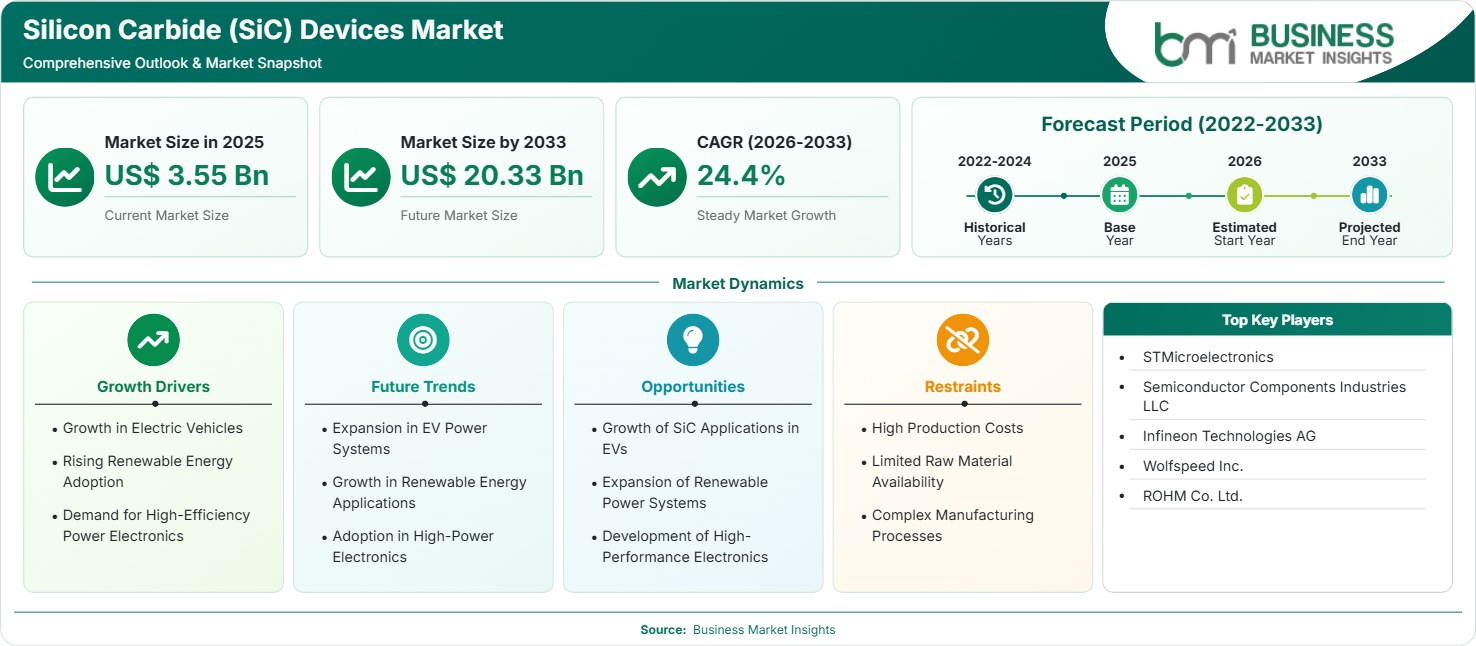
North America Silicon Carbide (SiC) Devices Market share accounted for a 32%–36% share in 2025 and is projected to expand at a CAGR of 24.0%–24.8% during 2026–2033. The region's strength is attributed to the growing use of electric vehicles, renewable energy, semiconductor production, and the need for power electronics. The United States and Canada make significant markets through automotive electrification, industrial automation, and infrastructure for clean energy.
- Automotive companies are increasing adoption of SiC-based power components for EV systems.
- Semiconductor manufacturers are expanding domestic production capabilities.
- Renewable energy projects are creating demand for efficient power conversion systems.
- Industrial sectors are adopting high-performance semiconductor solutions.
- Government initiatives are supporting advanced semiconductor technology development.
US Silicon Carbide (SiC) Devices Market
US market represented a 28%–32% share in 2025 and is estimated to grow at a CAGR of 24.2%–25.0% between 2026–2033. The country remains a key market due to strong semiconductor innovation, expanding electric vehicle manufacturing, renewable energy deployment, and industrial electrification trends.
- EV manufacturers are integrating SiC devices into powertrains and charging systems.
- Domestic semiconductor investments are increasing SiC production capacity.
- Energy infrastructure modernization is supporting power electronics adoption.
- Aerospace and defense applications are increasing demand for advanced semiconductor devices.
Europe Silicon Carbide (SiC) Devices Market
Europe market held a 22%–26% share in 2025 and is forecast to register a CAGR of 23.8%–24.6% during 2026–2033. The region benefits from strong automotive manufacturing capabilities, renewable energy commitments, and increasing demand for energy-efficient technologies. Germany, France, the UK, Italy, and the Netherlands represent major markets, with Germany leading due to its automotive industry and industrial automation ecosystem.
- European automakers are increasing SiC adoption in electric vehicle platforms.
- Renewable energy expansion is driving demand for efficient power conversion.
- Industrial manufacturers are adopting advanced semiconductor technologies.
- Energy efficiency regulations are encouraging high-performance electronics usage.
- Semiconductor companies are strengthening regional supply capabilities.
Asia Pacific Silicon Carbide (SiC) Devices Market
Asia Pacific Silicon Carbide (SiC) Devices market accounted for a 42%–46% share in 2025 and is expected to grow at the fastest CAGR of 24.8%–25.8% between 2026–2033. Growth is supported by semiconductor manufacturing expansion, electric vehicle production, renewable energy deployment, and strong electronics manufacturing capabilities. China, Japan, South Korea, and India represent major markets, with China and Japan playing important roles in SiC technology development and production.
- Semiconductor manufacturers are expanding SiC wafer and device production.
- EV manufacturing growth is increasing demand for SiC power solutions.
- Renewable energy installations are driving power electronics adoption.
- Industrial automation growth is supporting advanced semiconductor demand.
- Governments are investing in domestic semiconductor ecosystems.
Rest of World Silicon Carbide (SiC) Devices Market
Rest of World market represented a 5%–9% share in 2025 and is projected to grow at a CAGR of 23.5%–24.3% from 2026–2033. Latin America, Middle East, and Africa markets are developing through renewable energy investments, electric mobility initiatives, and industrial modernization programs. Brazil, UAE, Saudi Arabia, and South Africa represent emerging markets supported by clean energy projects and technology adoption.
- Renewable energy projects are increasing demand for efficient power conversion systems.
- Electric vehicle adoption is gradually expanding across emerging markets.
- Industrial modernization is supporting semiconductor technology demand.
- Energy infrastructure development is creating new application opportunities.
- Regional investments are improving adoption of advanced power electronics.