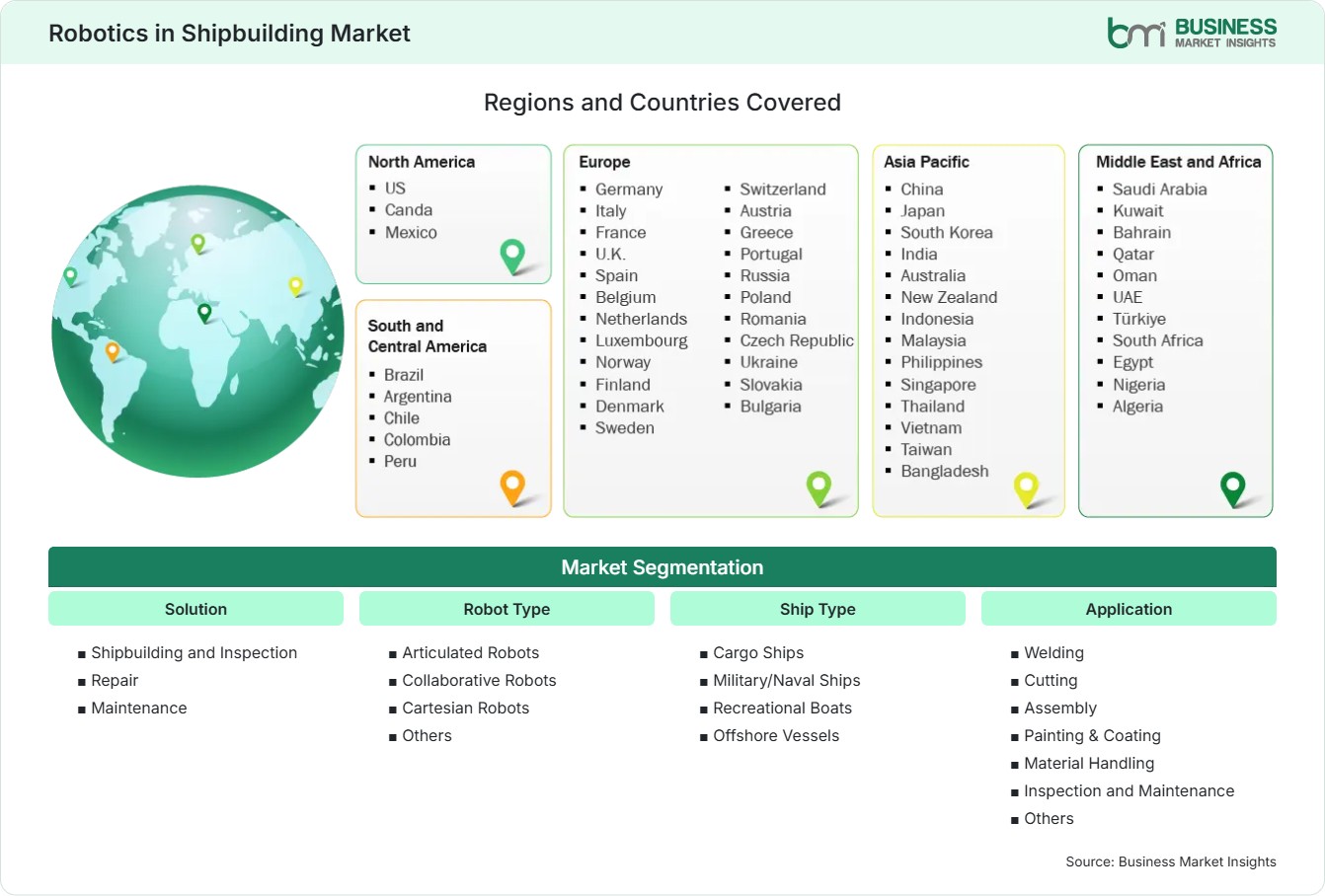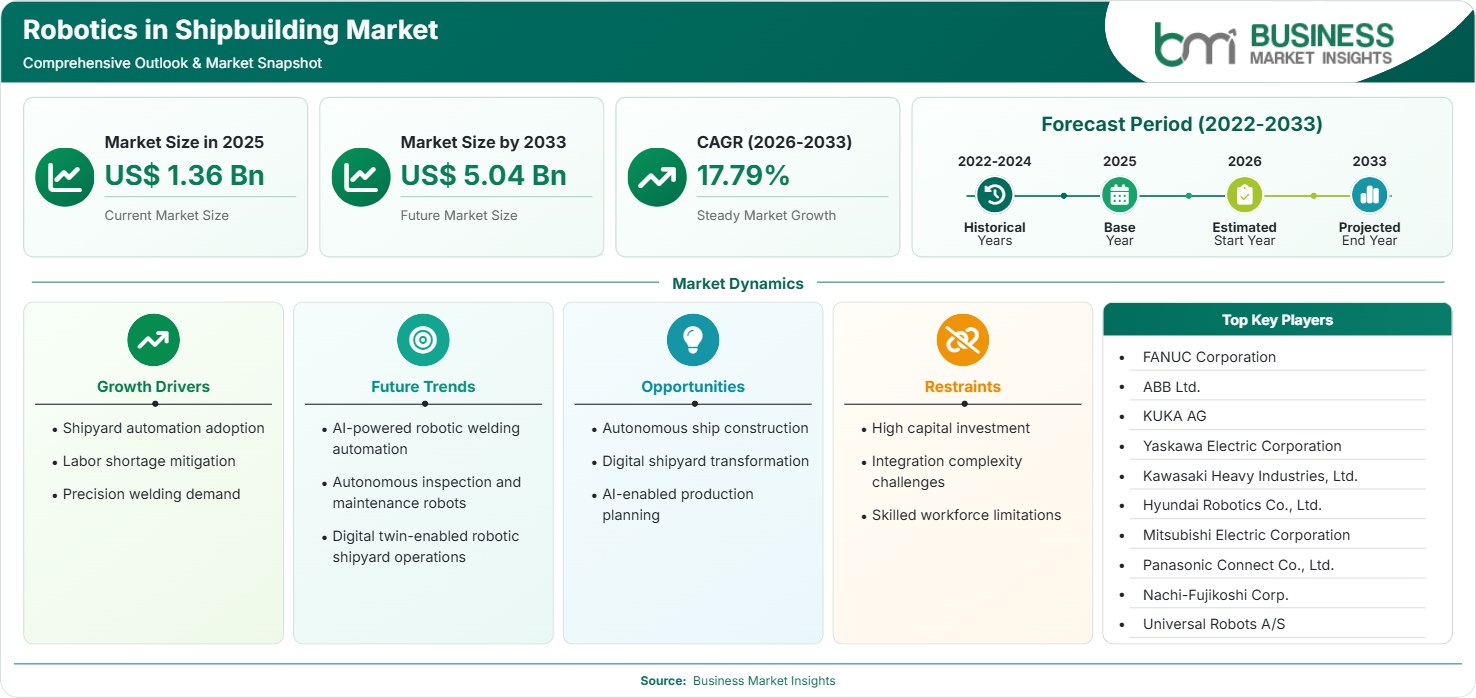
Robotics in Shipbuilding Market Regional Highlights
North America Robotics in Shipbuilding Market
North America accounts for an estimated 24%–28% share in 2025, supported by naval fleet modernization, advanced manufacturing capabilities, defense spending, and industrial automation investments. The region is projected to grow at a 16.8%–17.5% CAGR during 2026–2033. The United States remains the dominant contributor through naval shipbuilding programs, robotic welding implementation, and increasing adoption of intelligent manufacturing technologies.
- US naval shipyards continue expanding robotic welding and automated fabrication capabilities.
- Defense modernization programs encourage adoption of intelligent manufacturing technologies.
- Shipbuilders increasingly implement robotic inspection and quality assurance systems.
- Digital manufacturing initiatives strengthen demand for integrated robotic production platforms.
US Robotics in Shipbuilding Market
The US represents an estimated 84%–88% share of North America's market in 2025 and is expected to expand at a 17.0%–17.7% CAGR through 2033. Growth is driven by naval vessel construction, commercial shipyard modernization, skilled labor shortages, and increasing investments in advanced manufacturing technologies.
- Naval programs continue supporting investment in robotic welding and assembly systems.
- Shipyards are deploying AI-assisted automation to improve production efficiency.
- Advanced robotics improve workplace safety while reducing production cycle times.
Europe Robotics in Shipbuilding Market
Europe represents an estimated 23%–27% share in 2025, growing at a 16.9%–17.6% CAGR during 2026–2033. Regional growth is supported by naval defense projects, cruise ship construction, offshore engineering, and digital manufacturing initiatives. Germany, Italy, Norway, and France remain leading markets, while Türkiye is emerging as a rapidly expanding shipbuilding hub, aligning with robotics in shipbuilding market growth.
- Germany leads industrial robotics integration across advanced manufacturing facilities.
- Italy strengthens robotic adoption through cruise ship production and marine engineering.
- Norway invests in automated offshore vessel manufacturing technologies.
- European shipbuilders integrate robotics with digital production management systems.
Asia Pacific Robotics in Shipbuilding Market
Asia Pacific represents an estimated 42%–46% share in 2025 and records the fastest growth at a 18.6%–19.4% CAGR during 2026–2033. China, South Korea, and Japan dominate global shipbuilding output and continue investing in intelligent shipyard modernization, robotic fabrication, and AI-driven production systems. India and Southeast Asia are also expanding shipbuilding capacity through automation-focused investments.
- China leads robotic shipyard deployment through large-scale commercial vessel production.
- South Korea accelerates digital shipyard transformation using advanced robotic systems.
- Japan expands automation for precision welding and complex marine fabrication.
- India increases investments in naval shipbuilding modernization and industrial robotics.
- Southeast Asian shipyards adopt automation to improve global competitiveness.
Rest of World Robotics in Shipbuilding Market
Latin America, the Middle East, and Africa collectively account for an estimated 5%–9% share in 2025, expanding at a 17.1%–17.9% CAGR through 2033. Growth is supported by offshore energy projects, naval fleet expansion, port infrastructure development, and modernization of regional shipbuilding facilities. Brazil, Saudi Arabia, UAE, and South Africa represent key emerging markets.
- Brazil expands robotic shipbuilding capabilities through offshore vessel manufacturing.
- Gulf countries invest in advanced shipyard infrastructure supporting maritime diversification.
- South Africa modernizes repair and maintenance facilities using robotic technologies.
- Regional governments prioritize automation to strengthen domestic shipbuilding industries.
- Offshore energy investments continue creating demand for intelligent marine production systems.