
Osteoporosis Treatment Market Outlook: Size, Share, Trends, Growth Analysis, Competitive Landscape & Forecast, 2026-2033

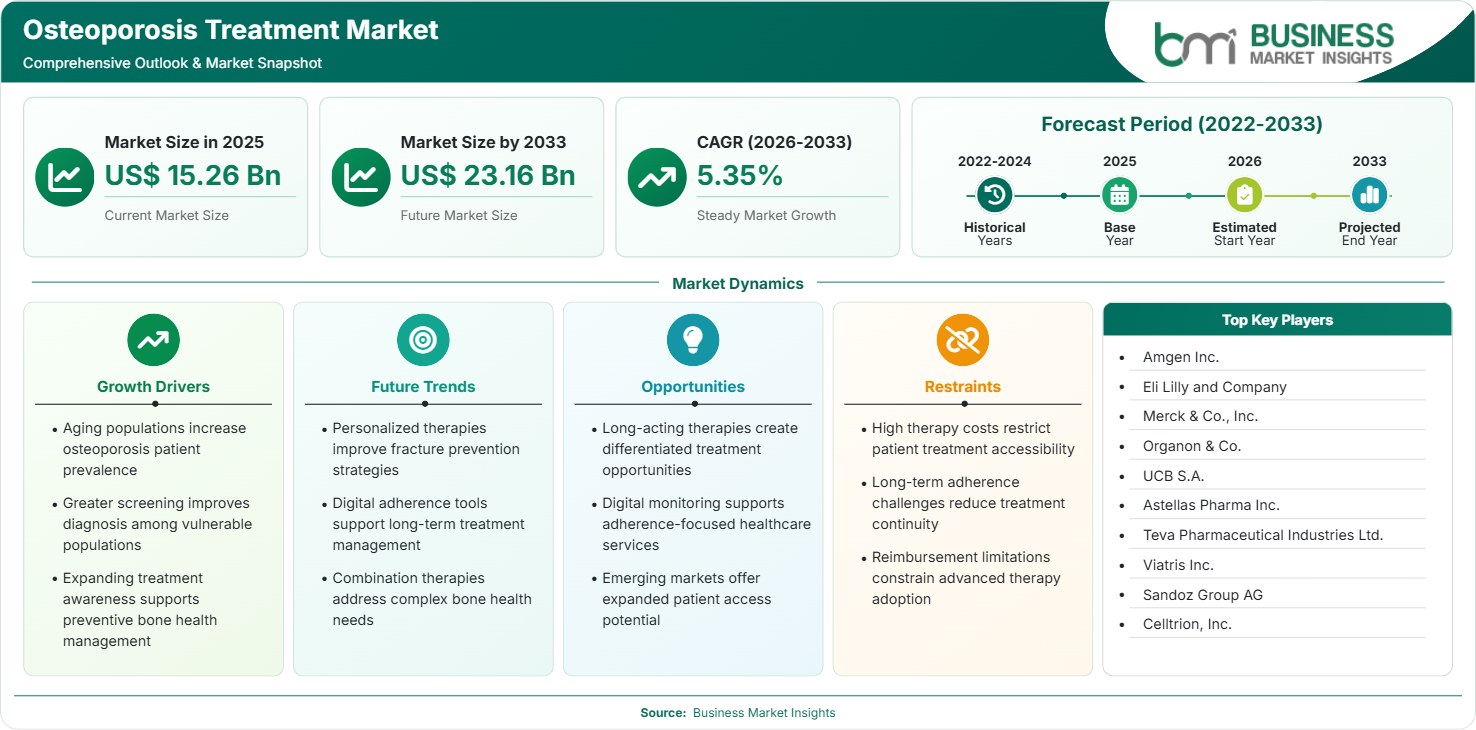
The Osteoporosis Treatment Market size was valued at US$ 15.26 Billion in 2025 and is projected to reach US$ 23.16 Billion by 2033, growing at a CAGR of 5.35% during 2026–2033. Key drivers include aging populations, improved screening, fracture prevention, treatment persistence, anabolic therapies, biosimilars, digital adherence tools, and emerging markets.

Report Coverage
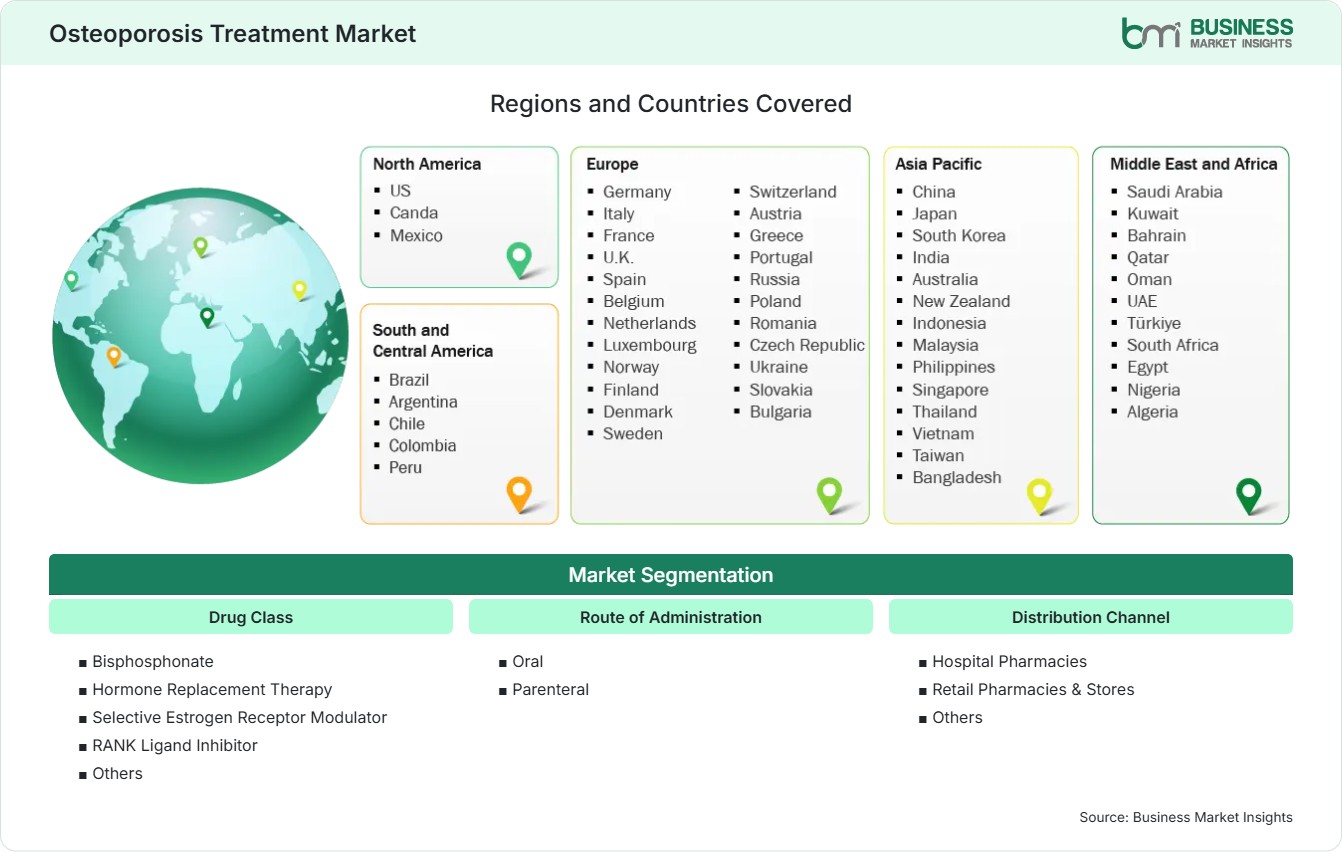
  • Drug Class: Bisphosphonate, Hormone Replacement Therapy, Selective Estrogen Receptor Modulator, RANK Ligand Inhibitor, Others
  • Route of Administration: Oral, Parenteral
  • Distribution Channel: Hospital Pharmacies, Retail Pharmacies & Stores, Others
US$ 15.26 Bn Market size in 2025
US$ 23.16 Bn Market Size by 2033
5.35% CAGR, 2026 - 2033
2026-2033 Forecast Period

AI Overview

Osteoporosis Treatment Market Summary

  • North America Region: North America holds a modeled 35%–38% Osteoporosis Treatment Market share in 2025, with a 4.8%–5.2% CAGR through 2033, supported by high diagnosis rates, reimbursement depth, specialist prescribing, biosimilar adoption, and continued innovation. The US represents the region's core demand center, with modeled 4.7%–5.1% CAGR driven by aging, screening, and payer-led access.
  • Fastest Growing Region: Asia Pacific accounts for 24%–27% in 2025 and is modeled to expand at 6.2%–6.8% CAGR, driven by rapidly aging populations, expanding healthcare infrastructure, greater diagnostic access, rising physician awareness, and increasing availability of injectable and biosimilar therapies.
  • Leading Segment: Oral administration represents a modeled 58%–62% share in 2025 and is projected at 4.4%–4.9% CAGR, supported by established bisphosphonate prescribing, lower administration complexity, broad pharmacy availability, and strong familiarity among clinicians and patients.
  • High Growth Segment: Parenteral administration represents 38%–42% in 2025 and is modeled at 6.4%–7.0% CAGR, supported by biologics, anabolic agents, adherence advantages, high-risk patient management, specialist supervision, and expanding biosimilar competition.
  • Key Market Opportunity: Earlier diagnosis, sequential treatment pathways, injectable adherence, biosimilar substitution, and underpenetrated Asian markets create opportunities for differentiated products, access programs, specialty distribution, and patient-support ecosystems.
  • Major Market Players: The competitive set comprises Amgen Inc., Eli Lilly and Company, Merck & Co., Inc., Organon & Co., UCB S.A., Astellas Pharma Inc., Teva Pharmaceutical Industries Ltd., Viatris Inc., Sandoz Group AG, and Celltrion, Inc.
Strategic Insights

Osteoporosis Treatment Market: Strategic Insights

Osteoporosis Treatment Market Strategic Framework
FREE PDF
Request your free sample
Request free sample
Stakeholder View

Key Takeaways

  • The value chain in Osteoporosis Treatment Market increasingly links originator manufacturers, generic and biosimilar developers, specialty distributors, hospital pharmacies, retail channels, diagnostic providers, and patient-support programs. Competitive advantage, therefore, depends on both therapeutic differentiation and reliable access infrastructure.
  • The potential benefits from parenteral therapies are the greatest since injectable biologics and bone-building agents are used in high-risk groups, where higher treatment intensity, patient adherence, and a reduction in fracture risk have both greater clinical and economic value.
  • There is a trend towards the development of treatments that are specific to individual mechanisms, the use of prescribed treatment protocols in sequence, better delivery devices, and the introduction of biosimilars for existing biologics. The most recent launches of denosumab show the impact that interchangeability and their position on formularies can have on prescribing costs.
  • The Asia Pacific region offers the strongest case for structural growth since the proportion of people in Eastern and South-Eastern Asia aged 65 or over is expected to increase from 12.7% in 2022 to 25.7% by 2050, thereby expanding the pool of potential patients.
  • More strategic combinations are now aiming at achieving commercial scale rather than focusing solely on pipeline discovery. The merger between Paratek Pharmaceuticals, Inc. and Radius Health, Inc. in March 2026 added TYMLOS to a more extensive specialty product range, showing the value of existing bone-health assets.
  • The economics of established biologics are being altered by biosimilar competition. Companies with large manufacturing capacity, payer access, interchangeable products, and relationships with pharmacies are better positioned to capitalize on substitution as the reference product's exclusivity decreases.
Geographic Outlook

Osteoporosis Treatment Market Regional Highlights

North America Osteoporosis Treatment Market

North America Osteoporosis Treatment Market represented a modeled 35%–38% share in 2025 and is projected to expand at 4.8%–5.2% CAGR through 2033. The region benefits from established screening, specialist networks, reimbursement infrastructure, and broad availability of oral and injectable therapies.

  • High rates of diagnosis and access to specialists maintain the existing treatment pathways, while payment providers are becoming more inclined to favour cheaper alternatives and those biologics which are preferred by the formulary.
  • The demand for osteoporosis treatments in the United States will continue to be driven by ageing, the management of previous fractures, and prescriptions from specialists, with a projected compound annual growth rate of 4.7% to 5.1% by 2033.
  • Canada has a chance based on access as the number of biosimilars launched increases the range of treatment options and may help alleviate pressure on public systems.
  • The main challenge facing the region is treatment persistence, which has led to a need for patient-support schemes, simpler dosing, and services that focus on adherence.

US Osteoporosis Treatment Market

The United States Osteoporosis Treatment Market remains the principal national market within North America, supported by high pharmaceutical spending, extensive specialist coverage, strong pharmaceutical innovation, and sophisticated payer infrastructure. The market is modeled to grow at 4.7%–5.1% CAGR through 2033. Competitive conditions are changing rapidly as biosimilars challenge denosumab economics.

  • Pharmacy benefit managers are exerting an ever-greater influence on product selection, thereby establishing a direct commercial connection among biosimilar interchangeability, formulary preference, and patient affordability.
  • For high-risk patients, injectable treatments still have strategic value, especially since having physicians administer them helps with adherence and allows for treatment monitoring.
  • Digital patient-support programs can address issues related to refills, appointment scheduling, and injection reminders, and provide patients with information on treatment sequencing.
  • It is still important to provide care that focuses on specialists for cases involving anabolic therapy, severe osteoporosis, and patients who have previously suffered vertebral or hip fractures.

Europe Osteoporosis Treatment Market

Europe held a modeled 27%–30% share in 2025 and Osteoporosis Treatment Market forecast at 4.5%–4.9% CAGR through 2033. Demand reflects aging demographics, established clinical pathways, public reimbursement systems, and increasing pressure to control pharmaceutical expenditure.

  • Germany and France are still the leading markets, due to their large elderly populations, specialized capabilities, and well-established reimbursement systems.
  • Poland and some of the Central European markets are expected to achieve a modeled compound annual growth rate of 5.5% to 6.2% as access to diagnostic services and newer treatments become more widespread.
  • Biosimilars are becoming increasingly important in procurement economics, especially for denosumab, since having multiple companies involved can both increase access to the treatment and lower its cost.
  • UCB S.A. states that the commercialisation of EVENITY for the treatment of severe osteoporosis in postmenopausal women who are at a high risk of fractures is continuing in Europe.
  • The procurement department will prefer suppliers who combine regulatory reliability, competitive pricing, and a reliable supply of drugs to hospitals and specialty pharmacies.

Asia Pacific Osteoporosis Treatment Market

Asia Pacific Osteoporosis Treatment Market accounted for a modeled 24%–27% share in 2025 and is projected to grow at 6.2%–6.8% CAGR, making it the fastest-growing regional market. Japan, China, South Korea, and Australia provide established treatment infrastructure, while India and Southeast Asia offer substantial expansion potential.

  • Japan remains a leading market due to its advanced healthcare infrastructure, aging population, and well-established screening and treatment procedures for osteoporosis.
  • China has considerable room for growth as specialist access and domestic pharmaceutical capabilities improve; in 2025, Radius Pharmaceuticals awarded Pharmanovia the commercialization rights for abaloparatide in China and the Asia-Pacific markets.
  • India and Southeast Asia could achieve a compound annual growth rate of 6.8% to 7.4% as spending on diagnosis, specialist care, and private healthcare increases.
  • South Korea promotes the use of biosimilars through its advanced capabilities in biologics manufacturing and its strong domestic pharmaceutical industry.
  • Australia has the advantage of well-established osteoporosis management, although affordability and reimbursement still play a key role in wider adoption.

Rest of World Osteoporosis Treatment Market

Rest of World Osteoporosis Treatment Market represented a modeled 9%–12% share in 2025. South and Central America are expected to grow at 5.6%–6.1% CAGR, led by Brazil and Mexico as healthcare access expands. Middle East and Africa are modeled at 5.8%–6.4% CAGR, supported by urbanization, private healthcare investment, and increasing awareness of age-related bone disease.

  • Brazil and Mexico account for the majority of demand in Latin America, with projected annual growth rates ranging from 5.8% to 6.2% as private healthcare networks expand access to specialists and pharmaceutical distribution.
  • Saudi Arabia and the United Arab Emirates are expected to achieve a compounded annual growth rate of 6.2% to 6.8%, on the back of healthcare modernization and the development of specialist infrastructure.
  • Access remains uneven, which is why affordable generic drugs, biosimilars, and relationships with distributors are essential to achieving wider geographic coverage.
  • For injectable products and biologic therapies, local registration expertise and dependable cold-chain logistics are becoming more important.
  • International manufacturers may enter markets where setting up the necessary infrastructure would involve higher capital commitments by means of licensing and regional commercialization agreements.
Global Market Geography
FREE PDF
Request your free sample
Request free sample
Segment Analysis

Osteoporosis Treatment Market Segmentation

Drug Class

Drug Class remains the principal determinant of therapeutic positioning, defining the Osteoporosis Treatment Market scope across established antiresorptive therapies, hormone-based approaches, selective estrogen receptor modulators, RANK ligand inhibitors, and emerging treatment options. Bisphosphonates represent a modeled 34%–38% share in 2025 and 4.2%–4.7% CAGR through 2033.

  • Bisphosphonate: Alendronate, risedronate, ibandronate, and zoledronic acid remain foundational therapies, supported by broad clinical familiarity, generic availability, established reimbursement, and durable antifracture evidence across major treatment populations.
  • Hormone Replacement Therapy: Hormone therapy occupies a selective role where menopausal symptoms coexist with fracture risk, with utilization shaped by patient age, cardiovascular considerations, contraindications, and individualized risk-benefit assessment.
  • Selective Estrogen Receptor Modulator (SERMs): Raloxifene and related therapies remain relevant for selected postmenopausal patients, particularly where vertebral fracture prevention and breast cancer risk considerations influence treatment selection.
  • RANK ligand (RANKL) Inhibitor: Denosumab supports high-risk treatment through twice-yearly administration, while biosimilar competition is expanding access and changing pricing, formulary, and pharmacy substitution dynamics.
  • Others: Other pharmacologic approaches address narrower patient groups and clinical circumstances, with demand influenced by tolerability, treatment sequencing, contraindications, and the availability of established alternatives.

Route of Administration

Route of Administration is increasingly shaped by adherence, clinical severity, and biologic innovation. Oral therapy commands a modeled 58%–62% Osteoporosis Treatment Market share in 2025 with 4.4%–4.9% CAGR, while parenteral treatment is expanding faster as anabolic and biologic therapies address higher-risk patients and reduce dosing frequency.

  • Oral: Tablets remain widely used because of convenience, generic availability, lower administration costs, and established physician familiarity, although dosing instructions and gastrointestinal tolerability can influence persistence.
  • Parenteral: Injectable and infusion therapies support high-risk patients, biologic treatment, and anabolic approaches, with less frequent administration creating adherence advantages and expanding specialist-led treatment opportunities.

Distribution Channel

Distribution Channel performance reflects prescription volume, treatment complexity, reimbursement design, and administration setting. Retail Pharmacies & Stores represent a modeled 44%–48% Osteoporosis Treatment Market share in 2025 with 4.8%–5.3% CAGR, while hospitals remain important for specialist-administered injectable treatments and complex patients.

  • Hospital Pharmacies: Hospital pharmacies support injectable biologics, specialist prescribing, fracture-related care, and patients requiring coordinated monitoring, particularly where treatment initiation follows acute fracture or specialist assessment.
  • Retail Pharmacies & Stores: Retail pharmacies provide broad access to oral therapies, refill management, generic substitution, and increasingly biosimilar dispensing, making them central to affordability and treatment continuity.
  • Others: Specialty pharmacies, mail-order providers, clinics, and integrated delivery networks support complex therapies through authorization assistance, cold-chain logistics, patient education, and adherence services.
Market Forces

Osteoporosis Treatment Market Dynamics

Key Market Drivers

Population Aging and Rising Fracture Prevention Priorities

Population aging is the strongest structural driver of demand because the prevalence of osteoporosis and fracture incidence rises with age. The United Nations projects people aged 65 years or older to reach 1.6 billion globally by 2050, versus 771 million in 2022. WHO reports 178 million new fractures globally in 2019, with older populations carrying the highest incidence. These trends expand screening, diagnosis, secondary fracture prevention, and pharmaceutical treatment demand. The Osteoporosis Treatment Market growth profile therefore, remains closely tied to demographic change, especially in North America, Europe, Japan, China, and other aging economies.

Clinical Shift Toward Risk-Stratified Treatment Sequencing

Treatment algorithms increasingly distinguish moderate-risk patients from individuals with severe or multiple fractures. The Endocrine Society recommends bisphosphonates as initial therapy for many high-risk postmenopausal women, while teriparatide, abaloparatide, and ramucirumab are recommended for selected very-high-risk populations. This stratification increases therapeutic complexity and expands the role of higher-value products. The Osteoporosis Treatment Market trends, therefore, increasingly reflect treatment sequencing, reassessment, and maintenance rather than one-time prescribing. Sequential use can also protect gains achieved with anabolic therapies, creating recurring demand across multiple drug classes.

Expansion of Biosimilar Competition in Biologic Bone Therapies

Denosumab biosimilars are now introducing a new level of competition in the area of this major injectable treatment. Celltrion introduced STOBOCLO and OSENVELT in the United States in July 2025 following approval by the FDA, while Sandoz launched Wyost and Jubbonti in June 2025 as interchangeable denosumab biosimilars. In 2026, Amgen noted a decline in Prolia sales and prices as several biosimilars entered the market. This shift in the competitive landscape should lead to greater leverage for payers, more pharmacy substitutions, and increased price sensitivity, as well as improved access for healthcare systems mindful of costs.

Key Market Opportunities

Expansion of Bone-Building Therapies for Very-High-Risk Patients

Bone-building treatments represent a valuable opportunity since their clinical use is focused on individuals who have severe osteoporosis, a history of multiple fractures, or have not responded adequately to standard therapies. After using abaloparatide or teriparatide, patients can receive antiresorptive therapy to maintain bone density gains, thereby necessitating sequential treatments. Radius Pharmaceuticals has carried out several analyses in 2025, which support the evidence related to abaloparatide, and its licensing agreement with Pharmanovia in the Asia Pacific region shows potential for commercialization in different geographic areas. Investors should focus on expanding the product's lifecycle, improving delivery methods, enhancing physician education, and advancing market access initiatives for anabolic treatment.

Commercialization Opportunities in Underpenetrated Asian Markets

The Asia Pacific region presents a mix of demographic growth, rising healthcare spending, expanding specialist capacity, and relatively low treatment penetration in many markets. In China, India, Southeast Asia, and South Korea, there are particular opportunities for companies that are able to adapt their pricing, regulatory approach, distribution methods, and interaction with physicians. The commercial strategy should focus on partnerships in which local registration and existing distribution capabilities reduce market entry costs. The fact that Pharmanovia has a 2025 agreement covering China and several territories in Southeast Asia shows how licensing can speed up access to the region without the need for a fully owned commercial infrastructure.

Digital Adherence and Patient-Support Ecosystems

Treatment persistence is an overlooked commercial opportunity because, although the symptoms of osteoporosis are generally not obvious at first, the therapies needed often have to be managed over a long period of time. Continuity can be improved by digital reminders, coordinating refills, scheduling injections, providing educational materials, and monitoring fracture risk. With respect to injectable therapies, integrated support can reduce missed appointments and assist patients in transitioning from the anabolic to the antiresorptive phase. Instead of competing, integrating pharmaceutical companies could develop distinct service propositions focused on adherence. The best opportunity that requires combining patient-support technology with the operations of specialty pharmacies and physicians, especially in the case of complex treatments that require regular monitoring and treatment sequencing.

Market Restraints and Challenges

Affordability Pressure and Rapid Biosimilar Price Competition

Factor: Expiration of biologic exclusivity is increasing competition from interchangeable and non-interchangeable denosumab biosimilars across major markets. Impact: Pricing leverage of originators may diminish quickly on the basis of payer focus on cost-efficient products, resulting in a reduction of revenues for already existing brands. For instance, Amgen noted the 32% year-over-year decrease in Prolia sales in Q2 2026 due to decreased volumes and net selling prices against the backdrop of increasing biosimilars competition. Such a situation may have positive and negative implications and raise the importance of various commercial aspects.

Low Diagnosis and Treatment Persistence

Factor: Osteoporosis is frequently asymptomatic until fracture, while treatment requires sustained adherence and periodic reassessment. Impact: Larger numbers diagnosed may not mean proportional prescription requirements because there is the possibility that people can defer their treatments, stop taking the treatment, or stay out of the fracture management programs altogether. According to the WHO, many cases of vertebral fractures have not been diagnosed, and early diagnosis and secondary prevention are emphasized. From a business perspective, this means there will always be a discrepancy between the requirement and the number of patients being treated.

Company Analysis

Competitive Landscape

Competitive positioning reflects a two-track market: established oral therapies retain scale and accessibility, while biologics, anabolic agents, and biosimilars reshape value capture. Osteoporosis Treatment Market analysis indicates that manufacturing scale, clinical evidence, reimbursement access, and specialty distribution increasingly determine competitive durability.

Company Name

Overview

Products and Services relevant to this market

Amgen Inc.

Global biotechnology company with a major bone-health franchise and established presence across biologic osteoporosis treatment.

Prolia and EVENITY anchor its osteoporosis portfolio, supported by global commercialization, physician education, patient access, and lifecycle management.

Eli Lilly and Company

Large pharmaceutical company with longstanding expertise in bone-building therapies and high-risk osteoporosis management.

FORTEO provides teriparatide-based anabolic treatment, supported by prescribing resources, patient savings, delivery guidance, and clinical education.

Merck & Co., Inc.

Established pharmaceutical manufacturer with a long history in antiresorptive osteoporosis treatment.

FOSAMAX, based on alendronate, remains a recognized bisphosphonate therapy supporting oral treatment pathways and generic-market familiarity.

Organon & Co.

Women's-health-focused pharmaceutical company expanding access through biosimilar commercialization partnerships.

BILDYOS and BILPREVDA provide denosumab biosimilar options, with commercialization across the United States, Europe, and Canada.

UCB S.A.

Biopharmaceutical company with a significant role in bone health through global collaboration on romosozumab.

EVENITY supports treatment of severe osteoporosis in postmenopausal women at high fracture risk, particularly in European markets.

Astellas Pharma Inc.

Japanese pharmaceutical company participating in global commercialization of established bone-health therapies.

EVENITY commercialization in selected territories supports severe osteoporosis treatment, with partnership-based geographic reach and specialist engagement.

Teva Pharmaceutical Industries Ltd.

Global generic and specialty pharmaceutical company with broad capabilities in affordable oral medicines.

Generic osteoporosis therapies and established bisphosphonate products support cost-sensitive treatment pathways across multiple international markets.

Viatris Inc.

Global healthcare company combining branded, generic, and complex pharmaceutical capabilities across numerous therapeutic areas.

Generic medicines relevant to osteoporosis support affordability, broad distribution, and pharmacy access across developed and emerging markets.

Sandoz Group AG

Global leader in generics and biosimilars with expanding biologic substitution capabilities.

Wyost and Jubbonti provide denosumab biosimilars for osteoporosis and cancer-related skeletal events, strengthening its injectable biosimilar position.

Celltrion, Inc.

South Korean biopharmaceutical company with a rapidly expanding biosimilar portfolio and US commercial presence.

STOBOCLO provides a denosumab biosimilar for osteoporosis, with US interchangeability and preferred formulary placements supporting uptake.

Trust & Transparency

Research Methodology

The market analysis combines proprietary research with secondary data from government agencies, company disclosures, regulatory filings, industry databases and expert interviews. Market estimates are validated through data triangulation, cross-market benchmarking and analyst review.

View Full Research Methodology

Questions Answered

Frequently Asked Questions

How can manufacturers defend mature osteoporosis brands?

Manufacturers can combine clinical differentiation with patient-support services, convenient delivery, evidence generation, specialty distribution, and payer contracting. For mature biologics facing biosimilar pressure, commercial resilience increasingly depends on manufacturing efficiency and access strategy rather than relying solely on historical brand recognition.

Which markets provide the strongest long-term expansion potential?

Asia Pacific offers the strongest structural opportunity because several large economies combine population aging with expanding healthcare infrastructure. China, India, Japan, South Korea, and Southeast Asian markets differ considerably in reimbursement and access, making localized pricing, regulatory execution, partnerships, and distribution capabilities essential.

What makes injectable osteoporosis therapies commercially attractive?

Injectable therapies can reduce dosing frequency and support adherence when administration occurs through healthcare professionals. They also include several higher-value biologic and anabolic products. Their commercial potential is strongest among patients requiring intensive fracture-risk management, although administration costs and clinical infrastructure can limit use in some healthcare systems.

What does the Osteoporosis Treatment Market Report cover?

The Osteoporosis Treatment Market Report covers market size and forecast, regional dynamics, drug class, route of administration, distribution channels, competitive positioning, recent developments, growth drivers, opportunities, and market restraints across the 2026–2033 forecast period.

How does biosimilar competition affect treatment access?

Biosimilars can reduce treatment costs, increase payer leverage, and broaden access to biologic therapies. Their impact depends on regulatory interchangeability, formulary placement, physician acceptance, pharmacy substitution rules, and manufacturer supply reliability. Denosumab is becoming an important example because multiple biosimilars entered major markets during 2025 and 2026.

Access the Full Osteoporosis Treatment Market Report

Get segment-level forecasts, regional estimates, competitive benchmarking, company profiles and downloadable Excel datasets.

Access the full Osteoporosis Treatment Market Report
350 pages PDF & Excel | 2026-10-05
Similar Research

Related Market Reports