
Pressure Ulcer Treatment Market Outlook: Size, Share, Trends, Growth Analysis, Competitive Landscape & Forecast, 2026-2033

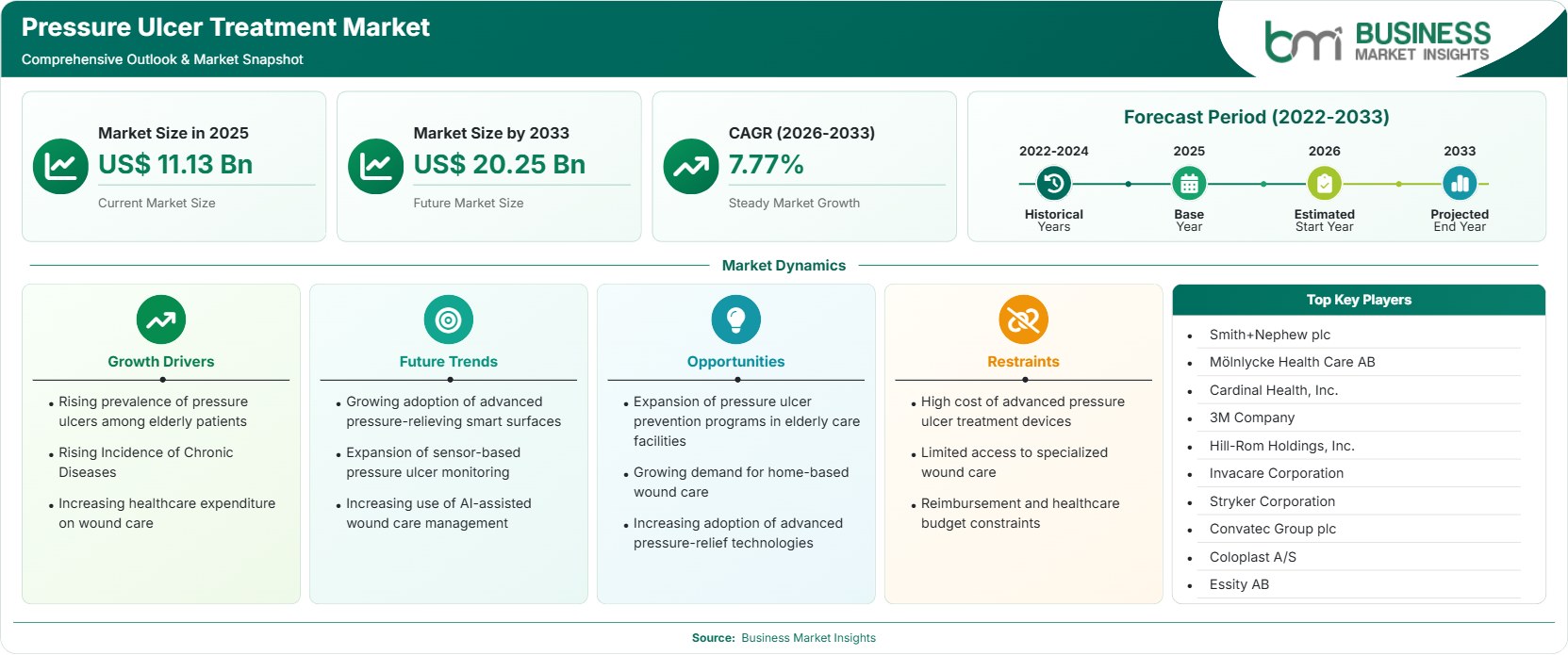
The Pressure Ulcer Treatment Market size was valued at US$ 11.13 Billion in 2025 and is projected to reach US$ 20.25 Billion by 2033, growing at a CAGR of 7.77% during 2026–2033. Market growth is driven by the rising prevalence of pressure ulcers among elderly patients, increasing incidence of chronic diseases, and growing healthcare expenditure on wound care. Expanding pressure ulcer prevention programs and technological advancements in wound management continue creating opportunities across healthcare settings.

Report Coverage
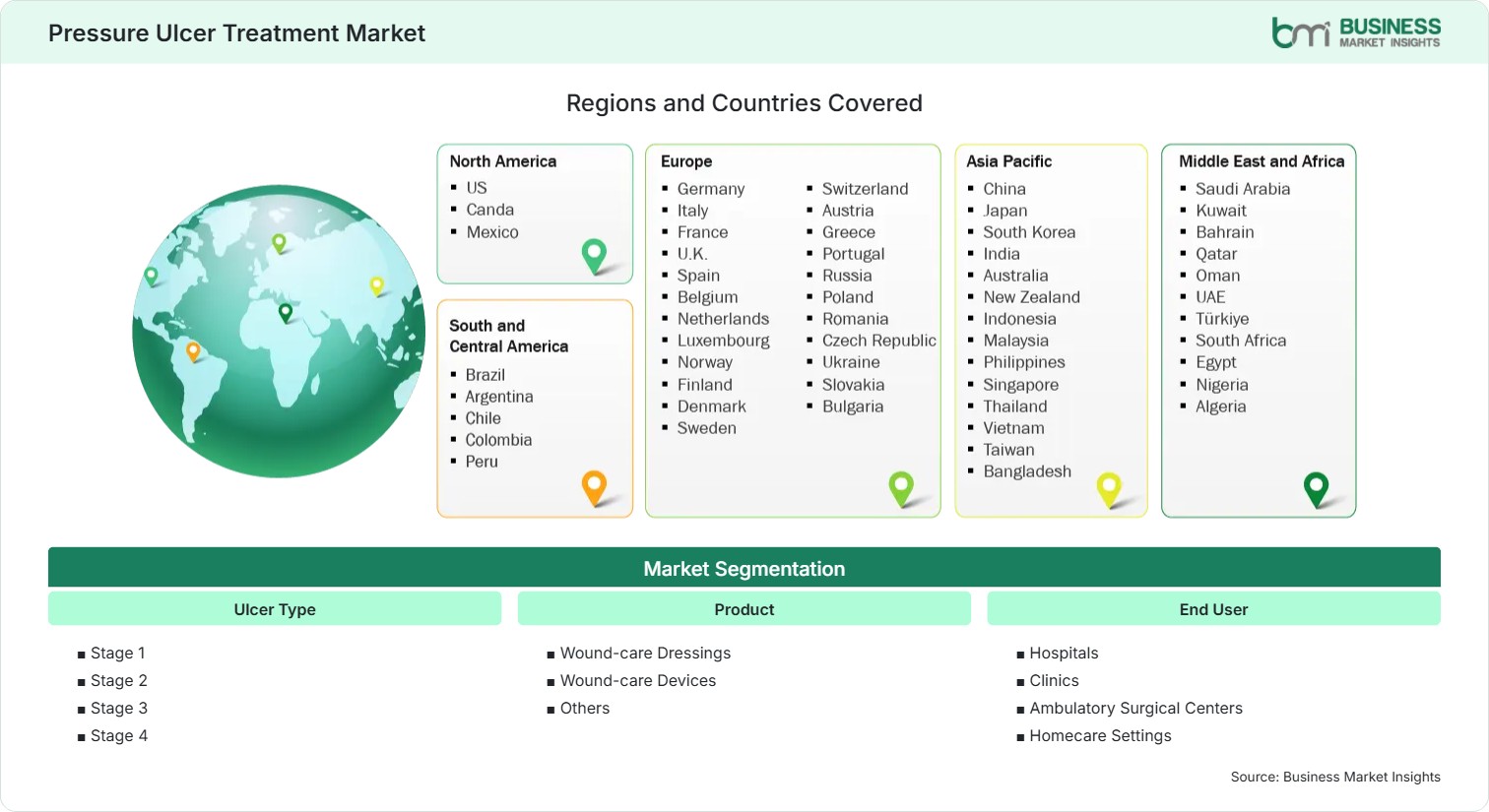
  • Ulcer Type: Stage 1, Stage 2, Stage 3, Stage 4
  • Product: Wound-care Dressings, Wound-care Devices, Others
  • End User: Hospitals, Clinics, Ambulatory Surgical Centers, Homecare Settings
US$ 11.13 Bn Market size in 2025
US$ 20.25 Bn Market Size by 2033
7.77% CAGR, 2026 - 2033
2026-2033 Forecast Period

01 AI Overview

Pressure Ulcer Treatment Market Summary

  • North America Region: North America holds a 38%–41% share in 2025 and is projected to expand at a 7.2%–7.8% CAGR during 2026–2033. Growth is supported by increasing elderly populations, advanced wound care adoption, strong healthcare spending, favorable reimbursement frameworks, growing hospital admissions, pressure injury prevention initiatives, and widespread use of advanced wound management technologies. The U.S. remains the largest market, growing at a 7.3%–7.9% CAGR.
  • Fastest Growing Region: Asia Pacific accounts for 22%–25% share in 2025 and is anticipated to register a 8.8%–9.5% CAGR through 2033. Expanding healthcare access, rising chronic disease burden, growing elderly populations, and increasing investments in wound care management support market expansion.
  • Leading Segment: Wound-care Dressings represent 48%–52% share in 2025 and are expected to grow at a 7.9%–8.4% CAGR during 2026–2033. Increased use of advanced dressings, effective wound healing support, and broad clinical adoption continue driving growth.
  • High Growth Segment: Hospitals account for 56%–60% share in 2025 and are forecast to expand at a 8.1%–8.7% CAGR through 2033. High patient volumes, growing surgical procedures, and widespread wound management services continue supporting demand.
  • Key Market Opportunity: Expansion of home-based wound care services and increasing adoption of pressure-relief technologies are creating substantial opportunities for treatment providers and device manufacturers.
  • Major Market Players: Smith+Nephew plc, Mölnlycke Health Care AB, Cardinal Health, Inc., 3M Company, Hill-Rom Holdings, Inc., Invacare Corporation, Stryker Corporation, Convatec Group plc, Coloplast A/S, and Essity AB.
02 Strategic Insights

Pressure Ulcer Treatment Market: Strategic Insights

Pressure Ulcer Treatment Market Strategic Framework
FREE PDF
Request your free sample
Request free sample
03 Stakeholder View

Key Takeaways

  • The market is increasingly focused on integrated wound management approaches combining advanced dressings, support surfaces, monitoring technologies, and preventive care programs.
  • Homecare settings present significant opportunities due to growing demand for long-term wound management and aging population care requirements.
  • Product innovation is centered on moisture management, antimicrobial dressings, pressure-relief systems, and smart wound monitoring technologies.
  • Asia Pacific offers strong investment potential owing to healthcare infrastructure expansion, demographic shifts, and increasing awareness of chronic wound treatment.
  • Healthcare providers are investing in prevention-focused strategies to reduce treatment costs and improve patient outcomes.
  • Growing emphasis on value-based healthcare models is encouraging adoption of advanced and clinically effective pressure ulcer management solutions.
04 Geographic Outlook

Pressure Ulcer Treatment Market Regional Highlights

North America Pressure Ulcer Treatment Market

North America accounted for approximately 38%–41% share in 2025 and is projected to grow at a 7.2%–7.8% CAGR through 2033. The region benefits from advanced healthcare systems, strong reimbursement support, and widespread adoption of specialized wound care products. Increasing prevalence of chronic diseases and a growing elderly population continue driving treatment demand across hospitals, long-term care facilities, and homecare settings. Investments in preventive care programs and pressure injury management technologies are further supporting Pressure Ulcer Treatment Market forecasts expansion.

  • Healthcare facilities are increasingly implementing pressure injury prevention protocols to reduce hospital-acquired ulcers and improve patient outcomes while minimizing treatment-related costs.
  • Strong reimbursement frameworks support adoption of advanced wound-care dressings, pressure-relief devices, and innovative treatment technologies across healthcare institutions.
  • Long-term care facilities continue expanding utilization of preventive wound management solutions due to increasing elderly patient populations.
  • Technological advancements in wound monitoring and support surfaces are strengthening demand for comprehensive pressure ulcer treatment solutions.

US Pressure Ulcer Treatment Market

The United States represents approximately 79%–83% share within North America and is expected to expand at a 7.3%–7.9% CAGR during the forecast period. Strong healthcare expenditure, increasing focus on pressure injury prevention, and extensive utilization of advanced wound care products continue supporting Pressure Ulcer Treatment market growth. Healthcare providers are increasingly emphasizing early intervention strategies and specialized wound care services to improve recovery outcomes and reduce hospitalization burdens associated with chronic wounds.

  • Hospitals continue investing in advanced wound-care technologies to improve healing outcomes and comply with patient safety requirements.
  • Growing incidence of chronic diseases and mobility-related conditions continues increasing demand for pressure ulcer treatment services.
  • Home healthcare providers are expanding wound management capabilities to support long-term patient care requirements.
  • Healthcare organizations are adopting evidence-based prevention protocols to reduce pressure ulcer occurrence and associated treatment costs.

Europe Pressure Ulcer Treatment Market

Europe represented approximately 28%–31% share in 2025 and is forecast to register a 7.5%–8.1% CAGR through 2033. Growth is supported by aging demographics, healthcare modernization initiatives, and strong adoption of advanced wound management technologies. Germany, the United Kingdom, and France remain leading markets, while Eastern European countries are witnessing increasing adoption. Government healthcare investments and focus on quality patient care continue supporting demand for advanced pressure ulcer treatment market trends products.

  • Germany remains the largest regional market due to advanced healthcare infrastructure and high utilization of wound-care technologies.
  • Rising elderly populations are increasing demand for preventive care programs and specialized treatment solutions.
  • Healthcare modernization initiatives continue driving adoption of innovative wound management products and pressure-relief devices.
  • Long-term care facilities increasingly utilize advanced dressings and support surfaces to improve patient outcomes.

Asia Pacific Pressure Ulcer Treatment Market

Asia Pacific accounted for approximately 22%–25% share in 2025 and is projected to witness the fastest expansion at a 8.8%–9.5% CAGR through 2033. Rising healthcare expenditure, expanding hospital infrastructure, and increasing awareness regarding wound care management continue supporting adoption. Growing elderly populations and improving access to healthcare services are creating favorable conditions for Pressure Ulcer Treatment Market expansion. Investments in healthcare technology and chronic disease management programs further support demand growth.

  • China continues strengthening wound care capabilities through healthcare infrastructure development and increased medical technology investments.
  • India is emerging as a high-growth market supported by expanding healthcare access and growing awareness of advanced wound management.
  • Increasing prevalence of diabetes and chronic diseases is contributing to greater treatment demand across healthcare settings.
  • Hospitals are enhancing wound care programs to improve patient safety and treatment outcomes.

Rest of World Pressure Ulcer Treatment Market

The Rest of World region accounted for approximately 6%–8% share in 2025 and is expected to grow at a 7.7%–8.3% CAGR through 2033. Increasing healthcare access and investments in chronic care management are contributing to market development across South and Central America, the Middle East, and Africa. Expansion of healthcare facilities, growing awareness of wound management practices, and improving availability of advanced treatment solutions continue creating opportunities for Pressure Ulcer Treatment Market participants.

  • Brazil remains an important market due to healthcare expansion and increasing adoption of advanced wound-care technologies.
  • Middle Eastern healthcare investments continue supporting procurement of modern wound management products and patient care systems.
  • Growing awareness regarding pressure injury prevention is encouraging greater utilization of treatment and monitoring solutions.
  • Healthcare infrastructure development across emerging economies is improving patient access to specialized wound care services.
Global Market Geography
FREE PDF
Request your free sample
Request free sample
05 Segment Analysis

Pressure Ulcer Treatment Market Segmentation

Ulcer Type

The ulcer type segment is driven by increasing diagnosis and treatment of pressure injuries across healthcare facilities. Stage 2 ulcers account for approximately 32%–36% share in 2025 and are projected to grow at a 7.8%–8.4% CAGR through 2033. Rising awareness regarding early intervention, improved wound assessment practices, and increasing access to specialized care continue supporting segment growth. Healthcare providers are increasingly adopting stage-specific treatment strategies to improve healing outcomes and reduce complications in Pressure Ulcer Treatment Market.

  • Stage 1: Early-stage pressure ulcers are primarily managed through preventive interventions, repositioning strategies, pressure-relief devices, and enhanced skin monitoring protocols to avoid progression.
  • Stage 2: Represents a significant treatment category due to partial-thickness skin loss requiring advanced dressings, moisture management solutions, and regular clinical assessment.
  • Stage 3: Treatment demand is driven by deeper tissue injury requiring comprehensive wound care management, infection prevention measures, and extended recovery programs.
  • Stage 4: Severe ulcers require intensive treatment, advanced wound-care products, multidisciplinary intervention, and prolonged care management to support healing outcomes.

Product

The product segment is led by wound-care dressings, accounting for approximately 48%–52% share in 2025 and anticipated to grow at a 7.9%–8.4% CAGR during 2026–2033. Strong clinical effectiveness, infection management capabilities, and growing adoption of advanced dressing technologies continue supporting Pressure Ulcer Treatment Market scope dominance. Rising emphasis on faster healing, reduced treatment complications, and improved patient comfort is further strengthening demand for advanced wound management products.

  • Wound-care Dressings: The largest product category owing to effectiveness in moisture balance, infection control, wound protection, and enhancement of tissue healing processes.
  • Wound-care Devices: Increasing adoption is supported by technological advancements in pressure-relief therapy, wound monitoring, and negative pressure wound treatment systems.

End User

The end-user segment is dominated by hospitals, accounting for approximately 56%–60% share in 2025 and projected to expand at a 8.1%–8.7% CAGR through 2033. High patient volumes, extensive wound management services, and availability of specialized healthcare professionals continue supporting segment growth in Pressure Ulcer Treatment Market. Increasing focus on reducing hospital-acquired pressure injuries and improving patient outcomes further strengthens adoption of advanced treatment solutions.

  • Hospitals: The leading end-user category due to comprehensive wound care services, advanced treatment infrastructure, and larger patient populations requiring pressure ulcer management.
  • Clinics: Growing adoption is supported by increasing outpatient wound care procedures and demand for convenient treatment and monitoring services.
  • Ambulatory Surgical Centers: Rising procedural volumes and enhanced post-operative wound management requirements are contributing to increased treatment demand.
  • Homecare Settings: Expanding rapidly due to growing preference for home-based recovery, long-term care management, and cost-effective treatment solutions.
06 Market Forces

Pressure Ulcer Treatment Market Dynamics

Key Market Drivers

Rising Prevalence of Pressure Ulcers Among Elderly Patients

Increasing numbers of elderly people will continue to contribute significantly to the pressure ulcers problem in the future. Elderly patients usually suffer from restricted mobility, bed-ridden status, and other diseases which make them vulnerable to pressure ulcers. Medical specialists are making efforts in the area of pressure ulcers management through prevention, diagnosis, and treatment. The demand for innovative wound care products, surfaces, and relief equipment is increasing with an aim to ensure better care to patients and lower treatment costs. Growth in occupancy rates in long-term care facilities also increases demand.

Rising Incidence of Chronic Diseases

Chronic diseases such as diabetes, heart-related problems, neurologic conditions, and obesity greatly raise the risk of pressure ulcers. Individuals who have such chronic illnesses often experience long periods of hospital stays and are less mobile, increasing their need for treatment. Advanced wound care solutions are gaining more attention in health care facilities due to the increasing number of patients with chronic diseases. The increasing prevalence of chronic diseases worldwide will further drive the market.

Increasing Healthcare Expenditure on Wound Care

Governments, healthcare institutions, and private organizations are increasing spending on wound care services and advanced treatment technologies. Rising investments in healthcare infrastructure, specialized wound management centers, and preventive care initiatives are supporting market expansion. Advanced dressings, pressure-relief systems, and patient monitoring technologies are increasingly adopted to enhance treatment effectiveness and lower long-term costs. As healthcare systems prioritize improved patient outcomes and quality care standards, demand for innovative pressure ulcer treatment solutions continues to expand across developed and emerging markets.

Key Market Opportunities

Expansion of Pressure Ulcer Prevention Programs in Elderly Care Facilities

Long-term care centers and elderly care facilities are increasingly implementing structured prevention programs aimed at reducing pressure ulcer incidence. These programs emphasize patient repositioning, skin assessment, nutritional support, and utilization of pressure-relief technologies. Growing awareness among caregivers and healthcare providers regarding preventive care benefits is creating opportunities for manufacturers of specialized support surfaces, monitoring systems, and wound management products. Expansion of elderly care infrastructure globally is expected to generate sustained demand for preventive healthcare solutions throughout the forecast period.

Growing Demand for Home-Based Wound Care

Increasingly, healthcare systems are promoting home-based treatment approaches to minimize hospitalization costs and provide patients with a more comfortable experience. Home-based healthcare organizations are embracing innovative wound dressings, monitoring tools, and pressure management devices to facilitate efficient treatment even in non-hospital settings. The growing inclination towards home-based healthcare and the increased use of telehealth services continue to drive this trend. Companies creating user-friendly wound management products will stand to gain from this growing trend.

Increasing Adoption of Advanced Pressure-Relief Technologies

Innovations in support-surface technology, pressure-relief mattresses, cushions, and intelligent monitoring systems are changing the face of pressure ulcer management and treatment. The innovations will be useful in reducing exposure to constant pressure, improving patient comfort, and achieving better treatment results. The health professionals are increasing their investments in technology innovations that will help them reduce the number of cases and minimize costs of treatment. An emphasis on patient safety and efficiency in the healthcare sector will continue to drive innovation in pressure-relief solutions.

Market Restraints and Challenges

High Cost of Advanced Pressure Ulcer Treatment Devices

Factor: Advanced pressure ulcer treatment devices, including pressure-relief mattresses, negative pressure wound therapy systems, and smart monitoring technologies, require significant capital investment and ongoing maintenance expenditures. Healthcare facilities must also allocate resources for staff training, device servicing, and replacement components. Impact: These high costs can restrict adoption among smaller hospitals, clinics, long-term care facilities, and providers operating under budget constraints. Delayed procurement decisions and limited reimbursement support in certain markets may further hinder market penetration. Despite clinical advantages and long-term cost savings associated with improved patient outcomes, affordability challenges continue to act as a barrier to widespread implementation of advanced pressure ulcer treatment technologies globally.

Limited Access to Specialized Wound Care

Factor: Advanced pressure ulcer treatment devices, including pressure-relief mattresses, negative pressure wound therapy systems, and smart monitoring technologies, require significant capital investment and ongoing maintenance expenditures. Healthcare facilities must also allocate resources for staff training, device servicing, and replacement components. Impact: These high costs can restrict adoption among smaller hospitals, clinics, long-term care facilities, and providers operating under budget constraints. Delayed procurement decisions and limited reimbursement support in certain markets may further hinder market penetration. Despite clinical advantages and long-term cost savings associated with improved patient outcomes, affordability challenges continue to act as a barrier to widespread implementation of advanced pressure ulcer treatment technologies globally.

07 Company Analysis

Competitive Landscape

The competitive landscape is characterized by continuous innovation in advanced wound-care products, pressure-relief technologies, patient monitoring systems, and homecare treatment solutions. The Pressure Ulcer Treatment Market analysis indicates that manufacturers are increasingly investing in advanced wound healing technologies, antimicrobial solutions, and pressure injury prevention systems to address growing healthcare requirements and improve patient outcomes.

Company Name

Overview

Products and Services relevant to this market

Smith+Nephew plc

Global medical technology company specializing in advanced wound management and chronic wound treatment solutions.

Advanced wound dressings, negative pressure wound therapy systems, pressure ulcer management products, and wound care solutions.

Mölnlycke Health Care AB

Leading provider of surgical and wound care products serving hospitals and long-term care facilities worldwide.

Foam dressings, antimicrobial wound products, pressure injury prevention solutions, and advanced wound-care technologies.

Cardinal Health, Inc.

Healthcare services and medical products provider supporting wound management and patient care requirements.

Wound dressings, patient care products, clinical supplies, and pressure ulcer treatment solutions.

3M Company

Diversified healthcare technology company with a comprehensive portfolio of wound care and skin protection products.

Advanced dressings, wound management systems, skin integrity products, and healthcare technologies.

Hill-Rom Holdings, Inc.

Medical technology company known for patient support systems and pressure injury prevention technologies.

Pressure-relief beds, therapeutic mattresses, patient positioning systems, and mobility solutions.

Invacare Corporation

Manufacturer of homecare and long-term care medical equipment focused on patient comfort and safety.

Pressure-relief mattresses, support surfaces, mobility aids, and patient care equipment.

Stryker Corporation

Global healthcare company providing hospital equipment and patient handling technologies.

Hospital beds, pressure redistribution systems, patient support surfaces, and clinical care products.

Convatec Group plc

Specialist developer of advanced wound care and chronic condition management solutions.

Advanced wound dressings, wound therapy products, antimicrobial solutions, and pressure ulcer treatment technologies.

Coloplast A/S

Medical device company focused on wound and skin care management solutions.

Wound dressings, pressure injury management products, skin care solutions, and treatment accessories.

Essity AB

Healthcare and hygiene company with a strong focus on wound management and patient care technologies.

Advanced wound dressings, compression therapies, pressure ulcer care solutions, and specialized treatment products.

10 Trust & Transparency

Research Methodology

The market analysis combines proprietary research with secondary data from government agencies, company disclosures, regulatory filings, industry databases and expert interviews. Market estimates are validated through data triangulation, cross-market benchmarking and analyst review.

View Full Research Methodology

11 Questions Answered

Frequently Asked Questions

How do pressure-relief devices support treatment?

Pressure-relief devices help redistribute weight, minimize prolonged tissue compression, reduce the risk of additional skin damage, and improve healing outcomes for patients with existing pressure ulcers.

Which region is expected to witness the fastest growth in Pressure Ulcer Treatment Market report?

Asia Pacific is projected to record the highest growth due to healthcare infrastructure expansion, growing elderly populations, increasing awareness of chronic wound management, and higher healthcare expenditure.

Why is home-based wound care gaining importance?

Homecare treatment enables long-term wound management in a cost-effective environment while improving patient comfort, reducing hospitalization requirements, and supporting continuity of care for elderly individuals.

Which product segment holds the largest Pressure Ulcer Treatment Market share?

Wound-care dressings represent the leading product segment because of their widespread use in moisture management, wound protection, infection prevention, and healing support across all pressure ulcer stages.

What are pressure ulcers?

Pressure ulcers are localized injuries to the skin and underlying tissue that develop due to prolonged pressure, friction, or shear forces, particularly among individuals with limited mobility or chronic health conditions.

Access the Full Pressure Ulcer Treatment Market Report

Get segment-level forecasts, regional estimates, competitive benchmarking, company profiles and downloadable Excel datasets.

Access the full Pressure Ulcer Treatment Market Report
350 pages PDF & Excel | 2026-08-24