
Orphan Drugs Market Outlook: Size, Share, Trends, Growth Analysis, Competitive Landscape & Forecast, 2026-2033

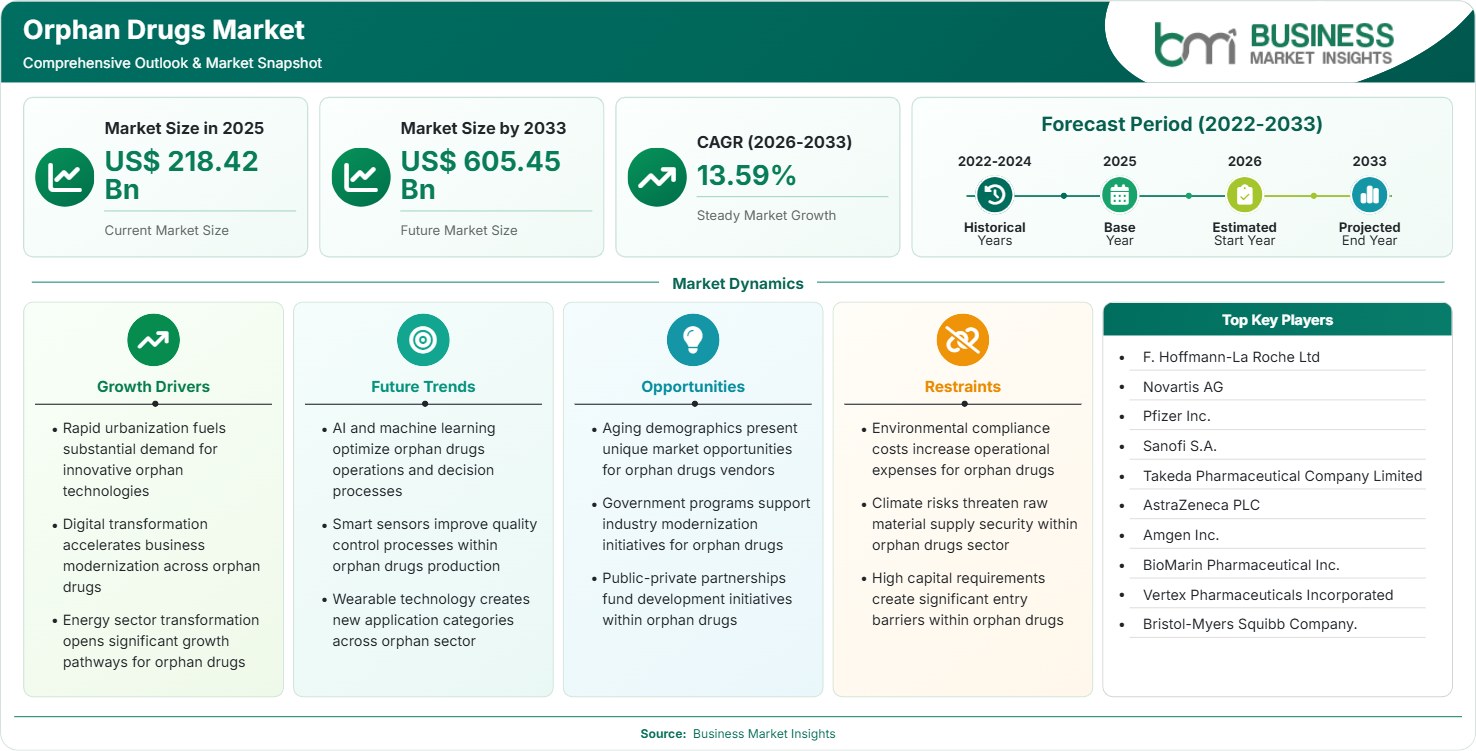
The Orphan Drugs Market size was valued at US$ 218.42 Billion in 2025 and is projected to reach US$ 605.45 Billion by 2033, growing at a CAGR of 13.59% during 2026–2033, supported by rare disease prevalence awareness, regulatory incentives, biologics innovation, gene therapy commercialization, and expanding patient identification programs.

Report Coverage
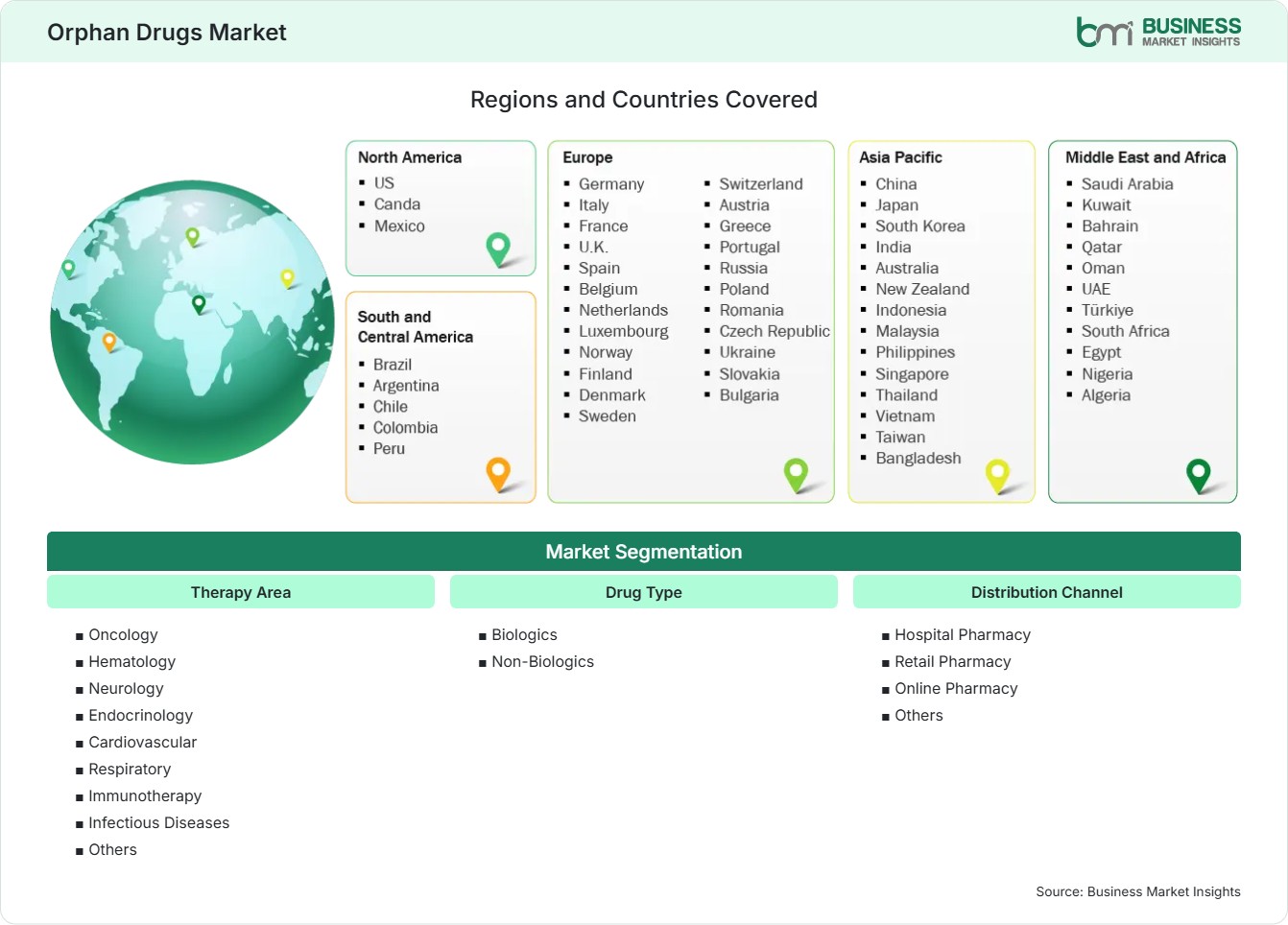
  • Therapy Area: Oncology, Hematology, Neurology, Endocrinology, Cardiovascular, Respiratory, Immunotherapy, Infectious Diseases, Others
  • Drug Type: Biologics, Non-Biologics
  • Distribution Channel: Hospital Pharmacy, Retail Pharmacy, Online Pharmacy, Others
US$ 218.42 Bn Market size in 2025
US$ 605.45 Bn Market Size by 2033
13.59% CAGR, 2026 - 2033
2026-2033 Forecast Period

AI Overview

Orphan Drugs Market Summary

  • North America Region: North America holds market share of 44%–47% in 2025, growing with a CAGR of 12.5%–13.5% during 2026–2033. Strong orphan drug legislation, advanced diagnostics, payer support, genomic testing adoption, rare disease advocacy, expanded newborn screening, and precision medicine investments continue accelerating commercialization opportunities. US market benefits from orphan designation incentives, specialized centers, and biotechnology leadership, advancing at 12.8%–13.8% CAGR.
  • Fastest Growing Region: Asia Pacific holds market share of 20%–23% in 2025, growing with a CAGR of 15.5%–16.5% during 2026–2033. Rare disease policy expansion, domestic biopharmaceutical innovation, growing healthcare expenditure, broader diagnostics, patient registry development, regulatory modernization, and increasing access programs support sustained demand across regional markets.
  • Leading Segment: Oncology accounts for 34%–37% share in 2025 and is anticipated to expand at 13.0%–14.0% CAGR. Increasing rare cancer incidence, biomarker-driven therapies, targeted biologics adoption, accelerated approvals, companion diagnostics integration, strong clinical pipelines, and sustained research funding reinforce segment leadership worldwide.
  • High Growth Segment: Biologics accounts for 63%–66% share in 2025 and is projected to grow at 14.5%–15.5% CAGR. Growing utilization of monoclonal antibodies, recombinant proteins, cell therapies, gene therapies, precision treatment models, strong reimbursement frameworks, and biotech innovation stimulate rapid expansion.
  • Key Market Opportunity: Commercial expansion of gene-editing therapies for ultra-rare disorders offers substantial opportunities through earlier diagnosis, personalized treatment pathways, regulatory incentives, premium pricing flexibility, and broader cross-border patient access programs.
  • Major Market Players: F. Hoffmann-La Roche Ltd, Novartis AG, Pfizer Inc., Sanofi S.A., Takeda Pharmaceutical Company Limited, AstraZeneca PLC, Amgen Inc., BioMarin Pharmaceutical Inc., Vertex Pharmaceuticals Incorporated, Bristol-Myers Squibb Company.
Strategic Insights

Orphan Drugs Market: Strategic Insights

Orphan Drugs Market Strategic Framework
FREE PDF
Request your free sample
Request free sample
Stakeholder View

Key Takeaways

  • Rare disease treatment ecosystems increasingly depend on coordinated networks involving research institutions, specialty manufacturers, diagnostic providers, treatment centers, advocacy groups, and reimbursement stakeholders.
  • Oncology, neurology, and advanced biologics offer the strongest revenue upside due to expanding precision medicine adoption and robust orphan-designation pipelines.
  • Innovation is shifting from conventional therapies toward gene therapies, RNA-based medicines, cell therapies, and AI-assisted rare disease discovery platforms.
  • Asia Pacific presents a compelling investment case, supported by rising diagnosis rates, healthcare modernization, and favorable rare-disease policy reforms.
  • Strategic acquisitions remain focused on rare-disease specialists, platform technologies, gene-therapy developers, and precision medicine capabilities.
  • Expanding patient registries and genomic screening initiatives are improving identification of previously underserved patient populations, expanding addressable treatment opportunities.
Geographic Outlook

Orphan Drugs Market Regional Highlights

North America Orphan Drugs Market

North America accounted for approximately 44%–47% of global revenue in 2025 and is expected to advance at a 12.5%–13.5% CAGR through 2033. The region benefits from strong regulatory incentives under orphan-drug frameworks, advanced healthcare systems, and high adoption of specialty therapies. The Orphan Drugs Market share remains concentrated in the United States because of established reimbursement structures, extensive rare disease research activity, and significant biotechnology investment. Expanded genomic testing and patient identification initiatives continue improving treatment penetration across multiple therapeutic areas.

  • FDA orphan designation incentives continue supporting research productivity, clinical trial activity, and commercialization of therapies targeting small patient populations.
  • Biologics and gene therapies are gaining adoption through specialized treatment centers and dedicated reimbursement mechanisms.
  • Public and private funding programs encourage research into rare oncology, neurological, and hematological disorders.
  • Digital health and patient registry programs strengthen patient identification and long-term treatment monitoring.

US Orphan Drugs Market

The United States represented nearly 79%–82% of North American Orphan Drugs Market revenue in 2025 and is forecast to expand at 12.8%–13.8% CAGR. Strong biotechnology leadership, rare disease advocacy, extensive clinical research infrastructure, and favorable exclusivity provisions sustain market momentum. The country records the highest concentration of orphan designations globally and remains a key destination for innovative therapy launches and advanced biologics commercialization.

  • Genomic sequencing adoption improves rare disease detection and accelerates treatment initiation.
  • Specialty pharmacies and integrated care models improve patient access and adherence.
  • Venture capital funding supports early-stage biotechnology innovation and rare disease discovery.
  • Academic research organizations maintain strong collaboration with pharmaceutical developers.

Europe Orphan Drugs Market

Europe held approximately 27%–30% Orphan Drugs Market share in 2025 and is anticipated to grow at a 12.8%–13.8% CAGR. Strong regulatory support from the European Medicines Agency, expanding rare disease registries, and growing focus on precision medicine contribute to regional expansion. Germany leads regional demand, while Spain and selected Central European markets demonstrate faster adoption rates. Cross-country collaboration programs continue supporting clinical research and patient access.

  • Germany remains the leading regional market supported by advanced healthcare infrastructure.
  • Spain exhibits strong expansion potential with estimated growth near regional averages.
  • Rare disease reimbursement discussions increasingly focus on outcomes-based payment approaches.
  • Biotechnology investment and collaborative research initiatives support pipeline development.
  • Personalized medicine adoption enhances treatment targeting across multiple disease categories.

Asia Pacific Orphan Drugs Market

Asia Pacific represented 20%–23% of the Orphan Drugs Market revenue in 2025 and is projected to achieve a 15.5%–16.5% CAGR, making it the fastest-growing region. China and Japan are the largest contributors, while India and South Korea are emerging as high-growth markets. Rare disease awareness programs, healthcare infrastructure investments, and national policy initiatives are expanding treatment access. Increasing domestic biopharmaceutical capabilities further strengthen regional competitiveness.

  • China continues investing in rare disease frameworks and specialty drug availability.
  • Japan benefits from established orphan designation systems and innovation incentives.
  • India is improving diagnostic accessibility and patient awareness initiatives.
  • Local biotechnology companies are accelerating development of targeted rare disease therapies.
  • International collaborations enhance clinical trial participation across multiple countries.

Rest of World Orphan Drugs Market

The rest of the world accounted for 8%–10% revenue in the Orphan Drugs Market share in 2025 and is expected to register a 13.5%–14.5% CAGR through 2033. South and Central America are improving access to specialty medicines through healthcare modernization efforts. In the Middle East and Africa, rare disease awareness and specialized treatment infrastructure remain key growth catalysts. Brazil and Saudi Arabia are among the leading contributors, while the UAE demonstrates notable expansion potential.

  • Brazil continues strengthening access pathways for rare disease therapies.
  • Saudi Arabia expands genomic medicine and screening initiatives.
  • UAE supports biotechnology investment and advanced healthcare projects.
  • Cross-border treatment partnerships improve specialist care availability.
  • Increasing public awareness contributes to earlier diagnosis and treatment adoption.
Global Market Geography
FREE PDF
Request your free sample
Request free sample
Segment Analysis

Orphan Drugs Market Segmentation

Therapy Area

Therapy Area accounted for the largest revenue concentration across disease-specific applications. The segment reflects evolving treatment approaches for rare cancers, hematological disorders, neurological diseases, and metabolic conditions. The segment held approximately 34%–37% leadership through oncology categories and is expected to expand at 13.0%–14.0% CAGR. The Orphan Drugs Market scope continues broadening as diagnosis rates improve globally.

  • Oncology: Dominant rare-disease treatment category driven by biomarker-focused therapies, high research investment, targeted medicines, and increasing approvals supporting specialized cancer management.
  • Hematology: Sustained demand originates from inherited blood disorders requiring long-term specialty therapy and advanced biologic interventions.
  • Neurology: Growing patient identification and gene-based treatments enhance adoption for rare neurological conditions.
  • Endocrinology: Improved screening programs and precision therapies support treatment expansion across rare hormonal disorders.
  • Cardiovascular: Increasing diagnosis of hereditary cardiovascular diseases drives need for targeted interventions and specialist management.
  • Respiratory: Novel biologics and rare pulmonary disease therapies contribute to expanding treatment opportunities.
  • Immunotherapy: Advanced immune-targeting approaches improve outcomes for selected rare disease populations.
  • Infectious Diseases: Specialized therapies address uncommon infectious conditions with limited traditional treatment alternatives.

Drug Type

Drug Type segmentation highlights the increasing preference for advanced biological therapies. Biologics generated approximately 63%–66% revenue share in 2025 and are projected to register 14.5%–15.5% CAGR. The Orphan Drugs Market trends indicate continued migration toward highly targeted treatment mechanisms supported by precision medicine, regulatory incentives, and strong clinical effectiveness.

  • Biologics: Strong adoption supported by monoclonal antibodies, cell therapies, gene therapies, and recombinant technologies addressing unmet medical needs.
  • Non-Biologics: Continues serving multiple rare disease indications through established formulations, targeted molecules, and specialty drug innovations.

Distribution Channel

Distribution channels remain critical because orphan therapies often require specialist oversight and complex handling requirements. Hospital pharmacy channels maintained approximately 58%–61% share in 2025 and are expected to advance at 12.5%–13.5% CAGR. Growth is supported by specialty care delivery models and increasing administration of complex biologic therapies.

  • Hospital Pharmacy: Leading channel because many therapies require specialist supervision, cold-chain logistics, and integrated patient care environments.
  • Retail Pharmacy: Expanding access for chronic rare disease treatments requiring long-term medication availability.
  • Online Pharmacy: Growing utilization reflects digital health adoption, improved delivery networks, and patient convenience benefits.
Market Forces

Orphan Drugs Market Dynamics

Key Market Drivers

Expansion of Rare Disease Diagnosis Programs

Advancements in genetic sequencing, newborn screening initiatives, and digital diagnostic platforms are increasing the identification of rare diseases worldwide. According to the WHO and rare disease patient groups, many rare disorders remain undiagnosed, resulting in significant unmet needs. Early diagnosis facilitates access to more appropriate treatments, thereby ensuring better long-term management. Improved diagnostic accuracy has enabled healthcare professionals to provide patients with more specific treatments, thereby ensuring commercial success for developers.

Strong Regulatory Incentives for Innovation

Orphan designation frameworks in major economies offer market exclusivity, fee reductions, protocol assistance, and accelerated review pathways. Such incentives mitigate development risk and increase return on investment when developing drugs for treating patient groups. Regulatory bodies continue to focus on innovations in rare diseases, as there is no alternative therapy available for many of them. Drug developers continue to focus on specialty pipelines, as they offer a favorable business environment and streamlined pathways due to exclusivity protections.

Growth of Biologics and Advanced Therapies

Biologics, gene therapies, and cell-based treatments are transforming care standards across rare disorders. A synergy between precision medicine tools and molecular targets is showing improved efficacy compared with conventional treatments. Funds are continually being invested in developing new treatments capable of addressing the fundamental causes of disease. Higher success rates in rare oncology, hematology, and neurological indications are fueling greater investment confidence.

Key Market Opportunities

Commercialization of Gene Editing Platforms

The advent of new CRISPR and gene-editing technologies provides a means to address conditions that could not be addressed before because they were rare and untreatable. These technologies are being harnessed by developers for single-gene diseases, where treatment may lead to high prices. There will be collaborations between innovative biotechnology and large pharmaceutical firms. Orphan Drugs Market Forecasts indicate that successful gene-editing therapies could transform treatment economics by reducing lifetime disease burden while expanding eligible patient groups identified through genomic screening initiatives.

Expansion Across Emerging Healthcare Systems

Healthcare modernization across Asia Pacific, Latin America, and the Middle East is creating new pathways for specialty medicine access. Government intervention to formulate strategies for rare diseases, build stronger reimbursement schemes, and invest in diagnostic systems is taking place. This raises awareness levels and improves diagnosis, hence increasing demand. Companies that can effectively combine innovative treatments with locally targeted patient access programs are best positioned to gain competitive advantages in expanding healthcare markets.

Digital Integration for Patient Identification

Artificial intelligence, advanced analytics, and digital patient registries enable more efficient identification of individuals with rare diseases. This technology will help recruit patients for clinical trials and generate evidence to support the reimbursement process. Data visibility will help better understand the burden of the disease and treatment outcomes. With the ongoing digitalization of health care systems, the commercialization strategy will be easier to develop.

Market Restraints and Challenges

High Treatment Costs and Reimbursement Pressure

Factor: Many therapies command exceptionally high annual treatment costs because development expenses are distributed across limited patient populations.

Impact: Increased scrutiny by payers, health technology assessment organizations, and government payment systems. The lack of money will either delay a decision or limit the criteria for coverage, meaning that although there is benefit to patients, they might not be able to access it due to budgetary limitations.

Limited Patient Populations and Clinical Complexity

Factor: Rare diseases often involve small, geographically dispersed patient populations.

Impact: Extended recruitment times, higher costs associated with conducting the trials, and problems related to the development of statistically sound data sets. Designers often use adaptive trial methodologies and international partnerships for this process. The regulations are stringent even in light of reduced populations, thus posing more difficulties.

Company Analysis

Competitive Landscape

The Orphan Drugs Market analysis reflects a competitive environment shaped by biologics innovation, specialty portfolios, rare disease expertise, and strategic partnerships.

Company Name

Overview

Products and Services relevant to this market

F. Hoffmann-La Roche Ltd

Global biopharmaceutical leader with strong rare oncology and precision medicine capabilities.

Targeted oncology therapies, diagnostics integration, biologics, and rare disease treatment solutions.

Novartis AG

Major innovator in gene therapies and rare disease drug development.

Gene therapies, specialty medicines, hematology treatments, and orphan-designated products.

Pfizer Inc.

Diversified pharmaceutical company with significant rare disease investments.

Rare disease medicines, biologics, clinical research, and specialty therapeutics.

Sanofi S.A.

Strong presence in rare genetic and metabolic disorders.

Enzyme replacement therapies, rare disease medicines, and specialty biologics.

Takeda Pharmaceutical Company Limited

Leading rare disease developer with global commercial infrastructure.

Plasma-derived therapies, rare disease medicines, and specialty treatment platforms.

AstraZeneca PLC

Expanding position through targeted therapies and precision medicine programs.

Oncology medicines, biologics, and specialty rare disease treatments.

Amgen Inc.

Biotechnology company focused on innovative biologics and specialty drugs.

Biologics, rare disease therapies, supportive care medicines, and advanced research services.

BioMarin Pharmaceutical Inc.

Specialist company dedicated largely to rare genetic diseases.

Gene therapies, enzyme therapies, and rare disease treatment programs.

Vertex Pharmaceuticals Incorporated

Recognized for precision medicines and genetic disease innovation.

Genetic disease therapies, advanced biotechnology platforms, and specialty medicines.

Bristol-Myers Squibb Company

Global pharmaceutical developer with targeted rare disease initiatives.

Oncology products, hematology therapies, biologics, and specialty drug development.

Trust & Transparency

Research Methodology

The market analysis combines proprietary research with secondary data from government agencies, company disclosures, regulatory filings, industry databases and expert interviews. Market estimates are validated through data triangulation, cross-market benchmarking and analyst review.

View Full Research Methodology

Questions Answered

Frequently Asked Questions

What does this Orphan Drugs Market Report help stakeholders evaluate?

It supports assessment of regional opportunities, competitive positioning, investment priorities, segment performance, innovation trends, and long-term strategic planning considerations.

Which region offers the strongest growth potential?

Asia Pacific presents the highest expansion potential because of regulatory reforms, healthcare investment, improving diagnostics, and increasing patient access programs.

Why are biologics important in rare disease treatment?

Biologics provide highly targeted therapeutic mechanisms, improved efficacy for many rare disorders, and strong alignment with precision medicine strategies.

What therapeutic area generates the highest revenue?

Oncology remains the leading therapeutic category due to substantial investment in biomarker-driven therapies, rare cancer treatments, and precision medicine approaches.

What factors are driving demand for orphan drugs?

Rising rare disease diagnosis rates, genomic testing adoption, regulatory incentives, targeted biologics development, and expanding patient advocacy initiatives are increasing treatment accessibility and commercial activity.

Access the Full Orphan Drugs Market Report

Get segment-level forecasts, regional estimates, competitive benchmarking, company profiles and downloadable Excel datasets.

Access the full Orphan Drugs Market Report
350 pages PDF & Excel | 2026-08-31
Similar Research

Related Market Reports