
Dermatitis Drugs Market Outlook: Size, Share, Trends, Growth Analysis, Competitive Landscape & Forecast, 2026-2033

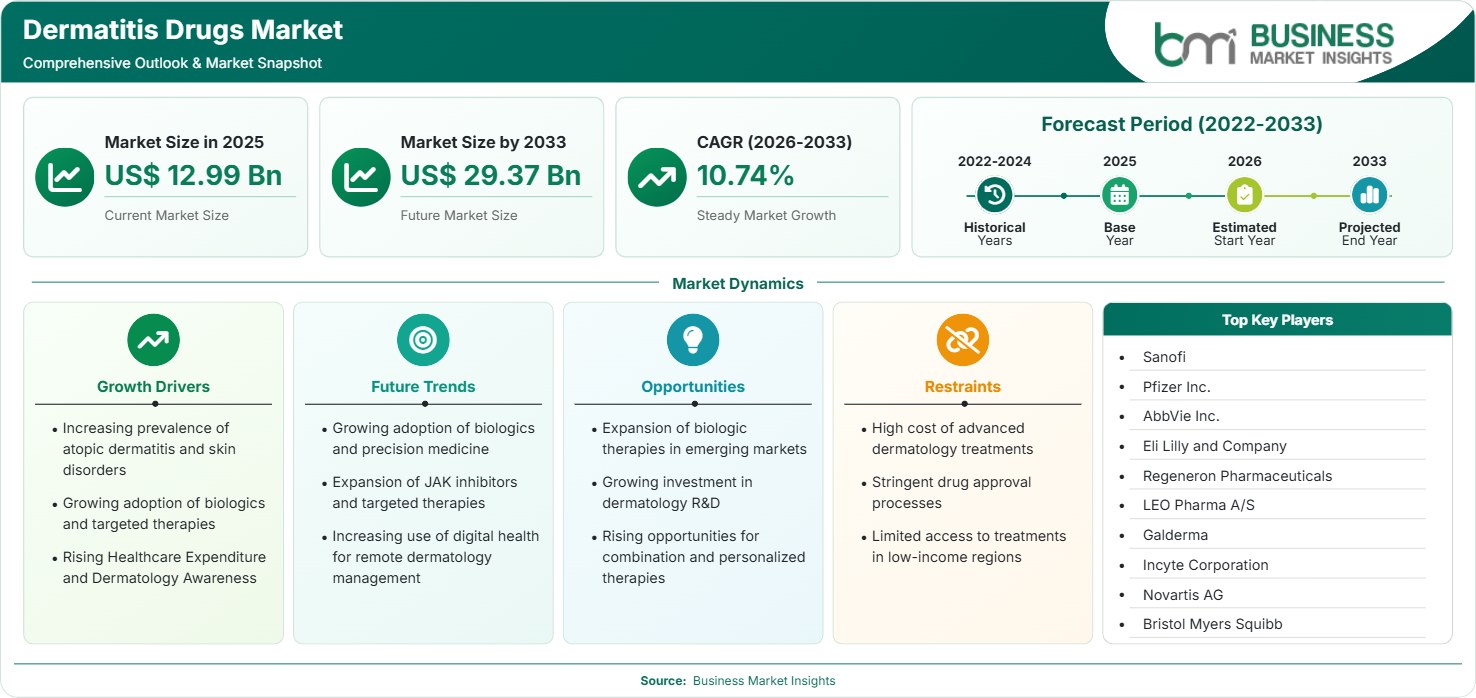
The Dermatitis Drugs Market size was valued at US$ 12.99 Billion in 2025 and is projected to reach US$ 29.37 Billion by 2033, growing at a CAGR of 10.74% during 2026–2033, driven by rising dermatological disease prevalence, expanding biologic adoption, increasing healthcare investment, and growing demand for advanced targeted treatment approaches.

Report Coverage
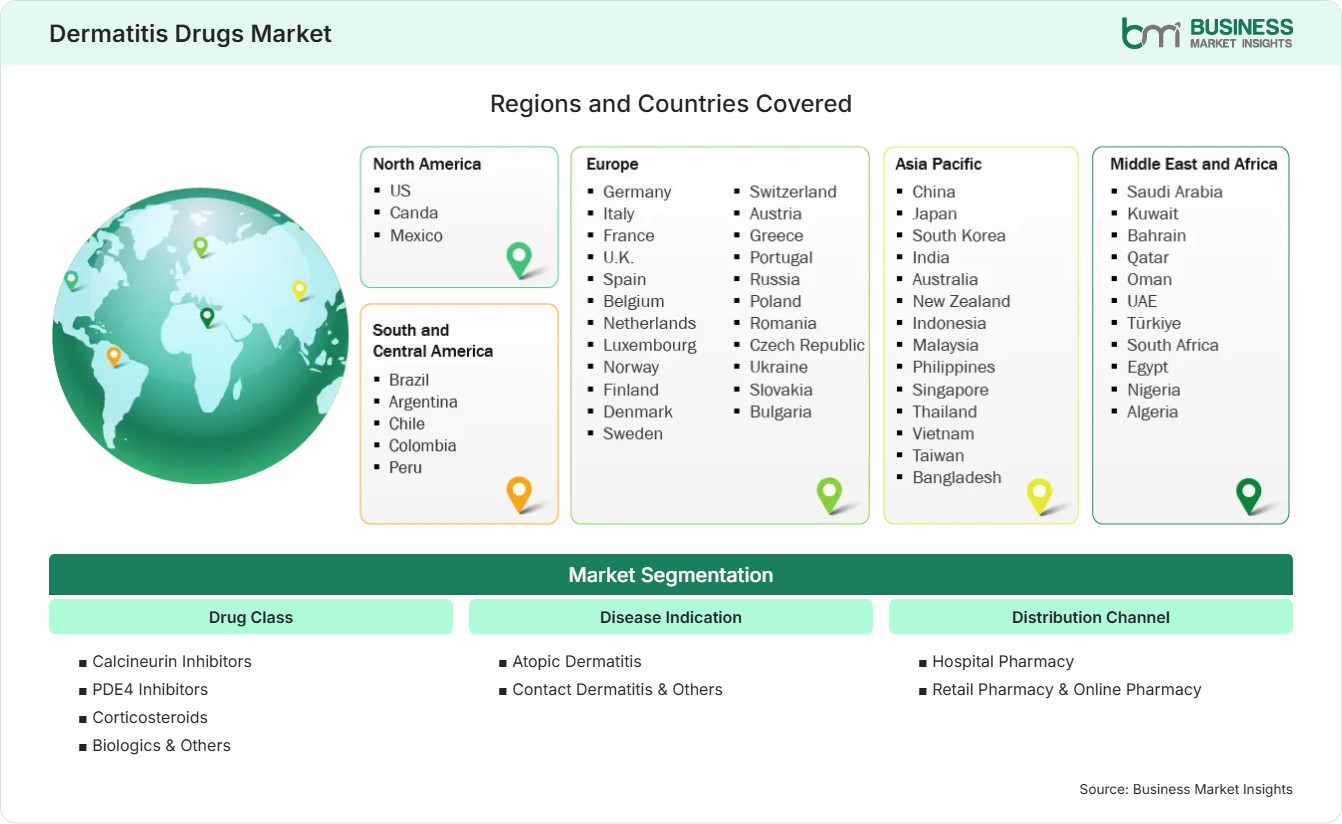
  • Drug Class: Calcineurin Inhibitors, PDE4 Inhibitors, Corticosteroids, Biologics & Others
  • Disease Indication: Atopic Dermatitis, Contact Dermatitis & Others
  • Distribution Channel: Hospital Pharmacy, Retail Pharmacy & Online Pharmacy
US$ 12.99 Bn Market size in 2025
US$ 29.37 Bn Market Size by 2033
10.74% CAGR, 2026 - 2033
2026-2033 Forecast Period

01 AI Overview

Dermatitis Drugs Market Summary

  • North America Region: North America holds a 38%–42% share in 2025, expanding at a CAGR of 10.2%–10.8% during 2026–2033, supported by advanced healthcare infrastructure, high diagnosis rates, biologic therapy adoption, and strong pharmaceutical innovation. The US market demonstrates strong growth with a CAGR of 10.4%–10.9% from 2026–2033 due to increasing atopic dermatitis cases, reimbursement availability, and adoption of specialty dermatology treatments.
  • Fastest Growing Region: Asia Pacific represents a 20%–24% share in 2025, advancing at a CAGR of 11.3%–12.0% during 2026–2033, driven by improving healthcare access, rising dermatological awareness, expanding pharmaceutical distribution networks, and increasing adoption of advanced therapies in emerging economies.
  • Leading Segment: Biologics account for a 30%–34% share in 2025, growing at a CAGR of 12.0%–12.7% during 2026–2033, supported by targeted mechanisms, clinical effectiveness, increasing physician preference, and expanding approvals for moderate-to-severe dermatitis conditions.
  • High Growth Segment: Online Pharmacy represents a 12%–15% share in 2025, expanding at a CAGR of 12.5%–13.2% during 2026–2033, supported by digital healthcare adoption, convenient medication access, teledermatology growth, and increasing consumer preference for online prescription services.
  • Key Market Opportunity: Opportunities are concentrated in biologic expansion, personalized dermatology treatment models, emerging market penetration, and innovative therapies addressing unmet needs in chronic inflammatory skin disorders.
  • Major Market Players: Sanofi, Pfizer Inc., AbbVie Inc., Eli Lilly and Company, Regeneron Pharmaceuticals, LEO Pharma A/S, Galderma, Incyte Corporation, Novartis AG, and Bristol Myers Squibb.
02 Strategic Insights

Dermatitis Drugs Market: Strategic Insights

dermatitis-drugs-market-market-strategic-framework
FREE PDF
Request your free sample
Request free sample
03 Stakeholder View

Key Takeaways

  • The treatment ecosystem is shifting toward targeted therapies, with biologics and immune-modulating drugs gaining importance due to improved efficacy profiles compared with traditional symptomatic treatments.
  • Chronic inflammatory skin conditions, particularly atopic dermatitis, represent the largest commercial opportunity as patient populations require continuous disease management and long-term therapeutic solutions.
  • Pharmaceutical innovation is increasingly focused on personalized medicine, biomarker identification, combination therapies, and next-generation biologic platforms to improve treatment outcomes.
  • North America remains a strategic investment region due to strong clinical research infrastructure, high healthcare spending, and rapid adoption of specialty dermatology medicines.
  • The competitive landscape is witnessing increased partnerships, pipeline expansion, and strategic investments as companies seek leadership positions in immunology and dermatology therapeutics.
  • Digital healthcare adoption is improving patient access through teledermatology platforms, online pharmacies, and remote consultation models that support medication adherence and treatment continuity.
04 Geographic Outlook

Dermatitis Drugs Market Regional Highlights

North America Dermatitis Drugs Market

North America accounted for a 38%–42% share in 2025 and is projected to grow at a CAGR of 10.2%–10.8% during 2026–2033. The region maintains leadership due to advanced dermatology infrastructure, strong pharmaceutical innovation, and widespread adoption of biologics. The Dermatitis Drugs Market share remains concentrated in the US, supported by high diagnosis rates, specialty care availability, and favorable reimbursement frameworks. Canada also contributes through improving access to advanced dermatological treatments and increasing healthcare investments.

  • The US remains the dominant regional contributor due to strong biologic adoption, extensive clinical research activity, and increasing demand for targeted dermatitis therapies.
  • Growing awareness of chronic skin disorders is encouraging earlier diagnosis and treatment initiation among patients across different age groups.
  • Pharmaceutical companies are expanding dermatology pipelines through clinical trials focused on biologics, immune modulators, and personalized treatment approaches.
  • Healthcare providers are increasingly adopting advanced therapies due to improved clinical outcomes and growing availability of specialty medicines.

US Dermatitis Drugs Market

The US represented a 34%–37% share in 2025 within the global landscape and is estimated to expand at a CAGR of 10.4%–10.9% during 2026–2033. The country benefits from strong healthcare expenditure, advanced pharmaceutical research, and widespread access to innovative dermatology treatments. The Dermatitis Drugs Market share in the US is supported by increasing prevalence of atopic dermatitis, growing biologic utilization, and improved patient access through specialty pharmacies. Strong regulatory activity continues encouraging innovation.

  • The US has a mature dermatology treatment ecosystem with increasing adoption of biologics and targeted therapies for moderate-to-severe conditions.
  • Rising patient awareness and improved screening practices are contributing to higher diagnosis rates and increased treatment demand.
  • Pharmaceutical manufacturers are investing heavily in clinical research to develop safer and more effective dermatitis therapies.
  • Specialty pharmacy networks are improving access to advanced prescription treatments and supporting patient adherence programs.

Europe Dermatitis Drugs Market

Europe represented a 28%–32% share in 2025 and is expected to grow at a CAGR of 10.0%–10.6% during 2026–2033. The region benefits from strong healthcare systems, increasing dermatological disease awareness, and adoption of advanced treatment options. Germany, France, the UK, and Italy are key contributors due to established pharmaceutical markets and healthcare accessibility. The Dermatitis Drugs Market growth in Europe is influenced by rising biologic adoption, regulatory support, and increasing investment in dermatology research.

  • Germany demonstrates strong market potential due to advanced healthcare infrastructure, specialist availability, and increasing demand for innovative therapies.
  • The UK is expanding adoption of advanced dermatitis treatments through healthcare modernization initiatives and improved access to specialty medicines.
  • France and Italy contribute through growing awareness of inflammatory skin disorders and increasing utilization of prescription dermatology products.
  • European pharmaceutical companies are strengthening research pipelines through collaborations focused on immunology and skin disease treatment.

Asia Pacific Dermatitis Drugs Market

Asia Pacific accounted for a 20%–24% share in 2025 and is projected to register the highest growth rate at a CAGR of 11.3%–12.0% during 2026–2033. Rising healthcare expenditure, expanding pharmaceutical access, and increasing awareness of dermatological disorders are supporting regional growth. China, Japan, India, and South Korea are major markets with improving treatment availability. The region presents significant opportunities due to large patient populations and increasing adoption of advanced therapies.

  • China is expanding dermatitis treatment access through healthcare reforms, pharmaceutical development, and increasing availability of specialty medicines.
  • Japan demonstrates strong adoption of innovative dermatology therapies supported by advanced healthcare infrastructure and aging population healthcare needs.
  • India offers growth potential through improving healthcare access, rising awareness, and increasing availability of affordable dermatological treatments.
  • South Korea is strengthening dermatology innovation through pharmaceutical research and increasing consumer focus on advanced skin care solutions.

Rest of World Dermatitis Drugs Market

South America accounted for a 5%–7% share in 2025 and is expected to expand at a CAGR of 10.6%–11.2% during 2026–2033, supported by improving healthcare access and rising awareness of skin disorders. Brazil and Mexico represent important growth markets due to expanding pharmaceutical distribution networks. The Middle East and Africa accounted for a 3%–5% share in 2025, growing at a CAGR of 9.5%–10.2% through healthcare infrastructure development and increasing treatment availability.

  • Brazil is emerging as a key regional market due to improving dermatology services and rising demand for prescription-based skin disorder treatments.
  • Mexico is witnessing increased adoption of advanced therapies as healthcare systems improve specialty medicine availability.
  • Middle Eastern countries are investing in healthcare modernization, supporting greater access to innovative dermatology treatments.
  • African markets are gradually expanding through improved healthcare infrastructure and increasing awareness of chronic inflammatory skin diseases.
global-market-geography
FREE PDF
Request your free sample
Request free sample
05 Segment Analysis

Dermatitis Drugs Market Segmentation

Drug Class

Drug Class segmentation represents a core component of the market, with biologics leading adoption due to targeted mechanisms and strong clinical outcomes. The segment accounted for a 30%–34% share in 2025 and is projected to grow at a CAGR of 12.0%–12.7% during 2026–2033. Increasing investment in immunology research, new product approvals, and demand for advanced therapies are shaping segment expansion. The Dermatitis Drugs Market trends indicate continued movement toward targeted drug classes.

  • Calcineurin Inhibitors: These therapies support treatment of inflammatory skin conditions by regulating immune responses and providing non-steroidal alternatives for long-term disease management.
  • PDE4 Inhibitors: PDE4 inhibitors are gaining adoption through targeted anti-inflammatory mechanisms, improved safety profiles, and increasing use in mild-to-moderate dermatitis cases.
  • Corticosteroids: Corticosteroids remain widely used due to established efficacy, physician familiarity, affordability, and availability across multiple treatment formulations.
  • Biologics: Biologics represent the fastest-growing category due to precision targeting, strong clinical effectiveness, and expanding approvals for chronic dermatitis disorders.

Disease Indication

Disease Indication segmentation is dominated by atopic dermatitis due to increasing prevalence, chronic disease burden, and rising demand for effective management options. The segment represented a 60%–64% share in 2025 and is expected to expand at a CAGR of 10.5%–11.2% during 2026–2033. Growing diagnosis rates and improved treatment access are supporting dermatitis drugs market development across healthcare systems.

  • Atopic Dermatitis: Atopic dermatitis remains the primary indication due to high patient prevalence, chronic inflammatory characteristics, and increasing adoption of targeted therapies.
  • Contact Dermatitis: Contact dermatitis treatment demand is supported by occupational exposure concerns, environmental factors, and increasing awareness of skin protection strategies.

Distribution Channel

Distribution Channel segmentation reflects changing healthcare purchasing patterns, with pharmacies and digital platforms improving treatment accessibility. The segment is influenced by prescription medicine availability, specialty pharmacy expansion, and online healthcare adoption in dermatitis drugs market. Online Pharmacy represented a 12%–15% share in 2025 and is projected to grow at a CAGR of 12.5%–13.2% during 2026–2033. Expanding digital healthcare ecosystems continue improving medication access.

  • Hospital Pharmacy: Hospital pharmacies remain important for specialty treatments, biologics administration, and physician-supervised dermatitis management.
  • Retail Pharmacy: Retail pharmacies support convenient access to commonly prescribed dermatology medicines and maintenance treatment products.
  • Online Pharmacy: Online pharmacies are expanding through digital ordering platforms, telehealth integration, and improved prescription fulfillment services.
06 Market Forces

Dermatitis Drugs Market Dynamics

Key Market Drivers

Increasing Prevalence of Atopic Dermatitis and Skin Disorders

The increasing prevalence of atopic dermatitis and other inflammatory skin disorders is a major factor supporting market expansion. Rising disease incidence, improved diagnosis rates, and greater awareness of chronic skin conditions are increasing demand for effective therapies. According to dermatology research organizations, atopic dermatitis affects a significant global patient population, creating sustained treatment requirements across age groups. The growth is supported by increasing healthcare access and demand for long-term disease management solutions. The Dermatitis Drugs Market trends indicate that pharmaceutical companies are prioritizing innovative therapies addressing immune pathways, reducing disease severity, and improving patient quality of life. Growing physician awareness and patient education programs continue strengthening treatment adoption worldwide.

Growing Adoption of Biologics and Targeted Therapies

The adoption of biologics and targeted therapies is transforming dermatitis treatment by providing more precise mechanisms of action compared with traditional therapies. Advanced biologic medicines targeting immune pathways are gaining acceptance among healthcare providers due to improved efficacy in moderate-to-severe conditions. The pharmaceutical industry is increasing its clinical research programs on monoclonal antibodies, immunomodulators, and customized treatment methods. Regulatory approvals have been on the rise as well as providing more advanced treatments within important markets. The demand for effective chronic diseases management has prompted the need for new treatment methods by patients and doctors. The inclination towards customized therapy is anticipated to enhance the competitive environment through the development of next-generation dermatology drugs.

Rising Healthcare Expenditure and Dermatology Awareness

The rise in healthcare spending along with awareness of dermatological treatments is making diagnosis and treatment more accessible around the world. Increased spending on specialty care, insurance coverage, and healthcare infrastructure are helping in the adoption of treatment. Healthcare public programs and e-healthcare systems are bringing increased attention to inflammatory skin diseases and their treatments. The access to the treatments is increasingly being achieved in developing nations owing to developments in terms of delivery of the treatments and drugs. Increased participation of patients is leading to early diagnosis and consistent disease management. These developments are setting up good opportunities for market expansion due to reduction in treatment gaps and widespread adoption of prescribed dermatology drugs.

Key Market Opportunities

Expansion of Biologic Therapies in Emerging Markets

There are a number of chances for the expansion of biologic therapy due to high investments in healthcare, increased diagnostic capabilities and need for more advanced treatment techniques. Health care infrastructure development and the availability of specialty drugs are priorities in countries from Asia-Pacific, Latin America, and the Middle East regions. Pharmaceutical companies are looking into partnerships and local manufacturing to increase access to the medicines. Increased awareness about chronic inflammatory skin conditions will foster the use of biologics. More opportunities for the stakeholders are anticipated due to evolving reimbursement schemes and healthcare modernization programs. The emergence of new reimbursement systems and modernization of healthcare systems will open more opportunities for market players.

Growing Investment in Dermatology R&D

Development in dermatology R&D is providing new avenues for the creation of novel solutions for the management of difficult skin conditions characterized by inflammation. The pharmaceutical industry is making increased efforts to conduct R&D for new molecular targets, delivery methods, and therapies that are safer. The expansion of clinical trials will help develop more sophisticated drugs to meet the demands of patients. Partnerships between biotech firms and the existing pharmaceutical companies are promoting the development process owing to research abilities and unique competencies. Increasing interest in immunological solutions is promoting increased investment in dermatological pipelines.

Rising Opportunities for Combination and Personalized Therapies

Combinations and personalized treatments provide new possibilities in light of the growing trend of healthcare professionals seeking therapies that are designed for specific patients. The development of biomarker and disease profiling studies provides new tools for identifying appropriate treatment options and improving the effectiveness of therapies. Pharmaceutical companies are looking at the combinations of drugs, biologics, and other treatment methods to address various degrees of disease and the nature of patients. Personalized treatments may enhance the efficacy of medications and limit the use of unnecessary treatment. Precision medicine is becoming an important concept in the healthcare industry and encourages the development of pharmaceutical products.

Market Restraints and Challenges

High Cost of Advanced Dermatology Treatments

Factor: High costs associated with advanced dermatology treatments, particularly biologics and specialty medicines, create affordability challenges for patients and healthcare systems. Research expenses, complex manufacturing processes, and specialty distribution requirements contribute to elevated treatment prices. Impact: High therapy costs can restrict patient access, delay treatment initiation, and limit adoption in price-sensitive markets. The problem is being addressed by healthcare companies and drug manufacturers using patient assistance programs, expanded payment programs, and the creation of cost-effective treatment methods. Increasing competition from new drugs, as well as the introduction of new treatment alternatives in the future, could help to make these drugs more available. However, affordability continues to be an important factor in global market.

Stringent Drug Approval Processes

Factor: Stringent regulatory approval processes increase development timelines and investment requirements for new dermatitis drugs. Clinical trial complexity, safety evaluation standards, and regulatory compliance requirements can extend product commercialization periods. Impact: Longer approval cycles may delay patient access to innovative therapies and increase development costs for pharmaceutical companies. Companies are responding by strengthening clinical trial strategies, improving regulatory planning, and investing in robust safety evaluation processes. Regulatory agencies continue balancing innovation with patient safety requirements, influencing market entry strategies for new therapies. Efficient approval pathways and strong regulatory collaboration will remain important factors affecting future expansion of advanced dermatology treatments.

07 Company Analysis

Competitive Landscape

The Dermatitis Drugs Market analysis highlights a competitive environment driven by pharmaceutical companies investing in biologics, targeted therapies, clinical research, and strategic collaborations. Market participants are strengthening pipelines through new product development, regulatory approvals, and expansion into emerging healthcare markets.

Company Name

Overview

Products and Services relevant to this market

Sanofi

Global pharmaceutical company with strong immunology capabilities and dermatology-focused treatment solutions.

Develops biologic therapies and specialty medicines for inflammatory skin disorders including atopic dermatitis.

Pfizer Inc.

Global healthcare company engaged in innovative pharmaceutical research across multiple therapeutic areas.

Provides advanced medicines and pipeline therapies targeting inflammatory and immune-related dermatological conditions.

AbbVie Inc.

Research-driven biopharmaceutical company with strong immunology and specialty medicine portfolio.

Offers immune-targeted therapies and dermatology treatments addressing chronic inflammatory diseases.

Eli Lilly and Company

Pharmaceutical company focused on innovative medicines and advanced therapeutic research.

Develops biologic and targeted treatments for inflammatory dermatology indications.

Regeneron Pharmaceuticals

Biotechnology company specializing in antibody-based medicines and immune-related therapies.

Provides biologic therapies targeting inflammatory pathways involved in dermatitis conditions.

LEO Pharma A/S

Dermatology-focused pharmaceutical company with specialized skin disease treatment expertise.

Develops prescription therapies for inflammatory skin disorders including dermatitis management.

Galderma

Dermatology company focused on medical and aesthetic skin health solutions.

Provides dermatology products and treatments for inflammatory and skin-related conditions.

Incyte Corporation

Biopharmaceutical company specializing in immune and oncology research.

Develops targeted therapies involving immune pathways relevant to dermatological disorders.

Novartis AG

Global pharmaceutical company with extensive innovation capabilities in immunology.

Offers advanced therapies and research programs targeting inflammatory skin diseases.

Bristol Myers Squibb

Global biopharmaceutical company focused on innovative specialty medicines.

Develops immune-modulating therapies applicable to inflammatory dermatology treatment areas.

10 Trust & Transparency

Research Methodology

The market analysis combines proprietary research with secondary data from government agencies, company disclosures, regulatory filings, industry databases and expert interviews. Market estimates are validated through data triangulation, cross-market benchmarking and analyst review.

View Full Research Methodology

11 Questions Answered

Frequently Asked Questions

Which regions offer future expansion opportunities in Dermatitis Drugs Market forecasts?

Asia Pacific, Latin America, and Middle Eastern markets offer expansion opportunities due to improving healthcare infrastructure, rising awareness of dermatological disorders, increasing pharmaceutical access, and growing demand for advanced therapies.

What role does personalized medicine play in dermatitis treatment?

Personalized medicine enables physicians to select therapies based on patient-specific disease characteristics, treatment response patterns, and biological markers, improving outcomes and supporting more efficient healthcare decisions.

How are digital healthcare platforms affecting dermatitis treatment access?

Digital healthcare platforms are improving access through teledermatology consultations, online prescription services, remote monitoring, and improved medication delivery systems, particularly for patients requiring continuous disease management.

Why are biologics gaining importance in dermatitis treatment?

Biologics are gaining importance because they provide targeted immune pathway modulation, improved effectiveness for moderate-to-severe conditions, and better disease management options compared with conventional treatment approaches.

What factors are influencing the growth of the Dermatitis Drugs Market report?

Growth is influenced by increasing prevalence of inflammatory skin disorders, rising adoption of biologic therapies, improved diagnosis rates, healthcare expenditure growth, and increasing demand for targeted treatments with better clinical outcomes.

Access the Full Dermatitis Drugs Market Report

Get segment-level forecasts, regional estimates, competitive benchmarking, company profiles and downloadable Excel datasets.

Access the full Dermatitis Drugs Market Report
350 pages PDF & Excel | 2026-08-06