
Specialty Drugs Market Outlook: Size, Share, Trends, Growth Analysis, Competitive Landscape & Forecast, 2026-2033

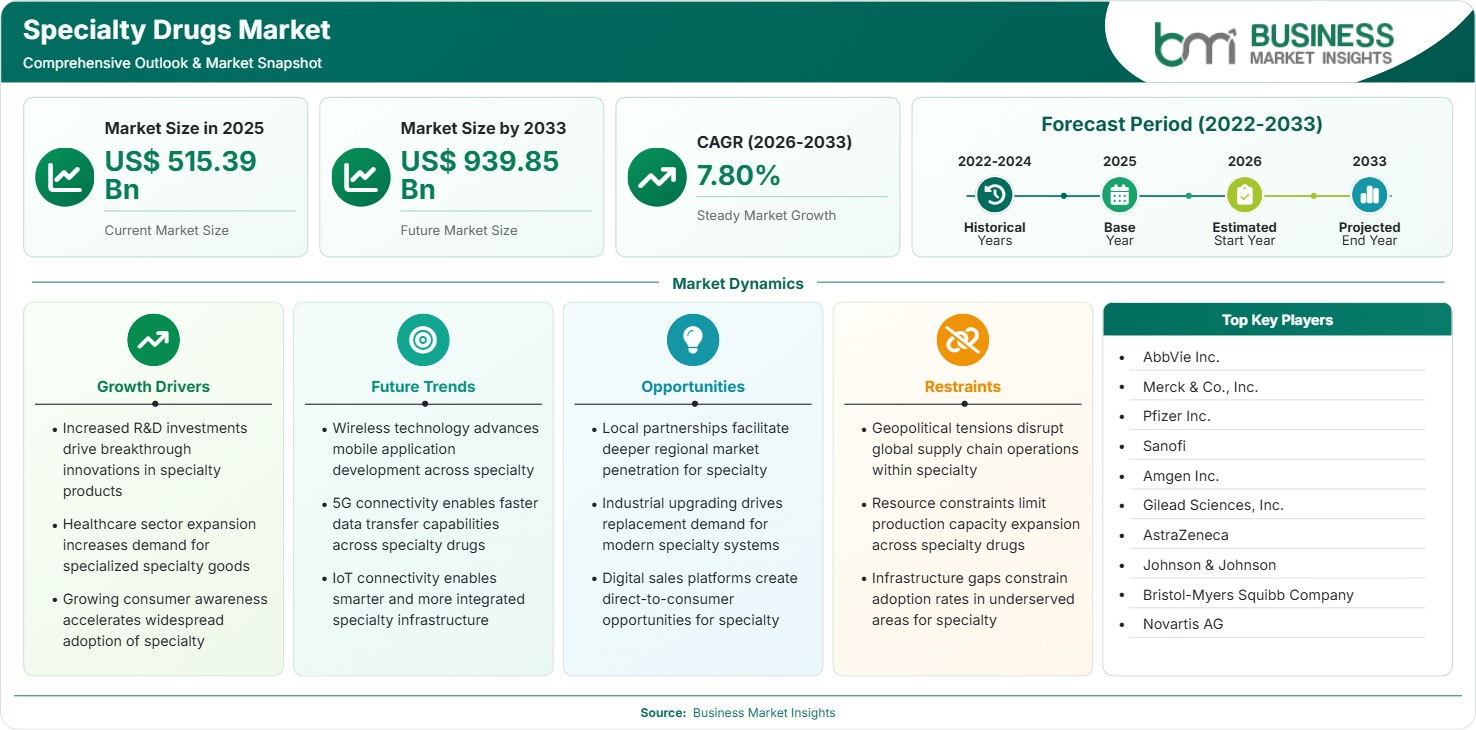
The Specialty Drugs Market size was valued at US$ 515.39 Billion in 2025 and is projected to reach US$ 939.85 Billion by 2033, growing at a CAGR of 7.80% during 2026–2033. Increasing biologics adoption, precision medicine advancements, expanding oncology pipelines, favorable orphan drug incentives, and rising investment in advanced therapeutic platforms continue creating strong commercial opportunities across specialty pharmaceutical ecosystems.

Report Coverage
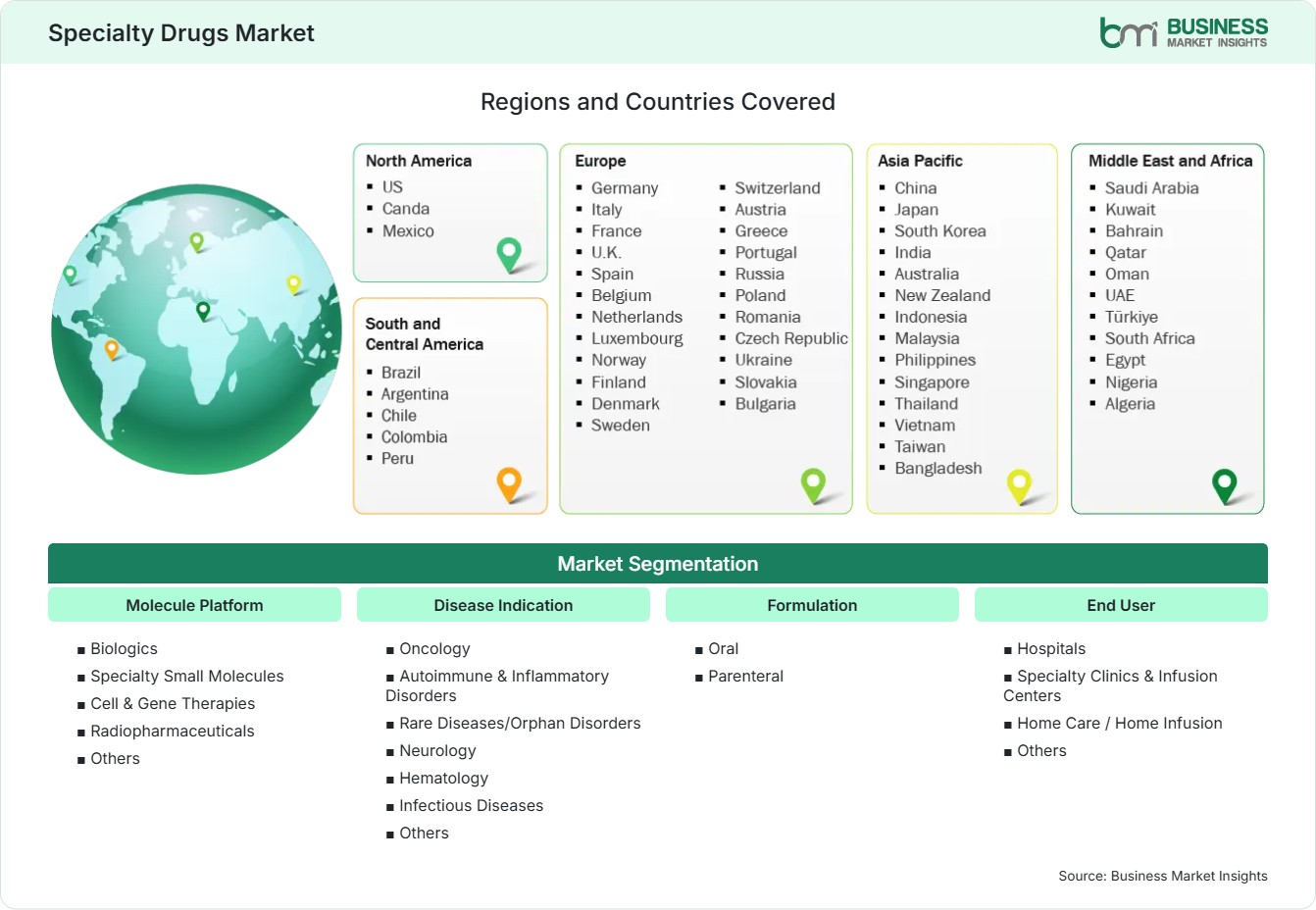
  • Molecule Platform: Biologics, Specialty Small Molecules, Cell & Gene Therapies, Radiopharmaceuticals, Others
  • Disease Indication: Oncology, Autoimmune & Inflammatory Disorders, Rare Diseases/Orphan Disorders, Neurology, Hematology, Infectious Diseases, Others
  • Formulation: Oral, Parenteral
  • End User: Hospitals, Specialty Clinics & Infusion Centers, Home Care / Home Infusion, Others
US$ 515.39 Bn Market size in 2025
US$ 939.85 Bn Market Size by 2033
7.80% CAGR, 2026 - 2033
2026-2033 Forecast Period

01 AI Overview

Specialty Drugs Market Summary

  • North America Region: North America holds a 40%–43% market share in 2025, growing at a 7.2%–7.8% CAGR during 2026–2033, supported by biologics innovation, favorable reimbursement systems, expanding specialty pharmacies, precision medicine adoption, strong biotechnology investments, advanced clinical infrastructure, increasing autoimmune therapies, and continuous oncology pipeline commercialization worldwide.
    U.S. Market: The United States dominates regional demand through robust biologics development, specialty pharmacy expansion, favorable reimbursement, and an estimated 7.3%–7.9% CAGR through 2033.
  • Fastest Growing Region: Asia Pacific accounts for 24%–27% market share in 2025 while advancing at a 9.1%–9.8% CAGR during 2026–2033, driven by expanding healthcare expenditure, increasing biologics manufacturing, growing chronic disease burden, regulatory modernization, improving reimbursement coverage, local biopharmaceutical innovation, and higher patient access across emerging economies.
  • Leading Segment: Biologics represents 50%–54% market share in 2025 with a 7.6%–8.2% CAGR, supported by superior therapeutic efficacy, expanding monoclonal antibody pipelines, increasing immunology applications, strong physician confidence, sustained regulatory approvals, continuous manufacturing innovation, and broad adoption across complex chronic diseases.
  • High Growth Segment: Cell & Gene Therapies contributes 6%–9% market share in 2025 while registering a 15.2%–16.5% CAGR, fueled by personalized medicine breakthroughs, increasing rare disease approvals, expanding clinical trials, advanced gene-editing technologies, growing investment, and supportive regulatory pathways accelerating commercialization worldwide.
  • Key Market Opportunity: Growing integration of companion diagnostics, precision medicine platforms, decentralized specialty care, digital patient monitoring, and value-based reimbursement models enables pharmaceutical companies to improve therapeutic outcomes while expanding access to high-value specialty therapies globally.
  • Major Market Players: AbbVie Inc., Merck & Co., Inc., Pfizer Inc., Sanofi, Amgen Inc., Gilead Sciences, Inc., AstraZeneca PLC, Johnson & Johnson, Bristol-Myers Squibb Company, and Novartis AG.
02 Strategic Insights

Specialty Drugs Market: Strategic Insights

Specialty Drugs Market Strategic Framework
FREE PDF
Request your free sample
Request free sample
03 Stakeholder View

Key Takeaways

  • The specialty pharmaceutical value chain is increasingly integrating biotechnology developers, contract manufacturing organizations, specialty pharmacies, digital health providers, and healthcare systems, creating more coordinated commercialization models that improve patient adherence and therapeutic outcomes.
  • Oncology, autoimmune diseases, and rare disease therapies continue offering the strongest commercial opportunities as healthcare providers prioritize targeted treatments with demonstrated clinical effectiveness and long-term patient management capabilities.
  • Pharmaceutical innovation is shifting toward next-generation biologics, cell therapies, gene therapies, precision diagnostics, artificial intelligence-assisted drug discovery, and digital patient support platforms that enhance treatment personalization and lifecycle management.
  • Asia Pacific presents one of the most compelling long-term investment destinations due to expanding healthcare expenditure, improving regulatory efficiency, rising biotechnology capabilities, and increasing access to specialty medicines across large patient populations.
  • Strategic mergers, licensing agreements, manufacturing partnerships, and co-development collaborations continue accelerating innovation while enabling companies to expand specialty portfolios, improve production capacity, and strengthen global market competitiveness.
  • Future competitive differentiation will increasingly depend on integrated patient support services, real-world evidence generation, digital monitoring technologies, and value-based reimbursement strategies that demonstrate measurable clinical and economic outcomes.
04 Geographic Outlook

Specialty Drugs Market Regional Highlights

North America Specialty Drugs Market

North America accounted for 40%–43% of the Specialty Drugs Market share in 2025 and is projected to expand at a 7.2%–7.8% CAGR through 2033. Strong biotechnology innovation, premium healthcare expenditure, broad insurance coverage for specialty medicines, and advanced biologics manufacturing continue supporting regional leadership. Continuous FDA approvals, expanding precision medicine initiatives, specialty pharmacy integration, and growing demand for immunology and oncology therapeutics further reinforce regional competitiveness while improving patient access to advanced treatment options.

  • The United States continues driving regional revenues through substantial biologics research funding, established reimbursement frameworks, extensive specialty pharmacy networks, increasing monoclonal antibody utilization, and sustained pharmaceutical innovation supporting long-term commercial expansion across multiple therapeutic areas.
  • Canada is strengthening specialty medicine adoption through improved provincial reimbursement programs, expanding rare disease strategies, increasing investment in biologics manufacturing capacity, and collaborative research initiatives supporting commercialization of innovative therapeutic platforms.
  • Precision oncology programs, genomic diagnostics, and artificial intelligence-assisted clinical decision support continue accelerating treatment personalization while improving patient outcomes, physician confidence, and healthcare system efficiency across regional healthcare providers.
  • Growing partnerships between pharmaceutical manufacturers, specialty distributors, and integrated healthcare organizations continue optimizing cold-chain logistics, improving patient adherence, and supporting broader access to high-value specialty therapies.
  • Biosimilar adoption continues reducing treatment costs across selected therapeutic categories while encouraging healthcare systems to redirect savings toward innovative specialty medicines with significant clinical differentiation.

US Specialty Drugs Market

The United States represented approximately 82%–85% of North American revenue during 2025 and is expected to register a 7.3%–7.9% CAGR through 2033. Strong venture capital investment, world-leading biotechnology companies, advanced academic research institutions, and extensive clinical trial activity maintain national leadership. Favorable orphan drug policies, expanding specialty pharmacy infrastructure, and increasing biologics utilization continue strengthening long-term market competitiveness across multiple disease indications.

  • Expanding oncology treatment pipelines supported by precision medicine and companion diagnostics continue improving patient selection while accelerating commercial adoption of targeted specialty therapies throughout healthcare systems.
  • Medicare reforms, commercial insurance innovation, and value-based reimbursement models continue influencing specialty drug accessibility while encouraging outcome-driven treatment approaches for complex chronic diseases.
  • Growing domestic manufacturing investment improves supply chain resilience, enhances biologics production capabilities, and supports long-term commercialization of advanced cell and gene therapy products.
  • Digital patient engagement platforms, remote monitoring technologies, and integrated care coordination continue improving medication adherence and clinical outcomes for specialty pharmaceutical patients nationwide.

Europe Specialty Drugs Market

Europe held approximately 27%–30% Specialty Drugs Market share during 2025 and is forecast to expand at a 7.0%–7.6% CAGR through 2033. Robust regulatory oversight, expanding biosimilar adoption, growing investment in biotechnology innovation, and strong public healthcare systems continue supporting regional demand. Collaborative research initiatives and favorable orphan drug regulations further strengthen commercialization opportunities for advanced specialty therapeutics throughout European healthcare markets.

  • Germany remains the leading European market with an estimated 7.1%–7.6% CAGR, supported by advanced pharmaceutical manufacturing, strong reimbursement frameworks, and significant biotechnology research investments.
  • The United Kingdom demonstrates one of the fastest innovation ecosystems through accelerated regulatory pathways, precision medicine initiatives, and increasing investment supporting commercialization of advanced specialty therapeutics.
  • France continues strengthening specialty medicine accessibility through centralized healthcare funding, increasing biologics utilization, and expanded clinical research partnerships between industry and academic institutions.
  • Increasing biosimilar penetration enhances healthcare affordability while supporting sustainable reimbursement strategies that facilitate wider patient access to premium specialty medicines.
  • Cross-border clinical collaborations accelerate rare disease research, oncology innovation, and advanced biologics development while strengthening Europe's competitive pharmaceutical ecosystem.

Asia Pacific Specialty Drugs Market

Asia Pacific captured 24%–27% market share during 2025 and is anticipated to record the fastest regional expansion with a 9.1%–9.8% CAGR through 2033. Rising healthcare expenditure, expanding biotechnology manufacturing capacity, improving regulatory frameworks, and increasing chronic disease prevalence continue driving regional investment. Government initiatives supporting domestic pharmaceutical innovation and expanding specialty healthcare infrastructure further enhance long-term commercial opportunities across emerging economies.

  • China remains the largest regional contributor owing to expanding biologics manufacturing, increasing regulatory efficiency, and substantial investment in innovative biotechnology companies supporting specialty therapeutic development.
  • India demonstrates one of the fastest growth trajectories through expanding biosimilar manufacturing capabilities, increasing specialty hospital networks, and government support encouraging domestic pharmaceutical innovation.
  • Japan continues leading high-value specialty medicine adoption through advanced healthcare infrastructure, strong reimbursement systems, and continuous innovation in regenerative medicine and biologics research.
  • South Korea strengthens regional competitiveness through biotechnology exports, advanced cell therapy development, and strategic investments supporting next-generation pharmaceutical manufacturing technologies.
  • Australia contributes through advanced clinical research, precision medicine adoption, and supportive regulatory environments encouraging commercialization of innovative specialty pharmaceutical products.

Rest of World Specialty Drugs Market

Rest of World accounted for approximately 8%–10% Specialty Drugs Market share during 2025 and is projected to expand at a 7.8%–8.5% CAGR through 2033.

South and Central America continue benefiting from expanding healthcare investments, increasing biologics accessibility, and improving reimbursement systems across major economies. Meanwhile, the Middle East and Africa are strengthening specialty pharmaceutical adoption through healthcare modernization, oncology center expansion, and government initiatives encouraging advanced therapeutic availability for complex diseases.

  • Brazil remains the leading South and Central American market, supported by expanding biologics utilization, improving healthcare infrastructure, and increasing public-private investment promoting specialty pharmaceutical accessibility.
  • Mexico continues strengthening specialty treatment availability through healthcare modernization, increasing pharmaceutical manufacturing investment, and expanded access to innovative biologic therapies across urban healthcare facilities.
  • Saudi Arabia represents the leading Middle Eastern market through national healthcare transformation programs, increasing biotechnology investment, and expanding specialty hospital infrastructure supporting advanced therapeutic adoption.
  • The United Arab Emirates demonstrates rapid regional advancement through precision medicine initiatives, healthcare digitalization, and growing pharmaceutical partnerships encouraging commercialization of innovative specialty therapies.
  • South Africa continues expanding specialty medicine utilization through improving oncology services, stronger regulatory frameworks, and increasing participation in multinational pharmaceutical clinical research programs.
Global Market Geography
FREE PDF
Request your free sample
Request free sample
05 Segment Analysis

Specialty Drugs Market Segmentation

Molecule Platform

The Molecule Platform segment accounted for approximately 50%–54% market share in 2025 and is projected to expand at a 7.8%–8.4% CAGR through 2033. Innovation in biologics, increasing regulatory approvals, growing investment in precision therapeutics, and expanding commercial manufacturing capabilities continue strengthening this segment. The Specialty Drugs Market scope continues broadening through advanced therapeutic platforms targeting complex and previously untreatable diseases.

  • Biologics: Dominates clinical utilization through monoclonal antibodies, recombinant proteins, and immunotherapies addressing oncology, autoimmune disorders, and inflammatory diseases with superior efficacy and long-term disease management benefits.
  • Specialty Small Molecules: Maintains strong adoption by offering targeted mechanisms of action, oral administration advantages, improved patient compliance, and expanding applications across oncology, neurology, and rare disease treatment pathways.
  • Cell & Gene Therapies: Experiencing exceptional momentum through personalized treatment approaches, expanding regulatory approvals, improving manufacturing scalability, and increasing investment targeting inherited disorders, oncology, and regenerative medicine applications.
  • Radiopharmaceuticals: Growing adoption is supported by precision oncology diagnostics, targeted radionuclide therapies, expanding nuclear medicine infrastructure, and continuous innovation improving treatment accuracy while minimizing damage to surrounding healthy tissues.

Disease Indication

Disease indication represented one of the largest revenue-generating categories with approximately 34%–38% led by oncology in 2025 and an estimated 8.3%–8.9% CAGR through 2033. Rising prevalence of chronic diseases, expanding biologics pipelines, increasing personalized medicine adoption, and continuous pharmaceutical innovation continue driving demand across multiple therapeutic indications requiring specialized treatment approaches.

  • Oncology: Continues leading demand through immunotherapies, antibody-drug conjugates, targeted therapies, companion diagnostics, and precision medicine strategies improving survival outcomes across multiple cancer indications.
  • Autoimmune & Inflammatory Disorders: Strong clinical demand is supported by expanding biologics utilization, improved treatment guidelines, increasing diagnosis rates, and long-term disease management requiring specialized pharmaceutical interventions.
  • Rare Diseases/Orphan Disorders: Benefits from orphan drug incentives, accelerated regulatory approvals, increasing genetic diagnostics, and growing investment supporting development of highly specialized therapeutic solutions for underserved patient populations.
  • Neurology: Expands steadily through innovation targeting multiple sclerosis, Alzheimer's disease, Parkinson's disease, epilepsy, and other complex neurological disorders requiring advanced therapeutic modalities.
  • Hematology: Demand continues increasing through targeted biologics, gene therapies, and innovative treatments addressing blood cancers, bleeding disorders, and inherited hematologic conditions with improved clinical effectiveness.
  • Infectious Diseases: Specialty antivirals and advanced biologic therapies continue supporting treatment of HIV, hepatitis, multidrug-resistant infections, and emerging infectious diseases requiring specialized pharmaceutical management.

Formulation

The formulation segment represented approximately 58%–62% Specialty Drugs Market share in 2025 and is forecast to register a 7.5%–8.1% CAGR through 2033. Continuous innovation in drug delivery technologies, patient convenience initiatives, extended-release formulations, and advanced injectable systems continue improving treatment adherence while supporting commercialization of complex specialty therapeutics.

  • Oral: Preferred for selected specialty therapies due to convenient administration, improved patient adherence, reduced hospital dependency, and expanding development of targeted oral oncology and autoimmune treatments.
  • Parenteral – Intravenous (IV): Widely utilized for biologics, oncology therapeutics, enzyme replacement therapies, and hospital-based specialty treatments requiring controlled dosing and rapid systemic drug delivery.
  • Parenteral – Subcutaneous (SC): Growing rapidly through self-administration capabilities, enhanced patient convenience, reduced infusion center dependence, and increasing commercialization of biologics supporting home-based specialty care.
  • Parenteral – Intramuscular (IM): Maintains important clinical relevance for selected biologics, immunotherapies, hormone therapies, and specialty treatments requiring sustained therapeutic delivery with simplified administration protocols.

End User

End-user demand remains concentrated within institutional healthcare settings, accounting for approximately 47%–51% Specialty Drugs Market share during 2025 while expanding at a 7.9%–8.5% CAGR through 2033. Increasing specialty pharmacy integration, advanced infusion infrastructure, expanding home healthcare capabilities, and multidisciplinary patient management continue supporting broader access to high-value specialty therapeutics across healthcare delivery systems.

  • Hospitals: Continue leading specialty drug utilization through advanced oncology centers, transplant programs, multidisciplinary care teams, and access to sophisticated infusion and monitoring infrastructure supporting complex therapeutic administration.
  • Specialty Clinics & Infusion Centers: Experience sustained expansion through outpatient biologic administration, personalized treatment services, reduced hospitalization requirements, and efficient management of chronic complex diseases requiring continuous specialty care.
  • Home Care / Home Infusion: Rapidly expanding owing to patient preference, technological advances in portable infusion systems, remote monitoring capabilities, reduced healthcare costs, and increasing payer support for decentralized specialty treatment delivery.
06 Market Forces

Specialty Drugs Market Dynamics

Key Market Drivers

Rising Prevalence of Oncology and Autoimmune Disorders

The increasing incidence of cancer, autoimmune diseases, and chronic inflammatory disorders continues to accelerate demand for specialty therapeutics worldwide.In accordance with the World Health Organization (WHO), cancer continues to be one of the primary killers throughout the world, whereas chronic immune-mediated disorders continue to increase due to aging of population and shifts in lifestyle habits. Such growing population necessitates advanced biologics, immunotherapy, and personalized medicines which yield better results than traditional drugs. The focus on personalized treatments in conjunction with companion diagnostic is gaining prominence among health care professionals. The Specialty Drugs Market growth will be bolstered by increasing clinical applications, greater use of biologics, better reimbursement schemes, and constant innovation in advanced therapy areas.

Rapid Expansion of Biologics and Precision Medicine

Advancements in biotechnology, monoclonal antibodies, recombinant proteins, antibody-drug conjugates, and gene-based therapies continue transforming pharmaceutical innovation. FDA and other regulatory authorities such as European Medicines Agency have hastened approval of innovative treatments for complicated disorders that do not have many options available for their cure. There has been an upsurge in the amount of money being spent by pharmaceutical giants on drug development involving biomarkers and personalized medicine platforms that will help increase the efficiency of treatment without adverse side effects. The use of genomic sequencing and drug discovery using AI allows better patient stratification. Advances in manufacturing processes will further help commercialize these medicines.

Supportive Regulatory Incentives for Rare Disease Therapies

Governments worldwide continue strengthening incentives supporting orphan drug development through Specialty Drugs Market exclusivity, tax benefits, accelerated review pathways, and research grants. Regulations put in place by the regulators facilitate investments by the drug makers on therapies targeting small populations who had not attracted much commercial interest. The increasing number of orphan drugs and fast-track approval processes keep enhancing access to innovative treatments for various rare diseases such as genetic, metabolic, neurological and blood diseases. Enhanced cooperation between biotech firms, universities and health care facilities keeps improving research productivity and commercialization process. Such regulations greatly increase the attractiveness of investment in specialty pharmaceutical products.

Key Market Opportunities

Commercial Expansion of Cell and Gene Therapy Platforms

Cell and gene therapies represent one of the strongest long-term investment opportunities as manufacturing scalability, regulatory experience, and clinical success continue improving worldwide. There is tremendous investment being made by pharmaceutical firms in the areas of viral vector manufacturing, gene-editing capabilities, autologous treatments, and allogeneic platforms that have the ability to treat currently untreatable diseases. The Specialty Drugs Market Forecast shows increasing commercialization potential due to the growth of reimbursement methods, capacity of treatment centers, and wider physician adoption. Further innovations in production processes are expected to decrease the difficulty of production while providing better accessibility for patients who can take part in using such drugs.

Digital Health Integration and Remote Specialty Care

Emerging Specialty Drugs Market Trends, including digital health technologies, continue to reshape specialty pharmaceutical delivery through remote patient monitoring, wearable devices, artificial intelligence-assisted adherence programs, and telemedicine integration. The cooperation of pharmaceutical companies with digital health organizations is growing to increase long-term adherence to treatment and collect clinical data for decision-making on reimbursements. The expansion of home infusion, connected devices, and cloud patient management is creating new business opportunities for specialty medicine providers. These innovations make patients' lives more comfortable, minimize the need for hospitalization, and positively influence the results of long-term treatment.

Emerging Market Access and Local Biopharmaceutical Manufacturing

Rapid healthcare infrastructure development across Asia Pacific, Latin America, and the Middle East creates substantial opportunities for specialty pharmaceutical expansion. Governments keep on making investments in the manufacture of biotech products, research and development infrastructure, and regulatory systems in order to enhance local capacity for pharmaceutical production. Rising investment in the healthcare sector, increased insurance penetration, and heightened awareness about innovative therapeutic treatments enhance the availability of cutting-edge drugs to patients. Collaborative efforts between foreign drug companies and local firms hasten the process of knowledge and drug production transfer.

Market Restraints and Challenges

High Treatment Costs and Reimbursement Constraints

Factor: Specialty drugs often involve complicated biologics manufacturing, customized manufacturing procedures, cold chain transportation, and extensive clinical development, making their cost of treatment much higher than traditional drugs.

Impact: Increasingly, providers, insurance companies, and governmental organizations determine the approval for reimbursement by using cost-effectiveness analysis for certain treatments. Budget constraints might slow down access to treatment, affect the eligibility criteria for patients to be reimbursed, and hinder market entry. Manufacturers must therefore demonstrate strong clinical outcomes, real-world evidence, and long-term economic value while negotiating value-based reimbursement agreements to sustain Specialty Drugs Market expansion and improve affordability.

Manufacturing Complexity and Supply Chain Vulnerabilities

Factor: The manufacture of biologics, cellular therapies, gene therapies, and radiopharmaceuticals involves advanced manufacturing sites, very specialized manpower, robust quality control systems, and cold chain distribution across the globe.

Impact: Issues related to production disruptions, lack of raw materials, regulatory issues, or logistical problems can result in delays in the availability of products and higher costs of operation. The pharmaceutical sector is continuing its effort towards diversification of its supply chains, local manufacturing facilities, electronic monitoring of quality, and advanced production technologies. However, ensuring the continuous supply of products remains an important operational challenge for the sector.

07 Company Analysis

Competitive Landscape

The competitive environment is characterized by sustained investment in biologics, precision medicine, advanced immunotherapies, and specialty pharmaceutical manufacturing. The Specialty Drugs Market analysis indicates that leading pharmaceutical companies are strengthening their portfolios through strategic acquisitions, licensing agreements, expanded biologics production, and next-generation therapeutic development. Companies are also investing in digital patient support programs, specialty pharmacy partnerships, and advanced manufacturing technologies to improve commercialization efficiency and patient access.

Company Name

Overview

Products and Services Relevant to this Market

AbbVie Inc.

Global biopharmaceutical company with strong leadership in immunology, oncology, neuroscience, and aesthetics, supported by extensive biologics research and global commercial operations.

Monoclonal antibodies, immunology biologics, oncology therapeutics, specialty pharmaceuticals, neuroscience treatments, and patient support services.

Merck & Co., Inc.

Research-driven pharmaceutical leader focused on innovative medicines, vaccines, and oncology therapies with extensive global clinical development capabilities.

Oncology immunotherapies, vaccines, biologics, specialty medicines, precision medicine solutions, and advanced pharmaceutical research.

Pfizer Inc.

Diversified global pharmaceutical company investing heavily in specialty medicines, rare diseases, oncology, inflammation, and advanced biotechnology platforms.

Oncology drugs, rare disease therapies, biologics, gene therapy programs, specialty injectables, and precision medicine products.

Sanofi

International healthcare company specializing in specialty medicines, immunology, rare diseases, vaccines, and innovative biologic therapeutics.

Rare disease treatments, immunology biologics, enzyme replacement therapies, specialty pharmaceuticals, and advanced biologic medicines.

Amgen Inc.

Biotechnology pioneer focused on innovative biologics, biosimilars, oncology, inflammation, nephrology, and cardiovascular specialty medicines.

Monoclonal antibodies, biosimilars, oncology therapeutics, inflammation treatments, bone health therapies, and biologic manufacturing.

Gilead Sciences, Inc.

Global biopharmaceutical company recognized for antiviral innovation while expanding oncology, cell therapy, and inflammatory disease portfolios.

Cell therapies, antiviral medicines, oncology treatments, specialty pharmaceuticals, and advanced biologic development platforms.

AstraZeneca PLC

Global science-led biopharmaceutical organization emphasizing oncology, rare diseases, respiratory conditions, and cardiovascular innovation.

Oncology biologics, rare disease therapies, respiratory specialty medicines, cardiovascular treatments, and precision medicine platforms.

Johnson & Johnson

Diversified healthcare company combining pharmaceutical innovation, biotechnology research, and advanced therapeutic development across multiple disease areas.

Immunology biologics, oncology medicines, neuroscience therapies, specialty pharmaceuticals, and advanced healthcare solutions.

Bristol-Myers Squibb Company

Global pharmaceutical innovator with strong expertise in immuno-oncology, hematology, cardiovascular medicine, and cell therapy research.

Immunotherapies, hematology medicines, cell therapies, oncology drugs, and specialty biologic products.

Novartis AG

International pharmaceutical company focusing on innovative medicines, radioligand therapies, gene therapies, and advanced biologics across complex disease areas.

Gene therapies, radiopharmaceuticals, oncology medicines, immunology products, and specialty pharmaceutical solutions.

10 Trust & Transparency

Research Methodology

The market analysis combines proprietary research with secondary data from government agencies, company disclosures, regulatory filings, industry databases and expert interviews. Market estimates are validated through data triangulation, cross-market benchmarking and analyst review.

View Full Research Methodology

11 Questions Answered

Frequently Asked Questions

What information does the Specialty Drugs Market Report provide?

The report provides comprehensive insights into market size, regional performance, competitive benchmarking, segmentation, technological developments, investment opportunities, regulatory trends, and long-term strategic outlook to support business decision-making.

Which region offers the highest future investment potential?

Asia Pacific presents the strongest long-term investment opportunity due to expanding biotechnology manufacturing, improving healthcare infrastructure, regulatory modernization, increasing healthcare expenditure, and growing patient access to advanced therapies.

Why are biologics dominating specialty pharmaceuticals?

Biologics provide highly targeted therapeutic mechanisms, improved clinical outcomes, and broader treatment options for autoimmune diseases, cancer, and inflammatory disorders, making them the largest molecule platform within specialty therapeutics.

Which therapeutic area generates the highest demand in the Specialty Drugs Market?

Oncology remains the largest therapeutic area because of increasing cancer prevalence, rapid innovation in targeted therapies, expanding immunotherapy adoption, and continuous regulatory approvals supporting personalized treatment approaches.

What are specialty drugs?

Specialty drugs are advanced pharmaceuticals developed for complex, chronic, or rare diseases requiring specialized handling, administration, monitoring, or patient support. They commonly include biologics, gene therapies, cell therapies, and targeted oncology medicines.

Access the Full Specialty Drugs Market Report

Get segment-level forecasts, regional estimates, competitive benchmarking, company profiles and downloadable Excel datasets.

Access the full Specialty Drugs Market Report
350 pages PDF & Excel | 2026-08-18