
Drug Delivery Market Outlook: Size, Share, Trends, Growth Analysis, Competitive Landscape & Forecast, 2026-2033

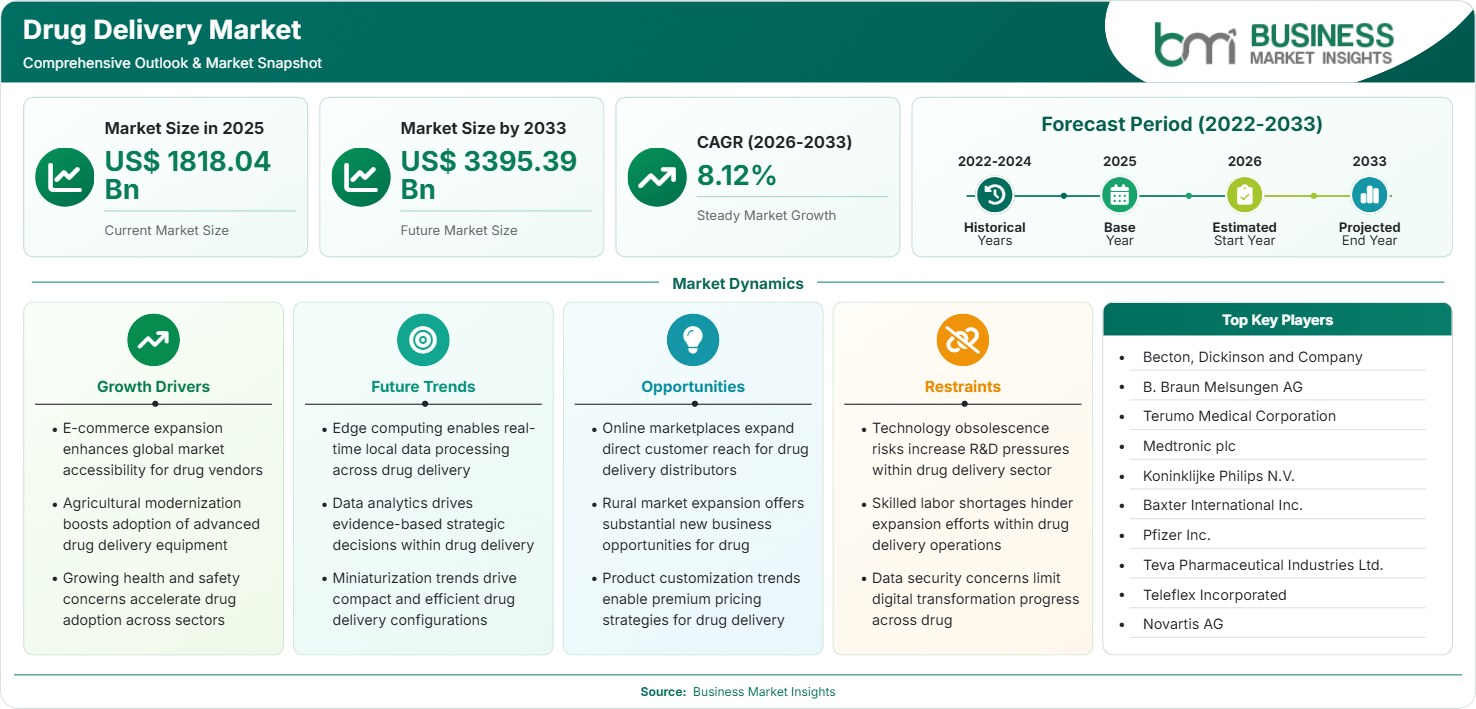
The Drug Delivery Market size was valued at US$ 1818.04 Billion in 2025 and is projected to reach US$ 3395.39 Billion by 2033, growing at a CAGR of 8.12% during 2026–2033, driven by biologics expansion, patient-centric delivery systems, and rising chronic disease prevalence globally.

Report Coverage
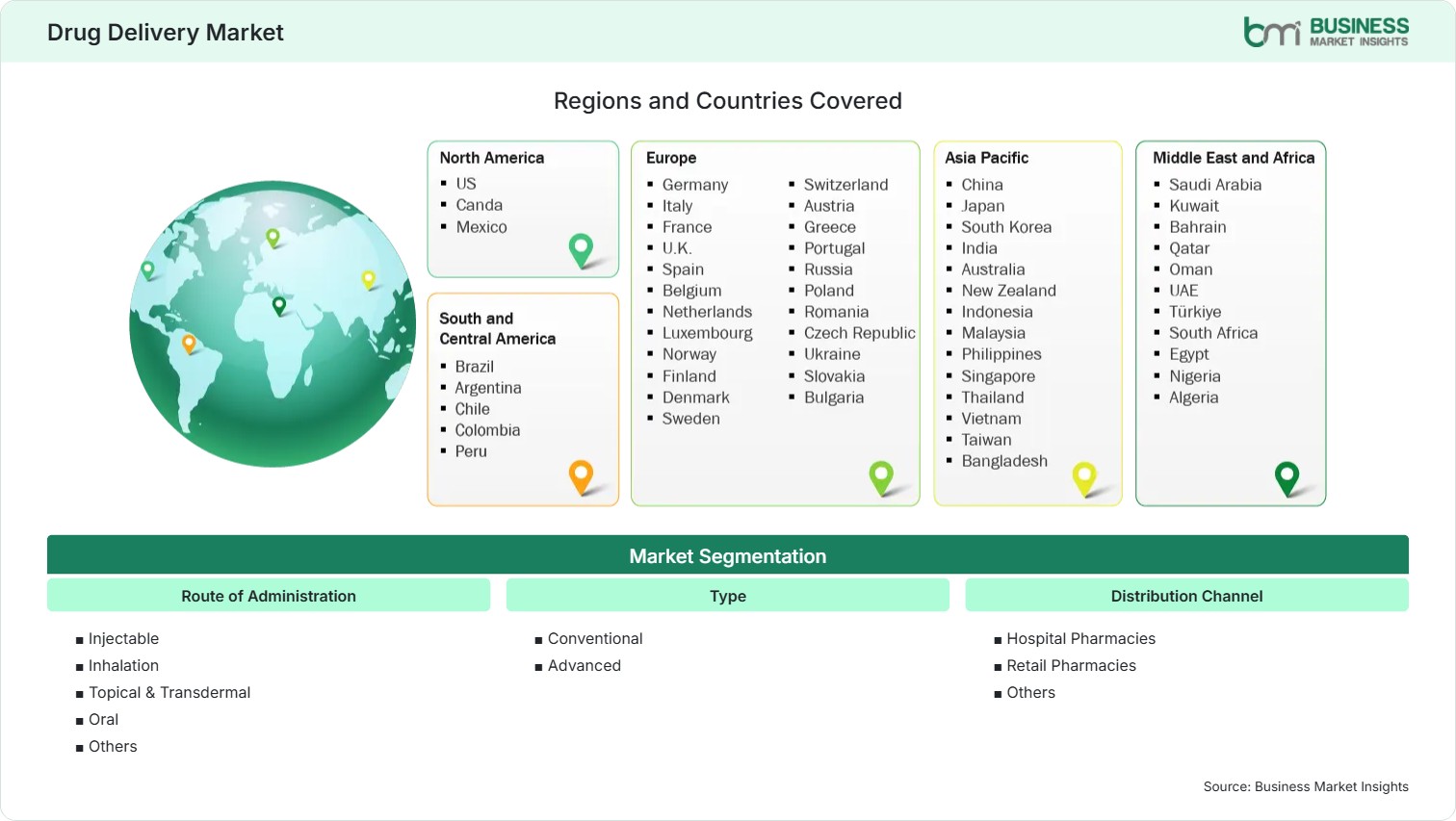
  • Route of Administration: Injectable, Inhalation, Topical & Transdermal, Oral, Others
  • Type: Conventional, Advanced
  • Distribution Channel: Hospital Pharmacies, Retail Pharmacies, Others
US$ 1818.04 Bn Market size in 2025
US$ 3395.39 Bn Market Size by 2033
8.12% CAGR, 2026 - 2033
2026-2033 Forecast Period

01 AI Overview

Drug Delivery Market Summary

  • North America Region: North America holds market share 34%–37% (2025), growing with a CAGR of 7.2%–7.8% influenced by biologics adoption, advanced delivery technologies, and strong healthcare infrastructure. US benefits from robust pipelines, high specialty drug usage, and rapid device innovation with CAGR 7.3%–7.9%.
  • Fastest Growing Region: Asia Pacific holds market share 24%–27% (2025), growing with a CAGR of 9.5%–10.2% driven by expanding healthcare access, rising generics manufacturing, increasing chronic disease burden, and government healthcare reforms boosting advanced delivery adoption.
  • Leading Segment: Injectable segment holds market share 41%–45% (2025), growing with a CAGR of 7.8%–8.4% driven by biologics dominance, rapid vaccine deployment, and increasing prevalence of autoimmune and oncology treatments requiring precise administration.
  • High Growth Segment: Advanced drug delivery holds market share 46%–50% (2025), growing with a CAGR of 9.0%–9.7% supported by sustained innovation in controlled release systems, smart injectors, and targeted therapies improving efficacy and patient compliance.
  • Key Market Opportunity: Integration of digital health platforms with delivery devices enhances adherence tracking, remote monitoring, and personalized dosing, enabling improved outcomes while reducing hospital visits and overall treatment costs significantly.
  • Major Market Players: Becton, Dickinson and Company; Emergent BioSolutions Inc.; Consort Medical plc; AptarGroup, Inc.; West Pharmaceutical Services, Inc.; Insulet Corporation; Nemera Development S.A.; SHL Medical AG; Pfizer Inc.; Gerresheimer AG; Ypsomed Holding AG
02 Strategic Insights

Drug Delivery Market: Strategic Insights

Drug Delivery Market Strategic Framework
FREE PDF
Request your free sample
Request free sample
03 Stakeholder View

Key Takeaways

  • The ecosystem is increasingly integrated, combining pharmaceutical manufacturing, device engineering, and digital monitoring, creating value chains centered on combination products and lifecycle management strategies.
  • Injectable biologics and advanced delivery systems represent the highest growth opportunity due to rising specialty drug pipelines and improved patient compliance technologies.
  • Innovation is shifting toward smart delivery platforms including connected injectors, wearable pumps, and nanotechnology-based carriers enhancing precision and therapeutic outcomes.
  • Asia Pacific offers a compelling investment case driven by healthcare expansion, domestic production incentives, and increasing pharmaceutical exports from India and China.
  • M&A activity is rising as large pharmaceutical companies acquire device specialists to strengthen integrated delivery capabilities and expand global market reach.
04 Geographic Outlook

Drug Delivery Market Regional Highlights

North America Drug Delivery Market

North America accounts for 34%–37% share in 2025 and is expanding at a CAGR of 7.2%–7.8%. Strong biologics pipelines, high healthcare spending, and early adoption of advanced delivery devices support regional dominance. The Drug Delivery Market share remains high due to favorable reimbursement frameworks and innovation ecosystems.

  • Advanced biologics pipeline drives adoption of injectable systems and wearable delivery devices, enhancing treatment efficiency across oncology, autoimmune diseases, and metabolic disorders while supporting sustained innovation and regulatory approvals.
  • Strong regulatory frameworks from FDA accelerate approvals of drug-device combination products, enabling faster commercialization and encouraging pharmaceutical companies to invest heavily in advanced delivery technologies.
  • High healthcare expenditure supports adoption of premium delivery solutions including smart injectors and inhalation devices, improving patient adherence and treatment outcomes across chronic conditions.
  • Increasing home healthcare adoption fuels demand for self-administration devices, reducing hospital visits and expanding outpatient treatment options across diverse therapeutic segments.

US Drug Delivery Market

The US holds 78%–82% Drug Delivery Market share within North America and grows at CAGR 7.3%–7.9%. Advanced R&D investments, strong pharmaceutical innovation, and rapid adoption of biologics drive sustained market expansion.

  • Presence of major pharmaceutical companies and device manufacturers accelerates innovation in drug-device combination systems, enhancing treatment precision and enabling large-scale commercialization across therapeutic areas.
  • Increasing prevalence of chronic diseases such as diabetes and cancer drives demand for advanced delivery solutions, supporting growth in insulin pumps and targeted therapies.
  • Strong reimbursement systems enable widespread adoption of high-cost biologics and delivery devices, ensuring accessibility for a large patient population.

Europe Drug Delivery Market

Europe accounts for 26%–29% share in 2025 and grows at CAGR 7.0%–7.6%. Germany and France lead adoption, while Eastern Europe shows higher growth potential driven by healthcare modernization.

  • Strong pharmaceutical manufacturing base supports innovation in delivery technologies, particularly in inhalation and transdermal systems for respiratory and dermatological therapies.
  • Increasing regulatory harmonization within EU accelerates approval processes for combination products, supporting faster market entry and adoption.
  • Growing aging population increases demand for chronic disease treatments, driving uptake of patient-friendly delivery systems across multiple therapeutic segments.
  • UK and Germany lead innovation with CAGR 7.2%–7.8%, while Poland and Spain show faster adoption due to healthcare investments.

Asia Pacific Drug Delivery Market

Asia Pacific holds 24%–27% share in 2025 and grows at CAGR 9.5%–10.2%. China and India dominate production, while Japan leads technological innovation.

  • Expanding pharmaceutical manufacturing capacity supports cost-effective production of delivery devices, enhancing regional competitiveness in global markets.
  • Rising chronic disease burden and population growth drive strong demand for advanced therapies and delivery systems.
  • Government initiatives in India and China promote domestic production and innovation, boosting adoption of advanced delivery technologies.
  • Japan leads innovation with CAGR 8.5%–9.2%, while India and China exceed 10% growth due to expanding healthcare access.

Rest of World Drug Delivery Market

Rest of World holds 10%–13% share in 2025 and grows at CAGR 7.8%–8.4%. Latin America and Middle East drive demand through healthcare investments and increasing pharmaceutical access.

  • Expanding healthcare infrastructure in Brazil and Mexico supports adoption of advanced delivery systems, improving treatment accessibility and outcomes.
  • Middle East investments in healthcare modernization boost demand for biologics and associated delivery technologies.
  • Increasing prevalence of chronic diseases drives demand for efficient drug delivery systems across emerging economies.
  • South Africa and UAE show strong growth potential with CAGR 8.0%–8.6% due to improving healthcare access and investment inflows.
Global Market Geography
FREE PDF
Request your free sample
Request free sample
05 Segment Analysis

Drug Delivery Market Segmentation

Route of Administration

This segment holds 100% distribution across applications, with injectable dominating 41%–45% share in 2025 and growing at CAGR 7.8%–8.4%. Rising biologics demand and precision dosing needs drive adoption across therapeutic areas globally. The market scope across routes highlights diversification and patient-centric solutions.

  • Injectable: Dominates due to biologics usage, enabling precise dosing and rapid action in critical therapies such as oncology, vaccines, and chronic disease management globally.
  • Inhalation: Widely used in respiratory diseases, offering targeted delivery and faster onset, supported by growing asthma and COPD prevalence worldwide.
  • Topical & Transdermal: Provides sustained drug release and improved patient compliance, particularly in pain management and hormone therapies.
  • Oral: Remains widely adopted for convenience, though limited by bioavailability challenges for complex biologics and specialty drugs.

Type

Advanced systems hold 46%–50% share in 2025 and grow at CAGR 9.0%–9.7%. Increasing innovation in controlled release and targeted therapies drives strong adoption across healthcare systems globally.

  • Conventional: Includes traditional oral and injectable methods, offering cost-effective solutions but limited precision and patient adherence in complex therapies.
  • Advanced: Encompasses smart injectors, nanocarriers, and sustained-release systems, improving therapeutic outcomes and driving market trends toward innovation.

Distribution Channel

Hospital pharmacies dominate with 48%–52% Drug Delivery Market share in 2025, growing at CAGR 7.5%–8.1%, driven by increasing biologics administration and complex therapies requiring clinical supervision.

  • Hospital Pharmacies: Key channel for high-value therapies requiring controlled administration, particularly for oncology and specialty treatments.
  • Retail Pharmacies: Supports widespread access to oral and self-administered therapies, expanding patient reach across urban and rural regions.
06 Market Forces

Drug Delivery Market Dynamics

Key Market Drivers

Rising Biologics Demand Driving Delivery Innovation

Growth in the market is highly supported by increasing use of biologics and vaccines. Biologics make up more than 30% of pharmaceutical pipelines as per World Health Organization. This is because of their need for complex delivery systems during administration. Delivery through injections is common due to the need for precision in administration. The introduction of wearable injectors has increased patient convenience. Combination products have become popular among pharmaceutical firms. This shift also accelerates Drug Delivery Market trends toward personalized medicine, where dosing accuracy and targeted delivery play a crucial role in chronic disease management and oncology treatment effectiveness.

Growth in Chronic Diseases and Aging Population

The global rise in chronic conditions such as diabetes, cancer, and cardiovascular diseases drives sustained demand for efficient delivery systems. According to WHO, chronic diseases account for nearly 74% of global deaths, increasing the need for long-term therapies. This trend supports Drug Delivery Market growth through the use of insulin pumps, inhalers, and transdermal patches. Aging population is one more factor that drives demand for solutions that are patient friendly and will allow patients to administer medicine themselves without requiring visits to hospitals. Adoption of solutions for at-home treatments leads to greater use of advanced devices as well.

Technological Advancements in Drug Delivery Systems

Continuous innovation in nanotechnology, micro-needle patches, and smart delivery devices enhances therapeutic efficiency and patient compliance. Advanced technologies make it possible to provide controlled drug delivery and decrease side effects, thus contributing to the trend towards precision medicine. The use of digital technologies for monitoring contributes to compliance and leads to better treatment outcomes. More and more often, pharmaceutical companies establish collaboration with tech companies to develop innovative products together, which accelerates commercialization of innovations. This will also allow entry into new fields such as gene therapy and personalized medicine.

Key Market Opportunities

Expansion of Digital and Connected Delivery Devices

Opportunities for growth can be found in the incorporation of digital health technologies with delivery systems. Connected injection devices and intelligent inhalers are used to monitor patients and measure compliance in real time. This aligns with Drug Delivery Market Forecasts emphasizing personalized treatment approaches. Growing use of telehealth services and remote monitoring systems further boosts the need for digital-based delivery devices. Drug manufacturers are focusing on IoT-based systems to improve their decisions based on data and engage patients. These initiatives not only generate extra sources of income but also boost treatment efficiency.

Emerging Markets Driving Volume Growth

Rapid healthcare expansion in emerging economies such as India, China, and Brazil creates significant opportunities for market players. Increasing government investments in healthcare infrastructure and pharmaceutical manufacturing boost demand for delivery systems. The emergence of increased middle classes and better healthcare facilities also plays a key role in the uptake of more sophisticated treatments. Companies are working towards manufacturing close to the target market and coming up with more economical solutions. Collaborations with distributors and healthcare professionals help them to penetrate the market. This gives them a good platform for future growth and expansion.

Advancements in Targeted and Controlled Release Systems

The advances in targeted drug delivery systems such as nanocarriers and liposomes show a great promise of better therapeutic results. This is because of their capability to deliver the drugs to a particular site of action thereby minimizing the side effects and increasing efficiency of treatment. The rise in studies in gene therapy and personalized medicine further fuels the demand for these systems. Pharmaceutical companies are investing heavily in R&D to develop next-generation delivery platforms. These advancements not only improve patient outcomes but also create competitive differentiation for companies, enabling them to capture higher market share and drive long-term revenue growth.

Market Restraints and Challenges

High Development Costs and Regulatory Complexity

Factor: Development of advanced delivery systems requires significant investment in R&D, clinical trials, and regulatory approvals.

Impact: High costs contribute to the high prices of products, thus making them inaccessible in cost-conscious areas and slowing down the process of commercialization. Moreover, complications with regulatory processes add to the list of difficulties, demanding testing and following the high safety standards. Different regulations in different regions make the process more difficult and costly. All of these factors serve as constraints on business growth and potential, especially for smaller businesses with less money to spend.

Limited Patient Awareness and Adoption Barriers

Factor: Lack of awareness regarding advanced delivery systems and resistance to new technologies among patients and healthcare providers.

Impact: Slower adoption rates reduce market penetration and delay revenue realization for innovative products. Training requirements for healthcare professionals and patients further complicate adoption, particularly in emerging markets. Additionally, concerns regarding device safety and reliability hinder acceptance of new technologies. Addressing these challenges requires targeted education initiatives, improved product design, and strong post-market support to build trust and ensure widespread adoption across diverse healthcare settings.

07 Company Analysis

Competitive Landscape

The Drug Delivery Market analysis highlights strong competition driven by innovation, partnerships, and product differentiation strategies among global leaders.

Company Name

Overview

Products and Services relevant to this market

Becton, Dickinson and Company

Global leader in medical technology with strong presence in drug delivery devices and diagnostics.

Syringes, pen injectors, infusion systems, safety needles, and integrated drug delivery solutions for biologics and vaccines.

Emergent BioSolutions Inc.

Focuses on specialty biopharmaceuticals and public health solutions.

Vaccine delivery systems, injectable platforms, and contract development services supporting biologics delivery.

Consort Medical plc

Specializes in drug-device combination products and inhalation technologies.

Inhalers, auto-injectors, and contract manufacturing services for pharmaceutical delivery systems.

AptarGroup, Inc.

Leading provider of dispensing systems and drug delivery devices.

Nasal sprays, inhalers, and injectable delivery solutions enhancing patient compliance.

West Pharmaceutical Services, Inc.

Provides packaging and delivery systems for injectable drugs.

Vial closures, syringes, and containment systems for biologics and vaccines.

Insulet Corporation

Focuses on diabetes management solutions.

Insulin pumps and wearable delivery systems improving patient adherence.

Nemera Development S.A.

Specialist in drug delivery device design and manufacturing.

Inhalers, auto-injectors, and nasal delivery systems for pharmaceutical applications.

SHL Medical AG

Developer of advanced injection systems.

Auto-injectors, pen injectors, and wearable drug delivery devices for biologics.

Pfizer Inc.

Global pharmaceutical leader with strong biologics portfolio.

Injectable therapies, vaccines, and integrated drug delivery solutions.

Gerresheimer AG

Provides packaging and delivery solutions for pharmaceuticals.

Glass and plastic packaging, syringes, and drug containment systems.

Ypsomed Holding AG

Specializes in injection and infusion systems.

Insulin pumps, pen injectors, and self-administration devices.

10 Trust & Transparency

Research Methodology

The market analysis combines proprietary research with secondary data from government agencies, company disclosures, regulatory filings, industry databases and expert interviews. Market estimates are validated through data triangulation, cross-market benchmarking and analyst review.

View Full Research Methodology

11 Questions Answered

Frequently Asked Questions

What is the scope of the Drug Delivery Market Report?

The market Report covers segmentation by route, type, distribution channel, regional insights, competitive landscape, and key trends shaping industry growth through 2033.

What are key challenges in the market?

High development costs, regulatory complexities, and limited awareness in emerging regions pose challenges to widespread adoption of advanced delivery technologies.

Which segment is growing fastest?

Advanced drug delivery systems are growing fastest due to increasing demand for targeted therapies, controlled release systems, and improved patient compliance solutions.

Which region dominates the market?

North America leads due to strong healthcare infrastructure, high adoption of biologics, and advanced research capabilities supporting continuous innovation in drug delivery technologies.

What is driving the market growth?

Growth is driven by increasing biologics demand, rising chronic diseases, and technological advancements in delivery systems such as smart injectors and wearable devices improving treatment efficiency and patient adherence.

Access the Full Drug Delivery Market Report

Get segment-level forecasts, regional estimates, competitive benchmarking, company profiles and downloadable Excel datasets.

Access the full Drug Delivery Market Report
350 pages PDF & Excel | 2026-08-17