
Lupus Drugs Market Outlook: Size, Share, Trends, Growth Analysis, Competitive Landscape & Forecast, 2026-2033

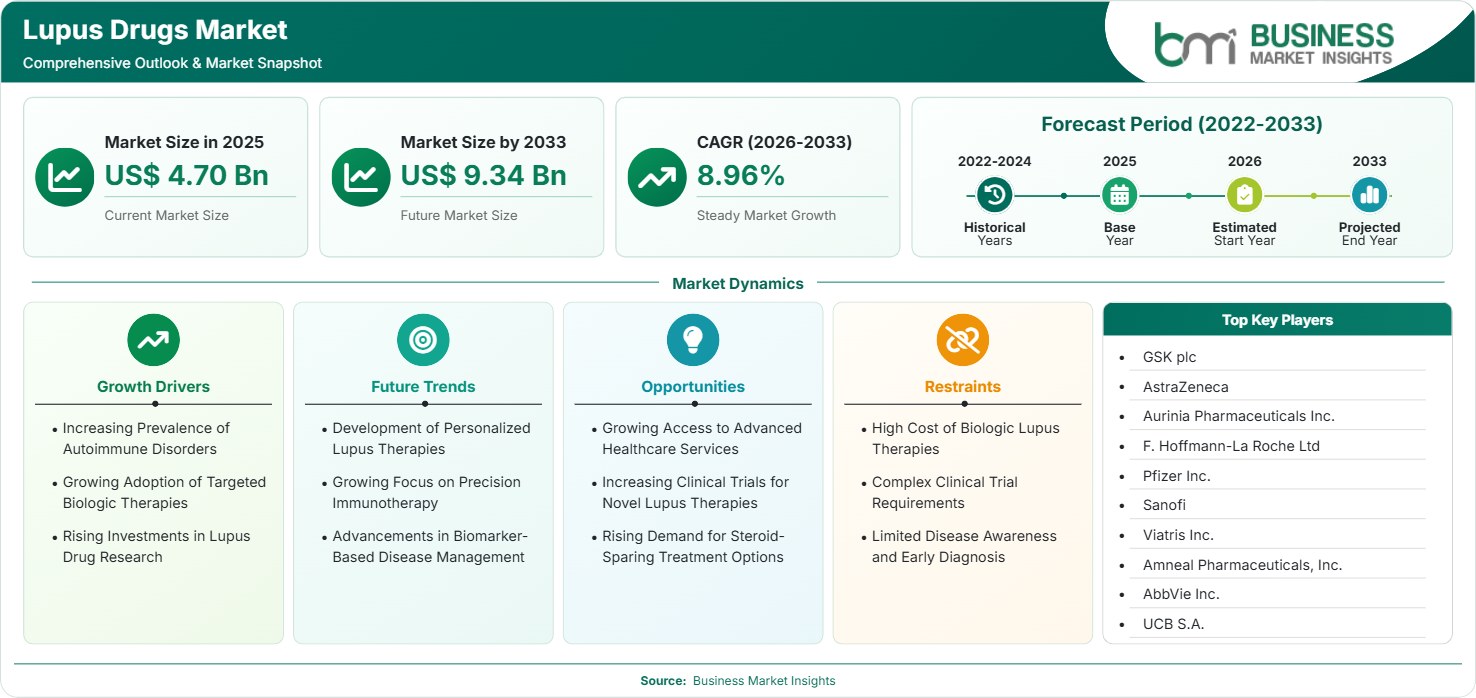
The Lupus Drugs Market size was valued at US$ 4.70 Billion in 2025 and is projected to reach US$ 9.34 Billion by 2033, growing at a CAGR of US$ 8.96% during 2026–2033, driven by biologic therapy adoption, rising autoimmune disease awareness, clinical innovation, and expanding access to advanced treatment options.

Report Coverage
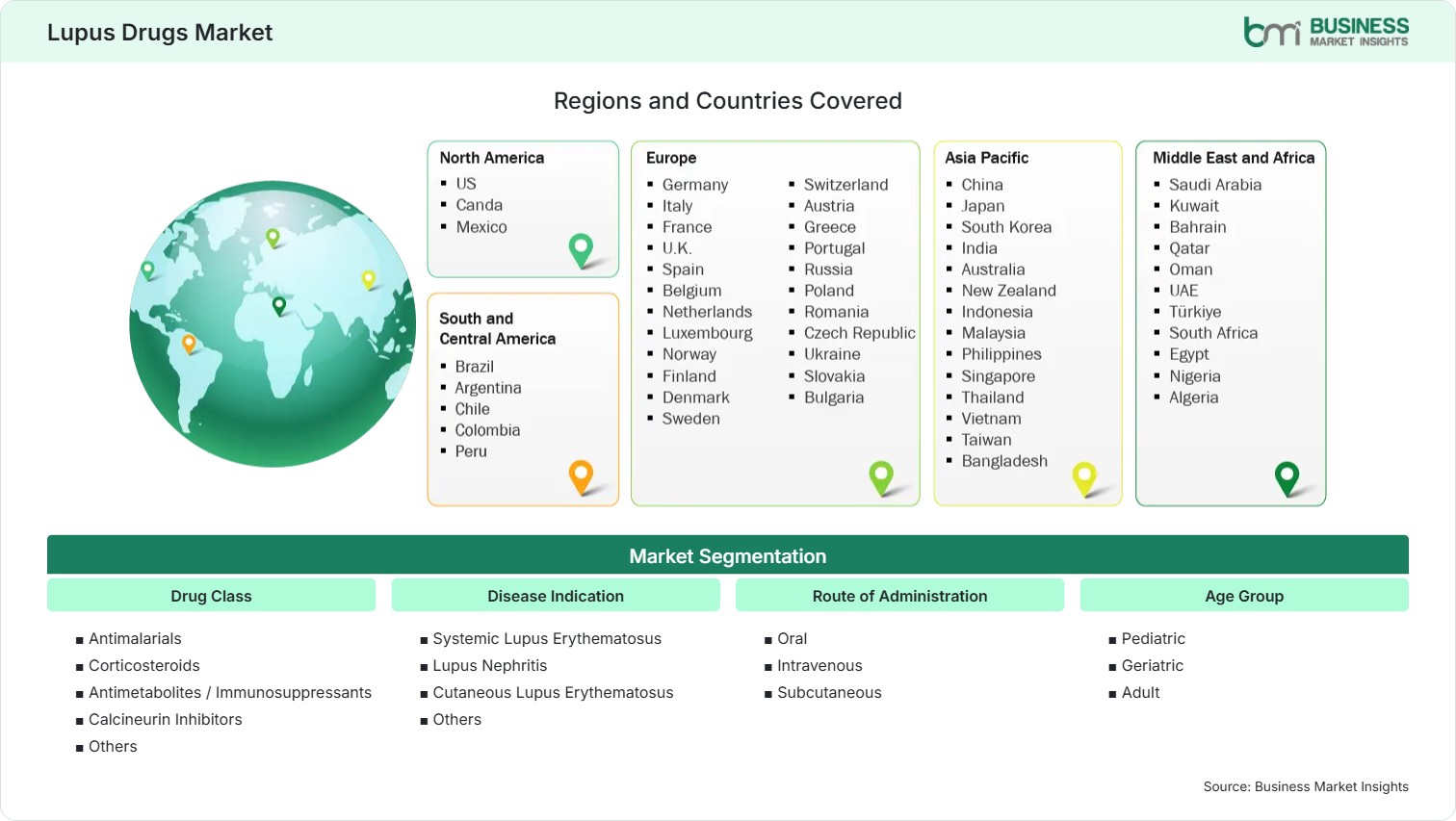
  • Drug Class: Antimalarials, Corticosteroids, Antimetabolites / Immunosuppressants, Calcineurin Inhibitors, Others
  • Disease Indication: Systemic Lupus Erythematosus, Lupus Nephritis, Cutaneous Lupus Erythematosus, Others
  • Route of Administration: Oral, Intravenous, Subcutaneous
  • Age Group: Pediatric, Geriatric, Adult
  • Type: Branded, Generics
US$ 4.70 Bn Market size in 2025
US$ 9.34 Bn Market Size by 2033
8.96% CAGR, 2026 - 2033
2026-2033 Forecast Period

01 AI Overview

Lupus Drugs Market Summary

  • North America Region: North America holds a 38%–42% share in 2025, growing with a CAGR of 8.2%–8.8% due to biologic adoption, healthcare infrastructure, reimbursement support, and research investments. The US market advances through specialty care networks with a CAGR of 8.4%–8.7%.
  • Fastest Growing Region: Asia Pacific maintains a 24%–28% share in 2025, expanding at a CAGR of 9.5%–10.2% supported by improving diagnosis rates, healthcare modernization, clinical trial expansion, and increasing access to autoimmune therapies across developing economies.
  • Leading Segment: Systemic Lupus Erythematosus (non-renal) indication accounts for a 45%–49% share in 2025, growing at a CAGR of 8.0%–8.6% due to broad patient prevalence, established treatment pathways, and increasing biologic usage.
  • High Growth Segment: Subcutaneous route of administration represents a 12%–16% share in 2025, progressing at a CAGR of 10.0%–10.8% due to patient convenience, self-administration trends, and expanding targeted therapy availability.
  • Key Market Opportunity: Growth opportunities are emerging through precision medicine, biomarker-driven treatment selection, emerging market access expansion, and development of steroid-sparing therapies that improve long-term patient outcomes.
  • Major Market Players: GSK plc, AstraZeneca, Aurinia Pharmaceuticals Inc., F. Hoffmann-La Roche Ltd, Pfizer Inc., Sanofi, Viatris Inc., Amneal Pharmaceuticals, Inc., AbbVie Inc., and UCB S.A.
02 Strategic Insights

Lupus Drugs Market: Strategic Insights

lupus-drugs-market-market-strategic-framework
FREE PDF
Request your free sample
Request free sample
03 Stakeholder View

Key Takeaways

  • Pharmaceutical value chains are shifting toward integrated ecosystems involving biologic manufacturers, specialty distributors, diagnostic providers, and healthcare institutions focused on personalized lupus management.
  • High-growth opportunities are concentrated in biologic therapies, lupus nephritis treatments, and patient-friendly administration formats that improve adherence among chronic disease populations.
  • Innovation strategy is more centered on immune modulating pathways, biomarker discovery, and newer therapies which help in providing patients with durable remissions without any adverse effects.
  • Asia Pacific provides an expansion opportunity as there is a continuous improvement in healthcare investment, research and development, and autoimmune disease awareness in various economies.
  • Strategic collaborations, licensing agreements, and pipeline acquisitions are shaping competitive positioning as companies seek differentiated therapies within autoimmune treatment portfolios.
  • Digital health integration and real-world evidence generation are becoming important tools for improving treatment monitoring and supporting value-based healthcare decisions.
04 Geographic Outlook

Lupus Drugs Market Regional Highlights

North America Lupus Drugs Market

North America accounted for a 38%–42% share in 2025 and is projected to expand at a CAGR of 8.2%–8.8% between 2026 and 2033. The region benefits from strong pharmaceutical presence, advanced healthcare systems, and high adoption of biologic therapies. The market share remains supported by reimbursement structures and specialized autoimmune care centers.

  • The United States contributes major demand due to extensive rheumatology networks, higher diagnosis rates, and strong adoption of advanced immunotherapies.
  • Canada supports regional expansion through improving access to specialty medications and government-backed healthcare programs focused on chronic disease treatment.
  • Research funding from biotechnology companies continues accelerating clinical development of innovative lupus therapies and combination treatment approaches.
  • Strong regulatory pathways enable faster commercialization of targeted therapies addressing unmet autoimmune disease treatment requirements.

US Lupus Drugs Market

The US represented a 34%–38% share in 2025, with growth estimated at a CAGR of 8.4%–8.7% through 2033. The market benefits from advanced clinical infrastructure, high biologic penetration, and strong pharmaceutical research activity. Increasing specialist involvement and improved patient identification continue supporting Lupus Drugs Market growth.

  • Increased utilization of specialty pharmacies improves access to high-value biologic therapies and supports treatment continuity among lupus patients.
  • Clinical research activity remains strong due to collaborations between pharmaceutical companies, academic centers, and healthcare providers.
  • Growing adoption of patient monitoring technologies supports treatment optimization and long-term disease management strategies.

Europe Lupus Drugs Market

Europe held a 27%–31% share in 2025 and is forecast to grow at a CAGR of 7.6%–8.3%. Germany, France, and the United Kingdom represent leading markets, while Italy and Spain demonstrate expanding opportunities. The Lupus Drugs Market share is influenced by healthcare reimbursement systems, clinical research infrastructure, and increasing demand for advanced autoimmune therapies.

  • Germany shows strong adoption of innovative medicines due to advanced healthcare infrastructure and specialist treatment availability.
  • France supports market expansion through national healthcare programs and increasing investment in autoimmune disease research.
  • The United Kingdom demonstrates growth through clinical trial participation and improving access to targeted therapies.
  • Italy and Spain present opportunities as diagnosis capabilities and specialist networks continue developing.

Asia Pacific Lupus Drugs Market

Asia Pacific captured a 24%–28% share in 2025 and is projected to register a CAGR of 9.5%–10.2% during 2026–2033. China, Japan, India, and South Korea are key contributors. The market growth is supported by healthcare modernization, rising awareness, and expanding pharmaceutical access.

  • China represents a major opportunity due to increasing autoimmune disease recognition and domestic pharmaceutical development initiatives.
  • Japan maintains strong demand through advanced healthcare systems and adoption of innovative specialty treatments.
  • India offers growth potential through improving diagnosis rates and expanding access to affordable therapies.
  • South Korea benefits from biotechnology investments and increasing participation in global clinical research programs.

Rest of World Lupus Drugs Market

Latin America, the Middle East, and Africa accounted for a 7%–10% share in 2025, with a CAGR of 7.2%–8.0% through 2033. Brazil, Mexico, Saudi Arabia, and the UAE represent important markets as healthcare infrastructure improves. The market share remains influenced by access programs, specialist availability, and pharmaceutical partnerships.

  • Brazil leads regional demand through expanding specialty healthcare services and increasing autoimmune disease awareness.
  • Mexico demonstrates growth potential through healthcare modernization and improved access to specialty medicines.
  • Saudi Arabia and UAE are investing in advanced healthcare facilities supporting rare and chronic disease treatment.
  • African markets show gradual improvement through international healthcare initiatives and pharmaceutical access collaborations.
global-market-geography
FREE PDF
Request your free sample
Request free sample
05 Segment Analysis

Lupus Drugs Market Segmentation

Drug Class

Drug Class segmentation represents a core component of the market, with antimalarials maintaining a leading position through established clinical usage. The segment accounted for a 32%–36% share in 2025 and is estimated to grow at a CAGR of 7.5%–8.2% between 2026–2034. Increasing adoption of immunosuppressive and targeted therapies is reshaping treatment strategies.

  • Antimalarials: Widely prescribed for systemic lupus management, these therapies support long-term disease control, reduce flare frequency, and remain foundational options for many patients.
  • Corticosteroids: Used for rapid inflammation control, corticosteroids continue supporting acute disease management despite increasing interest in steroid-sparing treatment approaches.
  • Antimetabolites/Immunosuppressants: These therapies address moderate-to-severe disease cases by regulating immune responses and supporting treatment protocols requiring sustained immunosuppression.
  • Calcineurin Inhibitors: Increasingly utilized in lupus nephritis management, these therapies provide targeted immune modulation and complement existing treatment combinations.

Disease Indication

Disease Indication segmentation demonstrates varied treatment demand across lupus conditions, with Systemic Lupus Erythematosus (non-renal) representing the largest category. This segment held a 45%–49% share in 2025 and is expected to grow at a CAGR of 8.0%–8.6% during 2026–2034. The Lupus Drugs Market scope continues expanding through improved diagnosis and indication-specific therapies.

  • Systemic Lupus Erythematosus (non-renal): Represents broad patient demand due to higher prevalence and established treatment pathways involving immunomodulators and biologic medicines.
  • Lupus Nephritis: Gains attention through advanced therapeutic development focused on preventing kidney damage and improving long-term patient outcomes.
  • Cutaneous Lupus Erythematosus: Benefits from growing demand for therapies addressing skin-related manifestations and improving quality-of-life outcomes.

Route of Administration

Route of Administration segmentation reflects changing patient preferences and pharmaceutical innovation. Oral formulations accounted for the largest share at 52%–56% in 2025, while subcutaneous therapies are expanding faster with a CAGR of 10.0%–10.8% between 2026–2034. Convenience, adherence improvement, and biologic delivery advancements influence adoption patterns.

  • Oral: Remains the preferred administration method due to convenience, established prescribing practices, and broad availability across healthcare settings.
  • Intravenous: Supports administration of advanced biologics requiring controlled delivery under clinical supervision and specialist monitoring.
  • Subcutaneous: Gains momentum through self-administration benefits, improved patient convenience, and increasing availability of targeted autoimmune therapies.

Age Group

Age Group segmentation highlights increasing treatment requirements across diverse patient populations. Adult patients represented a 65%–69% share in 2025 due to higher diagnosed cases and established treatment protocols. The segment is projected to grow at a CAGR of 8.3%–8.9% during 2026–2034 as healthcare systems improve chronic autoimmune disease management.

  • Pediatric: Expands through increased awareness of childhood lupus diagnosis and development of age-appropriate therapeutic approaches.
  • Geriatric: Gains importance as healthcare providers address complex disease management among aging populations with multiple conditions.
  • Adult: Maintains dominance due to higher disease incidence and extensive availability of approved treatment options.

Type

Type segmentation reflects competition between branded therapies and generic alternatives. Branded products accounted for a 58%–62% share in 2025, supported by biologic innovation and patented treatments. The segment is projected to grow at a CAGR of 8.5%–9.1% through 2026–2034 as companies continue investing in differentiated therapies.

  • Branded: Supported by novel biologics, targeted mechanisms, and pharmaceutical investment in advanced lupus treatment solutions.
  • Generics: Provide affordability advantages and improve access to established therapies across cost-sensitive healthcare markets.

Distribution Channel

Distribution Channel segmentation demonstrates increasing importance of specialty medication access pathways. Specialty pharmacies represented a 38%–42% share in 2025 and are expected to grow at a CAGR of 9.0%–9.7% during 2026–2034. Complex biologic therapies require coordinated dispensing, monitoring, and patient support services.

  • Hospital Pharmacies: Remain important for supervised administration, specialist prescribing, and management of complex lupus cases.
  • Retail/Drug Store Pharmacies: Support accessibility for conventional oral medications and routine prescription fulfillment.
  • Specialty Pharmacies: Expand through biologic distribution services, adherence programs, and patient assistance solutions.
06 Market Forces

Lupus Drugs Market Dynamics

Key Market Drivers

Increasing Prevalence of Autoimmune Disorders

Increased diagnoses of autoimmune disorders are driving the need for new therapies. WHO has recognized autoimmune disorders as an important health care concern that requires effective disease management strategies. Increased awareness levels, improved diagnosis techniques, and more specialists are helping to fuel the market. Trends within the market show increasing uptake of advanced treatments in an effort to enhance effectiveness while minimizing the side effects associated with treatments. This has prompted pharmaceutical firms to invest in research aimed at immune pathway manipulation.

Growing Adoption of Targeted Biologic Therapies

Biologic drugs are revolutionizing the field of lupus therapy through the provision of mechanism-targeted interventions on the immune system, in comparison to regular immunosuppressive drugs. Growing tendency among physicians to favor drugs that act through specific mechanisms is facilitating the uptake of biologic drugs among patients with moderate-to-severe cases of lupus. The Lupus Drugs Market is continuing to gain from approvals of novel biologics and increased guidelines for their use. Firms are focusing on the development of antibody-based drugs, complement modulators, and immune cells modulation drugs.

Rising Investments in Lupus Drug Research

Investment in autoimmune research is fueling developments in customized lupus treatments. The companies are stepping up their clinical trials activities to fill the gaps, especially those of lupus nephritis and refractory cases of the disease. The Lupus Drugs Market trends show increased cooperation among biotech companies, educational institutions, and medical bodies. Patient data and biomarker research is becoming more accessible, which allows for more focused approaches to clinical trials002E

Key Market Opportunities

Growing Access to Advanced Healthcare Services

The improvements in the infrastructure for health care in developing countries are presenting an opportunity for increased uptake of treatments for lupus. The increase in facilities for specialized hospitals and diagnosis as well as reimbursement avenues means more people can access the new medicines. According to the projections by Lupus Drugs Market Forecast, firms that adopt affordable distribution strategies and region-specific partnerships will be able to tap into the underdeveloped markets. The developments in the Asian-Pacific, Latin American, and Middle-Eastern regions present good commercial prospects for manufacturers.

Increasing Clinical Trials for Novel Lupus Therapies

Increasing levels of clinical studies are creating scope for new generation of lupus drugs that will be safe and effective. Biotech firms are utilizing new techniques that involve immunomodulatory and combination therapy approaches. Greater involvement in clinical development programs enables drugmakers to target particular symptoms like lupus nephritis. The support from regulators in developing breakthrough drugs and innovative treatments for rare diseases is encouraging growth in the pipeline.

Rising Demand for Steroid-Sparing Treatment Options

There is a trend toward the use of steroid-sparing options in order to avoid risks that arise from the long-term use of corticosteroids. This trend is prompting the development of biologics, immunomodulators, and targeted treatments that offer better safety. The companies that have solutions for the problem of steroids can cater to the needs of patients suffering from chronic lupus. Awareness on the part of the doctors and changing guidelines are helping this approach.

Market Restraints and Challenges

High Cost of Biologic Lupus Therapies

Factor: Expensive research, manufacturing complexity, and specialized production requirements increase biologic therapy costs. Impact: The high cost of treatment can hinder patient access, especially in regions that lack adequate reimbursement and have issues with the affordability of health care services. The cost issue impacts the use of advanced treatment approaches despite their potential advantages. It is important for companies to strike a balance between innovation and accessibility.

Complex Clinical Trial Requirements

Factor: Lupus disease complexity, patient variability, and long development timelines increase clinical trial challenges. Impact: Extended validation procedures can result in delays in the market launch of products as well as increased financial demands on drug manufacturers. It takes a lot of time to design clinical trials involving proper population, biomarkers, and outcome measures. All of these factors can hamper innovation even though there is high unmet need in the market.

07 Company Analysis

Competitive Landscape

The Lupus Drugs Market analysis highlights a competitive environment shaped by pharmaceutical companies investing in biologics, immunosuppressants, and targeted autoimmune therapies. Leading players are strengthening portfolios through clinical development, strategic collaborations, and lifecycle management initiatives to address diverse lupus manifestations.

Company Name

Overview

Products and Services relevant to this market

GSK plc

Global biopharmaceutical company focused on specialty medicines and immune-mediated disease solutions.

Lupus therapies, immunology research programs, biologic treatment development, and specialty medicines.

AstraZeneca

Multinational pharmaceutical company advancing innovative medicines across immunology and chronic diseases.

Lupus nephritis therapies, biologics, clinical research, and autoimmune treatment platforms.

Aurinia Pharmaceuticals Inc.

Specialty pharmaceutical company focused on autoimmune disease treatment innovation.

Lupus nephritis therapy development, targeted immunosuppressive treatments, and patient support programs.

F. Hoffmann-La Roche Ltd

Healthcare company developing advanced medicines and biotechnology solutions globally.

Immunology therapies, biologics, diagnostic support, and autoimmune disease research programs.

Pfizer Inc.

Global pharmaceutical company with extensive inflammatory and immune disease expertise.

Immunomodulatory medicines, clinical research capabilities, and autoimmune therapeutic solutions.

Sanofi

Healthcare organization developing specialty medicines and immunology-focused therapies.

Autoimmune treatments, biologic medicines, research collaborations, and specialty care solutions.

Viatris Inc.

Global healthcare company providing branded and generic pharmaceutical products.

Generic immunosuppressants, established therapies, and accessible treatment options.

Amneal Pharmaceuticals, Inc.

Pharmaceutical company specializing in complex generics and specialty medicines.

Generic lupus medications, specialty pharmaceuticals, and affordable treatment alternatives.

AbbVie Inc.

Research-driven biopharmaceutical company focused on immunology and chronic diseases.

Immunology medicines, clinical development, and targeted therapeutic platforms.

UCB S.A.

Global biopharmaceutical company specializing in neurological and immunological disorders.

Immunology therapies, biologic medicines, and autoimmune disease research solutions.

10 Trust & Transparency

Research Methodology

The market analysis combines proprietary research with secondary data from government agencies, company disclosures, regulatory filings, industry databases and expert interviews. Market estimates are validated through data triangulation, cross-market benchmarking and analyst review.

View Full Research Methodology

11 Questions Answered

Frequently Asked Questions

5. Why are pharmaceutical companies investing in lupus research?

Companies are investing due to unmet clinical needs, opportunities for differentiated therapies, expanding autoimmune disease understanding, and potential for improved patient outcomes.

What does the Lupus Drugs Market Report analyze?

The market report evaluates industry trends, competitive strategies, segmentation patterns, regional dynamics, treatment innovation, and future opportunities across the global landscape.

How are emerging markets influencing lupus therapy adoption?

Emerging markets are contributing through healthcare infrastructure improvements, increasing specialist availability, and broader access to advanced pharmaceutical products.

Which therapy category is gaining attention in lupus treatment?

Targeted biologic therapies are gaining attention due to their ability to address specific immune pathways and reduce dependence on traditional broad immunosuppressive treatments.

What factors are driving the Lupus Drugs Market expansion?

Increasing autoimmune disease diagnosis, improved treatment awareness, biologic therapy adoption, and rising investment in clinical research are key factors supporting market expansion.

Access the Full Lupus Drugs Market Report

Get segment-level forecasts, regional estimates, competitive benchmarking, company profiles and downloadable Excel datasets.

Access the full Lupus Drugs Market Report
350 pages PDF & Excel | 2026-08-05