
Antifungal Drugs Market Outlook: Size, Share, Trends, Growth Analysis, Competitive Landscape & Forecast, 2026–2033

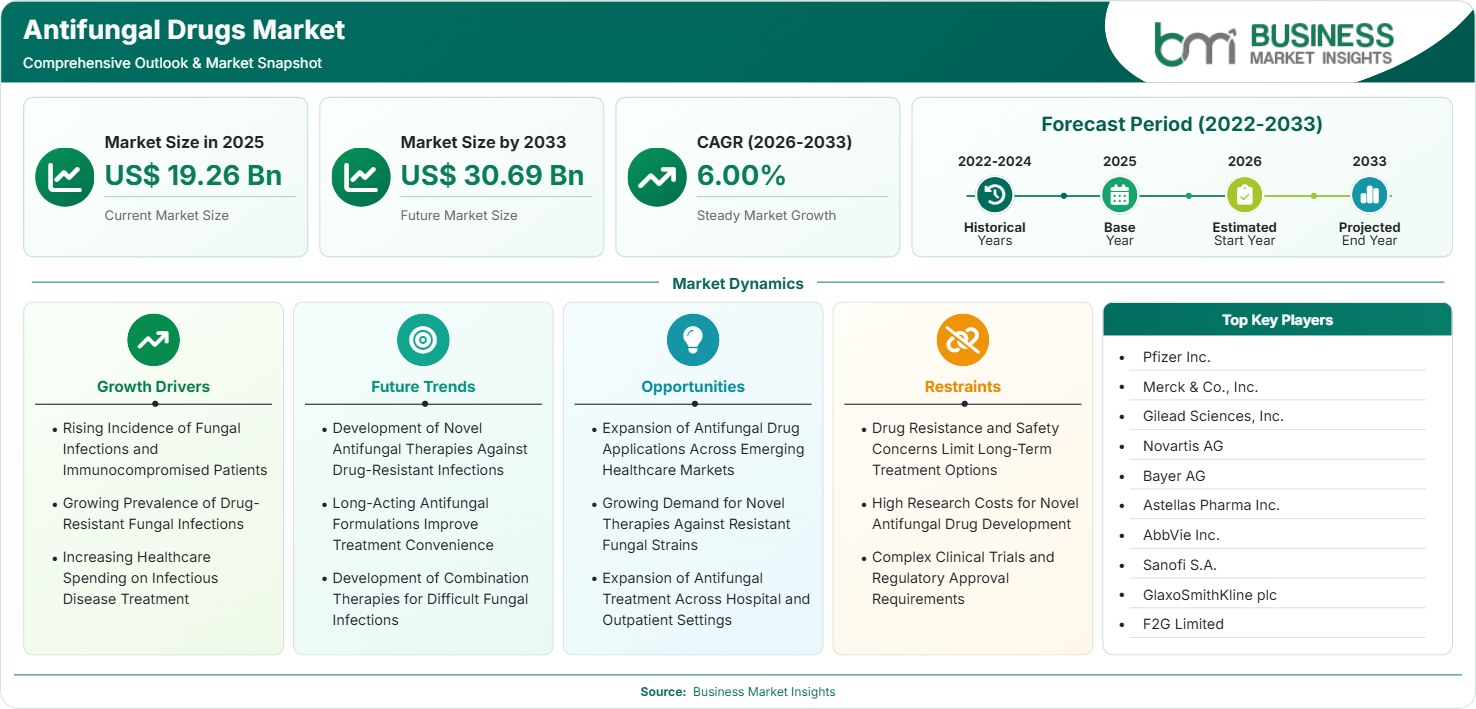
The Antifungal Drugs Market size was valued at US$ 19.26 Billion in 2025 and is projected to reach US$ 30.69 Billion by 2033, growing at a CAGR of 6.00% during 2026–2033, driven by rising fungal infections, drug resistance, healthcare investment, novel therapies, and wider treatment access.

Report Coverage
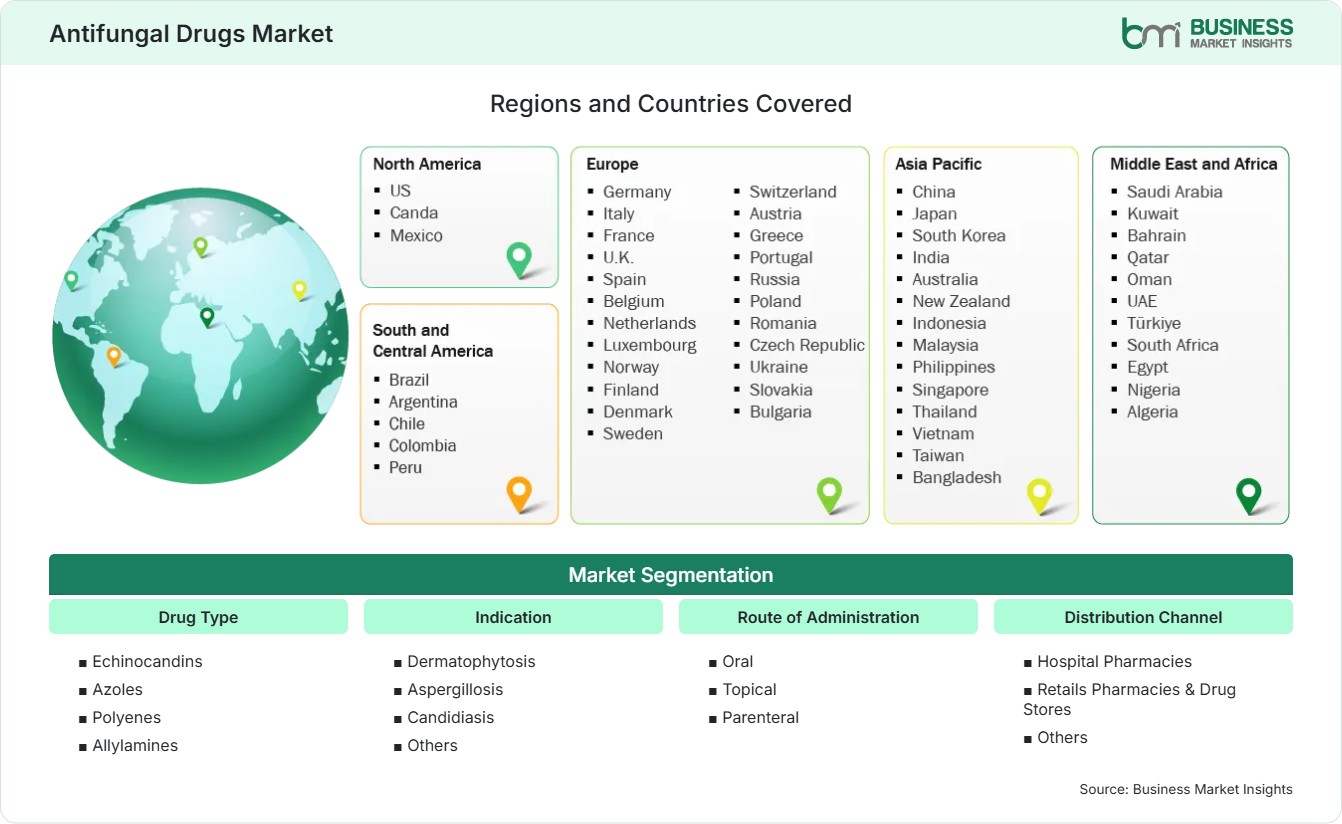
  • Drug Type: Echinocandins, Azoles, Polyenes, Allylamines
  • Indication: Dermatophytosis, Aspergillosis, Candidiasis, Others
  • Route of Administration: Oral, Topical, Parenteral
  • Distribution Channel: Hospital Pharmacies, Retails Pharmacies & Drug Stores, Others
US$ 19.26 Bn Market size in 2025
US$ 30.69 Bn Market Size by 2033
6.00% CAGR, 2026 - 2033
2026-2033 Forecast Period

AI Overview

Antifungal Drugs Market Summary

  • North America Region: North America holds a 34%–37% Antifungal Drugs Market share in 2025, growing at a 5.5%–5.9% CAGR during 2026–2033, supported by advanced infectious disease infrastructure, high diagnostic capacity, resistant fungal infections, hospital demand, and healthcare expenditure. The US represents 84%–88% of regional demand and is projected to grow at a 5.4%–5.8% CAGR during 2026–2033, supported by advanced diagnostics and specialized treatment capacity.
  • Fastest Growing Region: Asia Pacific holds a 22%–25% share in 2025 and is projected to grow at a 7.0%–7.5% CAGR during 2026–2033, supported by expanding healthcare infrastructure, increasing diagnosis, rising treatment access, growing patient populations, antimicrobial resistance surveillance, and increasing pharmaceutical investment across developing healthcare systems.
  • Leading Segment: Azoles account for a 38%–42% share in 2025 and are projected to grow at a 5.8%–6.2% CAGR during 2026–2033, supported by broad clinical utilization, established treatment protocols, multiple administration options, extensive physician familiarity, and demand across dermatological and systemic fungal infections.
  • High Growth Segment: Echinocandins represent a 21%–25% share in 2025 and are forecast to expand at a 6.8%–7.3% CAGR during 2026–2033, supported by invasive candidiasis treatment demand, resistant infections, hospital utilization, and continued clinical need for newer systemic antifungal options.
  • Key Market Opportunity: Drug-resistant infections are creating commercial opportunities for differentiated antifungal mechanisms, improved safety profiles, targeted formulations, combination approaches, rapid diagnostics, and broader treatment access across emerging healthcare systems.
  • Major Market Players: Pfizer Inc.; Merck & Co., Inc.; Gilead Sciences, Inc.; Novartis AG; Bayer AG; Astellas Pharma Inc.; AbbVie Inc.; Sanofi S.A.; GlaxoSmithKline plc; F2G Limited.
Strategic Insights

Antifungal Drugs Market: Strategic Insights

Antifungal Drugs Market Strategic Framework
FREE PDF
Request your free sample
Request free sample
Stakeholder View

Key Takeaways

  • The therapeutic value chain is becoming increasingly dependent on coordinated diagnostics, susceptibility testing, drug development, hospital procurement, specialist prescribing, and post-market resistance surveillance.
  • Echinocandins provide an attractive growth opportunity because invasive candidiasis and resistant Candida infections continue to create demand for effective systemic treatment options.
  • Novel mechanisms and improved formulations are gaining strategic importance because the limited number of available antifungal classes increases vulnerability to resistance and treatment failure.
  • Asia Pacific provides a compelling expansion case as healthcare infrastructure, diagnostic access, pharmaceutical availability, and infectious disease treatment capacity improve across major developing economies.
  • Investment priorities are increasingly shifting toward differentiated antifungal pipelines, targeted therapies, diagnostics integration, and development programs addressing pathogens identified as high-priority public health threats.
  • Outpatient and hospital treatment pathways require different formulation, administration, monitoring, and distribution strategies, creating opportunities for portfolios covering multiple clinical settings.
Geographic Outlook

Antifungal Drugs Market Regional Highlights

North America Antifungal Drugs Market

North America represents a 34%–37% share in 2025 and is projected to grow at a 5.5%–5.9% CAGR through 2033. Strong hospital infrastructure, advanced diagnostic capabilities, infectious disease specialization, and high treatment expenditure support regional demand. The region also faces increasing attention toward antifungal resistance, encouraging susceptibility testing and treatment optimization. Established pharmaceutical distribution networks support consistent availability of systemic and topical therapies.

  • Hospital systems maintain strong demand for systemic antifungals because severe infections require rapid diagnosis, specialist management, intravenous administration, and ongoing treatment monitoring.
  • Antifungal resistance surveillance is strengthening demand for susceptibility testing and evidence-based treatment selection, particularly where resistant Candida and Aspergillus infections complicate conventional therapeutic approaches.
  • Advanced healthcare infrastructure supports adoption of newer therapies, specialized formulations, and targeted treatment strategies addressing complex infections among immunocompromised patient populations.
  • Established pharmaceutical procurement and distribution systems improve product availability while supporting predictable access across hospitals, specialty pharmacies, and outpatient treatment networks.

US Antifungal Drugs Market

The US accounts for 84%–88% of North American demand in 2025 and North America Antifungal Drugs Market forecast to grow at a 5.4%–5.8% CAGR through 2033. Demand is supported by specialized hospital care, infectious disease programs, diagnostic capabilities, and treatment requirements for immunocompromised patients. Antifungal resistance remains an important clinical consideration, increasing the role of susceptibility testing and stewardship.

  • Specialized hospital treatment supports demand for echinocandins and other systemic therapies used for invasive fungal infections requiring monitored clinical administration.
  • Increasing attention to resistant Candida infections is strengthening diagnostic testing, susceptibility assessment, and antifungal stewardship across healthcare facilities.
  • Specialty pharmacy and hospital procurement networks support access to higher-value therapies while enabling treatment continuity for complex infectious disease cases.

Europe Antifungal Drugs Market

Europe Antifungal Drugs Market holds a 27%–30% share in 2025 and is projected to expand at a 5.6%–6.0% CAGR through 2033. Germany, the United Kingdom, France, Italy, and Spain represent leading markets due to established healthcare infrastructure and pharmaceutical access. Poland provides comparatively faster growth at a 6.5%–7.0% CAGR. Regional demand is influenced by aging populations, hospital treatment capacity, immunocompromised patient care, and increasing attention to antimicrobial resistance.

  • Germany provides strong demand through advanced hospital infrastructure, specialist infectious disease services, diagnostic capacity, and established pharmaceutical procurement systems.
  • The United Kingdom supports continued treatment demand through centralized healthcare systems, antimicrobial stewardship, resistance monitoring, and specialist management of invasive fungal diseases.
  • France and Italy provide substantial demand across hospital and outpatient treatment pathways, supported by established pharmaceutical access and broad clinical utilization.
  • Poland provides higher growth potential as healthcare infrastructure, treatment access, diagnostic capabilities, and pharmaceutical availability continue improving.

Asia Pacific Antifungal Drugs Market

Asia Pacific Antifungal Drugs Market accounts for a 22%–25% share in 2025 and is forecast to expand at a 7.0%–7.5% CAGR through 2033. China, Japan, India, South Korea, and Australia represent major markets, while India provides comparatively high growth at a 7.8%–8.3% CAGR. Expansion is supported by healthcare infrastructure development, increasing diagnostic access, rising treatment awareness, growing pharmaceutical availability, and larger patient populations.

  • China provides substantial demand potential through its large patient population, expanding hospital capacity, increasing diagnostic capabilities, and improving access to advanced pharmaceutical treatments.
  • India offers strong growth potential as healthcare infrastructure, infectious disease awareness, diagnostic access, and pharmaceutical availability continue expanding across urban and developing healthcare markets.
  • Japan and South Korea support established demand through sophisticated healthcare systems, specialist treatment capacity, advanced diagnostics, and strong pharmaceutical access.
  • Southeast Asian markets provide longer-term opportunities as healthcare investment, hospital infrastructure, treatment awareness, and pharmaceutical distribution improve.

Rest of World Antifungal Drugs Market

Rest of World represents a 14%–17% share in 2025 and is expected to grow at a 6.2%–6.8% CAGR through 2033. South and Central America benefit from expanding healthcare access, infectious disease awareness, hospital capacity, and pharmaceutical distribution. Brazil and Mexico represent leading markets, while Colombia provides comparatively faster growth at a 7.0%–7.5% CAGR. Middle Eastern and African markets are supported by healthcare infrastructure investment and improving access to essential medicines. Saudi Arabia provides stronger regional growth at a 7.2%–7.8% CAGR, supported by healthcare modernization and expanding specialized treatment capacity. South and Central American markets continue developing hospital and outpatient treatment capabilities, creating opportunities for systemic and topical therapies.

  • Brazil and Mexico provide substantial demand through relatively developed pharmaceutical distribution systems, expanding healthcare capacity, and increasing access to infectious disease treatment.
  • Saudi Arabia supports higher regional growth through healthcare modernization, specialist hospital expansion, pharmaceutical investment, and increasing access to advanced treatment options.
  • African markets offer longer-term potential as healthcare infrastructure, diagnostic capabilities, and availability of essential medicines improve across major urban centers.
  • Pricing, reimbursement, and distribution infrastructure remain important considerations for pharmaceutical companies seeking broader penetration across lower-resource healthcare markets.
Global Market Geography
FREE PDF
Request your free sample
Request free sample
Segment Analysis

Antifungal Drugs Market Segmentation

Drug Type

Drug type determines mechanism, treatment setting, safety profile, and clinical utilization. Azoles lead with a 38%–42% Antifungal Drugs Market share in 2025 and a 5.8%–6.2% CAGR through 2033. Echinocandins hold 21%–25%, Polyenes 15%–19%, reflecting diverse infection requirements and treatment pathways.

  • Echinocandins: Systemic treatment demand, invasive candidiasis management, hospital utilization, and increasing clinical attention toward resistant Candida infections.
  • Azoles: Supported by broad clinical familiarity, multiple treatment options, established prescribing practices, and utilization across systemic and localized fungal infections.
  • Polyenes: Growth is driven by established systemic treatment roles, broad antifungal activity, severe infection management, and continued demand where alternative therapies are unsuitable.
  • Allylamines: This segment is driven by dermatological treatment demand, topical utilization, established clinical familiarity, and continued management of superficial fungal infections.

Indication

Indication determines treatment intensity, administration route, and pharmaceutical demand. Dermatophytosis leads with a 36%–40% share in 2025, followed by Candidiasis at 29%–33%, Aspergillosis and Others. Systemic infections support higher-value treatment demand, while widespread superficial infections maintain substantial volume.

  • Dermatophytosis: Growth is supported by widespread superficial fungal infections, established treatment pathways, recurring demand, and continued utilization of topical and oral antifungal therapies.
  • Aspergillosis: Growth is supported by immunocompromised patient populations, hospital treatment requirements, systemic disease management, and increasing concern regarding resistant fungal pathogens.
  • Candidiasis: Supported by invasive and non-invasive infections, hospital demand, immunocompromised populations, and increasing resistance concerns requiring targeted treatment.
  • Others: Supported by diverse fungal disease categories, specialized treatment requirements, emerging diagnosis, and continued pharmaceutical demand across multiple clinical settings.

Route of Administration

Route selection reflects disease severity, infection location, treatment duration, patient condition, and clinical setting. Oral therapies lead with a 49%–53% share in 2025, while Topical holds 29%–33% and Parenteral represents 17%–21%. Oral treatment benefits from convenience, while parenteral therapy remains important for severe systemic infections.

  • Oral: supported by convenience, broad outpatient utilization, established prescribing practices, treatment flexibility, and suitability for numerous fungal infection categories.
  • Topical: supported by superficial infections, localized treatment requirements, patient convenience, established formulations, and continued outpatient demand.
  • Parenteral: supported by severe systemic infections, hospital-based treatment, rapid therapeutic requirements, and patients unable to use oral formulations.

Distribution Channel

Distribution determines medicine accessibility, procurement efficiency, treatment continuity, and patient reach. Hospital Pharmacies hold a 42%–46% share in 2025, followed by Retails Pharmacies & Drug Stores at 36%–40% and Others at 16%–20%. Hospital demand is supported by systemic infections, while retail channels remain important for outpatient therapies.

  • Hospital Pharmacies: Supported by inpatient treatment, specialist prescribing, parenteral administration, severe fungal infections, and centralized pharmaceutical procurement.
  • Retails Pharmacies & Drug Stores: Supported by outpatient treatment, oral and topical therapies, prescription access, recurring treatment requirements, and broad geographic availability.
  • Others: Supported by specialty distribution, institutional procurement, alternative healthcare channels, and treatment access requirements across specialized patient populations.
Market Forces

Antifungal Drugs Market Dynamics

Key Market Drivers

Rising Incidence of Fungal Infections and Immunocompromised Patients

Fungal diseases are leading to continuous demand in treatments due to the increased need for clinical intervention in immune-compromised individuals. WHO has estimated that there are more than 6.5 million invasive fungal infections around the world each year, and the deaths arising from this disease have been pegged at 3.8 million. This has been very important considering the fact that people requiring intensive treatment or having compromised immunity. The increased capability in diagnosis and treatment has considered to be a major Antifungal Drugs Market trend.

Growing Prevalence of Drug-Resistant Fungal Infections

Antifungal resistance is increasing pressure on healthcare systems because treatment options remain limited across several serious fungal infections. CDC reports that only three major antifungal classes are available for resistant fungal diseases, making some infections difficult to treat. Resistance among Candida species is increasing, while multidrug-resistant Candida auris continues to require specialized clinical management. This environment supports demand for novel mechanisms, susceptibility testing, and Antifungal Drugs Market growth.

Increasing Healthcare Spending on Infectious Disease Treatment

Investment in healthcare is driving the development of facilities and diagnostics, along with other important improvements such as specialized care and pharmaceuticals. Higher funding for infection disease treatment is making it possible to increase diagnosis and treatment for fungal infections which may not have been diagnosed earlier. An increase in hospital capacity is also leading to higher demands for systemic treatments, whereas improvements in outpatient facilities are enabling oral and topical treatment options. Improved laboratory facilities will help in better identification and susceptibility testing of pathogens.

Key Market Opportunities

Expansion of Antifungal Drug Applications Across Emerging Healthcare Markets

Emerging healthcare markets offer considerable growth prospects through increased access to diagnostics, availability of hospital facilities, drug distribution channels, and knowledge about infectious diseases. Higher treatment penetration will generate higher demand for existing antifungals as well as provide opportunity for differentiated antifungals. Healthcare investments in the region will also boost the expertise available for treating systemic infections. Portfolio strategies that reflect the economics, regulations, distribution channels, and treatment practices of the region can enhance penetration.

Growing Demand for Novel Therapies Against Resistant Fungal Strains

Resistance is increasing the need for therapies with differentiated mechanisms, improved activity, better tolerability, and broader treatment utility. Antifungal development highlights the importance of addressing unmet needs among priority fungal pathogens and identifies financial and technical limitations within the current development landscape. This creates opportunities for research programs focused on resistant infections, improved formulations, combination approaches, and targeted treatment. Development programs that address clinical gaps while demonstrating manageable safety profiles can attract strategic investment and strengthen competitive positioning.

Expansion of Antifungal Treatment Across Hospital and Outpatient Settings

Expansion of treatments in hospital and outpatient care settings could increase demand for medications by providing options for different degrees of infection and patient needs. The hospital setting will provide options for systemic and parenteral drugs, while outpatient care will help in administering oral and topical drugs. Improvements in the diagnostic process could enhance early diagnosis and help provide better drug options. Hospitals that are expanding ambulatory and specialty care programs could also improve continuation of antifungal therapy after discharge from the hospital.

Market Restraints and Challenges

Drug Resistance and Safety Concerns Limit Long-Term Treatment Options

Factor: Growing issues of resistance and toxicity can limit the range of antifungal treatments available, especially in cases of more complicated systemic infections. Impact: The limited range of treatments can make treatment management more difficult, increase monitoring needs, and affect the efficiency of existing treatment methods.

High Research Costs for Novel Antifungal Drug Development

Factor: The development of antifungals involves heavy expenditures in areas such as drug discovery, clinical development, safety assessment, and conducting specific trials aimed at complicated infections. Impact: The high cost of development may deter investors from investing in antifungals and prolong the commercialization process, resulting in fewer numbers of innovative products joining the pipeline amid increasing demands for new drugs. Financial and technical constraints are considered to be some of the major obstacles by WHO.

Company Analysis

Competitive Landscape

The Antifungal Drugs Market analysis highlights competition within existing systemic drugs, unique formulations, innovations in treatment methods, product development, marketing channels, and research on resistance. The leading pharmaceutical firms have a presence in several therapeutic areas and regions.

Company Name

Overview

Products and Services relevant to this market

Pfizer Inc.

Global pharmaceutical company with extensive infectious disease capabilities and established commercial infrastructure across major healthcare markets.

Antifungal therapies, systemic treatments, clinical development, pharmaceutical manufacturing, distribution, and infectious disease research capabilities.

Merck & Co., Inc.

Research-driven pharmaceutical company with broad prescription medicine capabilities and established infectious disease expertise.

Antifungal medicines, pharmaceutical research, clinical development, manufacturing, commercialization, and healthcare distribution.

Gilead Sciences, Inc.

Biopharmaceutical company with established expertise in infectious diseases and antifungal treatment through its marketed portfolio.

AmBisome, amphotericin B liposomal formulation, infectious disease development, manufacturing, access programs, and global distribution.

Novartis AG

Global pharmaceutical company with broad specialty medicine capabilities and international research and commercialization infrastructure.

Pharmaceutical development, specialty therapies, research capabilities, manufacturing, regulatory support, and global distribution.

Bayer AG

Diversified healthcare company with pharmaceutical operations and established capabilities across prescription medicine development.

Antifungal medicines, pharmaceutical research, clinical development, manufacturing, commercialization, and healthcare distribution.

Astellas Pharma Inc.

Research-focused pharmaceutical company with established anti-infective expertise and global specialty medicine operations.

Antifungal therapies, infectious disease research, clinical development, pharmaceutical manufacturing, and commercialization.

AbbVie Inc.

Global biopharmaceutical company with broad specialty pharmaceutical capabilities and international commercial infrastructure.

Pharmaceutical research, specialty medicines, clinical development, manufacturing, commercialization, and healthcare distribution.

Sanofi S.A.

Global healthcare company with extensive pharmaceutical development, manufacturing, and commercial capabilities.

Anti-infective medicines, pharmaceutical development, manufacturing, regulatory capabilities, and global healthcare distribution.

GlaxoSmithKline plc

Research-based biopharmaceutical company with established anti-infective expertise and global commercial reach.

Antifungal and anti-infective medicines, clinical research, pharmaceutical manufacturing, commercialization, and healthcare partnerships.

F2G Limited

Biotechnology company focused on developing novel antifungal medicines addressing serious and difficult-to-treat fungal infections.

Novel antifungal drug development, systemic treatment research, clinical development, regulatory programs, and commercialization activities.

Trust & Transparency

Research Methodology

The market analysis combines proprietary research with secondary data from government agencies, company disclosures, regulatory filings, industry databases and expert interviews. Market estimates are validated through data triangulation, cross-market benchmarking and analyst review.

View Full Research Methodology

Questions Answered

Frequently Asked Questions

What role will diagnostics play in future antifungal treatment?

Diagnostics will increasingly support pathogen identification, susceptibility assessment, treatment selection, resistance surveillance and help healthcare systems reduce inappropriate antifungal.

Which route of administration dominates treatment demand in Antifungal Drugs Market report?

Oral administration holds the largest share because it provides convenience and supports broad outpatient treatment. Topical therapies remain important for localized infections, while parenteral treatment is concentrated in severe systemic infections requiring hospital-based care.

Why is antifungal resistance becoming a major commercial opportunity?

The limited number of available antifungal classes increases the value of therapies offering differentiated mechanisms, improved safety, broader activity, or effectiveness against resistant fungal strains.

What is driving demand for echinocandins?

Demand is supported by invasive candidiasis treatment requirements and increasing concern regarding resistant Candida infections. Echinocandins remain important systemic therapies in hospital settings, particularly where serious infections require monitored treatment.

Which drug type holds the largest share of the Antifungal Drugs Market?

Azoles hold the leading position because of their broad clinical utilization, established treatment protocols, multiple formulations, and extensive use across several fungal infection categories.

Access the Full Antifungal Drugs Market Report

Get segment-level forecasts, regional estimates, competitive benchmarking, company profiles and downloadable Excel datasets.

Access the full Antifungal Drugs Market Report
350 pages PDF & Excel | 2026-08-20