
HIV Drugs Market Outlook: Size, Share, Trends, Growth Analysis, Competitive Landscape & Forecast, 2022-2033

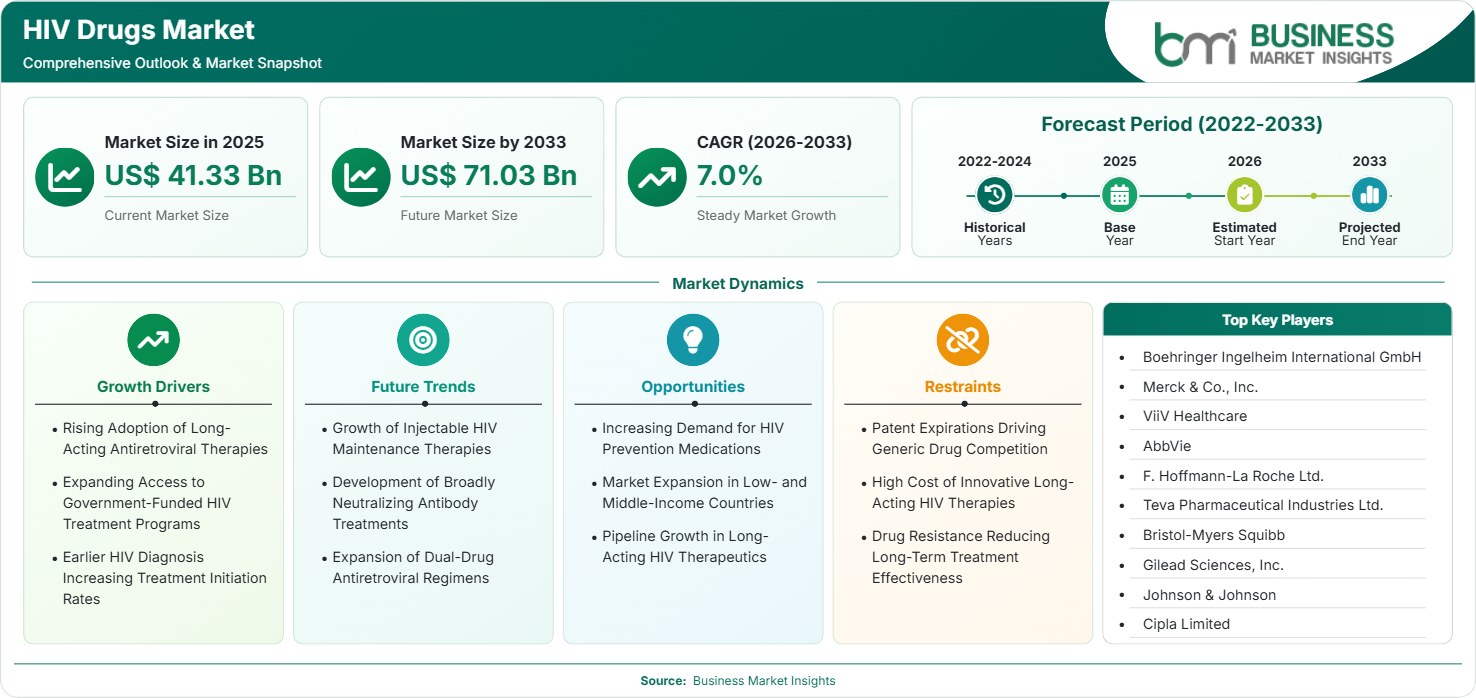
The HIV Drugs Market size was valued at US$ 41.33 Billion in 2025 and is projected to reach US$ 71.03 Billion by 2033, growing at a CAGR of 7.00% during 2026–2033. Rising HIV prevalence, increasing access to antiretroviral therapy, expansion of government-funded treatment programs, and continuous innovation in long-acting HIV therapies are driving market growth. Opportunities are emerging from combination therapies, improved patient adherence solutions, and expanding healthcare access across developing economies.

Report Coverage
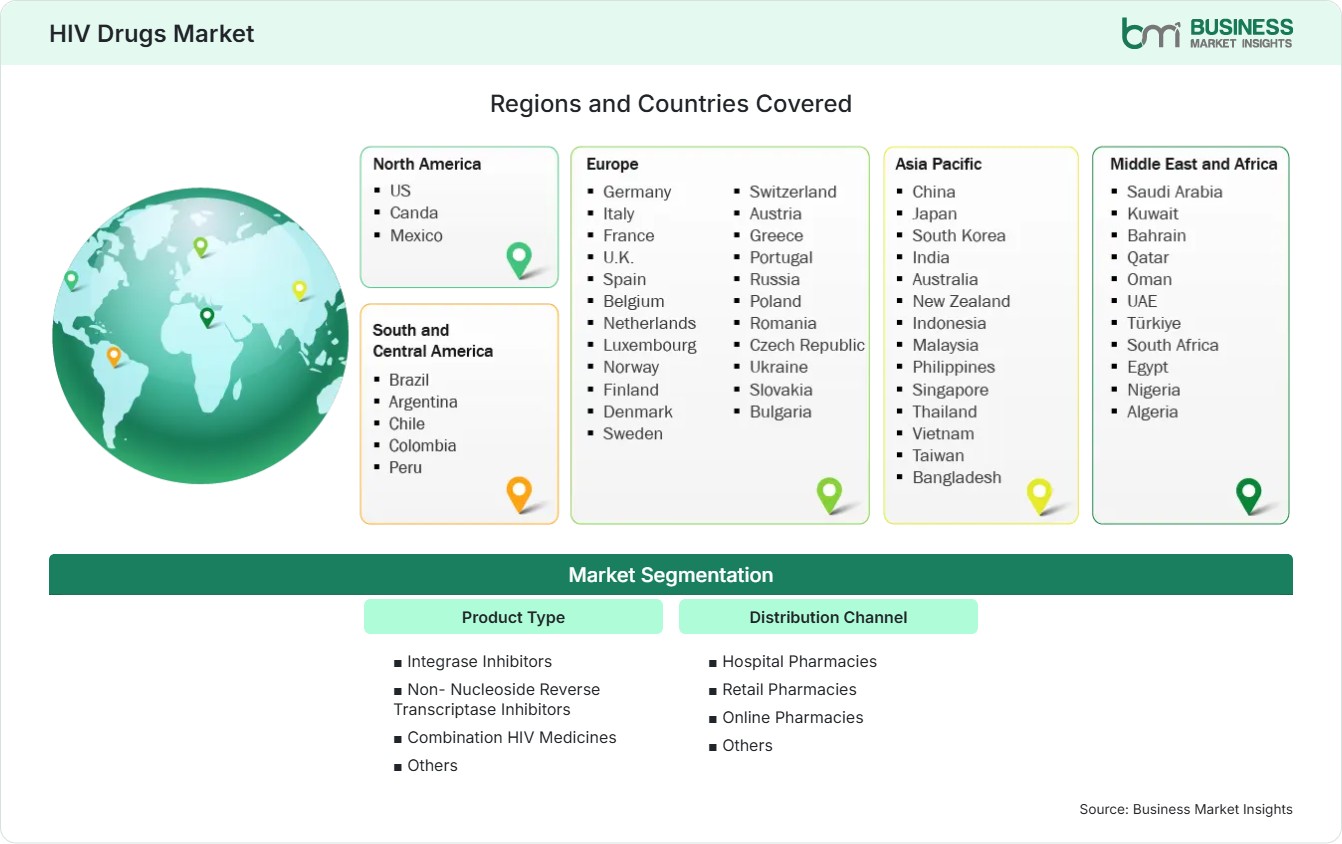
  • Product Type: Integrase Inhibitors, Non- Nucleoside Reverse Transcriptase Inhibitors, Combination HIV Medicines, Others
  • Distribution Channel: Hospital Pharmacies, Retail Pharmacies, Online Pharmacies, Others
US$ 41.33 Bn Market size in 2025
US$ 71.03 Bn Market Size by 2033
7.0% CAGR, 2026 - 2033
2026-2033 Forecast Period

01 AI Overview

HIV Drugs Market Summary

  • North America Region: North America holds a market share of 37%–40% in 2025 and is projected to grow at a CAGR of 6.5%–7.5% during 2026–2033. Strong healthcare infrastructure, high treatment accessibility, favorable reimbursement frameworks, and continuous innovation in HIV treatment support market leadership. The US market is expanding at a CAGR of 6.8%–7.8% during the forecast period.
  • Fastest Growing Region: Asia Pacific accounts for 21%–24% share in 2025 and is projected to grow at a CAGR of 8.0%–9.2% through 2033. Expanding treatment coverage, growing healthcare investments, and improving awareness programs continue supporting regional growth.
  • Leading Segment: Combination HIV Medicines represent 44%–47% share in 2025 and are expected to grow at a CAGR of 7.2%–8.2% through 2033. Improved treatment adherence, reduced pill burden, and enhanced therapeutic effectiveness support segment leadership.
  • High Growth Segment: Integrase Inhibitors hold 28%–31% share in 2025 and are anticipated to grow at a CAGR of 8.5%–9.5% during 2026–2033. Strong clinical efficacy, favorable safety profiles, and increasing physician preference continue driving adoption.
  • Key Market Opportunity: The continued expansion of long-acting HIV treatment formulations and broader treatment access in emerging economies presents significant opportunities for pharmaceutical manufacturers and healthcare providers.
  • Major Market Players: Boehringer Ingelheim International GmbH, Merck & Co., Inc., ViiV Healthcare, AbbVie, F. Hoffmann-La Roche Ltd., Teva Pharmaceutical Industries Ltd., Bristol-Myers Squibb, Gilead Sciences, Inc., Johnson & Johnson, Cipla Limited.
02 Strategic Insights

HIV Drugs Market: Strategic Insights

hiv-drugs-market-market-strategic-framework
FREE PDF
Request your free sample
Request free sample
03 Stakeholder View

Key Takeaways

  • Combination therapies remain the cornerstone of HIV treatment due to their ability to improve adherence, simplify regimens, and enhance long-term treatment outcomes.
  • Integrase inhibitors represent the most attractive growth segment as healthcare providers increasingly prefer therapies with strong efficacy and favorable safety profiles.
  • Long-acting injectable HIV therapies are emerging as an important innovation trend, addressing adherence challenges associated with daily oral medications.
  • Asia Pacific offers substantial expansion opportunities due to growing healthcare infrastructure, increasing treatment coverage, and rising public health investments.
  • Strategic collaborations among pharmaceutical companies, healthcare agencies, and global health organizations continue expanding treatment accessibility worldwide.
  • Ongoing investments in HIV prevention, diagnosis, and treatment initiatives are supporting a comprehensive healthcare ecosystem that benefits long-term market growth.
  • HIV drugs market forecast suggests that sustained advancements in long-acting therapies, broader access to antiretroviral treatment, increasing adoption of preventive medications, and continued government and global health investments will drive steady market growth, improve patient outcomes, and expand treatment coverage worldwide over the forecast period.
04 Geographic Outlook

HIV Drugs Market Regional Highlights

North America HIV Drugs Market

North America accounted for a 37%–40% share in 2025 and is projected to expand at a CAGR of 6.5%–7.5% during 2026–2033. The region benefits from advanced healthcare infrastructure, extensive HIV screening programs, high treatment accessibility, and widespread adoption of innovative antiretroviral therapies. The HIV Drugs Market share remains concentrated in the US due to favorable reimbursement systems, strong pharmaceutical innovation, and significant investments in HIV treatment and prevention strategies.

  • Growing adoption of single-tablet regimens is improving medication adherence and supporting more effective long-term disease management among HIV patients.
  • Healthcare providers are increasingly prescribing advanced antiretroviral therapies with improved efficacy and reduced side-effect profiles.
  • Government-funded treatment initiatives and awareness campaigns continue expanding access to diagnosis and treatment services.
  • Strong pharmaceutical research capabilities are accelerating the development of long-acting injectable HIV therapies and next-generation treatment options.
  • Increasing focus on preventive care and early intervention programs is supporting demand for comprehensive HIV management solutions.

US HIV Drugs Market

The US represented a 32%–35% share in 2025 and is estimated to grow at a CAGR of 6.8%–7.8% through 2033. Strong healthcare expenditure, advanced treatment accessibility, and significant pharmaceutical innovation support market expansion. The HIV Drugs Market growth in the US is driven by increasing uptake of modern antiretroviral therapies, long-acting treatment options, and expanding initiatives focused on reducing HIV transmission rates.

  • Expanding use of integrase inhibitor-based treatment regimens is supporting improved patient outcomes and long-term viral suppression.
  • Increasing adoption of long-acting injectable therapies is helping address adherence challenges associated with daily oral medication schedules.
  • Federal and state healthcare programs continue improving access to treatment among underserved patient populations.
  • Ongoing clinical research investments are strengthening development pipelines for next-generation HIV therapies and prevention products.

Europe HIV Drugs Market

Europe held a 27%–30% share in 2025 and is expected to grow at a CAGR of 6.0%–7.0% from 2026–2033. Germany, the UK, and France represent major HIV Drugs markets due to established healthcare systems, broad treatment coverage, and strong public health programs. Germany is estimated to expand at 6.5%–7.5% CAGR, supported by increasing adoption of advanced treatment regimens and continued investment in infectious disease management.

  • European healthcare systems emphasize early diagnosis and rapid treatment initiation to improve clinical outcomes and reduce transmission risks.
  • Germany is strengthening demand through advanced treatment access, strong healthcare reimbursement, and comprehensive disease management programs.
  • The UK market benefits from national HIV prevention initiatives and widespread availability of antiretroviral therapies.
  • France continues supporting market growth through public health investments and expanded patient access programs.
  • Growing emphasis on long-acting treatment solutions is encouraging adoption of innovative HIV therapeutics across the region.

Asia Pacific HIV Drugs Market

Asia Pacific accounted for a 21%–24% share in 2025 and is projected to register a CAGR of 8.0%–9.2% during 2026–2033. China, Japan, and India are leading markets due to increasing treatment access, growing healthcare investments, and expanding HIV awareness programs. China is expected to grow at 8.2%–9.2% CAGR, while India demonstrates strong adoption potential with a CAGR of 8.5%–9.5% through the forecast period.

  • Government initiatives focused on HIV diagnosis and treatment access are supporting market expansion across major regional economies.
  • China is witnessing increased adoption of antiretroviral therapies through healthcare modernization and disease-control programs.
  • Japan’s advanced healthcare system supports consistent access to innovative HIV treatment options and specialty care services.
  • India is experiencing rising treatment volumes due to expanding awareness campaigns and broader healthcare accessibility initiatives.
  • Regional pharmaceutical manufacturing capabilities are improving affordability and availability of HIV medications.

Rest of World HIV Drugs Market

Rest of World accounted for a 9%–12% share in 2025 and is expected to grow at a CAGR of 7.0%–8.0% through 2033. South America, the Middle East, and Africa remain important regions due to continued HIV prevalence and increasing international healthcare support. Brazil, South Africa, and Saudi Arabia represent significant growth markets supported by treatment access initiatives and healthcare infrastructure investments.

  • Brazil is improving HIV treatment accessibility through public healthcare programs and national disease management initiatives.
  • South Africa continues representing a major treatment market due to its large HIV patient population and extensive treatment networks.
  • Middle Eastern countries are investing in healthcare modernization and infectious disease management capabilities.
  • International organizations continue supporting treatment access through funding programs and awareness campaigns.
  • Expanding generic drug availability is improving affordability and strengthening long-term treatment adoption across emerging economies.
global-market-geography
FREE PDF
Request your free sample
Request free sample
05 Segment Analysis

HIV Drugs Market Segmentation

Product Type

Product type segmentation plays a central role in defining treatment strategies across HIV management. Drug adoption is influenced by efficacy, safety profile, resistance management, treatment adherence, and dosing convenience. Combination HIV Medicines accounted for 44%–47% share in 2025 and are projected to grow at a CAGR of 7.2%–8.2% through 2033 due to their ability to simplify treatment regimens and improve patient compliance.

  • Integrase Inhibitors: The fastest-growing segment, holding 28%–31% share in 2025 and expected to register a CAGR of 8.5%–9.5% through 2033. Strong efficacy, low resistance rates, and favorable safety profiles continue driving physician preference.
  • Non-Nucleoside Reverse Transcriptase Inhibitors (NRTIs): Remain an important treatment category due to their longstanding use in antiretroviral therapy combinations and proven clinical effectiveness.
  • Combination HIV Medicines: The leading segment because they reduce pill burden, improve adherence, and deliver effective long-term viral suppression outcomes.
  • Others: Includes protease inhibitors and additional antiretroviral treatment classes used in customized therapy regimens and resistant patient populations.

Distribution Channel

Distribution channels are evolving as healthcare accessibility, digital pharmacy adoption, and specialty medication management continue expanding across global healthcare systems. Hospital Pharmacies represented 52%–55% share in 2025 and are expected to grow at a CAGR of 6.8%–7.8% through 2033.

  • Hospital Pharmacies: The dominant segment due to strong patient monitoring requirements, specialty drug dispensing capabilities, and treatment initiation programs.
  • Retail Pharmacies: Remain a significant channel by providing convenient access to maintenance therapies and prescription refills.
  • Online Pharmacies: The fastest-growing channel, projected to expand at a CAGR of 8.0%–9.0% through 2033 due to convenience, home delivery services, and increasing digital healthcare adoption.
  • Others: Includes government distribution programs, community health centers, specialty HIV clinics, and nonprofit healthcare channels.
06 Market Forces

HIV Drugs Market Dynamics

Key Market Drivers

Rising Adoption of Long-Acting Antiretroviral Therapies

Long-acting antiretroviral therapies are transforming HIV treatment by reducing dosing frequency and improving medication adherence among patients. Traditional daily oral regimens often face compliance challenges, particularly among patients requiring lifelong therapy. Long-acting injectable formulations provide extended viral suppression with fewer administrations, enhancing convenience and treatment persistence. Healthcare providers are increasingly adopting these therapies due to their ability to improve quality of life and reduce the risk of treatment interruptions. HIV Drugs Market growth is being supported by continued clinical success of long-acting regimens, increasing physician confidence, and expanding regulatory approvals for innovative treatment options that simplify disease management.

Expanding Access to Government-Funded HIV Treatment Programs

Governments and global healthcare organizations continue investing heavily in HIV prevention, diagnosis, and treatment initiatives aimed at improving access to care. Publicly funded treatment programs have significantly increased the availability of antiretroviral medicines across both developed and emerging healthcare systems. Large-scale procurement initiatives, reimbursement policies, and international funding support are helping improve treatment coverage and patient outcomes. National HIV strategies are increasingly focused on achieving treatment targets and reducing transmission rates through broader access to effective therapies. Continued expansion of these programs is strengthening demand for branded and generic HIV medications across hospitals, clinics, and community healthcare facilities.

Earlier HIV Diagnosis Increasing Treatment Initiation Rates

Advancements in HIV screening programs, public awareness campaigns, and diagnostic technologies are contributing to earlier identification of HIV infections. Healthcare authorities increasingly recommend immediate treatment initiation following diagnosis to improve long-term outcomes and reduce disease transmission risks. Earlier diagnosis enables physicians to begin antiretroviral therapy before significant immune system damage occurs, supporting better viral suppression rates. The HIV Drugs Market is benefiting from rising screening coverage, improved healthcare accessibility, and increasing patient engagement with preventive healthcare services. As testing capabilities expand globally, larger numbers of newly diagnosed individuals are entering treatment programs, supporting sustained demand for HIV therapeutics.

Key Market Opportunities

Increasing Demand for HIV Prevention Medications

The growing adoption of preventive HIV treatment strategies is creating substantial opportunities for pharmaceutical manufacturers. Pre-exposure prophylaxis (PrEP) and other preventive medication approaches are gaining acceptance among healthcare providers and at-risk populations. Governments and healthcare organizations are expanding awareness initiatives to improve prevention outcomes and reduce new infection rates. HIV Drugs Market Forecasts indicate strong growth potential for prevention-focused therapies as healthcare systems increasingly emphasize proactive disease management rather than treatment alone. Pharmaceutical companies developing innovative prevention products, long-acting prophylactic formulations, and improved patient access programs are well positioned to benefit from this expanding segment.

Market Expansion in Low- and Middle-Income Countries

Low- and middle-income countries continue representing significant growth opportunities due to large patient populations, improving healthcare infrastructure, and increasing international support for HIV care initiatives. Governments are expanding treatment access, strengthening healthcare delivery systems, and improving diagnosis rates through public health programs. Pharmaceutical companies can capitalize on these opportunities through strategic partnerships, local manufacturing arrangements, and affordable treatment solutions. Continued expansion of donor-funded healthcare programs and international collaborations is expected to improve therapy availability across underserved regions. Increased affordability and broader healthcare access will play a critical role in supporting long-term market growth.

Pipeline Growth in Long-Acting HIV Therapeutics

Research and development activities focused on long-acting HIV therapies are creating attractive opportunities for future market expansion. Pharmaceutical companies are investing in injectable therapies, implant-based delivery systems, and extended-release formulations designed to improve adherence and treatment outcomes. These innovations aim to address long-standing challenges associated with daily oral treatment regimens. Clinical pipelines continue expanding as companies seek differentiated products capable of addressing evolving patient needs. Successful commercialization of next-generation therapies is expected to strengthen competitive positioning and create new revenue streams while advancing overall HIV disease management capabilities.

Market Restraints and Challenges

Patent Expirations Driving Generic Drug Competition

Factor: Several established HIV therapies are facing patent expirations, enabling generic manufacturers to introduce lower-cost alternatives into the market.

Impact: More competition from generics affects the prices at which branded drugs can be sold, limiting the earning potential for pharmaceutical innovators. Even though generics make treatment more affordable for more people and increase accessibility, they also increase competition and reduce differentiation among existing drugs. This problem is tackled through lifecycle management techniques and the development of new products.

High Cost of Innovative Long-Acting HIV Therapies

Factor: Advanced long-acting HIV treatments often require complex development processes, specialized manufacturing capabilities, and substantial research investments, contributing to higher treatment costs.

Impact: High prices can affect market accessibility in healthcare, making it difficult for healthcare providers and payers to obtain coverage. Funding issues can affect the speed of uptake, even when clinical advantages have been demonstrated. It is important that pharmaceutical companies manage innovation with regard to affordability and work with governments and healthcare agencies to increase access.

07 Company Analysis

Competitive Landscape

The HIV drugs market analysis reflects strong competition among pharmaceutical companies focused on developing innovative antiretroviral therapies, long-acting treatment formulations, combination medicines, and expanded global access programs. Market participants are investing in clinical research, strategic partnerships, manufacturing expansion, and patient-support initiatives to strengthen their competitive positions. The competitive environment is increasingly shaped by the development of next-generation therapies with improved efficacy, reduced dosing frequency, and enhanced patient adherence.

Company Name

Overview

Products and Services Relevant to this Market

Boehringer Ingelheim International GmbH

Global pharmaceutical company with experience in infectious disease treatment.

HIV therapeutics, antiviral research, and treatment support programs.

Merck & Co., Inc.

Leading pharmaceutical innovator focused on infectious diseases.

Antiretroviral therapies, HIV research and next-generation treatment development.

ViiV Healthcare

Specialized HIV-focused pharmaceutical company.

HIV treatment portfolios, long-acting therapies, and combination medicines.

AbbVie

Global biopharmaceutical company with antiviral treatment capabilities.

HIV therapies, pharmaceutical research, and specialty medicine development.

F. Hoffmann-La Roche Ltd.

Global healthcare company with strong infectious disease expertise.

HIV diagnostics, therapeutics, and disease management solutions.

Teva Pharmaceutical Industries Ltd.

Major generic and specialty pharmaceutical manufacturer.

Generic antiretroviral medicines and HIV treatment solutions.

Bristol-Myers Squibb

Global biopharmaceutical company with historical HIV treatment presence.

Antiviral therapies, pharmaceutical innovation, and patient support programs.

Gilead Sciences, Inc.

Leading HIV treatment company with extensive product portfolio.

Combination HIV medicines, prevention therapies, and antiviral treatments.

Johnson & Johnson

Global healthcare company involved in infectious disease innovation.

HIV treatment solutions, long-acting therapies, and healthcare technologies.

Cipla Limited

Major pharmaceutical company focused on accessible healthcare solutions.

Generic HIV medications, affordable treatment options, and global distribution.


10 Trust & Transparency

Research Methodology

The market analysis combines proprietary research with secondary data from government agencies, company disclosures, regulatory filings, industry databases and expert interviews. Market estimates are validated through data triangulation, cross-market benchmarking and analyst review.

View Full Research Methodology

11 Questions Answered

Frequently Asked Questions

What opportunities exist for HIV drug manufacturers?

Key opportunities include HIV prevention therapies, long-acting injectable treatments, expansion into low- and middle-income countries, and development of next-generation antiviral medicines.

Why is Asia Pacific growing faster than other regions?

Asia Pacific benefits from expanding healthcare infrastructure, rising awareness programs, increasing treatment accessibility, and growing investments in infectious disease management.

What is the fastest-growing product category?

Integrase Inhibitors are the fastest-growing category due to strong efficacy, favorable safety profiles, lower resistance potential, and increasing physician preference.

Which product segment dominates the market?

Combination HIV Medicines lead the market because they reduce pill burden, improve treatment adherence, and provide effective long-term viral suppression outcomes.

What is driving growth in the HIV drugs market report?

Growth is driven by increasing access to antiretroviral therapies, expansion of government-funded treatment programs, adoption of long-acting HIV treatments, and earlier diagnosis rates leading to faster treatment initiation.

Access the Full HIV Drugs Market Report

Get segment-level forecasts, regional estimates, competitive benchmarking, company profiles and downloadable Excel datasets.

Access the full HIV Drugs Market Report
350 pages PDF & Excel | 2026-08-03