
Contraceptive Drugs Market Outlook: Size, Share, Trends, Growth Analysis, Competitive Landscape & Forecast, 2026-2033

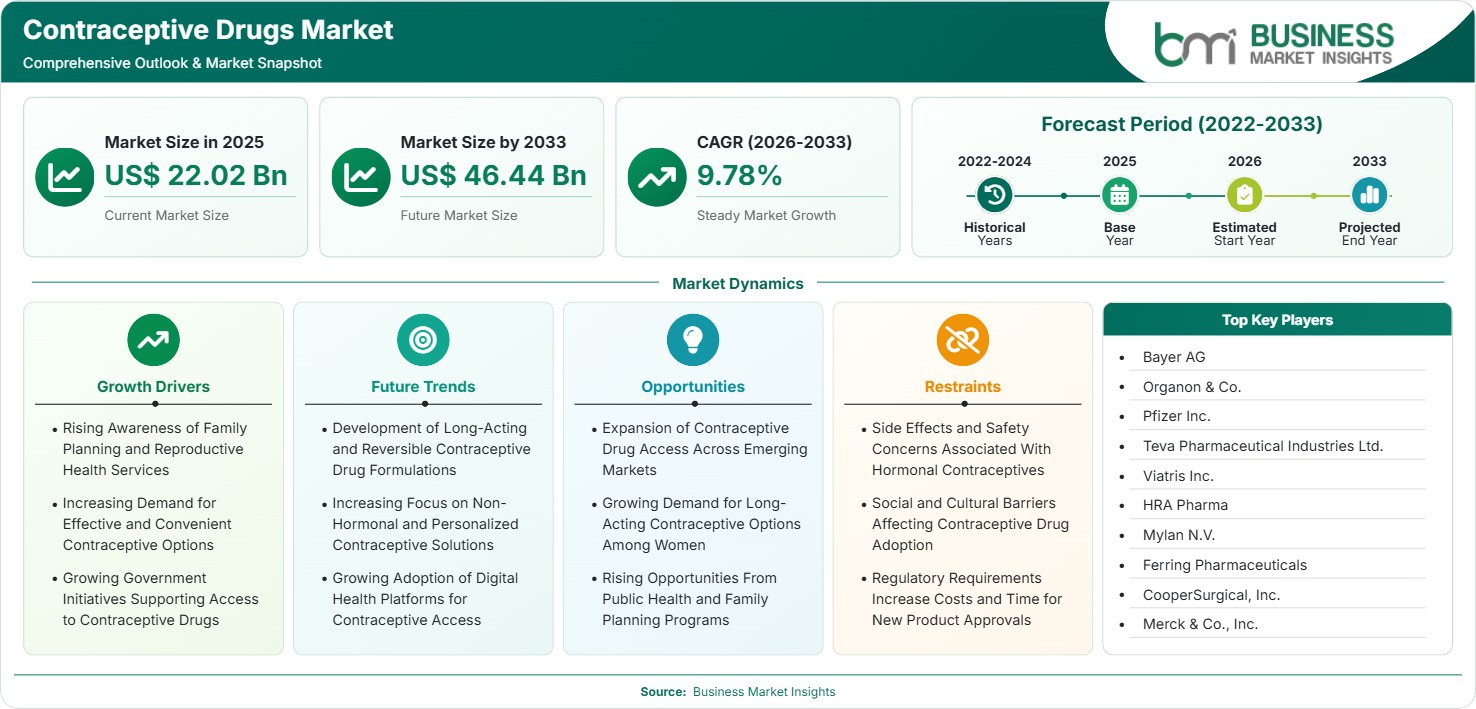
The Contraceptive Drugs Market size was valued at US$ 22.02 billion in 2025 and is projected to reach US$ 46.44 billion by 2033, growing at a CAGR of 9.78% during 2026–2033, supported by family planning awareness, demand for convenient contraception, government programs, wider healthcare access, and rising reproductive health expenditure.

Report Coverage
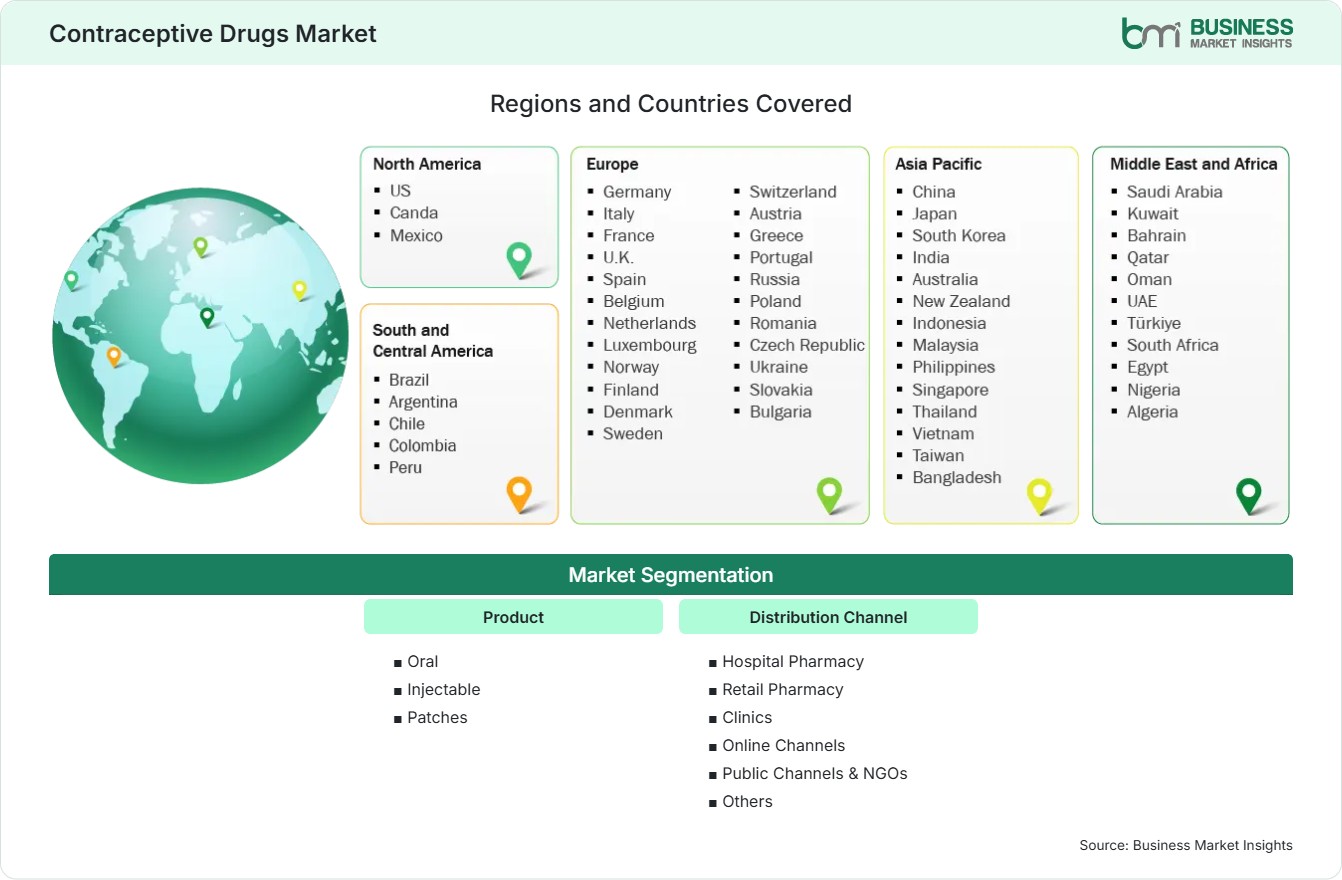
  • Product: Oral, Injectable, Patches
  • Distribution Channel: Hospital Pharmacy, Retail Pharmacy, Clinics, Online Channels, Public Channels & NGOs, Others
US$ 22.02 Bn Market size in 2025
US$ 46.44 Bn Market Size by 2033
9.78% CAGR, 2026 - 2033
2026-2033 Forecast Period

01 AI Overview

Contraceptive Drugs Market Summary

  • North America Region: North America held a 29%–33% share in 2025 and is projected to grow at a CAGR of 7.5%–8.5% during 2026–2033, supported by established reproductive healthcare systems, insurance coverage, prescription access, and continued demand for convenient contraceptive options. The US accounts for most regional demand, with growth supported by improved access to reproductive healthcare and newer contraceptive formulations.
  • Fastest Growing Region: Asia Pacific held a 24%–28% share in 2025 and is projected to grow at a CAGR of 11.5%–12.5% during 2026–2033, driven by population growth, increasing reproductive health awareness, expanding healthcare infrastructure, government family planning programs, and improving access to modern contraceptive methods.
  • Leading Segment: Oral contraceptives held a 38%–42% share in 2025 and are projected to grow at a CAGR of 8.5%–9.5% during 2026–2033, supported by established consumer familiarity, convenient administration, broad availability, and continued demand for reversible contraception.
  • High Growth Segment: Injectable contraceptives held a 14%–18% share in 2025 and are projected to grow at a CAGR of 10.5%–11.5% during 2026–2033, supported by longer dosing intervals, improved adherence, public health programs, and increasing use in markets with limited daily medicine access.
  • Key Market Opportunity: Emerging markets offer substantial room for expansion as governments, NGOs, healthcare providers, and pharmaceutical companies improve contraceptive availability, affordability, counseling, and distribution across underserved populations.
  • Major Market Players: Bayer AG, Organon & Co., Pfizer Inc., Teva Pharmaceutical Industries Ltd., Viatris Inc., HRA Pharma, Mylan N.V., Ferring Pharmaceuticals, CooperSurgical, Inc., and Merck & Co., Inc.
02 Strategic Insights

Contraceptive Drugs Market: Strategic Insights

Contraceptive Drugs Market Strategic Framework
FREE PDF
Request your free sample
Request free sample
03 Stakeholder View

Key Takeaways

  • Pharmaceutical manufacturers operate through a multi-channel ecosystem involving hospitals, retail pharmacies, clinics, online platforms, government procurement agencies, NGOs, distributors, and reproductive health organizations.
  • Emerging economies offer the strongest expansion potential as unmet contraceptive needs, healthcare access, and family planning programs increase. Injectable and other longer-acting options can expand beyond established oral contraceptive use.
  • Product development is increasingly focused on improving tolerability, dosing convenience, adherence, and delivery formats while addressing concerns associated with hormonal contraception.
  • Asia Pacific represents the strongest regional investment opportunity, with a 24%–28% share in 2025 and projected growth of 11.5%–12.5% through 2033.
  • Public-private partnerships between pharmaceutical companies, governments, NGOs, and healthcare organizations are important for expanding access, particularly in low-income and underserved markets.
  • Pricing, reimbursement, regulatory approval, provider counseling, and cultural acceptance directly influence product adoption. Companies need localized access strategies rather than relying solely on commercial pharmacy channels.
04 Geographic Outlook

Contraceptive Drugs Market Regional Highlights

North America Contraceptive Drugs Market

North America held a 29%–33% share of the global market in 2025 and North America contraceptive drugs market forecast to grow at a CAGR of 7.5%–8.5% during 2026–2033. The US represents the largest regional market because of established reproductive healthcare infrastructure and broad product availability. Canada provides additional demand through public healthcare access. Product choice, insurance coverage, prescription policies, and reproductive health awareness remain key market factors.

  • The US remains the dominant regional market, supported by broad contraceptive product availability, established healthcare providers, retail pharmacy networks, and consumer awareness.
  • Canada provides opportunities through public healthcare infrastructure and increasing access to reproductive health services, although provincial policies can influence availability and reimbursement.
  • Retail pharmacies remain important distribution points, while online healthcare services are improving access to consultations, prescriptions, and discreet product purchasing.
  • Demand for convenient contraceptive methods continues to support oral products, while injectable and patch-based options provide alternatives for users seeking different administration schedules.

US Contraceptive Drugs Market

The US held a 25%–29% contraceptive drugs market share of the global market in 2025 and is projected to grow at a CAGR of 7.2%–8.2% during 2026–2033. Demand is supported by established reproductive healthcare services, extensive retail pharmacy networks, online prescription platforms, and consumer awareness. Access, insurance coverage, regulatory changes, affordability, and regional differences in reproductive healthcare policies remain important factors influencing market performance.

  • Retail pharmacies remain a major access point, while online channels are gaining relevance through telehealth consultations, digital prescriptions, and home delivery services.
  • Product selection is broad, with oral contraceptives maintaining strong demand while patches and injectable options serve consumers seeking alternative administration schedules.
  • Insurance coverage and affordability influence adoption, particularly among younger consumers and lower-income populations requiring consistent access to prescription contraception.

Europe Contraceptive Drugs Market

Europe contraceptive drugs market accounted for a 25%–29% share in 2025 and is projected to grow at a CAGR of 8.0%–9.0% during 2026–2033. Germany, France, the UK, Italy, and Spain represent leading markets, while Poland and selected Eastern European countries provide higher-growth opportunities. Public healthcare systems, reproductive health programs, pharmacy access, and changing consumer preferences influence product adoption across the region.

  • Germany benefits from established healthcare infrastructure, broad pharmacy access, and continued demand for prescription contraceptive products among reproductive-age women.
  • France maintains a strong reproductive health ecosystem, with public healthcare support and established contraceptive access contributing to product demand.
  • The UK provides opportunities through NHS-supported family planning services, sexual health clinics, general practitioners, and pharmacy-based access programs.
  • Italy and Spain offer established markets, while growing reproductive health awareness and changing preferences support demand for convenient contraceptive products.
  • Poland and selected Eastern European markets offer higher-growth potential as access to modern contraceptive methods and reproductive health education improves.

Asia Pacific Contraceptive Drugs Market

Asia Pacific contraceptive drugs market held a 24%–28% share in 2025 and is projected to grow at a CAGR of 11.5%–12.5% during 2026–2033. China, India, Japan, and Australia are leading markets, while India and Southeast Asian economies offer stronger growth potential. India is projected to grow at 12.5%–13.5%, China at 10.5%–11.5%, and Indonesia at 12.0%–13.0%.

  • India offers substantial growth potential through government family planning programs, rising awareness, expanding healthcare access, and demand for affordable contraceptive products.
  • China benefits from a large population base and established healthcare infrastructure, while changing family planning dynamics influence long-term contraceptive demand.
  • Indonesia provides high-growth potential as reproductive health programs expand and modern contraceptive access improves across urban and rural populations.
  • Japan represents a mature market with demand influenced by reproductive healthcare awareness, product availability, and consumer preference for convenient contraception.
  • Australia offers a developed healthcare environment with established access to contraceptive products through healthcare providers, pharmacies, and reproductive health services.

Rest of World Contraceptive Drugs Market

Rest of World accounted for a 15%–19% share in 2025 and is projected to grow at a CAGR of 9.5%–10.5% during 2026–2033. Latin America represents a major opportunity because of improving reproductive health awareness and family planning access. Brazil is projected to grow at 9.0%–10.0%, Mexico at 9.5%–10.5%, and Colombia at 9.5%–10.5%.

  • Brazil benefits from an established pharmaceutical distribution network and broad demand for reproductive health products across public and private healthcare channels.
  • Mexico offers opportunities through family planning initiatives, pharmacy networks, and increasing reproductive health awareness among younger populations.
  • Colombia provides growth potential as healthcare access improves and family planning services expand through public and private providers.
  • Nigeria represents a major opportunity because of high unmet contraceptive needs and the increasing role of public health and NGO-led family planning programs.
  • Kenya benefits from reproductive health initiatives and NGO involvement, while improved healthcare access can support greater availability of modern contraceptive products.
Global Market Geography
FREE PDF
Request your free sample
Request free sample
05 Segment Analysis

Contraceptive Drugs Market Segmentation

Product

The Product segment is led by Oral contraceptives, which accounted for a 38%–42% contraceptive drugs market share in 2025 and are projected to grow at a CAGR of 8.5%–9.5% during 2026–2033. Injectable products are gaining adoption through longer dosing intervals, while patches offer a convenient alternative. Product choice is influenced by efficacy, tolerability, adherence, affordability, and healthcare provider counseling.

  • Oral: Combined contraceptives and progestin-only pills remain widely used because of familiarity, convenient administration, established availability, and broad prescription access across developed and emerging healthcare markets.
  • Injectable: Injectable contraception supports users seeking longer dosing intervals and can improve adherence, particularly through public health programs and healthcare settings serving populations with limited daily medicine access.
  • Patches: Contraceptive patches provide an alternative to daily oral administration, appealing to users seeking convenient dosing schedules and potentially supporting adherence among selected consumer groups.

Distribution Channel

The Distribution Channel segment includes Hospital Pharmacy, Retail Pharmacy, Clinics, Online Channels, Public Channels & NGOs, and Others. Retail pharmacies and clinics remain important access points, while public channels and NGOs are particularly relevant in emerging markets. Online channels are expanding through telehealth and home delivery. Distribution growth depends on prescription rules, reimbursement, affordability, and healthcare infrastructure.

  • Hospital Pharmacy: Provides contraceptive access within hospital-based reproductive health services, supporting prescription fulfillment, counseling, and post-treatment care.
  • Retail Pharmacy: Offers convenient consumer access and broad geographic coverage, making pharmacies an important channel for prescription and repeat contraceptive purchases.
  • Clinics: Clinics provide counseling, prescription services, reproductive health consultations, and access to contraceptive products for women seeking professional guidance.
  • Online Channels: Digital healthcare platforms support teleconsultations, electronic prescriptions, discreet purchasing, and home delivery, improving convenience for consumers with limited pharmacy access.
  • Public Channels & NGOs: Government programs and NGOs expand access through subsidized or free contraception, community outreach, education, and family planning initiatives in underserved populations.
06 Market Forces

Contraceptive Drugs Market Dynamics

Key Market Drivers

Rising Awareness of Family Planning and Reproductive Health Services

An increase in awareness regarding family planning and reproductive health will ensure that more individuals learn about pregnancy prevention and forms of contraceptives. An increase in individuals seeking professional advice when choosing contraceptives due to considerations of efficiency and convenience among others. This is being done by the government, healthcare professionals, schools, NGOs, and communities in educating about reproductive health. Telehealthcare and digital media platforms are also helping individuals to access information and consultations on contraception. Awareness in particular is critical for emerging markets with high unmet need for contraceptives.

Increasing Demand for Effective and Convenient Contraceptive Options

Consumers increasingly seek contraceptives that have effective pregnancy protection along with being convenient in their usage and manageable side-effect profiles. The need for these characteristics is leading to diversification of products beyond just oral contraceptives; there are products available in form of injections and patches as well. Oral contraceptives continue to be popular choices, however, consumers have an option of opting for other products depending upon the consumer's lifestyle, need for convenience and medical advice.

Growing Government Initiatives Supporting Access to Contraceptive Drugs

The government is increasing its efforts in incorporating reproductive health care services in public health care delivery programs. Public procurement may improve the availability of products and overcome affordability barriers, especially in low- and middle-income countries. The government programs often collaborate with NGOs, health workers, and manufacturers of drugs in delivering contraceptives via health clinics and networks in the community. This strategy may enhance access to products in remote and underprivileged areas and considered to be major contraceptive drugs market trend.

Key Market Opportunities

Expansion of Contraceptive Drug Access Across Emerging Markets

The emerging markets present a crucial growth avenue due to the lack of uniform access to contraceptives among both urban and rural dwellers. It would be possible for pharmaceutical organizations to partner with government bodies, non-governmental organizations, distributors, and healthcare professionals to make products more accessible through the mechanisms of public procurement and private pharmacies. An affordable line of products could be used by individuals with limited healthcare budgets. In addition, there is a possibility for pharmaceutical firms to educate providers and conduct community outreach to eliminate myths and increase product awareness. Markets with growing healthcare infrastructure and established family planning programs offer particularly attractive opportunities.

Growing Demand for Long-Acting Contraceptive Options Among Women

Long-acting contraceptive options could help overcome the barriers in compliance faced by the daily intake of medications. Long-acting methods will make the contraceptive method more convenient for the users seeking a prolonged period of protection. Although the provided product segmentation is based only on oral, injectable, and patch products, injectable contraceptives present a significant way towards increasing the length of the dosing interval. The manufacturers could enhance the chances of success through better formulation, better tolerability, better administration convenience, and better training of providers.

Rising Opportunities from Public Health and Family Planning Programs

Public health programs create opportunities for pharmaceutical suppliers to expand contraceptive access through government tenders, NGO partnerships, community healthcare systems, and subsidized distribution. Procurement volumes can support broader product availability while helping reduce affordability barriers for underserved populations. Companies can also provide training materials, healthcare worker education, supply-chain support, and patient information programs. Digital monitoring tools can improve inventory management and reduce stock-outs. The opportunity is particularly relevant in regions where public and nonprofit organizations represent major channels for reproductive healthcare delivery. Long-term program funding remains important for sustained market access.

Market Restraints and Challenges

Side Effects and Safety Concerns Associated with Hormonal Contraceptives

Factor: The use of hormonal contraceptives can result in side effects, which can differ according to the person and other factors, and are the cause of worries both for existing and future users. Impact: The existence of perceived or real side effects can make a person discontinue the use of this form of contraception, or simply prefer using another method. It is up to health professionals to inform about possible risks and contraindications to this method, and help a patient choose the best option. Manufacturers continue to develop safe dosages and formulations.

Social and Cultural Barriers Affecting Contraceptive Drug Adoption

Factor: Social norms, cultural beliefs, misinformation, gender dynamics, and limited reproductive health education can influence attitudes toward contraception. Impact: These barriers may reduce product adoption even where contraceptive drugs are physically available. The challenge is particularly relevant in communities where reproductive health discussions remain sensitive or where women have limited decision-making autonomy. Public health programs can address these issues through culturally appropriate education, community engagement, healthcare worker training, and confidential counseling. Expanding physical distribution alone may not generate sustained adoption unless social barriers and misconceptions are addressed simultaneously.

07 Company Analysis

Competitive Landscape

The Contraceptive Drugs Market analysis is shaped by pharmaceutical companies with established reproductive health portfolios, branded contraceptive products, generic medicines, and specialty healthcare capabilities. Competition centers on product efficacy, safety, formulation, brand recognition, regulatory approvals, pricing, distribution reach, and relationships with healthcare providers and public procurement agencies.

Company Name

Overview

Products and Services relevant to this market

Bayer AG

Global pharmaceutical and life sciences company with a major presence in women's healthcare and reproductive health.

Oral contraceptives, hormonal contraception, reproductive healthcare products, and women's health solutions.

Organon & Co.

Global healthcare company focused strongly on women's health and products addressing reproductive healthcare needs.

Oral contraceptives, reproductive health medicines, biosimilars, and women's healthcare products.

Pfizer Inc.

Global pharmaceutical company with broad prescription medicine capabilities and established healthcare distribution.

Contraceptive and women's health products, prescription medicines, and healthcare solutions.

Teva Pharmaceutical Industries Ltd.

Major global generic and specialty pharmaceutical manufacturer with extensive international distribution.

Generic contraceptive medicines, hormonal products, specialty pharmaceuticals, and reproductive health treatments.

Viatris Inc.

Global healthcare company combining branded and generic pharmaceutical capabilities across multiple therapeutic areas.

Generic oral contraceptives, women's health medicines, and broad pharmaceutical distribution services.

HRA Pharma

Women's healthcare-focused pharmaceutical company known for reproductive health and consumer healthcare products.

Emergency contraception, reproductive health products, and women's healthcare solutions.

Mylan N.V.

Pharmaceutical company historically focused on generic and specialty medicines with international market coverage.

Generic contraceptive medicines, oral hormonal products, and pharmaceutical distribution.

Ferring Pharmaceuticals

Specialty pharmaceutical company with expertise in reproductive medicine and women's health.

Reproductive health medicines, fertility products, and specialty treatments for women's healthcare.

CooperSurgical, Inc.

Women's healthcare company providing products and services across fertility, reproductive medicine, and gynecology.

Fertility and reproductive health products, clinical solutions, and women's healthcare technologies.

Merck & Co., Inc.

Global pharmaceutical company with broad healthcare operations and established women's health capabilities.

Women's health medicines, healthcare products, and reproductive health-related pharmaceutical solutions.

10 Trust & Transparency

Research Methodology

The market analysis combines proprietary research with secondary data from government agencies, company disclosures, regulatory filings, industry databases and expert interviews. Market estimates are validated through data triangulation, cross-market benchmarking and analyst review.

View Full Research Methodology

11 Questions Answered

Frequently Asked Questions

What factors influence contraceptive product selection?

Selection is influenced by efficacy, safety, side-effect profile, dosing convenience, affordability, medical eligibility, personal preference, and healthcare provider counseling. Access and reimbursement also affect the final choice.

What role do NGOs play in the Contraceptive Drugs market report?

NGOs help expand access through community education, contraceptive distribution, healthcare worker training, and family planning programs. Their role is particularly important in underserved areas where commercial pharmacy networks have limited reach.

How are online channels changing contraceptive access?

Online healthcare platforms can provide teleconsultations, digital prescriptions, discreet purchasing, and home delivery. These services can improve convenience and access, particularly for consumers who face geographic or privacy barriers.

Why is Asia Pacific expected to record strong growth?

Growth is supported by a large population base, increasing reproductive health awareness, government family planning initiatives, expanding healthcare infrastructure, and improving access to modern contraceptive products across emerging economies.

Which contraceptive product category currently leads demand?

Oral contraceptives remain the leading product category because of established consumer familiarity, broad availability, convenient administration, and extensive healthcare provider experience. Combined contraceptives and progestin-only pills serve different patient requirements.

Access the Full Contraceptive Drugs Market Report

Get segment-level forecasts, regional estimates, competitive benchmarking, company profiles and downloadable Excel datasets.

Access the full Contraceptive Drugs Market Report
350 pages PDF & Excel | 2026-08-05