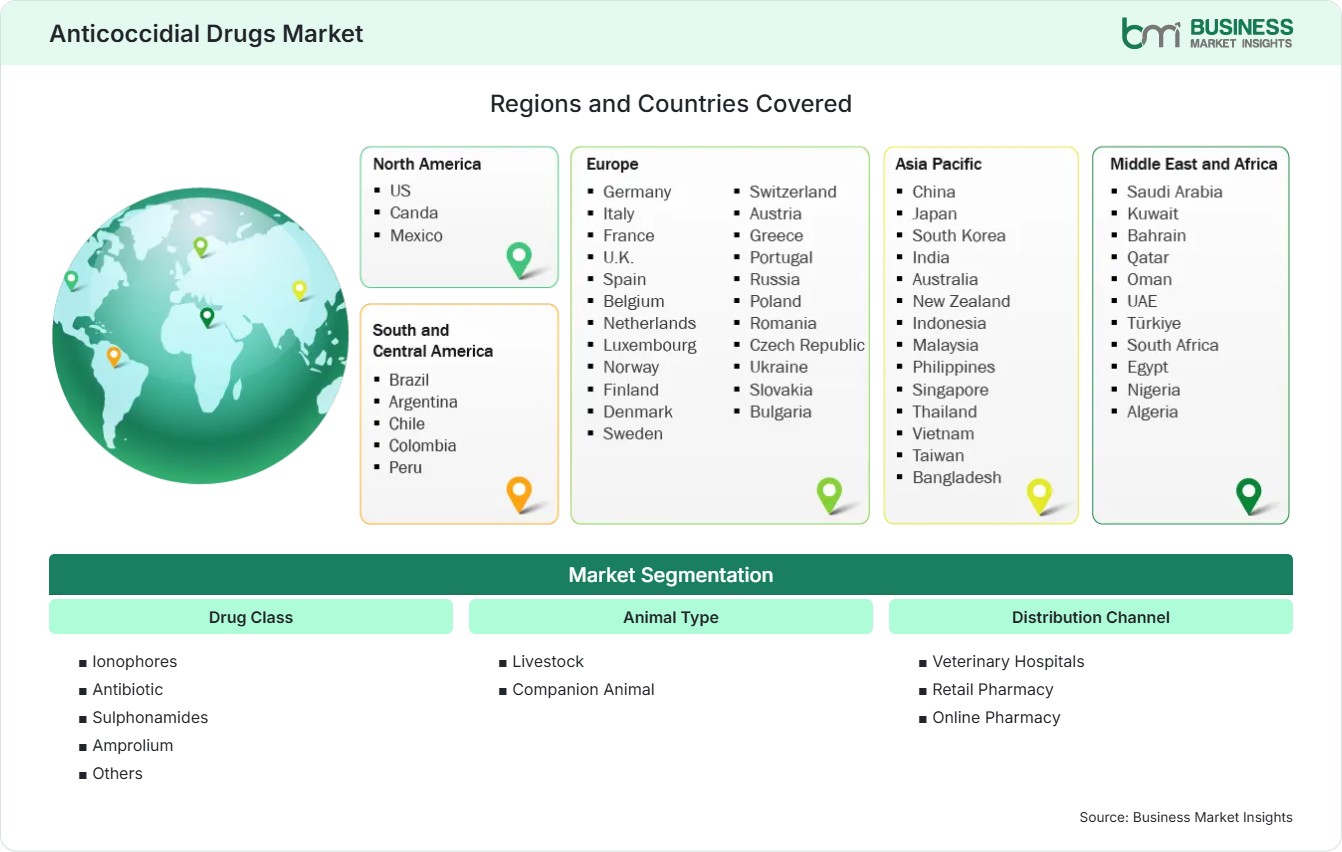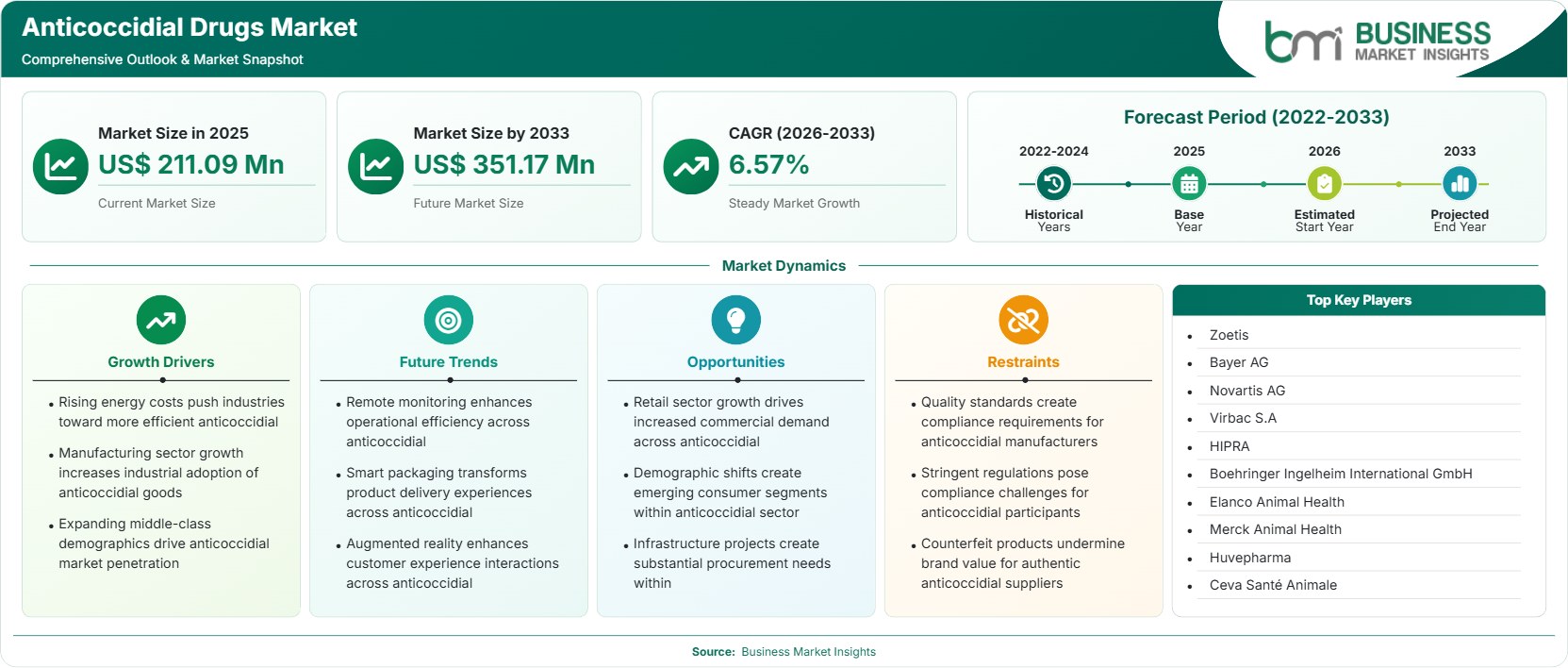
Anticoccidial Drugs Market Regional Highlights
North America Anticoccidial Drugs Market
North America accounted for 34%–37% of the global market share in 2025 and is projected to expand at a 5.8%–6.3% CAGR during 2026–2033. The region benefits from highly commercialized poultry production, robust veterinary healthcare infrastructure, widespread preventive disease management, and strict food safety regulations. Increasing investments in precision livestock farming and continuous innovation in veterinary pharmaceuticals support sustained demand. The Anticoccidial Drugs Market share remains highest in North America due to established livestock health programs, strong regulatory oversight, and consistent adoption of advanced disease prevention protocols.
- Commercial poultry producers increasingly adopt preventive medication programs integrated with vaccination and nutrition management, improving flock health, minimizing production losses, reducing mortality, and supporting sustained demand for advanced veterinary pharmaceutical solutions across large-scale farming operations.
- Regulatory agencies continue emphasizing antimicrobial stewardship, residue monitoring, and food safety compliance, encouraging manufacturers to develop innovative formulations that maintain therapeutic effectiveness while supporting sustainable livestock production and international agricultural trade requirements.
- Strong research collaborations between pharmaceutical companies, veterinary institutions, and livestock producers accelerate clinical validation, formulation improvements, and commercialization of next-generation anticoccidial products designed for modern intensive farming environments.
- Precision livestock technologies, including digital health monitoring, automated feeding systems, and predictive disease analytics, enable earlier intervention and optimized treatment strategies, strengthening regional competitiveness and long-term pharmaceutical demand.
- Rising consumer demand for safe, high-quality poultry and livestock products continues encouraging producers to invest in comprehensive animal health programs that reduce disease incidence while improving operational efficiency and productivity.
US Anticoccidial Drugs Market
The United States represents 78%–81% of North America's regional revenue and is anticipated to grow at a 5.9%–6.4% CAGR through 2033. Extensive poultry production, advanced veterinary pharmaceutical manufacturing capabilities, sophisticated livestock management systems, and strong regulatory compliance continue reinforcing national leadership. High adoption of preventive animal healthcare, increasing research investments, and widespread implementation of precision farming technologies further strengthen long-term market development across commercial livestock operations.
- Large integrated poultry companies continue investing in comprehensive disease prevention strategies combining biosecurity, vaccination, feed management, and veterinary therapeutics to maximize production efficiency and maintain export-quality livestock products.
- Continuous innovation by leading animal health companies supports broader availability of improved formulations with enhanced efficacy, easier administration, and better compliance with evolving regulatory requirements governing food-producing animals.
- Federal support for livestock disease surveillance, veterinary research, and animal welfare initiatives strengthens long-term confidence among pharmaceutical manufacturers while encouraging greater adoption of preventive treatment programs.
- Expanding use of digital veterinary platforms enables faster diagnosis, improved prescription management, and streamlined medicine distribution, supporting efficient disease control across geographically dispersed livestock operations.
Europe Anticoccidial Drugs Market
Europe held 27%–30% of global revenue in 2025 and is forecast to register a 5.6%–6.1% CAGR during 2026–2033. Comprehensive animal welfare legislation, strong veterinary healthcare systems, and stringent antimicrobial stewardship policies continue shaping regional demand. Germany remains the leading national market, while Poland is expected to record the fastest growth with a 6.6%–7.1% CAGR, supported by expanding poultry production and increasing livestock modernization initiatives.
- Regulatory emphasis on responsible antimicrobial usage encourages manufacturers to develop residue-compliant and sustainable therapeutic alternatives that align with evolving European food safety standards and environmental objectives.
- Germany maintains regional leadership through advanced livestock management, extensive veterinary healthcare infrastructure, and substantial investments in animal disease prevention technologies supporting consistent pharmaceutical demand.
- Poland experiences accelerated expansion as commercial poultry production increases, export activities strengthen, and producers adopt modern veterinary healthcare practices across expanding agricultural operations.
- Collaborative research involving pharmaceutical companies, universities, and veterinary organizations supports continuous product innovation while improving disease surveillance capabilities and treatment effectiveness throughout the region.
- Rising consumer demand for responsibly produced meat products encourages livestock producers to prioritize preventive animal healthcare, improving long-term adoption of specialized veterinary pharmaceuticals.
Asia Pacific Anticoccidial Drugs Market
Asia Pacific represented 24%–27% of worldwide revenue during 2025 and is projected to achieve the fastest regional expansion at a 7.3%–7.8% CAGR through 2033. Rapid livestock industrialization, increasing poultry consumption, expanding veterinary healthcare infrastructure, and government support for agricultural modernization continue driving demand. China remains the largest regional Anticoccidial Drugs Market, while India demonstrates the highest projected growth with a 8.0%–8.5% CAGR owing to expanding commercial farming investments.
- China continues leading regional consumption through its large commercial poultry sector, increasing investments in biosecurity measures, and growing adoption of advanced veterinary pharmaceuticals supporting large-scale livestock production.
- India records the strongest growth due to expanding poultry farming, rising veterinary awareness, supportive government livestock development programs, and increasing private investment in modern animal healthcare infrastructure.
- Southeast Asian countries continue strengthening disease surveillance programs while modernizing commercial livestock production to improve food security, productivity, and export competitiveness.
- Rising disposable income and increasing consumption of poultry protein encourage producers to invest in preventive healthcare solutions that improve production efficiency and reduce disease-related economic losses.
- International pharmaceutical companies continue expanding regional manufacturing, distribution partnerships, and technical support services to strengthen access across rapidly developing agricultural economies.
Rest of World Anticoccidial Drugs Market
Rest of World accounted for 10%–13% of global Anticoccidial Drugs Market revenue in 2025 and is expected to grow at a 6.4%–6.9% CAGR during 2026–2033. South & Central America continue benefiting from expanding poultry exports, livestock commercialization, and improving veterinary healthcare accessibility.
The Middle East & Africa experience steady expansion through increasing food security initiatives, government investments in animal health, and modernization of commercial livestock production systems. Brazil leads South & Central America, while Saudi Arabia demonstrates the highest regional growth potential with a 6.8%–7.3% CAGR supported by livestock diversification programs.
- Brazil continues strengthening regional leadership through expanding poultry exports, advanced livestock management practices, and increasing investment in veterinary pharmaceuticals supporting large commercial farming enterprises.
- Saudi Arabia experiences robust expansion driven by food security strategies, increasing domestic livestock production, veterinary infrastructure development, and government initiatives encouraging agricultural diversification.
- Growing awareness regarding economic losses associated with coccidiosis encourages livestock producers across developing economies to increase adoption of preventive disease management programs.
- Expanding distribution networks and stronger partnerships between multinational pharmaceutical companies and regional veterinary distributors improve medicine accessibility across underserved agricultural markets.
- Increasing investment in commercial livestock production, veterinary education, and disease surveillance programs supports sustainable long-term expansion while enhancing overall animal health standards across emerging economies.