
Diabetes Drugs Market Outlook: Size, Share, Trends, Growth Analysis, Competitive Landscape & Forecast, 2026–2033

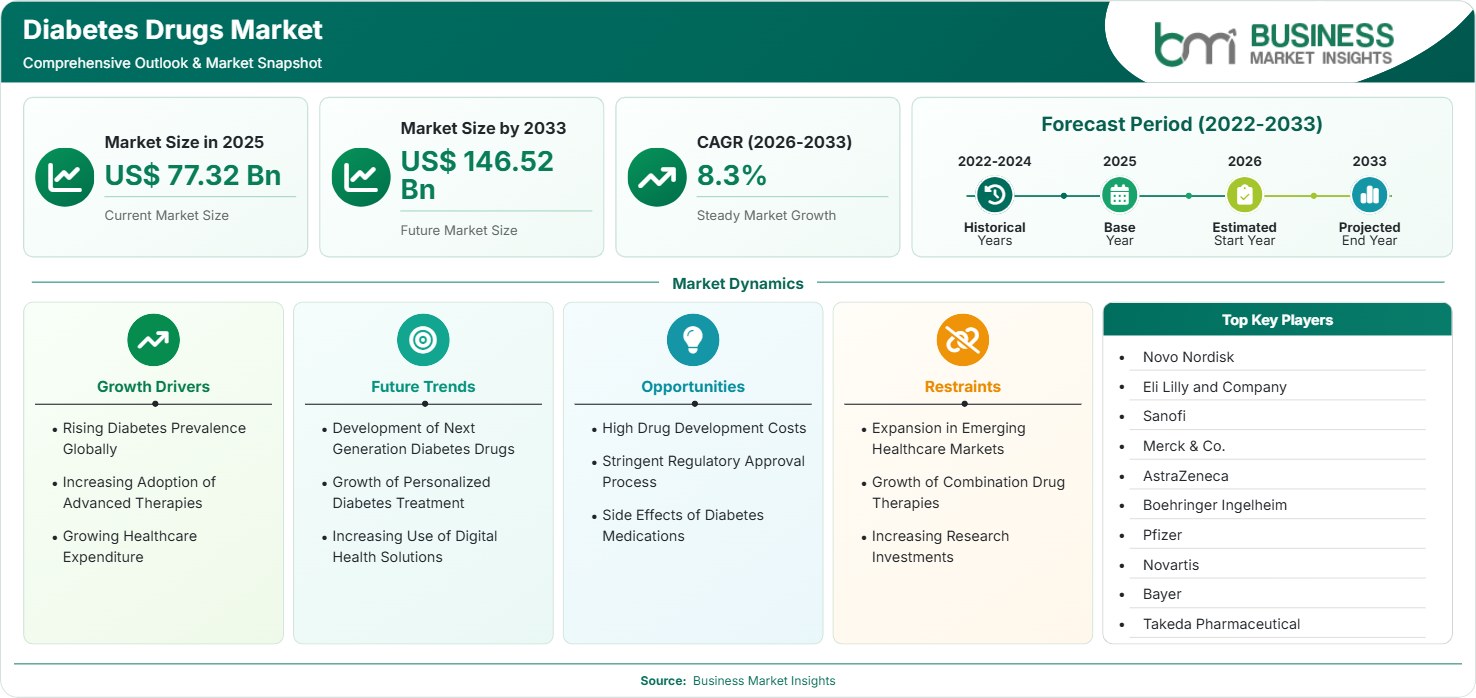
The Diabetes Drugs Market size was valued at US$ 77.32 billion in 2025 and is projected to reach US$ 146.52 billion by 2033, growing at a CAGR of 8.3% during 2026–2033, driven by rising diabetes prevalence, advanced therapeutics adoption, healthcare investments, increasing demand for personalized treatments, and expanding access to innovative glucose management solutions.

Report Coverage
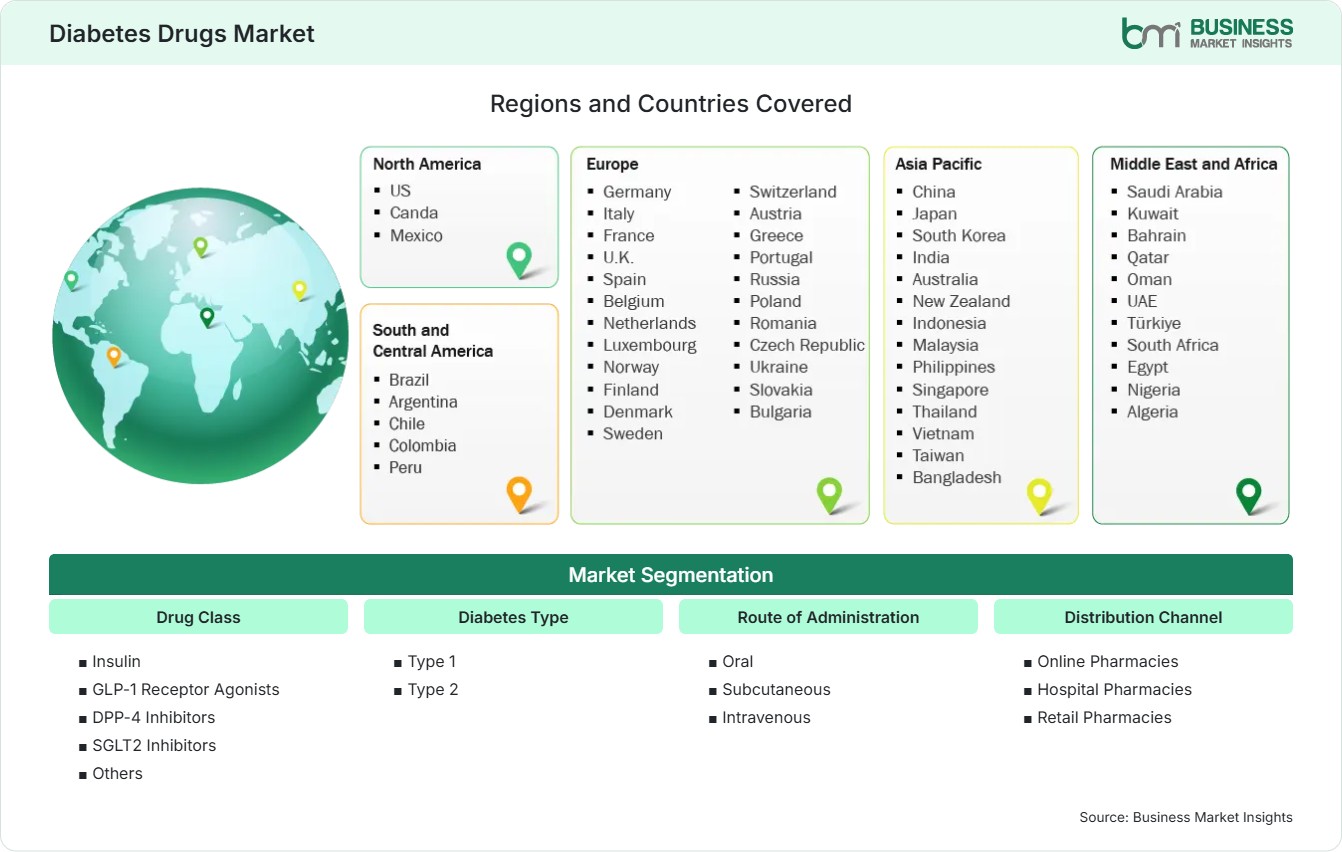
  • Drug Class: Insulin, GLP-1 Receptor Agonists, DPP-4 Inhibitors, SGLT2 Inhibitors, Others
  • Diabetes Type: Type 1, Type 2
  • Route of Administration: Oral, Subcutaneous, Intravenous
  • Distribution Channel: Online Pharmacies, Hospital Pharmacies, Retail Pharmacies
US$ 77.32 Bn Market size in 2025
US$ 146.52 Bn Market Size by 2033
8.3% CAGR, 2026 - 2033
2026-2033 Forecast Period

01 AI Overview

Diabetes Drugs Market Summary

  • North America Region: North America holds a market share of 38%–41% in 2025, growing with a CAGR of 7%–9% influenced by high diabetes burden, advanced healthcare infrastructure, reimbursement availability, and adoption of innovative therapies. The US market demonstrates strong demand for GLP-1 therapies and insulin products, expanding at a CAGR of 7%–8% during 2026–2033.
  • Fastest Growing Region: Asia Pacific maintains a market share of 22%–25% in 2025, expanding with a CAGR of 9%–11% supported by increasing diabetes incidence, healthcare modernization, rising pharmaceutical access, and growing adoption of advanced diabetes management therapies.
  • Leading Segment: Insulin represents a market share of 35%–38% in 2025, growing with a CAGR of 6%–8% due to continued demand among type 1 diabetes patients, improved insulin delivery systems, and expanding treatment access worldwide.
  • High Growth Segment: GLP-1 Receptor Agonists account for a market share of 22%–25% in 2025, growing with a CAGR of 12%–14% driven by efficacy in glucose control, weight management benefits, clinical innovation, and increasing physician adoption.
  • Key Market Opportunity: Emerging markets, combination therapies, digital diabetes management integration, and research-driven drug innovation create opportunities for pharmaceutical companies to expand treatment accessibility and develop next-generation diabetes solutions.
  • Major Market Players: Novo Nordisk, Eli Lilly and Company, Sanofi, Merck & Co., AstraZeneca, Boehringer Ingelheim, Pfizer, Novartis, Bayer, and Takeda Pharmaceutical.
02 Strategic Insights

Diabetes Drugs Market: Strategic Insights

diabetes-drugs-market-market-strategic-framework
FREE PDF
Request your free sample
Request free sample
03 Stakeholder View

Key Takeaways

  • Pharmaceutical value chains are shifting toward integrated diabetes management ecosystems combining drug therapies, patient monitoring technologies, healthcare services, and personalized treatment approaches.
  • GLP-1 receptor agonists and combination therapies represent major growth opportunities as healthcare providers seek improved metabolic outcomes and therapies addressing multiple disease-related challenges.
  • Innovation is accelerating through next-generation biologics, long-acting formulations, oral alternatives, and research focused on improving efficacy, safety, and patient convenience.
  • Asia Pacific provides a strong investment opportunity due to rising diabetes prevalence, expanding healthcare infrastructure, increasing pharmaceutical access, and growing demand for advanced therapies.
  • Strategic collaborations, licensing agreements, and research partnerships are increasing as pharmaceutical companies expand diabetes treatment portfolios and accelerate clinical development programs.
  • Healthcare systems are prioritizing preventive care and early intervention strategies to reduce diabetes-related complications and long-term treatment costs.
04 Geographic Outlook

Diabetes Drugs Market Regional Highlights

North America Diabetes Drugs Market

North America accounted for a market share of 38%–41% in 2025 and is projected to expand at a CAGR of 7%–9% from 2026–2033. The region benefits from advanced healthcare infrastructure, strong pharmaceutical presence, and high adoption of innovative diabetes therapies. The Diabetes Drugs Market share remains concentrated due to established treatment pathways and reimbursement systems.

  • The United States represents the largest contributor due to high diabetes prevalence and advanced pharmaceutical adoption.
  • Healthcare providers increasingly prescribe GLP-1 receptor agonists and advanced insulin formulations.
  • Strong research capabilities support clinical innovation and development of new diabetes therapies.
  • Canada contributes through improving access to chronic disease management solutions and pharmaceutical treatments.

US Diabetes Drugs Market

The US represented a market share of 34%–37% in 2025 and is expected to grow at a CAGR of 7%–8% during 2026–2033. The country maintains leadership through extensive healthcare spending, pharmaceutical innovation, and widespread adoption of advanced diabetes treatments. The Diabetes Drugs Market growth is supported by increasing demand for effective glucose management solutions.

  • High diagnosis rates continue supporting demand for insulin, GLP-1 therapies, and oral diabetes medications.
  • Pharmaceutical companies are investing heavily in clinical research and next-generation diabetes treatments.
  • Healthcare providers are increasingly adopting therapies offering improved metabolic benefits beyond glucose control.
  • Digital health integration is supporting better patient monitoring and treatment management.

Europe Diabetes Drugs Market

Europe held a market share of 27%–30% in 2025 and is forecast to achieve a CAGR of 7%–9% between 2026–2033. The region benefits from established healthcare systems, increasing diabetes awareness, and strong pharmaceutical research capabilities. Germany, the United Kingdom, France, and Italy are major contributors, while other European markets continue improving treatment accessibility.

  • Germany leads adoption through advanced healthcare infrastructure and strong pharmaceutical research activity.
  • The United Kingdom supports growth through diabetes management programs and healthcare innovation initiatives.
  • France demonstrates increasing demand for modern therapies and improved chronic disease management.
  • Italy contributes through expanding access to pharmaceutical treatments and healthcare services.
  • European markets emphasize cost-effective therapies and improved patient outcomes.

Asia Pacific Diabetes Drugs Market

Asia Pacific generated a market share of 22%–25% in 2025 and is expected to register a CAGR of 9%–11% during 2026–2033. The region represents the fastest-growing market due to increasing diabetes prevalence, healthcare modernization, and rising pharmaceutical availability. China, India, Japan, and Southeast Asian countries are major contributors.

  • China experiences strong demand due to a large diabetic population and expanding healthcare access.
  • India is increasing the adoption of diabetes treatment by improving healthcare infrastructure and pharmaceutical availability.
  • Japan supports innovation through advanced medical research and the healthcare needs of an aging population.
  • Southeast Asian markets are expanding as access to diagnosis and treatment improves.
  • Regional pharmaceutical investments are strengthening diabetes care capabilities.

Rest of World Diabetes Drugs Market

South America, the Middle East, and Africa accounted for a combined market share of 8%–11% in 2025. Growth is supported by increasing diabetes awareness, healthcare infrastructure development, and improving access to essential medicines. Brazil, Mexico, Saudi Arabia, and South Africa represent important developing markets with expanding demand for diabetes therapies.

  • Brazil demonstrates rising adoption due to increasing diabetes cases and healthcare system improvements.
  • Mexico supports market growth through chronic disease management initiatives and pharmaceutical availability.
  • Saudi Arabia invests in healthcare modernization and diabetes treatment programs.
  • South Africa experiences demand through improving diagnosis and medication access.
  • Emerging regions provide opportunities through expanded healthcare coverage and treatment availability.
global-market-geography
FREE PDF
Request your free sample
Request free sample
05 Segment Analysis

Diabetes Drugs Market Segmentation

Drug Class

Drug Class segmentation is a major component of the Diabetes Drugs Market, driven by evolving treatment approaches, rising disease prevalence, and ongoing pharmaceutical innovation. Insulin remains essential for diabetes management, while newer drug classes such as GLP-1 receptor agonists and SGLT2 inhibitors are gaining adoption due to improved therapeutic outcomes. The segment is supported by research investments, combination therapies, and increasing physician preference for personalized treatment strategies.

  • Insulin: Insulin therapies remain essential for glucose regulation, particularly in patients with type 1 diabetes and in advanced cases of type 2 diabetes. Innovations in formulations and delivery systems improve treatment convenience.
  • GLP-1 Receptor Agonists: GLP-1 receptor agonists are gaining adoption due to glucose management benefits, weight reduction effects, and increasing clinical evidence supporting broader metabolic health applications.
  • DPP-4 Inhibitors: DPP-4 inhibitors provide oral treatment options with established safety profiles, supporting continued usage among patients requiring effective glucose control with convenient administration.
  • SGLT2 Inhibitors: SGLT2 inhibitors are expanding due to cardiovascular and renal benefits alongside glucose management, increasing their adoption among patients with complex diabetes-related health conditions.

Diabetes Type

The Diabetes Types Segmentation is driven by differences in the treatment needs for type 1 and type 2 diabetics. The type 2 diabetic group constitutes more patients on account of lifestyle and age-related issues, and rising cases of metabolic diseases. Type 1 diabetics will remain responsible for growth in the need for insulin drugs and delivery technologies. Growing disease awareness and improved diagnosis are strengthening treatment adoption across both categories.

  • Type 1: Type 1 diabetes requires continuous insulin management, driving demand for advanced insulin therapies, improved formulations, and technologies supporting consistent glucose regulation.
  • Type 2: Type 2 diabetes represents a significant treatment population, supported by increasing prevalence, lifestyle-related risk factors, and growing adoption of oral and injectable therapies.

Route of Administration

Route of Administration segmentation is influenced by patient convenience, therapeutic effectiveness, and innovation in drug delivery technologies. Oral therapies remain widely preferred due to ease of use, while subcutaneous administration continues supporting insulin and injectable treatments. Pharmaceutical companies are investing in alternative delivery approaches to improve adherence and expand patient acceptance across diabetes management programs.

  • Oral: Oral diabetes medications offer convenient administration and support long-term disease management. Advancements in drug formulations continue improving efficacy, safety, and patient acceptance.
  • Subcutaneous: Subcutaneous therapies are widely used for insulin and injectable treatments, providing effective glucose control through reliable delivery mechanisms and advanced formulation development.
  • Intravenous: Intravenous administration is primarily utilized in specialized clinical settings where rapid glucose management is required under professional medical supervision.

Distribution Channel

The Distribution Channel segmentation shows trends in how people access medicines through different purchase and distribution channels for healthcare services. Hospital pharmacies still play a role in providing specialized drugs, whereas retail and internet pharmacies provide greater access to people. The use of digital health, prescription delivery, and improved logistics systems is affecting insulin procurement worldwide.

  • Online Pharmacies: Online pharmacies are expanding through digital healthcare adoption, prescription convenience, home delivery services, and improved accessibility for chronic disease medication management.
  • Hospital Pharmacies: Hospital pharmacies support diabetes treatments requiring clinical supervision, specialist consultation, and coordinated care within healthcare facilities.
  • Retail Pharmacies: Retail pharmacies provide widespread medication accessibility and remain important distribution points for routine diabetes treatments and long-term patient care.
06 Market Forces

Diabetes Drugs Market Dynamics

Key Market Drivers

Rising Diabetes Prevalence Globally

The growing prevalence of diabetes globally is one of the key drivers behind the demand for efficient drugs. As per the report from the International Diabetes Federation, hundreds of millions of adults are suffering from diabetes, thereby generating a consistent need for treatments related to managing glucose levels. Factors such as growing obesity, sedentary lifestyle, aging population, and evolving eating habits have been contributing to the spread of the disease. The Diabetes Drugs Market growth has been driven by a rising number of diagnosis cases as well as the availability of treatment options in both developed and developing countries.

Increasing Adoption of Advanced Therapies

The acceptance of advanced diabetes treatments is increasing as healthcare professionals seek more efficacious, convenient, and beneficial options. GLP-1 receptor agonists, SGLT2 inhibitors, and advanced insulin preparations have revolutionized the approach to the treatment of diabetes. The Diabetes Drugs Market trends show a shift towards developing drugs that not only address glucose metabolism but also deliver broader metabolic benefits. The growing body of data regarding the cardiorenal benefits of new drugs is changing the prescription patterns of physicians. Pharmaceutical companies are advancing their research through innovative drug forms and delivery systems.

Growing Healthcare Expenditure

Increasing healthcare spending is facilitating easier access to diabetes diagnosis, treatment, and disease management solutions. More resources are being dedicated by governments and healthcare organizations to diabetes prevention and management because of the growing rate of complications due to diabetes. Better healthcare infrastructure, better healthcare insurance, and more drug availability are making it easier for patients to adopt treatments. Research into new drugs and technologies in healthcare is also contributing to the development of novel diabetes treatments. The need for medicines to treat diabetes will continue to grow as healthcare organizations aim to alleviate the burden of disease.

Key Market Opportunities

Expansion in Emerging Healthcare Markets

Emerging healthcare markets offer great potential as governments improve the healthcare sector and expand access to drugs for treating chronic diseases. Asian, Latin American, and Middle Eastern countries are currently experiencing an increase in the incidence of diabetes along with the development of the healthcare sector. Pharmaceutical firms are targeting these markets by offering affordable medicines, forming alliances, and enhancing their distribution networks. Diagnosis, the availability of health insurance, and improved access to healthcare services are leading more people to seek treatment for their diseases. This offers opportunities for companies to come up with cheaper and more affordable medicines.

Growth of Combination Drug Therapies

Combination drugs offer opportunities to tackle multiple aspects of diabetes management through an integrative approach to treatment. There is increasing interest in developing drugs that not only help in glucose management but also help in achieving other metabolic objectives. Using a combination of drugs with different mechanisms of action can improve treatment efficacy while tailoring it to individual patient needs. Research programs in pharmaceutical companies are being developed around fixed-dose combinations and complementary drug therapy.

Increasing Research Investments

Investment in research is driving innovations in the area of diabetes medications through new modes of action, delivery methods, and formulations. Pharmaceutical firms and research organizations are expanding their clinical studies to solve gaps in the diabetes market. Research in biotechnology, precision medicine, and metabolic studies is helping to develop new drugs. Collaboration between academia and industry players is making drug development more efficient. These developments are expected to influence the diabetes drugs market forecast, as pharmaceutical companies continue to address the need for diabetes medications with greater efficacy and fewer side effects.

Market Restraints and Challenges

High Drug Development Costs

Factor: Diabetes drug development requires substantial investment in research, clinical trials, regulatory compliance, and manufacturing capabilities, increasing financial requirements for pharmaceutical companies. Impact: High costs of developing innovations pose a challenge for small firms and make the process expensive for the company. It takes much effort and time to conduct clinical trials. Companies need to weigh the risk of investing in innovation against market opportunities while remaining competitive on price. High costs resulting from advanced biological products, combination therapy, and personalized medicine complicate the situation. These aspects can impact the development of strategies for research and innovations in diabetes treatment.

Stringent Regulatory Approval Process

Factor: Diabetes medications require extensive clinical validation, safety evaluation, and regulatory review before approval by health authorities. Impact: Problems with long-term approval processes may lead to delayed product launches, rising development costs, and uncertainty among pharmaceutical firms. Regulatory authorities need thorough proof about the effectiveness and safety of the medications. Variations in approval procedures across geographic areas may make globalization more difficult for pharmaceutical companies. They will have to incur expenses on their regulatory system development. However, despite the rising number of diabetes patients, the process of innovation may still be prolonged because of these problems.

07 Company Analysis

Competitive Landscape

The Diabetes Drugs Market analysis highlights intense competition among global pharmaceutical companies focused on innovative therapies, advanced drug delivery systems, and the expansion of diabetes care portfolios. Key players are investing in GLP-1 receptor agonists, insulin innovations, combination therapies, and research programs targeting improved patient outcomes. Strategic collaborations, clinical advancements, and geographic expansion are shaping competitive positioning as companies address rising demand for effective diabetes management solutions.

Company Name

Overview

Products and Services relevant to this market

Novo Nordisk

Global pharmaceutical company specializing in diabetes care and metabolic disease treatments.

Insulin products, GLP-1 receptor agonists, diabetes medications, and obesity management therapies.

Eli Lilly and Company

Healthcare company focused on innovative medicines across diabetes and chronic disease areas.

Insulin therapies, GLP-1 receptor agonists, diabetes treatment solutions, and metabolic health products.

Sanofi

Pharmaceutical company offering healthcare solutions with a strong diabetes portfolio.

Insulin products, injectable diabetes therapies, glucose management medicines, and patient support solutions.

Merck & Co.

Global healthcare company developing prescription medicines and innovative therapies.

DPP-4 inhibitors, diabetes medications, clinical research, and metabolic disease treatment solutions.

AstraZeneca

Biopharmaceutical company focused on cardiovascular, renal, and metabolic healthcare.

SGLT2 inhibitors, diabetes medicines, combination therapies, and chronic disease management products.

Boehringer Ingelheim

Research-driven pharmaceutical company developing human and animal healthcare solutions.

Diabetes medicines, SGLT2 inhibitors, metabolic therapies, and collaborative treatment programs.

Pfizer

Global pharmaceutical company developing medicines across multiple therapeutic areas.

Diabetes research programs, metabolic treatments, pharmaceutical development, and healthcare solutions.

Novartis

Healthcare company focused on innovative medicines and disease management solutions.

Diabetes therapies, clinical research, pharmaceutical innovation, and chronic disease solutions.

Bayer

Life science company providing healthcare and pharmaceutical products globally.

Diabetes-related medicines, healthcare solutions, clinical development, and patient care products.

Takeda Pharmaceutical

Global pharmaceutical company focused on specialty medicines and healthcare innovation.

Diabetes treatments, metabolic disease research, pharmaceutical development, and therapeutic solutions.

08 Industry Activity

Recent Developments

July 2026

Bayer AG secured €3.0 billion in equity capital through an agreement with Apollo-managed funds to improve its capital structure. The transaction supports Bayer’s financial flexibility while keeping the LARC business integrated within its pharmaceuticals division.

May 2026

Sanofi India & National Health Mission (NHM), Madhya Pradesh signed a Memorandum of Understanding (MoU) to strengthen public healthcare services in Madhya Pradesh, with a focus on improving awareness, early detection, and management of non-communicable diseases (NCDs) such as diabetes. The initiative aims to improve disease outcomes and expand access to preventive healthcare services.

November 2024

AstraZeneca PLC announced a $3.5 billion investment in U.S. research and manufacturing expansion, including new R&D and production capabilities. The investment supports AstraZeneca’s broader biopharmaceutical pipeline, including manufacturing capacity needed for innovative therapies across chronic disease areas such as diabetes and metabolic disorders.

January 2024

Eli Lilly and Company launched LillyDirect, a digital healthcare platform designed to improve access and support for patients living with chronic conditions including diabetes. The platform aims to simplify access to personalized care, healthcare providers, and treatment support.

10 Trust & Transparency

Research Methodology

The market analysis combines proprietary research with secondary data from government agencies, company disclosures, regulatory filings, industry databases and expert interviews. Market estimates are validated through data triangulation, cross-market benchmarking and analyst review.

View Full Research Methodology

11 Questions Answered

Frequently Asked Questions

What does the Diabetes Drugs Market Report include?

The report covers market size, competitive landscape, segmentation analysis, regional trends, growth drivers, opportunities, restraints, and emerging developments influencing diabetes treatment adoption worldwide.

What challenges affect diabetes drug development?

High research costs, complex clinical trials, regulatory requirements, and pricing pressures are major challenges affecting diabetes drug development. Pharmaceutical companies must balance innovation investment with affordability and accessibility requirements across different healthcare systems.

How are emerging markets influencing diabetes drug demand?

Emerging markets are contributing to demand growth through rising diabetes prevalence, healthcare infrastructure improvements, expanding pharmaceutical access, and increasing awareness of chronic disease management. Companies are focusing on affordable treatment options and wider distribution networks in these regions.

Which drug classes are shaping future diabetes treatment approaches?

GLP-1 receptor agonists, SGLT2 inhibitors, and advanced insulin therapies are shaping future diabetes treatment due to improved efficacy and additional metabolic benefits. These drug classes are gaining attention because of their ability to address broader patient health requirements.

What factors are driving the Diabetes Drugs Market growth?

Increasing diabetes prevalence, growing adoption of advanced therapies, rising healthcare expenditure, and expanding access to innovative medications are major factors supporting market expansion. Pharmaceutical advancements in insulin, GLP-1 receptor agonists, and combination therapies are also influencing treatment adoption.

Access the Full Diabetes Drugs Market Report

Get segment-level forecasts, regional estimates, competitive benchmarking, company profiles and downloadable Excel datasets.

Access the full Diabetes Drugs Market Report
350 pages PDF & Excel | 2026-07-31