
Diabetes Devices Market Outlook: Size, Share, Trends, Growth Analysis, Competitive Landscape & Forecast, 2026-2033

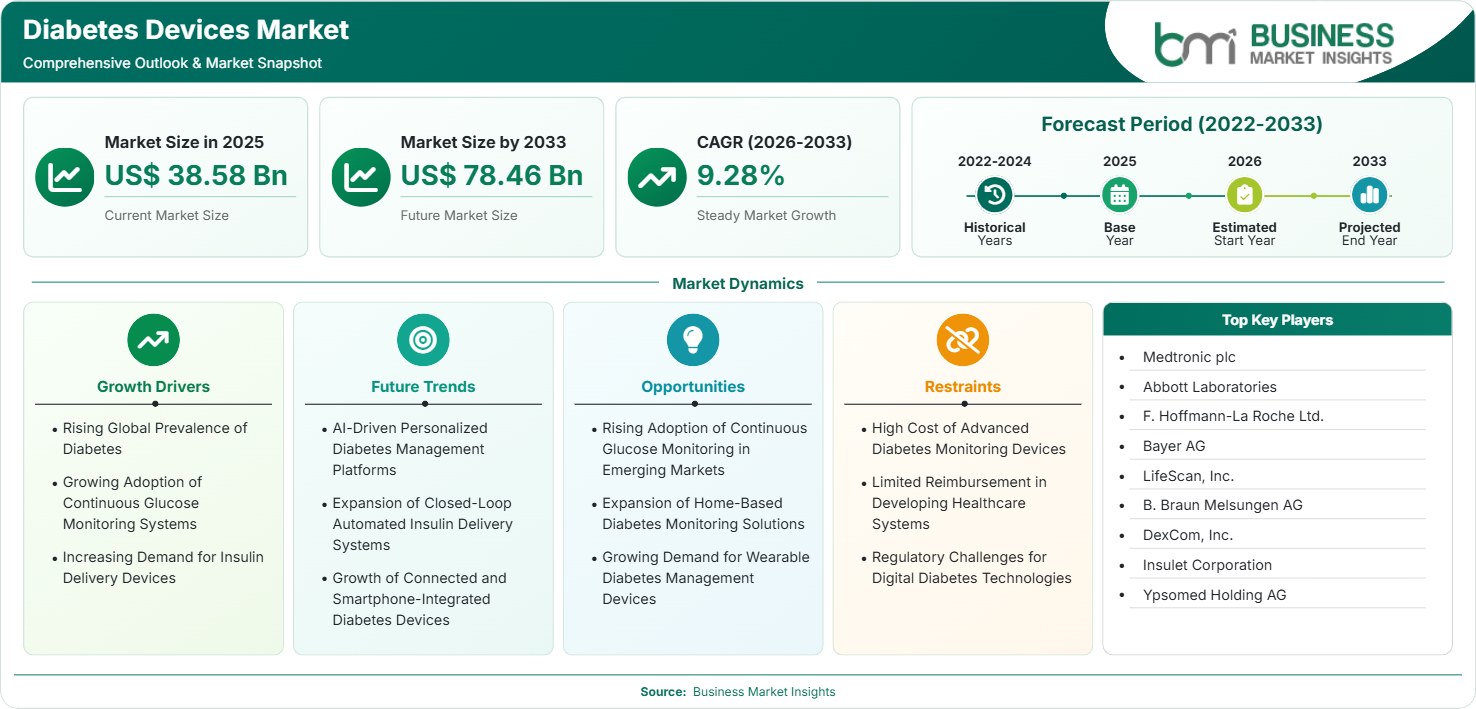
The Diabetes Devices Market size was valued at US$ 38.58 Billion in 2025 and is projected to reach US$ 78.46 Billion by 2033, growing at a CAGR of 9.28% during 2026–2033. Rising diabetes prevalence, increasing adoption of continuous glucose monitoring technologies, growing awareness regarding self-management of diabetes, and ongoing innovation in insulin delivery systems are supporting market expansion globally.

Report Coverage
  • Device Type: Blood Glucose Monitoring Systems, Treatment
  • Distribution Channel: Institutional Sales, Retail Sales
US$ 38.58 Bn Market size in 2025
US$ 78.46 Bn Market Size by 2033
9.28% CAGR, 2026 - 2033
2026-2033 Forecast Period

AI Overview

Diabetes Devices Market Summary

  • North America Region: North America holds a diabetes devices market share of 37%–40% in 2025, growing with a CAGR of 8.5%–9.0% during 2026–2033. High diabetes prevalence, advanced healthcare infrastructure, strong reimbursement support, increasing adoption of CGM systems, and rapid technological innovation continue supporting regional leadership. The U.S. market benefits from widespread adoption of connected diabetes management technologies, expanding at 8.6%–9.2% CAGR.
  • Fastest Growing Region: Asia Pacific accounts for 25%–28% share in 2025 and is projected to grow at a CAGR of 10.5%–11.1% through 2033. Rising diabetic population, healthcare modernization, growing awareness programs, expanding access to medical devices, and increasing healthcare expenditure are driving growth.
  • Leading Segment: Blood Glucose Monitoring Systems represent 54%–57% share in 2025 and are expected to grow at a CAGR of 9.0%–9.6% through 2033. Growing importance of regular glucose monitoring, increased adoption of CGM devices, and improvements in measurement accuracy continue supporting segment dominance.
  • High Growth Segment: Treatment devices account for 43%–46% share in 2025 and are forecast to grow at a CAGR of 9.8%–10.4% during 2026–2033. Rising use of insulin pumps, connected insulin delivery systems, and automated diabetes management technologies are supporting rapid growth.
  • Key Market Opportunity: Integration of digital health platforms, mobile applications, cloud-based monitoring systems, and connected diabetes care ecosystems is creating significant opportunities for device manufacturers.
  • Major Market Players: Medtronic plc, Abbott Laboratories, F. Hoffmann-La Roche Ltd., Bayer AG, LifeScan, Inc., B. Braun Melsungen AG, DexCom, Inc., Insulet Corporation, Ypsomed Holding AG.
Strategic Insights

Diabetes Devices Market: Strategic Insights

Diabetes Devices Market Strategic Framework
FREE PDF
Request your free sample
Request free sample
Stakeholder View

Key Takeaways

  • Continuous glucose monitoring and connected diabetes care platforms are transforming diabetes management by providing real-time insights and improving treatment decisions.
  • Blood glucose monitoring systems continue generating the largest revenue share due to their essential role in routine diabetes management.
  • Insulin delivery technologies and automated treatment systems are emerging as high-growth areas within the industry.
  • The diabetes devices market in Asia Pacific offers substantial expansion opportunities due to growing diabetes prevalence, healthcare investments, and increasing adoption of medical technologies.
  • Device manufacturers are increasingly integrating cloud connectivity, mobile applications, and analytics capabilities to improve patient engagement and treatment outcomes.
  • Strategic collaborations among medical device companies, healthcare providers, and digital health platforms continue driving innovation across the diabetes care ecosystem.
Geographic Outlook

Diabetes Devices Market Regional Highlights

North America Diabetes Devices Market

North America accounts for 37%–40% Diabetes Devices Market share in 2025 and is projected to grow at a CAGR of 8.5%–9.0% through 2033. Strong healthcare infrastructure, widespread awareness regarding diabetes management, and high adoption of advanced monitoring technologies continue supporting regional growth. Healthcare providers increasingly recommend continuous glucose monitoring and connected treatment devices to improve long-term patient outcomes.

  • The region continues witnessing strong adoption of continuous glucose monitoring systems as patients seek real-time visibility into glucose fluctuations and improved disease management. These devices are becoming increasingly integrated into comprehensive diabetes care programs.
  • Favorable reimbursement frameworks and strong healthcare spending are supporting broader adoption of advanced monitoring and treatment technologies across both hospital and homecare settings.
  • Device manufacturers continue introducing innovative products featuring improved accuracy, connectivity, and automation capabilities to enhance patient experiences and clinical outcomes.
  • Growing integration of mobile applications and cloud-based monitoring platforms is helping patients and healthcare providers improve disease monitoring and treatment adherence.
  • Increasing prevalence of Type 1 and Type 2 diabetes continues creating sustained demand for both monitoring and treatment devices throughout the region.

US Diabetes Devices Market

The United States contributes approximately 81%–85% of North American revenue and is expected to register a CAGR of 8.6%–9.2% through 2033. The country remains a major hub for diabetes technology innovation, product commercialization, and adoption of connected healthcare solutions.

  • Healthcare providers are increasingly utilizing advanced diabetes technologies to improve patient outcomes and reduce long-term treatment costs associated with diabetes complications.
  • High awareness regarding preventive care and disease management continues supporting demand for continuous glucose monitoring technologies.
  • Strong innovation activity among medical device companies is contributing to the rapid development of next-generation diabetes management solutions.
  • Increasing adoption of digital healthcare ecosystems is strengthening integration between glucose monitoring devices, insulin delivery systems, and patient management applications.

Europe Diabetes Devices Market

Europe represents 24%–27% of global revenue in 2025 and is anticipated to expand at a CAGR of 8.8%–9.4% through 2033. Growing focus on chronic disease management, supportive healthcare systems, and increasing adoption of advanced diabetes technologies are supporting regional growth. Germany remains the leading diabetes devices market while Poland shows stronger growth momentum.

  • Germany continues leading regional demand through extensive healthcare infrastructure and widespread adoption of advanced diabetes monitoring technologies.
  • Poland is among the fastest-growing markets, expected to record a CAGR of 9.7%–10.3% during the forecast period due to healthcare modernization and increasing diabetes awareness.
  • Healthcare organizations are prioritizing technologies that support continuous monitoring and improved glycemic control for diabetic patients.
  • Demand for wearable and minimally invasive diabetes devices continues increasing as patients seek more convenient management solutions.
  • Expanding digital health initiatives are encouraging broader integration of connected diabetes care technologies across healthcare providers.

Asia Pacific Diabetes Devices Market

Asia Pacific accounts for 25%–28% of total revenue in 2025 and is expected to achieve the fastest CAGR of 10.5%–11.1% through 2033. Rising prevalence of diabetes, improving healthcare infrastructure, and increasing affordability of medical technologies continue supporting market growth. Regional governments are investing in awareness and early diagnosis programs to address the growing disease burden.

  • China remains the largest market within the region due to its large diabetic population and increasing adoption of advanced healthcare technologies.
  • India is projected to achieve approximately 11.2%–11.9% CAGR, supported by growing healthcare expenditure, rising awareness regarding diabetes management, and improving access to medical devices.
  • Increasing urbanization and changing lifestyles continue contributing to rising diabetes incidence, creating demand for monitoring and treatment solutions.
  • Manufacturers are expanding regional distribution networks to improve accessibility of advanced diabetes care technologies.
  • Growing utilization of digital health platforms is helping healthcare providers improve patient monitoring and disease management outcomes.

Rest of World Diabetes Devices Market

Rest of World accounts for 9%–12% of global revenue in 2025 and is projected to grow at a CAGR of 9.1%–9.7% through 2033. Improving healthcare infrastructure, increasing disease awareness, and expanding access to medical technologies continue supporting adoption across emerging markets.

  • Brazil continues generating significant demand for diabetes devices due to growing disease prevalence and increasing healthcare investments.
  • The UAE is witnessing rising adoption of advanced diabetes monitoring systems as healthcare providers focus on improving chronic disease management outcomes.
  • Saudi Arabia is expected to register approximately 9.8%–10.4% CAGR through 2033, supported by healthcare modernization programs and growing awareness initiatives.
  • Public health campaigns are encouraging earlier diagnosis and regular monitoring, increasing demand for diabetes management technologies.
  • Growing investments in healthcare infrastructure are helping improve accessibility to advanced monitoring and treatment devices across emerging economies.
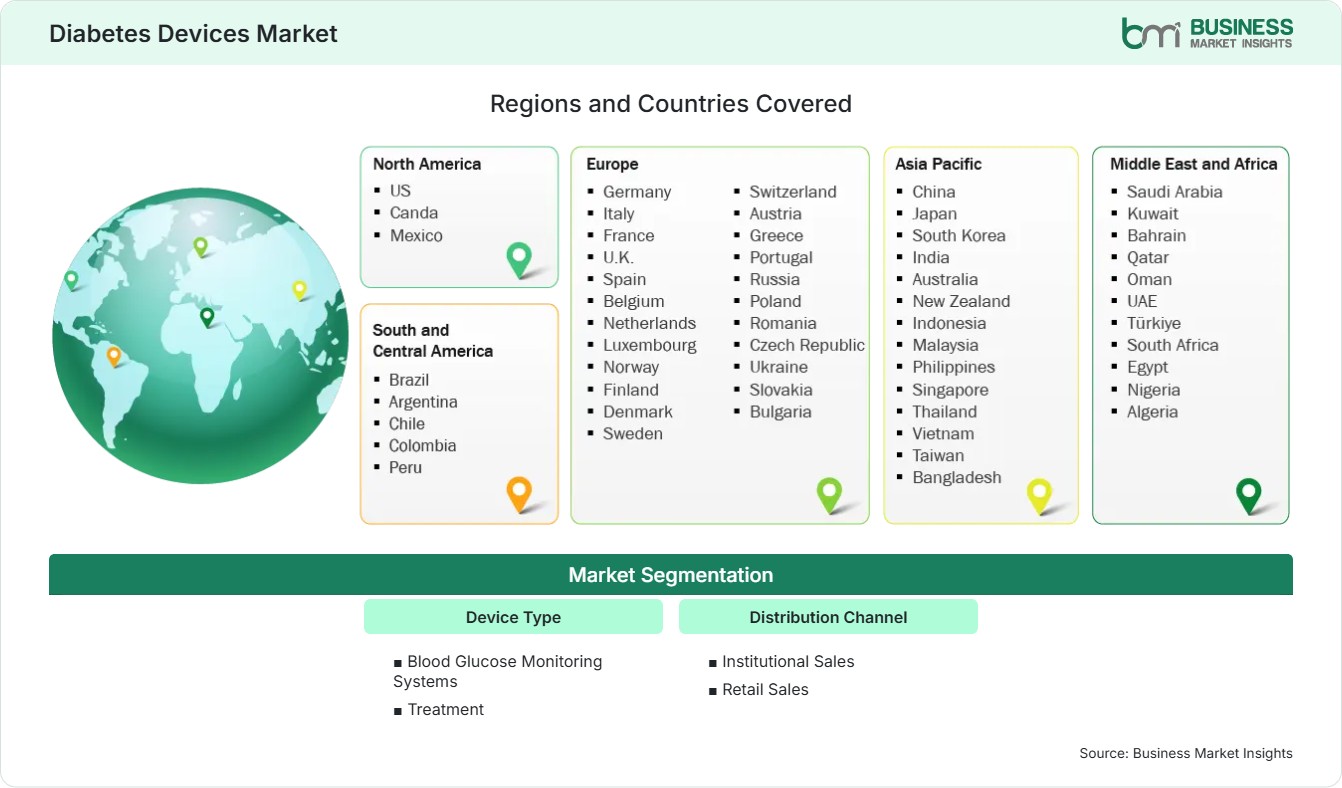
Global Market Geography
FREE PDF
Request your free sample
Request free sample
Segment Analysis

Diabetes Devices Market Segmentation

Device Type

The device type segment represents the core of diabetes management technologies, enabling patients and healthcare providers to monitor glucose levels and administer treatment effectively. The segment accounts for approximately 54%–57% share in 2025 and is projected to grow at a CAGR of 9.0%–9.6% through 2033. The expanding Diabetes Devices Market scope is supported by rising diabetes prevalence, growing demand for continuous monitoring solutions, technological advancements in wearable devices, and increasing focus on improving patient outcomes through personalized diabetes management.

  • Blood Glucose Monitoring Systems: Blood glucose monitoring systems remain the largest segment owing to their critical role in daily diabetes management. The category includes self-monitoring blood glucose devices and continuous glucose monitoring systems that enable real-time glucose tracking, improved treatment decisions, and enhanced glycemic control. Increasing adoption of connected monitoring technologies is further supporting segment expansion.
  • Treatment: Treatment devices include insulin pumps, insulin pens, patch pumps, and automated insulin delivery systems that help patients manage blood sugar levels more effectively. Growing utilization of smart insulin delivery solutions, integration with glucose monitoring platforms, and increasing demand for convenient diabetes care technologies continue driving growth across this category.

Distribution Channel

Distribution channels play an essential role in improving accessibility and availability of diabetes management technologies. The segment accounts for approximately 43%–46% share in 2025 and is expected to grow at a CAGR of 9.3%–9.9% through 2033. Current Diabetes Devices Market trends indicate increasing demand for both institutional procurement and retail-based access models that support broader patient adoption of advanced diabetes care solutions.

  • Institutional Sales: Institutional sales dominate procurement across hospitals, specialty diabetes clinics, healthcare networks, and public health programs. These channels facilitate adoption of advanced monitoring and treatment devices through professional supervision, reimbursement support, and integrated diabetes management programs.
  • Retail Sales: Retail sales channels continue expanding due to increasing consumer access to pharmacies, medical device distributors, e-commerce platforms, and home healthcare providers. Growing demand for self-monitoring solutions and home-based diabetes management is supporting stronger adoption through retail channels.
Market Forces

Diabetes Devices Market Dynamics

Key Market Drivers

Rising Global Prevalence of Diabetes

The growing incidence of both Type 1 and Type 2 diabetes worldwide remains one of the most significant factors driving demand for diabetes management technologies. Urbanization, sedentary lifestyles, dietary changes, aging populations, and increasing obesity rates are contributing to a larger diabetic patient population. As healthcare systems focus on early diagnosis and long-term disease management, demand for advanced monitoring and treatment devices continues increasing. Patients are seeking technologies that support better glycemic control and reduce the risk of diabetes-related complications. These trends are creating sustained opportunities for manufacturers operating across the diabetes care ecosystem.

Growing Adoption of Continuous Glucose Monitoring Systems

Continuous glucose monitoring systems are rapidly transforming diabetes management by providing real-time glucose data and reducing dependence on traditional finger-stick testing methods. These devices enable users to monitor glucose fluctuations continuously, receive alerts regarding abnormal levels, and make more informed treatment decisions. Healthcare providers increasingly recommend CGM technologies due to their ability to improve glucose control and enhance patient outcomes. Technological improvements in sensor accuracy, wearability, and connectivity are further accelerating market adoption. Growing awareness of the clinical and lifestyle benefits associated with continuous monitoring continues driving demand globally.

Increasing Demand for Insulin Delivery Devices

Insulin delivery technologies are becoming increasingly sophisticated as manufacturers develop solutions designed to improve convenience, accuracy, and treatment adherence. Modern insulin pumps and smart insulin delivery systems provide automated dosing capabilities and integrate with monitoring platforms to enhance diabetes management. Patients increasingly prefer solutions that simplify treatment routines and reduce manual interventions. Healthcare providers are also recognizing the benefits of advanced insulin delivery technologies in improving patient outcomes. As diabetes prevalence continues rising, demand for efficient and user-friendly treatment devices is expected to expand significantly.

Key Market Opportunities

Rising Adoption of Continuous Glucose Monitoring in Emerging Markets

Emerging economies present substantial growth opportunities for continuous glucose monitoring device manufacturers. Improvements in healthcare infrastructure, expanding insurance coverage, growing awareness regarding diabetes management, and increasing access to advanced medical technologies are supporting adoption. Governments and healthcare organizations are investing in programs focused on diabetes detection and disease management. As affordability improves and distribution networks expand, continuous glucose monitoring systems are expected to achieve greater penetration across underserved regions. Manufacturers that develop cost-effective solutions tailored to local healthcare requirements are likely to benefit from these growth opportunities.

Expansion of Home-Based Diabetes Monitoring Solutions

There is an increasing shift in the healthcare industry towards care delivery systems that enable patients to take control of their condition within the confines of their homes. Advances in the ease-of-use, connectivity, and accessibility of diabetes monitoring devices mean that patients are able to conduct monitoring activities without much medical intervention. Remote patient monitoring means that health service providers can monitor patients' progress and intervene appropriately when necessary. Increased demand for convenient healthcare services presents great business prospects for manufacturers and digital health companies.

Growing Demand for Wearable Diabetes Management Devices

Wearable medical technologies are becoming increasingly important within diabetes care because they offer continuous monitoring, improved convenience, and enhanced patient engagement. Advances in sensor technology, miniaturization, wireless connectivity, and mobile integration are enabling the development of highly sophisticated wearable devices. Patients are increasingly seeking discreet and comfortable solutions that fit seamlessly into daily lifestyles. Manufacturers are responding by introducing innovative wearable platforms that combine monitoring and treatment functions. Long-term Diabetes Devices Market Forecasts remain favorable as wearable technologies continue improving diabetes management effectiveness and patient convenience.

Market Restraints and Challenges

High Cost of Advanced Diabetes Monitoring Devices

Factor: Advanced diabetes technologies such as continuous glucose monitoring systems, smart insulin pumps, and integrated digital health solutions often involve substantial acquisition and maintenance costs. Device expenses may include sensors, software subscriptions, replacement components, and ongoing support requirements. Impact: High costs can limit adoption among uninsured and price-sensitive patient populations, particularly in developing economies. Financial barriers may reduce access to advanced technologies and slow market penetration despite their clinical benefits. Manufacturers must continue pursuing affordability strategies to expand adoption across broader patient groups.

Limited Reimbursement in Developing Healthcare Systems

Factor: Reimbursement policies for diabetes management technologies vary significantly across regions, with several developing healthcare systems providing limited financial support for advanced monitoring and treatment devices. Patients may be required to bear a substantial portion of device-related expenses. Impact: Inadequate reimbursement can discourage adoption, delay treatment upgrades, and restrict access to innovative diabetes management solutions. Manufacturers may face challenges expanding into certain markets where healthcare funding remains constrained. Addressing reimbursement gaps and improving affordability will remain critical for achieving broader global adoption of advanced diabetes care technologies.

Company Analysis

Competitive Landscape

The Diabetes Devices Market analysis highlights a highly competitive landscape characterized by continuous innovation in glucose monitoring technologies, insulin delivery systems, wearable medical devices, and connected diabetes management platforms. Market participants are focusing on sensor accuracy, automated insulin delivery, mobile health integration, cloud connectivity, and patient-centric device design to strengthen their market positions. Strategic partnerships, regulatory approvals, and digital health ecosystem development continue driving competitive differentiation across the industry.

Company Name

Overview

Products and Services relevant to this market

Medtronic plc

Global medical technology company with a strong presence in diabetes management and insulin delivery systems.

Insulin pumps, continuous glucose monitoring integration technologies, automated insulin delivery systems, diabetes management software, and connected care solutions.

Abbott Laboratories

Healthcare company specializing in diagnostics, medical devices, and diabetes monitoring technologies.

Continuous glucose monitoring systems, glucose sensors, diabetes data management platforms, and digital health monitoring solutions.

F. Hoffmann-La Roche Ltd.

Global healthcare company offering diagnostics and chronic disease management technologies.

Blood glucose monitoring devices, diabetes testing systems, diabetes management software, and patient monitoring solutions.

Bayer AG

Diversified life sciences company with a presence in healthcare and diagnostic technologies.

Blood glucose testing solutions, diabetes management products, healthcare technologies, and diagnostic support tools.

LifeScan, Inc.

Diabetes care company focused on blood glucose monitoring technologies and patient self-management solutions.

Blood glucose meters, testing strips, diabetes monitoring systems, digital tracking applications, and glucose management tools.

B. Braun Melsungen AG

Medical technology company providing drug delivery, infusion, and diabetes care solutions.

Insulin delivery systems, injection devices, diabetes management products, infusion technologies, and patient care solutions.

DexCom, Inc.

Specialized medical device company focused on continuous glucose monitoring technologies.

Continuous glucose monitoring systems, wearable glucose sensors, diabetes management software, mobile monitoring applications, and connected health platforms.

Insulet Corporation

Medical device company known for innovative insulin delivery technologies.

Tubeless insulin pumps, automated insulin delivery solutions, wearable diabetes management devices, and digital diabetes care platforms.

Ypsomed Holding AG

Medical technology company specializing in self-care solutions for chronic disease management.

Insulin pumps, injection systems, diabetes care devices, self-administration technologies, and connected treatment platforms.

Trust & Transparency

Research Methodology

The market analysis combines proprietary research with secondary data from government agencies, company disclosures, regulatory filings, industry databases and expert interviews. Market estimates are validated through data triangulation, cross-market benchmarking and analyst review.

View Full Research Methodology

Questions Answered

Frequently Asked Questions

How are digital technologies influencing diabetes care?

Digital health platforms, mobile applications, cloud-based monitoring systems, and connected healthcare ecosystems are improving patient engagement, enabling remote monitoring, and supporting more personalized diabetes management approaches.

What does this diabetes devices market report cover?

This report analyzes device type trends, distribution channel performance, regional opportunities, competitive positioning, market dynamics, technology developments, and future growth prospects through 2033.

Why are treatment devices growing rapidly?

Treatment devices such as insulin pumps and automated insulin delivery systems are gaining popularity because they improve treatment accuracy, enhance patient convenience, and support better long-term glycemic control.

Which device type currently dominates the market?

Blood glucose monitoring systems represent the leading segment due to their essential role in daily diabetes management, early detection of glucose fluctuations, and increasing adoption of continuous glucose monitoring technologies.

What is driving growth in the diabetes devices market?

Rising global diabetes prevalence, increasing adoption of continuous glucose monitoring technologies, growing awareness regarding disease management, and technological advancements in insulin delivery systems are major factors supporting market growth.

Access the Full Diabetes Devices Market Report

Get segment-level forecasts, regional estimates, competitive benchmarking, company profiles and downloadable Excel datasets.

Access the full Diabetes Devices Market Report
350 pages PDF & Excel | 2026-08-07
Similar Research

Related Market Reports