Neuromodulation Devices Market Regional Highlights
North America Neuromodulation Devices Market
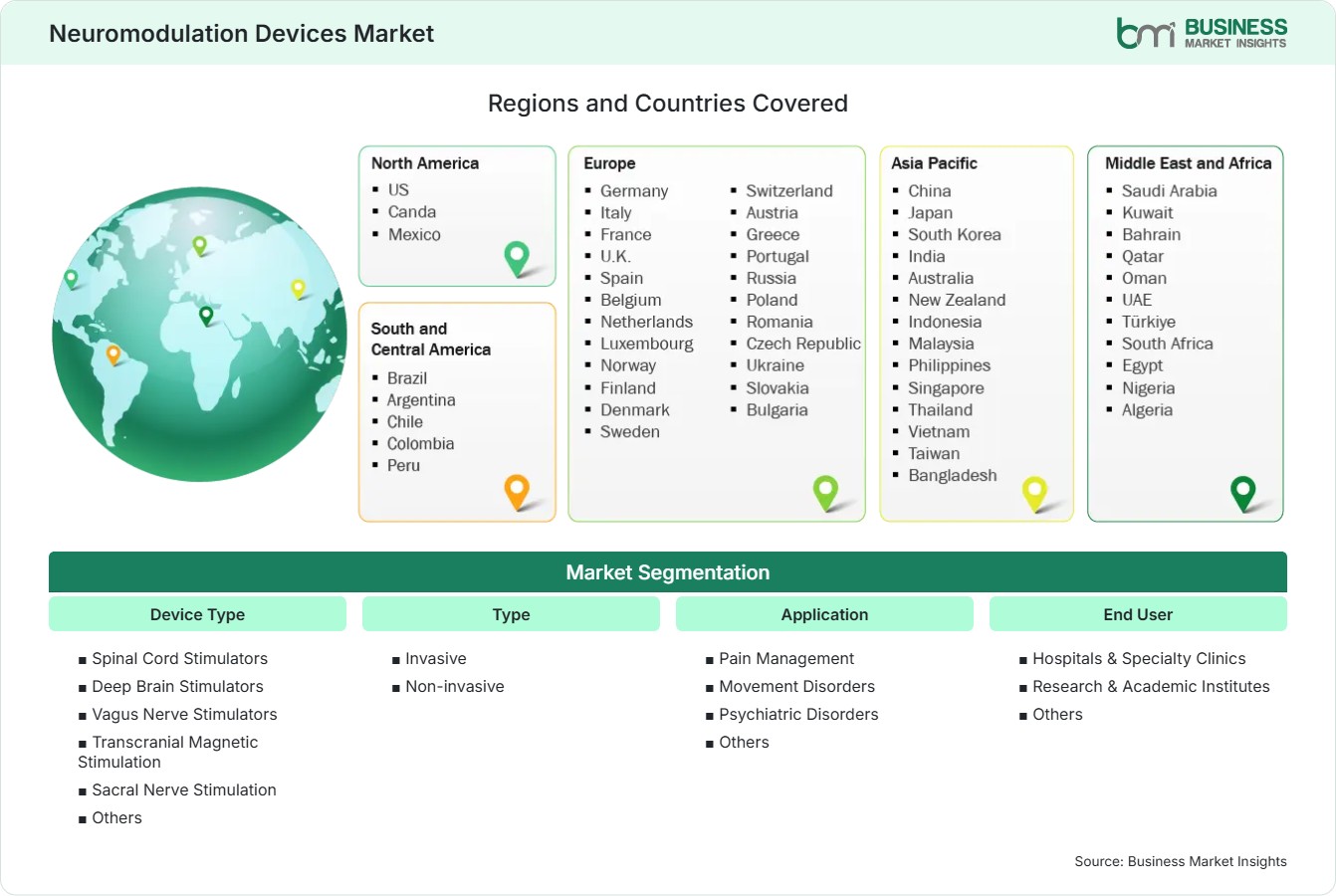
North America accounts for 41%–44% Neuromodulation Devices Market share in 2025 and is projected to grow at a CAGR of 8.8%–9.3% during 2026–2033. Regional leadership is supported by advanced healthcare infrastructure, widespread reimbursement coverage, high neurological disease diagnosis rates, and rapid adoption of innovative neurostimulation technologies across hospitals and specialty care centers.
- Strong reimbursement policies continue supporting wider adoption of implantable neurostimulation therapies for chronic neurological disorders.
- Continuous clinical research strengthens commercialization of advanced stimulation technologies across multiple treatment areas.
- Growing investments in digital neurology improve long-term patient monitoring and therapy optimization.
- Healthcare providers increasingly adopt minimally invasive neurostimulation procedures to improve patient recovery and clinical outcomes.
US Neuromodulation Devices Market
The United States contributes 84%–87% of North American revenue and is projected to expand at a CAGR of 8.9%–9.4% during the forecast period. Increasing chronic pain prevalence, favorable reimbursement, expanding neuroscience research, and continuous product innovation support sustained market development.
- Rising neurological disease burden continues increasing demand for advanced implantable stimulation devices.
- Leading medical device manufacturers maintain significant investments in research, clinical trials, and product development.
- Hospitals continue expanding specialized neurology and pain management centers across the country.
- Digital monitoring technologies improve long-term therapy management and physician decision-making.
Europe Neuromodulation Devices Market
Europe represents 28%–31% neuromodulation devices market share in 2025 and is expected to register a CAGR of 8.6%–9.1% during the forecast period. Germany leads regional demand through advanced healthcare infrastructure and strong medical technology adoption, while Spain records the fastest growth owing to increasing investments in neurological healthcare services and expanding access to innovative therapies.
- Growing prevalence of Parkinson's disease and chronic pain supports consistent demand for neurostimulation therapies.
- European healthcare systems continue investing in advanced neurological treatment technologies.
- Expansion of minimally invasive surgical procedures supports wider clinical adoption.
- Collaboration between hospitals and medical technology companies accelerates product innovation.
Asia Pacific Neuromodulation Devices Market
Asia Pacific accounts for 24%–27% market share in 2025 and is expected to record the fastest 10.6%–11.2% CAGR through 2033. Improving healthcare infrastructure, expanding neurology departments, increasing healthcare expenditure, and greater awareness of neurological disorders continue supporting strong regional expansion. China remains the largest market, while India demonstrates the fastest growth.
- Increasing investments in tertiary hospitals strengthen neurological treatment capabilities.
- Rising healthcare awareness encourages earlier diagnosis and treatment of neurological disorders.
- Government healthcare initiatives improve access to advanced medical technologies.
- Growing medical tourism supports wider adoption of specialized neuromodulation procedures.
Rest of World Neuromodulation Devices Market
The Rest of World region holds 5%–8% market share in 2025 and is projected to grow at a CAGR of 8.9%–9.5% during the forecast period. Expanding healthcare infrastructure, increasing neurological disease awareness, and improving access to specialized treatment continue supporting demand across Latin America, the Middle East, and Africa.
- Brazil remains the largest regional market through improving neurology care infrastructure.
- GCC countries continue investing in advanced neuroscience treatment facilities.
- Increasing specialist training supports broader adoption of neurostimulation procedures.
- Public healthcare investments improve patient access to advanced neurological therapies.