Microdermabrasion Devices Market Regional Highlights
North America Microdermabrasion Devices Market
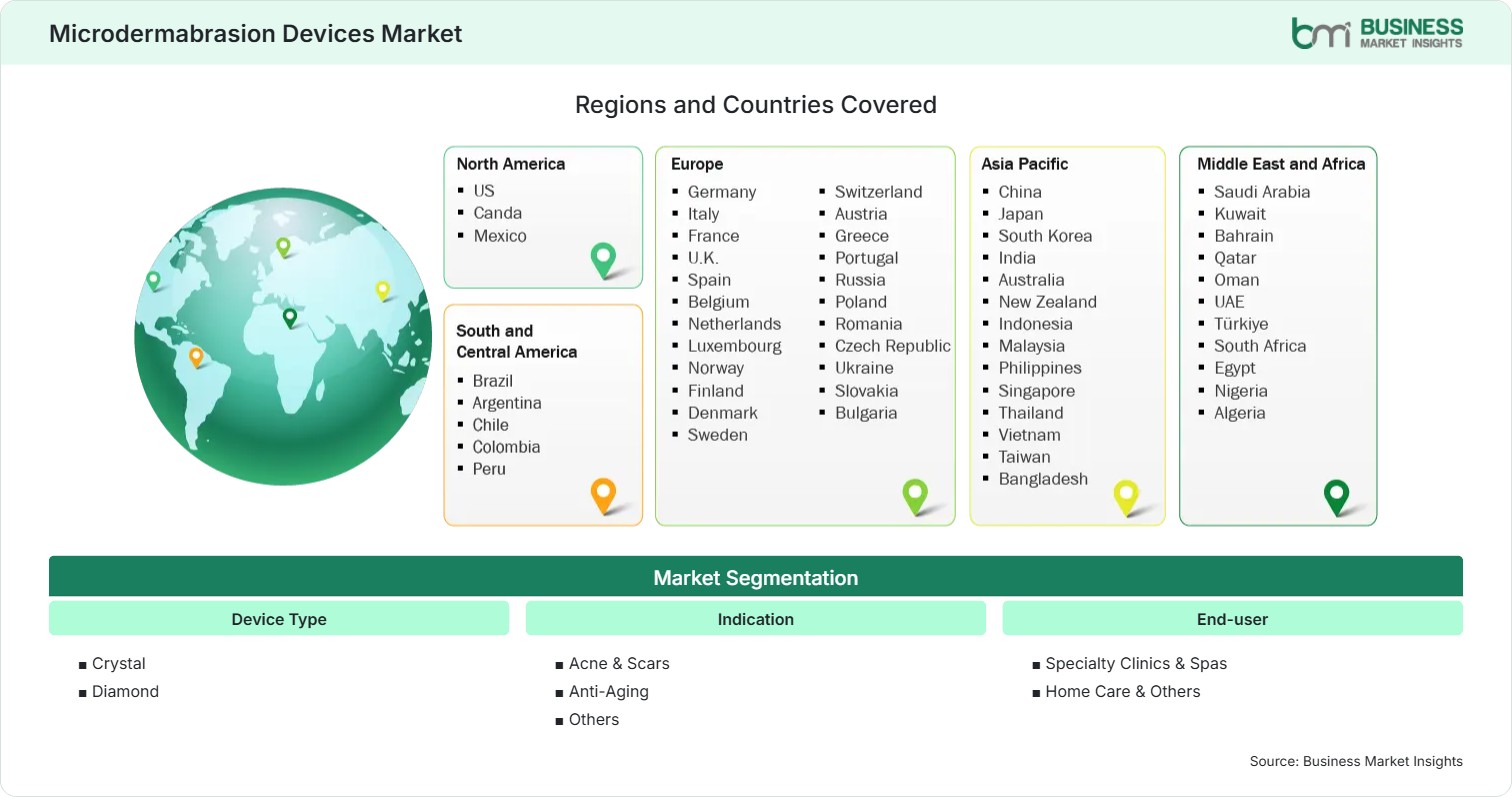
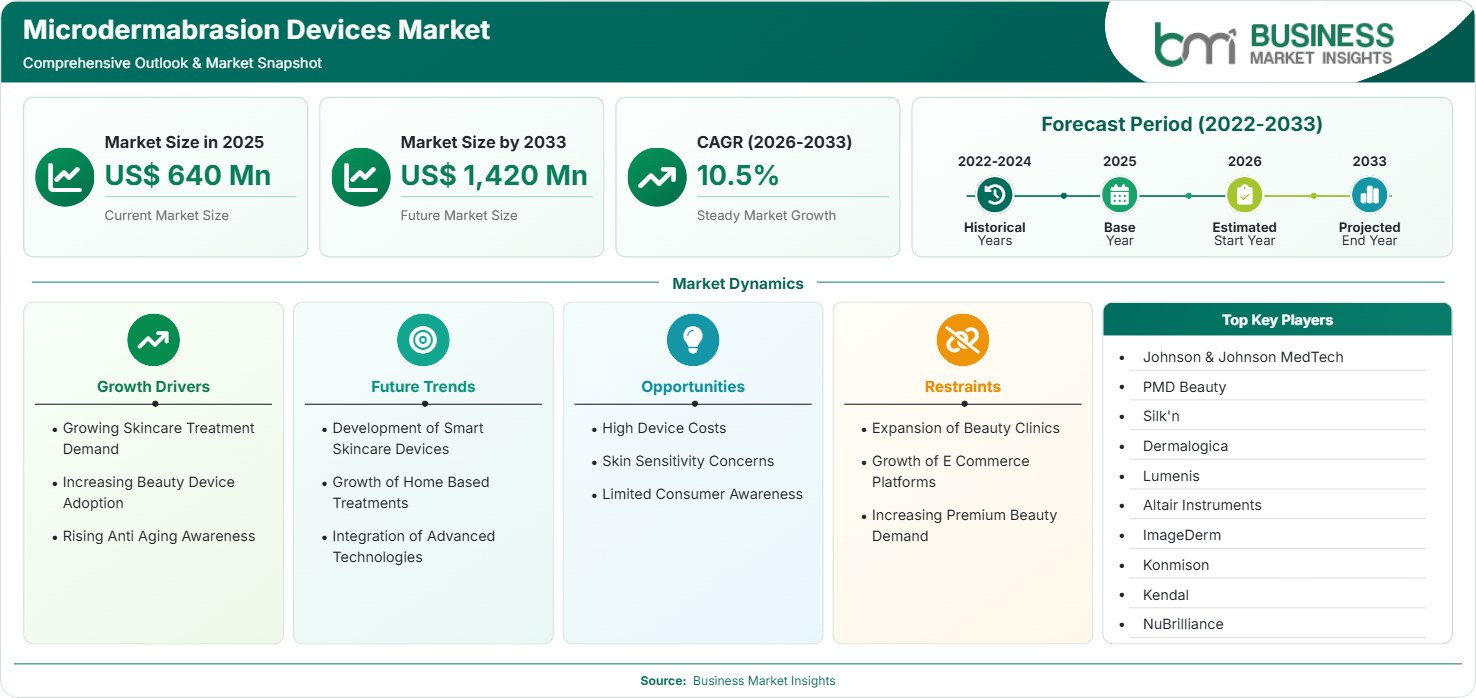
North America accounted for 36%–38% of the Microdermabrasion Devices Market share in 2025 and is projected to expand at a 10.0%–10.6% CAGR through 2033. Strong consumer spending on aesthetic procedures, advanced dermatology infrastructure, and high awareness regarding skin health continue supporting regional market leadership. Expanding home-use beauty devices further strengthen industry growth.
- Dermatology clinics continue adopting advanced microdermabrasion technologies to improve treatment quality and patient outcomes.
- Rising consumer preference for minimally invasive skincare procedures supports sustained equipment demand.
- Product innovation improves treatment precision, safety, portability, and user convenience across multiple applications.
- Online retail expansion improves accessibility to premium home-use beauty devices.
US Microdermabrasion Devices Market
The United States represented 30%–32% of global revenue in 2025 and is projected to grow at a 10.4% CAGR during 2026–2033. Increasing aesthetic procedure volumes, strong consumer purchasing power, expanding dermatology clinics, and rapid adoption of home-use skincare technologies continue driving sustained market growth.
- Growing anti-aging awareness continues increasing demand for non-invasive cosmetic procedures.
- Advanced aesthetic clinics expand investments in next-generation skincare technologies.
- Home-use beauty devices continue gaining popularity through digital retail platforms.
- Product innovation enhances treatment comfort and clinical effectiveness.
Europe Microdermabrasion Devices Market
Europe accounted for 27%–29% of global revenue in 2025 and is expected to register a 10.2%–10.8% CAGR through 2033. Rising demand for cosmetic dermatology, expanding wellness industries, and increasing consumer awareness continue supporting market growth. Germany remains the leading regional market, while Spain is projected to register the fastest growth at a 11.1% CAGR during the Microdermabrasion Devices Market forecast period.
- Medical aesthetics continues to spread into dermatological and aesthetic clinics owing to the increasing need for less invasive skin rejuvenation techniques and the continual investment in cutting-edge aesthetic technologies.
- Consumers’ preferences for high-end skincare products increase acceptance rates, as they invest in clinically proven machines that improve the results of their procedures.
- Regulatory standards encourage the development of safe and clinically effective aesthetic devices, prompting manufacturers to introduce CE-certified technologies that comply with stringent European safety, quality, and performance requirements.
- Wellness tourism supports demand for professional skincare treatments, particularly in countries such as Spain, Italy, and Germany, where international patients seek high-quality cosmetic procedures, advanced dermatology services, and competitive treatment costs.
Asia Pacific Microdermabrasion Devices Market
Asia Pacific accounted for 28%–30% of global revenue in 2025 and is projected to register the fastest Microdermabrasion Devices Market growth at 11.4%–12.0% CAGR through 2033. Rising disposable incomes, expanding beauty industries, increasing skincare awareness, and growing cosmetic treatment adoption continue supporting regional expansion. China remains the leading regional market, while India is projected to record the fastest growth with an estimated 12.3% CAGR during the forecast period.
- Beauty clinics continue expanding rapidly across major metropolitan areas.
- Growing middle-class populations increase spending on advanced skincare technologies.
- E-commerce platforms strengthen accessibility to home-use aesthetic devices.
- Manufacturers expand regional product portfolios targeting premium skincare consumers.
Rest of World Microdermabrasion Devices Market
The Rest of World region, including South & Central America and the Middle East & Africa, accounted for 7%–9% of worldwide revenues in 2025 and is anticipated to grow at a CAGR of 10.3%–10.9% through 2033. Brazil dominates regional demand with its highly developed aesthetics sector, whereas the UAE is forecast to post the highest regional growth at a CAGR of 11.5%, owing to expanding cosmetic healthcare infrastructure and high-end beauty spending.
Growing investments in aesthetic medicine, expanding dermatology services, and rising consumer awareness continue strengthening demand across emerging economies. Increasing medical tourism and premium skincare adoption further support long-term regional market expansion.
- Brazil continues strengthening its position as a leading aesthetic treatment market.
- Gulf countries expand investments in premium cosmetic healthcare services.
- Medical tourism supports adoption of advanced skincare technologies.
- Digital retail channels improve accessibility to home-use beauty devices.