Neurothrombectomy Devices Market Regional Highlights
North America Neurothrombectomy Devices Market
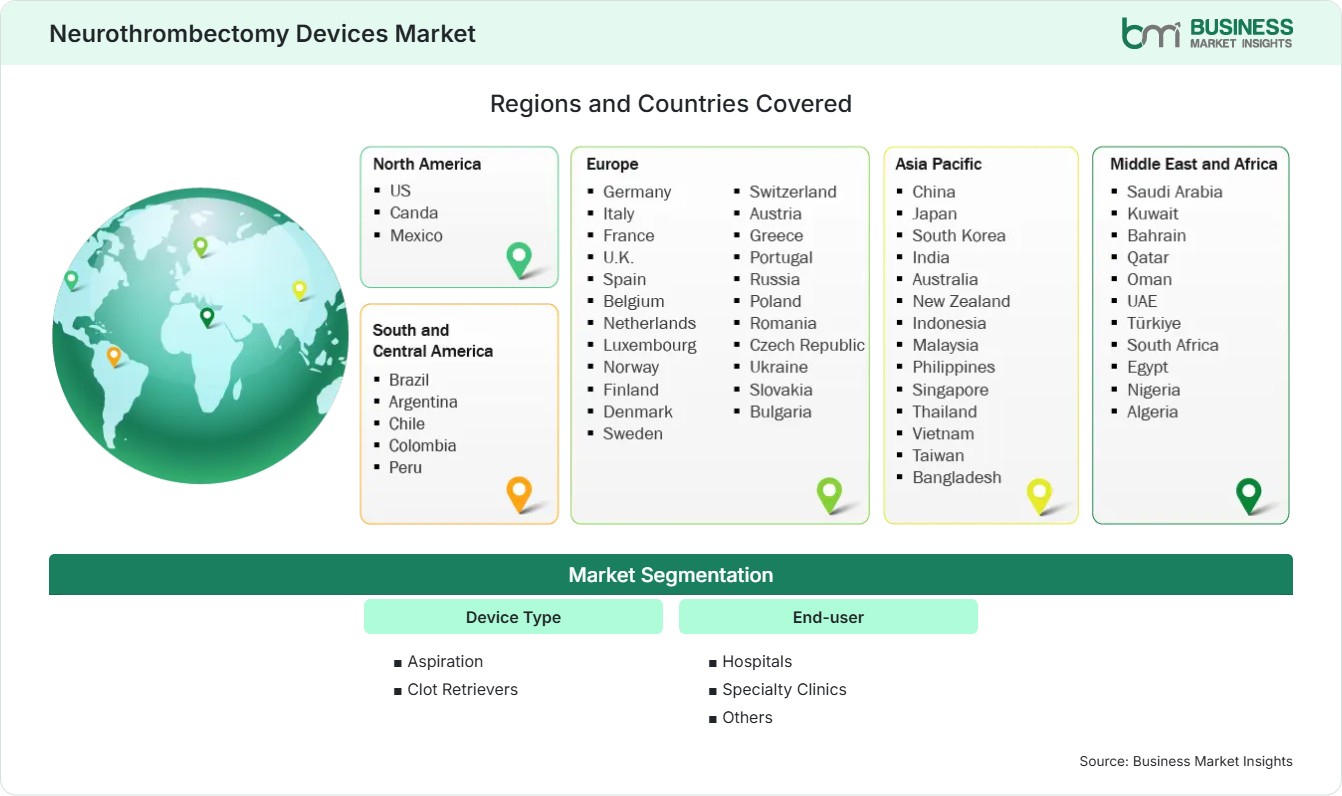
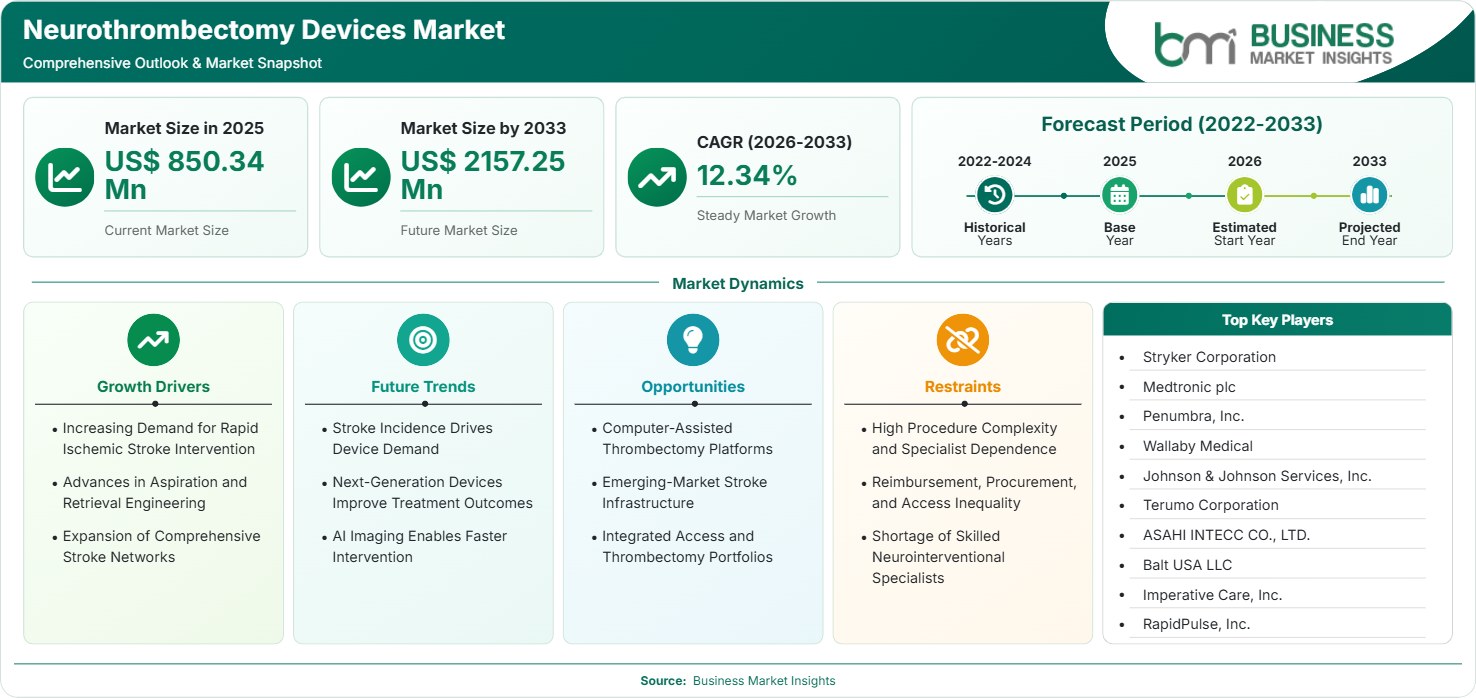
The North American region holds 34%–37% of the Neurothrombectomy Devices Market share in 2025 and is growing at a CAGR of 11.5%–12.1% during 2033. It is helped by the presence of fully fledged comprehensive stroke centers, advanced imaging technologies, a robust reimbursement infrastructure, highly experienced neurointerventionalists, and a high number of clinical trials. The USA leads in demand, whereas Canada expands its market by developing stroke networks and tertiary care. The sophisticated procurement process at hospitals and the use of next-generation aspirating and retrieving technologies favor vendors.
- Comprehensive stroke centers continue investing in integrated neurovascular suites, supporting rapid transition from diagnosis to intervention and increasing utilization of sophisticated thrombectomy platforms.
- U.S. hospitals are emphasizing door-to-treatment efficiency, making catheter navigability, device preparation, imaging integration, and predictable first-pass performance important purchasing criteria.
- Canada is strengthening regional referral pathways, enabling tertiary neurovascular centers to extend thrombectomy capabilities across broader geographic catchment areas.
- Device manufacturers benefit from a mature clinical research ecosystem that supports comparative evidence, post-market surveillance, product refinement, and physician training.
US Neurothrombectomy Devices Market
The US accounts for 82%–86% of the total North America demand in 2025 and records a CAGR of 11.4%–12.0%. A large number of procedures, stroke centers, insurance systems, and manufacturer dominance are key factors driving adoption. The American Heart Association still stresses the importance of rapid stroke treatment, while device makers develop distal stroke devices, aspirators, and workflow-simplifying tools. Also, significant development is observed in AI-based stroke triage, which will help establish links between community hospitals and comprehensive stroke centers.
- Large academic hospitals remain important early adopters because they generate clinical evidence, train neurointerventional specialists, participate in trials, and influence technology procurement across regional networks.
- AI-enabled triage is becoming strategically relevant because faster identification of large-vessel occlusion can support earlier transfer decisions and improve coordination between referring and receiving hospitals.
- Competitive differentiation increasingly depends on catheter performance, procedural consistency, clinical evidence, physician support, and the ability to integrate products into established stroke pathways.
Europe Neurothrombectomy Devices Market
Europe has a 25%–28% market share in 2025 and is projected to grow at a CAGR of 11.8%–12.5% in the Neurothrombectomy Devices Market. Germany, France, the UK, Italy, and Spain comprise important procedural markets, whereas Poland and various Central European nations offer greater growth prospects. Factors that influence adoption include national stroke pathways, availability of thrombectomy centers, clinical practice guidelines, and European regulations. Innovation within the region includes multicenter trials to develop evidence, specialist societies, cross-border referral systems, and patient selection using AI algorithms.
- Germany remains a leading market because of its extensive hospital infrastructure, established neurointerventional expertise, and capacity to perform complex endovascular procedures.
- France and the United Kingdom provide strong opportunities through centralized stroke strategies, specialist networks, and investment in rapid referral and treatment pathways.
- Poland and Central European markets offer faster expansion potential as thrombectomy availability improves and healthcare systems increase investment in specialist neurological services.
- European manufacturers and distributors can use regional clinical evidence and specialist training programs to strengthen adoption beyond major metropolitan hospitals.
Asia Pacific Neurothrombectomy Devices Market
Asia Pacific accounts for 24% to 27% of the market share in 2025 and is the fastest-growing region, with a CAGR of 13.0% to 13.8%. Japan, China, South Korea, Australia, and India are at the forefront of demand, whereas India and Southeast Asia present strong growth prospects. Higher stroke prevalence rates, an aging population, investment by urban hospitals, training for specialists, and greater awareness about mechanical thrombectomy will boost demand. The lack of access, however, presents opportunities for companies that can integrate technology commercialization with training and referral-building.
- Japan combines advanced neurointerventional expertise with sophisticated hospital infrastructure, supporting adoption of highly navigable devices and complex endovascular treatment strategies.
- China offers significant volume potential as tertiary hospitals expand neurovascular capabilities and regional centers develop stronger acute stroke referral systems.
- India represents a high-growth opportunity because large metropolitan centers increasingly provide thrombectomy while secondary-city hospitals develop transfer networks and specialist partnerships.
- South Korea and Australia offer mature procedural environments that can support early adoption of advanced devices, clinical research, and physician training initiatives.
Rest of World Neurothrombectomy Devices Market
The Rest of World represents 12% to 15% market share and is growing at a CAGR of 10.8% to 11.6%. Thrombectomy capability is growing in South and Central America through major urban hospitals, while markets in the Middle East will be supported by developments in neurological specialty centers. Leading countries include Brazil, Mexico, Saudi Arabia, and the United Arab Emirates, along with selected countries in the Gulf and Latin America, which are experiencing faster growth.
The increasing prevalence of thrombectomy procedures is evident across large, private, and educational hospitals in South America, owing to sophisticated imaging facilities and expertise. Tertiary neurological services are being developed in the healthcare system in the Middle East, leading to increased demand for expensive equipment and specialized physicians’ skills. Market penetration is hindered by financing programs and the availability of specialists.
- Brazil is the leading South American opportunity because major hospitals increasingly combine advanced imaging, neurointervention, and stroke-care capabilities within tertiary networks.
- Mexico provides expansion potential through private hospital investment and increasing concentration of specialist neurological services in major metropolitan areas.
- Saudi Arabia and the United Arab Emirates are developing advanced neurological centers, creating opportunities for premium devices supported by structured training and clinical collaboration.
- Regional distributors can improve access by combining inventory management, technical support, physician education, and relationships with referral hospitals.