
Ophthalmic Devices Market Outlook: Size, Share, Trends, Growth Analysis, Competitive Landscape & Forecast, 2026-2033

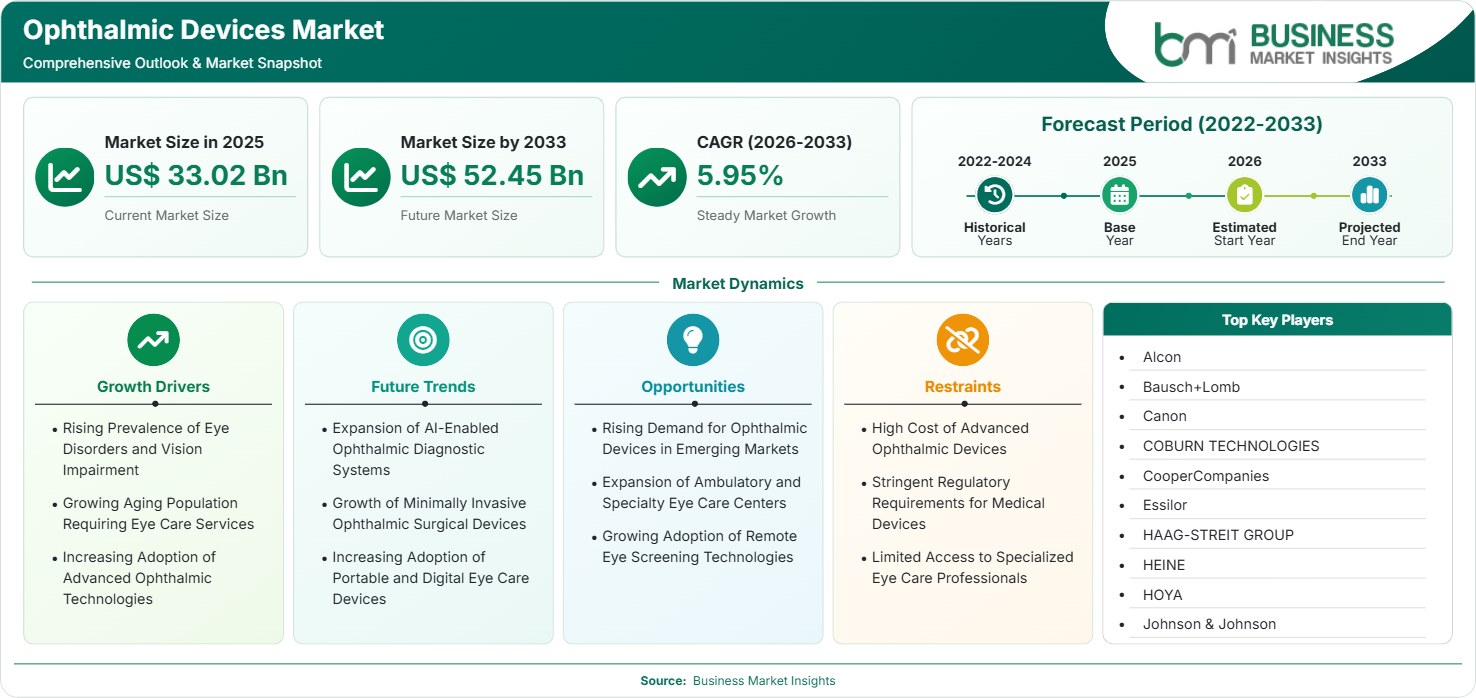
The Ophthalmic Devices Market size was valued at US$ 33.02 Billion in 2025 and is projected to reach US$ 52.45 Billion by 2033, growing at a CAGR of 5.95% during 2026–2033. Increasing prevalence of vision disorders, growing demand for advanced eye care services, and rising adoption of ophthalmic diagnostic and surgical technologies are supporting market growth globally. Growing awareness regarding preventive eye care and continuous advancements in ophthalmology equipment are further contributing to market expansion.

Report Coverage
  • Surgical: Implants, Consumables, Equipment
  • Vision Care: Contact Lenses, Ocular Health
  • End User: Hospitals, Ophthalmic Clinics, Others
US$ 33.02 Bn Market size in 2025
US$ 52.45 Bn Market Size by 2033
5.95% CAGR, 2026 - 2033
2026-2033 Forecast Period

AI Overview

Ophthalmic Devices Market Summary

  • North America Region: North America holds a market share of 34%–37% in 2025, growing with a CAGR of 5.5%–6.2% during 2026–2033. Strong healthcare infrastructure, widespread access to eye care services, and increasing adoption of advanced ophthalmic technologies continue supporting regional leadership. The U.S. ophthalmic devices market is expected to register a CAGR of 5.7%–6.4%.
  • Fastest Growing Region: Asia Pacific accounts for 28%–31% share in 2025 and is projected to grow at a CAGR of 6.4%–7.1% through 2033. Increasing healthcare investments, growing awareness of eye health, and expanding access to ophthalmology services continue driving regional growth.
  • Leading Segment: Surgical represents 58%–61% share in 2025 and is expected to grow at a CAGR of 6.0%–6.7% through 2033. Rising demand for cataract procedures and advanced ophthalmic surgeries continues supporting segment dominance.
  • High Growth Segment: Hospitals account for 46%–49% share in 2025 and are forecast to grow at a CAGR of 6.2%–6.9% during 2026–2033. Expanding surgical capabilities and increasing patient volumes continue accelerating segment growth.
  • Key Market Opportunity: Expansion of advanced ophthalmic surgeries, digital diagnostic technologies, and eye care services in emerging healthcare markets is creating substantial growth opportunities.
  • Major Market Players: Alcon, Bausch+Lomb, Canon, COBURN TECHNOLOGIES, CooperCompanies, Essilor, HAAG-STREIT GROUP, HEINE, HOYA, and Johnson & Johnson.
Strategic Insights

Ophthalmic Devices Market: Strategic Insights

Ophthalmic Devices Market Strategic Framework
FREE PDF
Request your free sample
Request free sample
Stakeholder View

Key Takeaways

  • Ophthalmic devices play a critical role in diagnosing, monitoring, and treating a broad range of vision disorders and eye conditions.
  • Surgical products remain the dominant segment, supported by rising demand for cataract procedures, retinal treatments, and other ophthalmic surgeries.
  • Hospitals continue representing the largest end-user category due to their advanced infrastructure, specialized equipment, and high patient volumes.
  • Technological advancements are improving diagnostic precision, enabling earlier disease detection, more accurate procedures, and better treatment outcomes.
  • Demand for vision correction products remains strong across developed and emerging markets, supported by rising vision-related disorders and growing awareness.
  • North America remains the leading market, driven by advanced healthcare infrastructure, high technology adoption, and strong healthcare spending.
  • Asia Pacific is projected to witness the fastest growth due to improving healthcare access, rising patient populations, and expanding medical infrastructure.
  • Digital diagnostics, AI-enabled technologies, and minimally invasive surgical systems are expected to create significant future growth opportunities.
Geographic Outlook

Ophthalmic Devices Market Regional Highlights

North America Ophthalmic Devices Market

North America accounts for 34%–37% Ophthalmic Devices Market share in 2025 and is projected to grow at a CAGR of 5.5%–6.2% through 2033. The region benefits from advanced healthcare infrastructure, strong ophthalmology networks, and high adoption of modern eye care technologies.

  • Healthcare providers continue investing in advanced ophthalmic diagnostic equipment to improve clinical outcomes.
  • Cataract and refractive procedures continue supporting demand for surgical ophthalmic devices.
  • Growing awareness regarding preventive eye care is encouraging routine vision examinations.
  • Technological advancements are improving diagnostic accuracy and treatment efficiency across healthcare facilities.
  • Strong reimbursement systems continue facilitating patient access to ophthalmic care services.
  • Research and development activities remain supportive of product innovation and market growth.

US Ophthalmic Devices Market

The United States contributes approximately 89%–93% of North American revenue and is expected to register a CAGR of 5.7%–6.4% through 2033. The country remains the largest ophthalmic devices market due to its extensive healthcare infrastructure and high healthcare expenditure.

  • Hospitals continue expanding investments in advanced ophthalmic surgical systems, diagnostic equipment, and imaging technologies to improve treatment capabilities.
  • Eye care providers are increasingly adopting digital imaging, automated diagnostics, and advanced screening technologies to enhance disease detection and clinical accuracy.
  • Aging populations continue contributing to rising demand for ophthalmic procedures, particularly for cataracts, glaucoma, retinal disorders, and other age-related conditions.
  • Advanced treatment options, including minimally invasive procedures and precision-based technologies, are improving patient outcomes and supporting more effective management of major vision disorders.
  • A strong industry presence encourages continuous product launches, research and development activities, and technological advancements across the ophthalmic devices sector.
  • Increasing healthcare spending is supporting investments in modern ophthalmic infrastructure, specialized equipment, and advanced treatment solutions, contributing to continued market expansion.

Europe Ophthalmic Devices Market

Europe represents 24%–27% of global revenue in 2025 and is anticipated to expand at a CAGR of 5.8%–6.5% through 2033. Strong healthcare systems and increasing focus on eye health continue supporting regional growth.

  • Germany continues leading regional demand through its advanced healthcare infrastructure and ophthalmology sector.
  • Poland is among the fastest-growing markets and is estimated to register a CAGR of 6.7%–7.4% during the forecast period.
  • Growing awareness regarding vision health is supporting demand for ophthalmic products.
  • Healthcare providers continue upgrading diagnostic and surgical ophthalmology equipment.
  • Increasing adoption of modern treatment approaches remains supportive of market expansion.
  • Investments in healthcare technology continue driving product demand across the region.

Asia Pacific Ophthalmic Devices Market

Asia Pacific accounts for 28%–31% of global revenue in 2025 and is expected to achieve the fastest CAGR of 6.4%–7.1% through 2033. Expanding healthcare access and increasing prevalence of vision-related disorders continue supporting strong regional growth.

  • China remains the largest regional ophthalmic devices market, supported by its large patient population, increasing healthcare expenditure, and expanding ophthalmic care infrastructure.
  • India is projected to achieve approximately 7.3%–8.0% CAGR, driven by improving access to specialized eye care services, advanced diagnostics, and surgical treatments.
  • Rising awareness regarding eye health is encouraging consumers to undergo regular screenings, enabling earlier diagnosis and timely treatment of vision disorders.
  • Expanding healthcare infrastructure, including hospitals, clinics, and specialized eye care centers, is supporting the adoption of advanced ophthalmic diagnostic and surgical technologies.
  • Growing demand for vision correction solutions, including corrective lenses, implants, and surgical procedures, continues creating opportunities for ophthalmic device manufacturers.
  • Government healthcare initiatives and public eye care programs are contributing to improved accessibility, affordability, screening, and treatment services across developing markets.

Rest of World Ophthalmic Devices Market

Rest of World accounts for 8%–11% of global revenue in 2025 and is projected to expand at a CAGR of 5.0%–5.7% through 2033. Increasing investments in healthcare services and growing awareness of vision care continue supporting market development across Latin America, the Middle East, and Africa.

  • Brazil continues generating demand through expanding healthcare infrastructure, increasing access to specialized eye care services, and rising investments in ophthalmic technologies.
  • The UAE is witnessing increasing adoption of advanced ophthalmic diagnostic, imaging, and treatment technologies, supported by modern healthcare facilities.
  • Saudi Arabia is expected to achieve approximately 5.9%–6.6% CAGR through 2033, driven by healthcare modernization initiatives, infrastructure development, and increasing technology adoption.
  • Growing awareness campaigns are encouraging preventive vision care, routine eye examinations, and earlier detection of eye disorders.
  • Investments in hospitals, specialized clinics, and healthcare facilities are improving accessibility to advanced ophthalmic diagnostic and treatment services.
  • Rising demand for modern eye care solutions, including advanced diagnostics, surgical systems, and vision correction technologies, is expected to support long-term market growth.
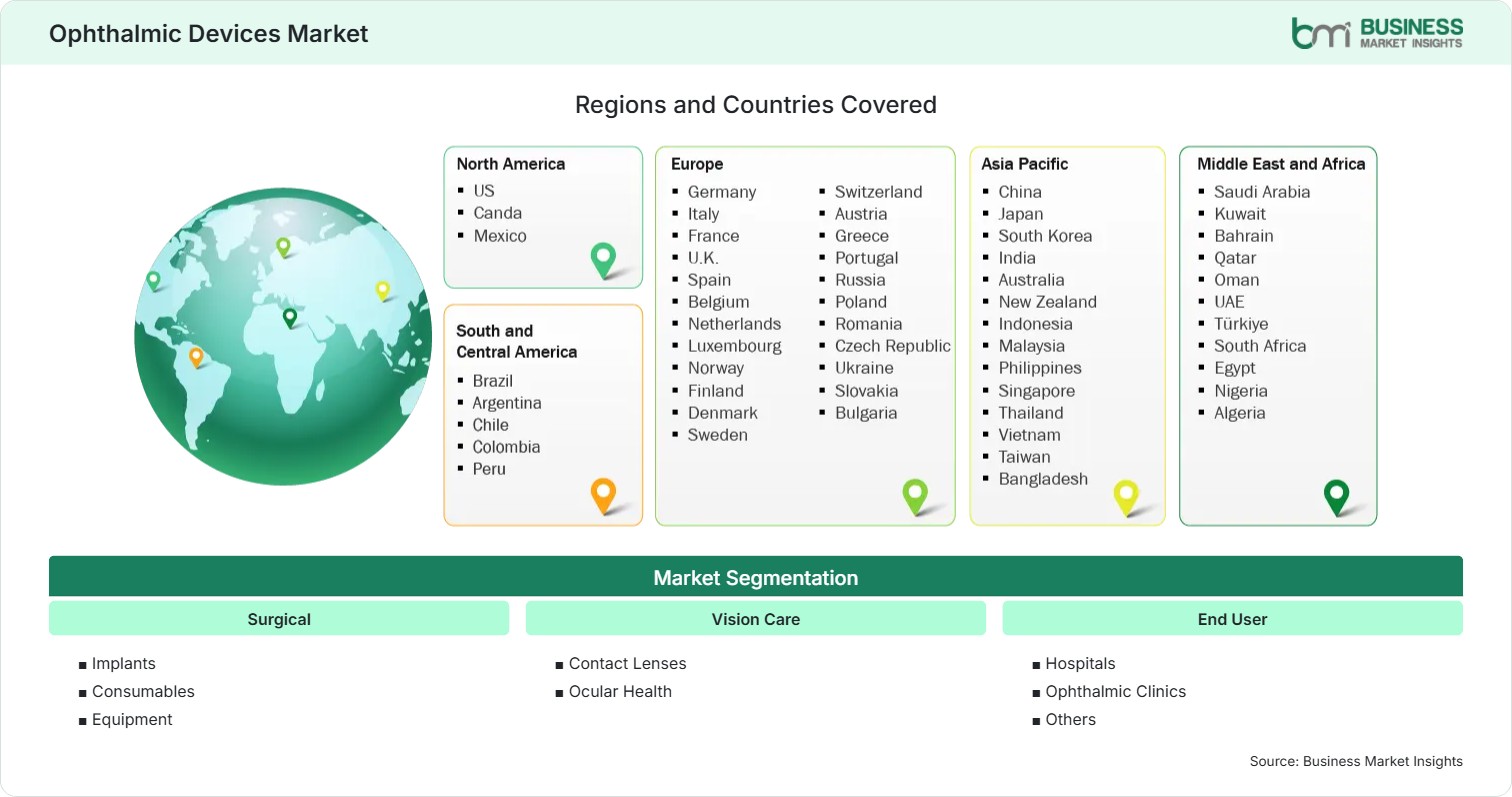
Global Market Geography
FREE PDF
Request your free sample
Request free sample
Segment Analysis

Ophthalmic Devices Market Segmentation

Surgical

The surgical segment represents the largest category within the market. This segment accounts for approximately 58%–61% share in 2025 and is projected to grow at a CAGR of 6.0%–6.7% through 2033. The expanding Ophthalmic Devices Market Scope is supported by increasing demand for cataract surgeries, rising prevalence of vision disorders, and continuous advancements in ophthalmic surgical technologies.

  • Implants: Ophthalmic implants continue witnessing strong demand due to their extensive use in cataract and vision correction procedures.
  • Consumables: Consumables remain essential for surgical procedures, supporting routine ophthalmic treatments and interventions.
  • Equipment: Surgical equipment adoption continues increasing as healthcare providers invest in advanced technologies that improve treatment precision and patient outcomes.

Vision Care

The vision care segment highlights products focused on vision correction and ocular health management. This segment accounts for approximately 39%–42% share in 2025 and is expected to register a CAGR of 5.8%–6.5% through 2033. Current Ophthalmic Devices Market Trends indicate growing consumer awareness regarding eye health and increasing demand for non-surgical vision correction solutions.

  • Contact Lenses: Contact lenses continue representing a significant category due to increasing adoption among consumers seeking vision correction alternatives to eyeglasses.
  • Ocular Health: Ocular health products are witnessing growing demand as awareness regarding preventive eye care and long-term vision management continues increasing.

End User

The end-user segment highlights the primary healthcare settings utilizing ophthalmic devices. This segment accounts for approximately 46%–49% share in 2025 and is projected to grow at a CAGR of 6.2%–6.9% through 2033. Increasing patient volumes, expanding ophthalmology services, and growing investments in diagnostic and treatment infrastructure continue supporting market growth.

  • Hospitals: Hospitals dominate the market due to their ability to provide comprehensive ophthalmic diagnosis, surgical procedures, and post-treatment care.
  • Ophthalmic Clinics: Ophthalmic clinics continue expanding their role through specialized eye care services and increasing adoption of advanced diagnostic technologies.
  • Others: Other end users include ambulatory care centers, academic institutions, and specialty healthcare facilities.
Market Forces

Ophthalmic Devices Market Dynamics

Key Market Drivers

Rising Prevalence of Eye Disorders and Vision Impairment

The rise in the prevalence of vision disorders is one of the most prominent drivers of demand for ophthalmic devices on a global scale. Disorders like cataracts, glaucoma, refractive errors, retinal diseases, among others, are still affecting a considerable segment of the population across the globe. Healthcare service providers have begun offering increased capacity for diagnosing and treating such health conditions, resulting in increased demand for ophthalmic devices. In addition, rising programs for early diagnosis and vision screening tests have also fueled the demand for ophthalmic devices.

Growing Aging Population Requiring Eye Care Services

There is a continued trend of increased demand for ophthalmic goods and services from the aged population. Aged individuals are prone to eye diseases that require ongoing diagnosis and management. Ophthalmic care services are being prioritized by health organizations to address age-related vision problems and maintain quality of life. Increasing life expectancy is also fueling the need for ophthalmic care. As demographics continue to shift toward an aging population, there will be increasing demand for ophthalmic equipment.

Increasing Adoption of Advanced Ophthalmic Technologies

Improvements in ophthalmological technologies have enhanced diagnostic accuracy and treatment efficacy within modern-day healthcare systems. Through the use of digital imaging systems, guidance technologies for surgery, and diagnostic tools, there have been increased efforts to provide precise eye care procedures. Healthcare organizations are still focusing on acquiring new technology to enhance their services in terms of efficiency and success rate. The development in technology will help in increasing the use of ophthalmology equipment within healthcare facilities. Innovation will continue to drive growth in the market.

Key Market Opportunities

Rising Demand for Ophthalmic Devices in Emerging Markets

Emerging economies present significant growth opportunities for ophthalmic device manufacturers. Expanding healthcare infrastructure, improving access to medical services, and increasing awareness regarding eye health are supporting market development. Governments and healthcare organizations are also investing in programs designed to improve vision care accessibility. Growing middle-class populations are further contributing to demand for advanced diagnostic and treatment technologies. These factors are expected to create attractive long-term opportunities for market participants seeking geographic expansion.

Expansion of Ambulatory and Specialty Eye Care Centers

The growing number of ambulatory and specialty eye care facilities is creating additional demand for ophthalmic devices. These centers provide focused ophthalmology services while improving patient accessibility and treatment efficiency. Investments in advanced diagnostic equipment and surgical systems continue supporting facility expansion. Patients increasingly prefer specialized eye care environments that offer streamlined services and shorter treatment timelines. As specialty care networks continue expanding, demand for ophthalmic technologies is expected to increase accordingly.

Growing Adoption of Remote Eye Screening Technologies

Remote screening technologies are emerging as an important opportunity within the ophthalmic devices industry. Healthcare providers are increasingly utilizing digital imaging and telehealth-supported screening tools to improve access to vision care. These solutions help identify eye disorders at earlier stages while supporting healthcare delivery in underserved regions. Technological improvements are enhancing the accuracy and reliability of remote assessments. Long-term Ophthalmic Devices Market Forecast projections remain favorable as healthcare systems continue embracing digital healthcare solutions.

Market Restraints and Challenges

High Cost of Advanced Ophthalmic Devices

Factor: Advanced ophthalmic equipment often requires significant investments in technology, installation, maintenance, and staff training. High-end diagnostic and surgical systems can be expensive for smaller healthcare facilities and providers.

Impact: Elevated equipment costs may limit adoption among budget-constrained institutions, particularly in developing regions. Healthcare providers may delay technology upgrades due to financial limitations, potentially affecting overall market penetration.

Stringent Regulatory Requirements for Medical Devices

Factor: Ophthalmic devices must comply with rigorous regulatory standards related to safety, clinical performance, quality assurance, and product approval processes. Compliance requirements vary across countries and regions.

Impact: Regulatory complexity can increase development timelines and product launch costs. Manufacturers may face additional investments in testing, documentation, and compliance activities before commercializing new products.

Company Analysis

Competitive Landscape

The Ophthalmic Devices Market Analysis is characterized by strong competition among ophthalmic equipment manufacturers, vision care companies, diagnostic technology providers, and surgical device developers. Market participants are focusing on advanced diagnostic systems, surgical precision technologies, vision correction products, and digital eye care solutions to strengthen their market positions. Growing demand for ophthalmic procedures, increasing focus on early diagnosis, and rising adoption of advanced eye care technologies continue driving innovation across the market. Companies are investing in product development, healthcare partnerships, and expansion of vision care portfolios to address evolving patient and provider requirements.

Company Name

Overview

Products and Services Relevant to this Market

Alcon

Global eye care company specializing in surgical and vision care products.

Ophthalmic surgical equipment, intraocular lenses, consumables, contact lenses, and eye care solutions.

Bausch+Lomb

Eye health company serving vision care and ophthalmology markets worldwide.

Contact lenses, surgical devices, ophthalmic pharmaceuticals, and ocular health products.

Canon

Technology company providing advanced ophthalmic imaging and diagnostic solutions.

Retinal imaging systems, ophthalmic diagnostic equipment, and eye examination technologies.

COBURN TECHNOLOGIES

Provider of ophthalmic lens processing and diagnostic solutions.

Lens manufacturing systems, refraction equipment, ophthalmic instruments, and vision care technologies.

CooperCompanies

Global medical device company with a strong presence in vision care.

Contact lenses, vision correction products, and specialty eye care solutions.

Essilor

Vision care company focused on corrective eyewear and optical technologies.

Vision correction products, ophthalmic lenses, eye care solutions, and optical technologies.

HAAG-STREIT GROUP

Manufacturer of ophthalmic diagnostic and examination equipment.

Slit lamps, diagnostic instruments, imaging systems, and ophthalmic examination technologies.

HEINE

Medical technology company specializing in diagnostic instruments.

Ophthalmic diagnostic devices, examination systems, and medical visualization technologies.

HOYA

Healthcare and technology company serving vision care markets globally.

Intraocular lenses, ophthalmic lenses, diagnostic products, and vision correction solutions.

Johnson & Johnson

Healthcare company active in vision and surgical eye care segments.

Contact lenses, ophthalmic surgical products, eye health solutions, and vision care technologies.

Trust & Transparency

Research Methodology

The market analysis combines proprietary research with secondary data from government agencies, company disclosures, regulatory filings, industry databases and expert interviews. Market estimates are validated through data triangulation, cross-market benchmarking and analyst review.

View Full Research Methodology

Questions Answered

Frequently Asked Questions

How are technological advancements influencing the ophthalmic devices industry?

Technological advancements are improving diagnostic accuracy, surgical precision, and patient outcomes. Innovations in imaging systems, digital diagnostics, and minimally invasive procedures continue supporting broader adoption of advanced ophthalmic devices.

What does this Ophthalmic Devices Market Report cover?

This report covers surgical and vision care analysis, end-user assessment, regional trends, competitive landscape analysis, market drivers, opportunities, restraints, challenges, and future growth prospects through 2033.

Why do Hospitals represent the high-growth end-user segment?

Hospitals continue experiencing strong growth because they provide comprehensive ophthalmic diagnosis, surgical intervention, and patient management services while increasingly investing in advanced eye care technologies.

Which segment dominates the market?

Surgical dominates the market due to increasing volumes of cataract procedures, growing demand for ophthalmic surgeries, and continuous technological advancements in surgical equipment and implants.

What is driving growth in the market?

Rising prevalence of eye disorders and vision impairment, growing aging populations requiring eye care services, and increasing adoption of advanced ophthalmic technologies are major factors driving market growth.

Access the Full Ophthalmic Devices Market Report

Get segment-level forecasts, regional estimates, competitive benchmarking, company profiles and downloadable Excel datasets.

Access the full Ophthalmic Devices Market Report
350 pages PDF & Excel | 2026-08-20