
Neurovascular Devices Market Outlook: Size, Share, Trends, Growth Analysis, Competitive Landscape & Forecast, 2026-2033

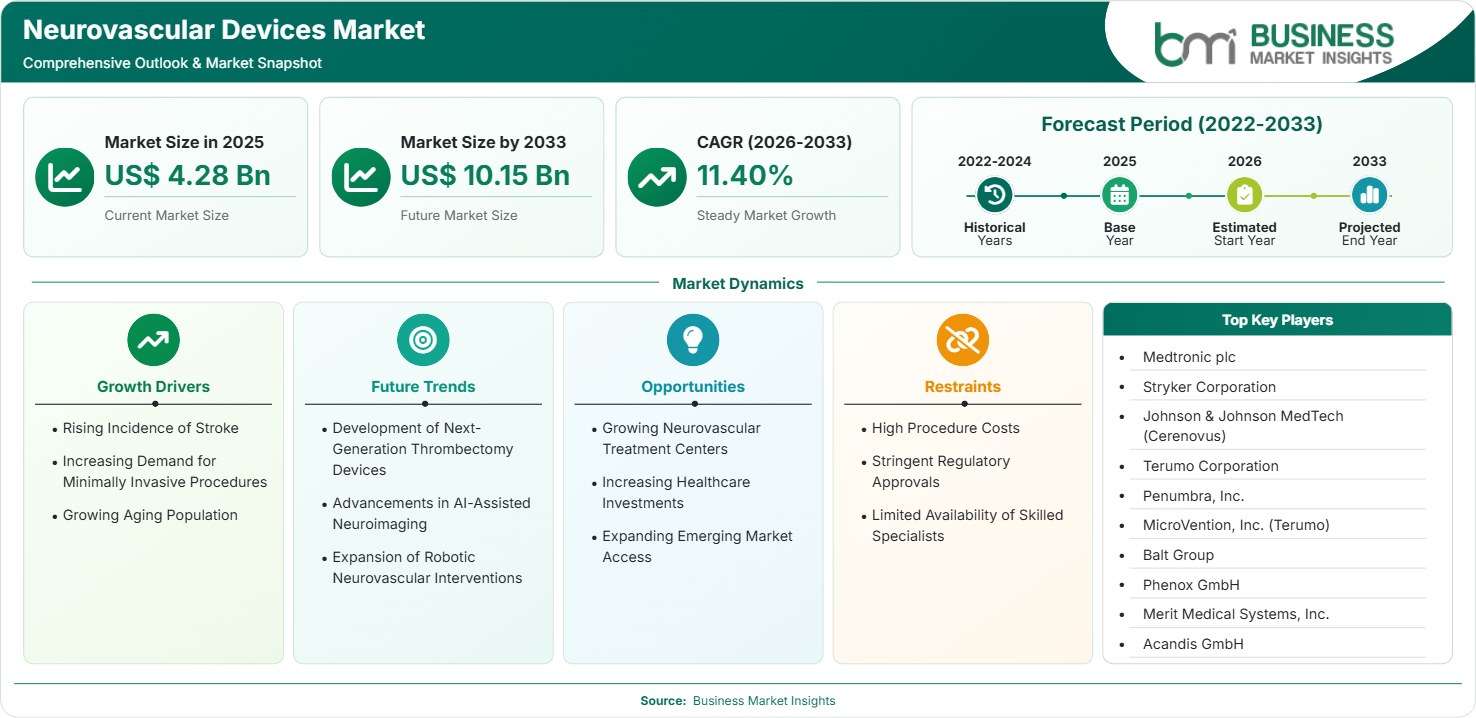
The Neurovascular Devices Market size was valued at US$ 4.28 Billion in 2025 and is projected to reach US$ 10.15 Billion by 2033, growing at a CAGR of 11.40% during 2026–2033, driven by rising stroke prevalence, minimally invasive procedures, aging populations, and expanding neurovascular care infrastructure.

Report Coverage
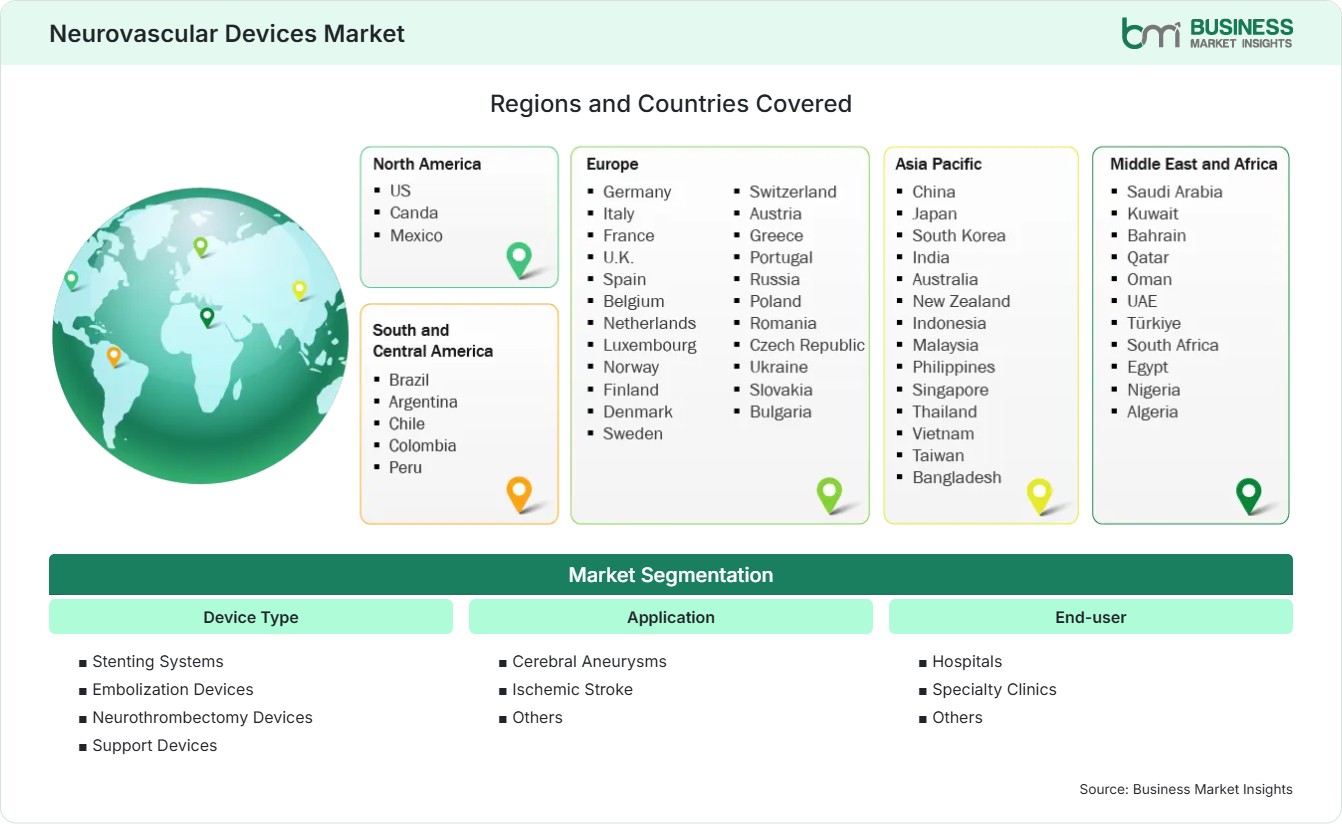
  • Device Type: Stenting Systems, Embolization Devices, Neurothrombectomy Devices, Support Devices
  • Application: Cerebral Aneurysms, Ischemic Stroke, Others
  • End-user: Hospitals, Specialty Clinics, Others
US$ 4.28 Bn Market size in 2025
US$ 10.15 Bn Market Size by 2033
11.40% CAGR, 2026 - 2033
2026-2033 Forecast Period

AI Overview

Neurovascular Devices Market Summary

  • North America Region: North America holds a 38%–42% share in 2025, growing with a CAGR of 10.20%–10.80% due to advanced healthcare systems, stroke intervention adoption, reimbursement support, and clinical innovation. The US market benefits from advanced thrombectomy adoption, specialized centers, and a 10.50%–11.00% CAGR during 2026–2033.
  • Fastest Growing Region: Asia Pacific accounts for a 22%–26% share in 2025, expanding at a CAGR of 12.50%–13.20% supported by increasing neurological disease burden, healthcare investments, improved access to interventions, and rising adoption of advanced neurovascular treatment technologies across emerging economies.
  • Leading Segment: Neurothrombectomy Devices represent a 32%–36% share in 2025, achieving a CAGR of 12.00%–12.80% due to increasing ischemic stroke procedures, improved device efficacy, rapid emergency treatment protocols, and expanding availability of mechanical clot retrieval solutions.
  • High Growth Segment: Embolization Devices demonstrate a 11.80%–12.60% CAGR from 2026–2033, supported by aneurysm management demand, flow diversion innovations, complex vascular intervention capabilities, and increasing preference for minimally invasive neurovascular procedures.
  • Key Market Opportunity: Growing investment in stroke centers, emerging healthcare infrastructure, AI-assisted diagnosis, and next-generation devices creates opportunities for manufacturers to expand access, improve outcomes, and strengthen adoption across developing healthcare markets globally.
  • Major Market Players: Medtronic plc, Stryker Corporation, Johnson & Johnson MedTech, Terumo Corporation, Penumbra, Inc., MicroVention, Inc., Balt Group, Phenox GmbH, Merit Medical Systems, Inc., and Acandis GmbH.
Strategic Insights

Neurovascular Devices Market: Strategic Insights

Neurovascular Devices Market Strategic Framework
FREE PDF
Request your free sample
Request free sample
Stakeholder View

Key Takeaways

  • The value chain is evolving from traditional medical device manufacturing toward integrated neurovascular solutions combining advanced implants, delivery systems, imaging compatibility, and physician training programs. Companies with strong clinical support networks are positioned to capture higher-value opportunities.
  • Ischemic stroke management remains a major growth avenue as hospitals increasingly adopt mechanical thrombectomy workflows. Device manufacturers focusing on faster deployment, improved navigation capabilities, and broader anatomical compatibility can address expanding clinical requirements.
  • Innovation is shifting toward next-generation flow diverters, aspiration technologies, miniaturized delivery systems, and AI-supported procedural planning. Research investments are increasingly focused on improving safety profiles and expanding treatment options for complex vascular conditions.
  • Asia Pacific offers a compelling expansion opportunity due to rising neurological disease awareness, healthcare infrastructure development, and increasing availability of specialized intervention centers. Local partnerships and distribution networks are becoming essential for market penetration.
  • Strategic acquisitions, technology collaborations, and portfolio expansion activities are shaping competitive positioning. Established medical technology companies are strengthening neurovascular portfolios through partnerships with specialized innovators developing advanced intervention technologies.
Geographic Outlook

Neurovascular Devices Market Regional Highlights

North America Neurovascular Devices Market

North America represents a leading regional market, accounting for a 38%–42% share in 2025 and expanding at a CAGR of 10.20%–10.80% during 2026–2033. Strong healthcare infrastructure, high adoption of advanced stroke intervention procedures, and established reimbursement systems support regional expansion. The Neurovascular Devices Market share remains concentrated in the US due to specialized neurological centers, clinical research capabilities, and strong presence of global device manufacturers.

  • The US dominates regional demand through advanced stroke networks, high procedural volumes, and widespread adoption of mechanical thrombectomy systems in tertiary hospitals and specialized neurovascular centers.
  • Canada contributes through improving neurological care infrastructure, government-supported healthcare investments, and increasing availability of minimally invasive treatment options for cerebrovascular disorders.
  • Rising clinical research activities and regulatory approvals for innovative devices are supporting faster adoption of advanced embolization and stenting technologies across North American healthcare facilities.
  • Increasing collaboration between hospitals, academic institutions, and device manufacturers is strengthening physician training programs and improving procedural outcomes for complex neurovascular interventions.

US Neurovascular Devices Market

The US accounts for a 34%–38% share of the North American market in 2025 and grows at a CAGR of 10.50%–11.00% through 2033. The country benefits from advanced healthcare infrastructure, high stroke treatment capacity, and strong adoption of innovative devices. Favorable reimbursement policies and extensive clinical expertise continue supporting market expansion. The Neurovascular Devices Market growth in the US is reinforced by increasing demand for emergency stroke interventions and minimally invasive neurological procedures.

  • The presence of comprehensive stroke centers enables rapid adoption of thrombectomy devices and advanced endovascular treatment protocols across major healthcare networks.
  • Leading medical technology companies maintain strong commercial operations in the US, supporting product launches, physician education, and clinical adoption of new neurovascular solutions.
  • Increasing investment in artificial intelligence-assisted imaging and procedural guidance technologies is enhancing treatment decision-making and improving intervention efficiency.

Europe Neurovascular Devices Market

Europe holds a 27%–31% share in 2025 and expands at a CAGR of 10.70%–11.30% from 2026–2033. Germany, the UK, France, and Italy represent major markets due to developed healthcare systems, increasing stroke management initiatives, and growing adoption of minimally invasive procedures. The region emphasizes clinical quality, regulatory compliance, and improved access to advanced neurovascular therapies. Germany demonstrates strong adoption, while emerging Eastern European markets provide additional expansion opportunities.

  • Germany leads European demand through advanced hospital infrastructure, strong medical technology adoption, and extensive availability of specialized neurovascular intervention centers.
  • The UK market benefits from national stroke care initiatives, improved emergency treatment pathways, and increasing implementation of mechanical thrombectomy programs.
  • France and Italy are expanding adoption through healthcare modernization efforts, rising neurological disease awareness, and increased investment in specialized treatment facilities.
  • European manufacturers and research institutions continue developing innovative catheter systems, embolization technologies, and advanced delivery mechanisms for complex procedures.

Asia Pacific Neurovascular Devices Market

Asia Pacific represents a 22%–26% share in 2025 and records the fastest growth with a CAGR of 12.50%–13.20% during 2026–2033. Increasing stroke incidence, healthcare infrastructure expansion, and rising access to advanced neurological procedures are supporting regional development. China, Japan, India, and South Korea are major contributors. The market share is expanding as governments and private healthcare providers invest in specialized stroke centers and advanced intervention capabilities.

  • China is experiencing rapid adoption due to increasing neurological disease burden, expanding hospital capabilities, and domestic investments in advanced medical device manufacturing.
  • Japan maintains strong demand through an aging population, advanced healthcare systems, and early adoption of innovative minimally invasive neurovascular procedures.
  • India represents a high-growth opportunity due to improving healthcare access, rising awareness of stroke treatments, and expansion of specialized neurological hospitals.
  • South Korea is strengthening market development through advanced medical technology adoption, research collaborations, and increasing availability of specialized intervention centers.

Rest of World Neurovascular Devices Market

Rest of World accounts for a 7%–10% share in 2025 and grows at a CAGR of 11.80%–12.40% through 2033. Latin America, the Middle East, and Africa are gradually improving neurovascular treatment access through healthcare investments and infrastructure upgrades. Brazil, Mexico, Saudi Arabia, and the UAE are emerging markets with increasing demand for advanced neurological interventions. Growing awareness of stroke treatment options supports future expansion.

  • Brazil and Mexico are improving adoption through healthcare modernization programs, increasing specialist availability, and expanded access to advanced neurological procedures.
  • Middle Eastern countries are investing in specialized hospitals and advanced treatment facilities to strengthen neurological care capabilities.
  • Saudi Arabia and the UAE are developing advanced healthcare ecosystems through government-led investments and international healthcare partnerships.
  • African markets show long-term potential as healthcare infrastructure improves and awareness of stroke management solutions increases.
Global Market Geography
FREE PDF
Request your free sample
Request free sample
Segment Analysis

Neurovascular Devices Market Segmentation

Device Type

Device Type segmentation represents the core structure of the Neurovascular Devices Market, with advanced intervention technologies driving adoption across hospitals and specialty clinics. This segment accounted for a 55%–59% share in 2025 and is expected to grow at a CAGR of 11.80%–12.50% between 2026–2033. Increasing procedure volumes, technological innovation, and improved clinical outcomes are strengthening demand for specialized neurovascular devices.

  • Stenting Systems: Stenting systems support treatment of complex vascular conditions by maintaining vessel patency. Adoption is increasing due to improved designs, enhanced flexibility, and compatibility with challenging anatomical structures.
  • Embolization Devices: Embolization devices enable minimally invasive management of aneurysms and vascular abnormalities. Demand is supported by technological improvements, precision delivery systems, and expanding neurointerventional expertise.
  • Neurothrombectomy Devices: Neurothrombectomy devices are gaining momentum through increasing ischemic stroke interventions. Improved clot retrieval efficiency, faster deployment, and expanded treatment windows are supporting widespread clinical adoption.
  • Support Devices: Support devices improve procedural navigation and safety during interventions. Catheters, guidewires, and related accessories are benefiting from increasing complexity of neurovascular procedures.

Application

Application segmentation highlights the diverse clinical utilization of neurovascular technologies across cerebrovascular disorders. This segment represented a 35%–39% share in 2025 and is projected to grow at a CAGR of 11.20%–11.90% between 2026–2033. The Neurovascular Devices Market scope continues expanding as healthcare providers improve diagnosis, intervention capabilities, and treatment accessibility for neurological conditions.

  • Cerebral Aneurysms: Cerebral aneurysm treatment relies on advanced embolization and flow diversion technologies. Increasing screening awareness and improved intervention methods are driving demand among specialized neurological centers.
  • Ischemic Stroke: Ischemic stroke applications represent a major area of adoption due to increasing thrombectomy procedures. Hospitals are investing in advanced devices to improve emergency treatment outcomes.
  • Others: Other applications include arteriovenous malformations and complex vascular disorders. Expanding clinical research is supporting broader use of neurovascular intervention technologies.

End-user

End-user segmentation reflects increasing adoption across healthcare facilities offering specialized neurological procedures. This segment accounted for a 40%–44% share in 2025 and is estimated to expand at a CAGR of 10.90%–11.70% through 2033. Hospitals remain dominant due to advanced infrastructure, while specialty clinics and emerging facilities contribute to broader treatment accessibility.

  • Hospitals: Hospitals represent the primary adoption base due to comprehensive stroke centers, advanced imaging infrastructure, and availability of trained neurointerventional specialists.
  • Specialty Clinics: Specialty clinics are expanding utilization through focused neurological care, outpatient procedures, and increasing access to specialized intervention services.
  • Others: Other end-users include ambulatory facilities and healthcare institutions adopting neurovascular solutions for specialized treatment requirements.
Market Forces

Neurovascular Devices Market Dynamics

Key Market Drivers

Rising Incidence of Stroke

The rising burden of strokes around the globe is among the foremost factors that are fueling developments in interventional techniques, owing to the fact that ischemic stroke is a leading cause of disabilities globally. According to the World Health Organization, stroke is one of the most prevalent causes of death and permanent neurological disabilities, thereby escalating the need for quick solutions to such problems. The rise in use of mechanical thrombectomy and embolization procedures is contributing to the Neurovascular Devices Market growth within hospitals.

Increasing Demand for Minimally Invasive Procedures

Minimally invasive neurovascular techniques have been favored because they offer shorter recovery periods, lesser procedural trauma, and better results than conventional surgery techniques. Growing awareness of the endovascular techniques among the doctors is contributing to the adoption of the procedure in specialized healthcare facilities. The Neurovascular Devices Market trends is driven by constant innovation in the field of products in terms of navigation, flexibility, and safety.

Growing Aging Population

The demographics of aging have been driving a rise in the occurrence of cerebrovascular diseases, thereby ensuring consistent demand for technologies that address neurovascular issues. The medical device manufacturers have introduced devices that facilitate safer procedures for such complicated patients. The rising demand from aging individuals is driving investment decisions related to healthcare.

Key Market Opportunities

Growing Neurovascular Treatment Centers

The development of neurovascular treatment facilities generates a wide scope of business opportunities for medical device companies due to higher accessibility of specialized services. Healthcare systems are establishing extensive stroke networks with imaging facilities, intervention laboratories, and professionals. Developing economies are building facilities and infrastructure for neurological treatment in order to narrow the treatment gap and enhance emergency response capacity. The Neurovascular Devices Market Forecasts state that the growing establishment of specialized treatment centers will generate new commercialization opportunities.

Increasing Healthcare Investments

Growing healthcare expenditure and modernization efforts are prompting hospitals to improve their neurological interventions. Governments and private healthcare institutions are investing more into advanced medical devices and technologies, especially concerning the treatment of strokes and minimally invasive surgeries. Greater investment in health care infrastructures, research projects, and training will create a conducive environment for growth within the market. Medical device makers may take advantage of this trend by coming up with affordable technology suited for various environments.

Expanding Emerging Market Access

Growth is evident within emerging markets because of advancements in healthcare facilities, heightened neurological disease awareness, and greater access to specialized medical services. Countries such as those in the Asia-Pacific, Latin American, and Middle Eastern regions are increasing access to more advanced interventions via healthcare reforms and collaborations with other nations. Companies are now targeting regions that offer distribution channels, physician training, and local product strategies.

Market Restraints and Challenges

High Procedure Costs

Factor: Advanced neurovascular procedures require specialized devices, imaging systems, trained specialists, and dedicated facilities, increasing overall treatment expenses. Impact: High procedural costs can restrict accessibility in price-sensitive healthcare markets and limit adoption among hospitals with constrained budgets. Expensive technologies, including advanced thrombectomy systems and flow diversion devices, require significant capital investment and ongoing training. Although clinical benefits support adoption in developed regions, cost considerations remain a challenge in emerging economies.

Stringent Regulatory Approvals

Factor: Neurovascular devices require extensive clinical validation, safety assessments, and regulatory compliance before commercialization due to their critical medical applications. Impact: Lengthy approval timelines can delay product launches and increase research and development expenses for manufacturers. Regulatory authorities require strong evidence demonstrating device safety, effectiveness, and reliability. Companies must invest heavily in clinical trials, documentation, and quality management systems to meet evolving requirements.

Company Analysis

Competitive Landscape

The Neurovascular Devices Market analysis highlights a competitive environment driven by established medical technology companies, specialized neurointervention manufacturers, and innovators focused on advanced treatment solutions. Leading players compete through product innovation, clinical evidence generation, strategic partnerships, and geographic expansion.

Company Name

Overview

Products and Services relevant to this market

Medtronic plc

Global medical technology company offering advanced neurological intervention solutions and extensive healthcare device portfolios.

Provides neurovascular stents, embolization products, thrombectomy solutions, and intervention technologies for stroke and aneurysm treatment.

Stryker Corporation

Medical technology leader specializing in surgical and neurovascular products with global healthcare operations.

Offers thrombectomy devices, aneurysm treatment solutions, and neurointerventional systems for cerebrovascular procedures.

Johnson & Johnson MedTech (Cerenovus)

Healthcare technology division focused on neurological intervention and stroke treatment innovations.

Develops embolization devices, thrombectomy technologies, and neurovascular solutions supporting minimally invasive procedures.

Terumo Corporation

Japanese medical technology company providing advanced catheter-based intervention products worldwide.

Supplies neurovascular catheters, coils, embolization systems, and procedural support devices.

Penumbra, Inc.

Specialized medical device company focused on innovative minimally invasive therapies.

Provides aspiration systems, thrombectomy devices, and neurovascular intervention technologies for stroke treatment.

MicroVention, Inc. (Terumo)

Neurovascular technology specialist developing advanced treatment solutions for complex conditions.

Offers flow diversion devices, coils, stents, and embolization technologies for aneurysm management.

Balt Group

European neurovascular company specializing in interventional technologies.

Manufactures thrombectomy devices, embolization solutions, and delivery systems for neurovascular procedures.

Phenox GmbH

German medical device company focused on innovative neurointervention solutions.

Develops clot retrieval devices, stents, and treatment systems for ischemic stroke management.

Merit Medical Systems, Inc.

Global healthcare technology company producing specialized intervention products.

Provides catheter-based solutions, microcatheters, and accessories supporting neurovascular procedures.

Acandis GmbH

German company specializing in minimally invasive neurovascular technologies.

Manufactures thrombectomy devices, stent retrievers, and advanced systems for stroke intervention.

Trust & Transparency

Research Methodology

The market analysis combines proprietary research with secondary data from government agencies, company disclosures, regulatory filings, industry databases and expert interviews. Market estimates are validated through data triangulation, cross-market benchmarking and analyst review.

View Full Research Methodology

Questions Answered

Frequently Asked Questions

Why are companies investing in next-generation neurovascular technologies?

Companies are investing in next-generation technologies to address increasing neurological disease burden, improve procedural outcomes, expand minimally invasive treatment options, and strengthen competitive positioning through differentiated product portfolios.

How does the Neurovascular Devices Market Report evaluate opportunities?

The report assesses industry growth factors, technological developments, regional opportunities, competitive strategies, segmentation dynamics, and emerging applications influencing future healthcare investments.

What role do hospitals play in neurovascular device adoption?

Hospitals remain the primary users due to their advanced imaging infrastructure, emergency stroke capabilities, and availability of trained specialists. Comprehensive stroke centers increasingly invest in advanced devices to improve treatment speed and procedural success rates.

How are technological advancements changing neurovascular treatment procedures?

Innovations in thrombectomy systems, flow diversion devices, embolization technologies, and catheter designs are improving procedural precision and patient outcomes. Artificial intelligence-assisted imaging and enhanced navigation systems are also supporting faster clinical decision-making during complex interventions.

What factors are influencing adoption of neurovascular devices across emerging healthcare markets?

Increasing investment in healthcare infrastructure, expansion of specialized stroke centers, improved physician training, and rising awareness of neurological disorders are accelerating adoption.

Access the Full Neurovascular Devices Market Report

Get segment-level forecasts, regional estimates, competitive benchmarking, company profiles and downloadable Excel datasets.

Access the full Neurovascular Devices Market Report
350 pages PDF & Excel | 2026-08-25
Similar Research

Related Market Reports