
Neurovascular Embolectomy Devices Market Outlook: Size, Share, Trends, Growth Analysis, Competitive Landscape & Forecast, 2026-2033

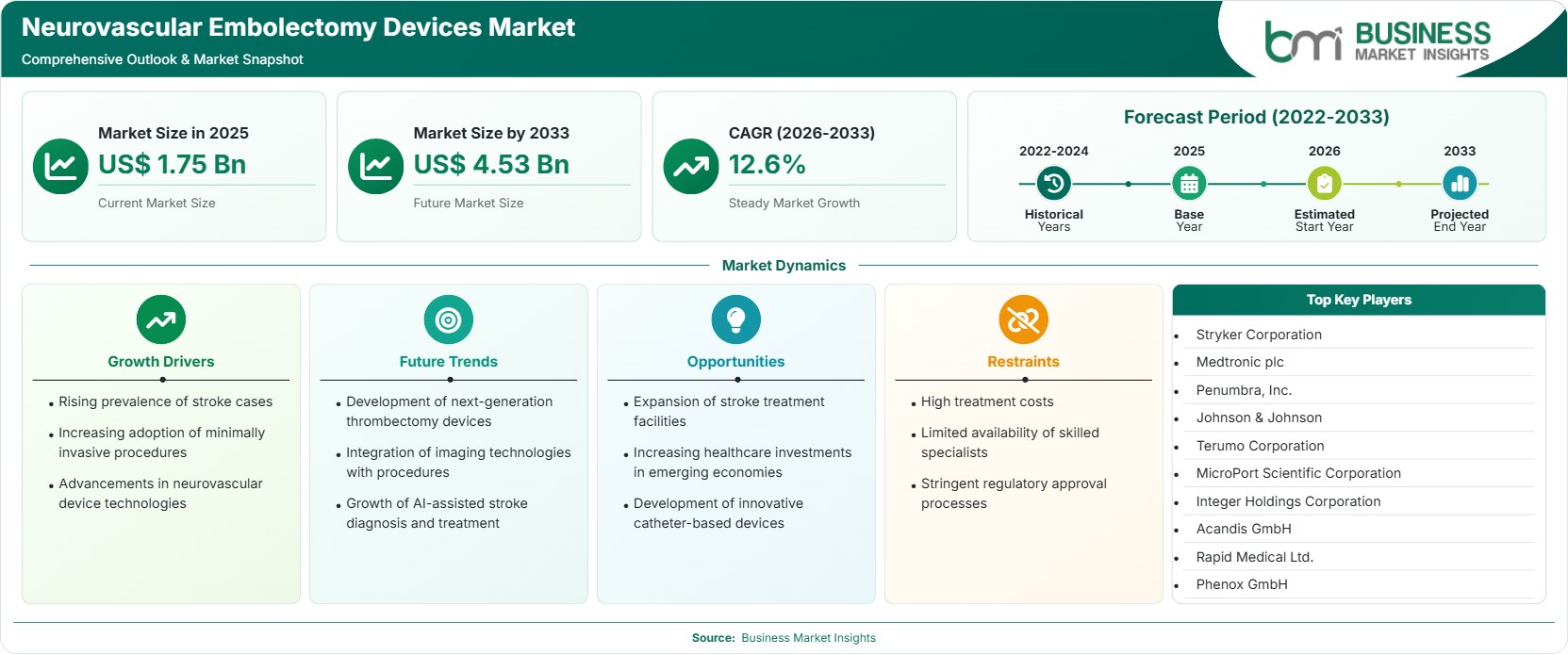
The Neurovascular Embolectomy Devices Market size was valued at US$ 1.75 Billion in 2025 and is projected to reach US$ 4.53 Billion by 2033, growing at a CAGR of 12.6% during 2026–2033, driven by rising stroke incidence, increasing adoption of minimally invasive procedures, and continuous advancements in neurovascular intervention technologies. Expanding stroke treatment infrastructure and innovative catheter-based device development are creating substantial market opportunities.

Report Coverage
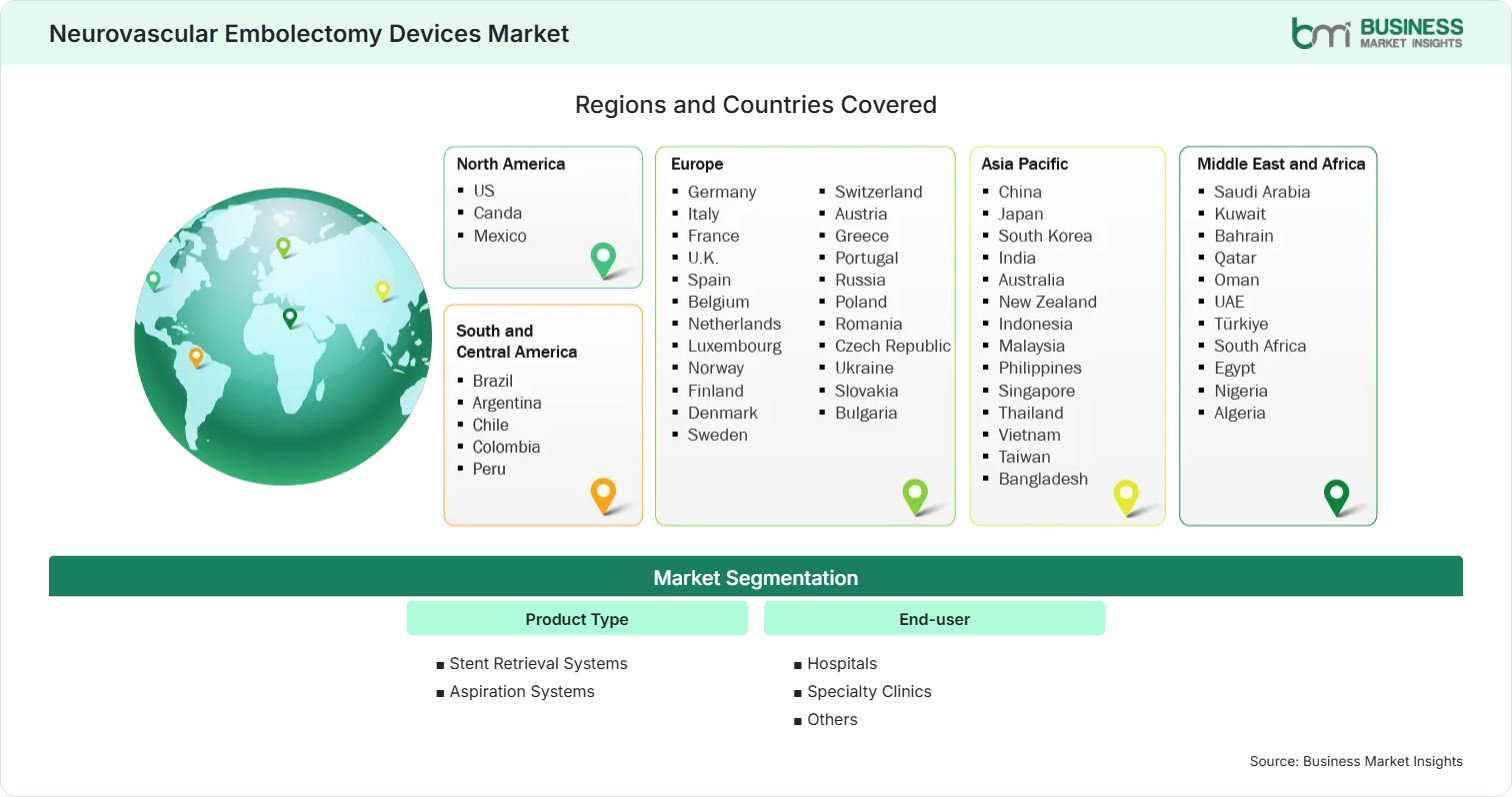
  • Product Type: Stent Retrieval Systems, Aspiration Systems
  • End-user: Hospitals, Specialty Clinics, Others
US$ 1.75 Bn Market size in 2025
US$ 4.53 Bn Market Size by 2033
12.6% CAGR, 2026 - 2033
2026-2033 Forecast Period

01 AI Overview

Neurovascular Embolectomy Devices Market Summary

  • North America Region: North America holds market share 41%–44% in 2025, growing with a CAGR of 11.9%–12.4%, driven by comprehensive stroke care infrastructure, favorable reimbursement, and widespread adoption of advanced thrombectomy procedures. The US market grows at 12.1%–12.6% supported by expanding comprehensive stroke centers.
  • Fastest Growing Region: Asia Pacific holds market share 21%–24% in 2025, expanding at a CAGR of 13.9%–14.5%, supported by improving neurological healthcare infrastructure, increasing stroke awareness, and rising healthcare expenditure across emerging economies.
  • Leading Segment: Stent Retrieval Systems dominate with share 61%–64% in 2025, growing at CAGR 12.8%–13.3%, driven by high clinical success rates, rapid clot removal capability, and increasing physician preference during acute ischemic stroke treatment.
  • High Growth Segment: Hospitals account for share 69%–72% in 2025, growing at CAGR 13.1%–13.7%, driven by expanding comprehensive stroke centers, availability of neurointerventional specialists, and increasing emergency thrombectomy procedures.
  • Key Market Opportunity: Expansion of stroke treatment facilities, increasing healthcare investments across emerging economies, and development of innovative catheter-based neurovascular devices continue creating significant long-term commercial opportunities.
  • Major Market Players: Stryker Corporation, Medtronic plc, Penumbra, Inc., Johnson & Johnson, Terumo Corporation, MicroPort Scientific Corporation, Integer Holdings Corporation, Acandis GmbH, Rapid Medical Ltd., Phenox GmbH.
02 Strategic Insights

Neurovascular Embolectomy Devices Market: Strategic Insights

Neurovascular Embolectomy Devices Market Strategic Framework
FREE PDF
Request your free sample
Request free sample
03 Stakeholder View

Key Takeaways

  • The market ecosystem is becoming increasingly integrated as device manufacturers collaborate with hospitals, neuroscience centers, imaging technology providers, and healthcare systems to improve stroke treatment accessibility and clinical outcomes.
  • Growth opportunities remain strongest in stent retrieval systems and comprehensive stroke centers as mechanical thrombectomy becomes the standard of care for acute ischemic stroke management.
  • Innovation is focused on next-generation aspiration catheters, enhanced stent retrievers, flexible navigation systems, AI-assisted imaging, and improved procedural efficiency to maximize successful vessel recanalization.
  • Asia Pacific presents the strongest investment opportunity due to expanding stroke care infrastructure, increasing healthcare expenditure, improving physician training, and growing government initiatives for neurological disease management.
  • Strategic acquisitions, clinical collaborations, and regulatory approvals continue strengthening competitive positioning as companies expand neurovascular intervention portfolios and geographic market presence.
  • Increasing awareness regarding early stroke intervention and improvements in emergency care networks are expected to enhance treatment rates and support sustained market expansion.
04 Geographic Outlook

Neurovascular Embolectomy Devices Market Regional Highlights

North America Neurovascular Embolectomy Devices Market

North America accounts for 41%–44% share in 2025, expanding at a CAGR of 11.9%–12.4%. The Neurovascular Embolectomy Devices Market share remains the highest globally due to advanced stroke treatment infrastructure, favorable reimbursement policies, high adoption of mechanical thrombectomy procedures, and continuous technological innovation across major healthcare institutions.

  • Comprehensive stroke centers across the United States and Canada continue expanding access to mechanical thrombectomy through advanced neurointerventional capabilities and specialized emergency care networks.
  • Strong reimbursement frameworks encourage adoption of premium neurovascular devices while supporting rapid implementation of advanced stroke intervention technologies.
  • Continuous investment in clinical research, physician training, and next-generation thrombectomy technologies strengthens regional leadership in neurovascular intervention.
  • Growing awareness regarding early stroke diagnosis and treatment continues increasing patient eligibility for mechanical thrombectomy procedures.

US Neurovascular Embolectomy Devices Market

The US holds 33%–36% share in 2025, growing at a CAGR of 12.1%–12.6%. The Neurovascular Embolectomy Devices Market growth is supported by expanding comprehensive stroke centers, increasing adoption of minimally invasive neurovascular procedures, and continuous investment in advanced neurological care.

  • High incidence of acute ischemic stroke continues driving demand for advanced mechanical thrombectomy devices across major hospitals and specialized neuroscience centers.
  • Government initiatives supporting rapid stroke intervention and emergency medical response continue improving patient access to advanced neurovascular treatments.
  • Strong collaboration between medical device manufacturers and healthcare providers accelerates adoption of innovative thrombectomy technologies.
  • Continuous expansion of physician education and neurointerventional training programs supports increasing procedural volumes across healthcare facilities.

Europe Neurovascular Embolectomy Devices Market

Europe captures 28%–31% share in 2025, expanding at a CAGR of 11.6%–12.1%. The market share is supported by established healthcare systems, favorable clinical guidelines, and increasing adoption of mechanical thrombectomy across major neurological centers. Germany, France, and the UK lead the regional market, while Eastern Europe records the fastest growth with a CAGR of 12.8%–13.4% due to expanding stroke treatment infrastructure.

  • Germany, France, and the United Kingdom continue strengthening stroke care networks through investments in comprehensive neuroscience centers and advanced neurointerventional technologies.
  • Increasing adoption of evidence-based clinical guidelines is improving patient access to mechanical thrombectomy procedures across public healthcare systems.
  • European manufacturers continue investing in catheter innovation, aspiration technologies, and physician education programs to improve procedural success rates.
  • Eastern European countries are expanding healthcare infrastructure and emergency stroke services to improve access to advanced neurovascular interventions.

Asia Pacific Neurovascular Embolectomy Devices Market

Asia Pacific accounts for 21%–24% share in 2025 and is projected to grow at a CAGR of 13.9%–14.5%. The market growth is driven by rising stroke prevalence, improving healthcare infrastructure, increasing government healthcare expenditure, and expanding access to specialized neurological treatment across China, India, Japan, and South Korea.

  • China continues investing heavily in comprehensive stroke centers and advanced neurovascular intervention technologies to improve nationwide stroke management.
  • India records the fastest regional growth with a CAGR of 14.6%–15.2%, supported by expanding healthcare infrastructure, increasing neurologist availability, and greater investment in tertiary care hospitals.
  • Japan remains a major adopter of advanced thrombectomy technologies due to its aging population and highly developed neurological healthcare system.
  • Increasing physician training, public awareness campaigns, and government healthcare initiatives continue supporting regional market expansion.

Rest of World Neurovascular Embolectomy Devices Market

Rest of World represents 7%–9% share in 2025, growing at a CAGR of 12.0%–12.5%. South & Central America and the Middle East & Africa continue expanding steadily due to improving neurological healthcare infrastructure, increasing stroke awareness, and greater investment in specialized medical services.

Brazil leads adoption across South America, while Saudi Arabia and the United Arab Emirates continue expanding advanced stroke treatment capabilities through significant healthcare modernization initiatives.

  • Middle Eastern countries continue investing in tertiary healthcare facilities equipped with advanced neurointerventional technologies and comprehensive stroke management programs.
  • Brazil remains the leading South American market due to increasing adoption of minimally invasive neurological procedures and improving hospital infrastructure.
  • Expanding emergency healthcare services and physician training initiatives are improving patient access to mechanical thrombectomy across developing regions.
  • Growing public and private healthcare investments continue supporting long-term adoption of advanced neurovascular embolectomy devices across emerging markets.
Global Market Geography
FREE PDF
Request your free sample
Request free sample
05 Segment Analysis

Neurovascular Embolectomy Devices Market Segmentation

Product Type

The product type segment is led by Stent Retrieval Systems, accounting for 61%–64% market share in 2025 and projected to grow at a CAGR of 12.8%–13.3% during the forecast period. Their superior clot retrieval efficiency, high procedural success rates, and strong clinical evidence continue driving widespread adoption across comprehensive stroke centers. The Neurovascular Embolectomy Devices Market scope continues expanding with ongoing advancements in thrombectomy technologies and minimally invasive neurovascular interventions.

  • Stent Retrieval Systems: Stent retrieval systems remain the preferred treatment option for acute ischemic stroke owing to high recanalization rates, improved clinical outcomes, and compatibility with advanced neurointerventional procedures.
  • Aspiration Systems: Aspiration systems continue witnessing rapid adoption due to technological improvements, simplified clot extraction procedures, reduced procedure time, and increasing physician preference during mechanical thrombectomy.

End-user

The end-user segment is dominated by Hospitals, accounting for 69%–72% share in 2025 while registering a CAGR of 13.1%–13.7% during the forecast period. Growing establishment of comprehensive stroke centers, increasing emergency neurovascular procedures, and availability of specialized neurological teams continue strengthening segment leadership.

  • Hospitals: Hospitals remain the primary treatment centers for acute ischemic stroke owing to advanced imaging facilities, experienced neurointerventional specialists, and round-the-clock emergency thrombectomy capabilities.
  • Specialty Clinics: Specialty clinics continue expanding their role by offering advanced neurovascular diagnostics, follow-up neurological care, and minimally invasive stroke intervention procedures for selected patient populations.
06 Market Forces

Neurovascular Embolectomy Devices Market Dynamics

Key Market Drivers

Rising Prevalence of Stroke Cases

The increasing global burden of ischemic stroke continues to drive demand for neurovascular embolectomy devices. According to the World Stroke Organization, stroke remains one of the leading causes of mortality and long-term disability worldwide, with ischemic stroke accounting for the majority of reported cases. Market growth is supported by expanding patient eligibility for mechanical thrombectomy and greater awareness regarding rapid stroke intervention. Governments and healthcare providers continue investing in comprehensive stroke care networks to improve patient outcomes and reduce long-term healthcare costs.

Increasing Adoption of Minimally Invasive Procedures

Healthcare providers are increasingly adopting minimally invasive neurovascular procedures due to reduced procedural complications, faster patient recovery, shorter hospital stays, and improved clinical outcomes. Mechanical thrombectomy has become the preferred treatment option for eligible acute ischemic stroke patients because of its proven effectiveness in restoring cerebral blood flow. This shift reflects evolving Neurovascular Embolectomy Devices market trends toward minimally invasive stroke treatment. Growing physician confidence, improved clinical guidelines, and wider availability of advanced neurointerventional technologies continue supporting procedural adoption across developed and emerging healthcare systems.

Advancements in Neurovascular Device Technologies

Continuous innovation in stent retrievers, aspiration catheters, guidewires, and imaging technologies is significantly improving procedural efficiency and treatment success. Manufacturers are developing highly flexible, trackable, and precision-engineered devices that enable rapid clot removal while minimizing vascular trauma. Improvements in catheter design, aspiration performance, and imaging integration continue enhancing physician confidence and expanding treatment capabilities across comprehensive stroke centers worldwide.

Key Market Opportunities

Expansion of Stroke Treatment Facilities

The growing establishment of comprehensive stroke centers and specialized neurovascular treatment facilities presents significant opportunities for device manufacturers. Neurovascular Embolectomy Devices Market Forecasts indicate sustained demand as governments continue strengthening emergency stroke care infrastructure. Expansion of specialized neurological centers increases procedural capacity while improving access to advanced mechanical thrombectomy, creating long-term commercial opportunities for manufacturers of neurovascular intervention devices.

Increasing Healthcare Investments in Emerging Economies

Emerging economies continue expanding healthcare expenditure to strengthen neurological care infrastructure and improve access to advanced stroke treatment technologies. Investments in tertiary hospitals, physician training, emergency medical services, and advanced imaging capabilities are supporting greater adoption of neurovascular intervention devices. International healthcare partnerships and favorable government initiatives further encourage market penetration across rapidly developing healthcare systems.

Development of Innovative Catheter-Based Devices

Ongoing research into next-generation catheter-based technologies is creating substantial growth opportunities across the neurovascular intervention market. Manufacturers are developing highly navigable aspiration catheters, enhanced stent retrievers, and integrated delivery systems designed to improve procedural efficiency and patient outcomes. Continuous innovation in materials, device flexibility, and clot retrieval performance is expected to expand treatment capabilities while strengthening competitive differentiation.

Market Restraints and Challenges

High Treatment Costs

Factor: Mechanical thrombectomy procedures require expensive neurovascular devices, advanced imaging equipment, specialized operating facilities, and multidisciplinary medical expertise. Impact: High treatment costs limit accessibility in low- and middle-income countries while placing financial pressure on healthcare systems with constrained reimbursement budgets. Cost considerations may delay technology adoption in smaller hospitals and restrict broader implementation of advanced neurovascular intervention programs despite proven clinical benefits.

Limited Availability of Skilled Specialists

Factor: Successful neurovascular embolectomy procedures require experienced neurointerventional specialists with advanced training in complex endovascular techniques. Impact: The shortage of qualified specialists limits procedural availability, particularly in rural regions and developing countries. Healthcare providers continue facing challenges in expanding stroke intervention services due to lengthy physician training requirements, ultimately affecting patient access and overall market growth.

07 Company Analysis

Competitive Landscape

The neurovascular embolectomy devices market analysis reflects a competitive environment driven by continuous product innovation, strategic acquisitions, clinical evidence generation, and expansion of neurovascular intervention portfolios. Leading manufacturers are investing in advanced thrombectomy technologies, aspiration systems, catheter innovations, and physician training initiatives to strengthen their global market position while improving clinical outcomes for acute ischemic stroke treatment.

Company Name

Overview

Products and Services Relevant to this Market

Stryker Corporation

Global medical technology company specializing in neurovascular, orthopedic, and surgical solutions with a strong international presence.

Stent retrievers, aspiration catheters, neurovascular access systems, thrombectomy devices, and stroke intervention technologies.

Medtronic plc

Leading global healthcare technology company focused on minimally invasive therapies and neurological treatment solutions.

Neurovascular thrombectomy devices, aspiration systems, guide catheters, access devices, and stroke management technologies.

Penumbra, Inc.

Medical device company specializing in neurovascular and peripheral thrombectomy technologies for minimally invasive interventions.

Aspiration thrombectomy systems, aspiration pumps, neurovascular catheters, access devices, and stroke treatment solutions.

Johnson & Johnson

Global healthcare company with advanced medical technology businesses serving multiple surgical and interventional specialties.

Neurovascular intervention devices, catheter technologies, vascular access products, and minimally invasive treatment solutions.

Terumo Corporation

Japanese medical technology company offering cardiovascular and neurovascular intervention products globally.

Microcatheters, guidewires, aspiration catheters, access systems, and neurovascular procedural devices.

MicroPort Scientific Corporation

Medical device manufacturer focused on cardiovascular and neurovascular intervention technologies.

Neurovascular catheters, guidewires, access devices, thrombectomy products, and minimally invasive treatment solutions.

Integer Holdings Corporation

Medical device outsourcing company supporting development and manufacturing of advanced neurovascular technologies.

Components, delivery systems, catheter technologies, and manufacturing solutions for neurovascular device companies.

Acandis GmbH

German medical device company specializing in innovative neurovascular intervention technologies.

Stent retrievers, microcatheters, embolic protection devices, and neurovascular access solutions.

Rapid Medical Ltd.

Developer of advanced neurovascular devices focused on stroke intervention and aneurysm treatment.

Mechanical thrombectomy devices, neurovascular implants, catheter-based systems, and stroke intervention technologies.

Phenox GmbH

European medical technology company specializing in neurovascular thrombectomy and embolization solutions.

Stent retrievers, aspiration technologies, microcatheters, embolization devices, and neurovascular treatment systems.

08 Industry Activity

Recent Developments

June 2026

Penumbra, Inc. announced that the U.S. FDA granted clearance for THUNDERBOLT, the first computer-assisted vacuum thrombectomy (CAVT) platform for the treatment of acute ischemic stroke, expanding its neurovascular embolectomy portfolio.

January 2026

Boston Scientific announced a definitive agreement to acquire Penumbra, Inc., expanding its portfolio of thrombectomy and neurovascular technologies for the treatment of ischemic stroke and other vascular diseases.

October 2025

Terumo Neuro and Geisinger announced a collaboration to advance stroke education and neurovascular innovation in recognition of World Stroke Day 2025, supporting awareness and adoption of minimally invasive stroke treatment technologies.

March 2025

Penumbra, Inc. announced new clinical data for its computer-assisted vacuum thrombectomy (CAVT) technology at the Society of Interventional Radiology (SIR) 2025 meeting, demonstrating improved outcomes and reinforcing its thrombectomy technology portfolio.

10 Trust & Transparency

Research Methodology

The market analysis combines proprietary research with secondary data from government agencies, company disclosures, regulatory filings, industry databases and expert interviews. Market estimates are validated through data triangulation, cross-market benchmarking and analyst review.

View Full Research Methodology

11 Questions Answered

Frequently Asked Questions

What does the Neurovascular Embolectomy Devices Market Report cover?

The market report provides comprehensive insights into market size, segmentation, regional analysis, competitive landscape, technological developments, growth opportunities, and future industry outlook.

What are the major challenges affecting market growth?

High treatment costs, limited availability of skilled neurointerventional specialists, and unequal access to advanced stroke care infrastructure remain the key challenges affecting market expansion.

Which region is expected to grow the fastest?

Asia Pacific is projected to register the highest growth due to increasing healthcare investments, expanding stroke care infrastructure, improving physician training, and rising awareness regarding rapid stroke intervention.

Which product segment dominates the market?

Stent Retrieval Systems account for the largest market share owing to their proven clinical effectiveness, high recanalization success rates, and widespread adoption for acute ischemic stroke treatment.

What factors are driving the Neurovascular Embolectomy Devices Market?

Rising stroke prevalence, increasing adoption of minimally invasive thrombectomy procedures, technological advancements in neurovascular devices, and expanding comprehensive stroke treatment centers are the major market growth drivers.

Access the Full Neurovascular Embolectomy Devices Market Report

Get segment-level forecasts, regional estimates, competitive benchmarking, company profiles and downloadable Excel datasets.

Access the full Neurovascular Embolectomy Devices Market Report
350 pages PDF & Excel | 2026-07-29