
Ophthalmic Surgical Devices Market Outlook: Size, Share, Trends, Growth Analysis, Competitive Landscape & Forecast, 2026-2033

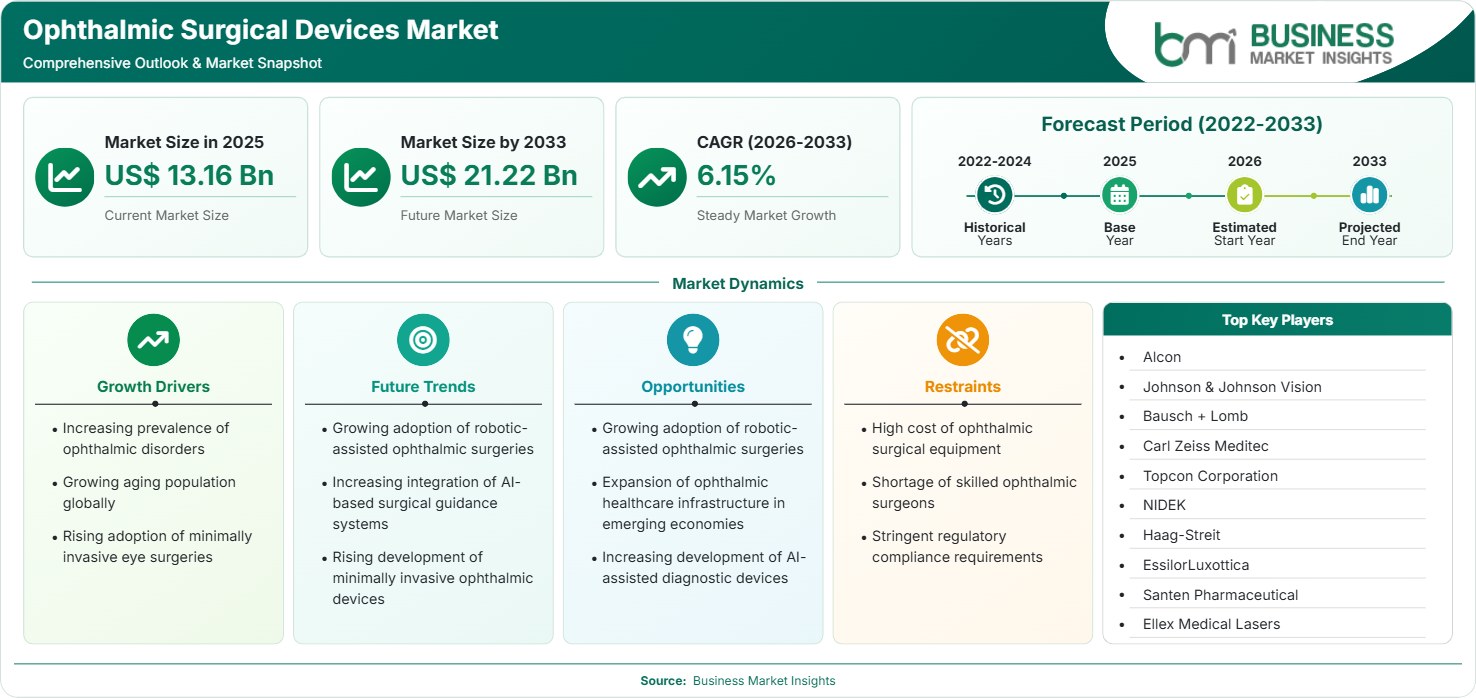
The Ophthalmic Surgical Devices Market size was valued at US$ 13.16 Billion in 2025 and is projected to reach US$ 21.22 Billion by 2033, growing at a CAGR of 6.15% from 2026 to 2033, driven by rising ophthalmic disorders, aging population growth, minimally invasive procedures, healthcare infrastructure expansion, and advanced surgical technology adoption.

Report Coverage
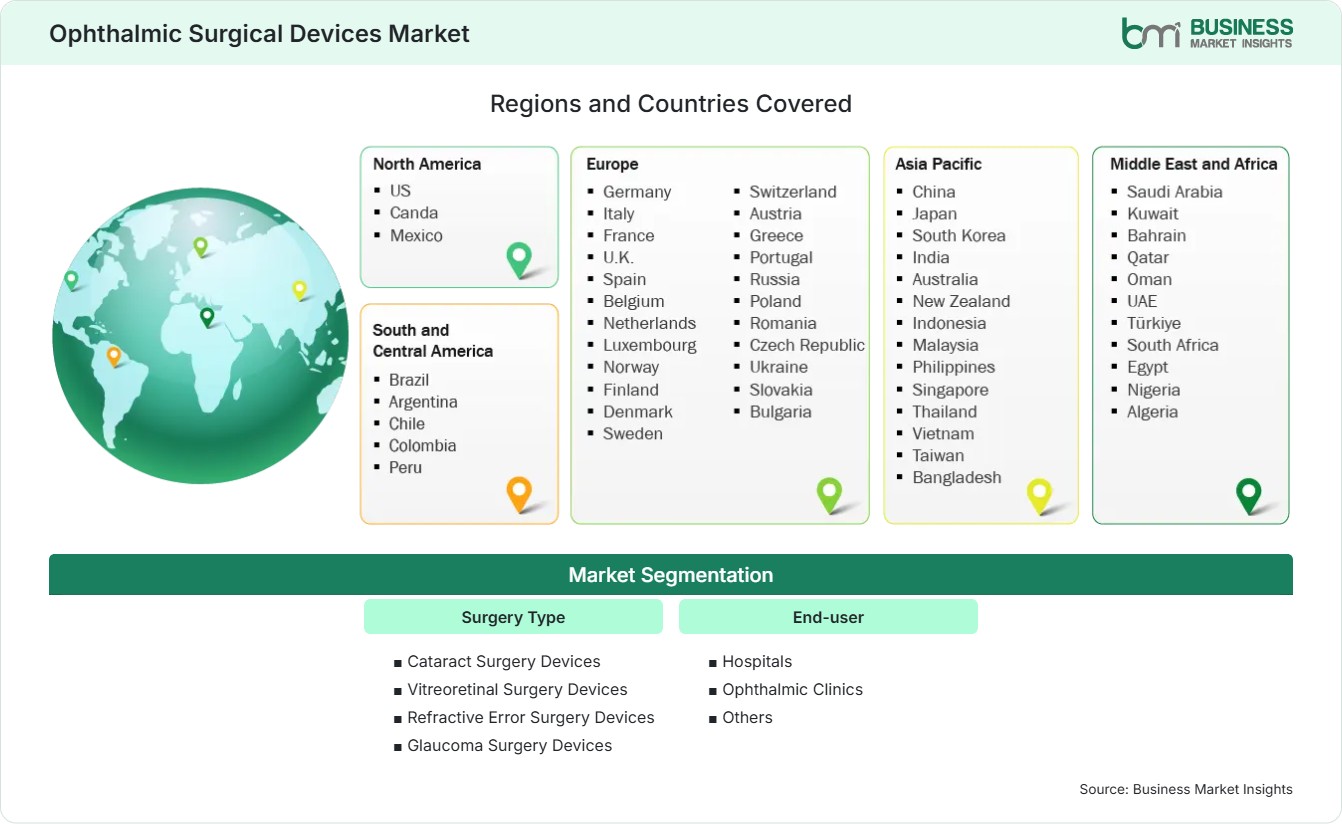
  • Surgery Type: Cataract Surgery Devices, Vitreoretinal Surgery Devices, Refractive Error Surgery Devices, Glaucoma Surgery Devices
  • End-user: Hospitals, Ophthalmic Clinics, Others
US$ 13.16 Bn Market size in 2025
US$ 21.22 Bn Market Size by 2033
6.15% CAGR, 2026 - 2033
2026-2033 Forecast Period

AI Overview

Ophthalmic Surgical Devices Market Summary

  • North America Region: North America holds a market share of 35%–38% in 2025, growing with a CAGR of 5%–7% influenced by advanced healthcare infrastructure, high surgical procedure volumes, technological adoption, and increasing demand for premium ophthalmic solutions. The US market demonstrates steady adoption with a CAGR of 5%–7% during 2026–2033, supported by aging demographics, surgical innovation, and specialty eye care expansion.
  • Fastest Growing Region: Asia Pacific holds a market share of 22%–25% in 2025, expanding with a CAGR of 7%–9% due to improving healthcare access, rising ophthalmic disease burden, increasing investments in eye-care facilities, and growing adoption of advanced surgical equipment.
  • Leading Segment: Cataract Surgery Devices hold a market share of 45%–48% in 2025, growing with a CAGR of 6%–8% due to increasing cataract prevalence, aging populations, improved surgical outcomes, and widespread adoption of intraocular lens procedures.
  • High Growth Segment: Glaucoma Surgery Devices hold a market share of 12%–15% in 2025, advancing with a CAGR of 7%–9% due to rising glaucoma cases, minimally invasive glaucoma surgery adoption, and increasing focus on early disease management.
  • Key Market Opportunity: Robotic-assisted ophthalmic surgery, AI-assisted diagnostic integration, and expanding eye-care infrastructure in emerging economies are creating opportunities for advanced surgical device manufacturers.
  • Major Market Players: Alcon, Johnson & Johnson Vision, Bausch + Lomb, Carl Zeiss Meditec, Topcon Corporation, NIDEK, Haag-Streit, EssilorLuxottica, Santen Pharmaceutical, and Ellex Medical Lasers.
Strategic Insights

Ophthalmic Surgical Devices Market: Strategic Insights

Ophthalmic Surgical Devices Market Strategic Framework
FREE PDF
Request your free sample
Request free sample
Stakeholder View

Key Takeaways

  • Ophthalmic surgical ecosystems are shifting toward precision technologies that improve surgical accuracy, visualization, and patient outcomes.
  • Cataract surgery remains the largest application area, while glaucoma and retinal procedures provide additional growth opportunities through advanced minimally invasive techniques.
  • Innovation priorities include AI-assisted imaging, robotic surgical support, laser-based procedures, and improved intraoperative visualization technologies.
  • Asia Pacific presents strong investment opportunities due to rising healthcare access, increasing disease prevalence, and expansion of specialized eye-care centers.
  • Strategic partnerships and acquisitions are increasing as medical device companies strengthen ophthalmology portfolios and expand global market presence.
  • Emerging economies are becoming important growth centers due to healthcare infrastructure improvements and increasing availability of advanced surgical technologies.
Geographic Outlook

Ophthalmic Surgical Devices Market Regional Highlights

North America Ophthalmic Surgical Devices Market

North America accounted for a 35%–38% share in 2025 and is projected to register a CAGR of 5%–7% from 2026–2033. The region maintains leadership due to established ophthalmology infrastructure, advanced surgical capabilities, and high adoption of premium devices. The Ophthalmic Surgical Devices Market share reflects strong demand from hospitals, specialty clinics, and ambulatory surgical centers. The United States remains the primary contributor due to healthcare spending and technology adoption.

  • The United States is expanding ophthalmic equipment adoption through advanced eye-care facilities, increasing surgical procedure volumes, and growing demand for precision-based diagnostic and treatment solutions. Healthcare providers are investing in advanced technologies to improve patient outcomes and surgical efficiency.
  • Canada is supporting ophthalmic technology growth through healthcare modernization, improved specialty care services, and increased adoption of advanced vision-care equipment across medical facilities.
  • Medical device companies are investing in innovative surgical platforms, advanced imaging technologies, and next-generation ophthalmic solutions to enhance accuracy and treatment capabilities.
  • Hospitals are adopting advanced ophthalmic equipment to improve surgical precision, reduce procedure times, and enhance overall clinical efficiency.

US Ophthalmic Surgical Devices Market

The United States represented a 30%–33% share in 2025 and is expected to achieve a CAGR of 5%–7% between 2026–2033. The country benefits from advanced healthcare infrastructure, high ophthalmic procedure volumes, and strong presence of medical technology companies. The Ophthalmic Surgical Devices Market growth is supported by aging demographics, increasing cataract procedures, and adoption of minimally invasive surgical techniques.

  • Hospitals are increasing investments in advanced ophthalmic surgical equipment and operating technologies.
  • Ophthalmologists are adopting minimally invasive procedures to improve patient recovery outcomes.
  • Healthcare providers are integrating advanced visualization and diagnostic technologies.

Europe Ophthalmic Surgical Devices Market

Europe accounted for a 28%–31% share in 2025 and is forecast to grow at a CAGR of 5%–7% during 2026–2033. The region benefits from strong healthcare systems, increasing aging populations, and established ophthalmology practices. Germany, France, and the United Kingdom represent leading markets, while Italy and Spain demonstrate increasing demand due to expanding eye-care services and medical technology adoption.

  • Germany is increasing ophthalmic technology adoption through advanced eye-care research, healthcare technology investments, and the development of innovative diagnostic and surgical solutions.
  • France is expanding eye-care capabilities through the modernization of specialized medical facilities, improved healthcare infrastructure, and increased adoption of advanced ophthalmic technologies.
  • The United Kingdom is supporting ophthalmology services through improved healthcare access initiatives, enhanced specialty care facilities, and investments in advanced vision-care solutions.
  • European manufacturers are developing innovative surgical platforms and ophthalmic solutions to address the growing needs of aging populations, improve treatment precision, and enhance clinical outcomes.

Asia Pacific Ophthalmic Surgical Devices Market

Asia Pacific represented a 22%–25% share in 2025 and is projected to grow at a CAGR of 7%–9% between 2026–2033. The region demonstrates strong growth potential due to rising vision disorder prevalence, healthcare infrastructure development, and increasing medical device adoption. China, India, Japan, and South Korea are key markets supporting expansion through improved ophthalmic services and increasing investments in specialized healthcare facilities.

  • China is expanding ophthalmic device adoption through healthcare modernization, rising surgical demand, and increasing investments in advanced eye-care technologies.
  • India is increasing access to ophthalmic equipment through eye-care infrastructure expansion, healthcare development initiatives, and rising investments in medical technology.
  • Japan is adopting advanced ophthalmic systems due to aging demographics, strong healthcare capabilities, and continuous technology development. The demand for precision-based diagnostic and surgical equipment is increasing across medical facilities.
  • South Korea is supporting ophthalmic market growth through healthcare innovation, specialized treatment facilities, and investments in advanced medical equipment to improve eye-care outcomes and surgical efficiency.

Rest of World Ophthalmic Surgical Devices Market

South and Central America accounted for a 6%–8% share in 2025, while the Middle East and Africa contributed a combined 5%–7% share. These regions are projected to grow at CAGRs of 6%–8% and 7%–9%, respectively, supported by improving healthcare infrastructure, increasing ophthalmic disease awareness, rising medical tourism, and expanding access to specialized eye-care services. Brazil, Mexico, UAE, and Saudi Arabia represent emerging markets with increasing investments in ophthalmology facilities.

  • Brazil is expanding ophthalmic services through healthcare investments and increasing demand for cataract procedures.
  • Mexico is improving access to eye-care treatments through specialty clinic expansion and medical technology adoption.
  • UAE is investing in advanced ophthalmology centers supporting premium surgical device adoption.
  • Saudi Arabia is strengthening healthcare infrastructure through specialized vision care development programs.
Global Market Geography
FREE PDF
Request your free sample
Request free sample
Segment Analysis

Ophthalmic Surgical Devices Market Segmentation

Surgery Type

Surgery Type segmentation is driven by increasing ophthalmic disease prevalence, aging populations, and growing adoption of minimally invasive procedures. Cataract Surgery Devices dominated the segment with a 45%–48% share in 2025 and are projected to grow at a CAGR of 6%–8% between 2026–2033. The Ophthalmic Surgical Devices Market scope continues expanding as healthcare providers adopt advanced surgical systems, imaging technologies, and precision instruments to improve patient outcomes.

  • Cataract Surgery Devices: Represent the largest segment due to high procedure volumes, aging-related cataract prevalence, and increasing adoption of advanced intraocular lens technologies.
  • Vitreoretinal Surgery Devices: Support treatment of retinal disorders through advanced surgical instruments and visualization systems. Demand is increasing due to rising retinal disease incidence.
  • Refractive Error Surgery Devices: Enable correction of vision disorders through laser-based and surgical procedures. Adoption is supported by increasing preference for vision correction solutions.
  • Glaucoma Surgery Devices: Gain momentum through minimally invasive glaucoma surgery technologies designed to improve pressure control and reduce treatment complications.

End-user

End-user segmentation reflects increasing adoption across hospitals, specialized ophthalmic clinics, and other healthcare settings. Hospitals represented a 55%–58% share in 2025 and are projected to grow at a CAGR of 5%–7% between 2026–2033. Hospitals remain dominant due to advanced infrastructure, availability of skilled surgeons, higher surgical volumes, and ability to invest in comprehensive ophthalmic technologies.

  • Hospitals: Remain the leading end-user due to advanced surgical infrastructure, multidisciplinary care capabilities, and adoption of complex ophthalmic procedures.
  • Ophthalmic Clinics: Expand adoption through specialized services, outpatient procedures, and increasing preference for dedicated eye-care facilities.
Market Forces

Ophthalmic Surgical Devices Market Dynamics

Key Market Drivers

Increasing Prevalence of Ophthalmic Disorders

The increasing prevalence of ophthalmic disorders is a major factor driving demand for advanced surgical devices worldwide. Conditions including cataracts, glaucoma, retinal disorders, and refractive errors are becoming more common due to demographic changes and lifestyle factors. The World Health Organization estimates that billions of people globally experience vision impairment, increasing the need for effective diagnosis and treatment solutions. The Ophthalmic Surgical Devices Market trends indicate rising adoption of advanced surgical equipment as healthcare providers focus on improving treatment accuracy and reducing recovery time. Growing awareness regarding eye health and early intervention is further encouraging patients to seek specialized ophthalmic care.

Growing Aging Population Globally

The growing aging population is significantly increasing demand for ophthalmic surgical procedures as age-related eye disorders become more prevalent. Cataracts, glaucoma, and retinal conditions are strongly associated with aging, creating sustained demand for surgical interventions and advanced medical devices. According to the United Nations' demographic forecast, the number of people aged 60 and over is expected to continue to grow. This will create a need for improved vision care treatment from the healthcare industry. The medical device industry has been responding to this challenge through efficient surgical platforms and precise instruments.

Rising Adoption of Minimally Invasive Eye Surgeries

The rising adoption of minimally invasive eye surgeries is encouraging healthcare providers to invest in advanced ophthalmic surgical devices that improve patient comfort and recovery outcomes. Minimally invasive glaucoma surgeries, along with advanced laser technologies, are gradually becoming more popular because of low rates of complications and fast recovery. Technologies that offer better precision, visualization, and control are now being used by surgeons more often. Manufacturers are working on making smaller devices, imaging technology, and automated surgical systems. The rising trend in outpatient surgeries is also contributing to market growth.

Key Market Opportunities

Growing Adoption of Robotic-Assisted Ophthalmic Surgeries

The growing adoption of robotic-assisted ophthalmic surgeries is creating opportunities for medical device manufacturers developing advanced precision-based surgical platforms. Robotic technologies can enhance surgeon control, improve procedural accuracy, and support complex ophthalmic interventions requiring high levels of precision. Integration of robotics with advanced imaging, artificial intelligence, and automated assistance systems is enabling new approaches in eye surgery. The Ophthalmic Surgical Devices Market Forecasts indicate increasing opportunities for companies investing in robotic surgical platforms, navigation technologies, and next-generation ophthalmic instruments. As healthcare providers seek improved surgical outcomes and reduced procedural limitations, robotic-assisted solutions are expected to gain gradual adoption across specialized eye-care centers.

Expansion of Ophthalmic Healthcare Infrastructure in Emerging Economies

Emergence of infrastructure in terms of provision of eye healthcare facilities in developing economies has led to various possibilities due to increased availability of specialized vision care services. Hospitals, specialty clinics, diagnostic centers, and even upgradation of medical devices are some of the measures being undertaken in developing nations to cater to the growing healthcare requirements associated with eyes. Increased healthcare spending, government initiative, as well as collaboration with medical device firms are contributing towards better availability of ophthalmic procedures. Ophthalmic manufacturers could gain from developing affordable surgical techniques for developing economies.

Increasing Development of AI-Assisted Diagnostic Devices

The increasing development of AI-assisted diagnostic devices is creating opportunities by improving disease detection, surgical planning, and treatment decision-making. Artificial intelligence technologies can analyze ophthalmic images, identify abnormalities, and support clinicians in diagnosing complex eye conditions. The integration of AI with imaging technologies and surgical technology is making the process more efficient and accurate. Digital ophthalmology solutions are becoming more popular among healthcare providers due to their rapid diagnostic capabilities and tailored treatment options. There will be many opportunities for firms focused on developing advanced ophthalmic technologies, as well as AI and connected healthcare platforms.

Market Restraints and Challenges

High Cost of Ophthalmic Surgical Equipment

Factor: Advanced ophthalmic surgical equipment requires significant investment in precision engineering, imaging technologies, laser systems, and specialized manufacturing processes. Impact: High equipment costs can limit adoption among smaller healthcare facilities and providers operating in cost-sensitive markets. Hospitals and clinics may face challenges allocating capital for advanced surgical systems, particularly in developing regions with limited healthcare budgets. High maintenance and technology upgrade costs may lead to additional expenses for owners. The manufacturers overcome these difficulties through the provision of low-cost products, finance schemes, and expanding their geographical presence. Nonetheless, high costs remain a significant barrier to the use of advanced ophthalmic surgical technologies.

Shortage of Skilled Ophthalmic Surgeons

Factor: The availability of trained ophthalmic surgeons remains limited in several developing and underserved regions, creating challenges in operating advanced surgical equipment effectively. Impact: A shortage of skilled professionals can restrict utilization rates of sophisticated devices and delay access to specialized eye-care procedures. Advanced surgical technologies often require specialized training, experience, and continuous skill development. Healthcare systems must invest in workforce development programs, surgeon training initiatives, and education infrastructure to improve adoption outcomes. Although technology advancements can support surgical efficiency, availability of qualified professionals remains essential for maximizing the benefits of modern ophthalmic devices.

Company Analysis

Competitive Landscape

The competitive environment is shaped by medical device innovation, surgical technology advancements, healthcare infrastructure expansion, and increasing demand for precision ophthalmic solutions. Ophthalmic Surgical Devices Market analysis indicates that leading companies are focusing on advanced surgical systems, imaging technologies, minimally invasive solutions, and AI-enabled ophthalmic platforms. Market participants are strengthening their positions through product innovation, strategic collaborations, acquisitions, and expansion of ophthalmology-focused portfolios.

Company Name

Overview

Products and Services relevant to this market

Alcon

Global eye-care company specializing in surgical and vision solutions.

Cataract surgery devices, ophthalmic instruments, surgical systems.

Johnson & Johnson Vision

Healthcare company providing vision care technologies.

Ophthalmic surgical products, vision correction solutions, surgical systems.

Bausch + Lomb

Eye-health company offering ophthalmic products and technologies.

Surgical devices, cataract solutions, ophthalmic equipment.

Carl Zeiss Meditec

Medical technology company focused on ophthalmology and microsurgery.

Surgical microscopes, visualization systems, ophthalmic platforms.

Topcon Corporation

Technology company specializing in ophthalmic equipment.

Diagnostic devices, surgical imaging systems, eye-care technologies.

NIDEK

Ophthalmic equipment manufacturer providing eye-care solutions.

Surgical systems, diagnostic devices, ophthalmic instruments.

Haag-Streit

Medical technology company specializing in ophthalmic solutions.

Surgical microscopes, examination systems, ophthalmic equipment.

EssilorLuxottica

Global vision care company offering optical technologies.

Vision solutions, ophthalmic technologies, eye-care products.

Santen Pharmaceutical

Pharmaceutical company focused on ophthalmology.

Eye-care therapies, ophthalmic treatment solutions, specialty products.

Ellex Medical Lasers

Ophthalmic technology company specializing in laser systems.

Laser-based ophthalmic surgery equipment and treatment systems.

Trust & Transparency

Research Methodology

The market analysis combines proprietary research with secondary data from government agencies, company disclosures, regulatory filings, industry databases and expert interviews. Market estimates are validated through data triangulation, cross-market benchmarking and analyst review.

View Full Research Methodology

Questions Answered

Frequently Asked Questions

Why are emerging economies important for ophthalmic device growth?

Emerging economies are important due to expanding healthcare infrastructure, rising eye disease burden, increasing medical investments, and improving access to specialized ophthalmic care.

What does the Ophthalmic Surgical Devices Market Report cover?

The report covers market size, segmentation, regional trends, competitive landscape, growth factors, opportunities, challenges, and future technology developments.

How is artificial intelligence influencing ophthalmic surgery?

Artificial intelligence supports improved diagnosis, surgical planning, image analysis, and workflow optimization through integration with ophthalmic diagnostic and surgical systems.

Which surgery type dominates the ophthalmic surgical devices segment?

Cataract Surgery Devices represent the leading segment due to high procedure volumes, aging-related cataract prevalence, and increasing adoption of advanced surgical technologies.

What factors are driving the Ophthalmic Surgical Devices Market growth?

The market is driven by increasing ophthalmic disorders, aging populations, minimally invasive surgery adoption, healthcare infrastructure expansion, and technological advancements in eye-care procedures.

Access the Full Ophthalmic Surgical Devices Market Report

Get segment-level forecasts, regional estimates, competitive benchmarking, company profiles and downloadable Excel datasets.

Access the full Ophthalmic Surgical Devices Market Report
350 pages PDF & Excel | 2026-08-05