Next Generation Drug Conjugates Market Regional Highlights
North America Next Generation Drug Conjugates Market
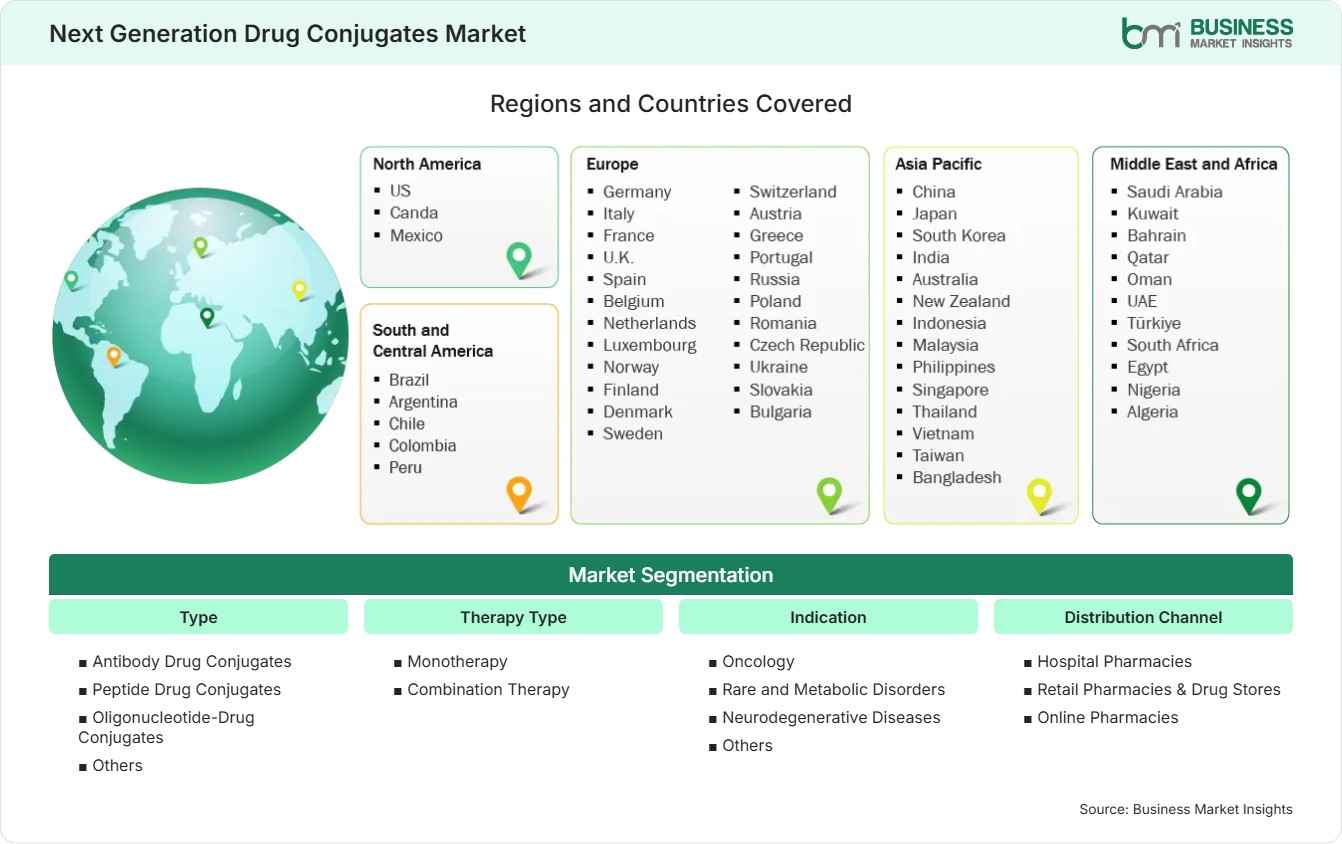
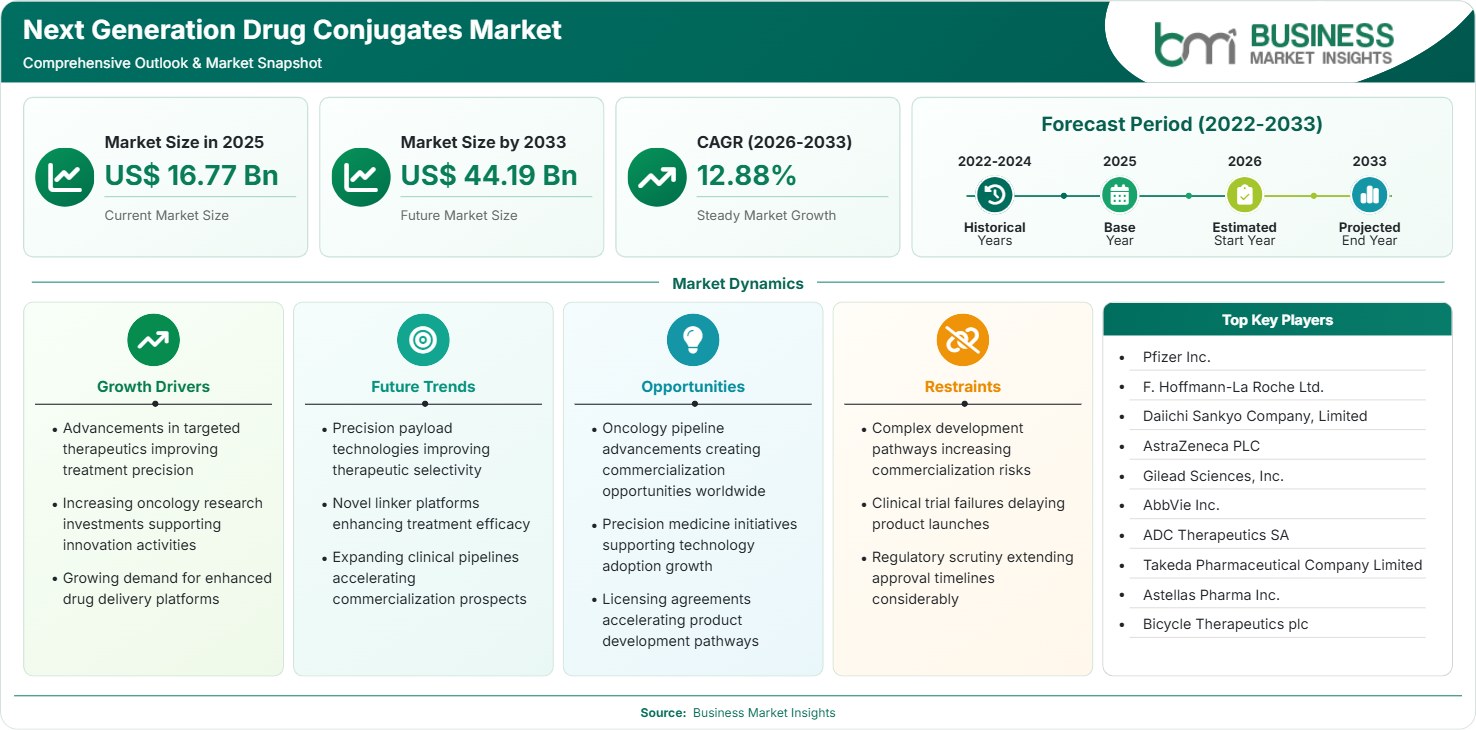
North America represents the largest regional market, accounting for 40%–43% share in 2025 and advancing at a CAGR of 11.8%–12.4% through 2033. The region benefits from advanced oncology infrastructure, substantial R&D expenditure, and concentration of major biopharmaceutical innovators. The Next Generation Drug Conjugates Market share remains strongest across the United States and Canada due to accelerated approval pathways and payer support for high-value oncology therapeutics.
- Strong commercialization pipelines for ADCs are speeding up their presence in both academic and community oncology settings.
- The increasing density of clinical trials enables the quick validation of next-generation conjugation technologies.
- The adoption of precision medicine leads to better patient selection and improved treatment outcomes.
- The strategy of entering into licensing agreements and making acquisitions helps to strengthen innovation ecosystems.
- Stability in reimbursement helps to maintain high prices for treatments.
US Next Generation Drug Conjugates Market
The United States accounts for 82%–86% of North American revenue and records a CAGR of 12.0%–12.6%. The country leads global development activity due to strong venture capital participation, robust regulatory frameworks, and concentration of oncology research institutions. Clinical adoption remains high across major cancer centers, supporting commercial expansion.
- The FDA's breakthrough pathways lead to faster reviews of products.
- The involvement of academia and industry helps to improve the results of translational research.
- The infrastructure for biomarker testing increases the use of targeted treatments.
- Large networks specialising in pharmacy help patients gain access.
Europe Next Generation Drug Conjugates Market
Europe captures 26%–29% Next Generation Drug Conjugates Market share in 2025 and grows at a CAGR of 11.5%–12.2%. Germany leads regional adoption with strong oncology funding, while the UK represents a high-growth market approaching 12.5%–13.2% expansion. Regional growth is supported by reimbursement modernization and increasing precision oncology programs.
- The expansion of cancer treatment programmes leads to greater acceptance of targeted therapies.
- Making regulations more consistent helps open up more ways to sell products.
- Clinical research collaborations help to strengthen innovation ecosystems.
- Germany is still the biggest contributor among all the nations.
- UK and Nordic countries exhibit accelerated innovation uptake.
Asia Pacific Next Generation Drug Conjugates Market
Asia Pacific holds 22%–25% share in 2025 and records the fastest CAGR of 14.5%–15.3%. China leads regional revenue generation, while India and South Korea demonstrate particularly strong growth trajectories. Rising cancer prevalence, domestic innovation, and manufacturing investments support the Next Generation Drug Conjugates Market growth across the region.
- Chinese biopharma companies are expanding ADC and conjugate pipelines rapidly.
- The greater the amount spent on healthcare, the more accessible specialty therapies become.
- The ability to carry out contract manufacturing enhances regional competitiveness.
- The government offers incentives in order to encourage investment in the field of biotechnology.
- Expanding clinical trials speeds up product development.
Rest of World Next Generation Drug Conjugates Market
Rest of World contributes 8%–11% share in 2025 and expands at a CAGR of 12.8%–13.6%. Brazil leads South & Central America, while Saudi Arabia and the UAE emerge as high-growth healthcare markets. Healthcare infrastructure development and increasing oncology investments support adoption across developing economies.
- Investing in specialized cancer care makes treatment easier to access.
- Healthcare modernization programs increase demand.
- International partnerships help in the transfer of technology.
- The expansion of private healthcare enables access to premium therapies.
- As greater awareness of diseases develops, so do the rates of diagnosis.